-
-
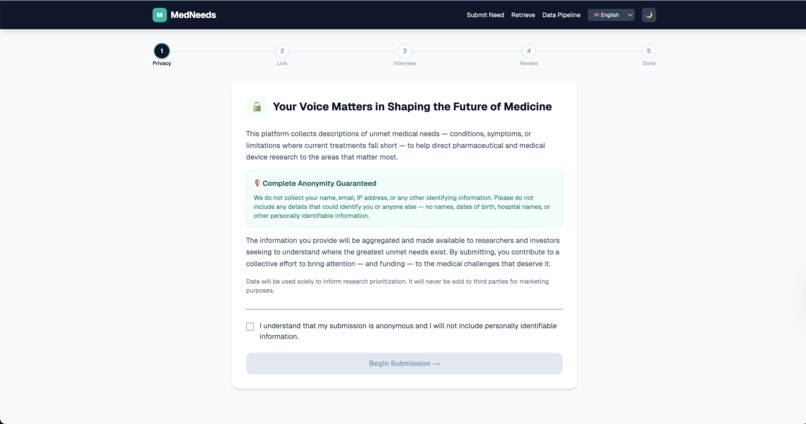
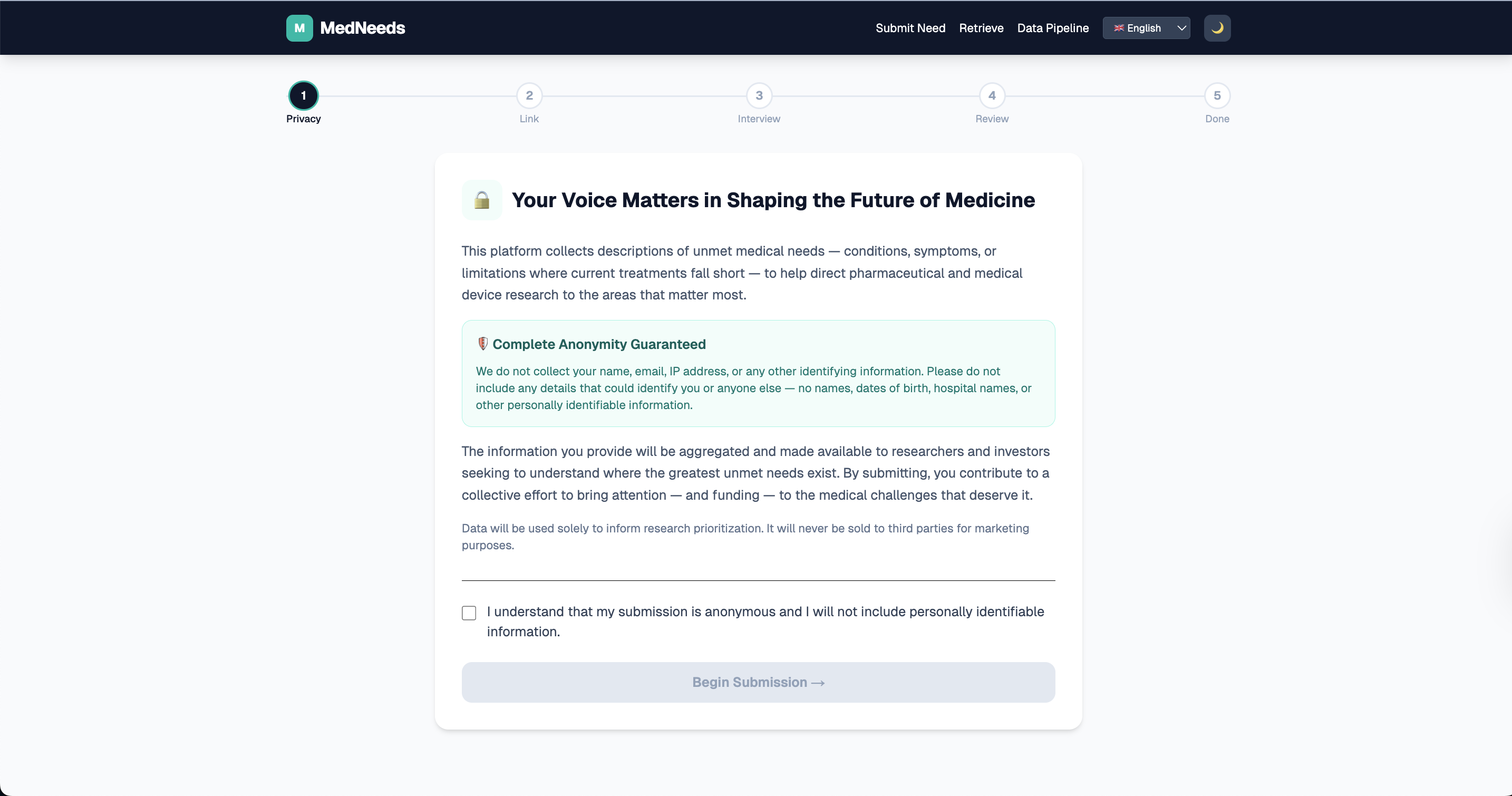
Anonymous Clause
-
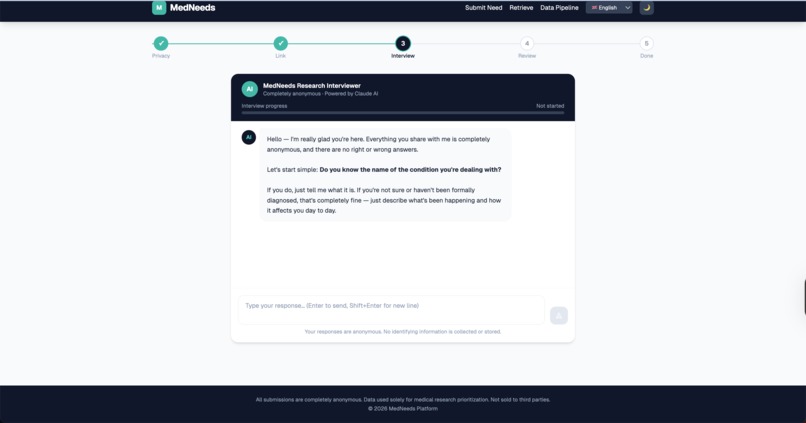
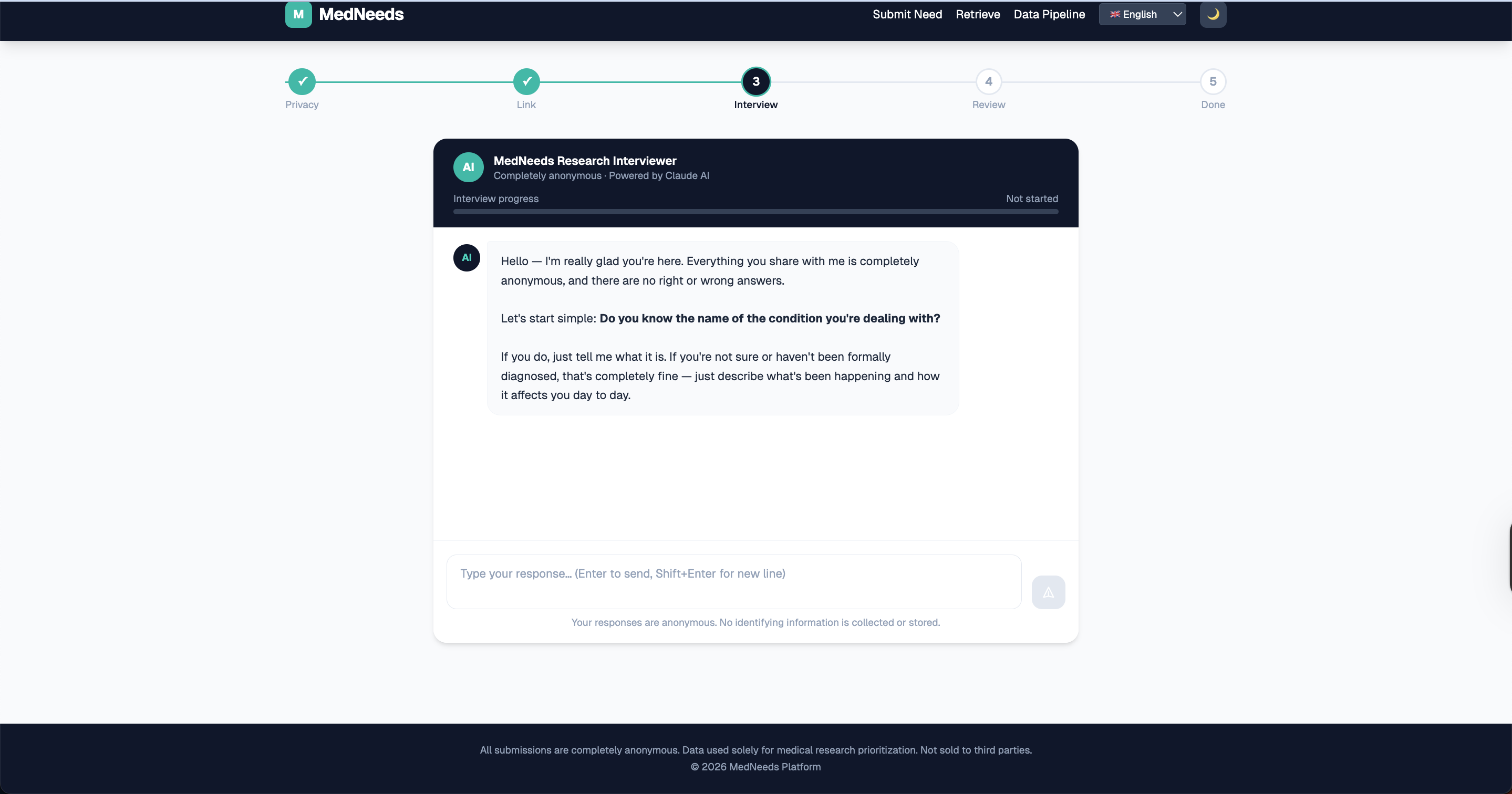
Conversational Interviewing AI
-
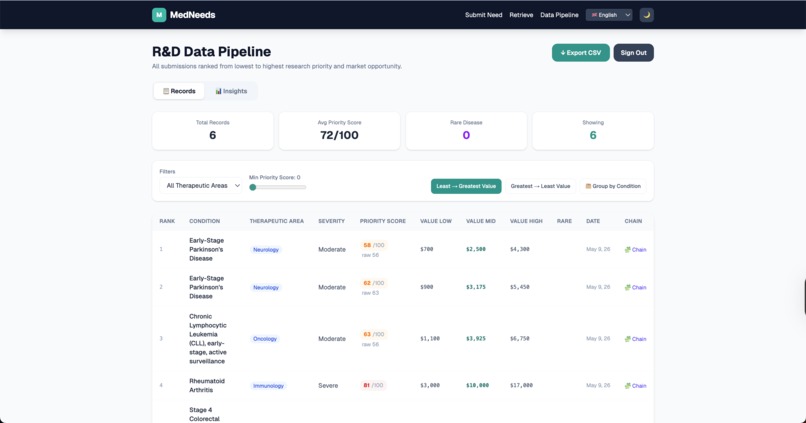
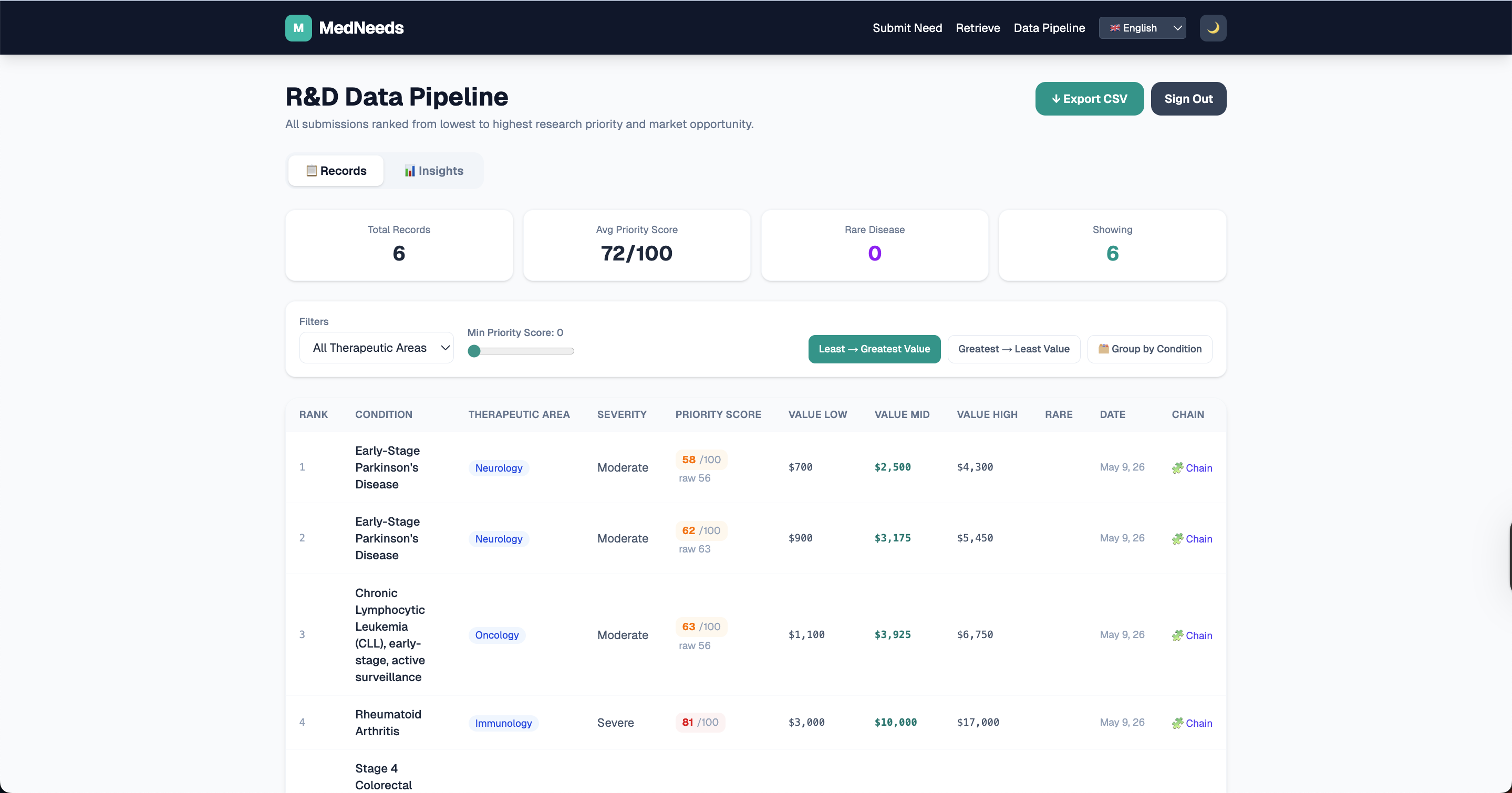
R&D reports
-
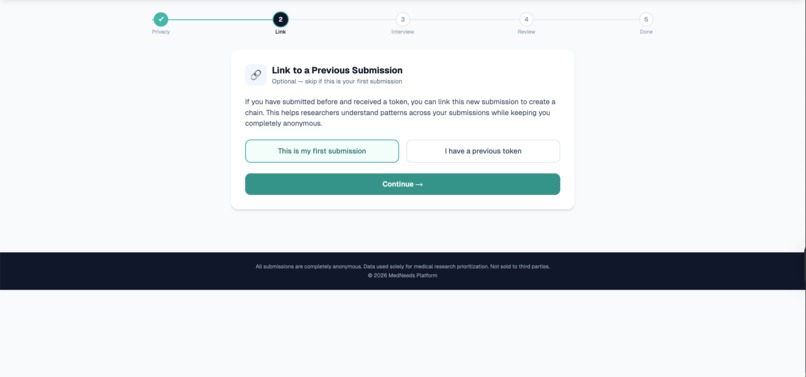
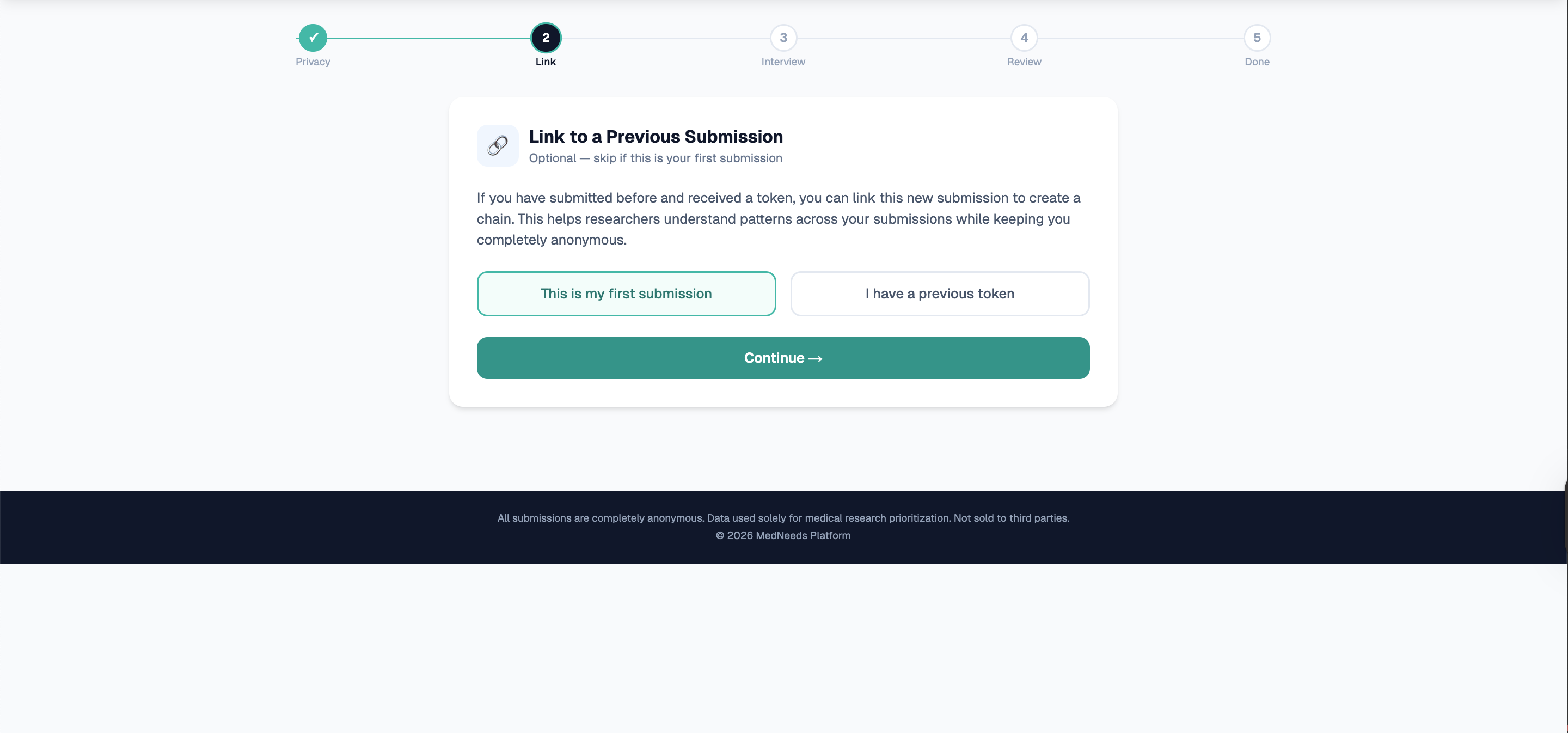
Token use
Inspiration
Our inspiration for this project came from conversations with one of our parents, who works in the pharmaceutical industry and often spoke about how surprisingly disconnected medical research priorities can be from the everyday realities patients actually face. The fact is, public institutions and healthcare systems frequently struggle to distribute resources efficiently, leaving many chronic, disabling, or under-recognized conditions without meaningful attention or investment. We believed the people most affected by these gaps are: patients, caregivers, frontline clinicians, and communities, who deserved a direct voice in what is being researched in the future. This platform was created to help bridge that disconnect by giving individuals a safe, anonymous way to describe where current treatments fall short and what kinds of breakthroughs would meaningfully improve their lives.
What it does
The platform serves as a bridge between patients, caregivers, and clinicians on one side, and pharmaceutical researchers, medical device developers, and investors on the other. Submissions are entirely anonymous. Each submission captures a well-characterized medical need, along with an economic valuation intended to signal market viability, by allowing each user to chat with our chatbot, which asks insightful questions about their situation and needs. The collected data is organized and presented in a format suitable for scientific and commercial evaluation by researchers. The application is intentionally simple in its first release: a single submission interface for contributors and a reporting layer for researchers. A dashboard with summary analytics is envisioned as a future enhancement.
How we built it
We built the platform using a combination of AI-assisted development tools, including Claude AI and ChatGPT, as well as Claude Code running in VS Code, alongside modern web technologies like Next.js and React to create a functional, responsive web application. As first-time hackers with limited coding experience when we started, AI tools played a critical role in helping us generate the initial application architecture, debug issues, improve UI/UX decisions, and refine the conversational AI logic that powers our validation agent. We combined iterative prompting with hands-on experimentation to gradually transform an early concept into a fully functional website. Along the way, we learned how to manage application state, design database schemas, implement secure token systems for anonymous submission linking, deploy a live domain, and think critically about privacy-focused software architecture.
Challenges we ran into
One of the biggest challenges was designing a system that preserved complete anonymity while still allowing users to retrieve their prior submissions and link new submissions to existing ones, all without creating any pathway to de-anonymization. We had to ensure that tokens encode no session data, timestamps, or identifying metadata; they should only serve as identifiers. Another major challenge was designing the AI conversation flow because we needed the validation and valuation agents to gather medically useful, specific information without sounding robotic, invasive, or emotionally detached. Striking the right balance between collecting depth and treating users with empathy required careful prompt engineering and multiple iterations.
Accomplishments that we're proud of
We're especially proud of the conversational AI experience we built. Early versions were just pattern-matching surveys, but through iteration, we had the agent learn from other submissions and adapt to each user's unique conversation, asking thoughtful follow-up questions and maintaining a compassionate tone rather than sounding robotic. We're also proud of our privacy-first design — no accounts, no personal data, completely anonymous. Users retain full control over their submissions with just a cryptographically random token. As first-time hackers, we're proud that we went from abstract idea to deployed product in 24 hours. While learning modern development workflows, AI-assisted programming, and web deployment along the way.
What we learned
This project taught us how powerful AI-assisted development can be for small teams with limited prior experience. We learned how to collaborate effectively using tools like Claude and ChatGPT to brainstorm architecture decisions, debug code, refine designs, and accelerate development without losing ownership of the underlying ideas. We also learned that building healthcare adjacent technology involves much more than coding. Privacy, ethics, accessibility, trust, and communication all became central design considerations. We gained a much deeper appreciation for how difficult it is to create systems that responsibly handle sensitive human experiences while still generating structured and actionable data. Additionally, we learned practical engineering skills, including deploying a public facing application, configuring domains, structuring backend systems, and designing around anonymity and security constraints.
What's next for Med Needs Hub
We want to improve both the researcher's and contributor's experience. On the research side, we plan to build an advanced analytics dashboard that identifies trends, clusters similar unmet needs, and provides better tools for prioritizing research opportunities by severity, prevalence, and impact. We also want to expand the platform's reach by connecting with patient advocacy groups, clinicians, researchers, and pharmaceutical organizations that may benefit from more direct insight into patient experiences. We recognize that designing on our Macs meant we optimized for desktop without prioritizing mobile responsiveness, something we'd fix immediately. We also wish we'd had time to transform the token system into a knowledge graph structure, where tokens become nodes and submissions branch out as connected relationships. This would make the system far more efficient for researchers to identify patterns and connections across submissions. Long term, we envision the platform evolving into a vast intelligence layer for unmet medical needs, one that helps ensure future medical innovation is shaped not just by institutions and markets, but also by the lived experiences of the people medicine is ultimately meant to serve.
Built With
- anthropic
- api
- claude
- next.js
- railway
- react
- sqlite
- typescript

Log in or sign up for Devpost to join the conversation.