-
-
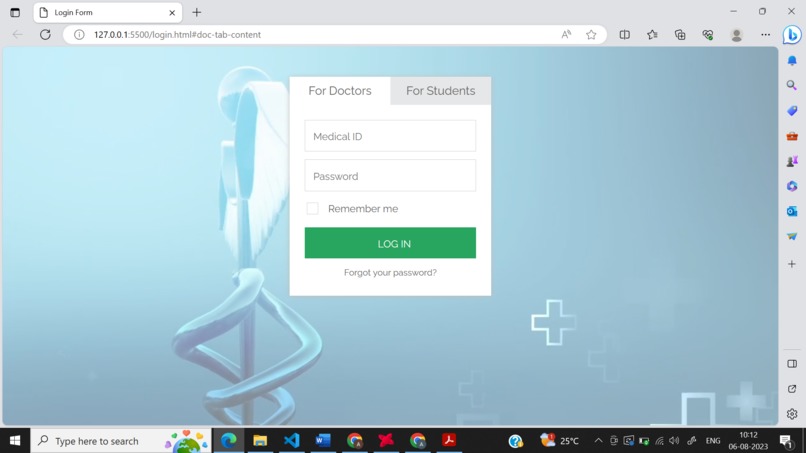
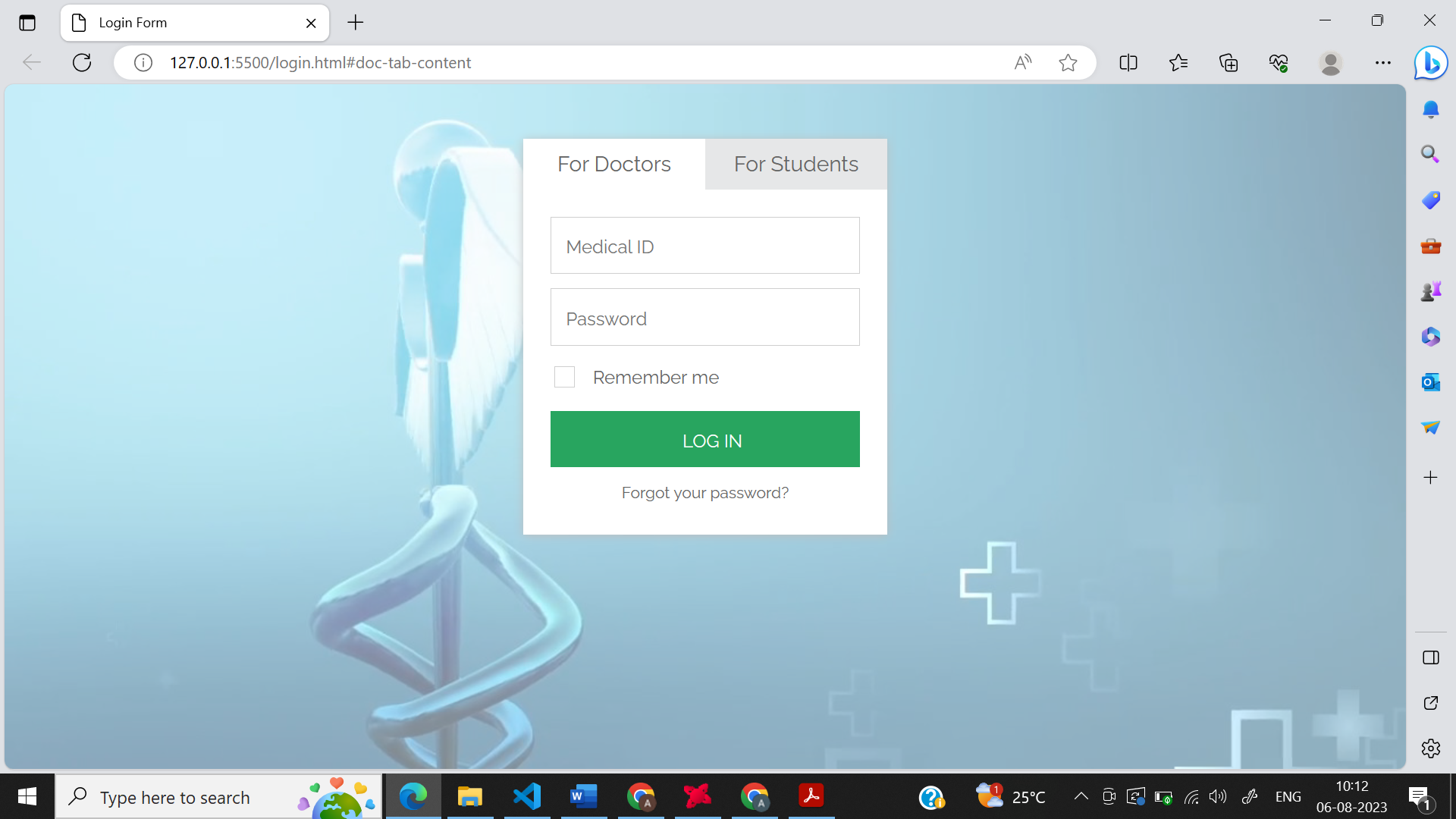
login page
-
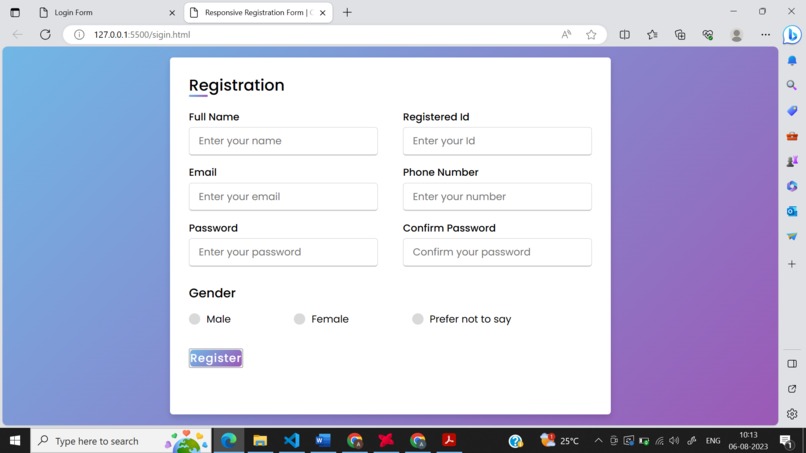
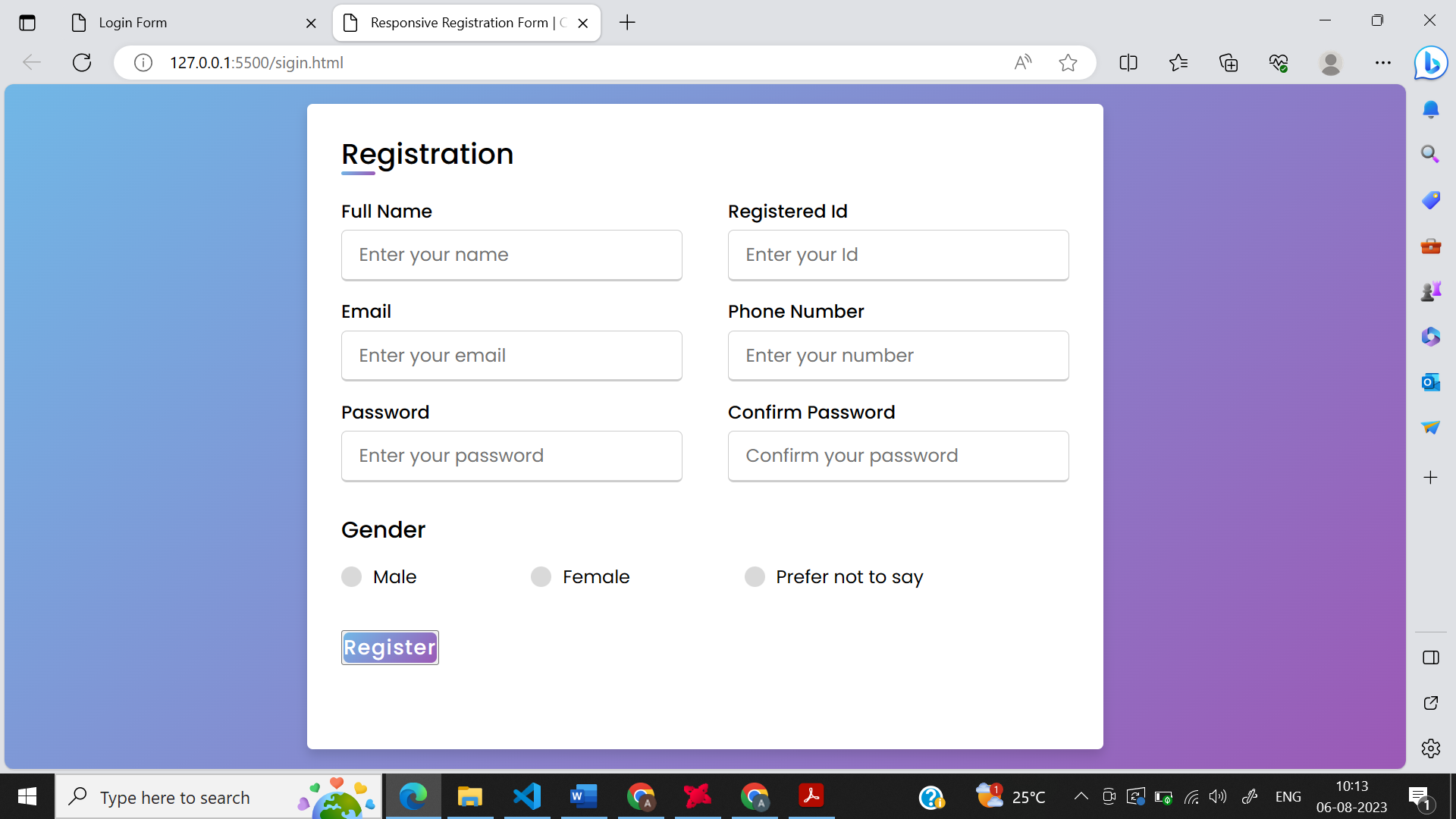
sign up page
-
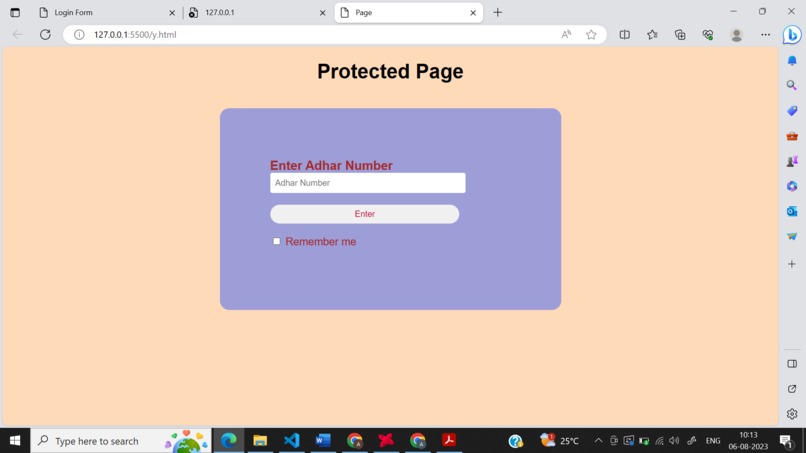
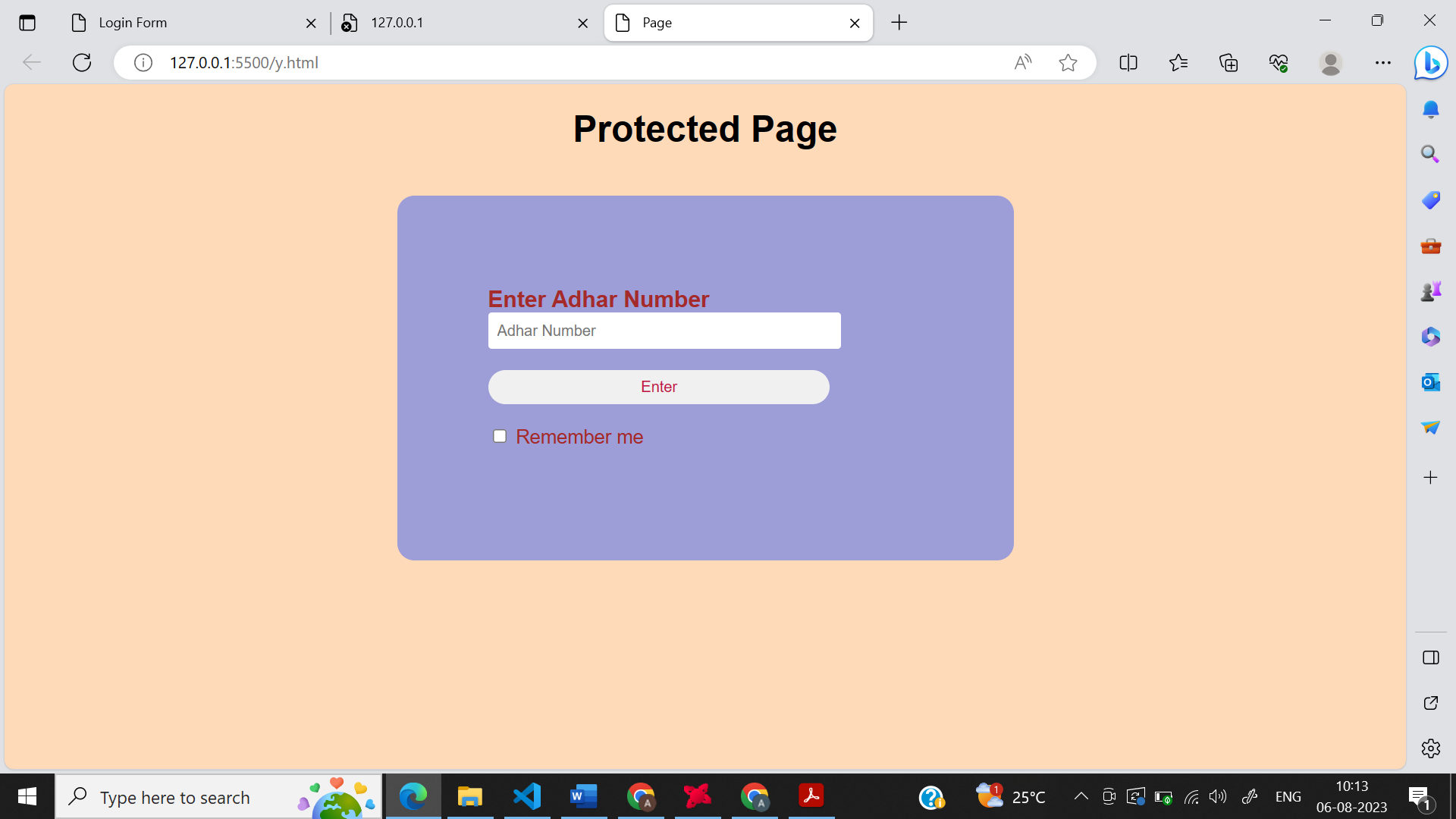
patient opening
-
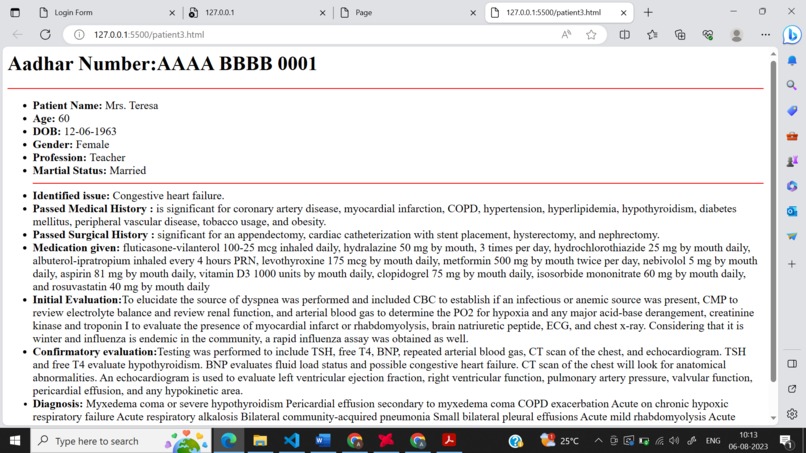
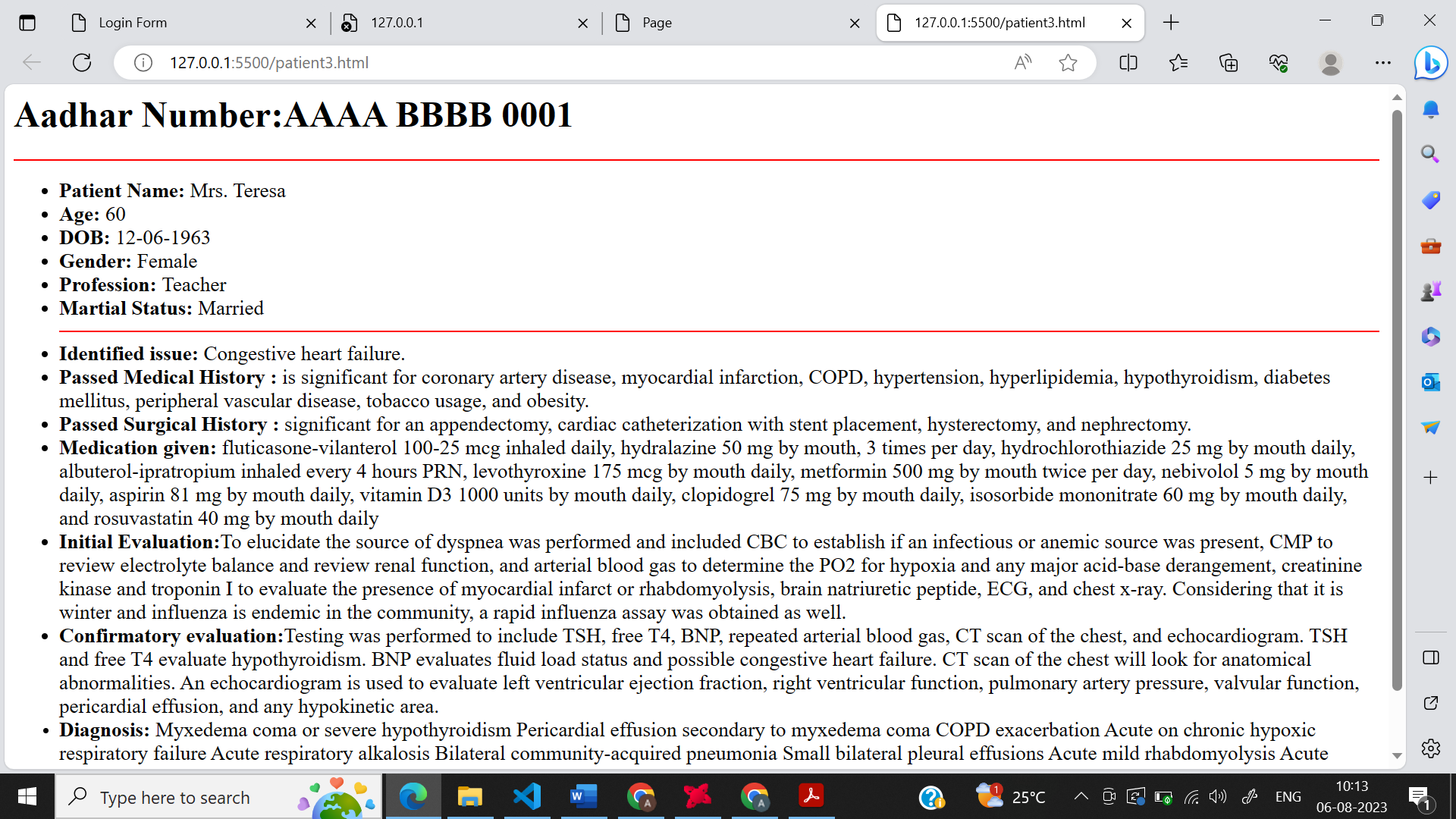
medical history of patient
Inspiration
MOTIVATION The population of India is rapidly growing and currently stands at 1,421,052,203, making it one of the most populous countries in the world. India should place primary focus on enhancing its education and healthcare systems, recognizing their paramount importance for the nation's well-being and development. We have made a decision to prioritize the improvement of healthcare services across the country. BACKGROUND Case 1: Concealing Allergy History A patient visits a primary care physician complaining of recurring symptoms of skin rashes and difficult breathing. The patient has a known history of allergies, including the severe reaction to penicillin. However due to fear of needles or an aversion to certain medications, the patient intentionally withholds this information from the physician. The physician unaware of the patient’s history, prescribes a course of antibiotics that incudes penicillin. As a result, the patient suffers a severe allergic reaction, including anaphylaxis, which requires immediate medical intervention to stabilize their condition. After further investigation and questioning, it is revealed that the patient had withheld their allergy history, leading to the incorrect prescription and subsequent adverse reaction.In this case, the patient's failure to disclose their allergy history resulted in a potentially life-threatening situation. It underscores the importance of patients providing accurate and complete information to healthcare providers. Honest and open communication between patients and healthcare professionals is vital to ensure safe and effective care.
Case 2: False medication The Karnataka Medical Council registered 329 cases against doctors from the districts across the state. However, of these, only 33 cases have been proven. Also, the nature of most complaints’ points to failure of the doctor/hospital in managing a complication or complaints streaming from medical negligence. These activities are some of the petty crimes, but few of the well-practiced doctors with a mindset of doing a crime tactically would help them to escape from punishments, voluntarily involves in the purpose of money-making to perform some activities like practising medicine without any qualification and by using a fake certificate of completing the respective course, abortion when especially done for a girl child, organ trade will fall under serious crimes.
CASE 3: HIDING FROM THE DOCTOR Rajan Pillai, an Indian business tycoon, sought medical treatment in the United States in the early 1990s. He was diagnosed with terminal lung cancer. However, when he returned to India, he concealed his diagnosis from his family, friends, and even his doctors. Pillai continued his business activities and maintained a normal lifestyle, all while hiding the truth about his deteriorating health. He avoided undergoing any treatment or informing his loved ones about his condition. Tragically, Pillai's health declined rapidly, and by the time he finally disclosed his illness, it was too late for effective treatment. He passed away in 1995 at the age of 48.
What it does
1.FOR DOCTORS TO ACCESS THE MEDICAL HISTORY This will be done will the help of a unique number that is given to the doctors through National Medical commission (NMC). The medical history of a patient can also be accessed to nurses, this will be done with the help of a unique number given to the nurses through Indian Nursing Council. This will help the doctors get the whole medical history which can save the time of both patient and the doctor. This can also be done to identify if the patient suffers from any allergies or cannot withstand any particular drug. If there is any patient who’s hiding any information, that also could be stopped. This can save many lives and other problems. This will not put the doctor into any problem due to the mess created by the patient. Initially the user has to register into our app. Fill in the given details. Doctors only who are aged within 60 can register. This is done to avoid spread of information about the patient details through non-working doctors.
- FOR MEDICAL STUDENTS FOR CASE STUDY The present medical students who are going to become the future doctors of our county will need real life situation to get to know more about how things actually happen. This can help the medical students get to learn many different cases. They will have to register into the app first and then they will have an access to the different case studies. 3.DATA ACCESSING BY DIFFERENT DOCTORS OF DIFFERENT HOSPITALS Now if a patient is currently in Delhi, and has taken his medical treatment from different hospitals of Delhi. He later shifts to Mumbai due to his work. Now he has started taking medication from a new hospital. Now the doctor of this hospital can actually access his medical history through his Aadhar card number.
How we built it
- Defining our app's objectives: Clearly outline to the goals of our app. Identifying the key features such as, such as securing data storage, comprehensive medical history inputs, intuitive user interfaces, and integration with electronic health record (EHR) systems.
- Conducting user research: Understanding the needs and expectations of both patients and the healthcare providers. Conducting surveys, interviews, or focus groups to gather insights into their experiences, challenges, and preferences when it comes to sharing their medical history.
- Ensuring the data privacy and security of the patients: Developing a robust security measure to protect the patient's data. Complying with relevant regulations like HIPAA (Health Insurance Portability and Accountability Act) to ensure the confidentiality, integrity, and availability of information.
- Designing a user-friendly interface: Creating an intuitive and user-friendly interface that encourages the hospital’s administrative clerk to input the patient's medical history and considering using a step-by-step process, clear labels and visual aids to simplify the data entry process.
- Comprehensive medical history inputs: Designing a structured survey sheet that covers all relevant aspects of a patient's medical history including the sections for demographics, allergies, medications, past surgeries, chronic conditions, family medical history, and lifestyle factors.
- Data validation and accuracy: Implementing a validation check to ensure the accuracy of the entered data. Using conditional logic, resulting in asking users for additional details based on their responses. Provide a clear instruction and example to assist users in providing precise and complete information.
- Integration with EHR systems: Collaborating with healthcare providers and EHR system developers to integrate our app with their platforms. This allows the doctors to access the patient's complete medical history.
- Testing and feedbacks: Conduct testing with a group of users to ensure the app's functionality, use and effectiveness. Gathering feedbacks from patients and healthcare providers to identify areas for improvements in our app.
- Continuous improvements: Updating and enhancing our app based on the user's feedback, technological advancements and changing healthcare regulations. Staying informed about industrial trends and include relevant features to provide the best user experience.
Accomplishments that we're proud of
Making of website
What we learned
HTML CSS JS
What's next for MED MEMOIR
Making this a government website so that each and every citizen of the country has access to this for their betterment as well as the country.

Log in or sign up for Devpost to join the conversation.