💡 Inspiration
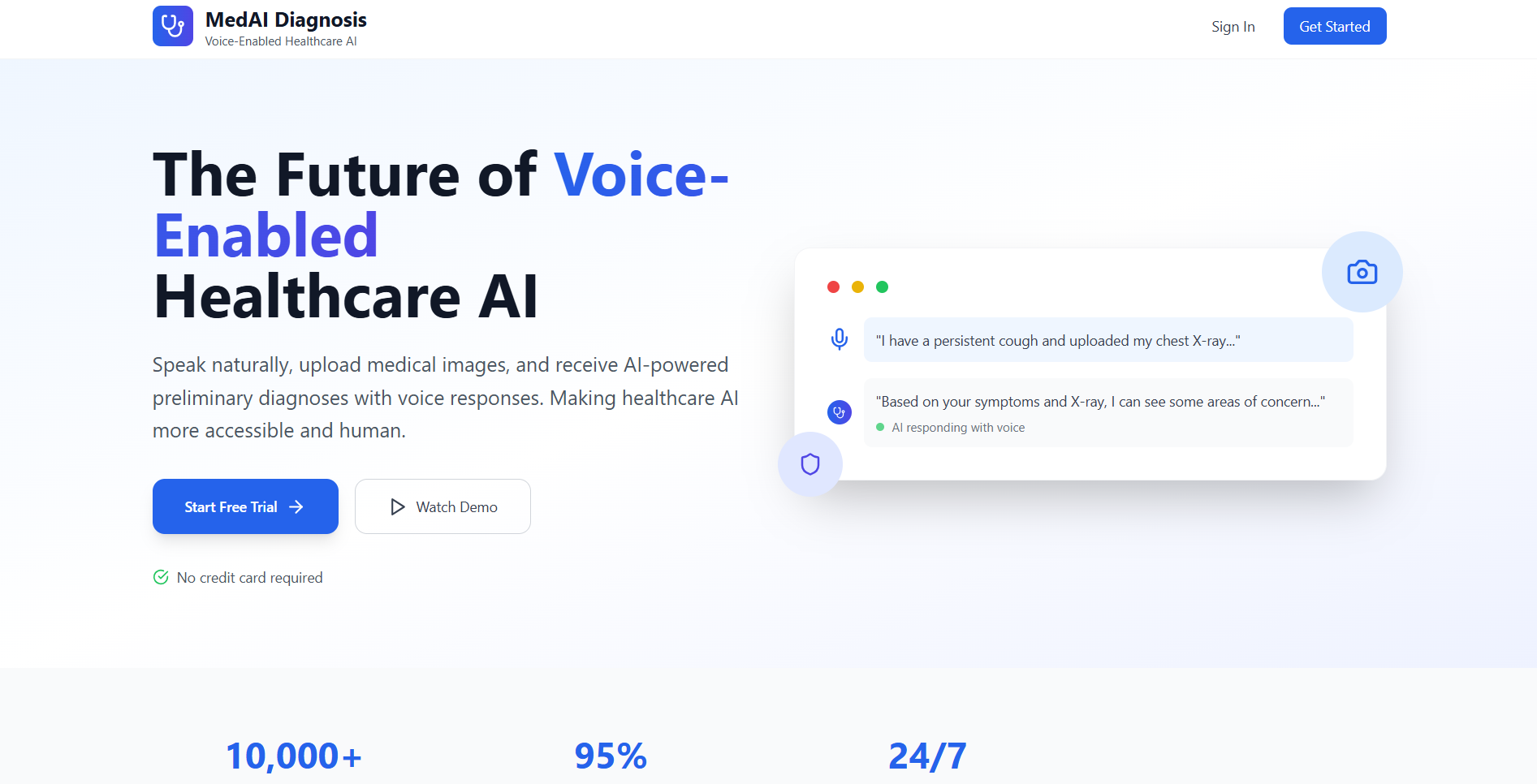
Access to timely medical advice remains a challenge for millions, particularly in remote and underserved areas. We wanted to build something that mimics a conversation with a doctor — simple, fast, and empathetic. The idea for MedAI came from observing how many people rely on the internet to self-diagnose, often without context or accuracy. We aimed to build a human-centric, voice-first medical AI that combines image and symptom-based diagnosis into one unified experience, lowering barriers to early medical intervention.
⚙️ What it does
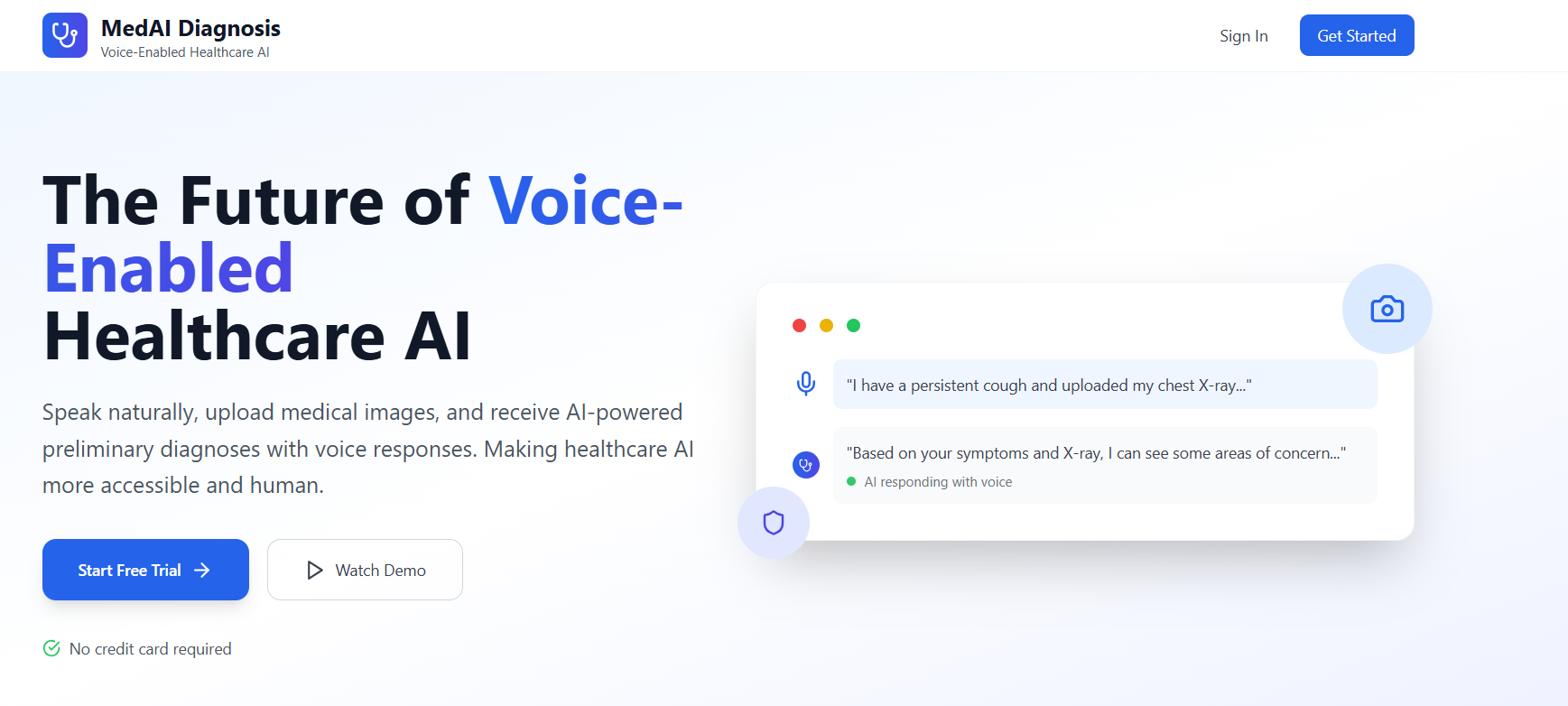
MedAI Diagnosis is an AI-powered healthcare platform that allows users to:
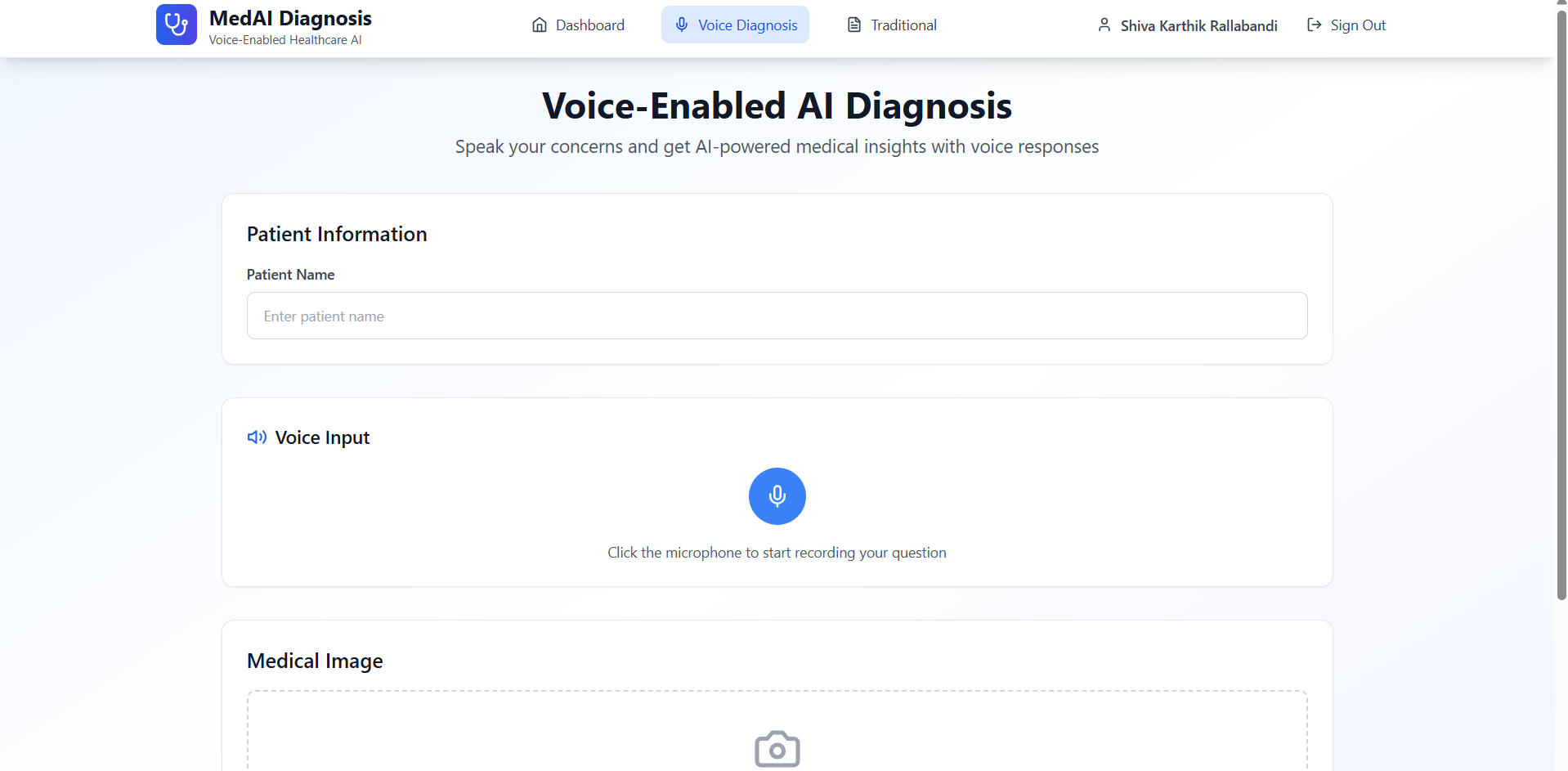
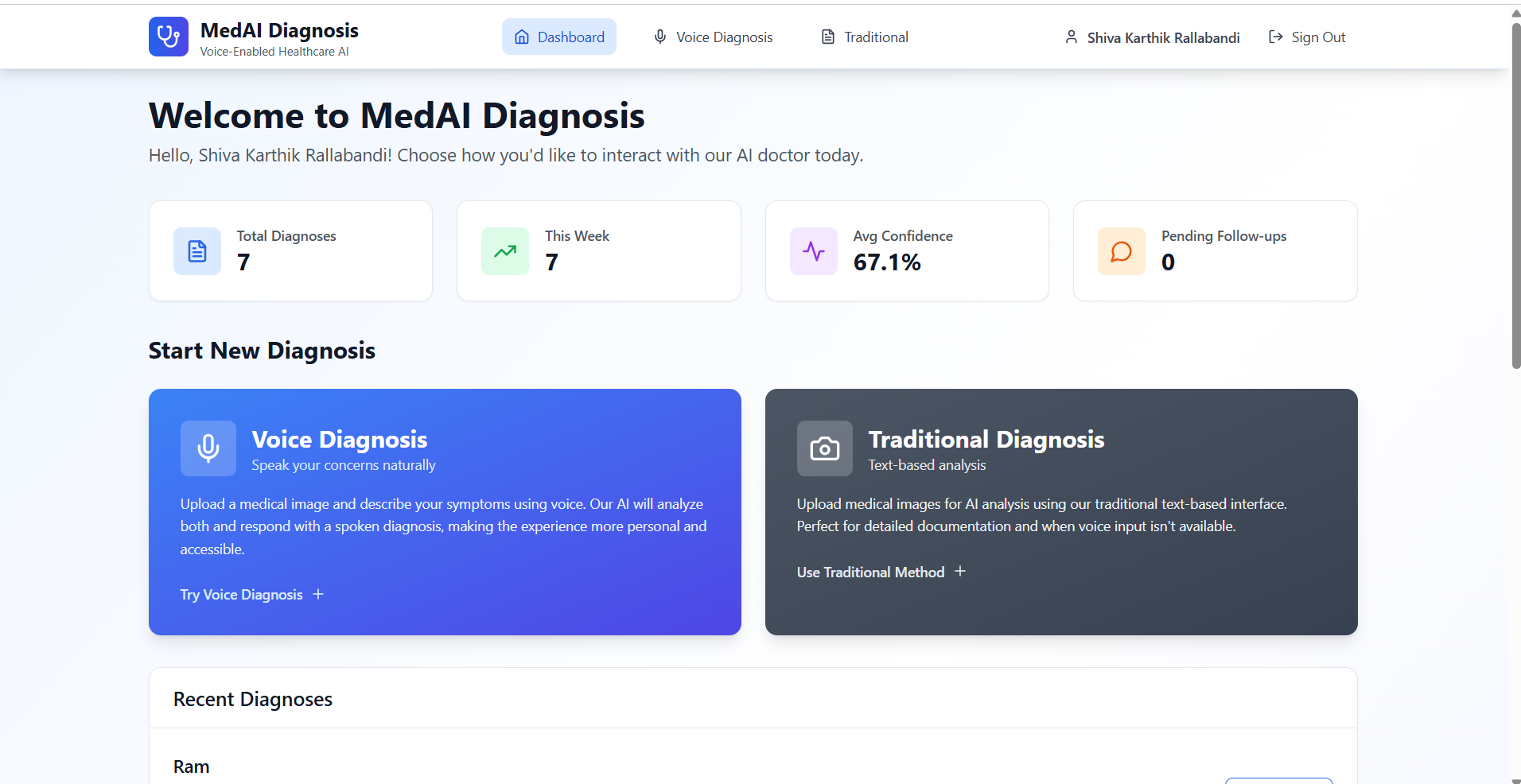
- Describe their symptoms using natural voice input
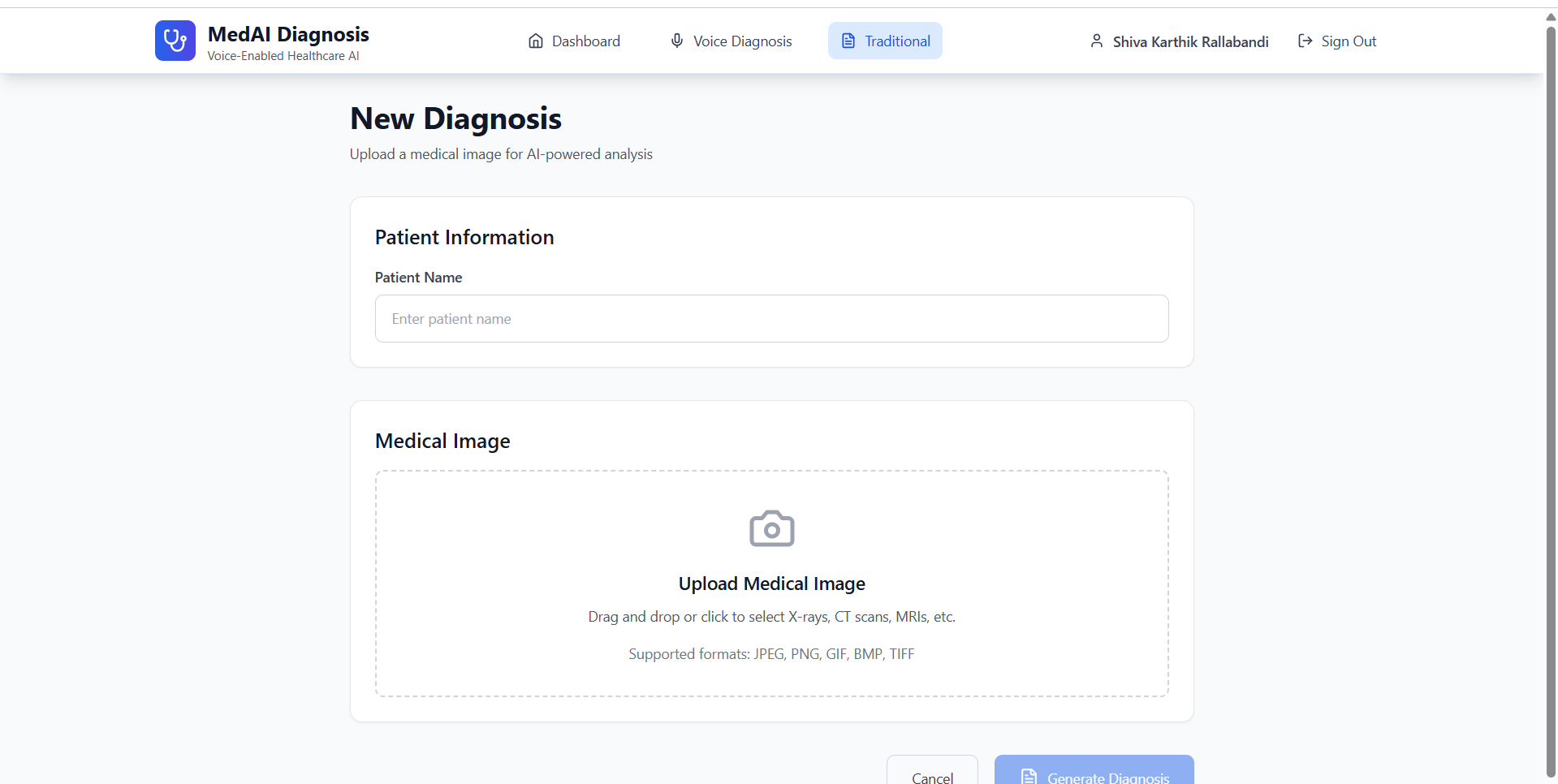
- Upload medical images such as X-rays, CT scans, or rashes
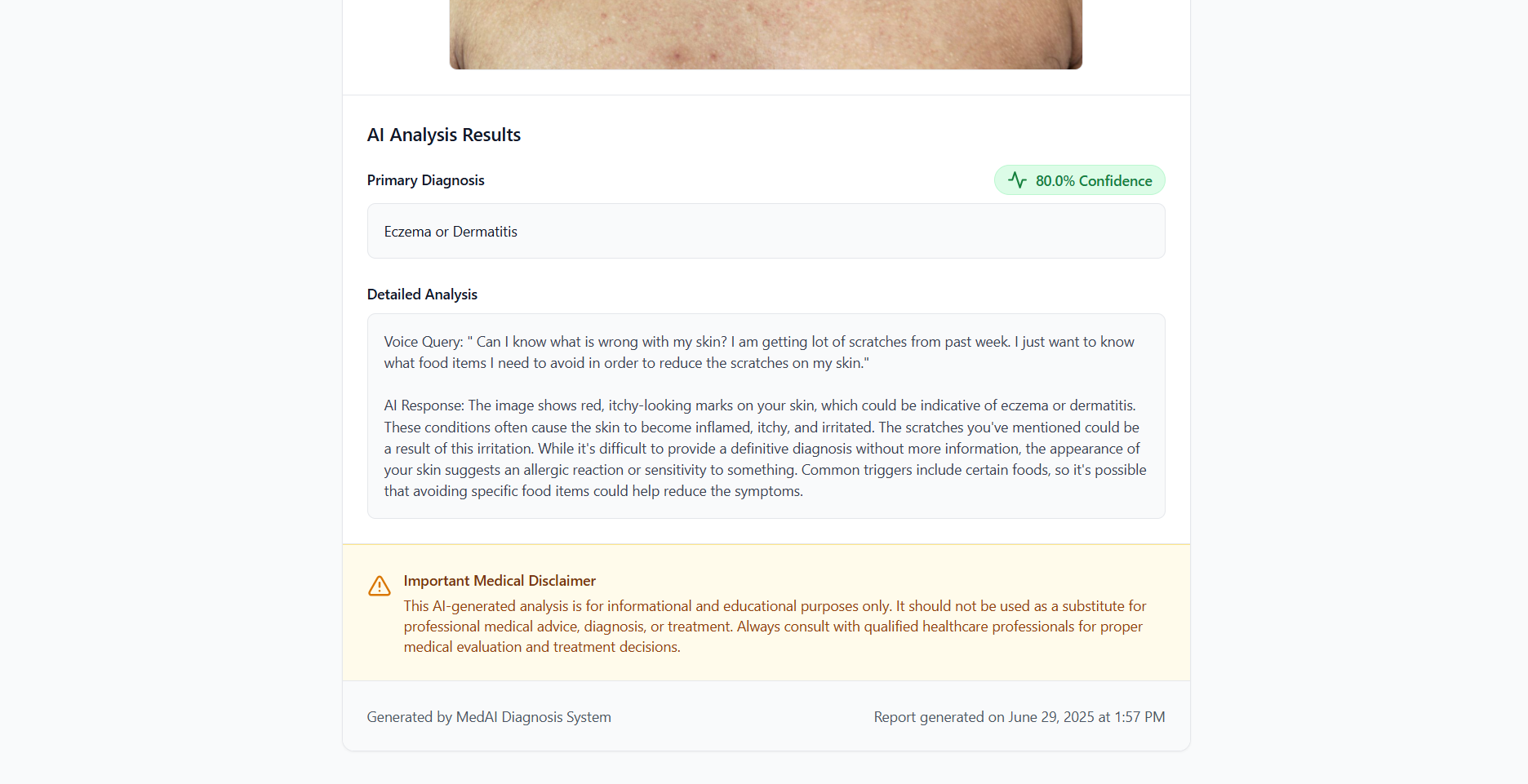
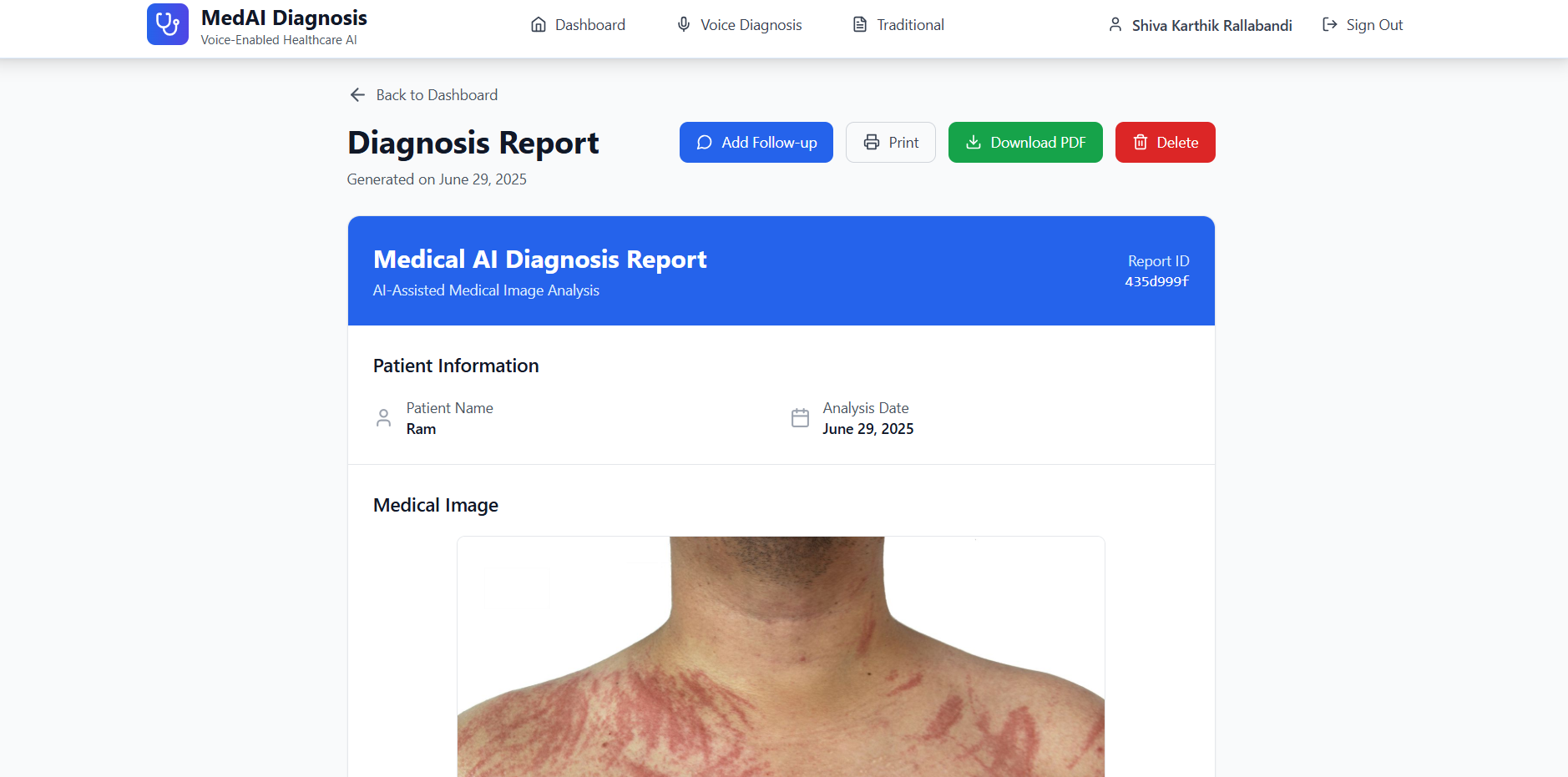
- Receive AI-generated preliminary health assessments
- Hear spoken feedback from the AI for a more natural experience
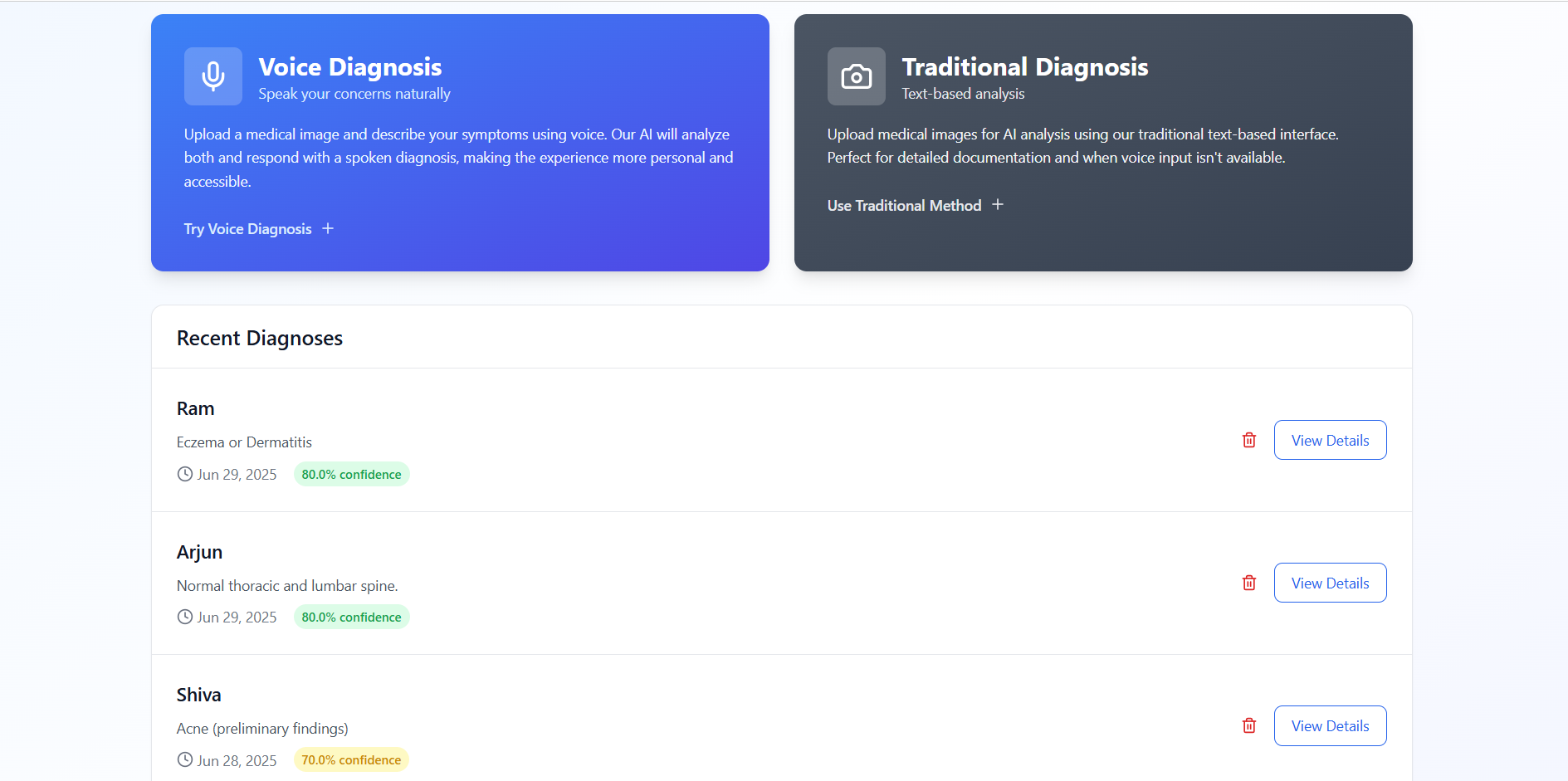
- Track their status and generate professional-grade medical reports
MedAI bridges the gap between people and preliminary medical guidance using multimodal AI, helping users take the right next steps in their healthcare journey.
🛠️ How we built it
- Frontend: React 18 with TypeScript, Tailwind CSS, and Framer Motion
- Voice Input: GROQ Whisper API for real-time speech-to-text
- Image Analysis: Google Gemini Vision API for processing medical images
- Voice Output: ElevenLabs API for natural text-to-speech responses
- Backend: Supabase for database, storage, and authentication
- Security: Row-level security, audit logging, and encrypted storage
🚧 Challenges we ran into
- Ensuring accurate voice input capture in noisy environments
- Integrating multiple APIs with real-time performance
- Designing a natural and fluid voice conversation flow
- Handling multiple file formats and sizes during image upload
- Implementing secure data practices for handling medical images
🏆 Accomplishments that we're proud of
- Built a fully functional and secure AI-powered diagnosis platform
- Combined voice and image input for a rich multimodal experience
- Delivered a responsive and accessible user interface
- Supported end-to-end patient flow from diagnosis to report generation
📚 What we learned
- How to design and implement voice-first user interfaces
- Techniques for combining multimodal AI capabilities effectively
- The importance of intuitive design in healthcare technology
- Best practices for managing sensitive health data securely
🚀 What's next for Med-AI: AI-Powered Preliminary Health Diagnosis Tool
- Train domain-specific AI models using medical datasets
- Support for multilingual voice input and responses
- Medical professional collaboration for improved accuracy
- Mobile-first app for wider accessibility
- Integration with telemedicine services for doctor follow-up
Built With
- ai
- eleven-labs
- gemini
- gradio
- groq
- large-language-models
- machine-learning
- python
- react
- tailwind-css
- typescript

Log in or sign up for Devpost to join the conversation.