Inspiration
Unplanned equipment failures cause massive financial losses, production delays, and safety hazards in industries. Most factories still rely on reactive maintenance, which fixes problems only after they occur. We wanted to build something smarter — a system that predicts failures before they happen, helping industries save time, cost, and effort while ensuring worker safety. That’s how MechSage was born — a step toward intelligent, AI-driven maintenance.
What it does
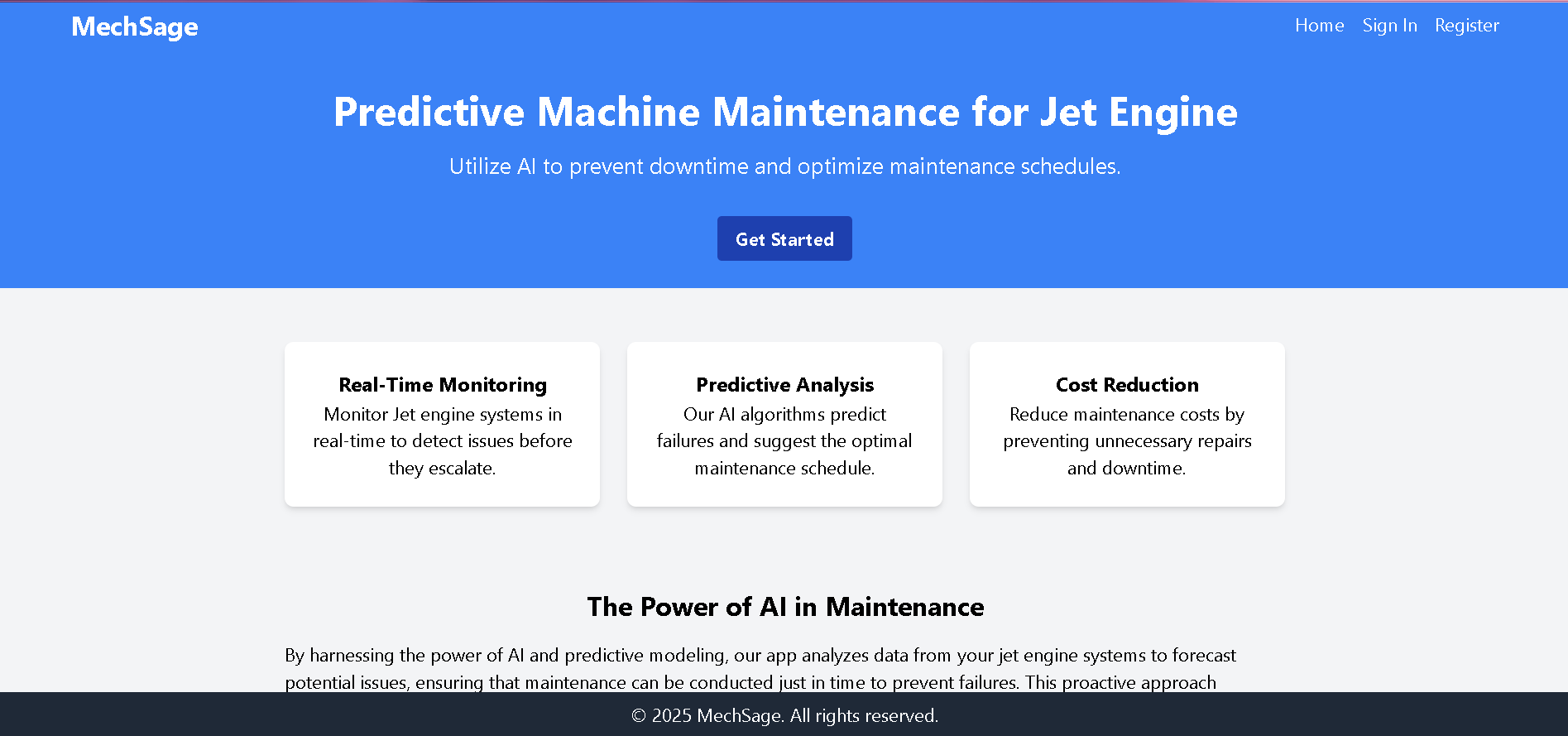
MechSage is a predictive maintenance platform that:
- Predicts Remaining Useful Life (RUL) of industrial equipment using machine learning.
- Continuously monitors real-time sensor data and detects early signs of degradation.
- Sends instant maintenance alerts via Telegram and browser notifications.
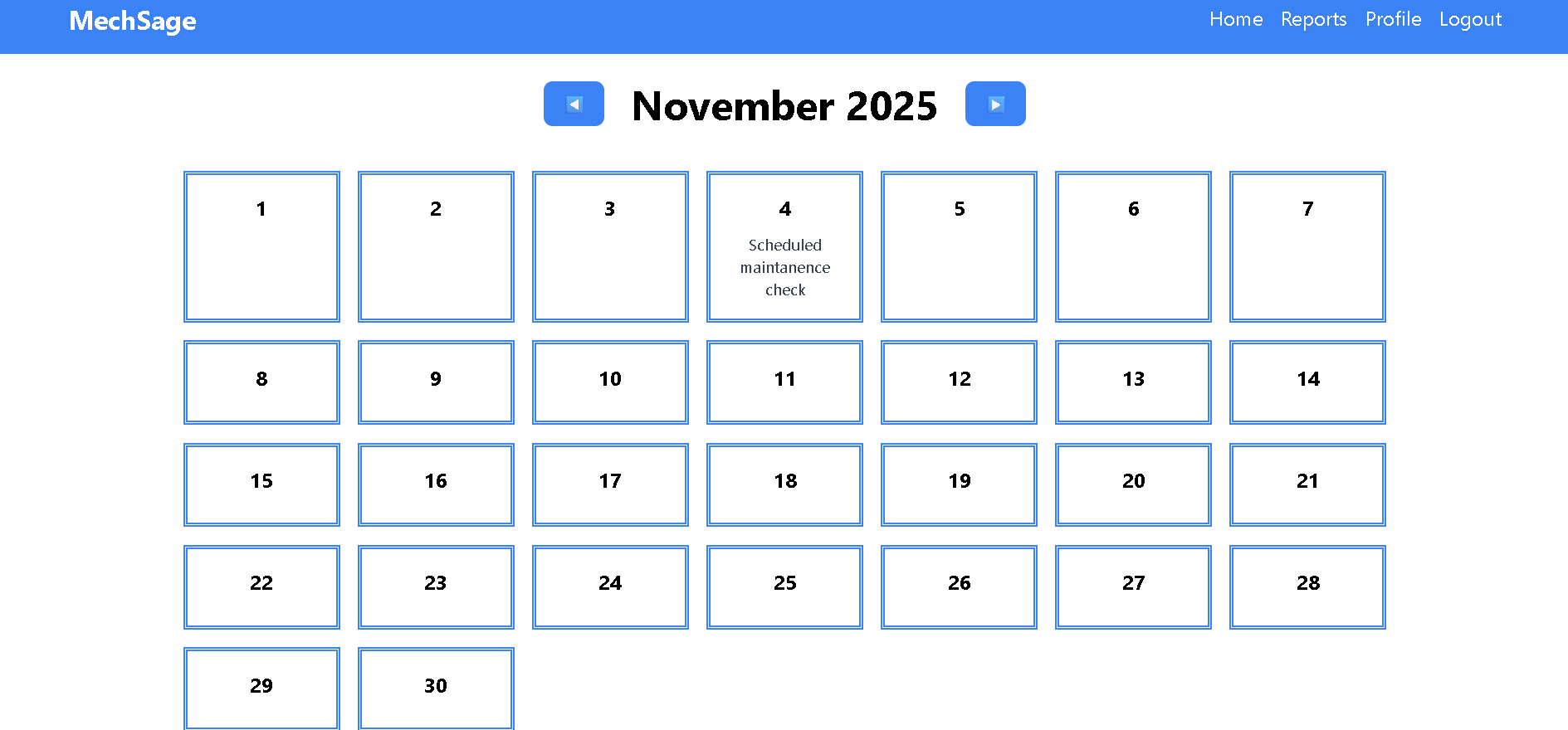
- Allows users to schedule proactive maintenance through an interactive calendar interface.
- Provides a dashboard with dynamic charts and model predictions for quick decision-making.
How we built it
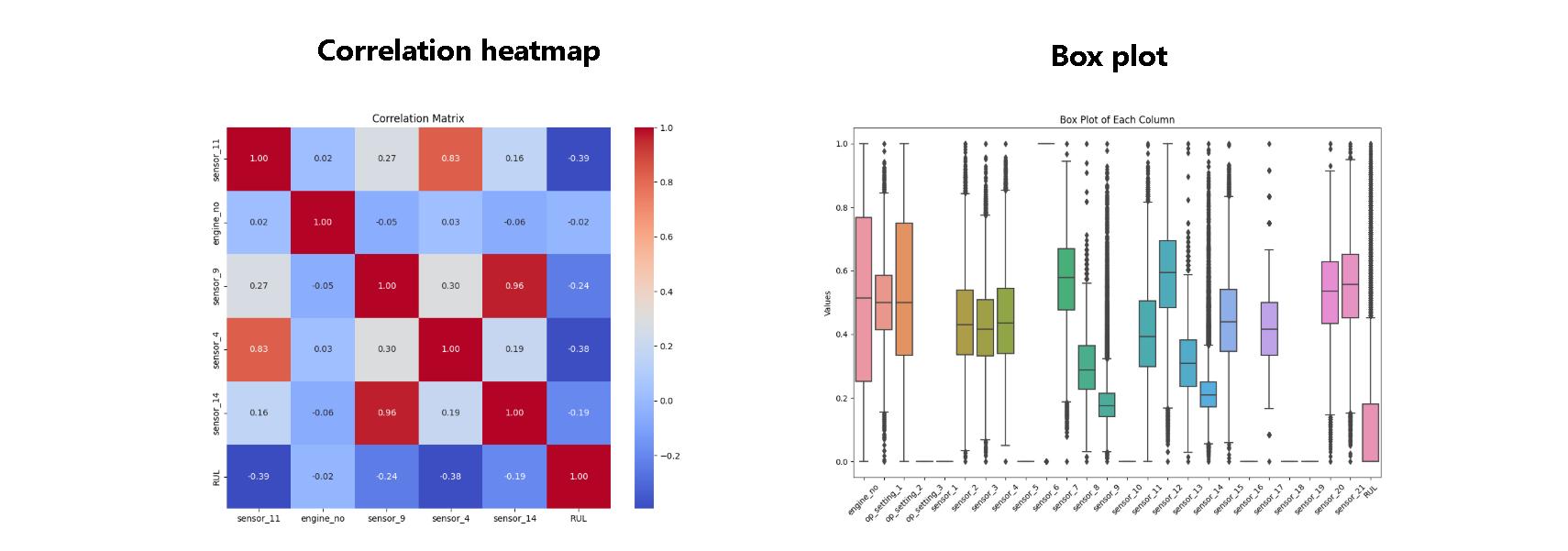
Dataset: NASA CMAPSS Jet Engine Dataset (multivariate time series for equipment health).
Preprocessing: Feature reduction for optimal performance.
- Handling missing values and noise removal.
- Normalization using Min-Max Scaler.
- Machine Learning Models:
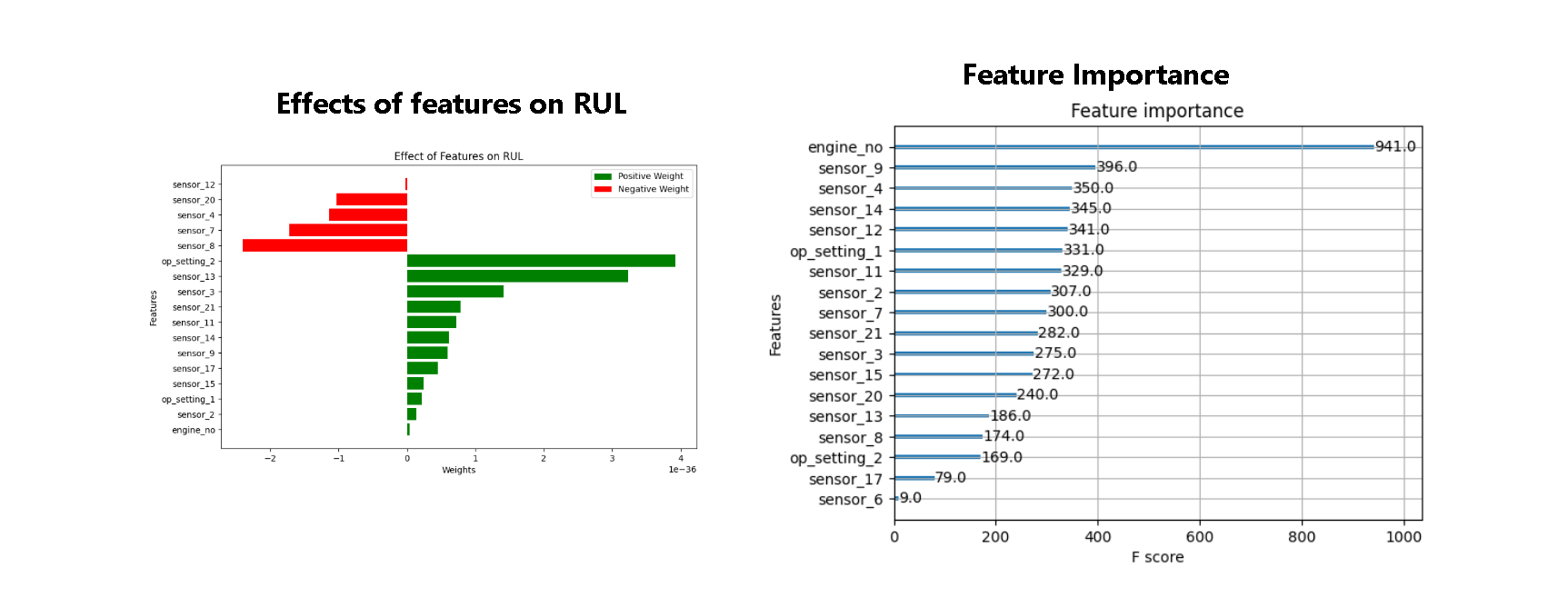
- Trained and compared XGBoost, Random Forest Regressor, and Decision Tree Regressor.
- XGBoost achieved the best performance with an R² score of 0.65.
Tech Stack:
- Frontend: React.js for interactive visualization and calendar scheduling.
- Backend: Flask API for model inference and data processing.
- Database: MongoDB for storing sensor data, predictions, and user logs.
- Communication: Telegram bot for real-time alerts and user interaction.
- Runtime: Node.js for asynchronous backend operations.
Challenges we ran into
- Handling large time-series datasets efficiently during training and inference.
- Achieving a balance between model accuracy and inference speed for real-time prediction.
- Integrating Flask (Python ML backend) with React (JS frontend) smoothly.
- Configuring Telegram notifications and ensuring secure message delivery.
- Deploying the entire system so that real-time data updates flow seamlessly across components.
Accomplishments that we're proud of
- Built a fully integrated predictive maintenance ecosystem from scratch.
- Achieved a high R² score (0.65) with XGBoost for RUL prediction.
- Successfully implemented real-time alerting and visualization with Telegram and React.
- Designed a user-friendly dashboard combining prediction analytics, alerts, and scheduling.
- Demonstrated a scalable solution adaptable to multiple types of industrial machines.
What we learned
- The importance of feature engineering in time-series-based ML predictions.
- How to bridge AI models with full-stack web apps for real-world usability.
- How real-time IoT-like workflows can be simulated using Flask APIs and MongoDB.
- End-to-end pipeline management — from data preprocessing to deployment.
What's next for MechSage
- Integrate live IoT sensor data streams from industrial machines via MQTT or OPC-UA.
- Implement a deep learning-based RUL prediction model (e.g., LSTM or CNN-LSTM hybrid).
- Add anomaly detection modules for identifying unseen failure modes.
- Deploy on cloud platforms like AWS or Azure for scalability.
- Extend Telegram bot functionality to support voice commands and maintenance ticket creation.
Built With
- flask
- html5
- javascript
- node.js
- python
- react.js
- xgboost

Log in or sign up for Devpost to join the conversation.