Inspiration
Real-life driving studies are currently limited by participant safety. Researchers can't study the effects of unsafe behavior because that would put the participants in unethical danger. VR traffic simulation allows researchers to experiment with unsafe environments and have more control over each element of the environment. By running these initial experiments, we can test the experimental method of VR driving to collect data about driver behavior.
What it does
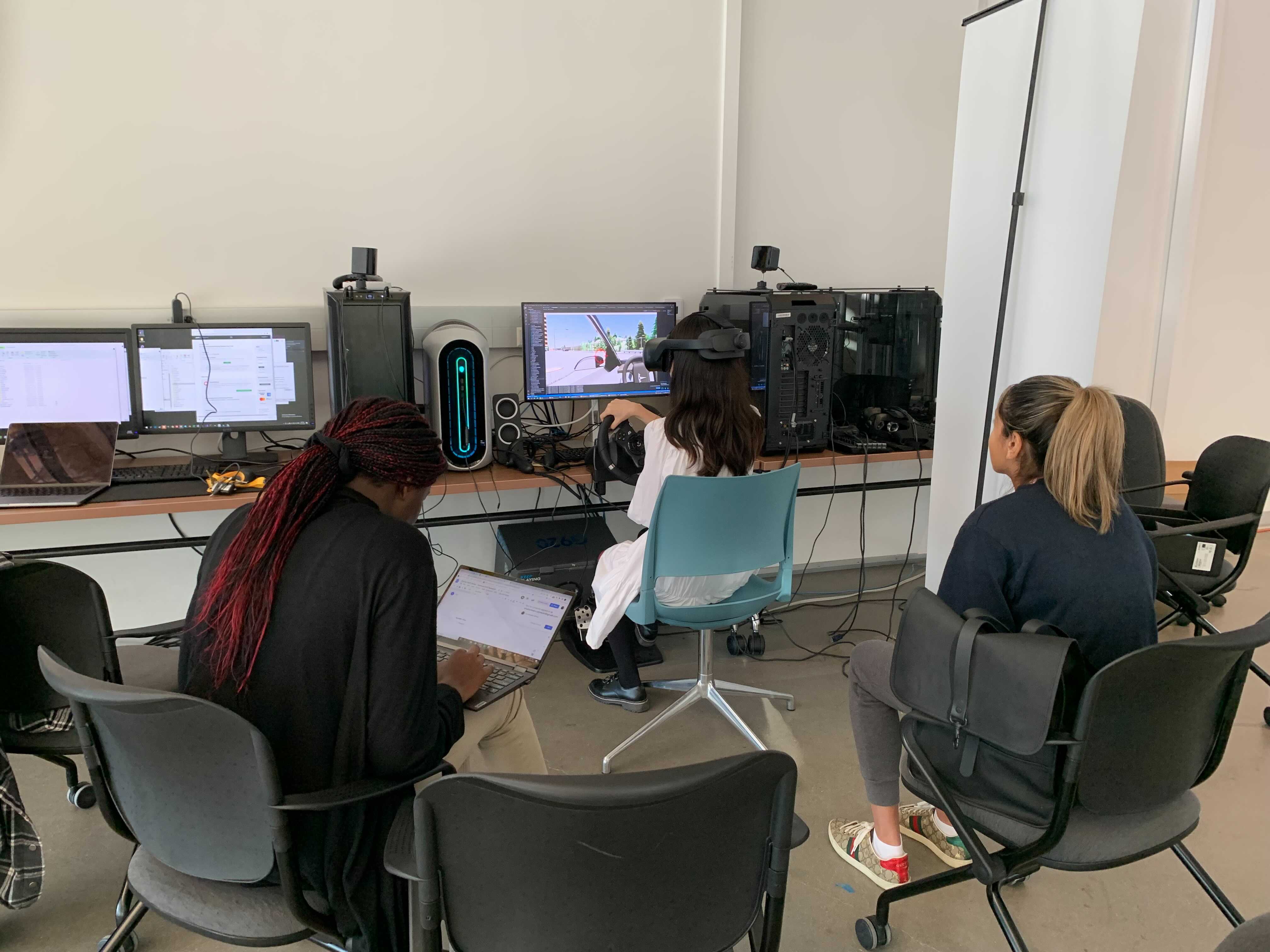
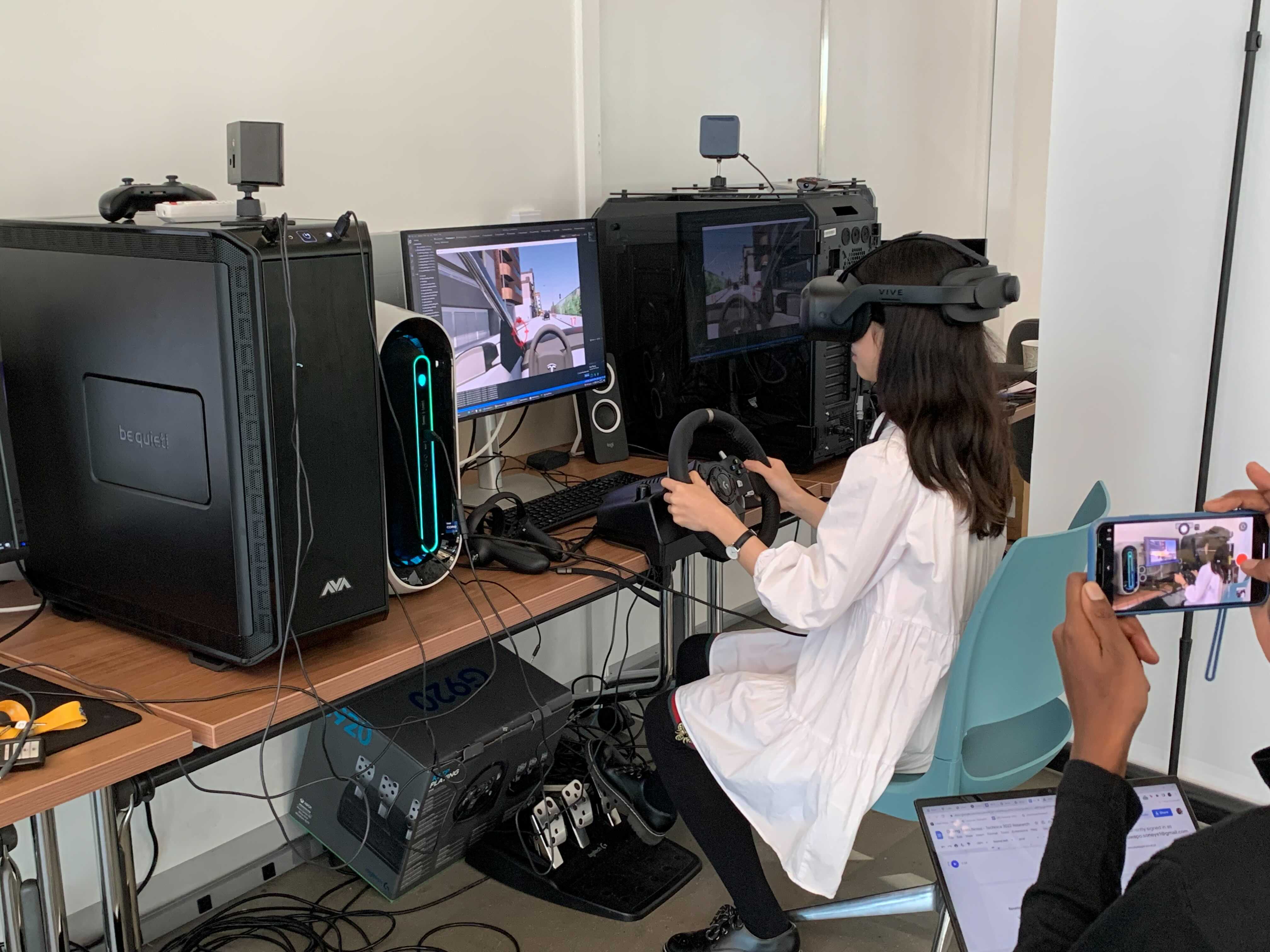
The driving simulator that we used for the project, DReyeVR, allows researchers to run traffic and driving simulations for experimental purposes. Researchers can control many elements of the simulation, such as obstacles, driving routes, and other cars and pedestrians. With this level of control, researchers can run more regulated studies with fewer varying variables. The driving simulator also collects lots of valuable data for researchers to analyze, such as eye gaze, speed, and position within the simulation.
How we built it
For our experiment, we ran three different types of trials with eight participants. First, we ran a control trial with no obstacles or challenges. Next, we ran a trial where participants could only use one hand to drive. For the final trial, we added a mental obstacle for the participants by having them complete a counting task. After collecting the data, we made different data visualizations and drew conclusions.
Challenges we ran into
Time was one of our biggest challenges. It took a while to run all of the trials with each participant. Many participants also had to take breaks in between trials due to motion sickness. We also ran into some challenges and bugs when using Python for data visualizations.
Accomplishments that we're proud of
We're proud of our creativity when coming up with research questions and different trials to run. We are also proud of our ability to learn how to use complex technologies like Python and DReyeVR in such a short period of time.
What we learned
We learned a lot about the research process in general. This includes how to come up with research questions, how to run experimental trials, how to analyze data, and how to present our work. We also gained technological knowledge about DReyeVR and Python.
What's next for Measuring Driver Behavior Through VR Simulation
Some potential modifications to this experiment include varying driver conditions such as wether and time of day, making the experience more realistic through physics and haptic feedback, and implementing more traffic laws into the simulation.


Log in or sign up for Devpost to join the conversation.