-
-
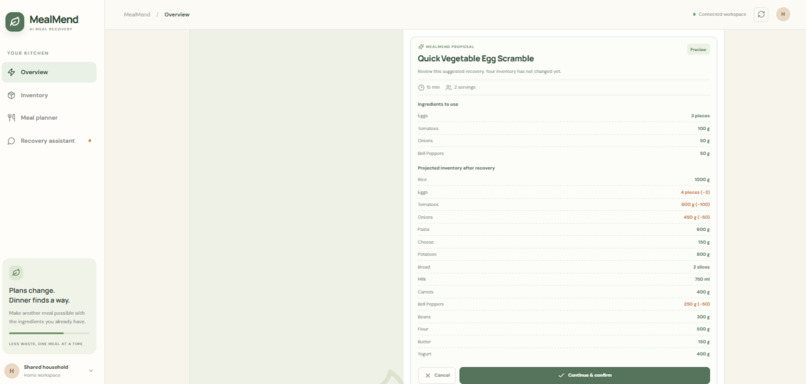
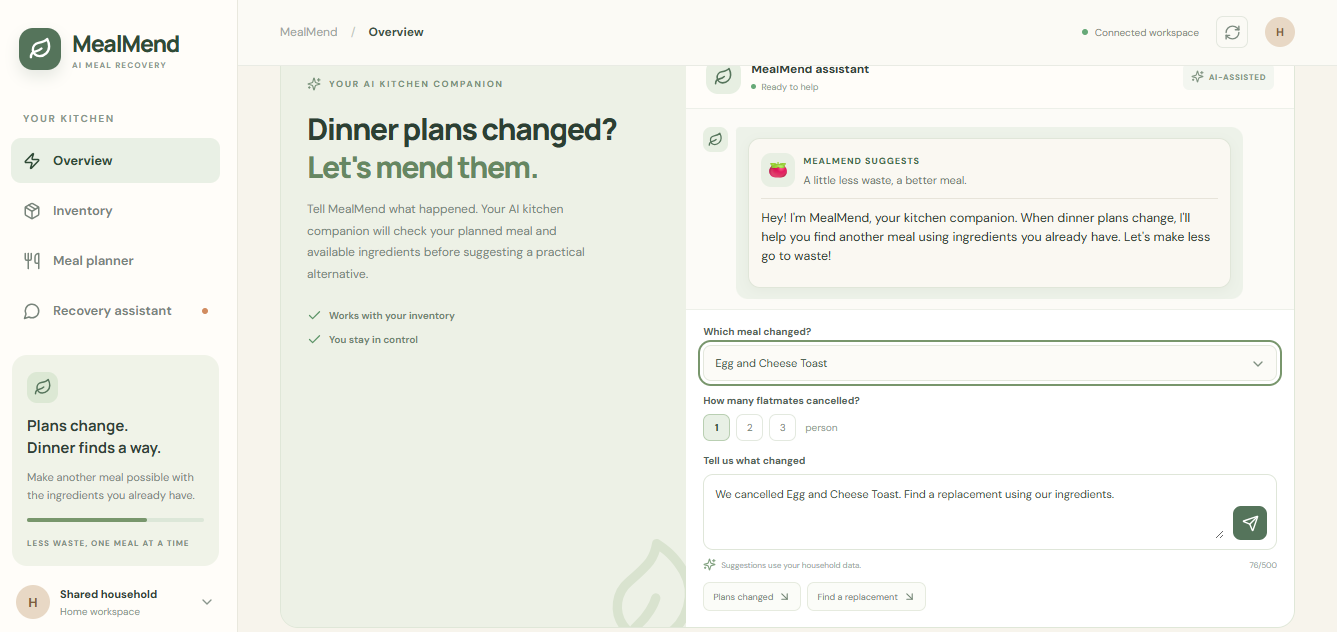
MealMend adapts to the change and recommends an alternative based on the available ingredients and the number of servings.
-
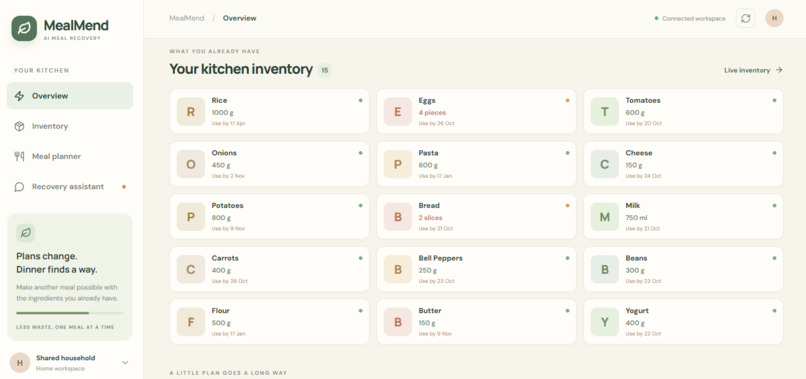
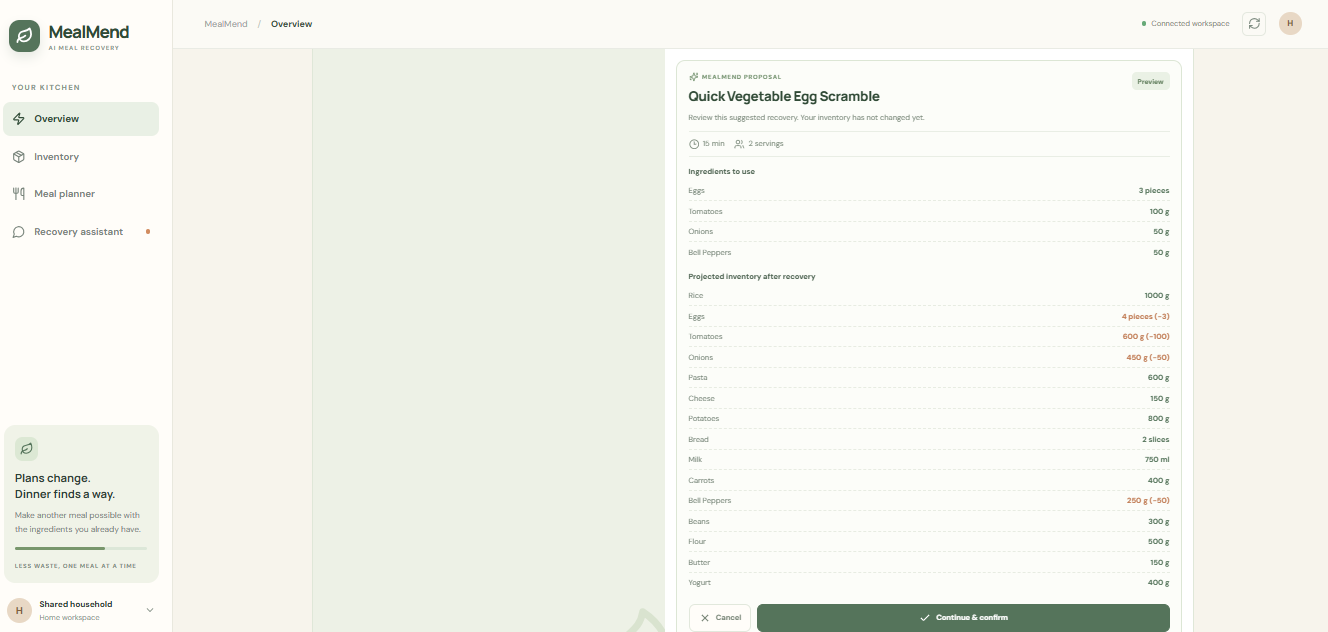
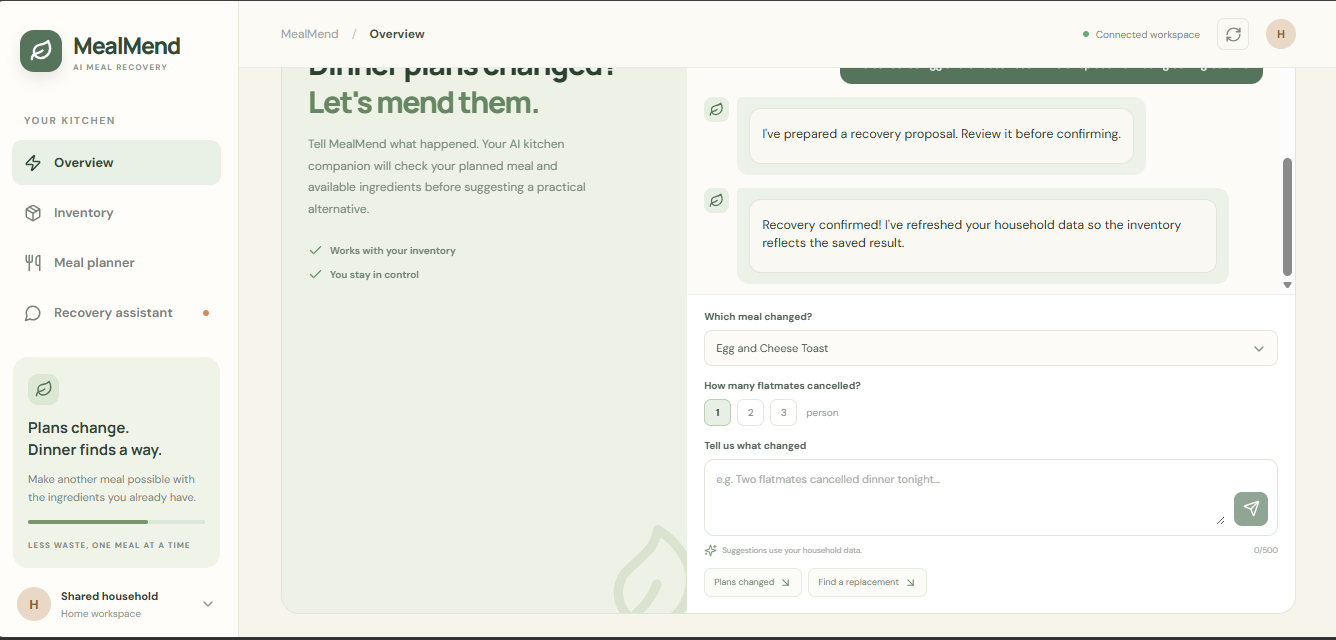
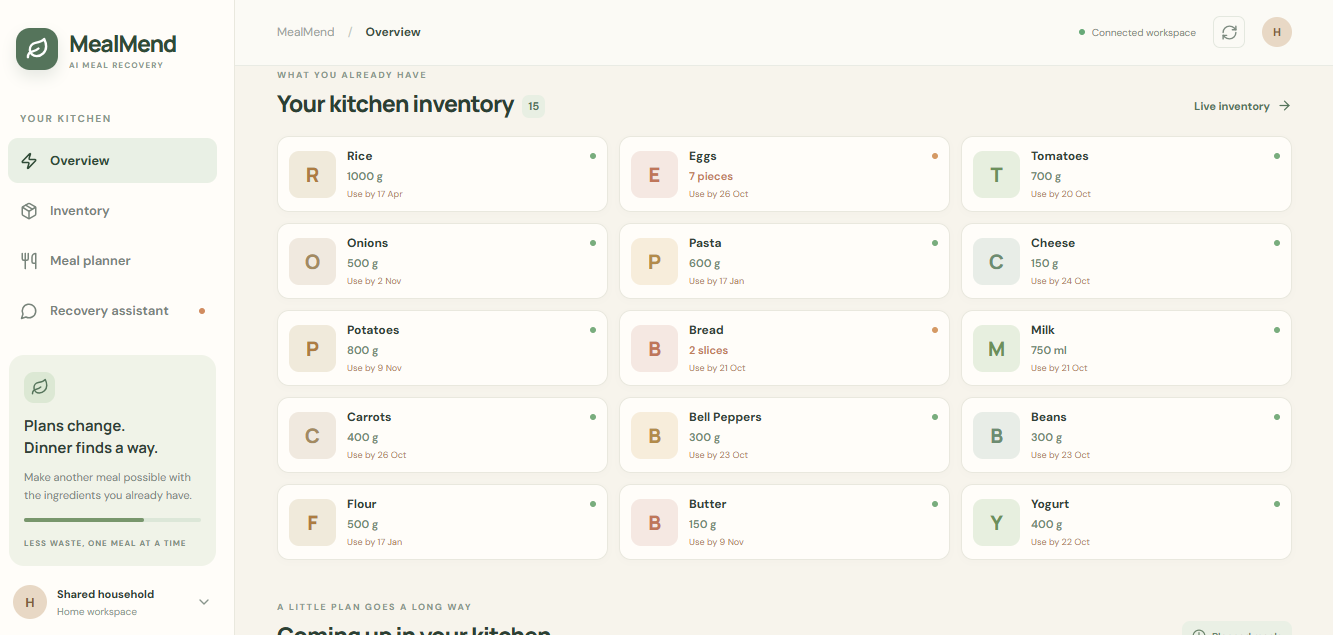
MealMend completes the recovery workflow and updates the household inventory to reflect the revised meal plan.
-
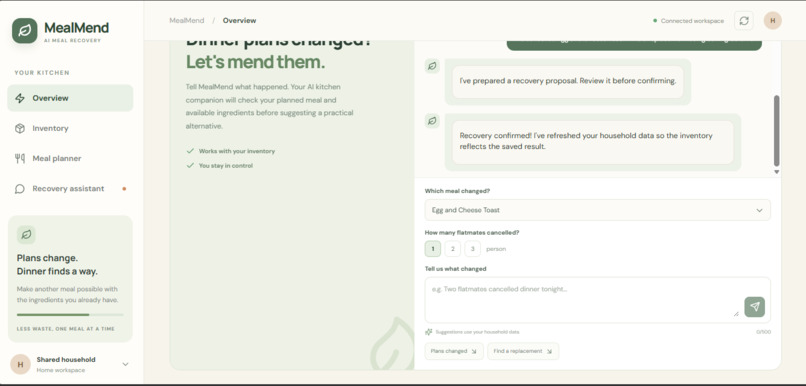
MealMend confirms the recovery action and updates the household inventory.
-
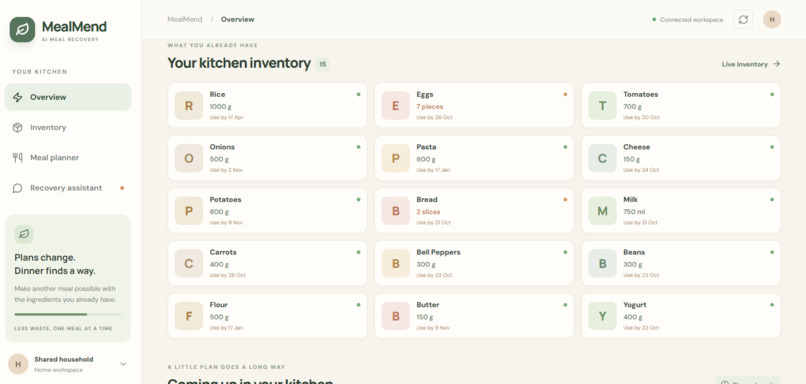
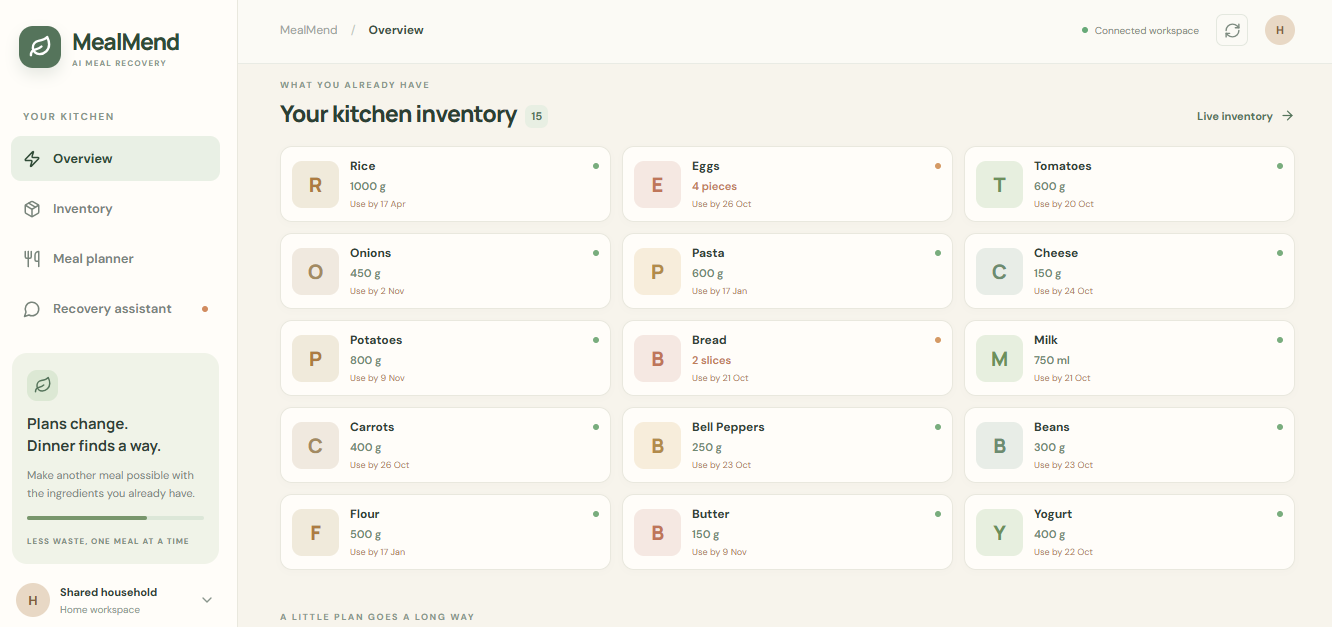
Household inventory before plans change - ingredients and expiry dates provide the context for smarter meal decisions.
-
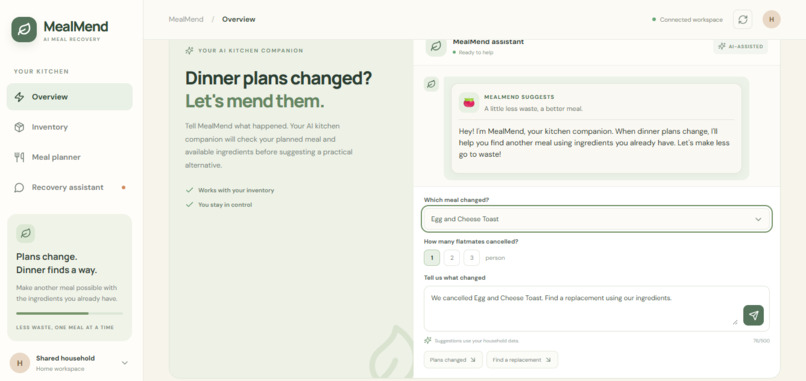
When plans change or cancelled, users can ask MealMend to rethink the meal using their existing household inventory.
-
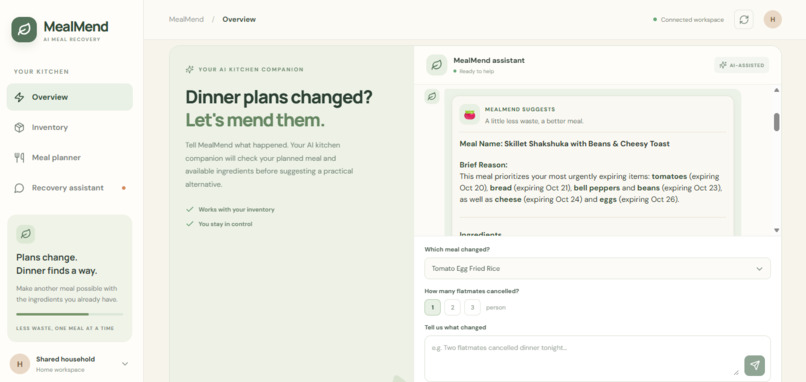
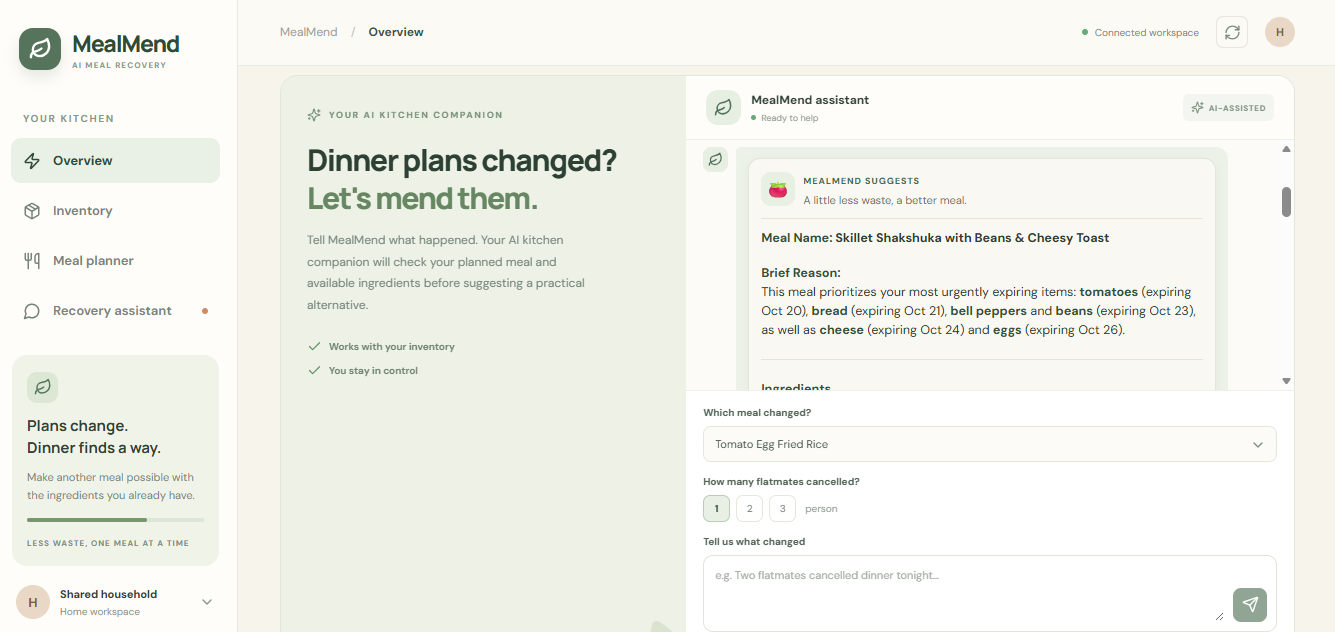
MealMend recommends a meal using soon-to-expire pantry ingredients, help reduce food waste and make the most of what's already available.
-
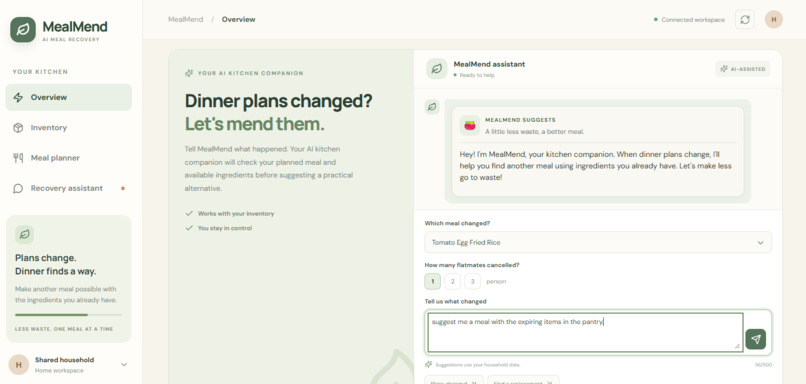
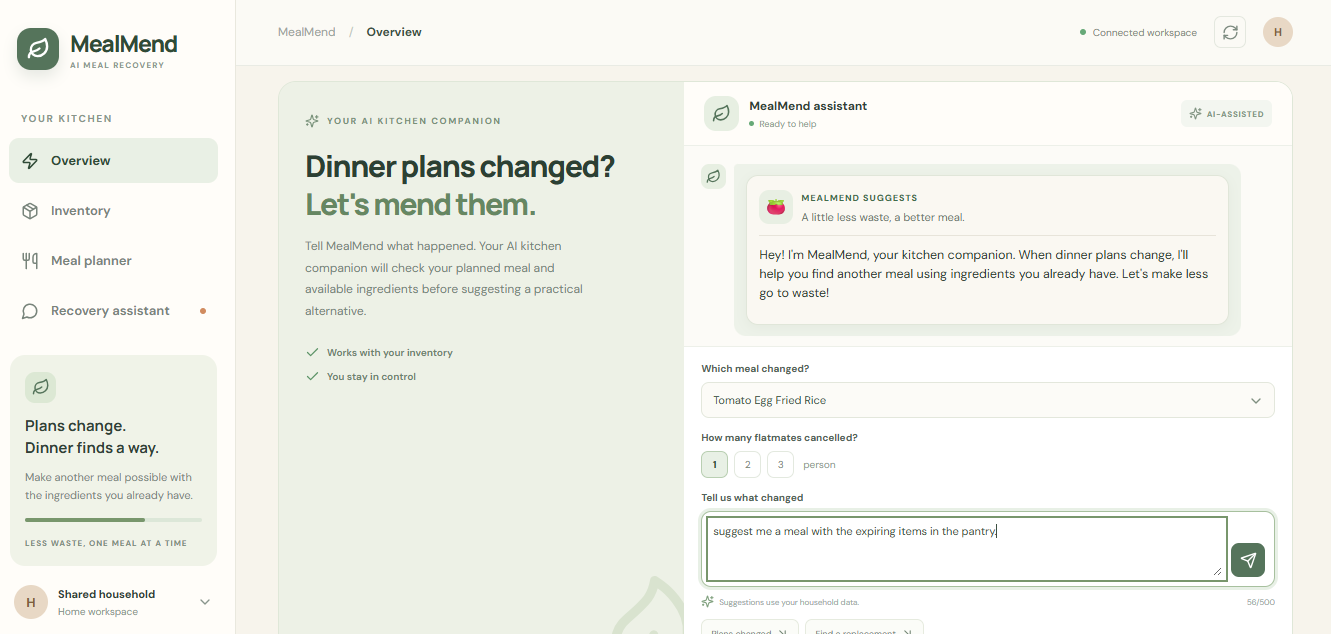
Users can ask MealMend to suggest a meal using ingredients that are expiring soon in the pantry.
Inspiration
Most food waste at home doesn’t come from bad shopping. It comes from plans falling apart. A flatmate cancels dinner, pasta night is off, and the tomatoes and rice in the kitchen sit there until they expire. In shared households, nobody has the energy to rework dinner on the spot, so takeaway wins.
We wanted a kitchen assistant you can simply message when plans change: “We cancelled the pasta because one person can’t make it.”
What it does
MealMend is a conversational kitchen companion designed for the Alexa+ assistant experience. Households can say what changed in plain language, and MealMend responds using the food they already have.
Meal recovery. When a dinner is cancelled, MealMend:
Understands which meal was cancelled and how many people dropped out. Checks the household’s real inventory for a feasible replacement. Scales the replacement to the remaining diners. Proposes the swap, showing exactly which ingredients it would use, and updates the inventory only after the household confirms. Expiry-aware suggestions. Ask “suggest a meal with expiring ingredients” and MealMend builds a recipe around what’s about to go off, using the household’s live inventory and expiry dates, with step-by-step instructions. It separates ingredients confirmed in stock from pantry items it can’t verify, like salt and herbs. Grocery help. Questions like “What should we buy for tomorrow?” or “How much cheese do we need?” are answered from the meal plan and current stock, so the household only buys what’s missing.
How we built it
Frontend: React and Vite. A chat-style assistant console sits beside a live view of the household’s inventory, expiry dates, and meal plan. The conversation mirrors how an Alexa+ exchange would work. Backend: Node.js and Express, with MongoDB storing inventory, meals, planned meals, and recovery history. AI: Google Gemini (@google/genai). The AI and the backend share the work. Gemini interprets requests and drafts open-ended suggestions like recipes, grounded in the household’s live inventory and expiry dates. Anything that changes the household’s data goes through deterministic backend code instead: it validates the extracted intent (cancelled meal, people cancelled), checks feasibility, scales servings, and writes to the database only after the user confirms. Recovery records are stored so the same cancelled meal can’t be recovered twice.
Challenges we ran into
Keeping AI output away from inventory. It was tempting to let the model suggest a meal and commit it. We split recovery into a proposal and a confirmation so the user always sees what will change before it changes. Turning loose language into reliable data. Phrases like “one person can’t make it” have to become a precise number of diners. We validate the extracted intent and ask a follow-up question when something is missing, rather than guessing. Grounding suggestions in real stock. Generic recipes aren’t useful, so the assistant is given the household’s actual quantities and expiry dates and labels anything it can’t confirm.
What we learned
A useful AI product is mostly the code around the model. The AI can suggest freely, but anything that changes data should go through deterministic code and user confirmation. We also learned that keeping inventory, meal plans, and grocery recommendations consistent with one another mattered more than the polish of any single AI response.
What's next for MealMend
Connecting the backend to real Alexa+ through MCP. Adding voice input and spoken replies, a natural fit for a kitchen where hands are busy. Warning when a planned meal’s date falls after an ingredient’s expiry. Handling unit differences (cups vs grams) and ingredients shared between planned meals. Per-flatmate preferences and dietary needs.

Log in or sign up for Devpost to join the conversation.