-
-
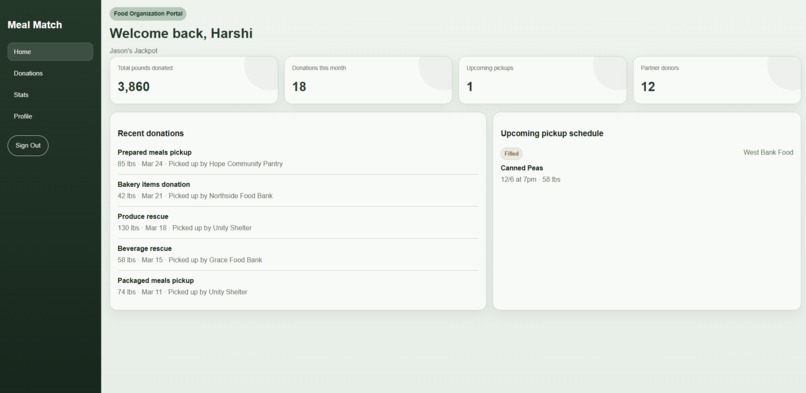
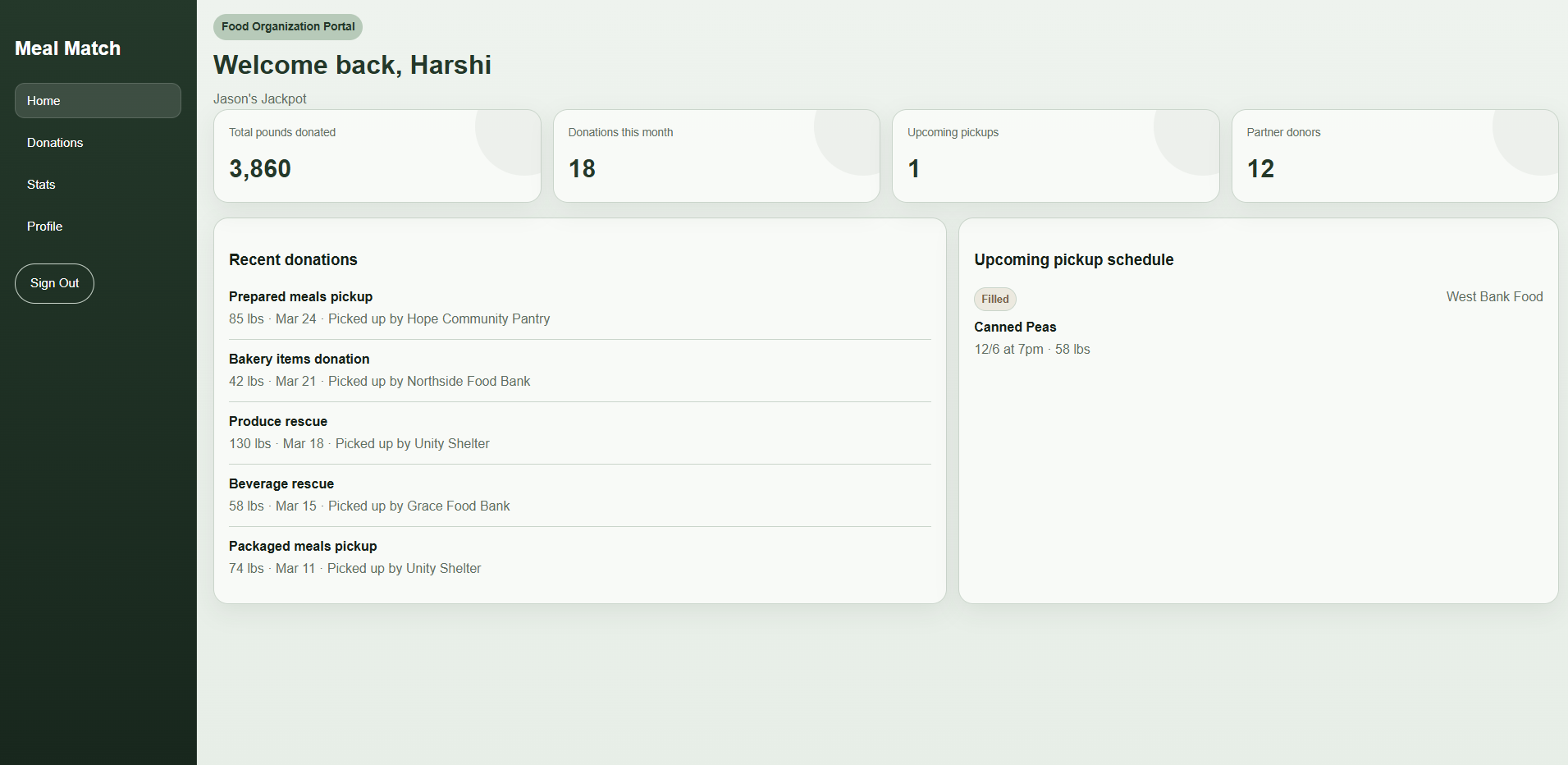
Food Organization Portal - Homepage
-
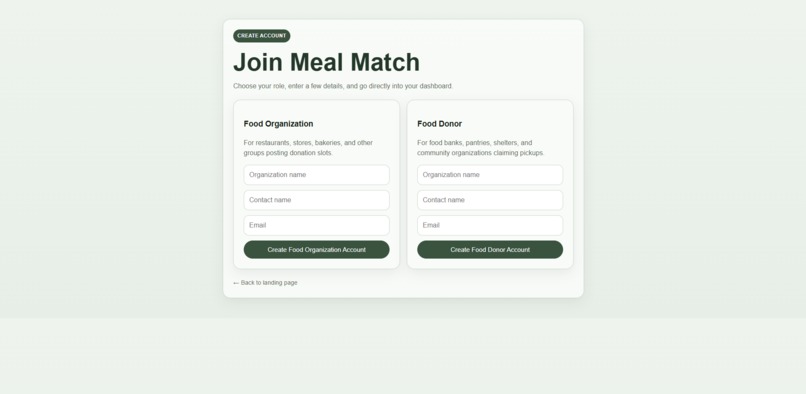
Login Page
-
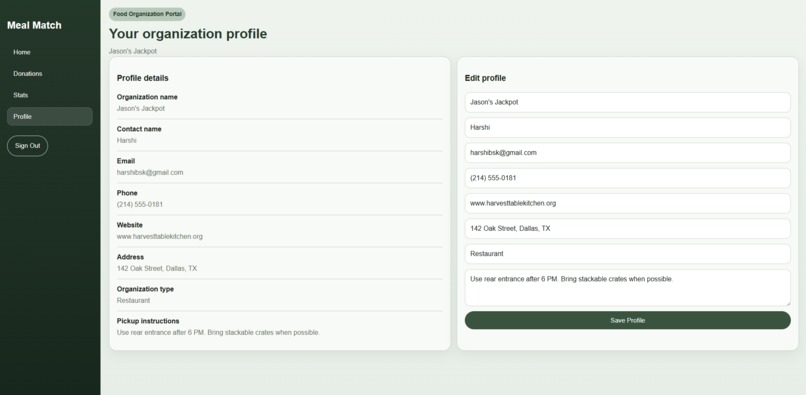
Food Organization Portal - Profile
-
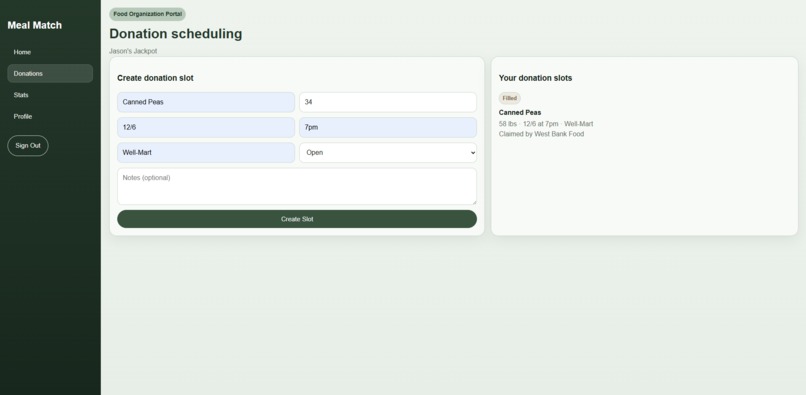
Food Organization Portal - Donation Scheduling
-
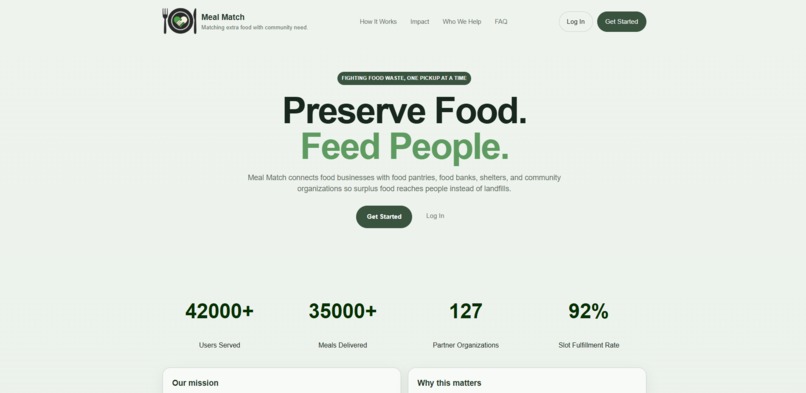
Landing Page
-
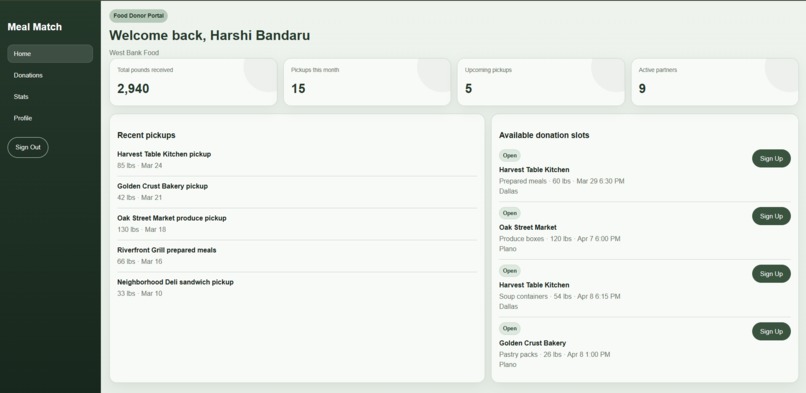
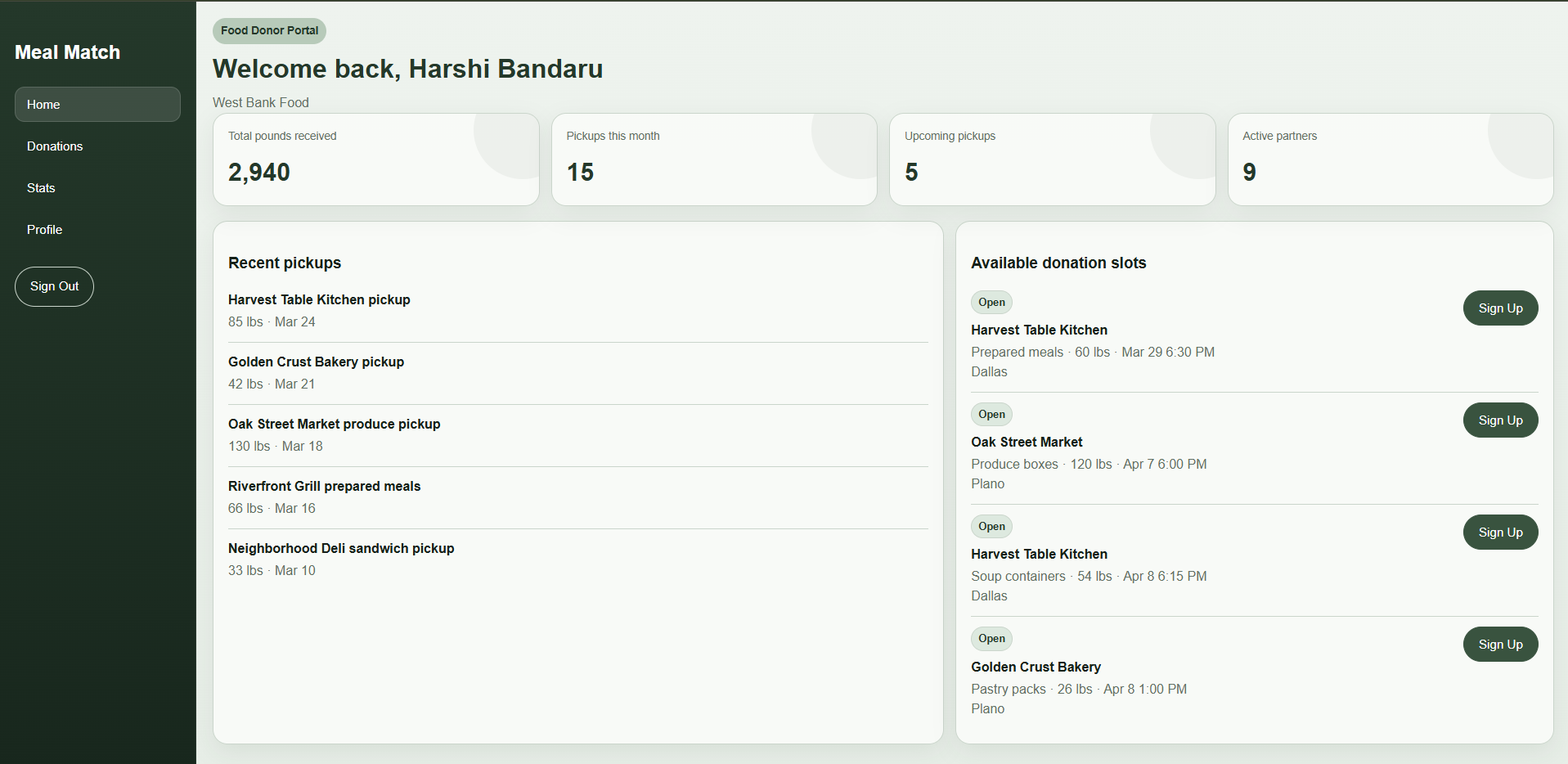
Food Donor Portal - Homepage
-
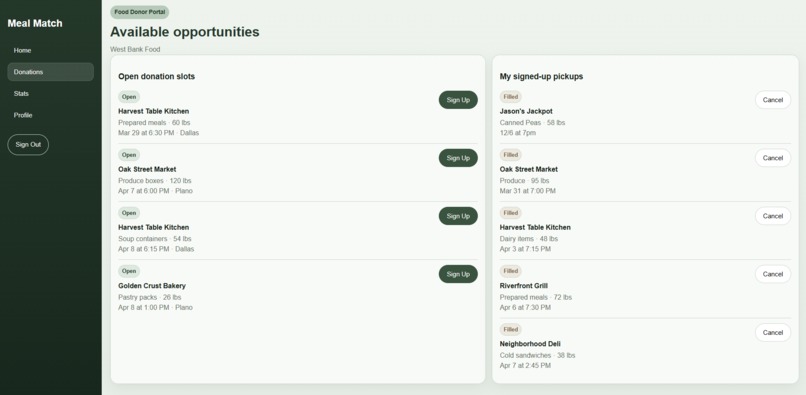
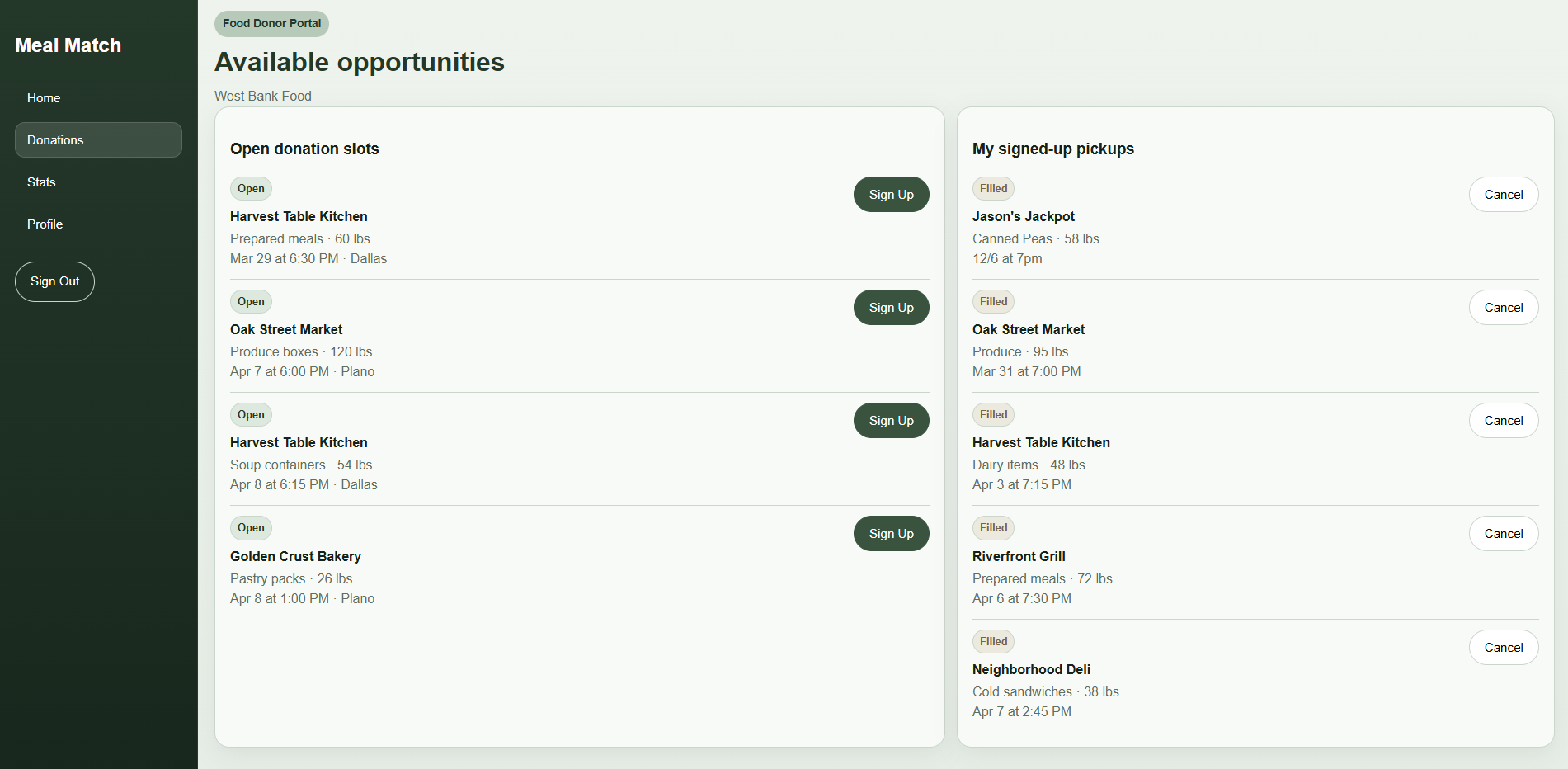
Food Donor Portal - Opportunities
Inspiration
Food waste has become an increasingly prominent issue, with roughly 33 billion pounds of food discarded annually in the US alone. Comparing these stats to the existing food insecurities within communities, there is a clear disconnect between surplus items and the need for it. Seeing this issue motivated us to create a solution that could connect food donors with organizations and banks to assist those in need and allow for efficient redistribution.
What it does
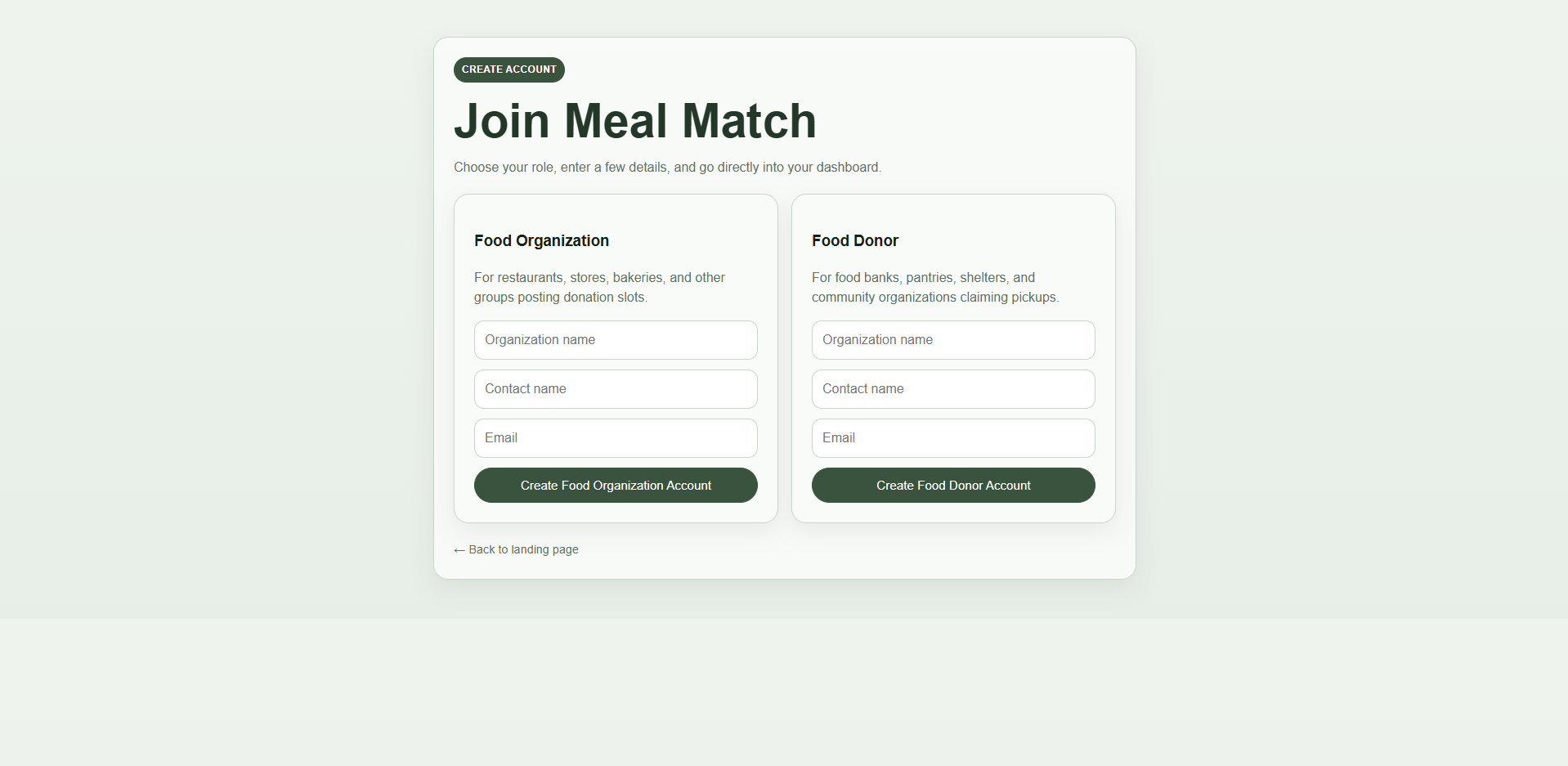
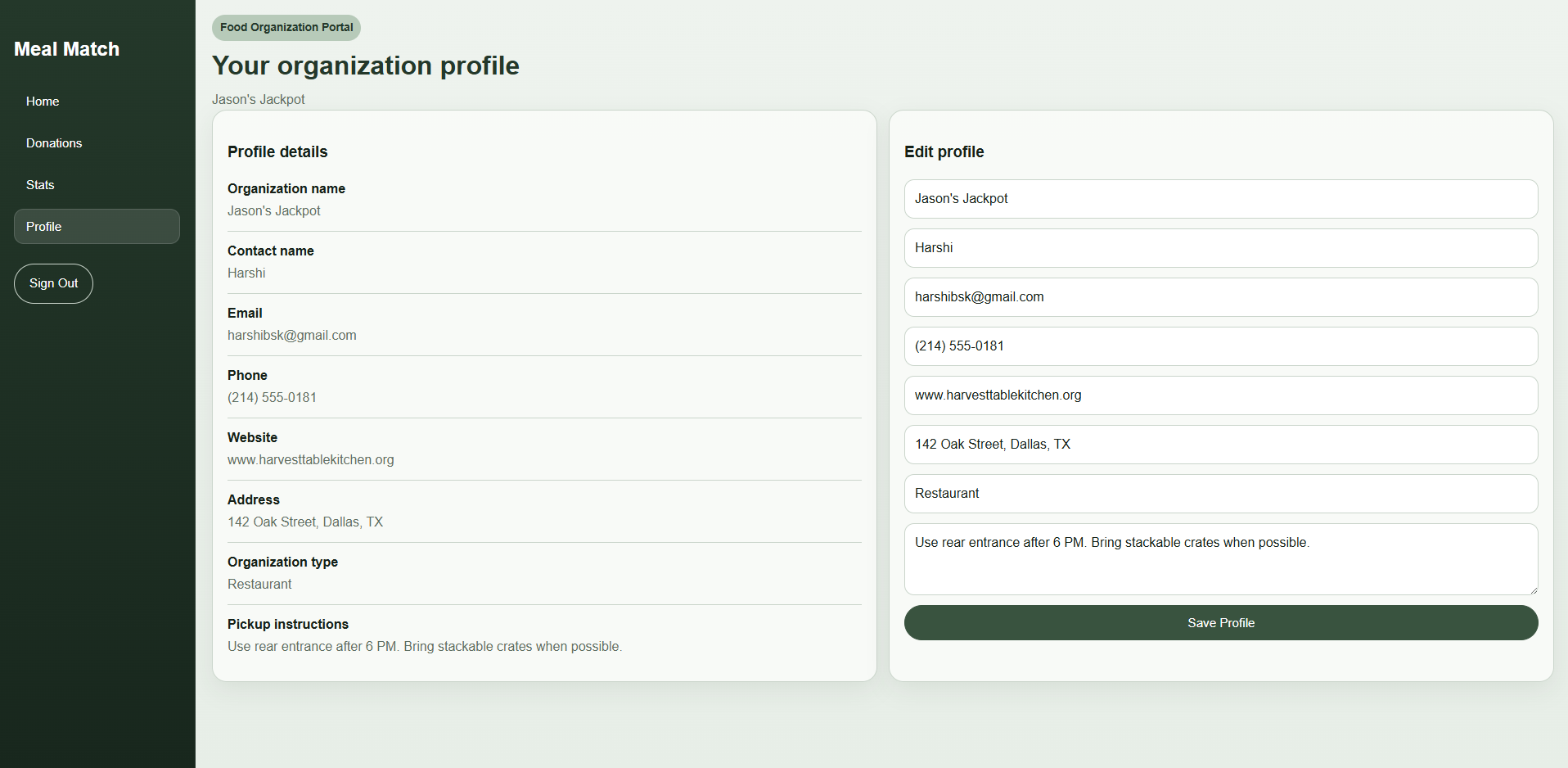
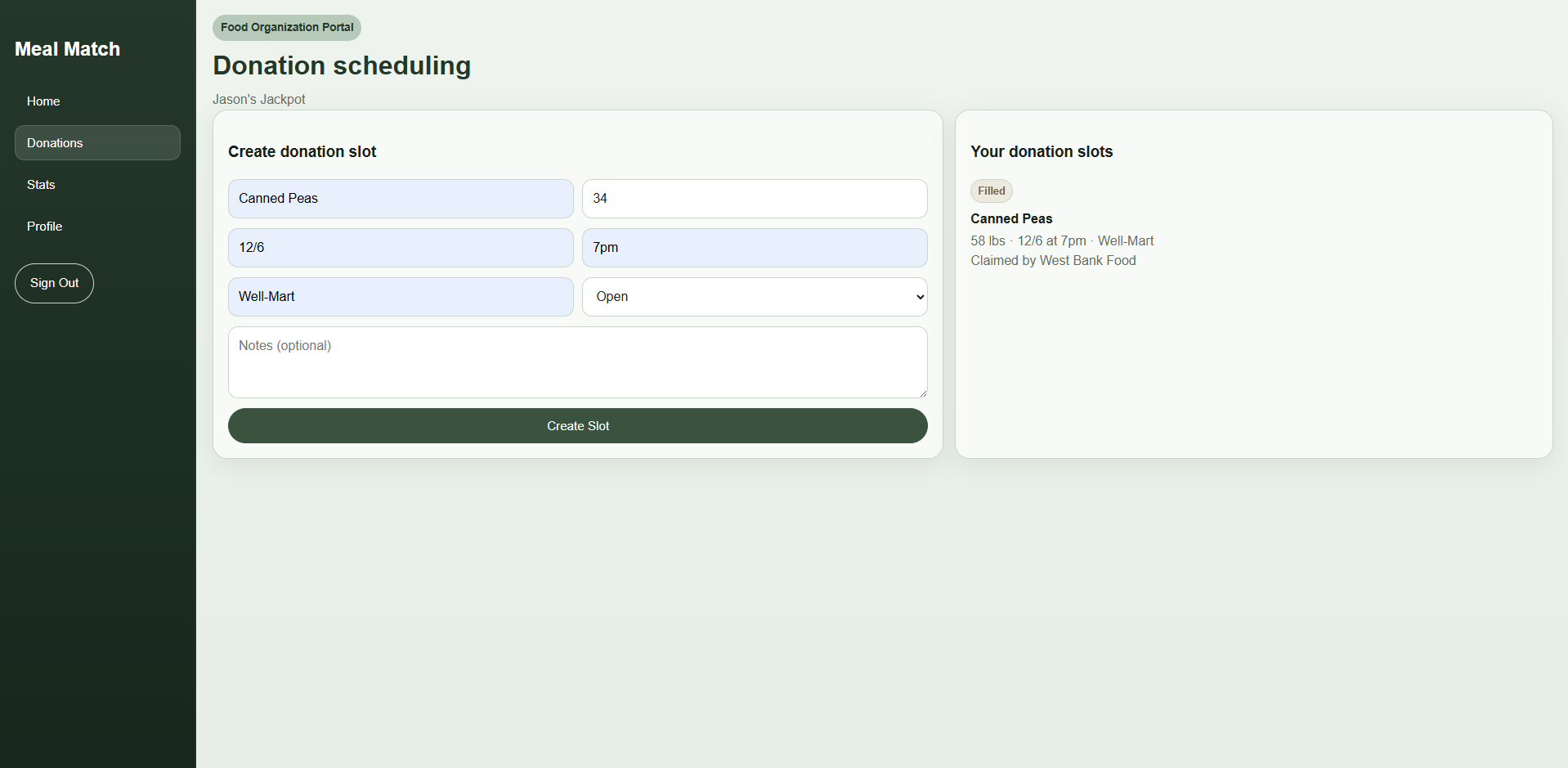
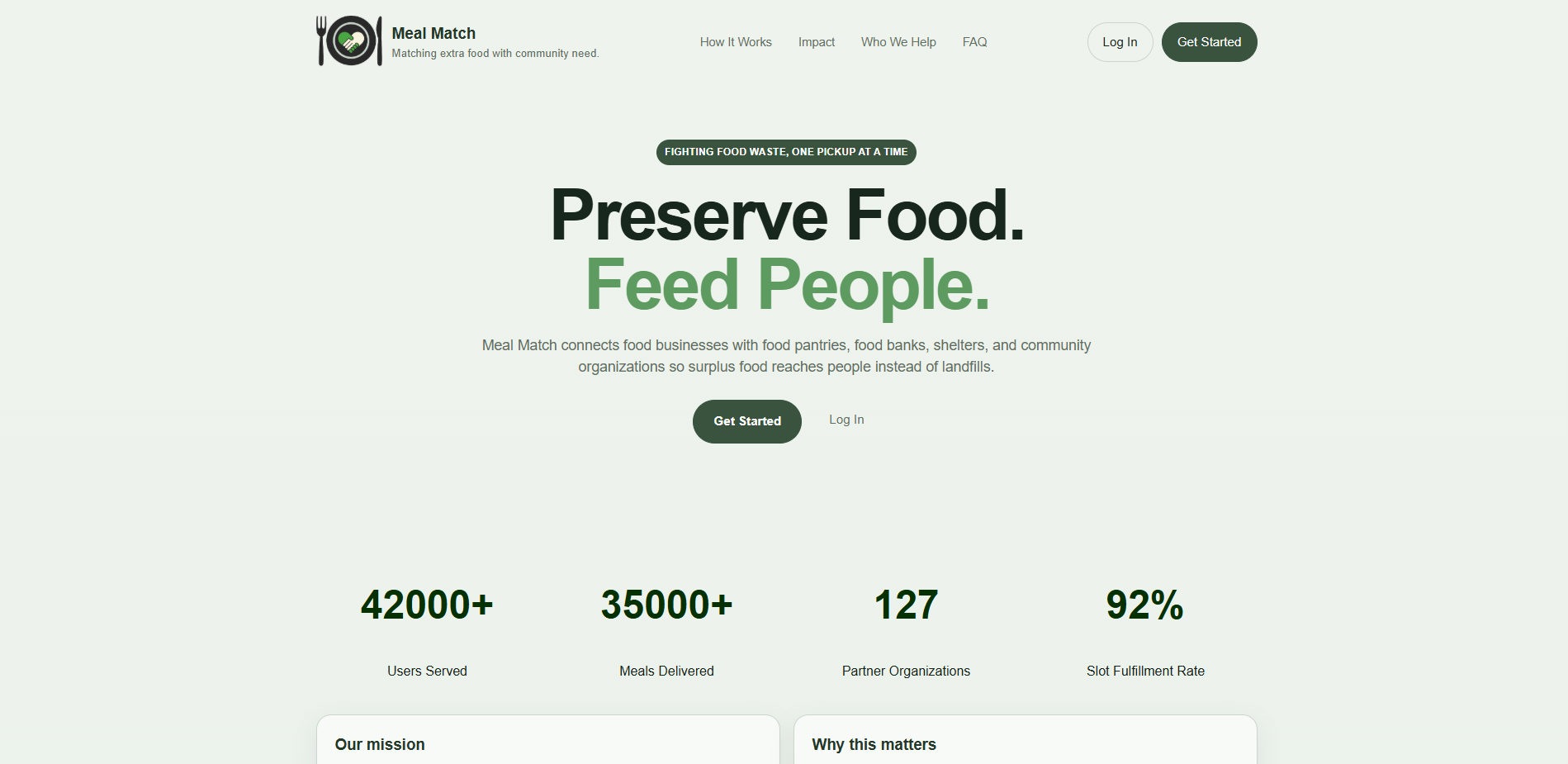
Meal Match is a website where food donors, such as restaurants, can donate their leftovers to food banks and other services in real time. The user logs into the website, either as a food donor or a food organization, from which they are taken to their respective dashboard and presented with multiple options. Food organizations (restaurants, supermarkets, etc) can list available food, including details such as pounds, pickup times, and location. Then, food donors (food banks, soup kitchens, etc) can view, claim, and coordinate pickups for the excess items. The website also provides statistical info, including graphs and bar charts, allowing users to track donations and organizations to understand trends.
How we built it
We built the Meal Match website by using various front-end web languages like HTML, CSS, and JavaScript to make a clean and user-friendly interface. We designed separate login portals for food banks/food donors and organizations like restaurants, which creates a personalized experience for both types of users. We also incorporated data visualizations like charts and graphs showing donation activity, and we structured the website to display real-time interaction between users.
Challenges we ran into
One of the main challenges we faced was debugging issues in the website’s logic, such as incorrect routing where users were directed to the same portal after logging in and signing up. We would fix the issue that redirects both the “login” and “get started” buttons to a sign up screen by creating a login page. This would allow the user to efficiently login with a simple username and password for easy access. Specifically, we would create a new html page for the login screen. Then we would save the username and password within a database and cross-verify the user’s login attempts with the information in the database for security.
Accomplishments that we're proud of
We are proud of creating a highly functional and useful application that addresses a global issue. We were able to improve the efficiency of our program, improve the visual clarity of the graphical data, and fixed minor bugs that were impacting the overall user experience of our website. Most importantly, we developed a platform that is able to decrease food insecurity within less developed regions and decrease waste generated by restaurants and other culinary businesses.
What we learned
Throughout the development of this project, we learned how to design and structure a full website from a technical but also user-centered standpoint. We gained experience in debugging complex issues, improving user experience through design, and making our data and ideas clear through visualizations. In our research, we also developed a higher understanding of the impact of food waste in the real world and how even small technological solutions can make a difference in larger-scale societal issues.
What's next for Meal Match
Next, we plan to expand Meal Match by expanding our interface to an app, formatted for iOS and Android. This way, users will be able to access our service more efficiently, which would allow them to see new updates on deliveries, pick ups, or donations through more convenient methods. Additionally, we plan to integrate location services into the app, allowing food donors to have in app tracking for the pick up location, making it easier to plan trip routes, ETA’s, and general logistics of the trip.

Log in or sign up for Devpost to join the conversation.