-
-
Meal Master_Page_01
-
Meal Master_Page_02
-
Meal Master_Page_03
-
Meal Master_Page_04
-
Meal Master_Page_05
-
Meal Master_Page_06
-
Meal Master_Page_07
-
Meal Master_Page_08
-
Meal Master_Page_09
-
Meal Master_Page_10
-
Meal Master_Page_11
-
Meal Master_Page_12
-
Meal Master_Page_13
-
Meal Master_Page_14
-
Meal Master_Page_15
-
Meal Master_Page_16
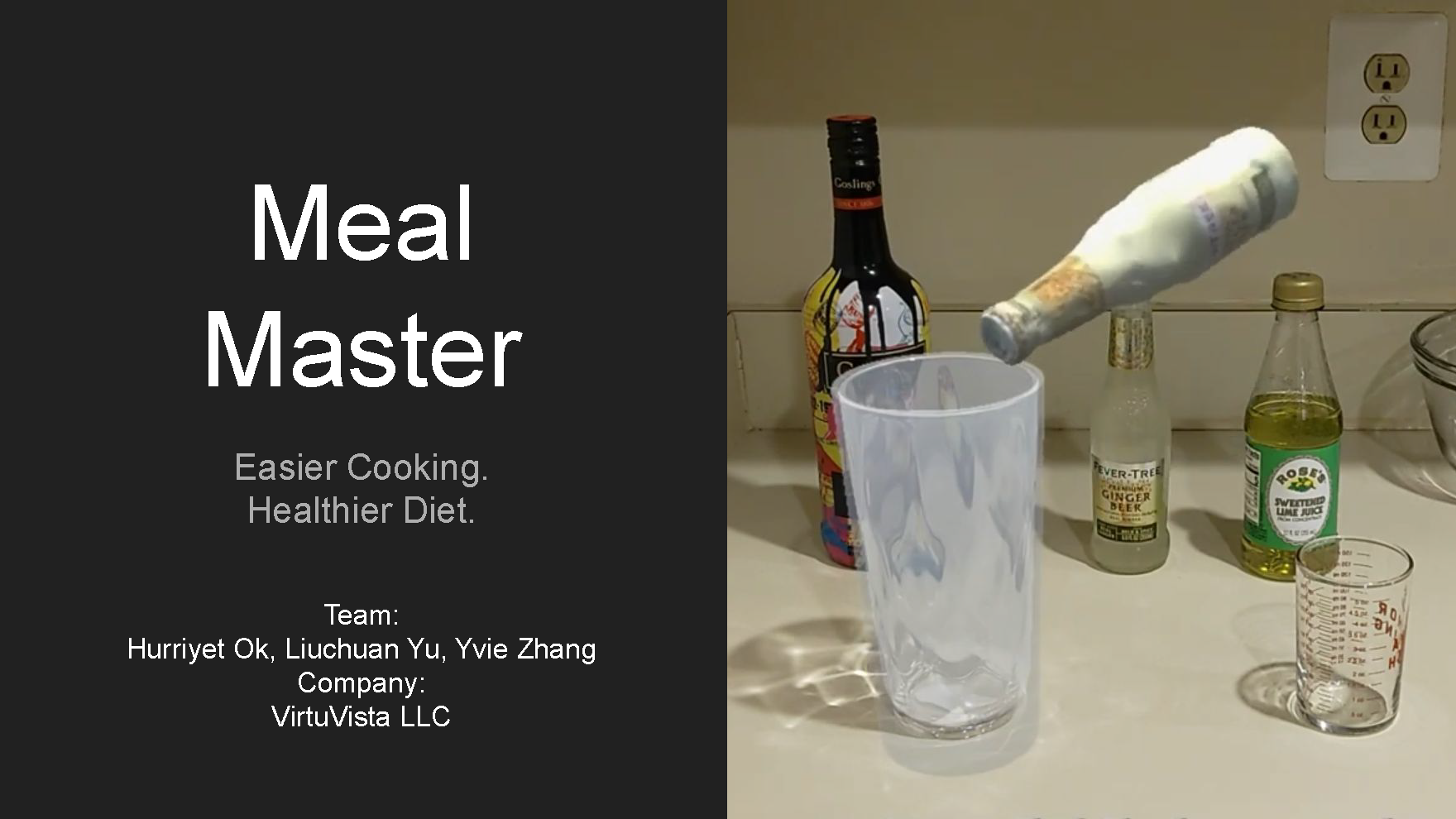

Meal Master
Product Overview
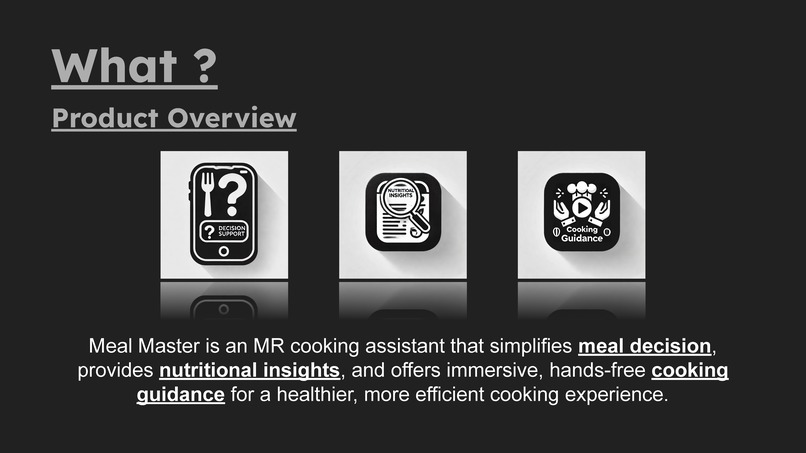
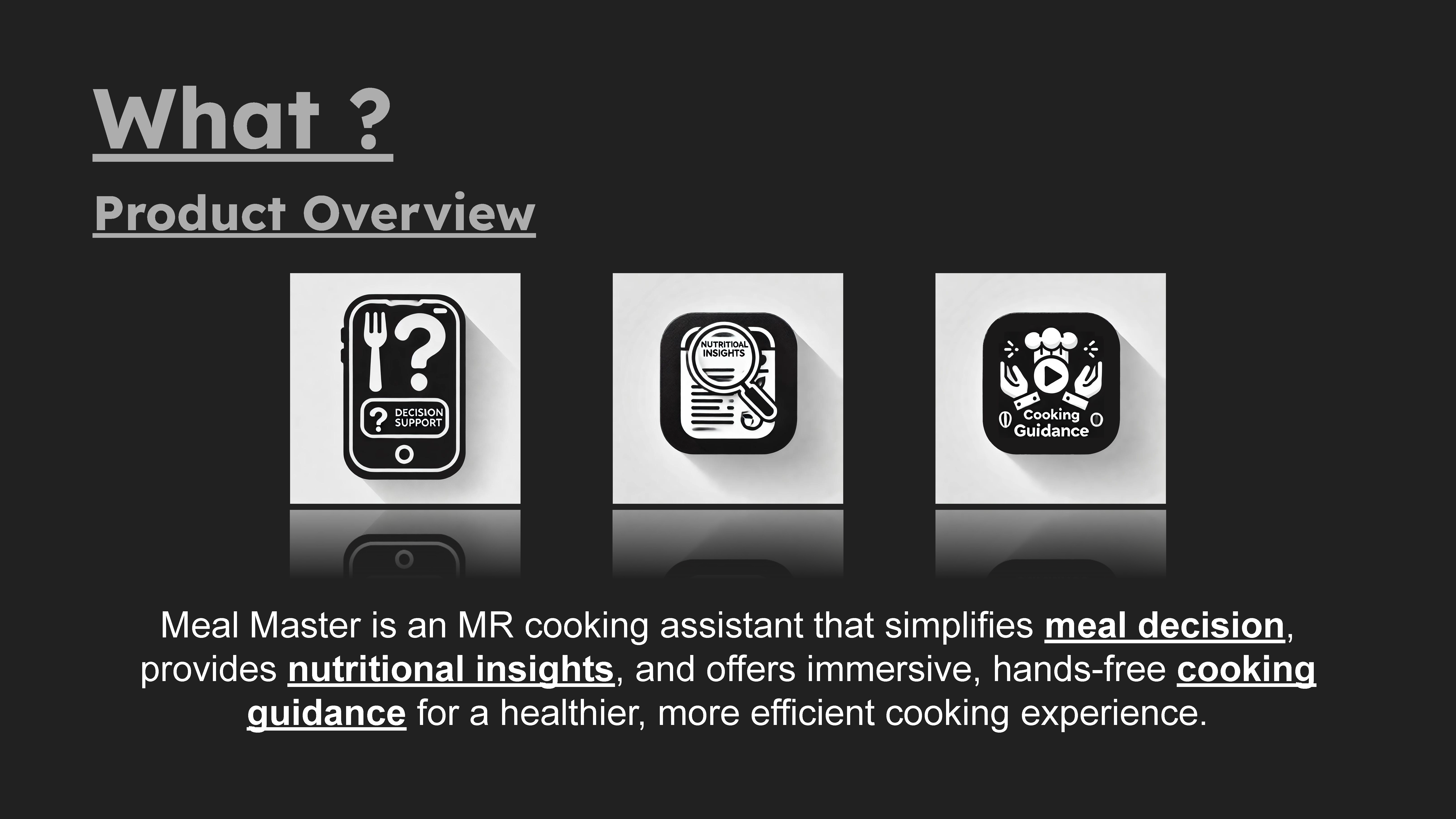
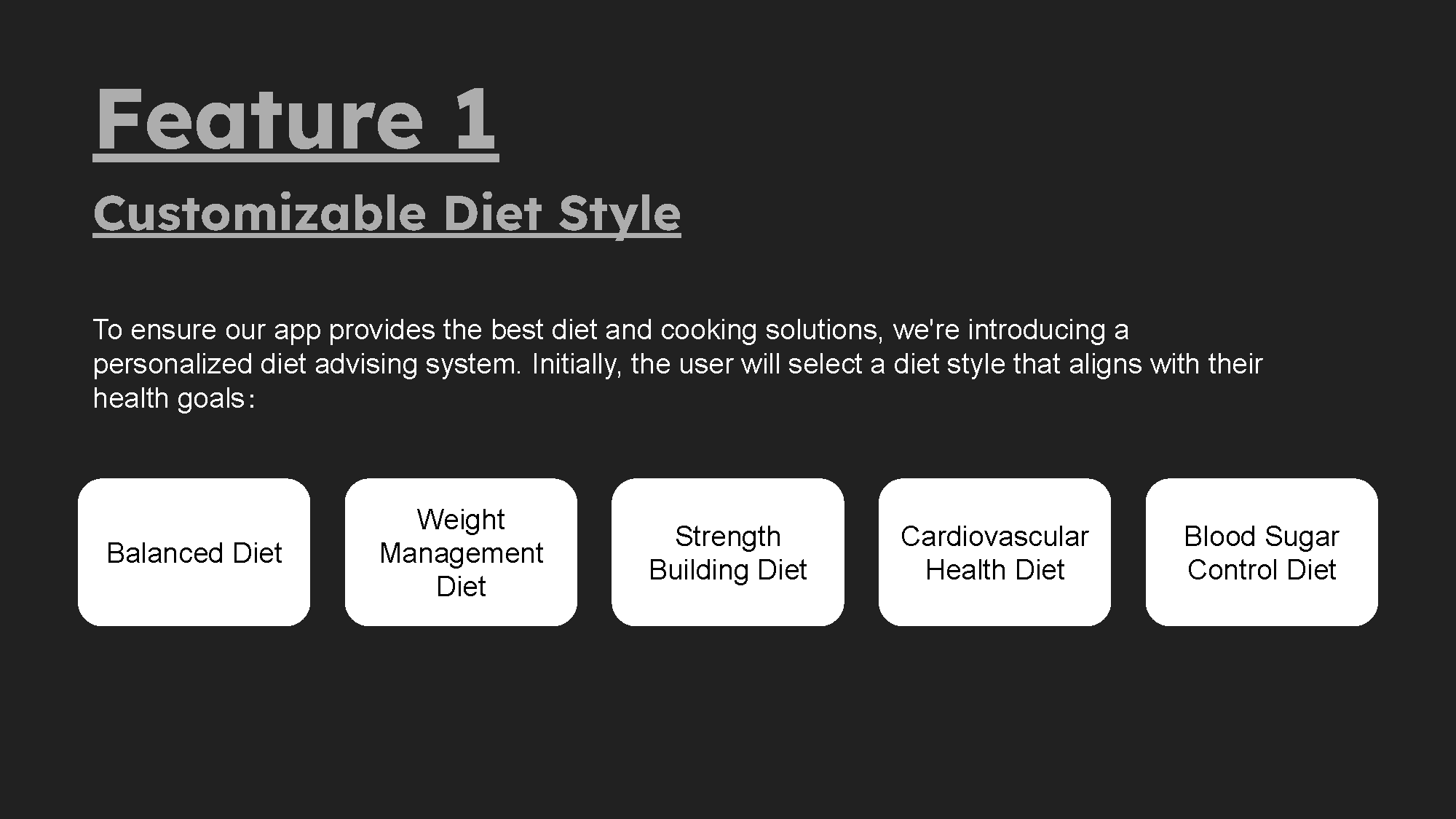
The Meal Master is an innovative MR cooking assistant designed to help users make informed, healthy meal choices while simplifying the cooking process. By leveraging MR technology, the app enables users to seamlessly plan meals, understand the nutritional value of their ingredients, and receive hands-free cooking guidance in an immersive environment. The app is aimed at busy individuals who want to maintain a healthy diet but are pressed for time, as well as those seeking a more intuitive and convenient cooking experience.
Problem Statement
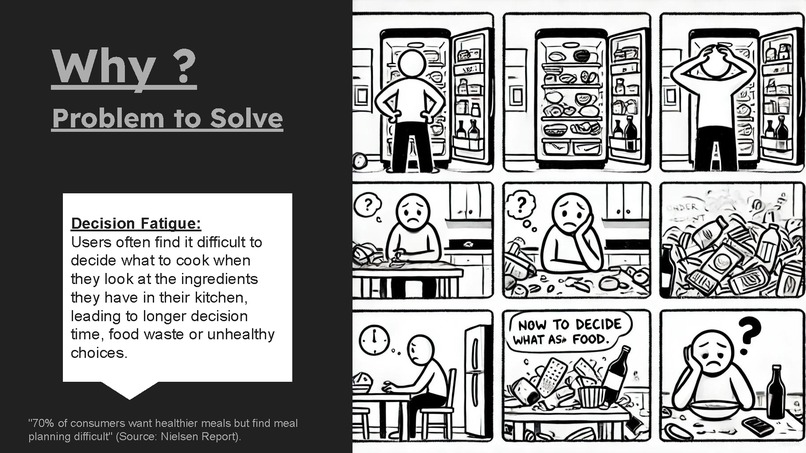
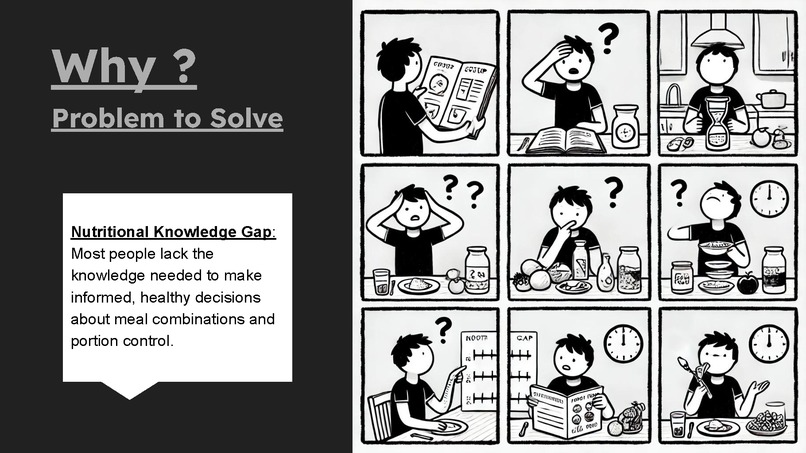
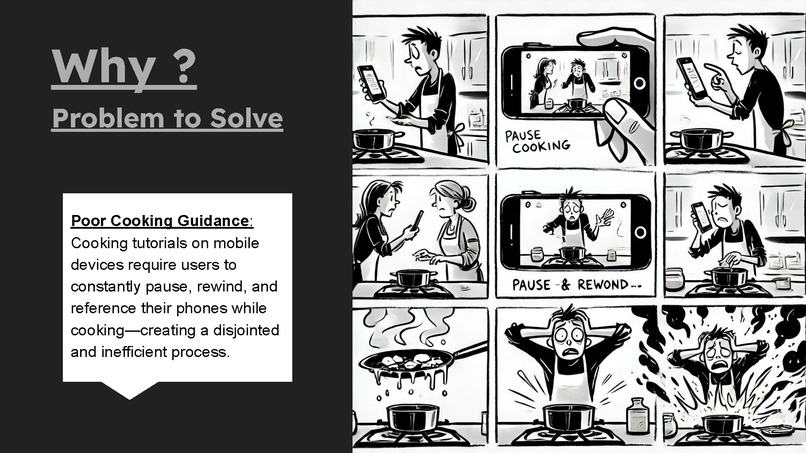
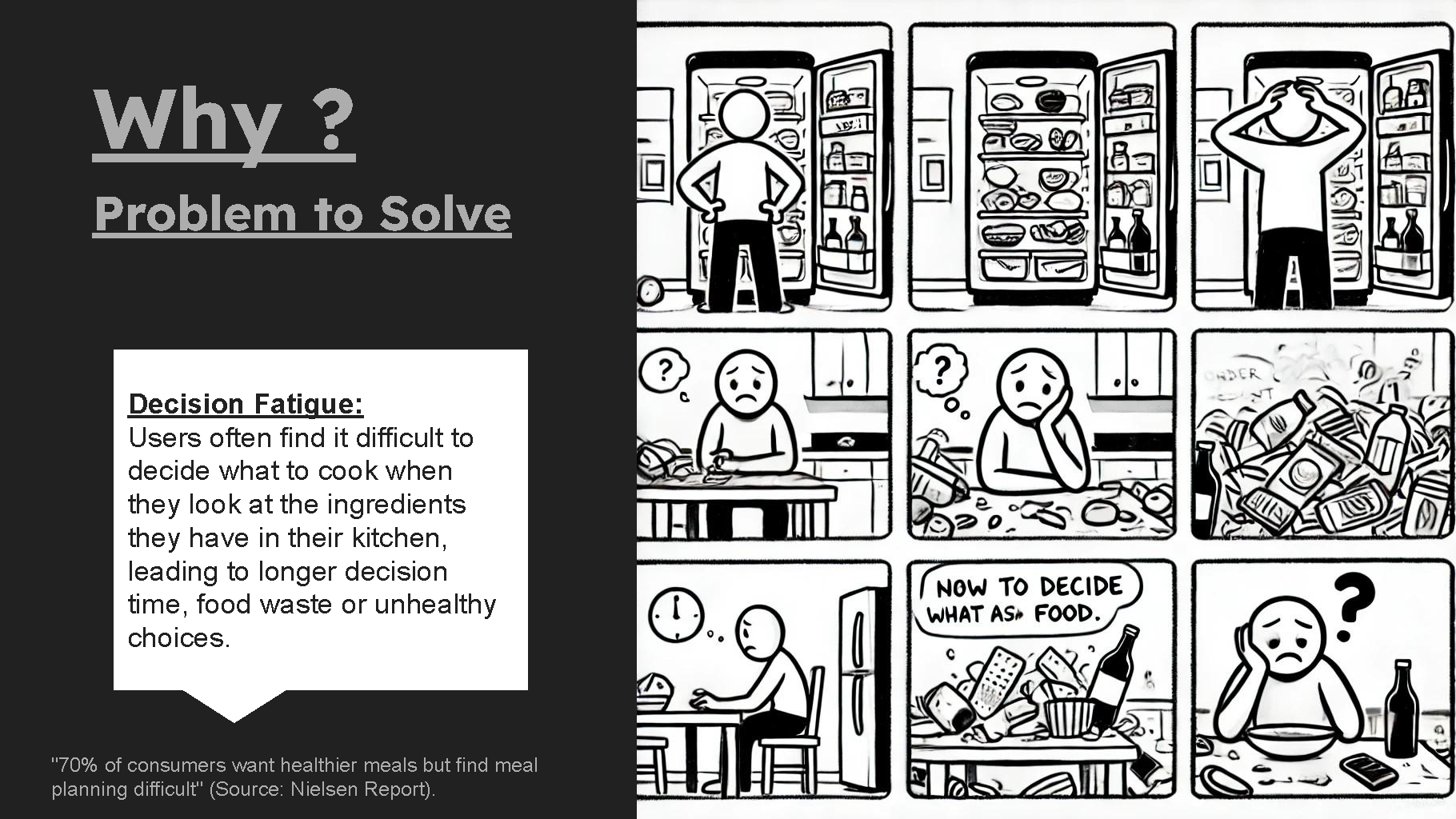
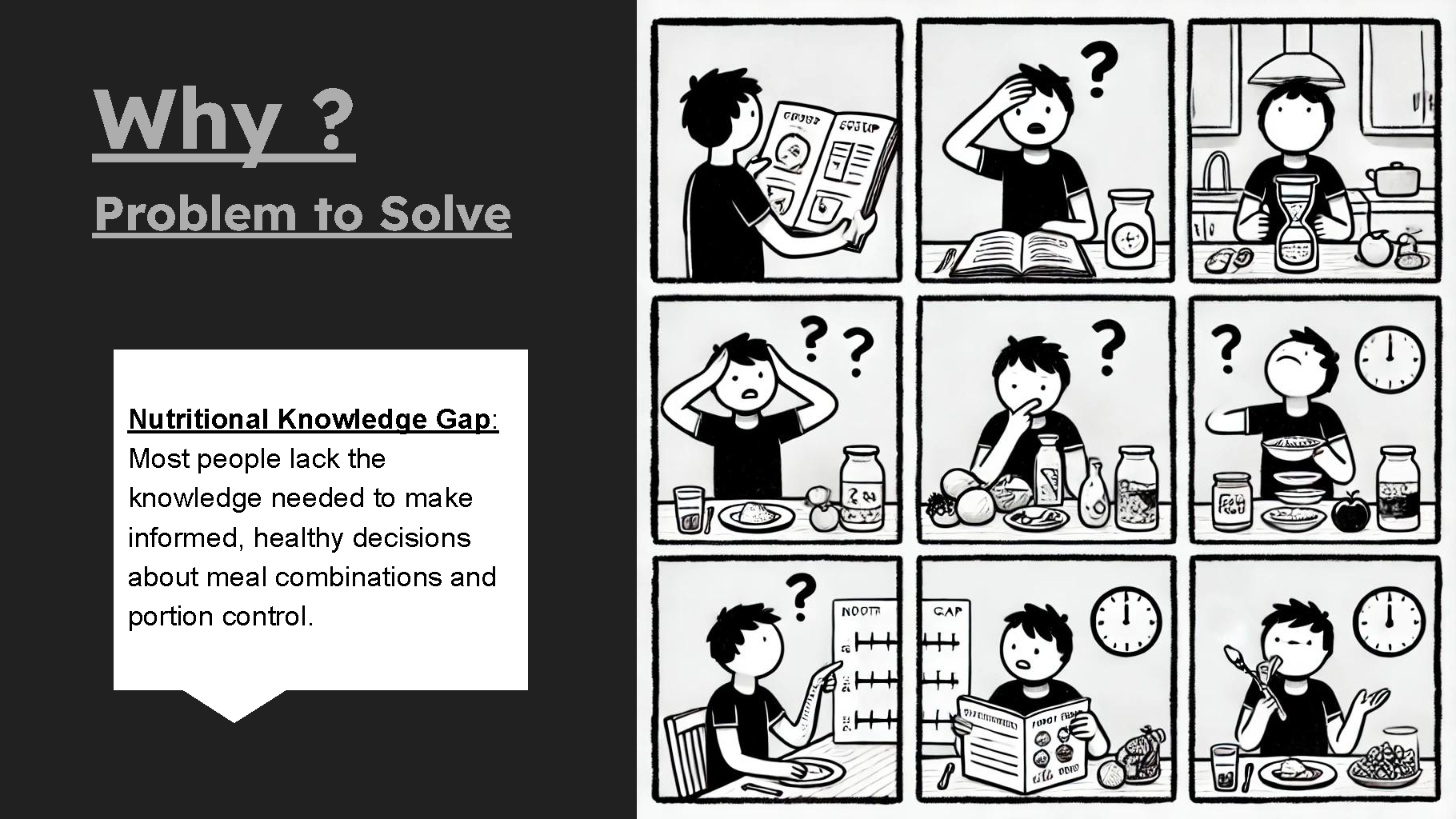
Many individuals face challenges when it comes to meal planning and cooking: Decision Fatigue: Users often find it difficult to decide what to cook when they look at the ingredients they have in their kitchen, leading to either food waste or unhealthy choices. Nutritional Knowledge Gaps: Most people lack the knowledge needed to make informed, healthy decisions about meal combinations and portion control. Inefficient Cooking Guidance: Traditional cooking tutorials on mobile devices are inconvenient, requiring users to constantly pause, rewind, and reference their phones while cooking—creating a disjointed and inefficient process.
Product Mission
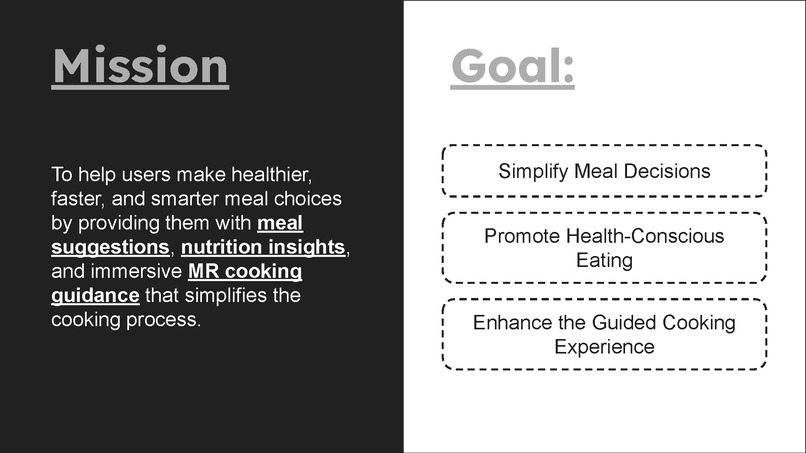
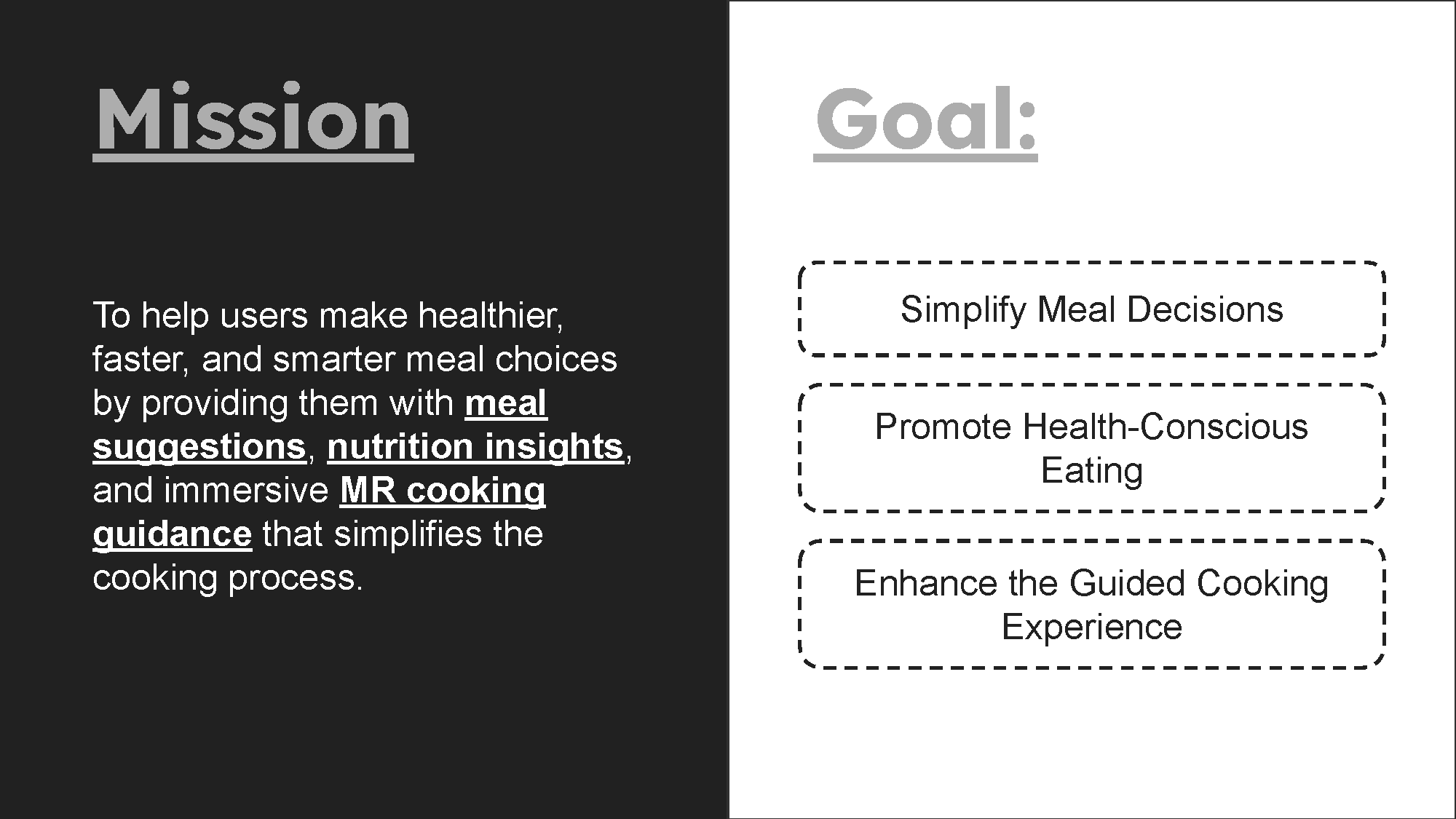
To help users make healthier, faster, and smarter meal choices by providing them with meal suggestions, nutrition insights, and immersive MR cooking guidance that simplifies the cooking process.
Product Goals
Simplify Meal Decisions: Eliminate the hassle of deciding what to cook by offering meal suggestions based on available ingredients. Promote Health-Conscious Eating: Empower users to make healthier choices by providing nutritional and caloric information for every meal. Enhance the Cooking Experience: Provide intuitive, hands-free cooking guidance in MR, making it easier to follow recipes and stay engaged while cooking.
Target Audience
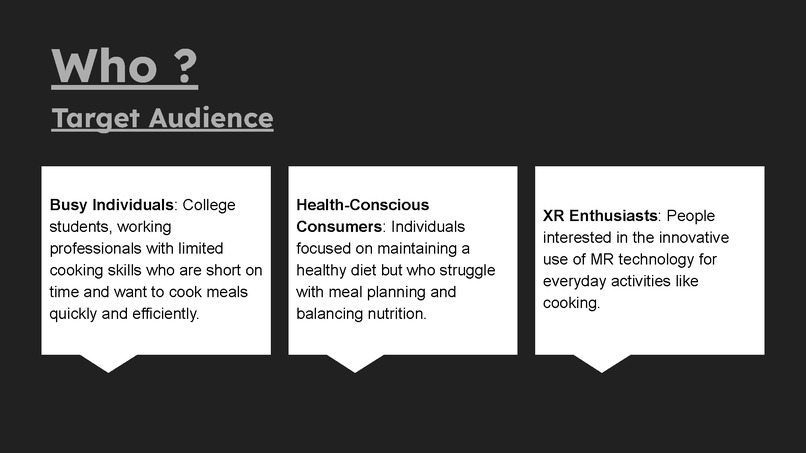
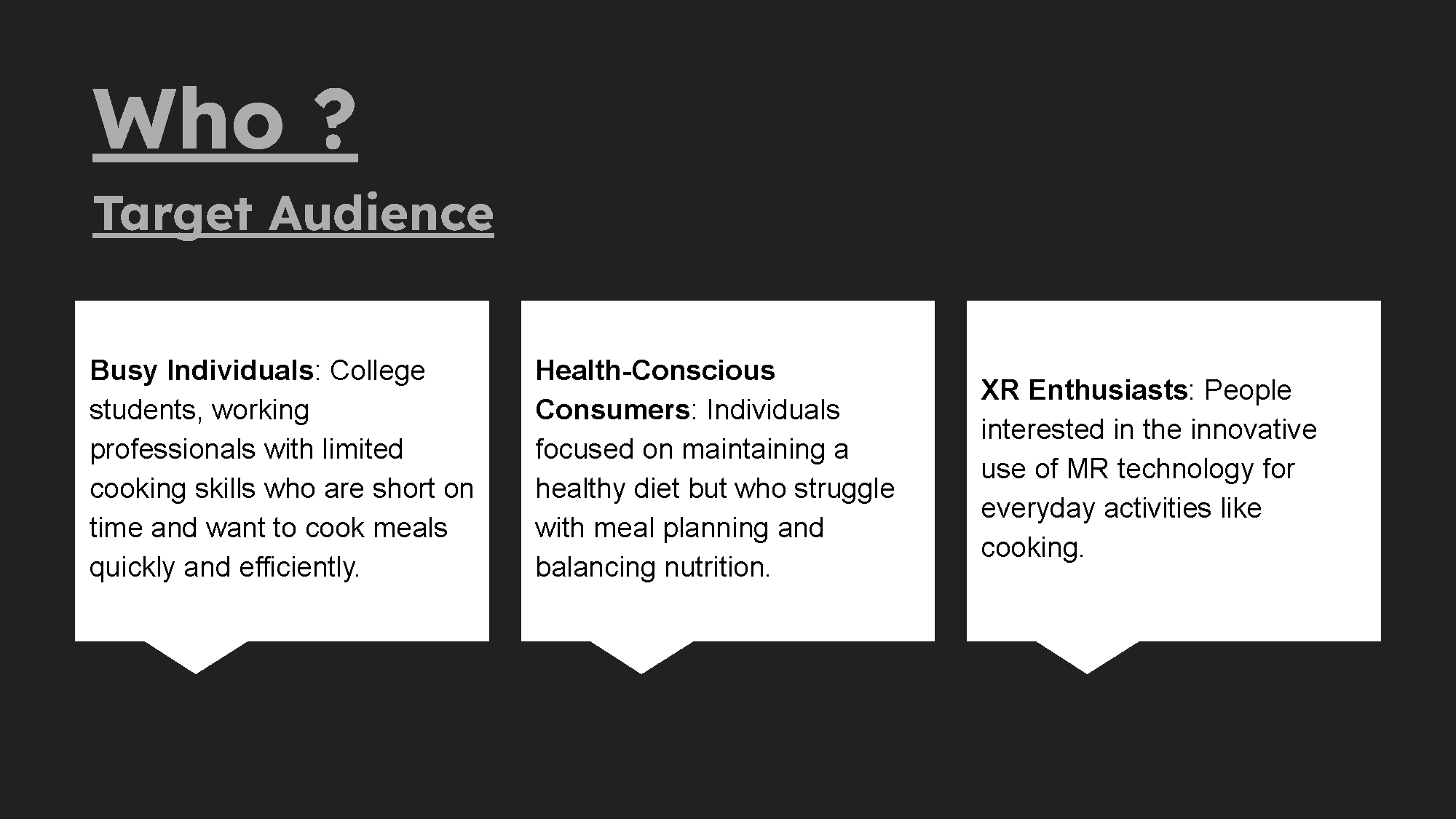
Busy Individuals: College students, working professionals, and parents who are short on time and want to cook meals quickly and efficiently. Health-Conscious Consumers: Individuals focused on maintaining a healthy diet but who struggle with meal planning and balancing nutrition. Tech Enthusiasts and Early Adopters: People interested in the innovative use of MR technology for everyday activities like cooking.
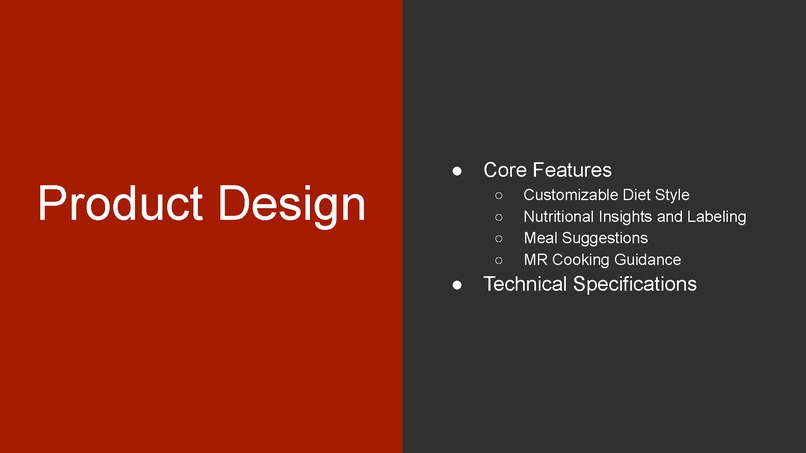
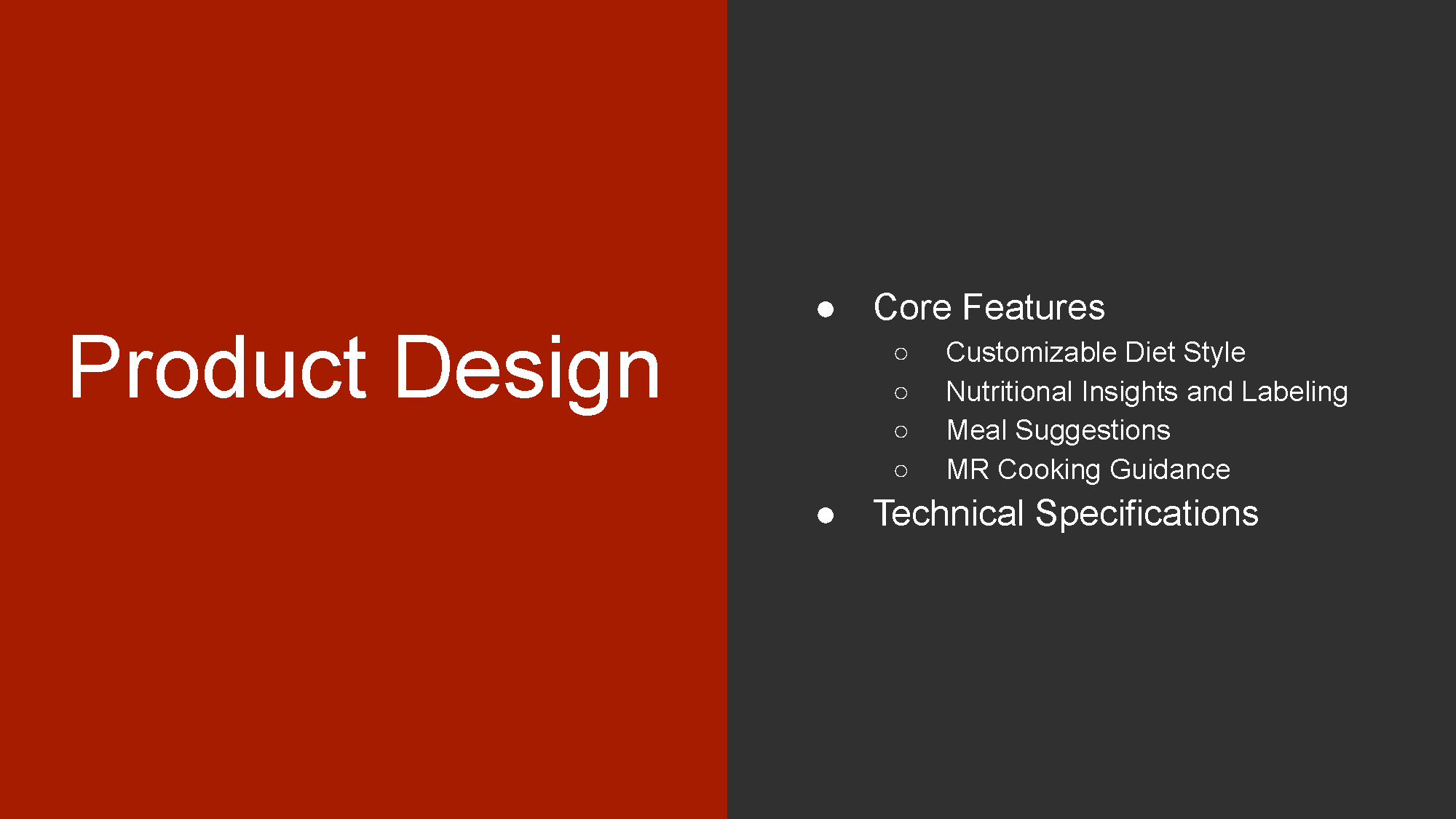
Core Features
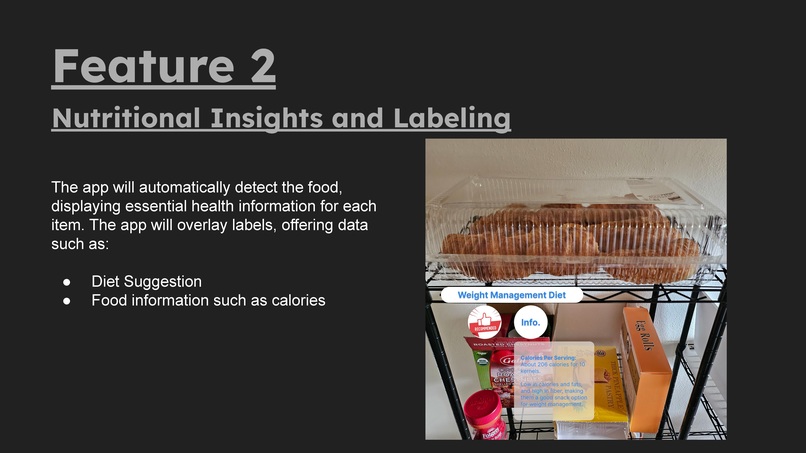
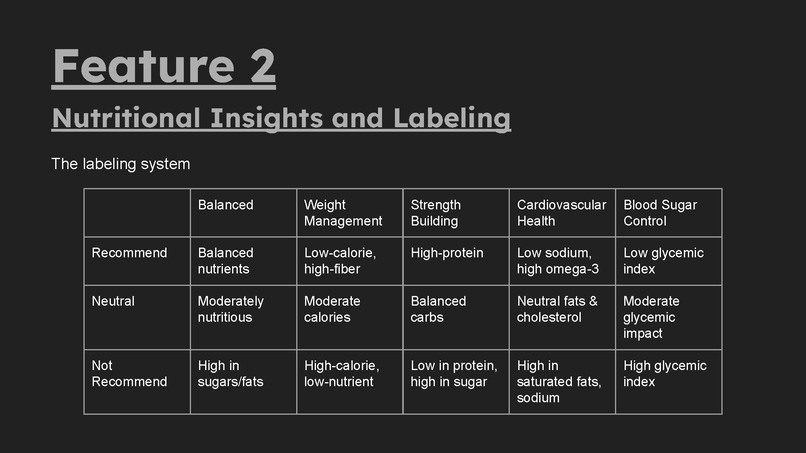
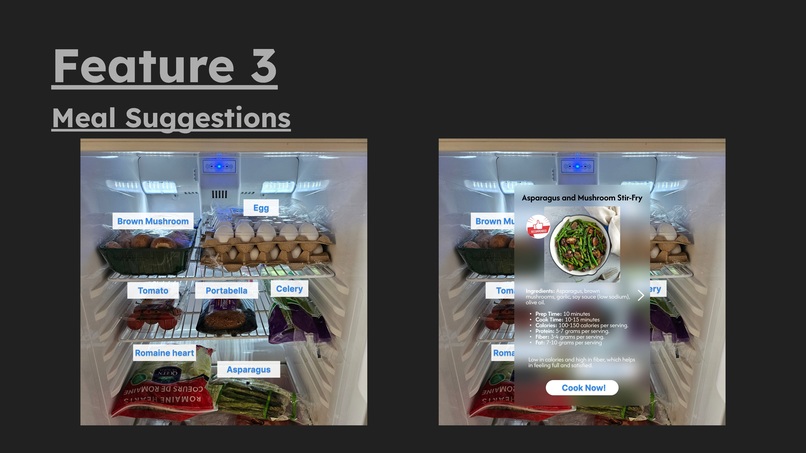
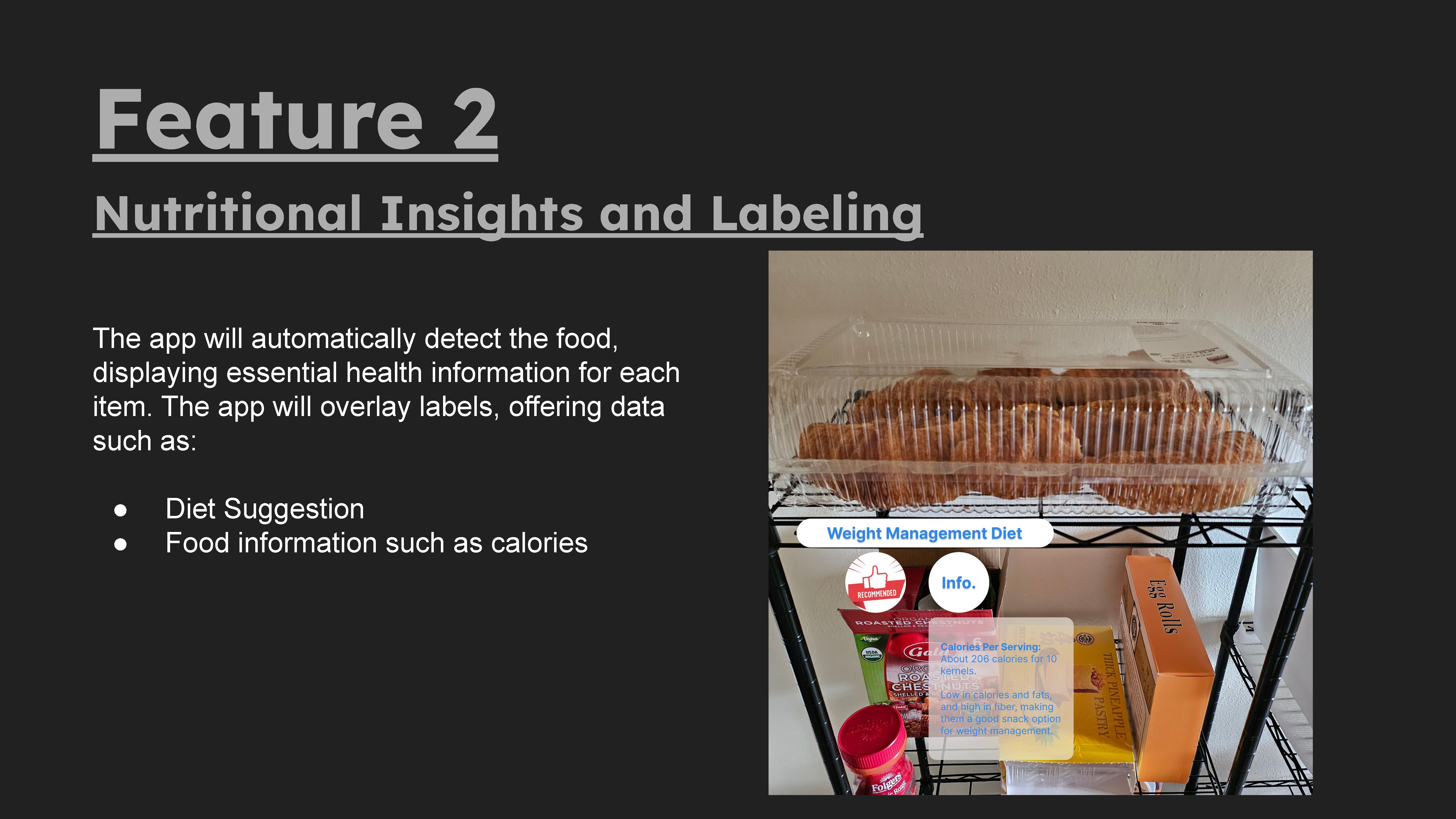
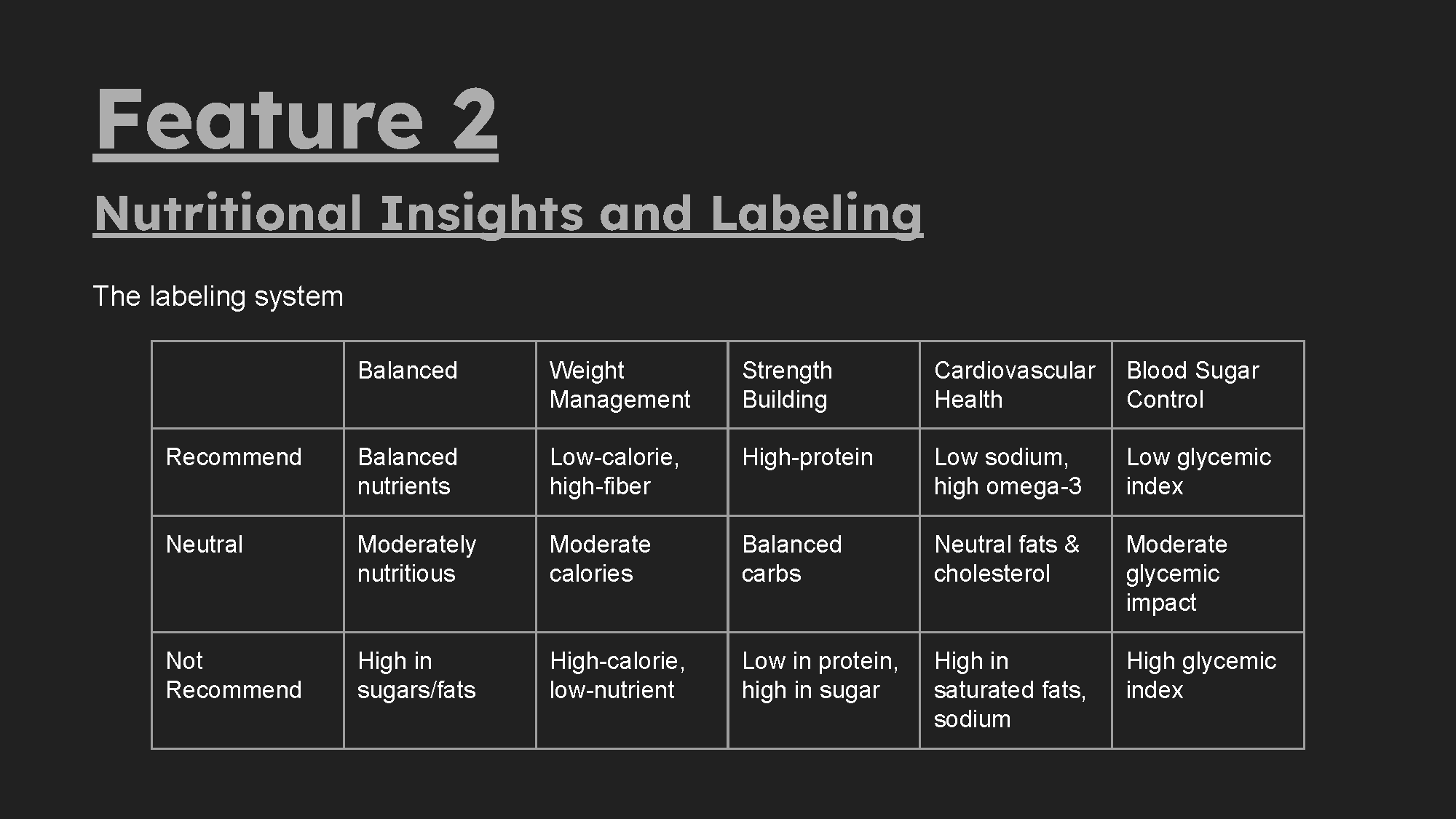
- Nutritional Insights and Labeling Once the user puts on the VR headset (Quest 2, Quest 3, Quest Pro), the app will automatically detect the food in the user's kitchen, displaying essential health information for each item. The app will overlay labels on the ingredients, offering data such as: Calories per serving Macronutrient breakdown (carbohydrates, fats, proteins) Vitamin and mineral content Dietary compatibility (e.g., vegan, gluten-free)
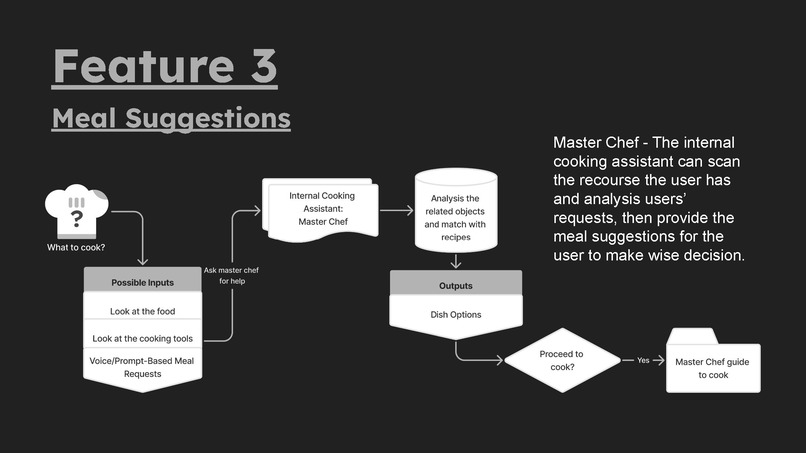
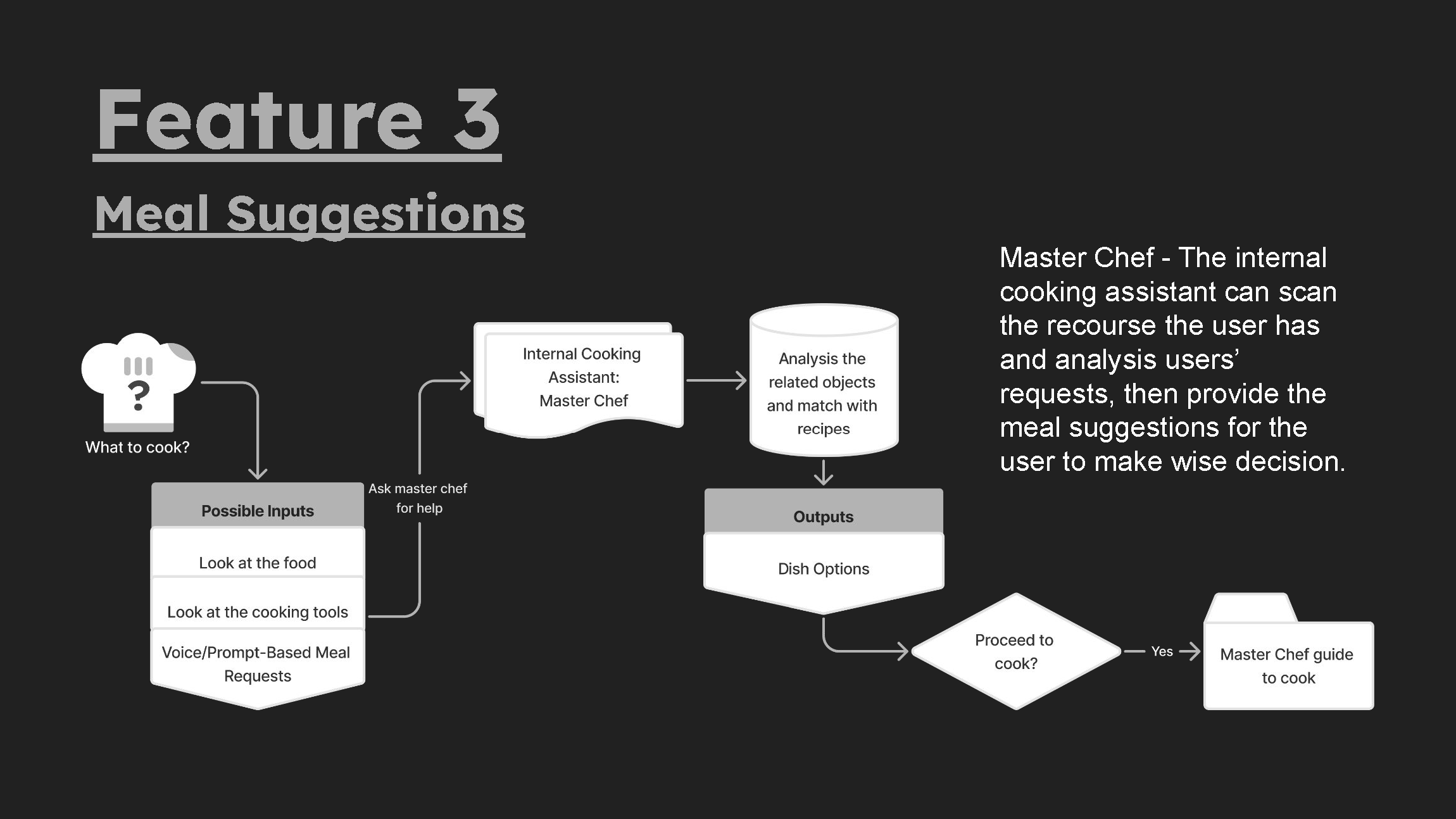
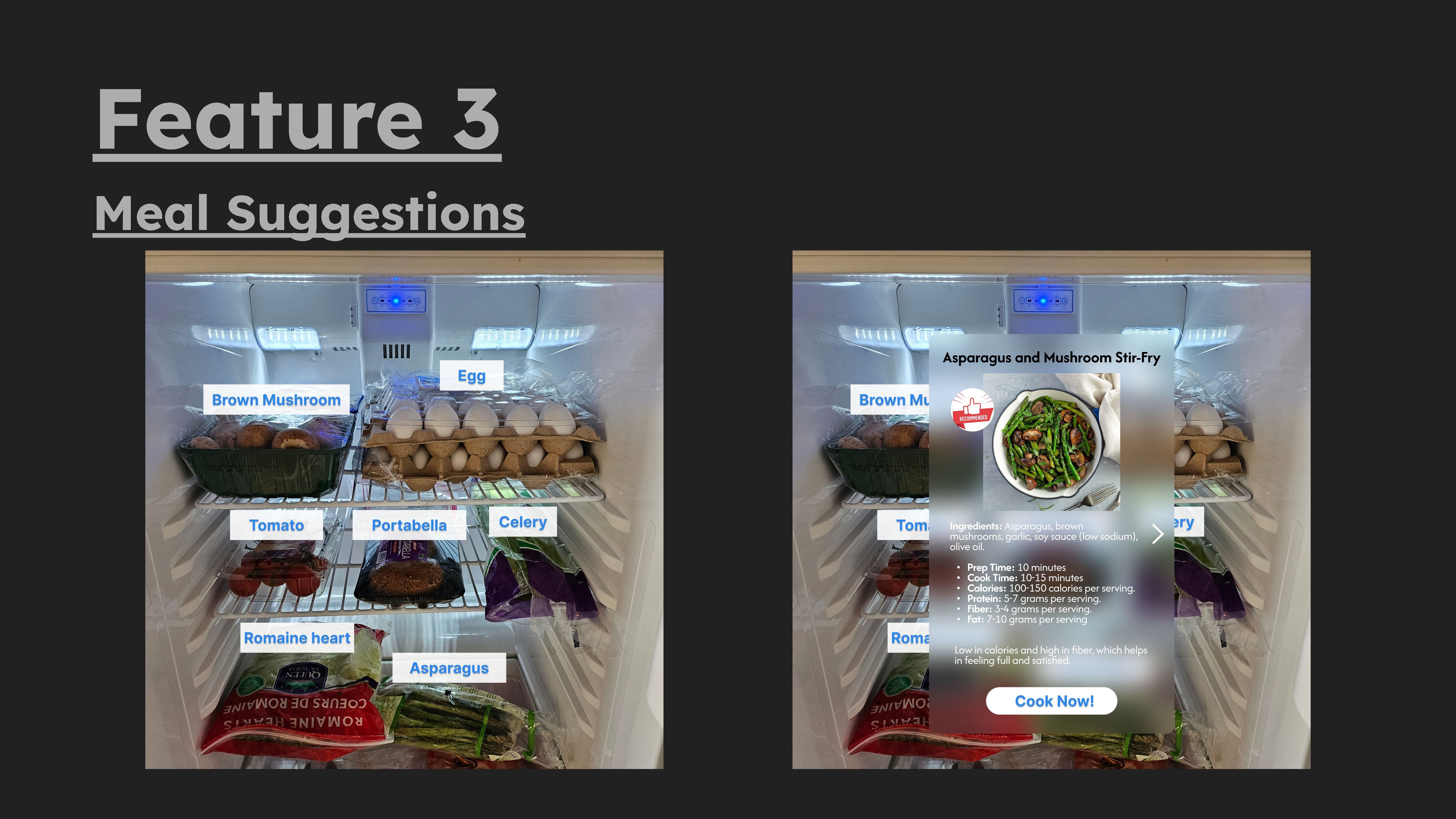
- Automated Meal Suggestions The app scans the user's ingredients and provides several meal solutions based on their preferences and dietary goals. Each meal suggestion will include: Estimated Cooking Time: Helps users plan meals within the time they have available. Nutritional Information: Calorie count, macro and micronutrient details. Health Insights: Guidance on how the meal fits into a balanced diet (e.g., low-carb, high-protein options). The suggestions can also be filtered based on dietary restrictions (vegetarian, keto, etc.).
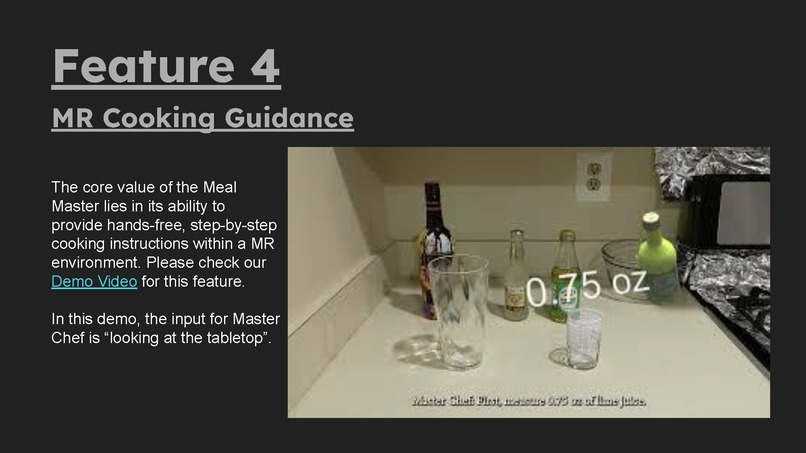
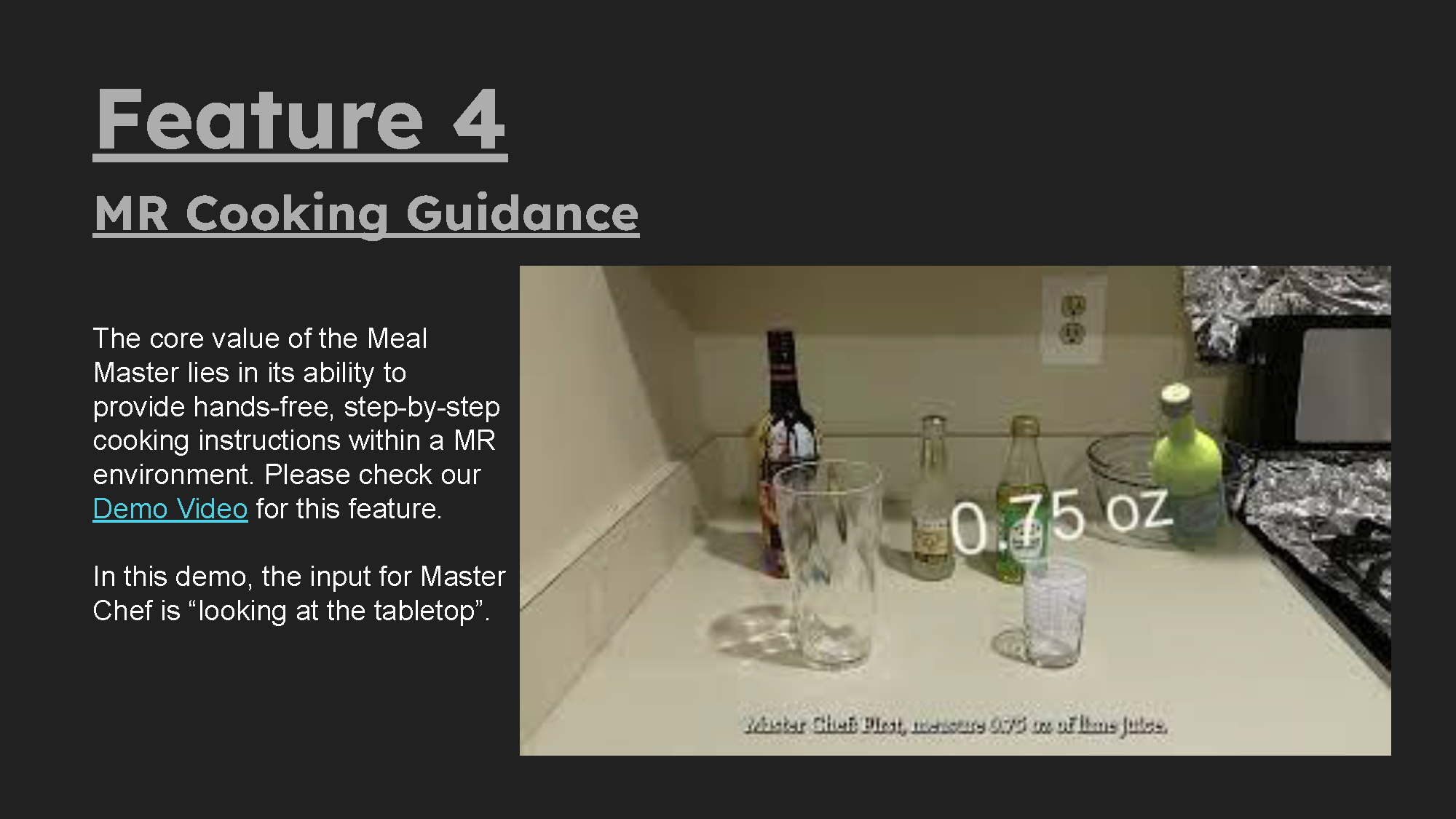
- Immersive VR Cooking Guidance The core value of the app lies in its ability to provide hands-free, step-by-step cooking instructions within a VR environment. The features include: Visual and Auditory Prompts: Users receive real-time visual instructions on the next cooking step, along with audio guidance, allowing them to follow along without needing to touch their device. 360-Degree MR Environment: Users can view the entire kitchen setup in MR, with guidance on where to find ingredients, how to prepare them, and even tips for cooking techniques. Interactive Feedback: The system will notify the user if any steps are missed, such as forgetting to season the dish or checking the cooking time for specific items. Interactable assistive elements: Set-timer feature allows users to effortlessly set cooking timers through VR gestures or voice commands, ensuring they can focus on cooking without having to manually operate other devices or check their phones.
- Voice/Prompt-Based Meal Requests Users can enter specific food items or meal ideas via voice commands or text input. The app will generate recipes and meal suggestions based on these inputs. For example, a user could say, "I want to cook with chicken, spinach, and sweet potatoes," and the app will suggest recipes and provide step-by-step cooking guidance for those ingredients.
Additional Features (Future Versions)
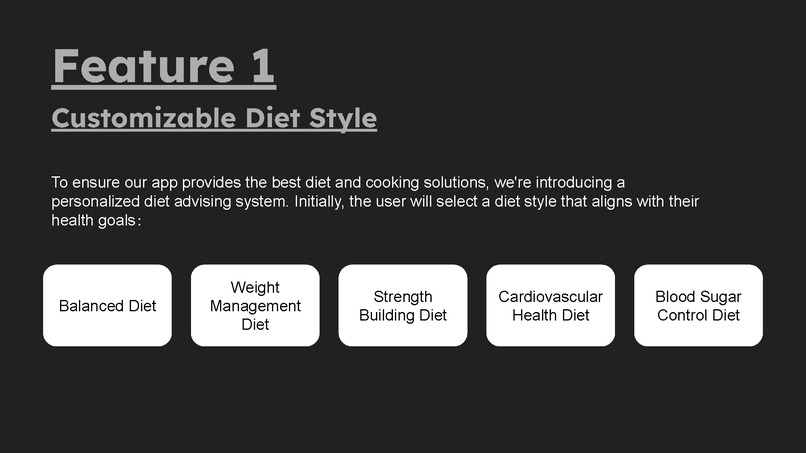
Personalized Meal Plans: A premium feature that allows users to set weekly or monthly dietary goals (e.g., weight loss, muscle gain), and the app will generate personalized meal plans based on these goals. Social Features: In a future update, users can enter a shared MR space to cook together with friends or family members, making cooking a more social and engaging experience.
Technical Specifications
- MR Hardware Requirements
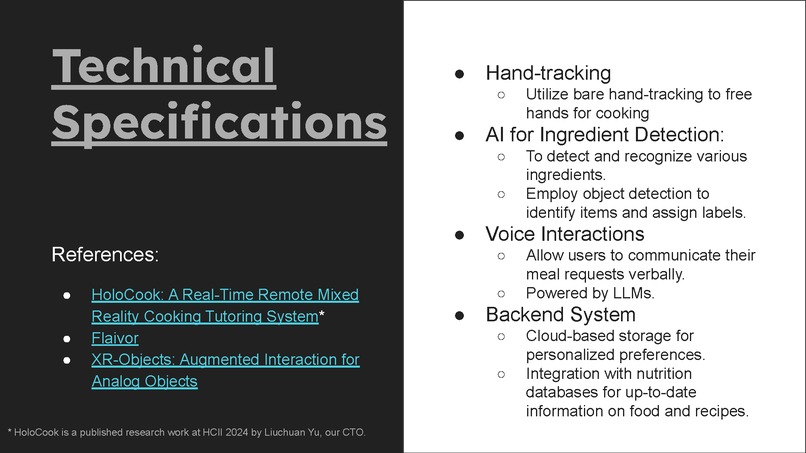
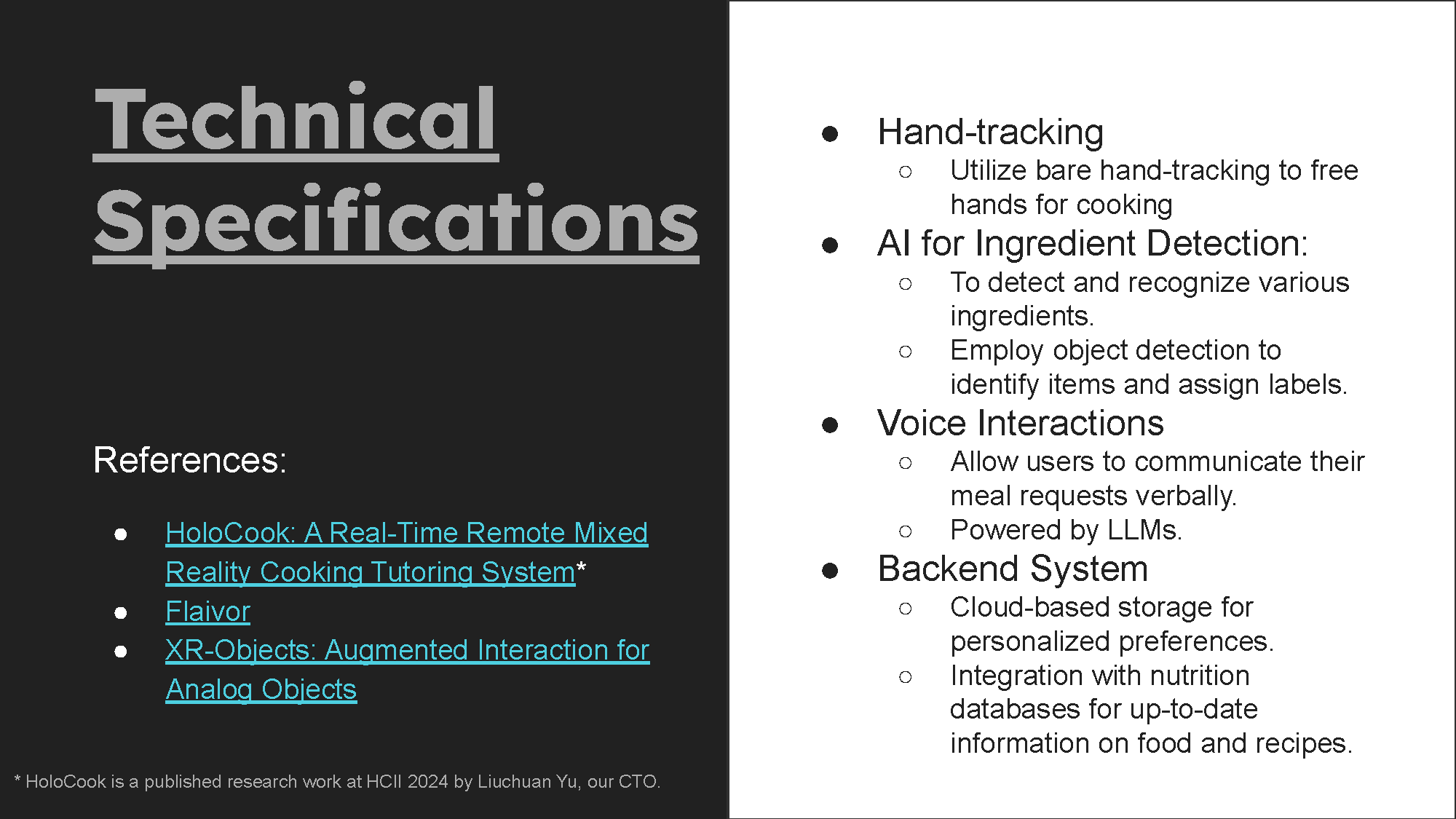
Compatible with leading MR platforms (e.g., Oculus Quest 2, Quest 3, and other major headsets). Hand-tracking for interacting with the MR environment and recipes. - AI for Ingredient Detection Machine learning algorithms will be used to detect and recognize various ingredients within the user's kitchen. The app will employ image recognition technologies to accurately identify items and assign labels.
- Voice Recognition Powered by natural language processing (NLP) algorithms, allowing users to communicate their meal requests through voice commands.
- Backend System Cloud-based storage for personalized preferences, meal history, and dietary goals. Integration with nutrition databases for up-to-date information on food and recipes.
- References
- HoloCook: A Real-Time Remote Mixed Reality Cooking Tutoring System
- Flaivor
- XR-Objects: Augmented Interaction for Analog Objects
Market Opportunity
The MR and health/wellness industries are growing at a rapid pace, and this app stands at the intersection of both. XR Market Growth: The global XR market is expected to reach $44.7 billion by 2026 (source: Statista). Health-Conscious Consumers: A survey by Nielsen reported that 80% of millennials prioritize health and wellness, indicating a strong market for solutions that cater to this growing demand.
Business Model
- Freemium Model
- Free Tier: Basic features such as ingredient detection, meal suggestions, and basic cooking guidance.
- Premium Tier: Advanced features like personalized meal plans, smart kitchen integrations, and exclusive recipe content.
- Partnerships
- MR Hardware Companies
- Nutrition and Wellness Brands: Collaborations with health brands for co-branded experiences (e.g., specific dietary recommendations or recipe integration).
Go-to-Market Strategy
- Partnerships with MR Manufacturers: Early collaborations with leading MR hardware providers bundle the app with MR headsets, targeting tech-savvy early adopters.
- Influencer and Social Media Marketing: Leverage influencers in the health and wellness space to promote the app. Focus on partnerships with food bloggers, fitness influencers, and nutritionists to raise awareness.
- Direct-to-Consumer Marketing: Target college students, working professionals, and busy families through digital ads on platforms such as Instagram, YouTube, and TikTok.
Vision for the Future
The long-term vision is to become the go-to platform for cooking and health management in MR. Beyond individual cooking, the platform aims to integrate AI-driven personalized meal plans, global cuisines, and even AI-driven kitchen automation to enhance the cooking experience for everyone.
Built With
- deepvoice
- sam
- unity


Log in or sign up for Devpost to join the conversation.