-
-
-
-
-
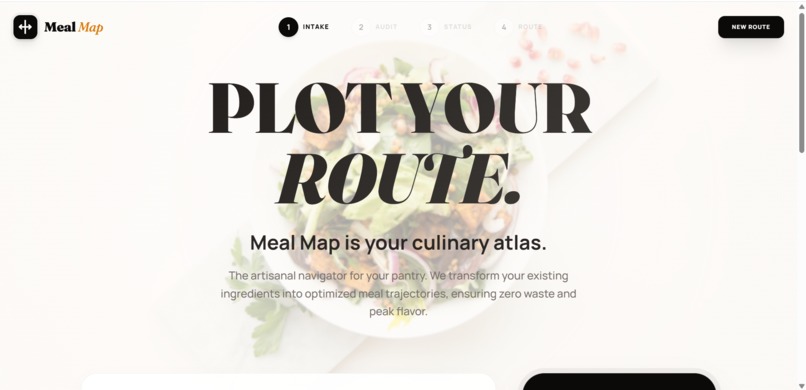
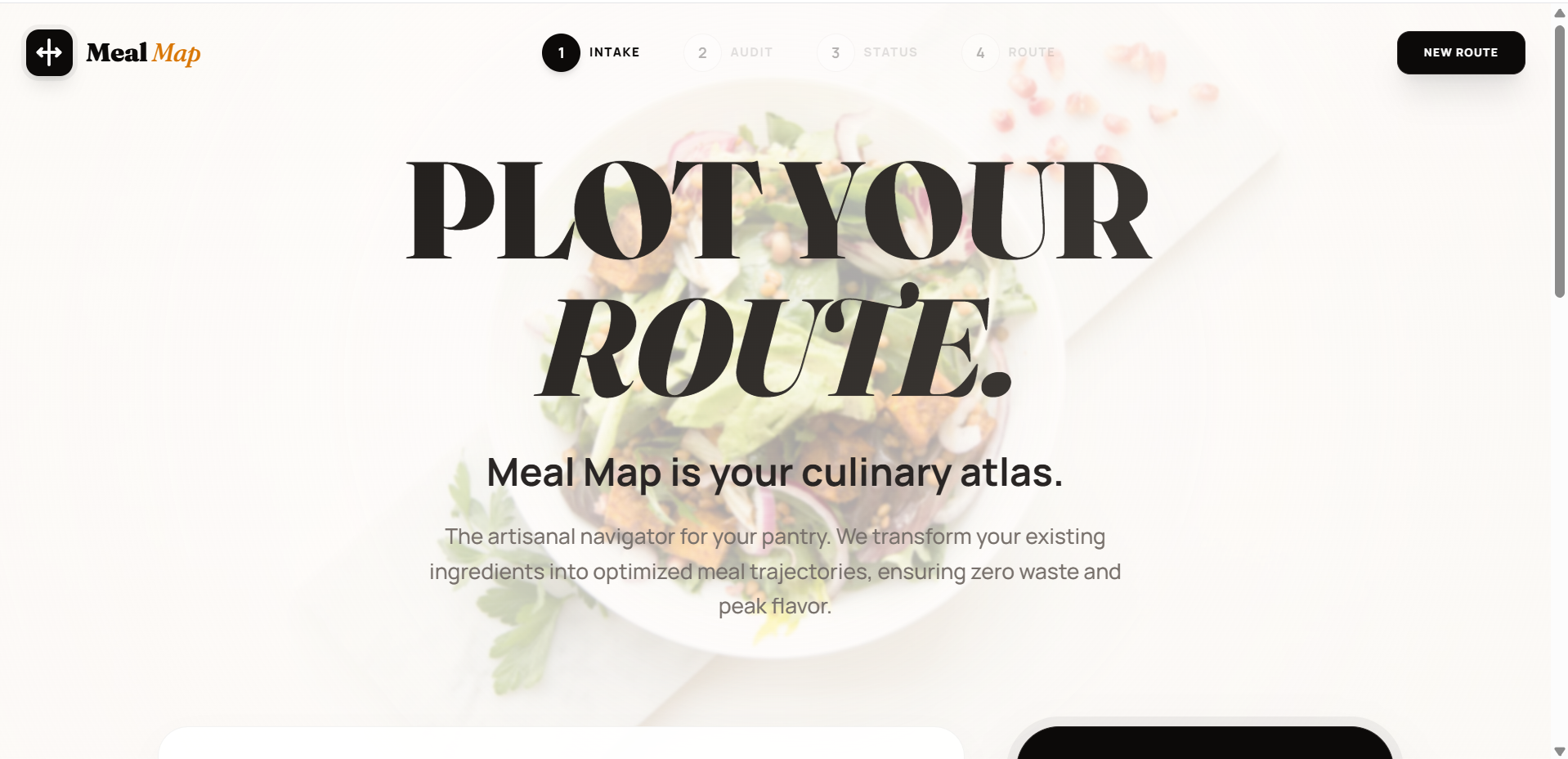
Landing Page
-
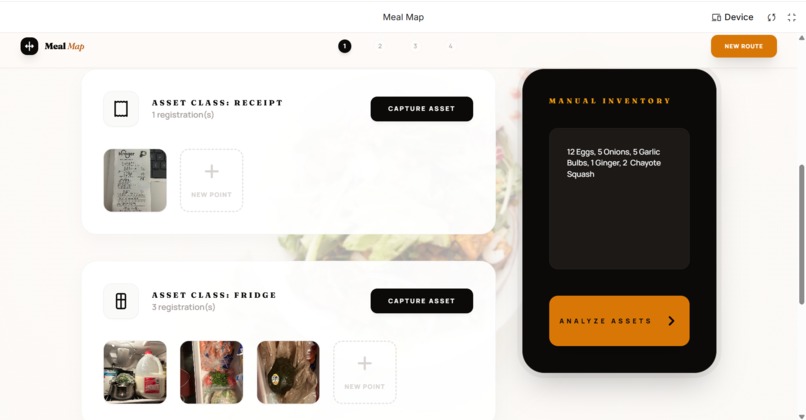
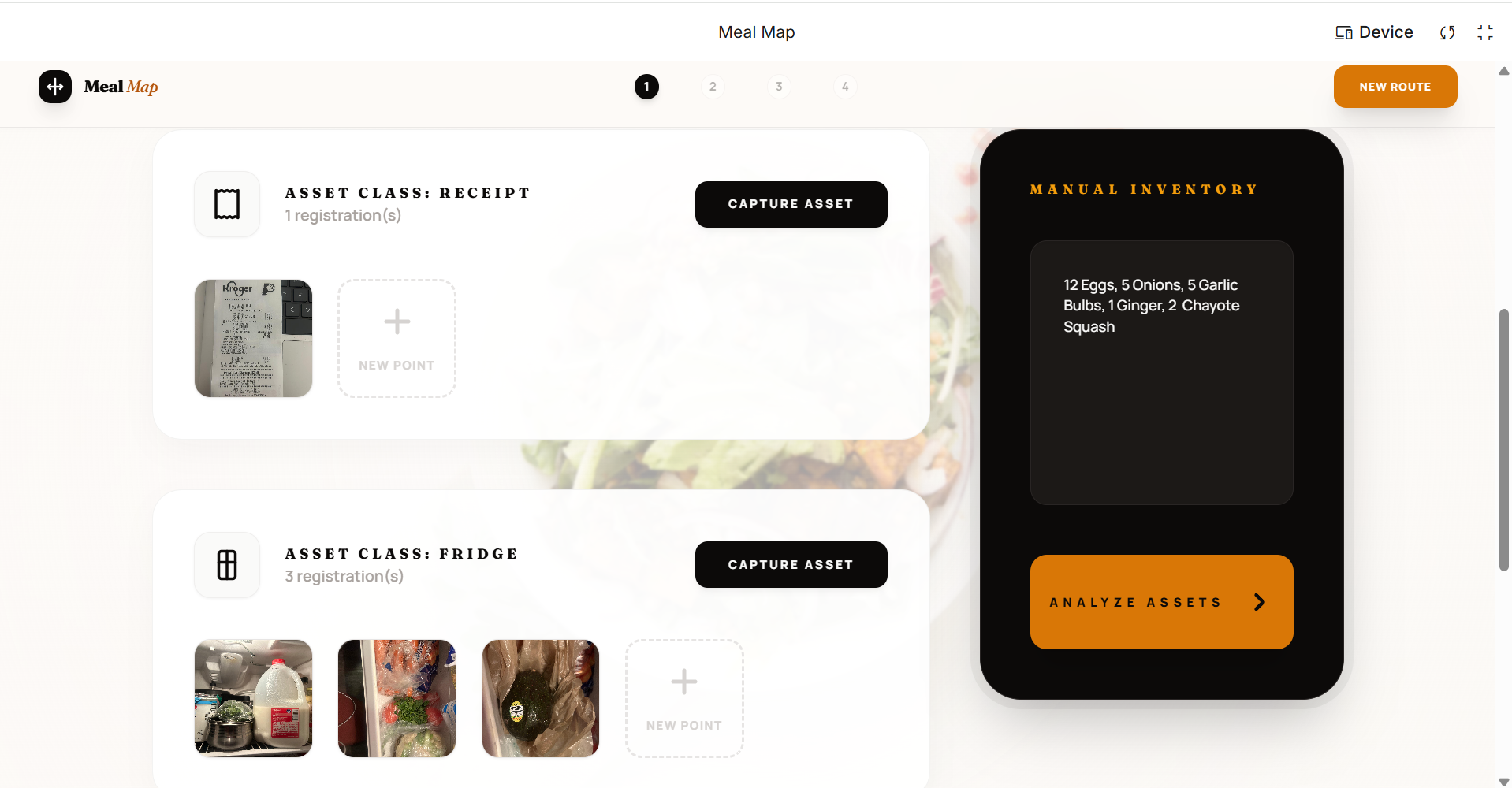
Inputs section
-
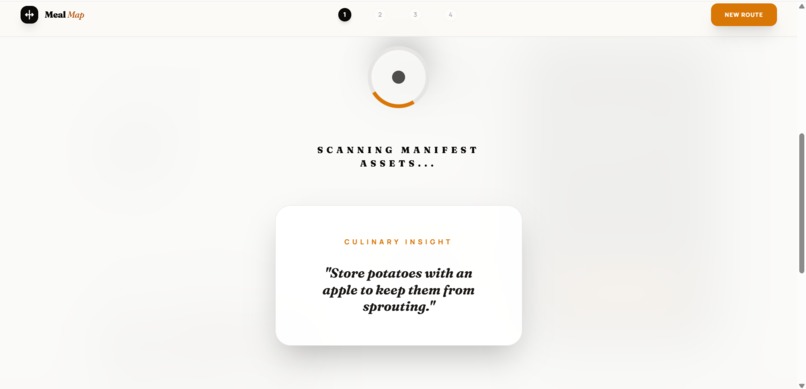
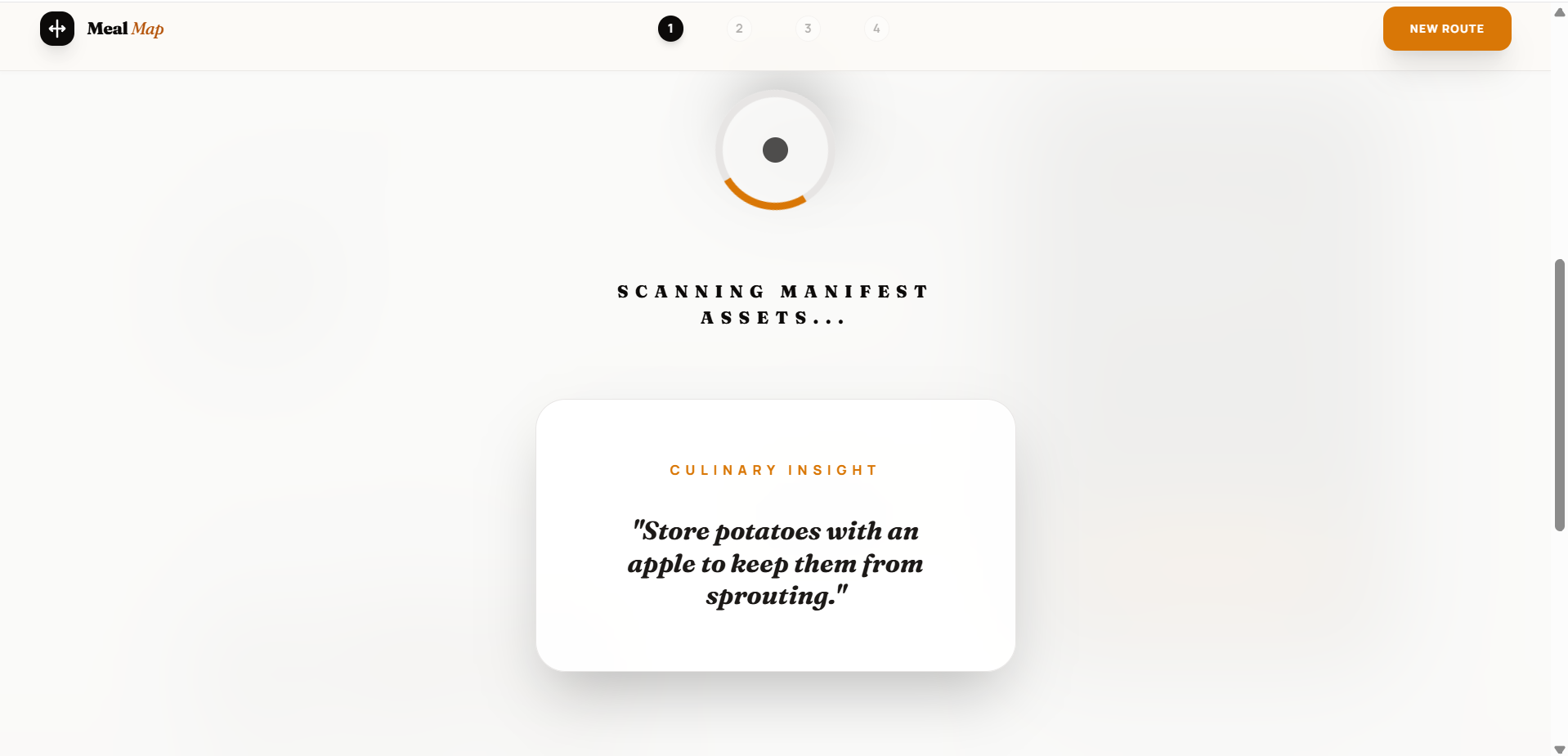
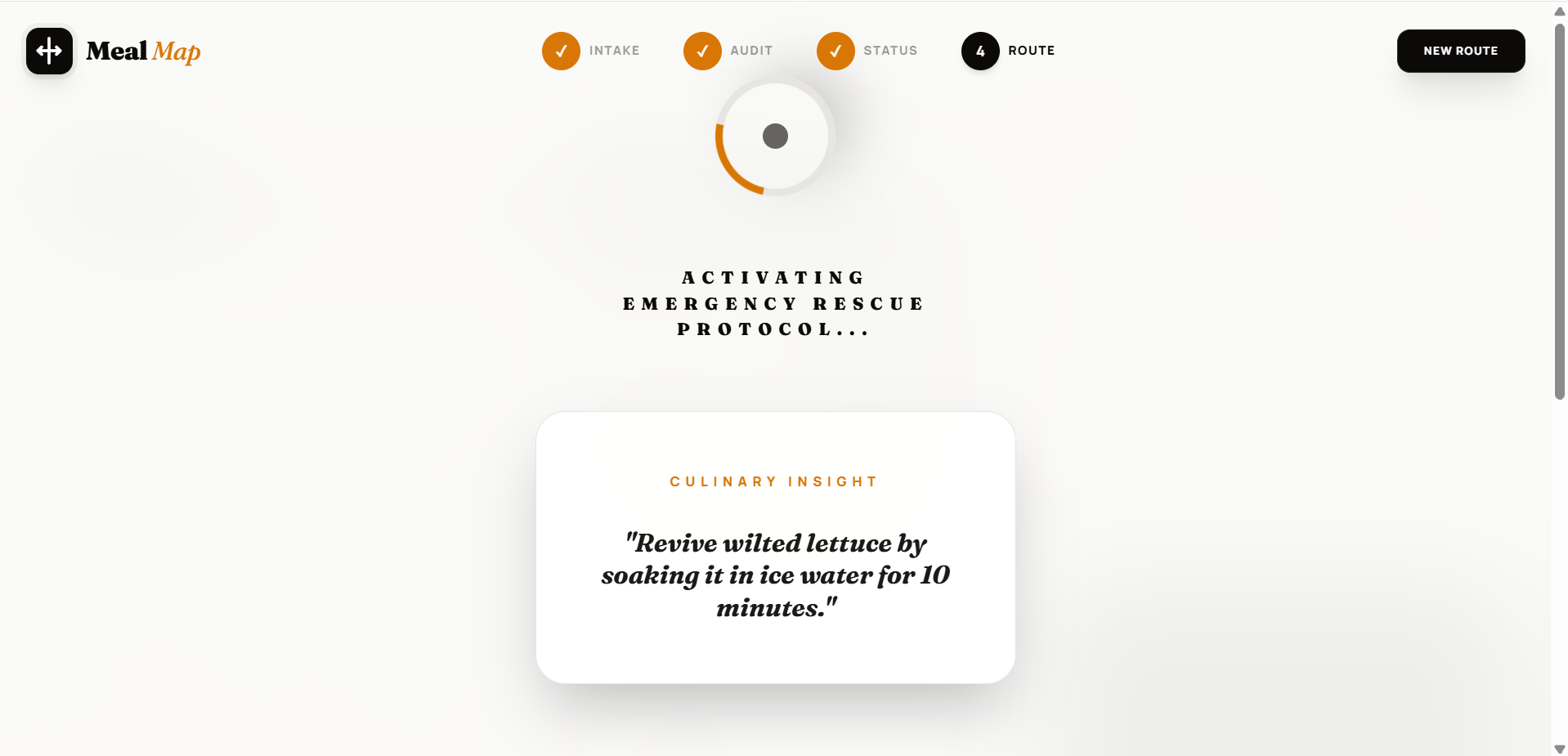
Meal Map loads while it gives some useful kitchen tips!
-
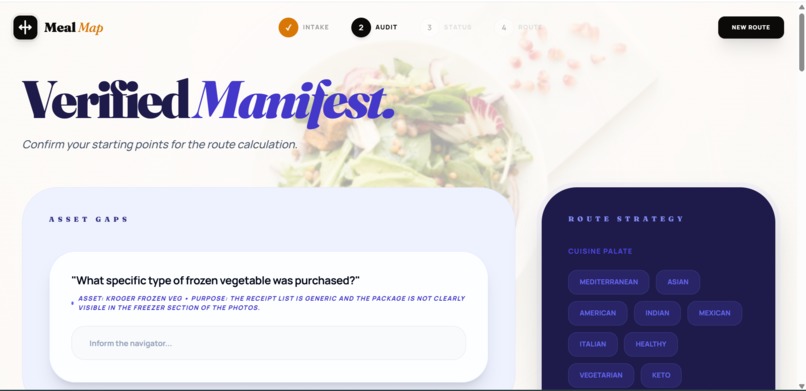
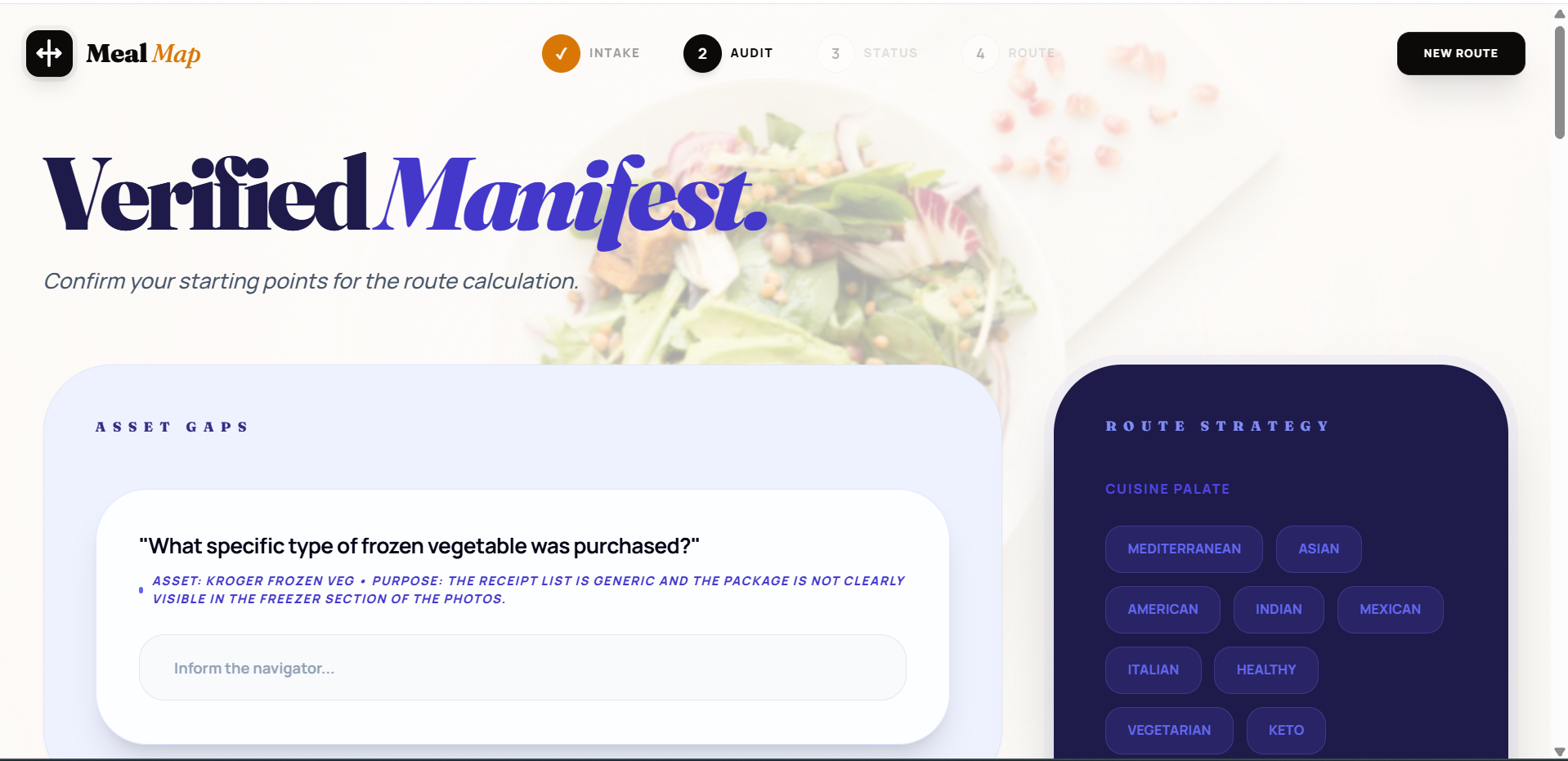
Additional verifications from the images
-
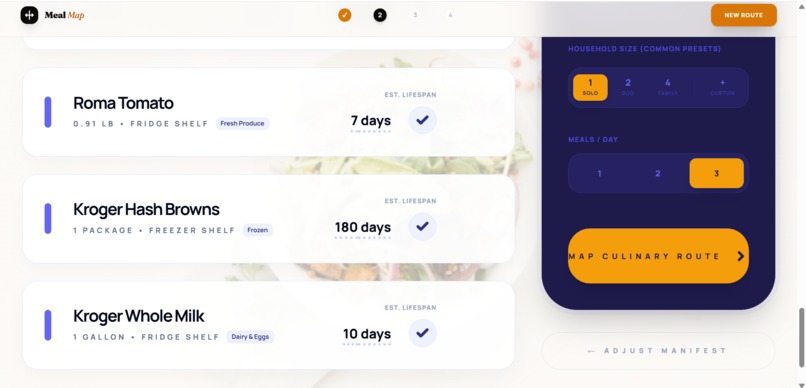
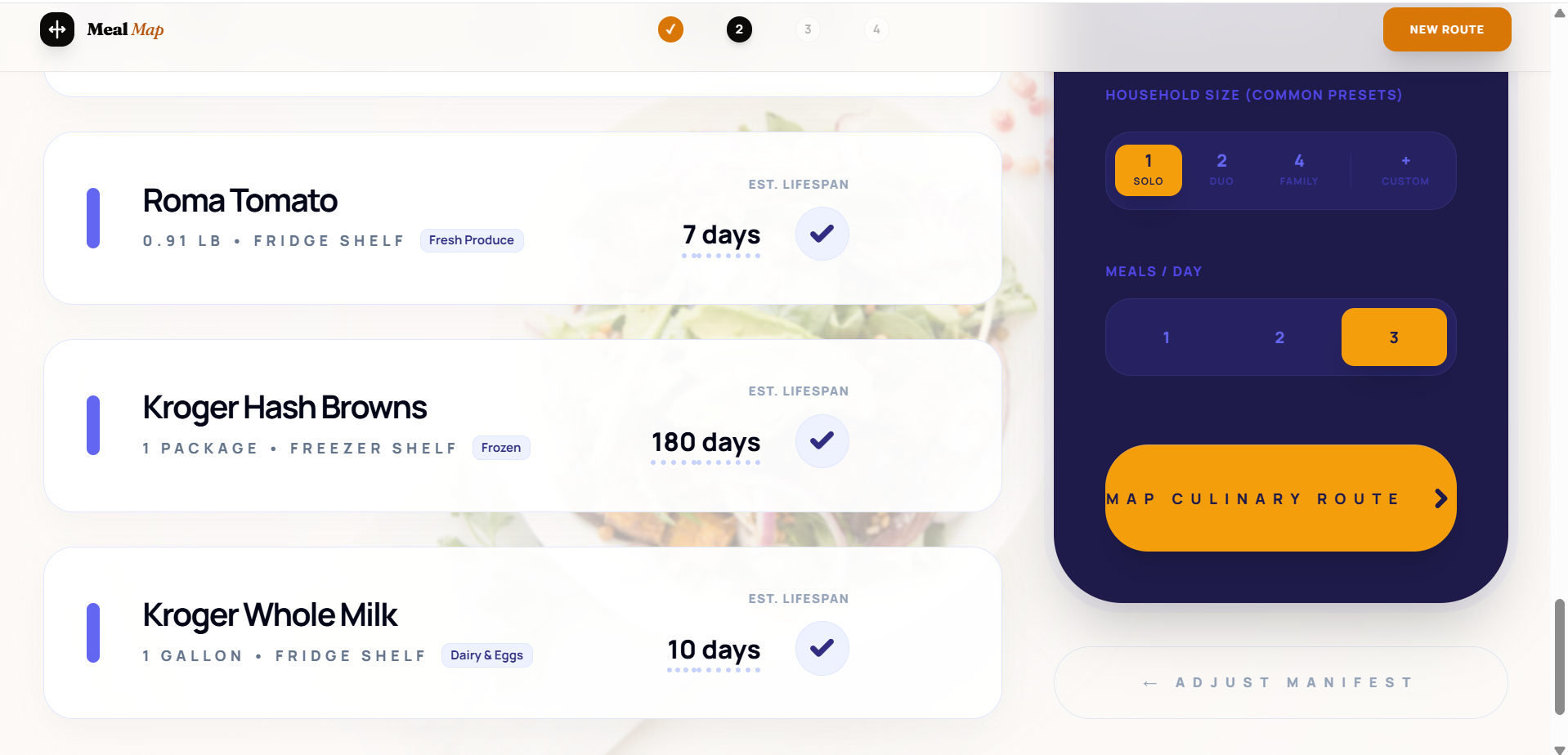
Gemini 3 estimates expiry dates and asks user for cuisine choices and meal choices!
-
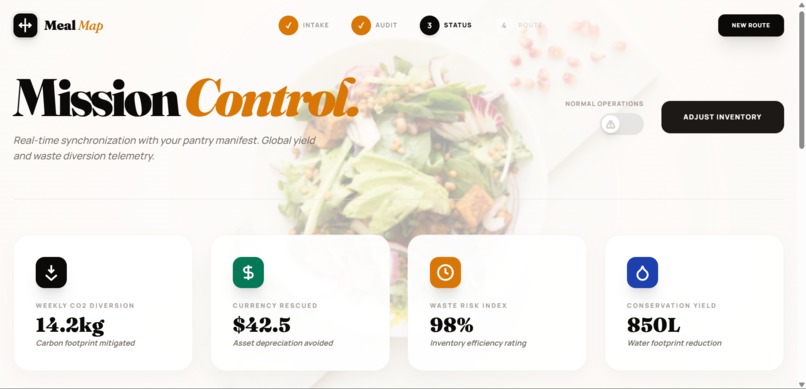
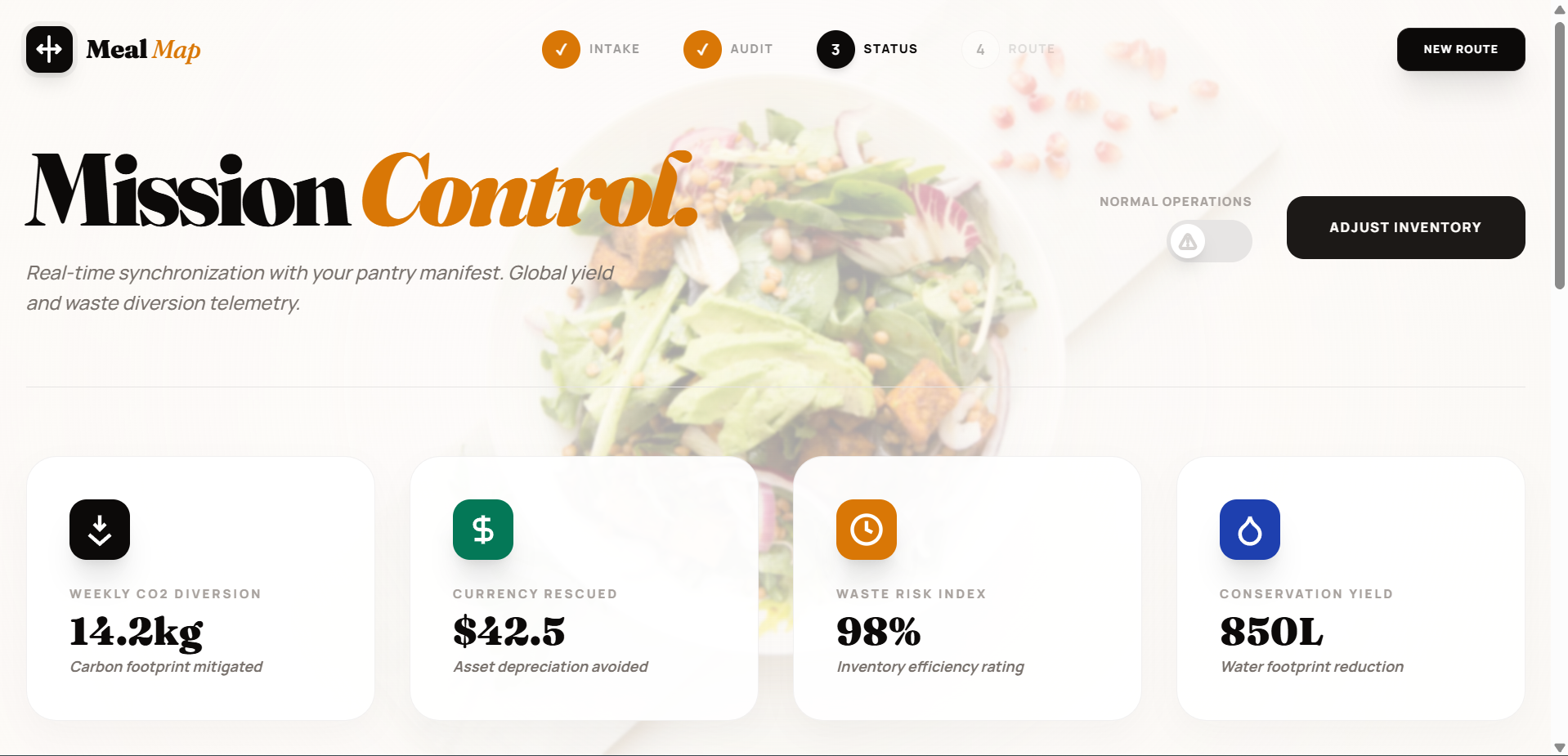
From image to real time product insights.
-
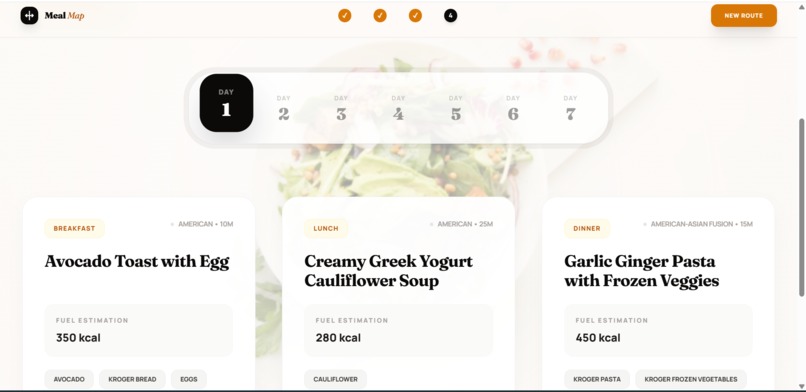
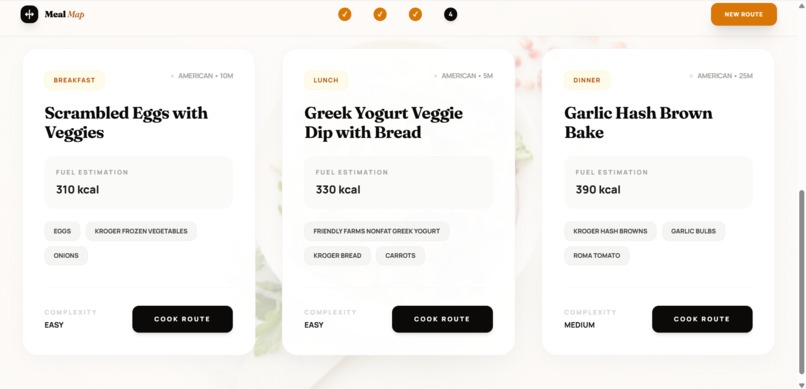
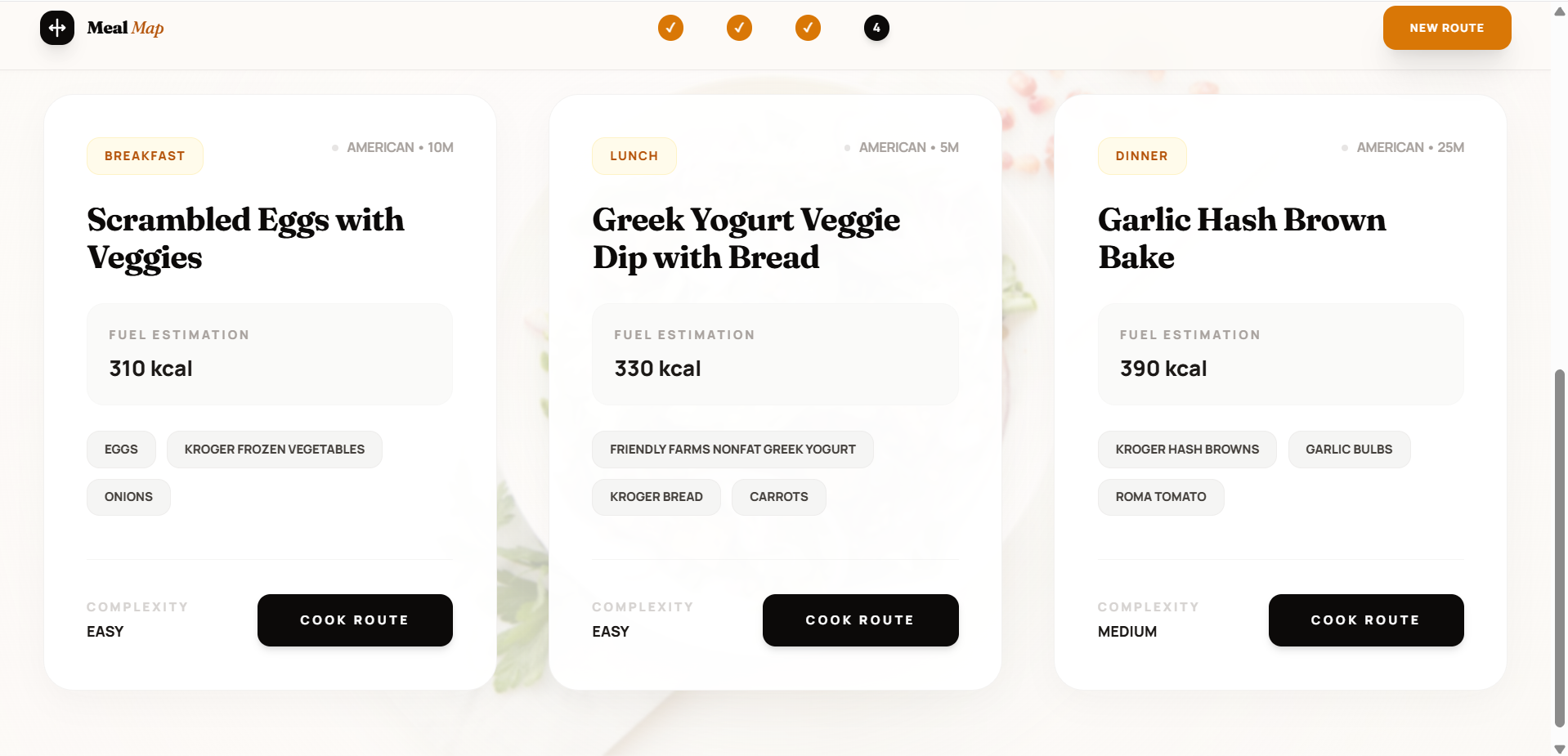
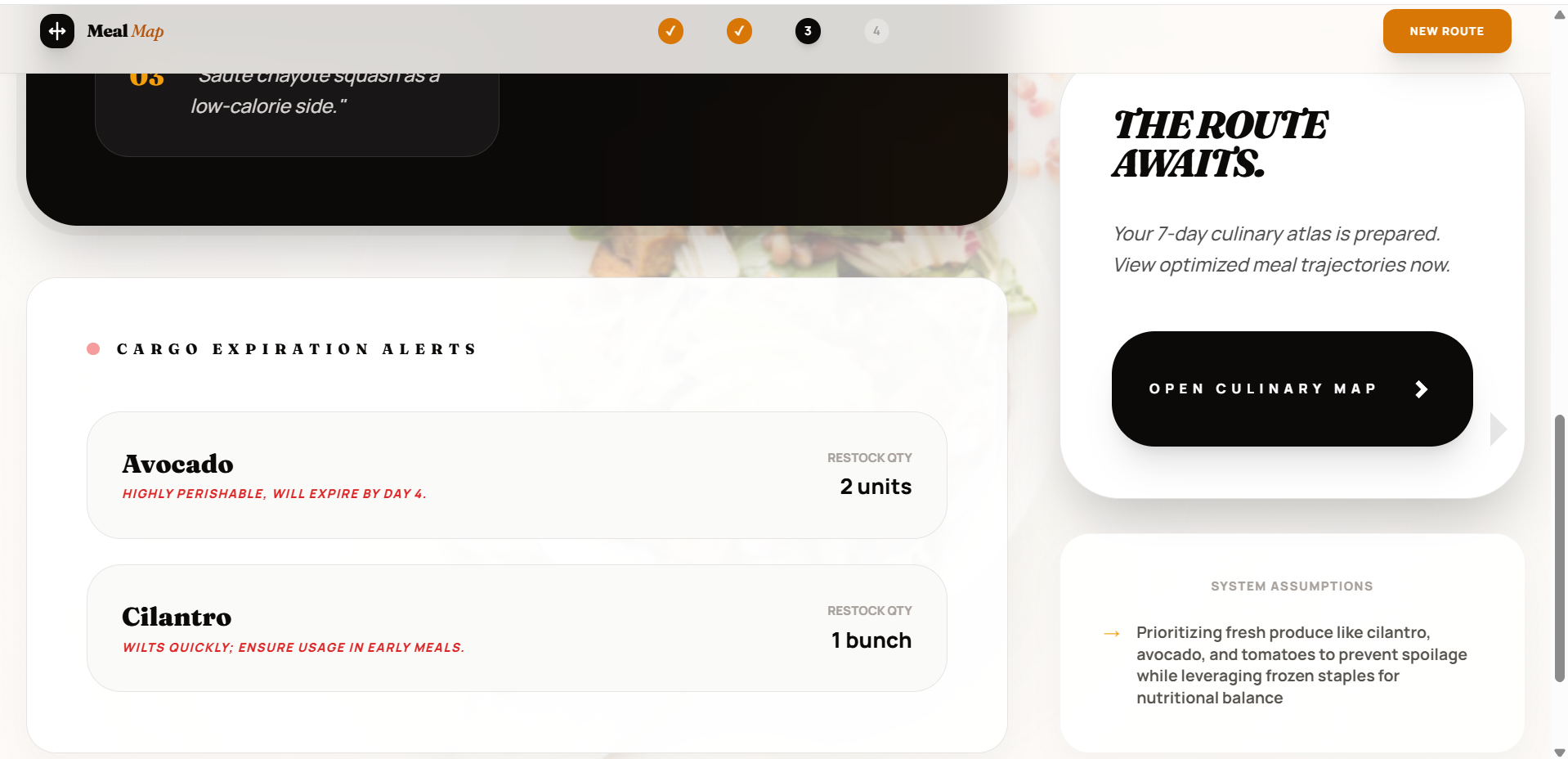
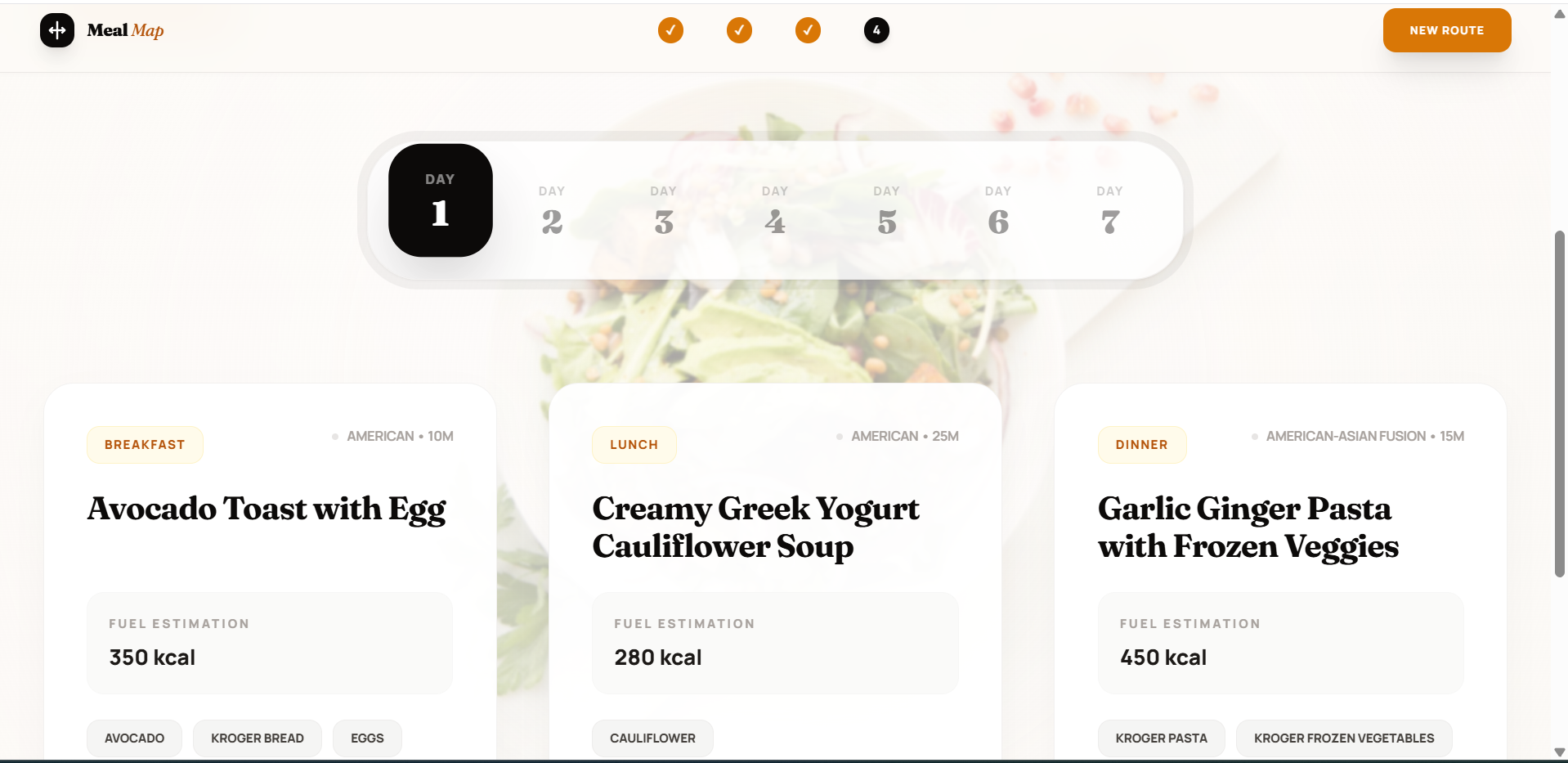
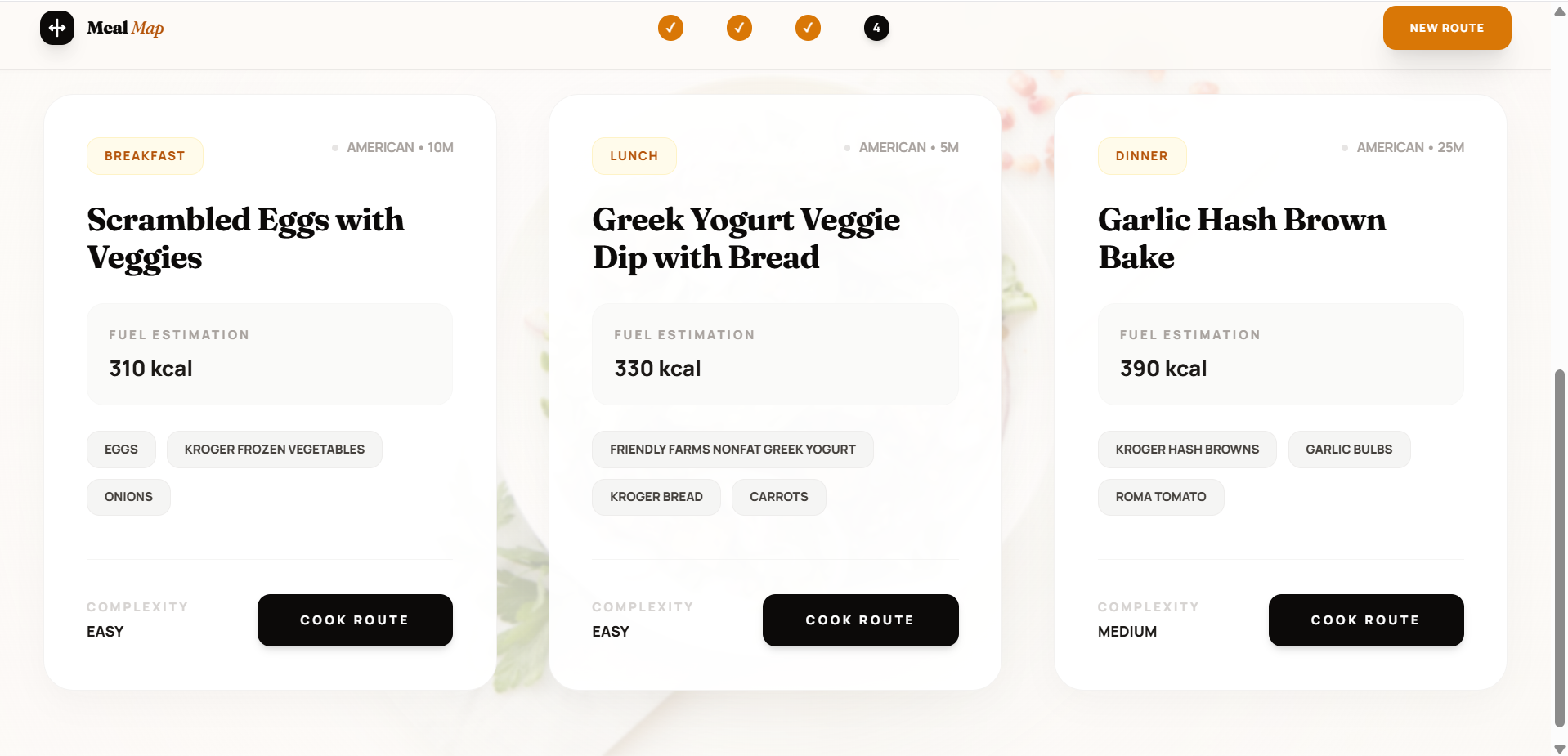
Meal Map gives out the plan for the week with 100% utilization of groceries. So week's sorted!
-
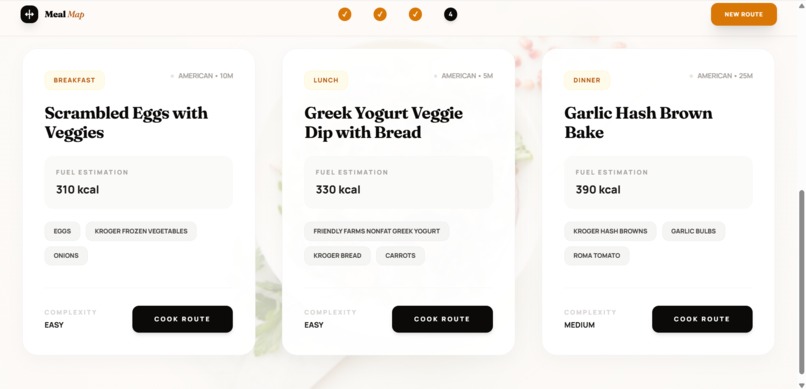
Also it gives the link to the recipe so that you don't have to break your heads!
-
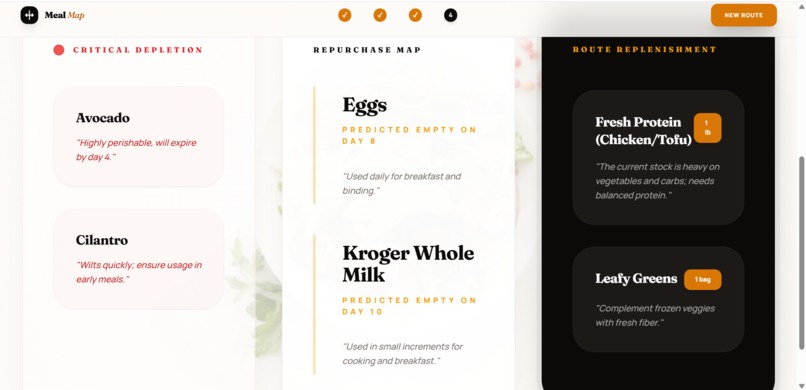
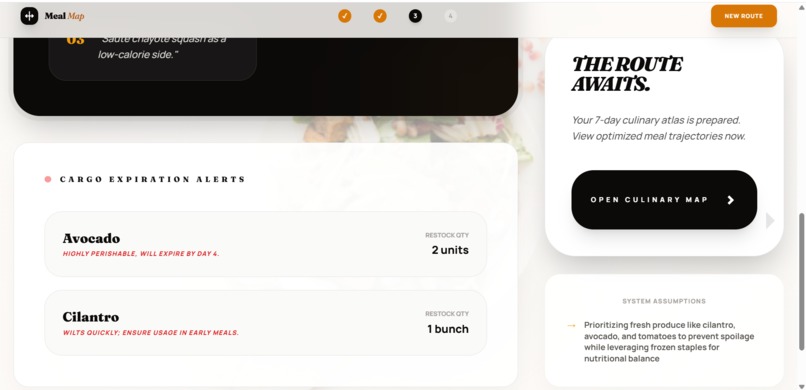
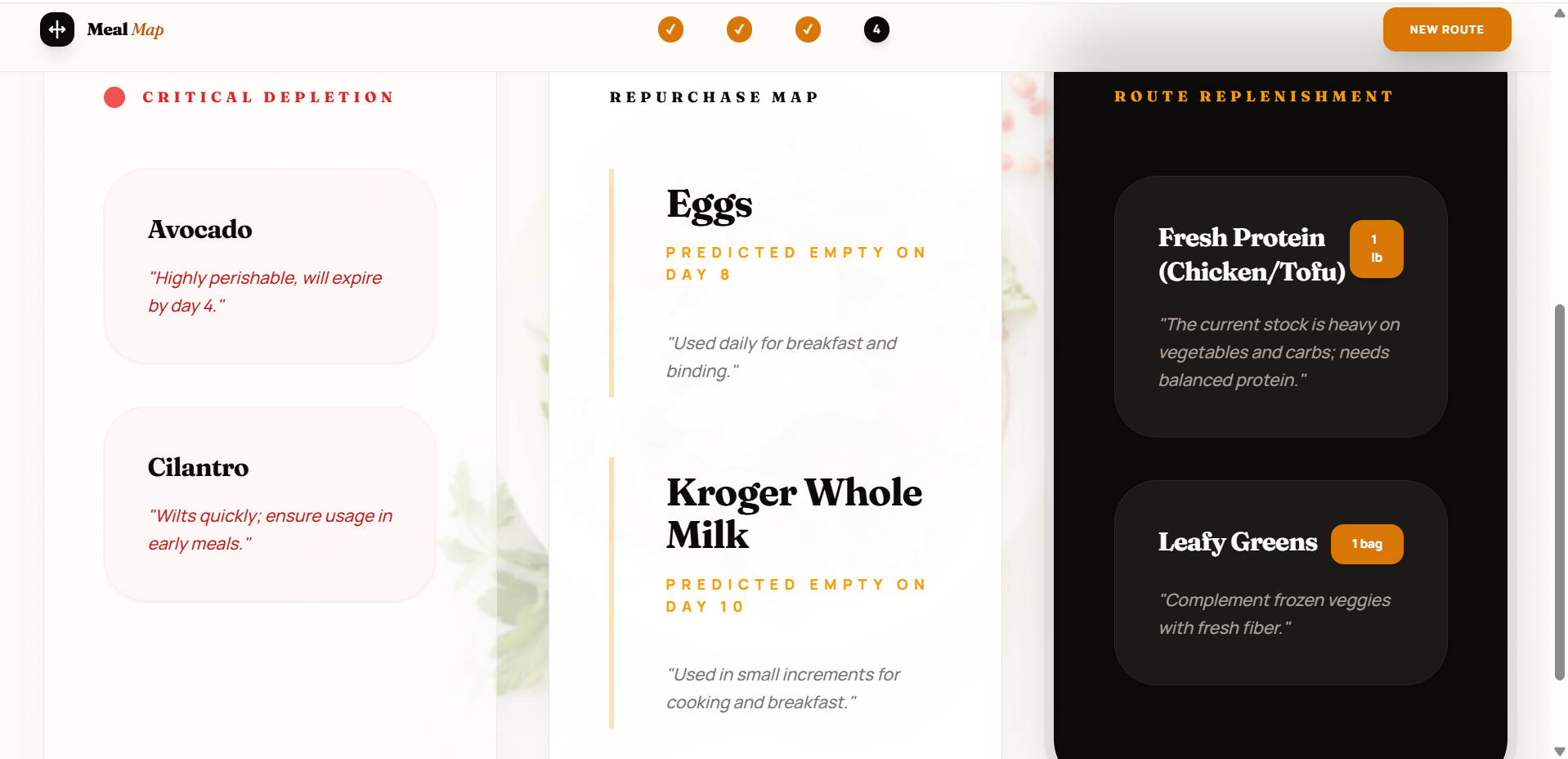
Meal Map suggests user for restocking so that it also matches the protein, fiber goals!
-
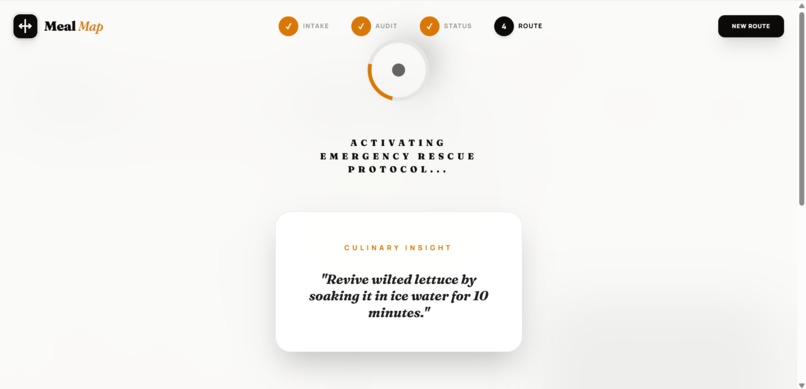
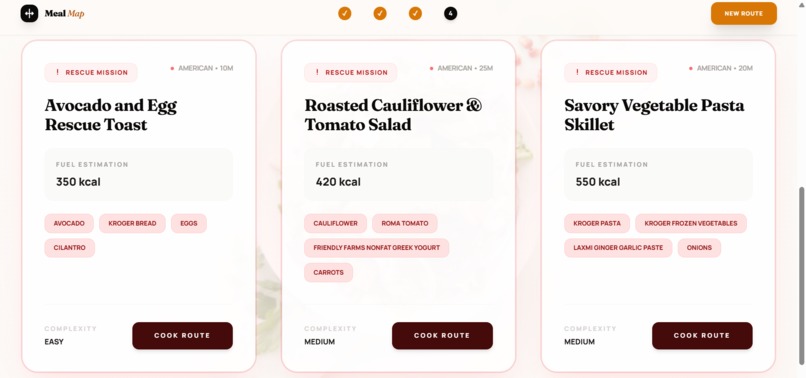
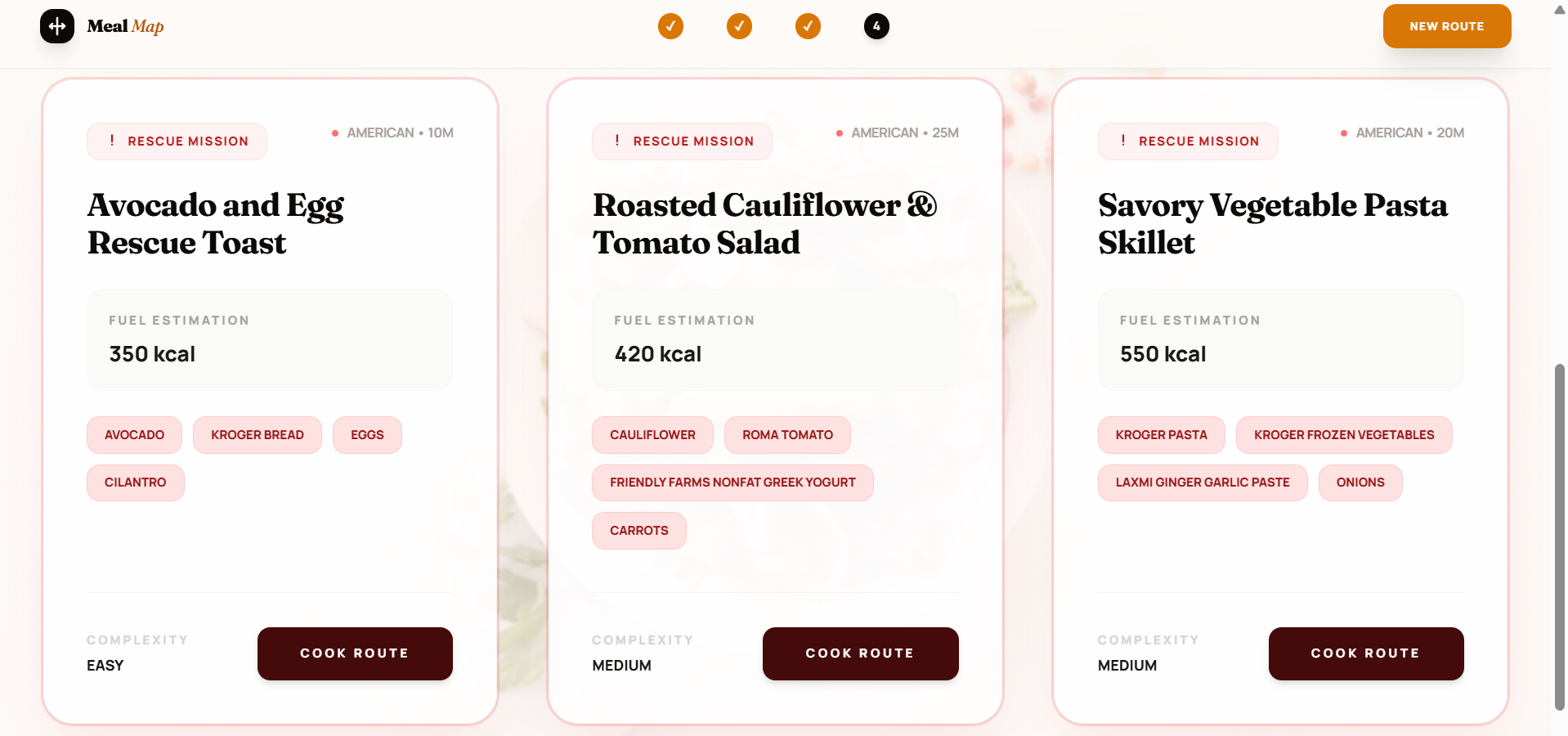
Activating emergency route!
-
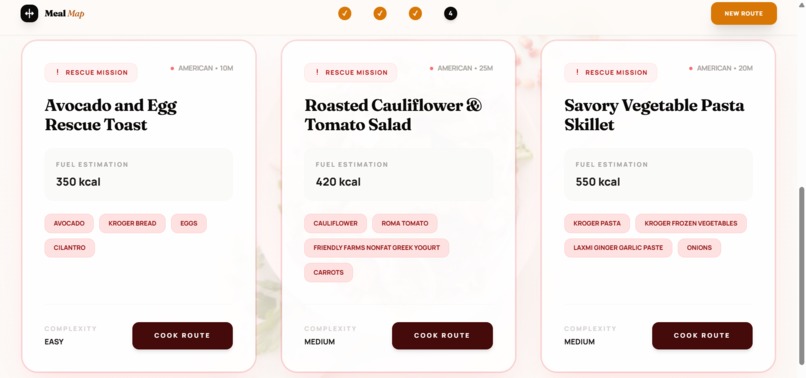
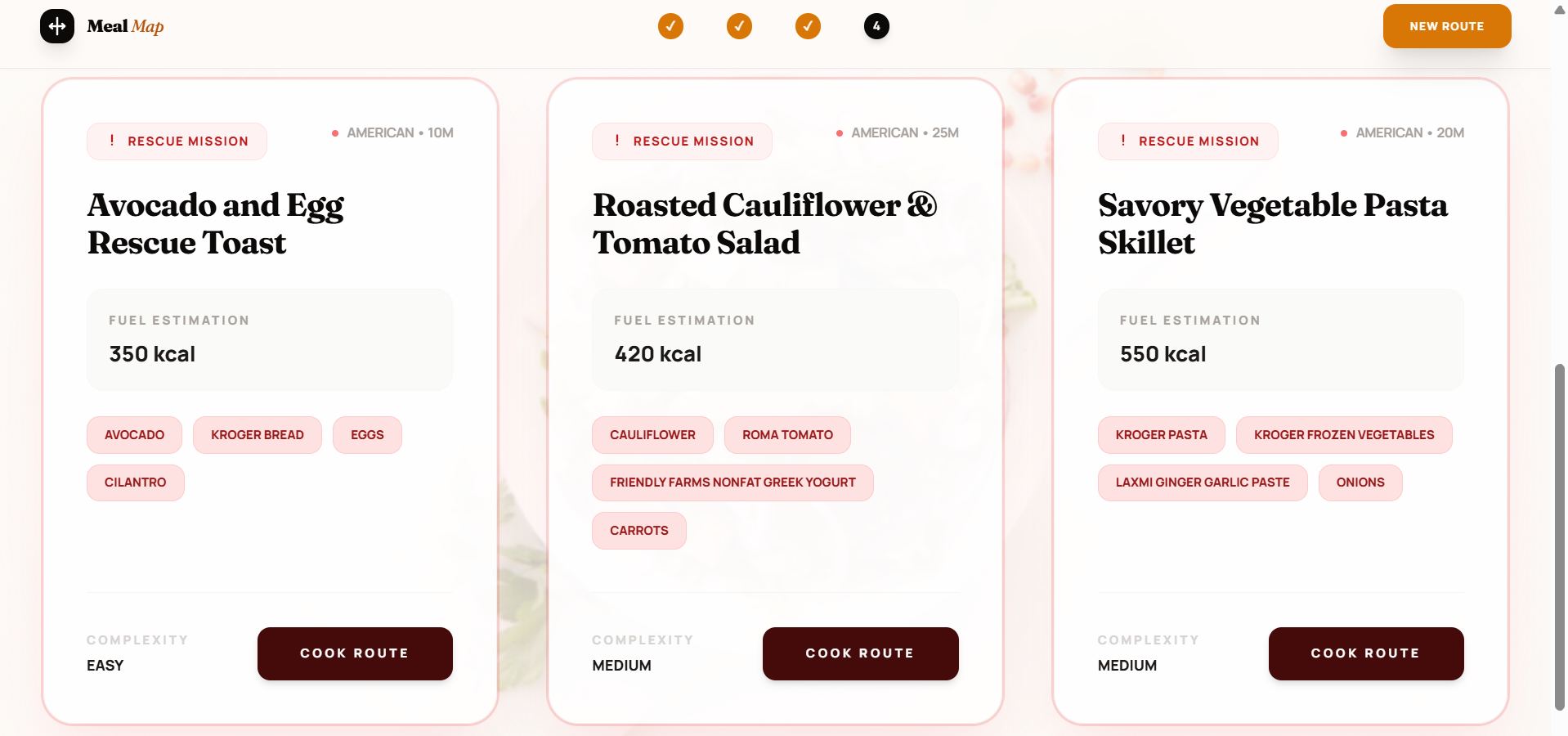
Meal Map suggests recipes that user can try within 15-20 min for a quick meal!
Inspiration
As a graduate student living away from home, I often found myself buying groceries with good intentions, only to forget what I already had and end up wasting food by the end of the week. Between classes, projects, and deadlines, meal planning was always the last priority. Many of my friends faced the same problem - spoiled vegetables, expired milk, and last-minute takeout because we didn’t manage our groceries properly. This everyday struggle inspired me to build Meal Map: a system that could understand what’s in your kitchen and help you use it intelligently.
What it does
Meal Map is an AI-powered meal planning and food management application that uses Gemini 3’s multimodal reasoning to analyze grocery receipts, fridge and pantry images, and user preferences. It creates a verified inventory, detects expiration risks, asks smart clarification questions, and generates optimized 7-day meal plans. It also features Emergency Mode for last-minute rescue meals, a Restock Engine to predict repurchases, and impact metrics to track cost and waste reduction. Instead of asking users to manually log everything, Meal Map works automatically using real-world data.
How we built it
We built Meal Map using Google AI Studio and the Gemini 3 Flash Preview model as the core reasoning engine. The frontend was developed using React and TypeScript to create an interactive and responsive user experience. We designed custom orchestration pipelines that allow Gemini 3 to process multiple inputs - images, text, and time constraints and reason across them. Prompt engineering was used to guide the model through intake, audit, planning, and optimization phases. The system integrates image processing, structured reasoning workflows, and dynamic state management to deliver real-time recommendations.
Challenges we ran into
One of the biggest challenges was handling noisy real-world data, such as blurry receipts, cluttered fridge images, and incomplete information. Another challenge was managing API limits and ensuring stable performance under free-tier constraints. Designing prompts that encouraged Gemini 3 to ask meaningful clarification questions instead of making assumptions also required multiple iterations. Balancing speed, accuracy, and cost while maintaining a smooth user experience was another major learning curve.
Accomplishments that we're proud of
We are proud of building a fully functional, end-to-end system that goes beyond simple recipe suggestions. Meal Map successfully integrates multimodal inputs, performs real-time reasoning, and generates adaptive meal plans. The Emergency Mode and Restock Engine demonstrate proactive AI behavior rather than reactive responses. We are especially proud that the application reflects a real problem faced by students and working professionals and offers a practical solution that can scale.
What we learned
Through this project, we learned how powerful modern multimodal AI systems can be when combined with thoughtful system design. We gained hands-on experience with Gemini 3’s reasoning capabilities, orchestration workflows in Google AI Studio, and building AI-driven user interfaces. We also learned the importance of designing AI systems that acknowledge uncertainty, ask questions, and adapt over time instead of producing static outputs.
What's next for Meal Map
In the future, we plan to add long-term usage tracking, personalized nutrition coaching, and integrations with local grocery delivery services. We also want to introduce collaborative household accounts and sustainability dashboards. With further optimization and deployment, Meal Map has the potential to become a smart household companion that helps users save money, reduce waste, and build healthier habits using AI-driven intelligence.
Built With
- css3
- esm.sh
- gemini-2.5-flash
- gemini-3-flash
- google-gemini-api
- html5
- lucide-icons
- react-19
- recharts
- tailwind-css
- typescript

Log in or sign up for Devpost to join the conversation.