Inspiration
Thresholds runs many group homes, but there was no easy way for one home to see what another was cooking. Good recipes stayed in one kitchen, and planning meals and shopping for them took repeated effort in every home.
The challenge said the bar was polish rather than complexity, and that stuck with us. We wanted to build something complete and pleasant enough that staff and residents would actually open it on a busy day, not just a long feature list.
What it does
me-n-u connects group homes through food:
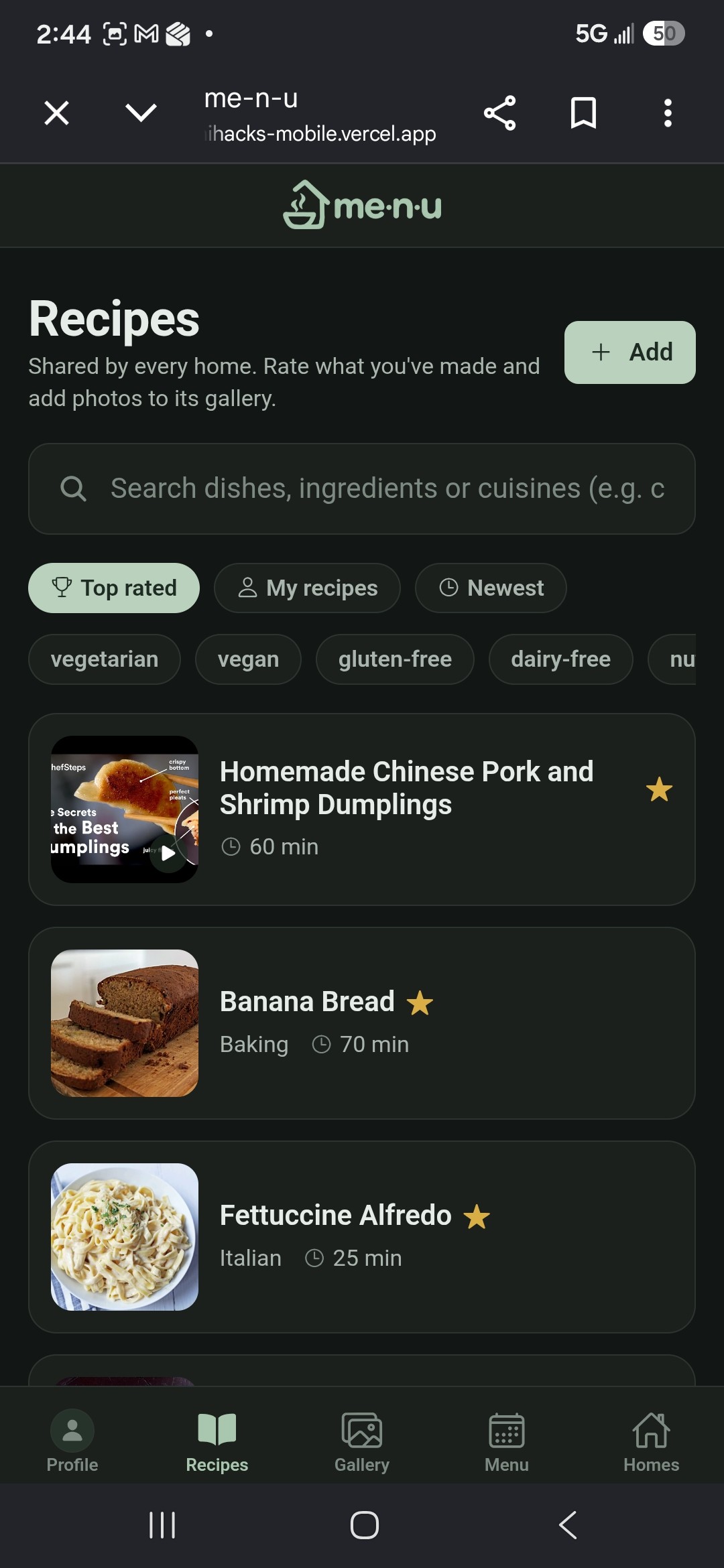
- Share recipes: add a recipe by hand, or turn a photo or YouTube video into written steps.
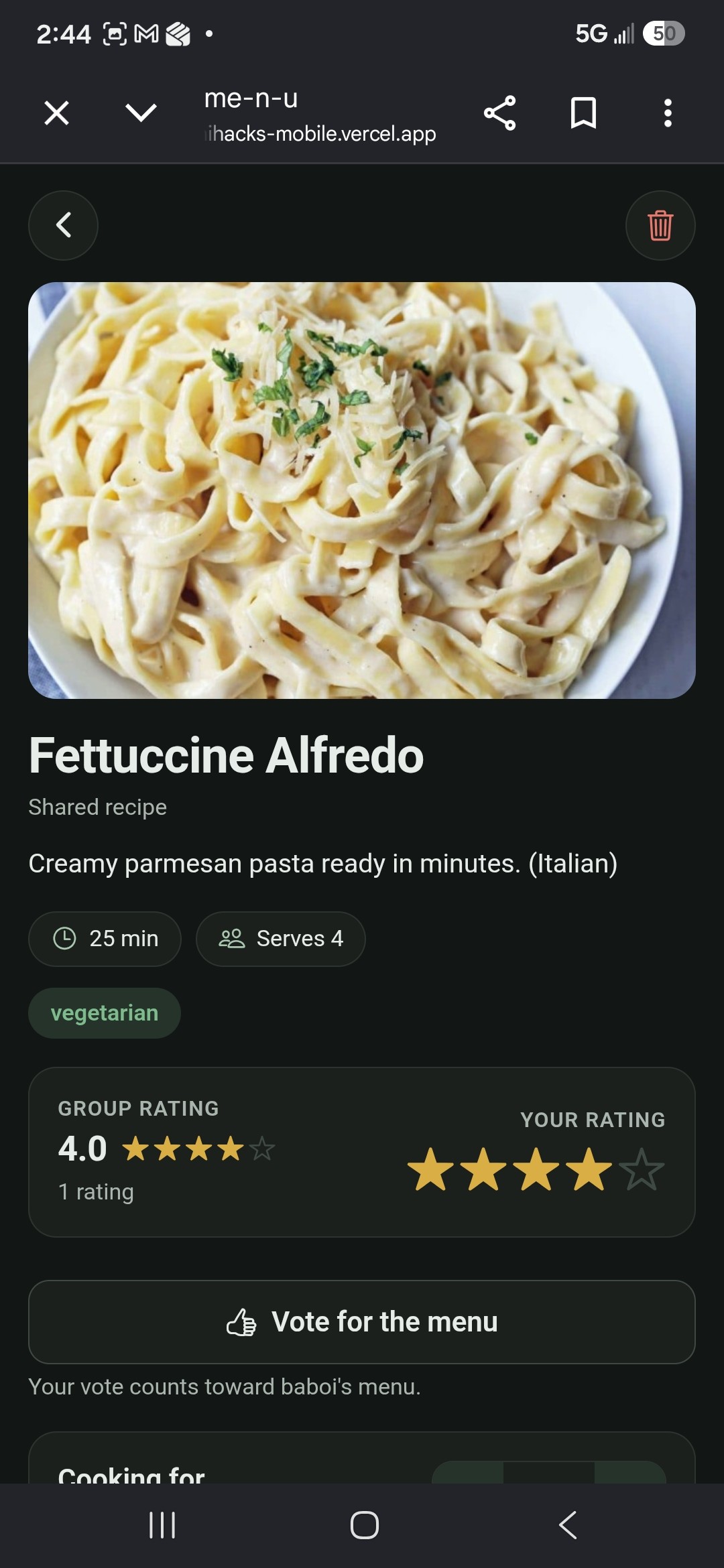
- Find what's good: everyone can rate recipes, so the favourites across homes rise to the top.
- Plan the week: each home builds its own weekly menu, and members can vote on what goes on it.
- Shop from the plan: the menu becomes a grocery list.
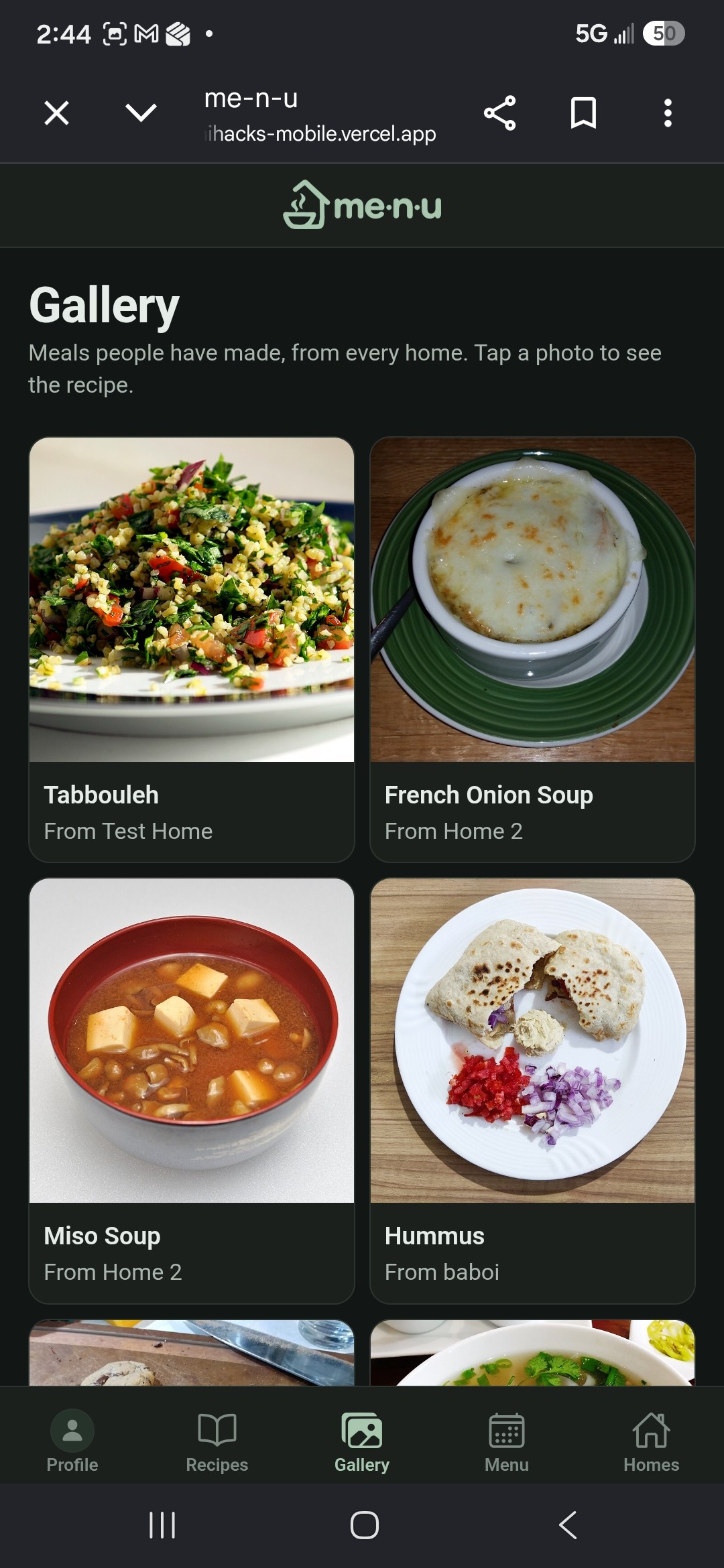
- Share photos: the gallery shows what other homes are making.
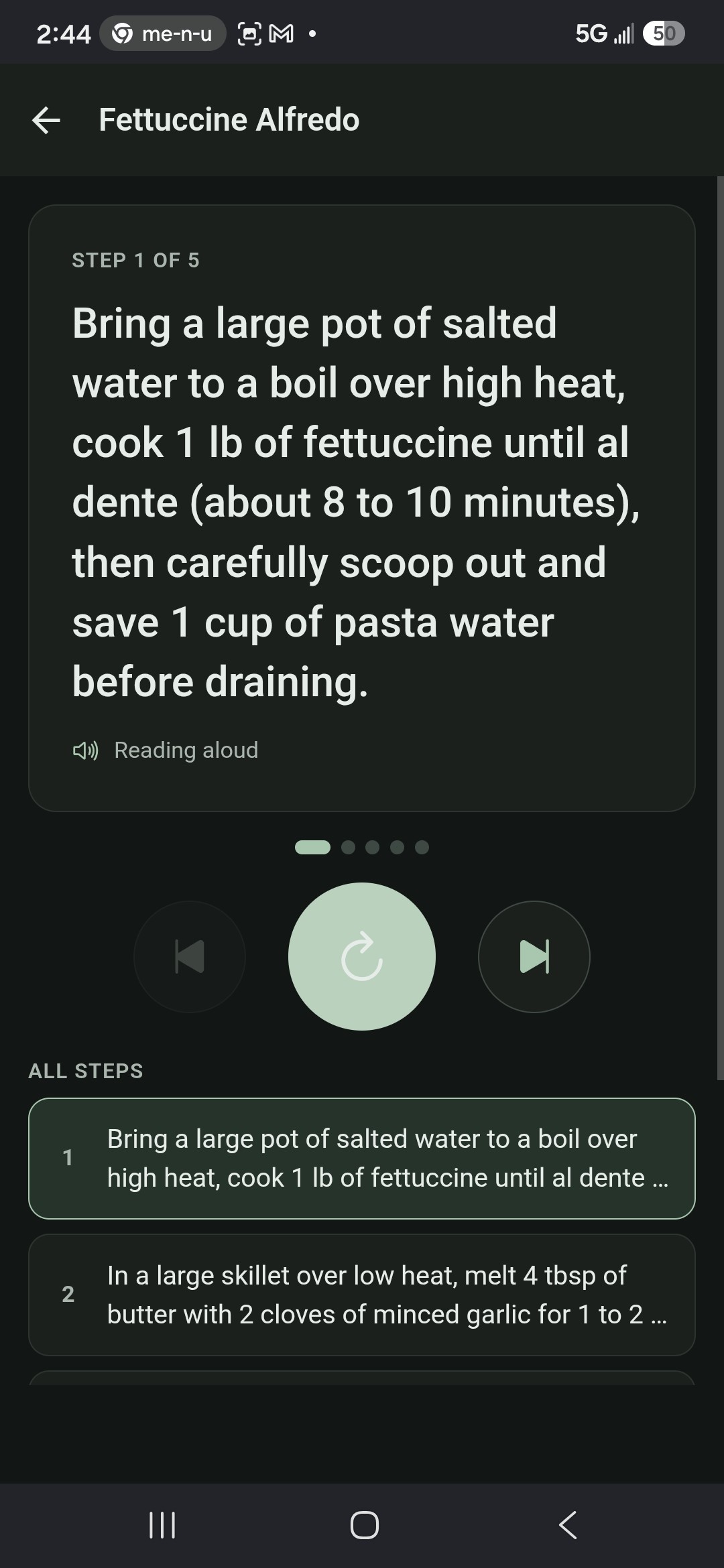
- Listen while cooking: a recipe can be read aloud one step at a time, with icon buttons to go back, replay or skip ahead, so nobody has to touch a screen with messy hands.
Homes have admins and acting admins, so each home can keep running when someone is away.
How we built it
- App: Expo and React Native with Expo Router, deployed to the web on Vercel.
- Backend: Supabase for Postgres, sign-in with Google or email, photo storage and Edge Functions.
- Access control: row-level security in the database keeps each home's menu, votes and grocery list visible only to its members.
- Recipe conversion: Google Gemini reads photos and YouTube links and turns them into structured recipes.
- Read-aloud: ElevenLabs generates the voice through a Supabase Edge Function, which keeps the API key off the client. Each clip is stored under a hash of its text, so a step is only generated once.
- Design: one primary colour, #B9D1BD, with no gradients and a minimal layout, plus light and dark themes.
We also used Claude Code, an AI coding assistant, to help build and debug the app.
Challenges we ran into
Making recipes sound natural. The voice stumbled over shorthand like "150g" and "1/2 tsp". We wrote a converter that spells out units, fractions, temperatures, ranges and numbers before the text reaches ElevenLabs, so "150g" is spoken as "one hundred and fifty grams". The recipe on screen doesn't change.
Protecting people's privacy. Group homes are sensitive places, so we made the gallery and recipes anonymous. Photos are credited to a home, never a person, and recipes don't show who shared them. A database trigger sets the home's name, and only if the poster belongs to that home.
Getting sign-in ready for real users. Google sign-in only worked for approved test users until we added a privacy policy and published the app. Email sign-up then hit the rate limit on confirmation emails, so we turned email confirmation off. Our first privacy page also trapped signed-out visitors, so we rebuilt it as a static page outside the app's navigation.
Keeping keys out of the code. We moved our keys out of the repository, so Vercel now supplies the Supabase values at build time and the AI keys stay on the server.
Cutting a feature we had already built. We built a pantry tracker that showed which ingredients you were missing. Once the grocery list was working well, the pantry was just more to maintain, so we removed it, along with the "Completed" button tied to it.
Accomplishments that we're proud of
- The whole loop works: a recipe can go from a photo to a weekly menu to a grocery list.
- Read-aloud works well for people cooking with their hands full.
- Privacy is enforced in the database, not just hidden in the interface.
- The app is live, and anyone can sign up.
What we learned
- Polish takes real engineering. Details like a disabled "back" button on step one or no white flash when you scroll too far take time, but they're what make an app feel finished.
- Removing a feature can improve a product as much as adding one.
- Moving from a demo to a public app brings its own work, including OAuth publishing, email limits, privacy policies and key management.
- Security rules are easiest to trust when they live close to the data.
What's next for me-n-u
- Dietary restriction tags and filters, so homes can quickly find meals that work for their residents.
- A most-cooked view, to show what homes actually make as well as what they rate highly.
- Piloting it with a few Thresholds homes and improving it based on their feedback.
- Native iOS and Android releases.
Built With
- gemini
- node.js
- postgresql
- react
- supabase
- typescript
- vercel


