-
-
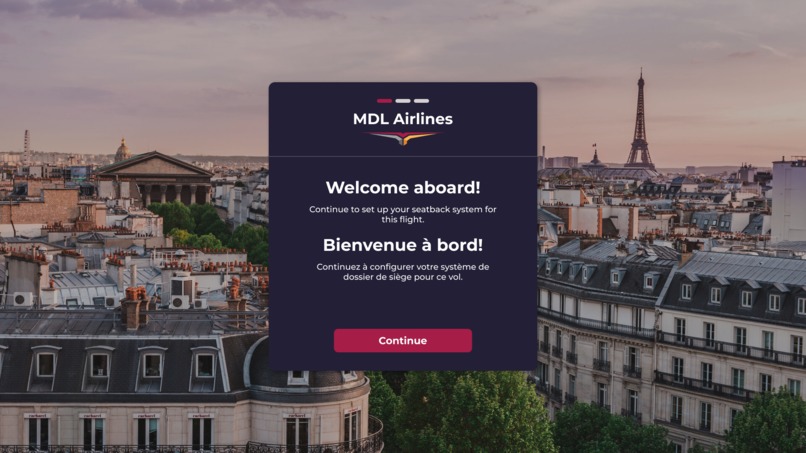
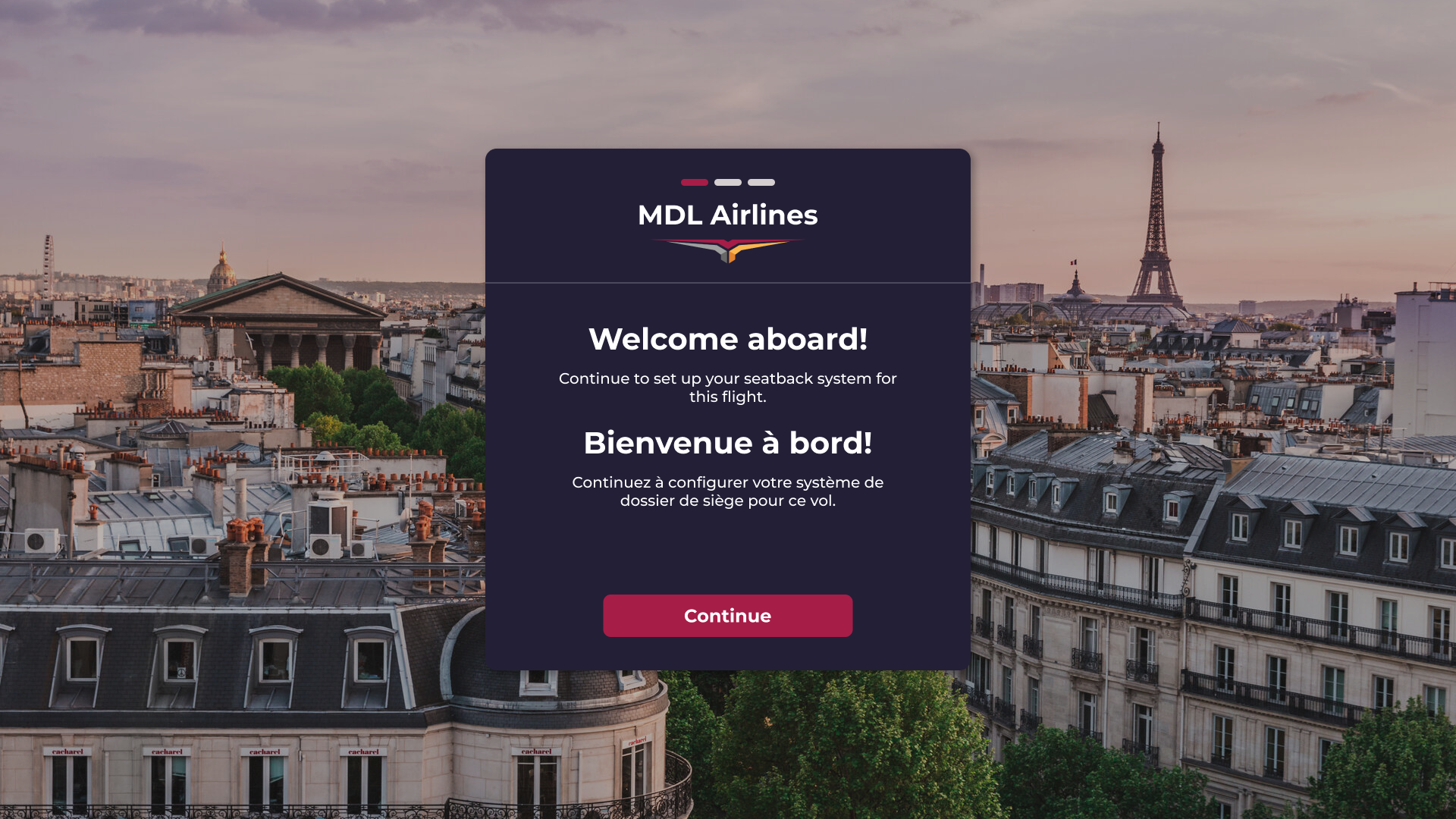
Welcome Screen
-
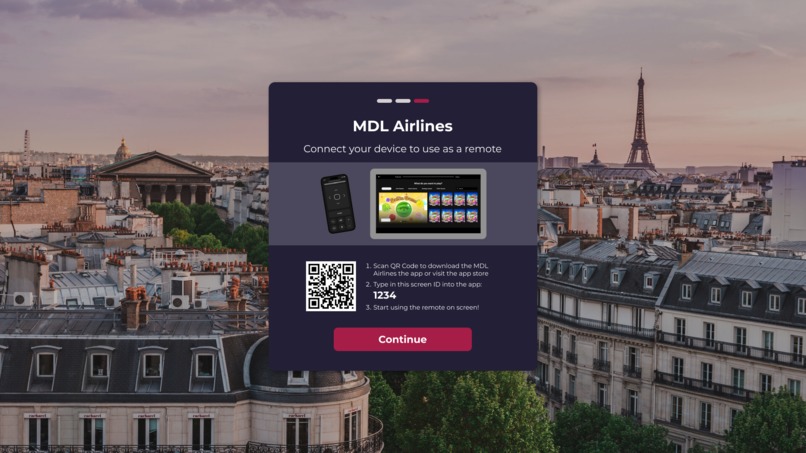
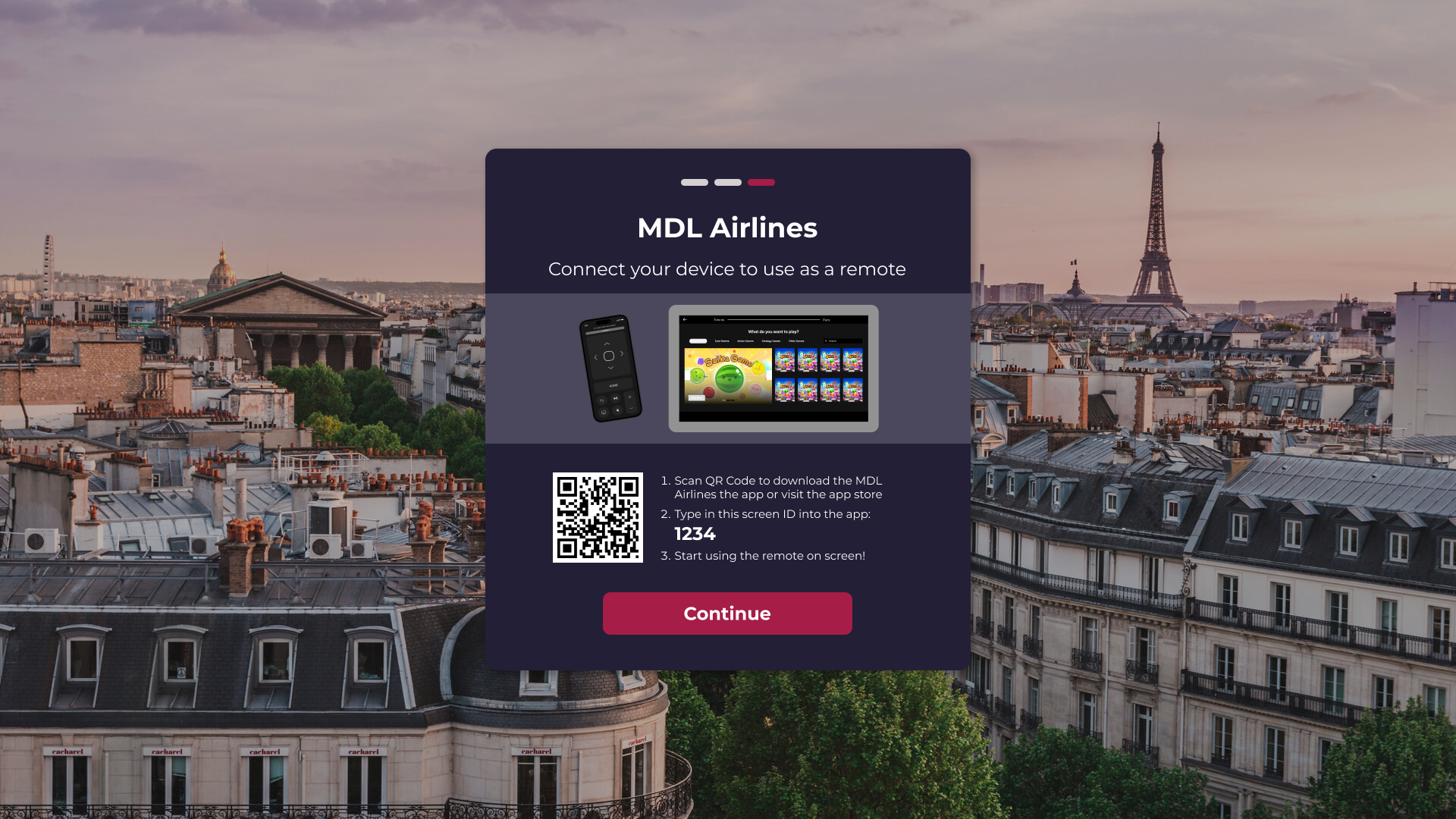
Phone remote connection
-
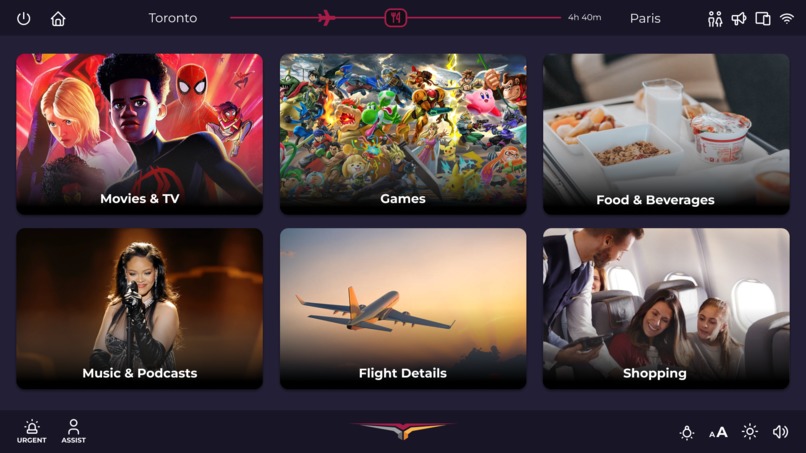
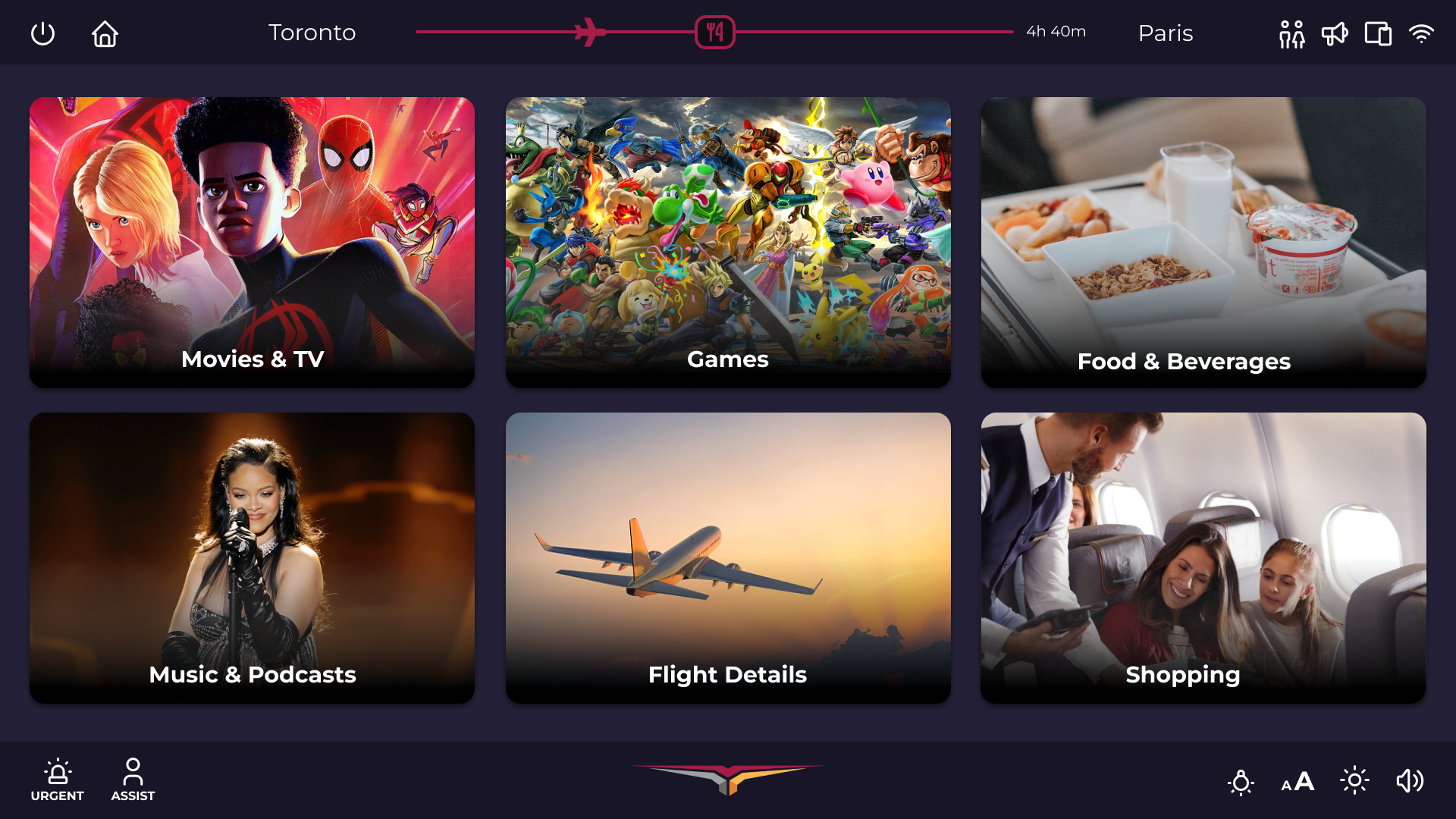
Home Screen
-
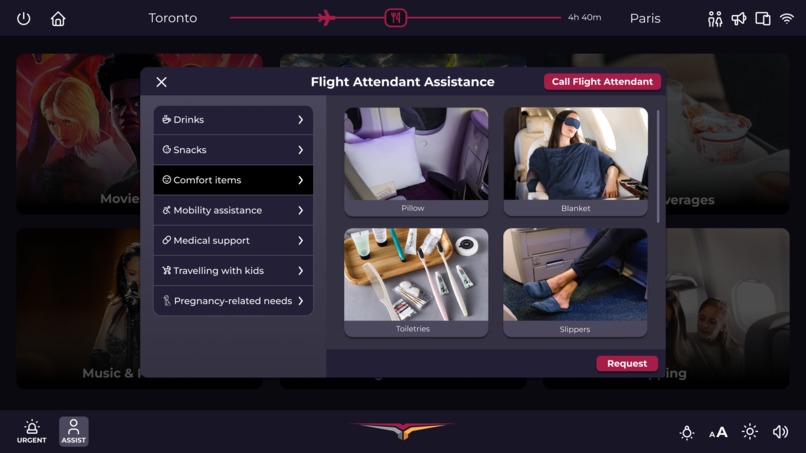
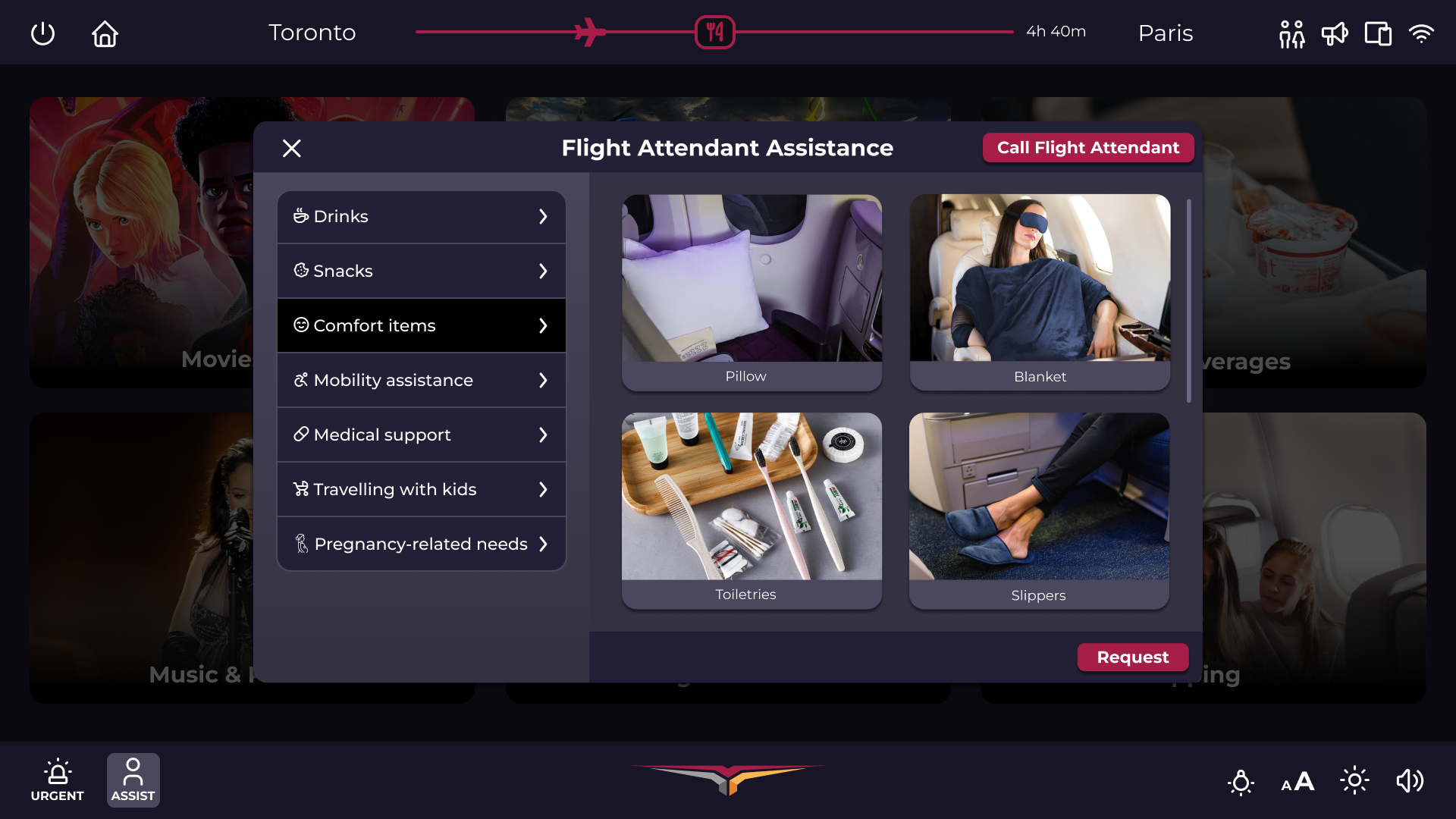
Inclusive support section
-
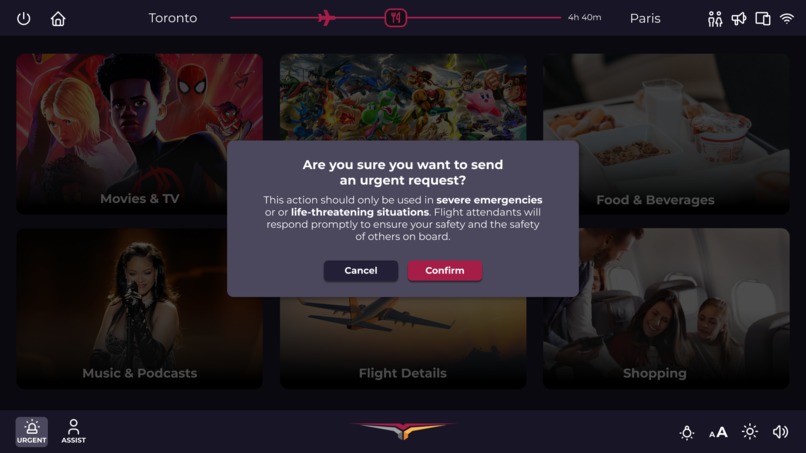
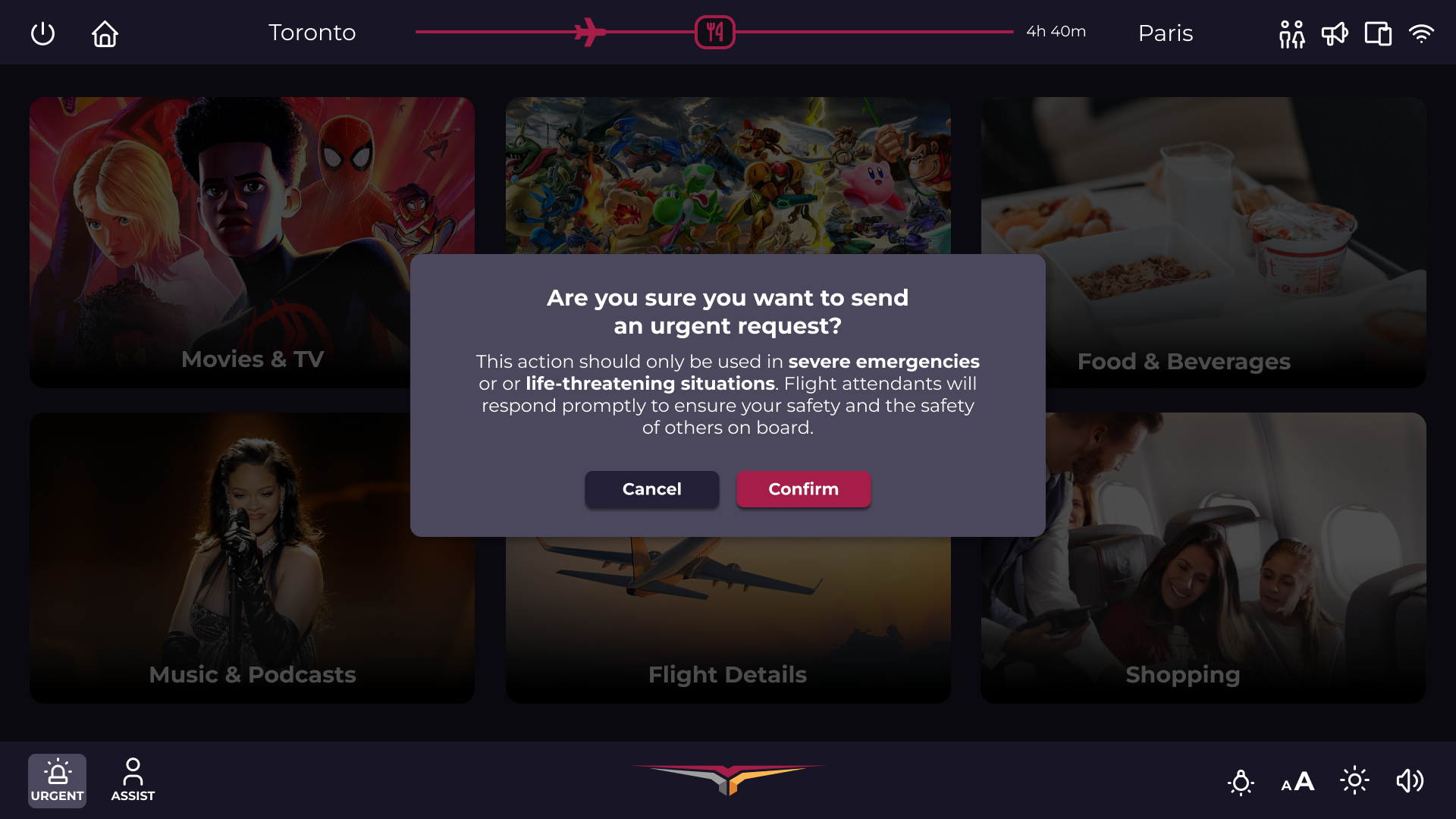
Urgent request
-
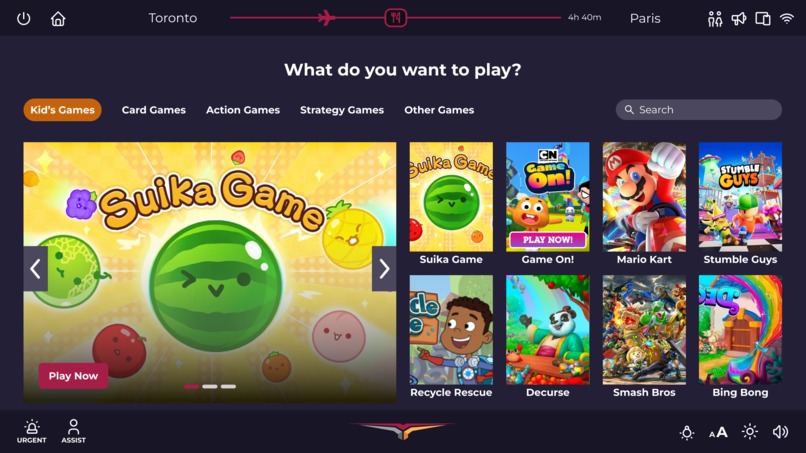
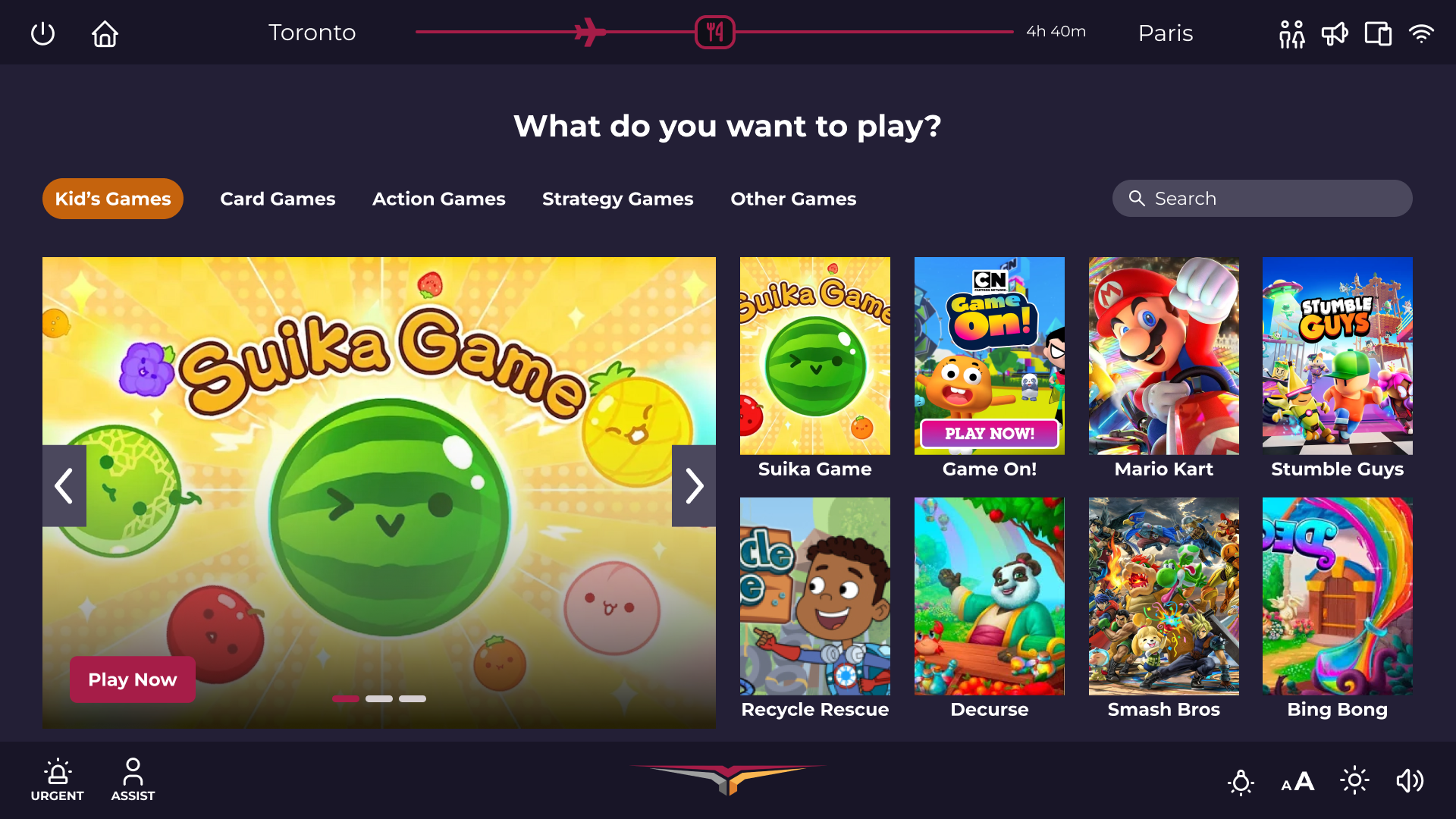
Games Screen
-
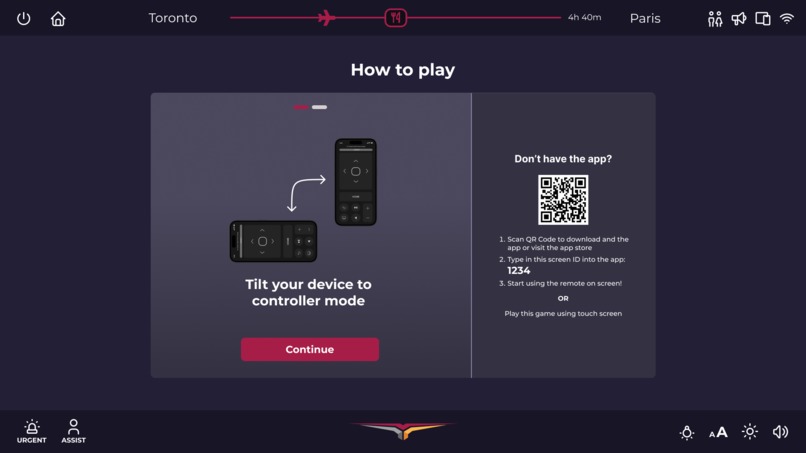
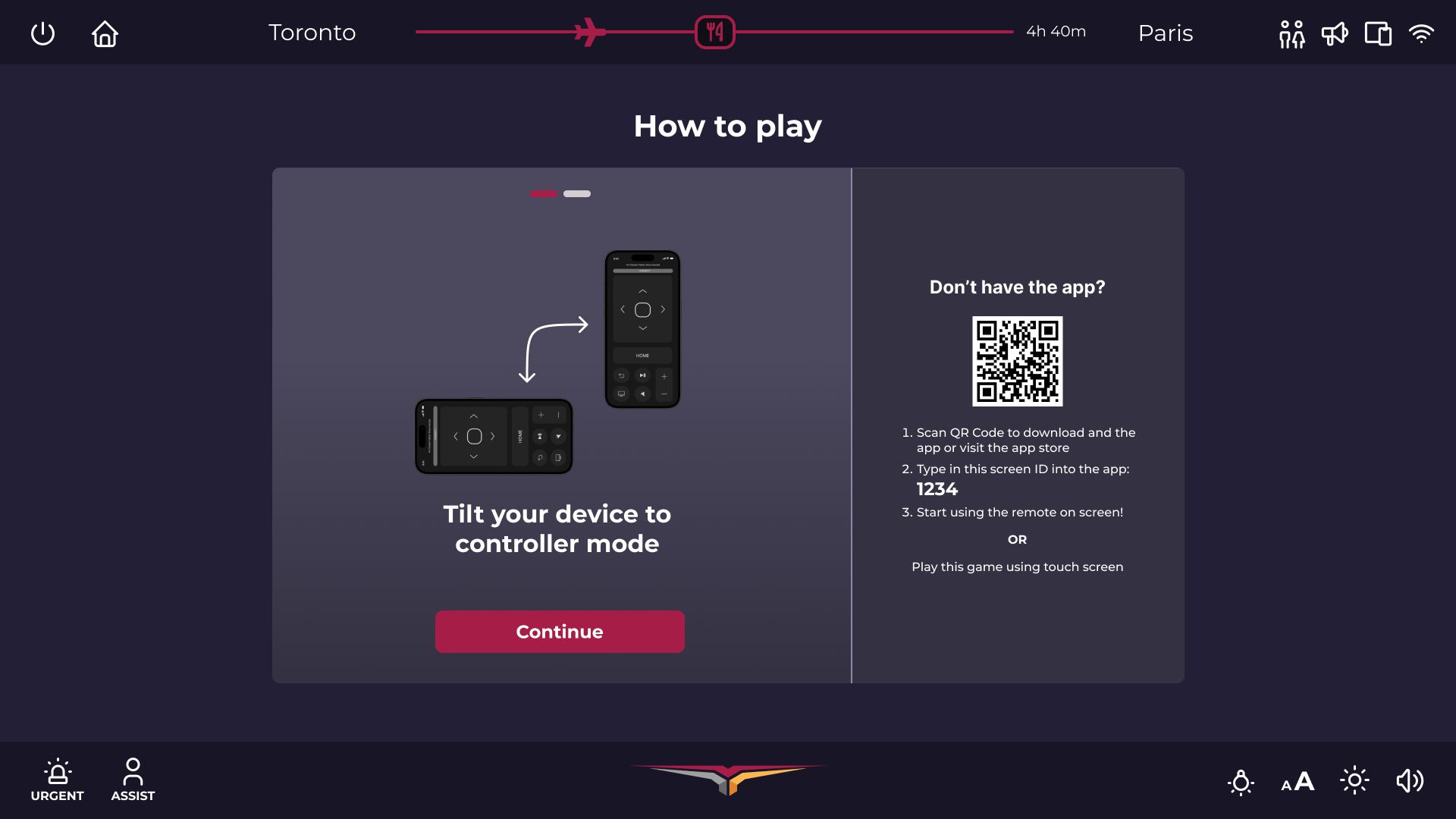
Game mode phone remote
Link to Other Demo Videos
In-flight Communication: https://drive.google.com/file/d/1DjNGSlSTiwYn9qC_9idBW_wiwohOcm1L/view?usp=drive_link
Media Preferences: https://drive.google.com/file/d/17DcWwR1_AoxKtJ6mNWGoVLiFx16kRZR1/view?usp=sharing
Inspiration
In-flight entertainment has changed greatly over the modern tech boom. With more passengers owning their own devices, seatback screens have become an outdated technology. Nowadays, more than 65% of passengers access in-flight entertainment through their own devices, while 44% passengers use only the seatback screen. At MDL Airlines, we also understand that more passengers are dissatisfied with a lack of inclusivity in air travel. Over 60% of the 2.2 million Canadians with disabilities had issues when traveling on federally regulated planes and trains.
This begs the question: how can we create a more engaging, inclusive, and personalized experience for travellers through our seatback screens?
What It Does
MDL Leisure is a 4-part solution to improve the current version of seatback screens.
Part 1 includes a redesign of its current UI. With more corporations shifting to modern UI, we decided to completely revamp the current version of seatback screens and increase its user friendliness.
Part 2 includes the introduction of a new technology: the MDL Remote App. Almost all in-flight entertainment systems are controlled by touch. This is inconvenient for those who have mobility issues, since they need to raise their arm forward to use the seatback screen. Consequently, we developed a remote control app that connects through mobile devices.
Part 3 includes a revamped flight support panel. This aims to streamline communication between staff and passengers. With this support panel, passengers will now be able to notify staff about a variety of needs, including medical assistance, child assistance, or mobility assistance.
Part 4 includes an enhanced content layout to provide better recommendations to a variety of demographics. This includes a game page and a movies page organized into kids and adult sections, as well as international categories to account for travelers that speak different languages.
How We Built It
MDL Leisure was brainstormed through FigJam and designed through Figma. We created a user flow, a low-fidelity design, a high-fidelity design, and a front-end prototype.
Challenges We Ran Into
One challenge that we ran into was trying to differentiate ourselves from other airlines. There are several modern airlines that have adapted newer technologies, including improved content selection and Wifi networks. For instance, Air Canada recently partnered with Apple TV to improve their seatback screens. To have a competitive edge in the market, MDL Airlines decided to focus on the MDL Remote App. We also put a heavy emphasis on inclusivity, because in-flight inclusivity has been criminally overlooked by all airlines for the past few decades.
Accomplishments That We're Proud Of
We are proud of the work we were able to get done in the time frame given. We have a detailed user flow and were able to design screens for all parts of the flow. We were also proud of incorporating a remote control app, because almost no other airline in the world has introduced this feature yet.
What We Learned
We learned a lot more about the airline industry and its current struggles with adapting to the modern tech boom. We also learned about the importance of inclusivity in air travel, and how it's often overlooked how scary it can be for disabled passengers (e.g. those in wheelchairs) to travel on a plane.
What's Next for In-Flight Entertainment System
The next step for the in-flight entertainment system is to develop a detailed shopping center, as well as improve the passenger support section. The idea of incorporating an AI Chatbot is also on the table.
Built With
- figjam
- figma

Log in or sign up for Devpost to join the conversation.