
Inspiration
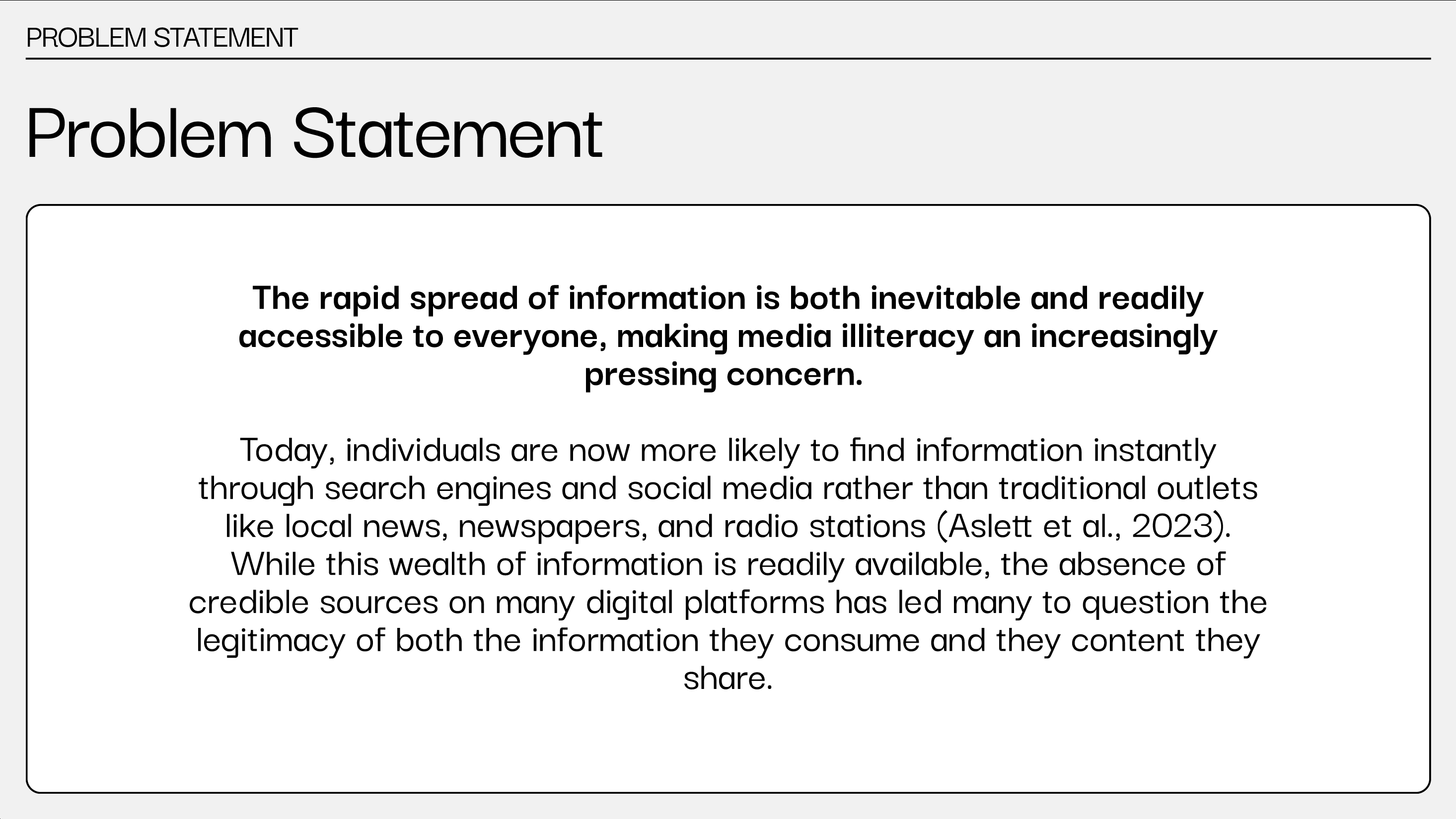
Our mission is rooted in the fight against fake news, misinformation, and disinformation, which are increasingly pervasive threats in today’s digital world. As the saying goes, "the pen is mightier than the sword," which underscores the power of words and information. We aim to ensure that no one falls victim to digital deception.
While technology has contributed to the spread of misinformation, we believe it can also be a powerful ally in promoting the truth. By leveraging AI for good, we aim to combat falsehoods and uphold the integrity of information.
Fun fact: Moodeng is a pygmy hippopotamus born on July 10, 2024, living in Khao Kheow Open Zoo, Thailand. She became a viral internet sensation during a busy political season in the US. Amid the flood of true and half-true information, Moodeng, symbolizing purity and honesty, stood as a beacon of clarity. Like Moodeng, our tool is here to cut through the noise and keep things transparent. So, Vote for Moodeng!
What it does
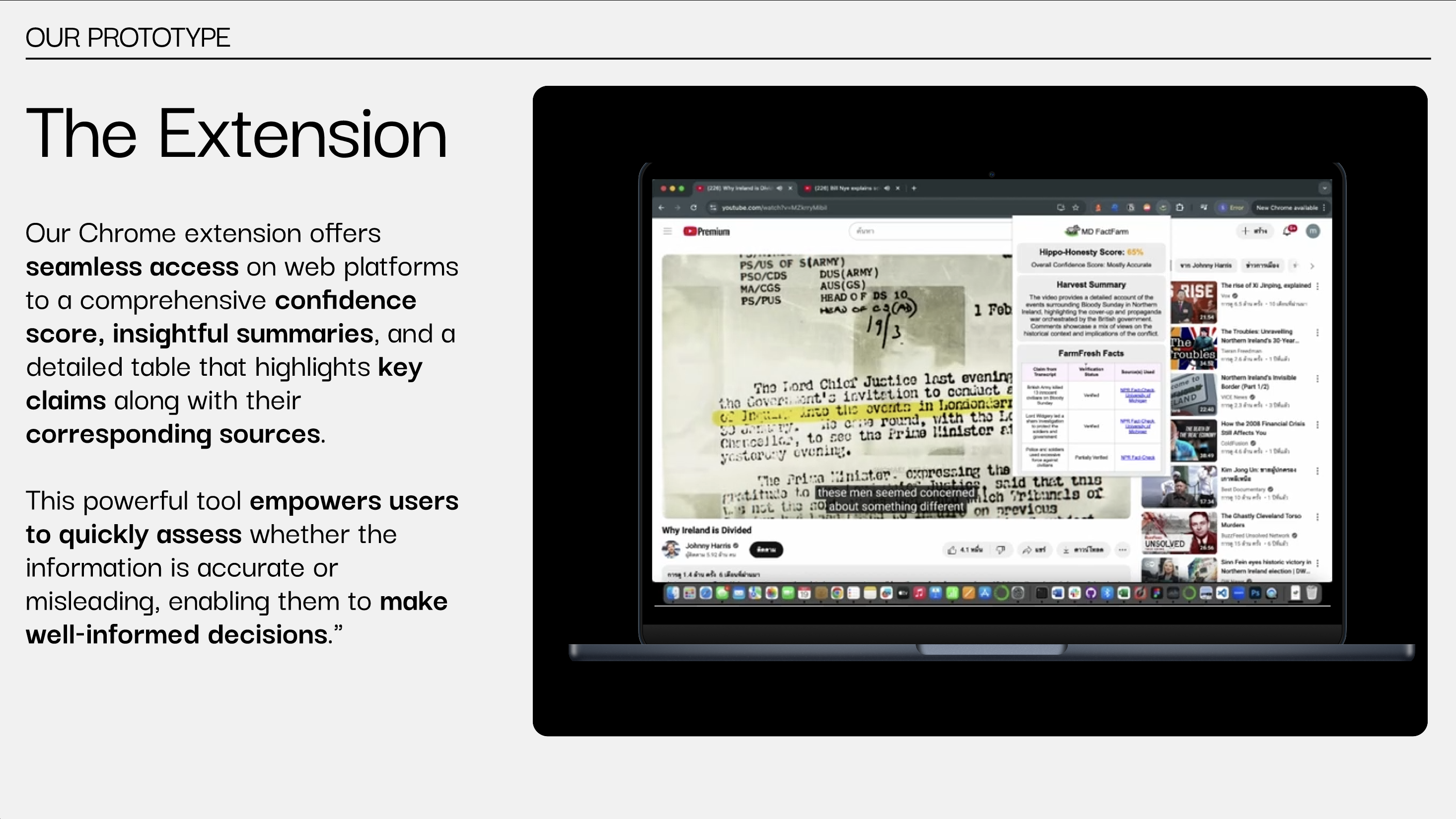
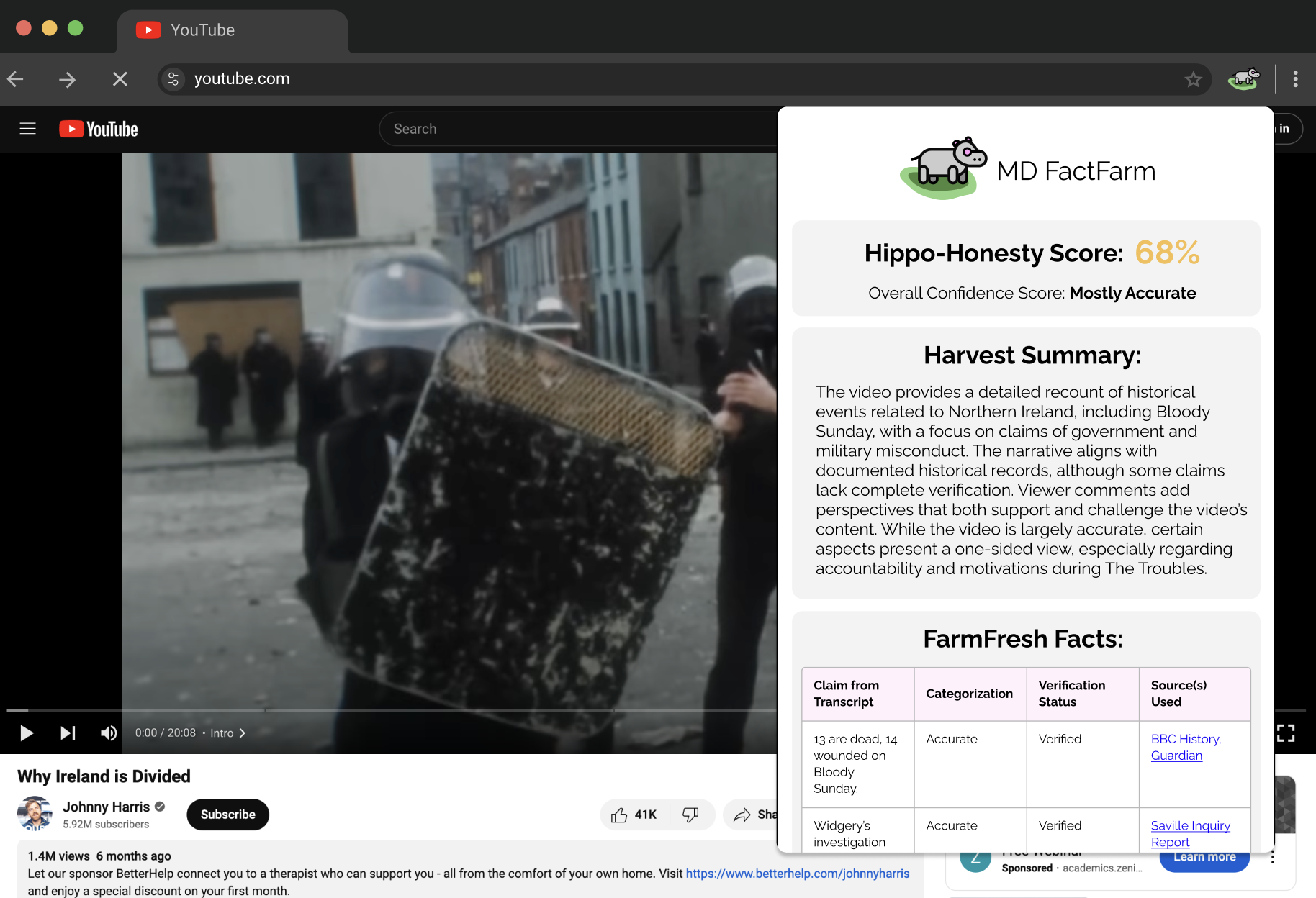
Social media platforms are now major sources of rapidly shared information. Our Chrome extension, MD FactFarm, simplifies fact-checking through AI-driven content analysis and verification. Initially focused on YouTube, our tool offers real-time fact-checking by scanning video content to identify and flag misinformation while providing reliable sources for users to verify accuracy.
How we built it
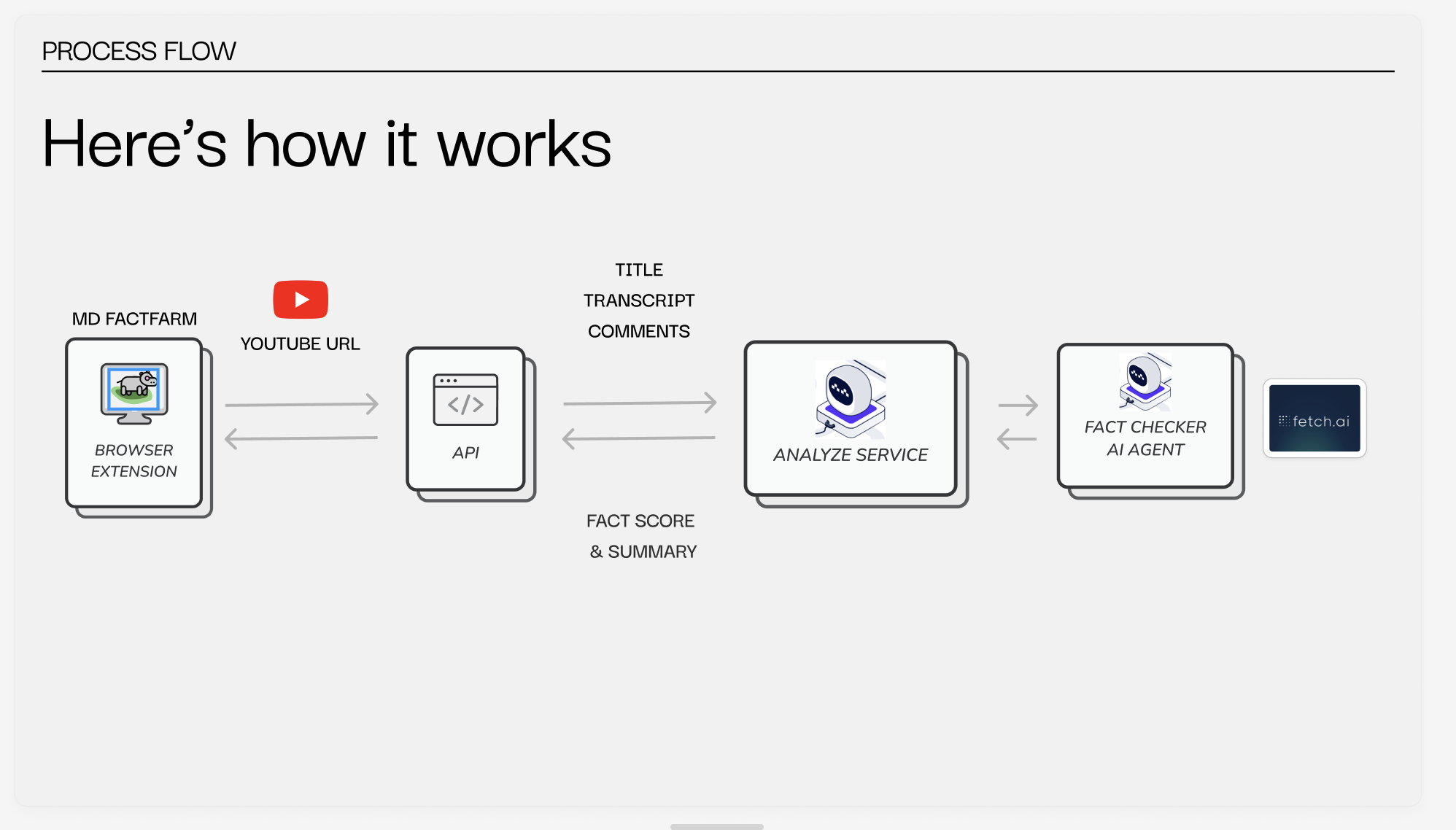
At the core of our system is a Large Language Model (LLM) that we trained and optimized to accurately understand and interpret various forms of misinformation, powering our fact-checking capabilities.
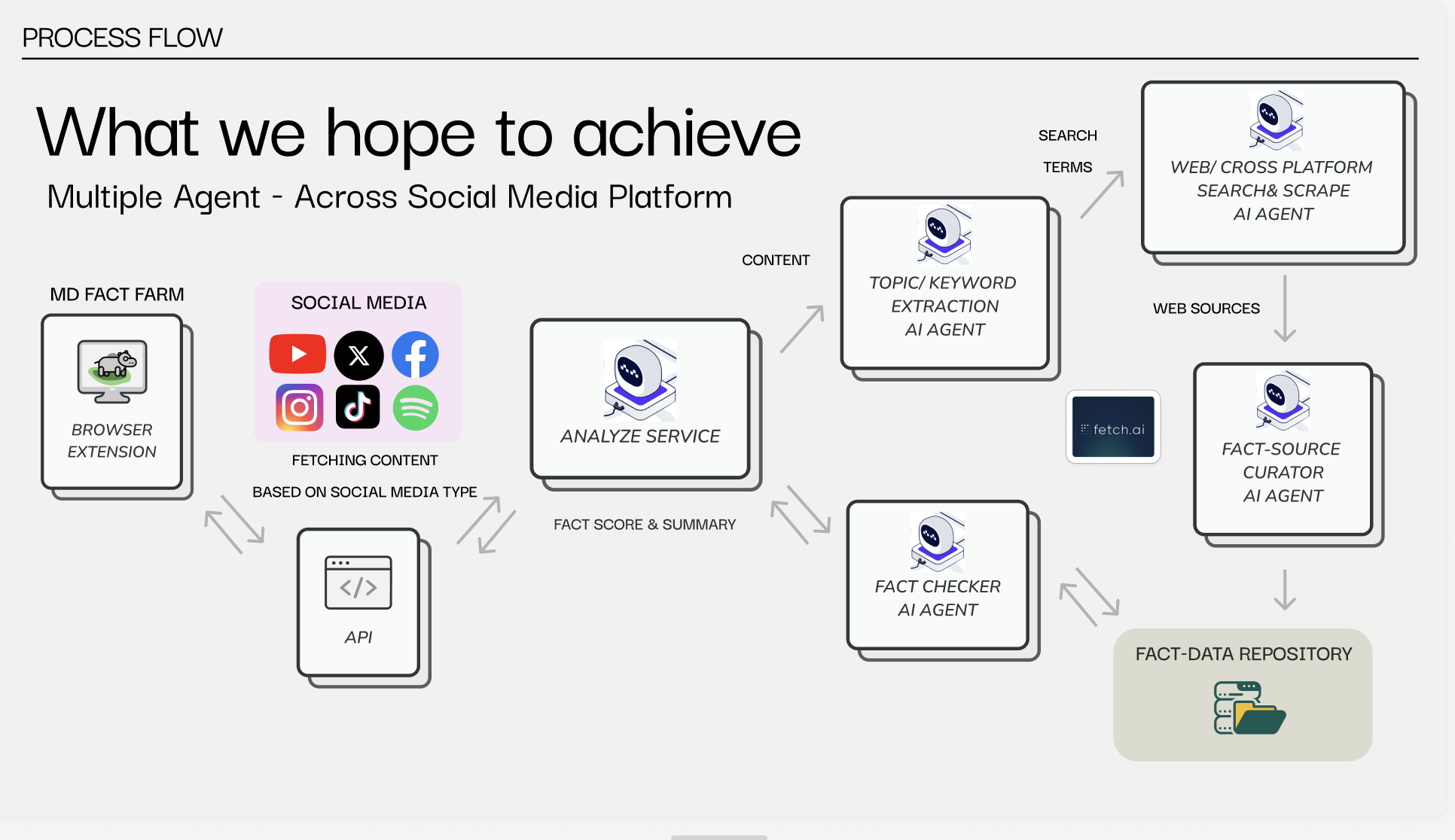
We integrated an AI agent using Fetch.ai and built services and APIs to enable seamless communication with the agent.
Our front-end, built with HTML, CSS, and JavaScript, was designed and deployed as a Chrome extension.
Challenges we ran into
One of the major challenges we encountered was ensuring that the AI could accurately differentiate between fact, opinion, and misleading content. Early on, the outputs were inconsistent, making it difficult to trust the results.
To achieve this, we had to rethink our approach to prompt engineering. We provided the AI with more detailed context and built a structured framework to clearly separate different types of content. Additionally, we implemented a formula for the AI to use to determine a confidence score for each output. These changes helped us generate more consistent and reliable results, enabling the AI to better recognize the subtle distinctions between fact, opinion, and misleading content.Another challenge was integrating multiple agent frameworks into a unified system that could operate seamlessly. Managing the intricacies of coordinating tasks and data flow between these diverse components contributed to a complex integration process.
Accomplishments that we're proud of
We successfully developed a Chrome extension that that provides real-time fact-checking for YouTube, empowering users to make informed decisions.
We crafted prompts that effectively leverage the LLM's ability to detect misinformation.
We successfully integrated Fetch.ai, utilizing agents that lay the foundation for scalability.
What we learned
We learned the importance of defining the problem clearly and deciding on a minimum viable product (MVP) within a limited timeframe. Additionally, we focused on framing our work to align with the AI agent framework, which has been crucial in improving our approach to misinformation detection.
What's next for MD FactFarm
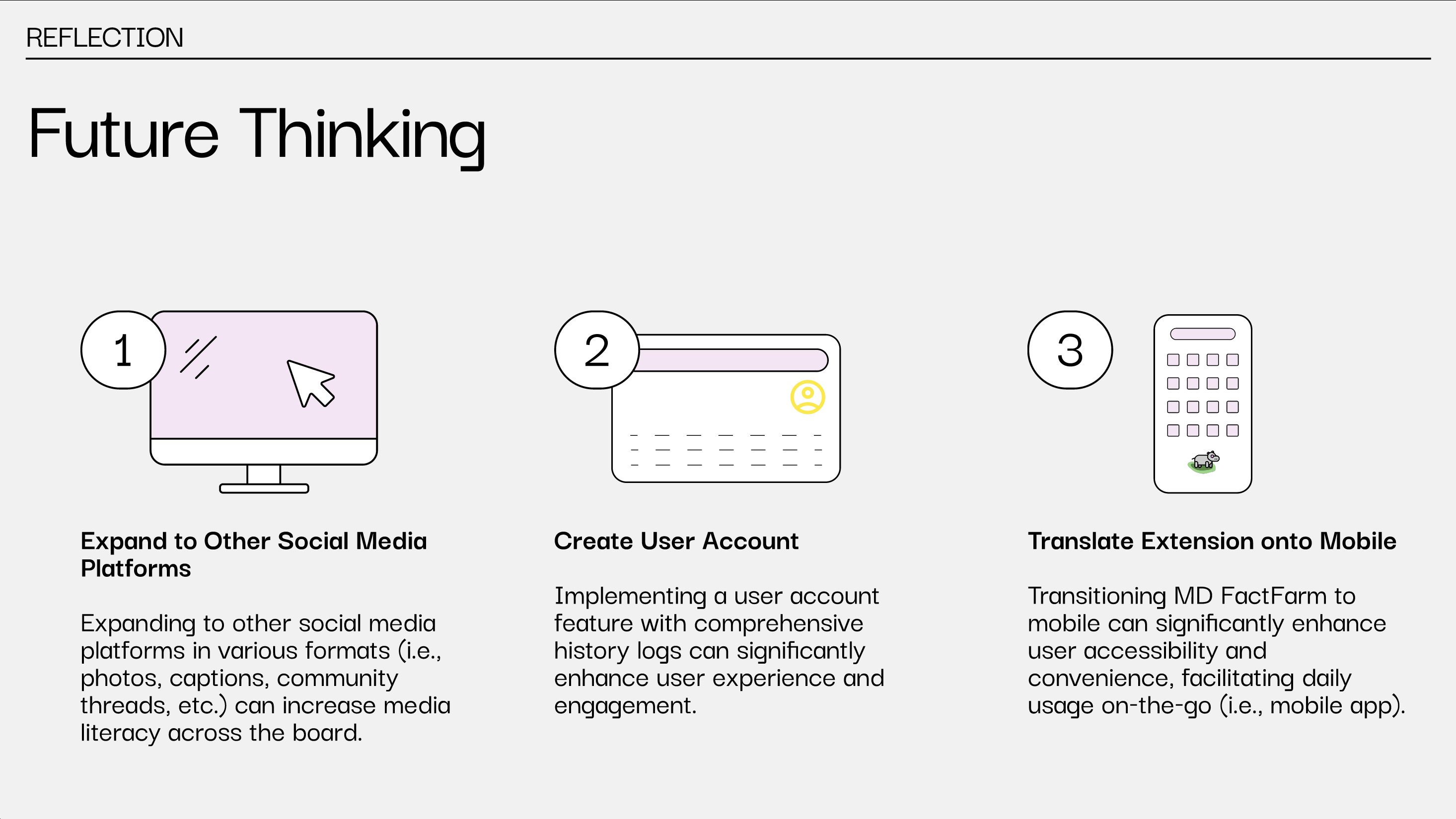
Moving forward, we plan to expand our platform to include other social networks, such as Twitter and Facebook, where misinformation spreads rapidly. We aim to gather a wider range of information sources to ensure more comprehensive fact-checking and cover more diverse content. Moreover, we are working on enhancing our AI's fact-checking mechanics, utilizing more advanced techniques to improve accuracy.


Log in or sign up for Devpost to join the conversation.