About MCP-Siege
We built MCP-Siege to explore a simple question:
What happens when an AI agent can interact with a game through WebMCP instead of controlling it through clicks and screen coordinates?
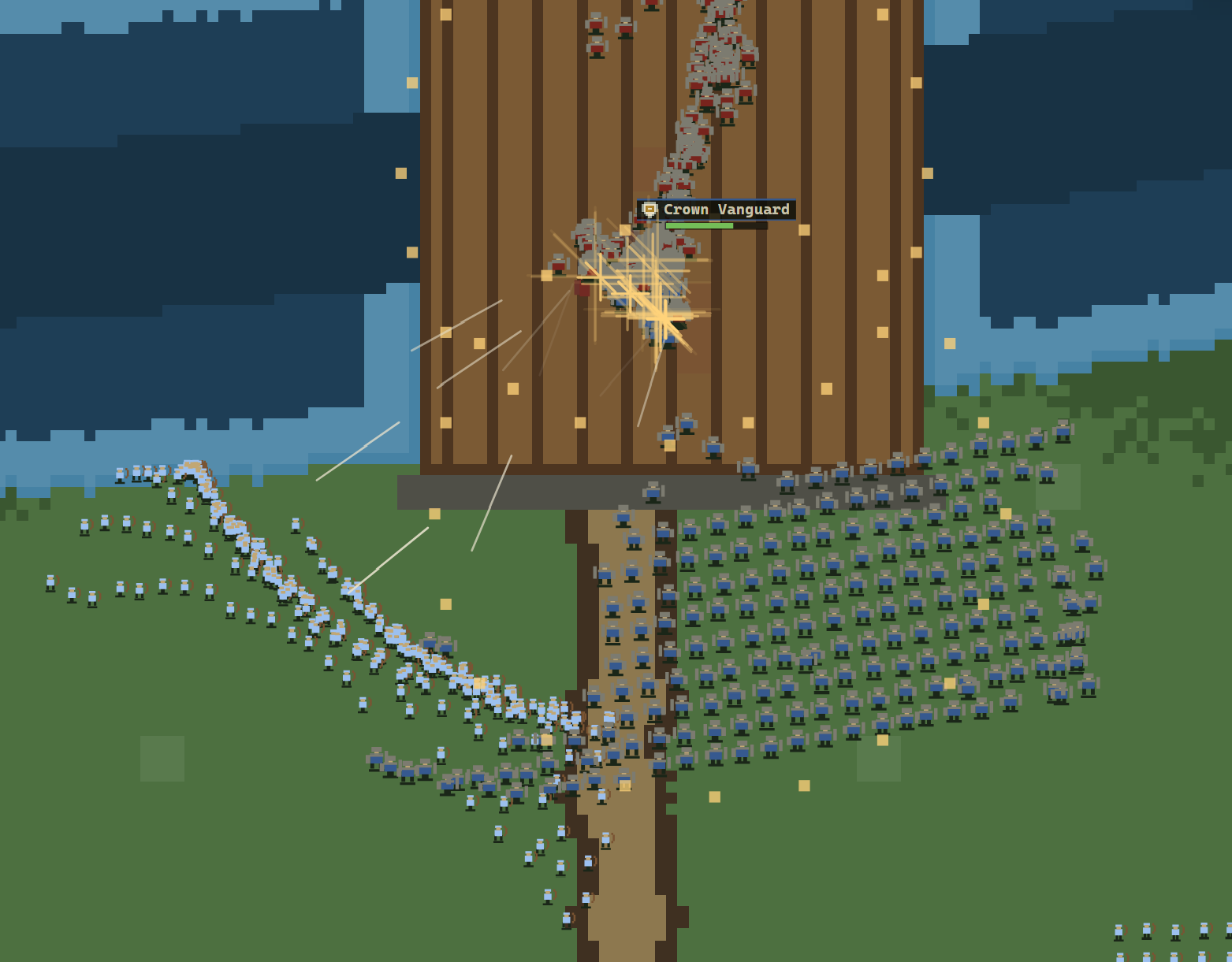
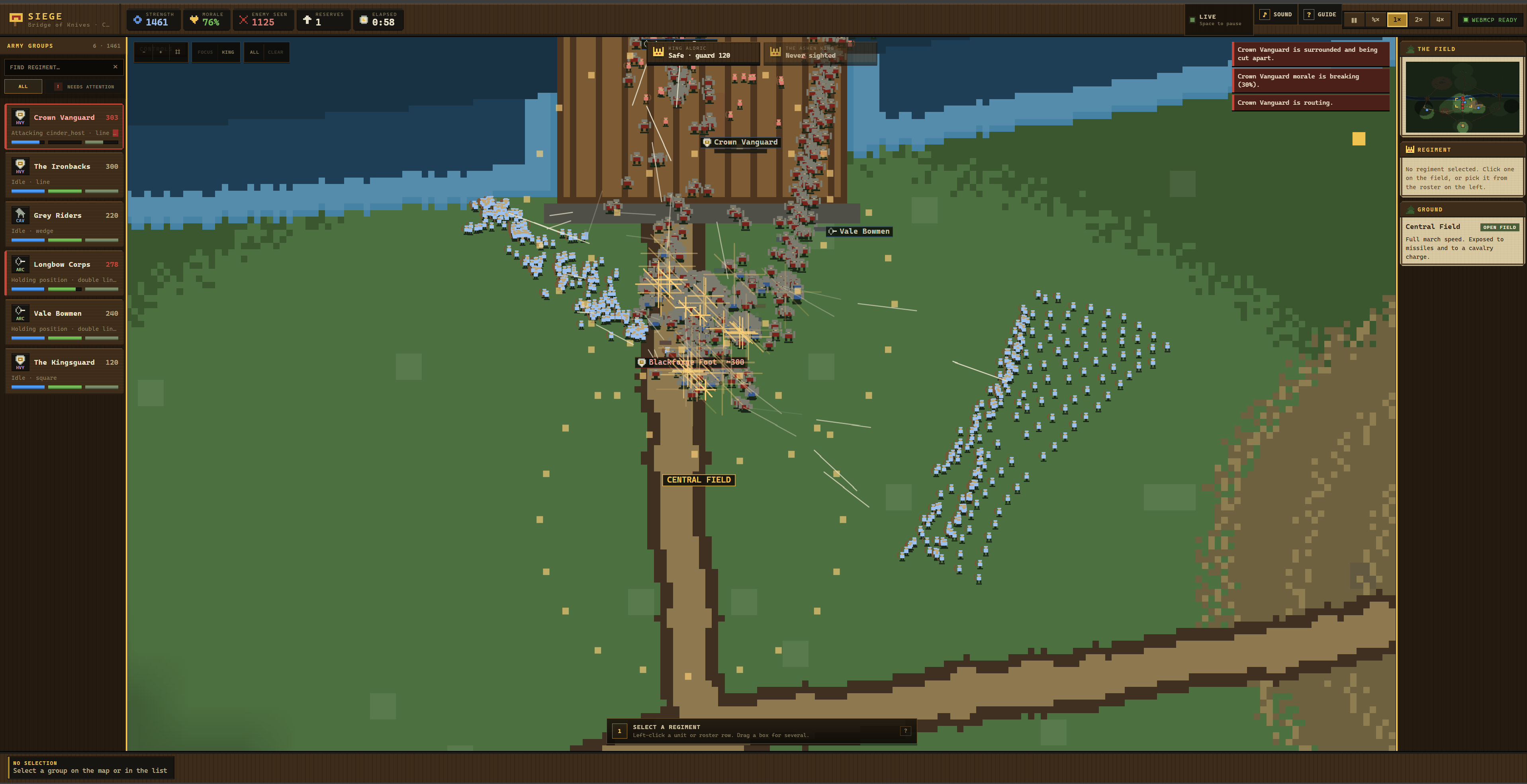
In MCP-Siege, players command a medieval RTS army, while WebMCP exposes structured actions that allow an AI agent to understand units and move them directly in the game.
The current implementation is intentionally simple: AI can command unit movement through WebMCP. But the idea goes much further.
MCP-Siege shows a possible foundation for games where AI agents are not just chatbots next to the game, but actual participants inside it.
The same approach could enable:
- AI party members in RPGs that can actually follow commands and interact with the world
- AI commanders or teammates in strategy and tactical games
- AI crew members in simulators
- AI companions in survival and sandbox games
- entirely new multiplayer experiences built around humans and AI playing together
Instead of every game creating a completely custom AI integration, WebMCP could provide a common interface between the game and the agent.
How we built it
We built MCP-Siege as a browser-based medieval RTS and exposed selected game actions through WebMCP.
When an agent connects, it can discover the tools provided by the game, understand their schemas, and use them to move units. This avoids fragile UI automation and gives the agent a direct, structured way to interact with game logic.
Challenges and what we learned
One of our biggest challenges was deciding how much of the game should be exposed to the agent.
Even something as simple as moving a unit requires the AI to understand what units exist, which one should be controlled, where it can move, and how the game state changes afterward.
We also learned that WebMCP does not need to be limited to productivity websites or forms.
Games are interactive web applications too.
MCP-Siege is a small proof of concept, but it points toward something much larger:
WebMCP could become the interface that lets AI agents enter games as companions, teammates, and characters — not just tools outside of them.
Open source
MCP-Siege is open source under the MIT License. The complete source code and license can be viewed in the public GitHub repository:
Built With
- ai
- game
- javascript
- react
- rts
- vercel
- vite
- web
- webmcp


Log in or sign up for Devpost to join the conversation.