-
-
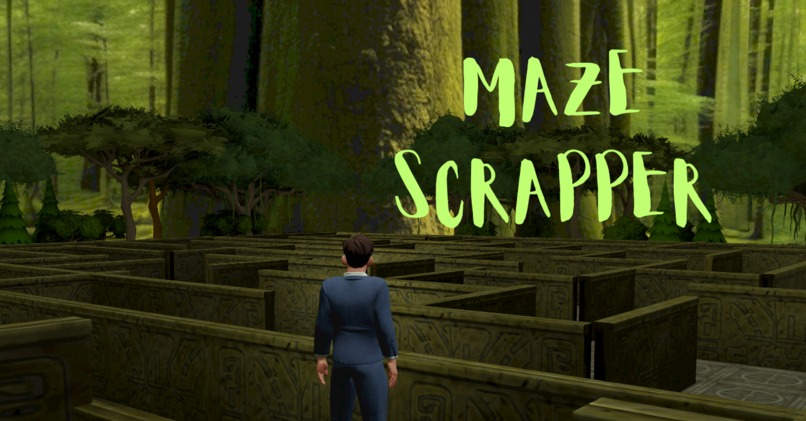
Get lost in a new maze every time—collect, explore, and escape in this endlessly re-playable adventure built for Meta Horizon mobile.
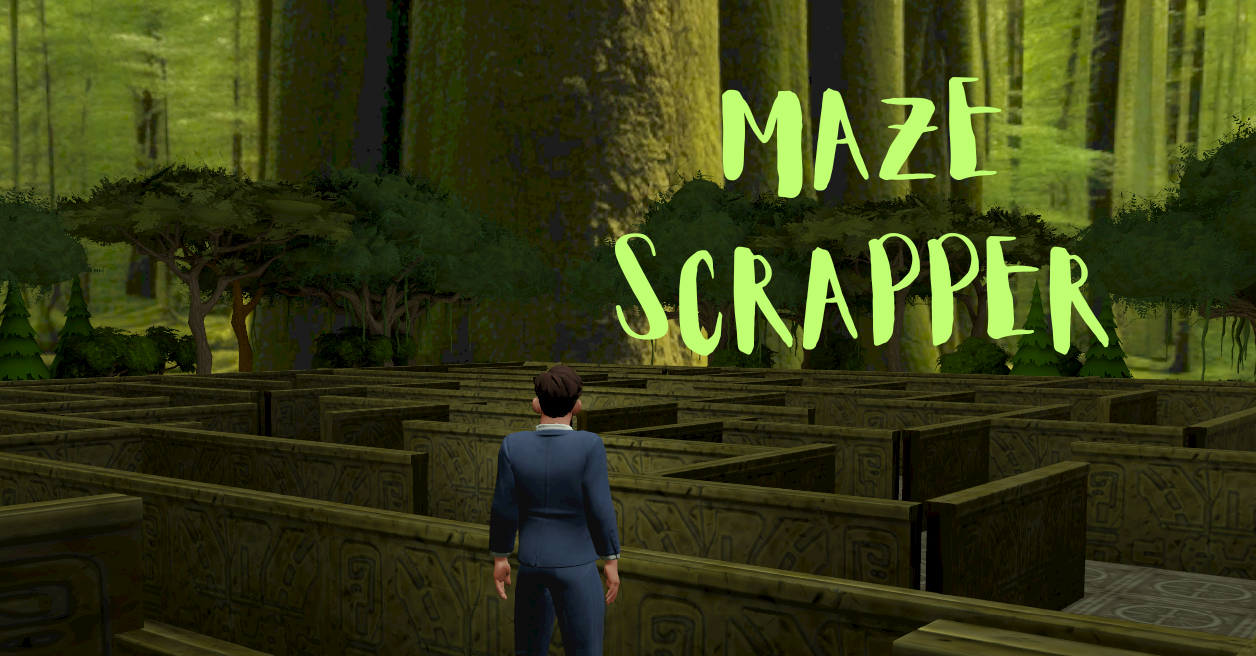
Inspiration
The core idea came from a simple observation: solving a maze from a top-down map is very different from navigating it in first-person without an overview. Most mobile games provide a full maze view, but I wanted players to experience the tension, uncertainty, and discovery that come from navigating blind—relying on memory and instinct.
This game draws inspiration from puzzle adventures and escape room mechanics, where players must explore, collect, and overcome environmental challenges. The emotional arc—feeling lost, finding a clue, and ultimately escaping—makes for a compelling gameplay loop. I aimed to recreate that feeling on mobile through intuitive controls, ambient design, and procedural environments.
What it does
Maze Scrapper is a mobile game that challenges players to navigate a procedurally generated maze from a first-person or limited-view perspective. The goal is to collect scattered objects and return them to a central hub, all while navigating unpredictable paths and tracking your progress. Every playthrough presents a unique maze, making the game highly re-playable and engaging for players who enjoy puzzle-solving and exploration.
How we built it
We built Maze Scrapper using a mobile-friendly game engine with scripting support for procedural generation. A Depth-First Search (DFS) algorithm was used to generate a new maze layout each time the game starts. Key features include:
1) Procedural maze generation using DFS
2) Collectible system with grabbable items and return zones
3) Touch-based navigation with intuitive swipe controls
4) Trigger zones and progress counters for game state tracking
5) Minimalist UI for real-time feedback without cluttering the screen
Assets were sourced from optimized mobile asset packs and custom scripts were written to handle object spawning, scoring logic, and interaction.
Challenges we ran into
1) Integrating DFS into tile-based layout without creating unreachable zones or visual glitches
2) Tuning touch controls to ensure smooth navigation on small screens
3) Ensuring solvable mazes while maintaining randomness and challenge
4) UI limitations on dynamic score updates and persistent leaderboard implementation
5) Syncing sound effects with actions in a procedurally shifting maze environment
Accomplishments that we're proud of
1) Successfully implemented procedural maze generation that is both solvable and varied
2) Designed a fully functional core gameplay loop of collection and return
3) Created a clean, immersive mobile experience despite platform constraints
4) Delivered a working prototype that is fun, intuitive, and re-playable
What we learned
1) Gained hands-on experience in applying graph traversal algorithms (DFS) to procedural game design.
2) Learned to optimize mobile UX, including swipe-based controls and responsive UI layout.
3) Understood how to balance procedural randomness with structured playability, ensuring every maze is fun yet solvable.
4) Improved core skills in game architecture, asset management, and logic scripting for real-time interaction.
5) Identified the value of tight feedback loops through iterative testing to improve game flow and challenge.
Navigated numerous technical challenges within the game development engine, uncovering key limitations:
1) Prefab deletion bugs: Even after removal, some prefabs remained linked to scripts, causing ghost object references.
2) Editor instability: The hierarchy view occasionally crashed or disappeared, leading to the loss of unsaved work.
3) Asset management issues: Difficulties in organizing and reordering assets in the hierarchy disrupted workflow.
These issues highlighted the importance of manual version control and frequent backups during development.
Overall, the project was not just about building the game, but also about learning to work around platform-specific constraints and building robust troubleshooting habits.
What's next for MAZE SCRAPPER
1) Add leaderboard integration with persistent scoring across sessions
2) Implement visual cues (e.g., particle effects or object glows) to improve object discovery
3) Enhance sound design with spatial audio and ambient effects
4) Introduce difficulty levels and timed modes for competitive re-playability
5) Expand into multiplayer (race or co-op) modes
6) Experiment with themed maze environments like ice, neon, or jungle settings


Log in or sign up for Devpost to join the conversation.