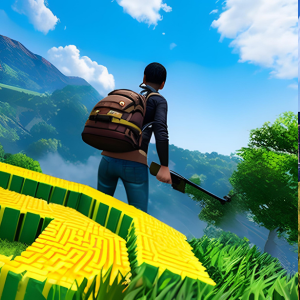
INSPIRATION
Video Games: Look to popular video games for inspiration, especially those with unique gameplay mechanics or immersive worlds. Games like PUBG, Fortnite, Minecraft, and classics like Pac-Man can offer valuable insights.
Movies and Books: Explore science fiction and fantasy movies or books that feature maze-like environments or survival scenarios. Films like "The Maze Runner" or books like "The Hunger Games" might spark creative ideas.
Virtual Reality: Stay updated with the latest developments in VR technology and experiences. VR games and applications, such as those on Oculus and HTC Viven, can provide inspiration for your AR/VR project.
Real-World Mazes: Visiting real-world mazes like hedge mazes, corn mazes, or escape rooms to understand the physical aspects of maze design and gameplay.
WHAT IT DOES
AR/VR Technology: It leverages augmented reality (AR) and virtual reality (VR) technologies to create an immersive and visually stunning gaming experience. Players wear AR/VR headsets to interact with the virtual world.
Maze Gameplay: The core gameplay involves navigating through intricate mazes. These mazes can vary in complexity and design, offering unique challenges in each round.
Battle Royale: Inspired by popular battle royale games like PUBG, players are not alone in the maze. They compete against each other, with the goal of being the last person or team standing.
Obstacles and Challenges: The mazes are filled with obstacles, traps, and puzzles that players must overcome. These challenges can be both environmental (e.g., moving walls, hidden passages) and strategic (e.g., resource management, combat).
Strategy and Survival: To win, players need a combination of strategy, quick thinking, and survival skills. They must outsmart opponents, make tactical decisions, and adapt to changing circumstances.
Multiplayer Interaction: Maze Royale emphasizes multiplayer interaction, where players can form alliances or engage in intense competitive gameplay. This social aspect adds depth to the experience.
Immersive Environment: The project creates a captivating and visually stunning virtual world, enhancing the player's sense of immersion and engagement.
Adaptive Gameplay: The game's AI and level design can adapt to player skills, ensuring that both beginners and experienced gamers find it challenging and enjoyable.
HOW WE BUILT IT
Concept and Design: Define the core gameplay mechanics, rules, and objectives. Create a detailed design document that outlines the maze layouts, obstacles, and overall game flow. Design the user interface and user experience for the AR/VR environment.
Choose Development Tools and Technologies: Select the game engine that best suits your needs, such as Unreal Engine, which both support AR/VR development. Choose the appropriate AR/VR hardware, like Oculus Rift, HTC Viven, or AR headsets like HoloLens.
3D Modeling and Environment Design: Create 3D models for the maze structures, obstacles, characters, and other in-game assets. Design visually appealing environments that are immersive and challenging. Implement textures, lighting, and effects to enhance the visual experience.
AR/VR Development: Develop the AR/VR interactions, including hand tracking, gesture recognition, and head tracking. Implement AR markers or tracking technology for precise positioning and interaction within the game world. Optimize performance to ensure a smooth and comfortable AR/VR experience.
Multiplayer Integration: Implement multiplayer functionality to allow multiple players to join and compete in the same maze simultaneously. Set up server infrastructure for matchmaking, game sessions, and player communication.
Obstacle and Maze Logic: Implement the logic for maze generation, ensuring that mazes are challenging and diverse. Create scripts for obstacles and puzzles, making them interactive and dynamic. Develop AI for non-player entities (NPCs) or opponents that react to player actions.
User Interface (UI): Design and implement an intuitive user interface for navigating menus, tracking progress, and communicating vital information to players.
Testing and Iteration: Conduct extensive testing to identify and resolve bugs, glitches, and gameplay issues. Gather feedback from play testers to make improvements and refinements.
Sound and Music: Add audio effects and background music to enhance immersion and atmosphere. Implement positional audio to create a 3D audio environment.
Deployment: Prepare the project for distribution on AR/VR platforms.
CHALLENGES WE RAN INTO
Performance Optimization: AR/VR experiences demand high performance to avoid motion sickness and provide a smooth user experience. Balancing graphical quality with performance can be challenging, especially on less powerful hardware.
Motion Sickness: Designing an AR/VR experience that minimizes motion sickness for players is crucial. It requires careful consideration of movement mechanics, user interfaces, and frame rates.
Multiplayer Networking: Implementing robust multiplayer functionality, including synchronization of player positions, actions, and interactions, can be complex and prone to synchronization issues.
ACCOMPLISHMENTS THAT WE'RE PROUD OF
  Creation of a Playable Game
  Problem - Solving Skills
  Programming Proficiency
  Game Design Skills
  Portfolio Piece
WHAT WE LEARNED
  Game Development Skills
  Problem-Solving
  Project Management
  Creativity
  Collaboration and Communication
  Player Experience
Built With
- 3dmodel
- ar/vr
- c++
- cloudservice
- muiltplayerdevelopment
- physicsengine
- soundandmusic
- unreal-engine

Log in or sign up for Devpost to join the conversation.