-
-
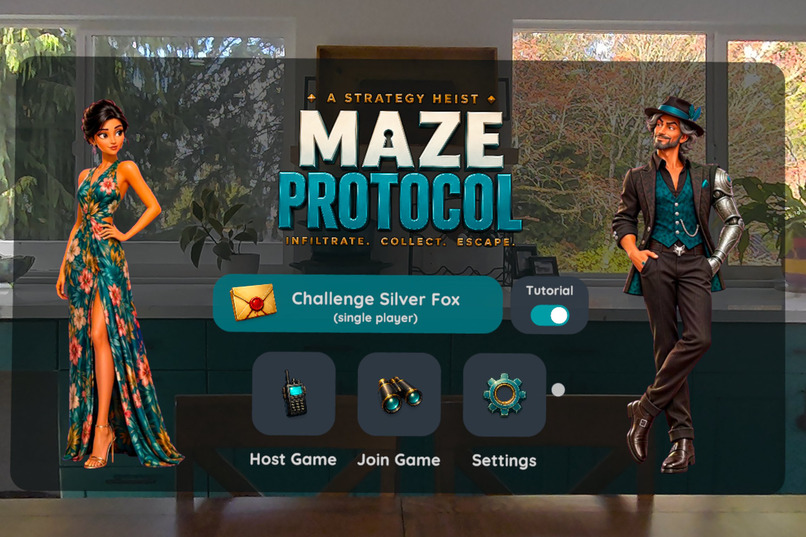
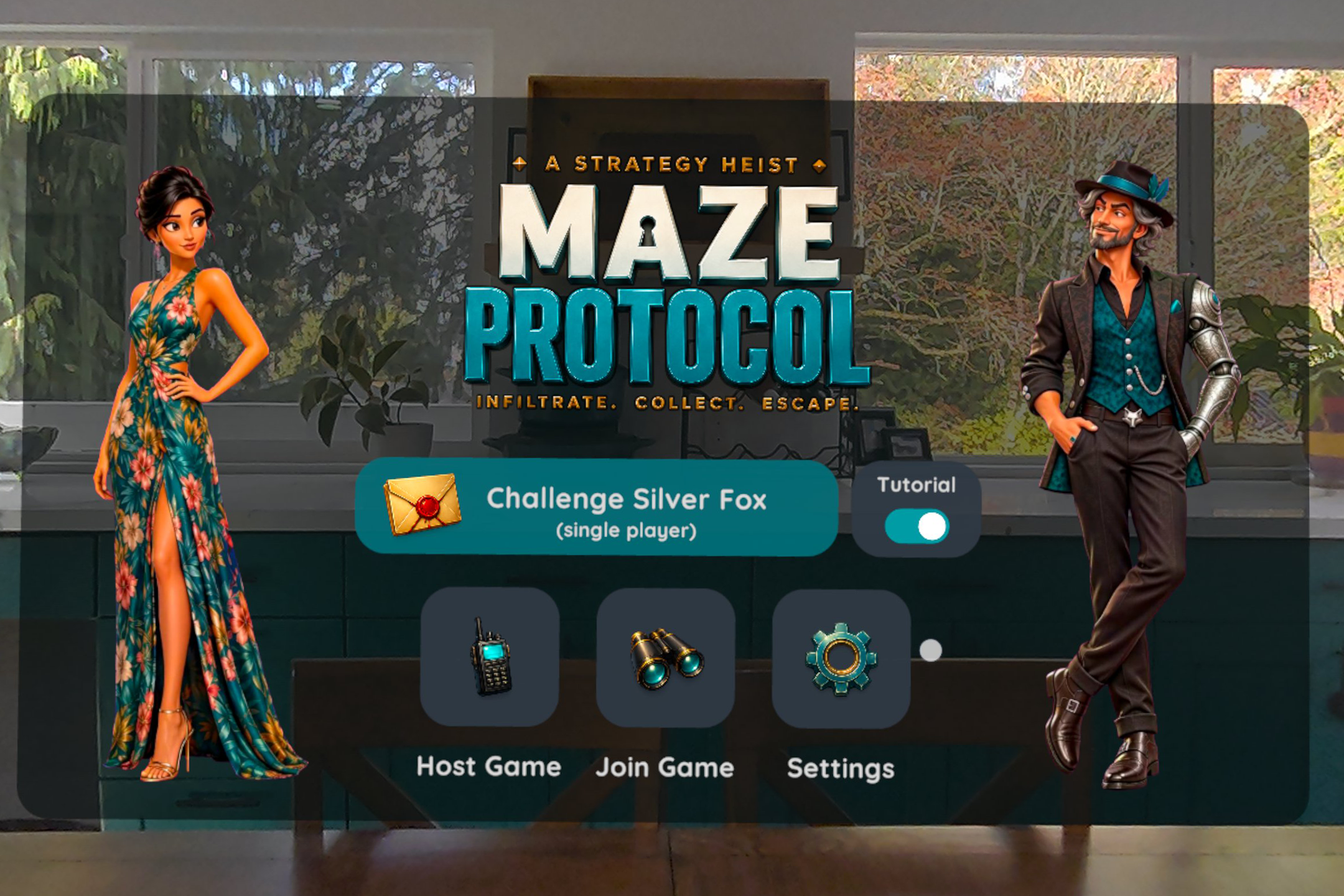
Start your adventure.
-
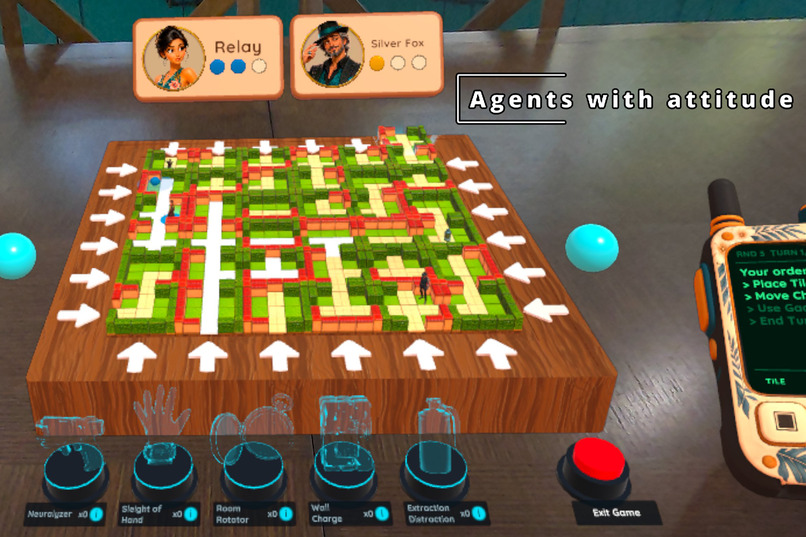
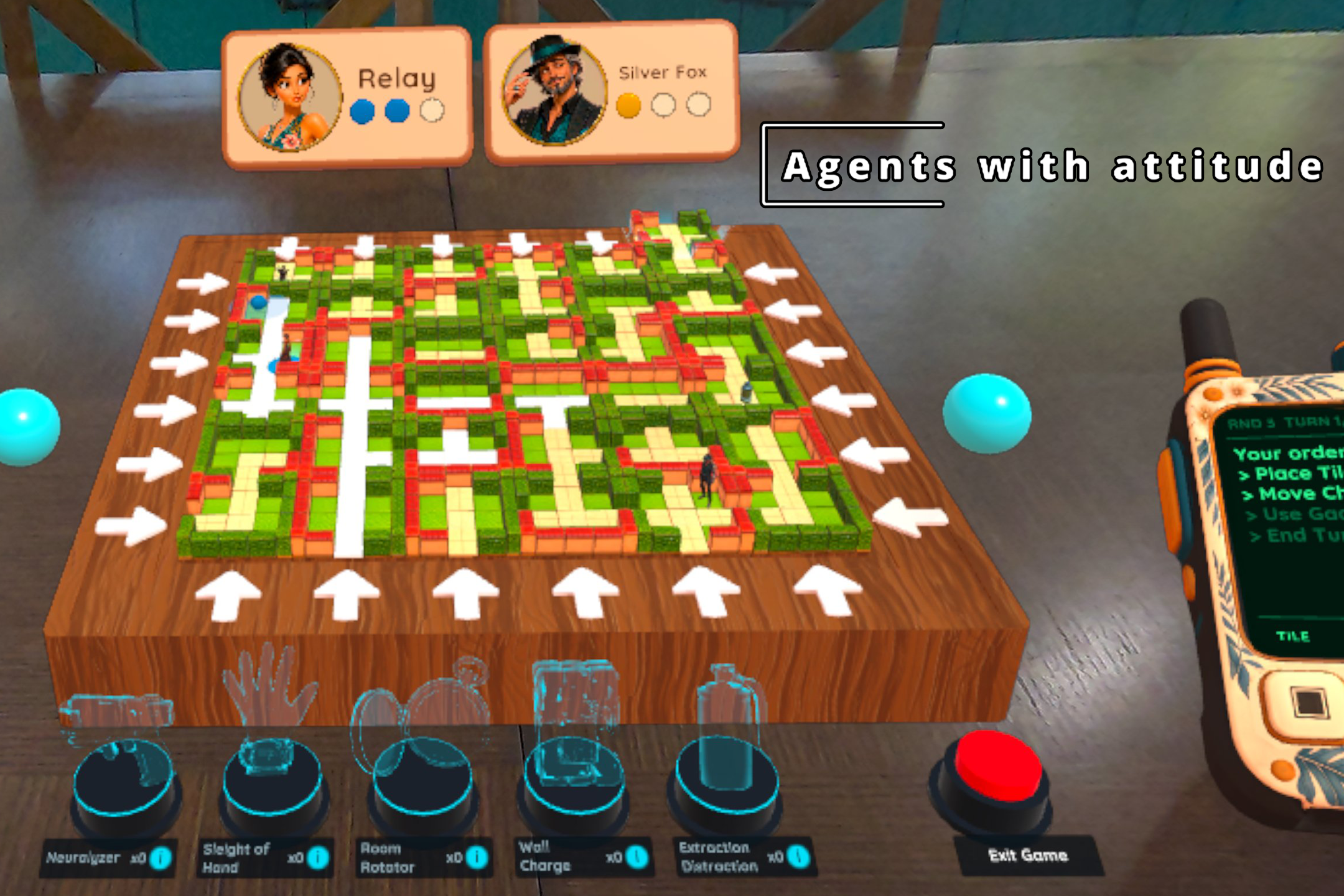
Over 40 custom lines of agent banter
-
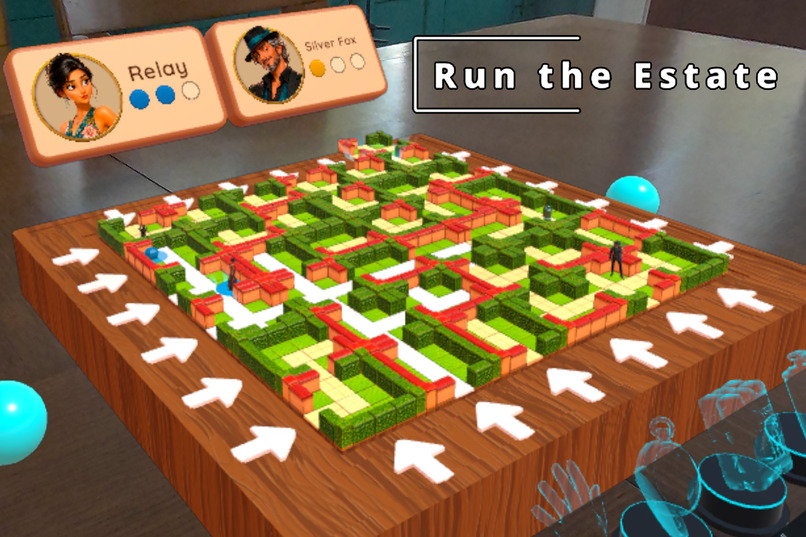
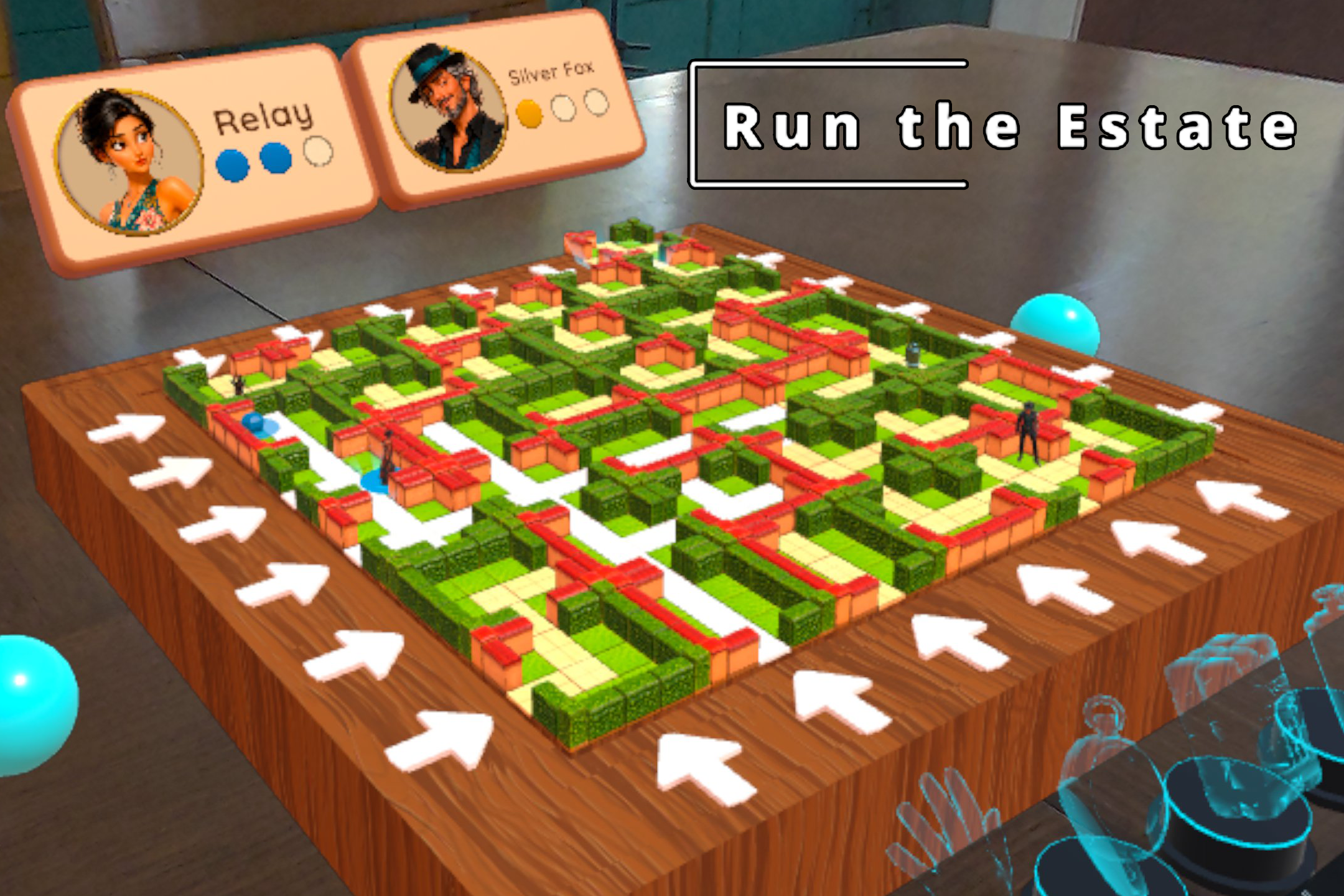
Feels like a real board game on your table.
-
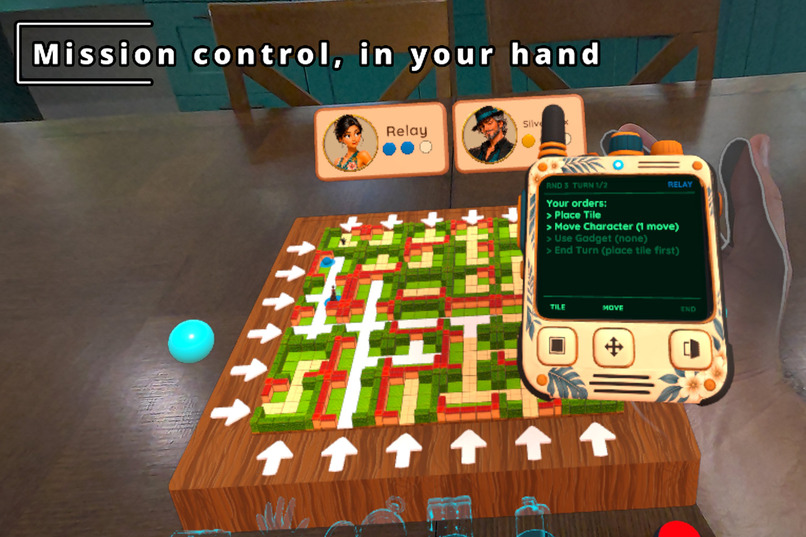
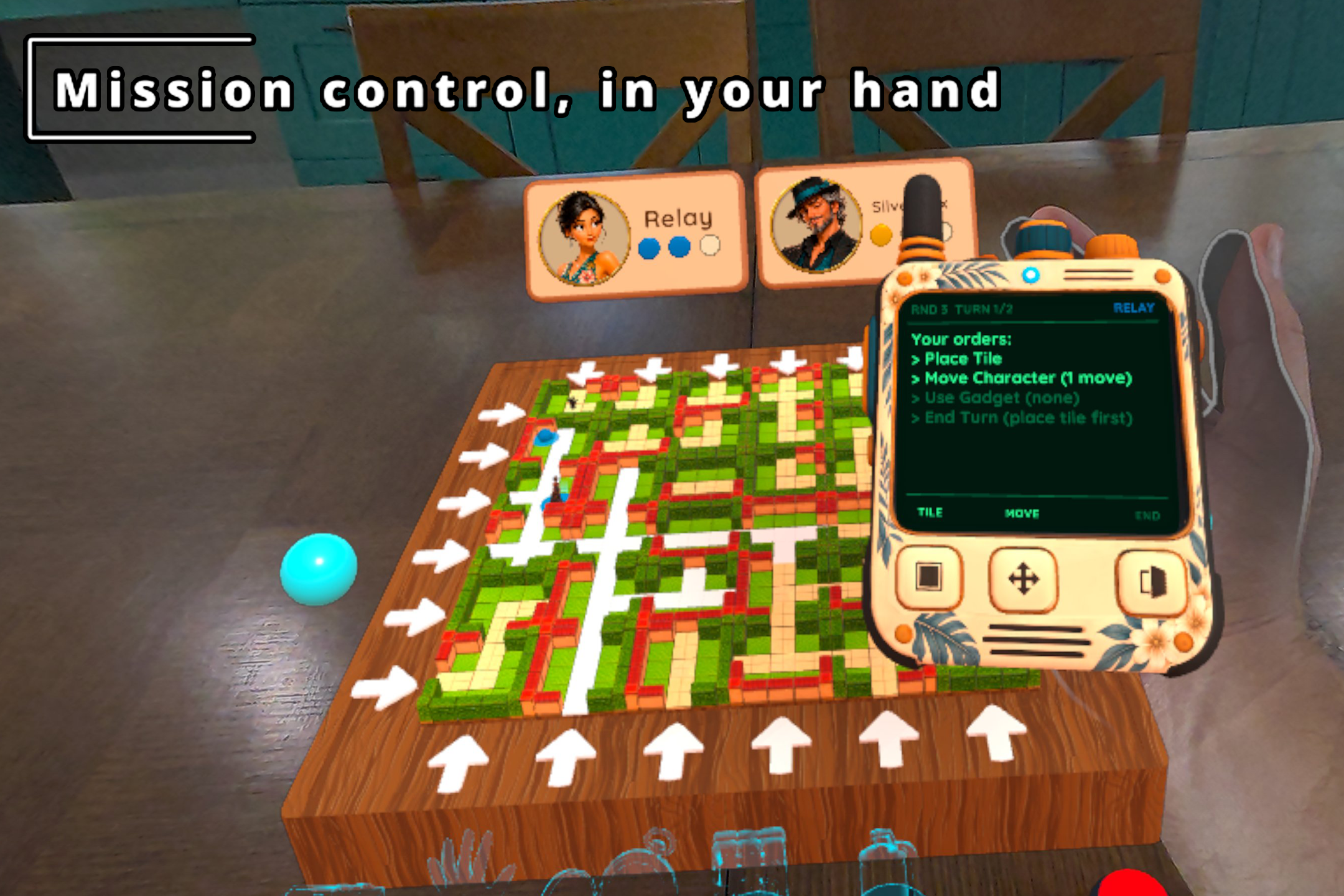
Mission control in your hand.
-
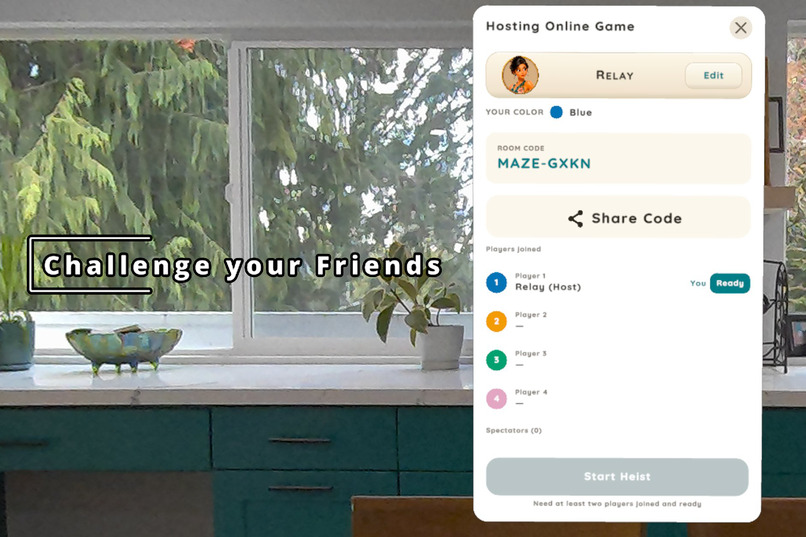
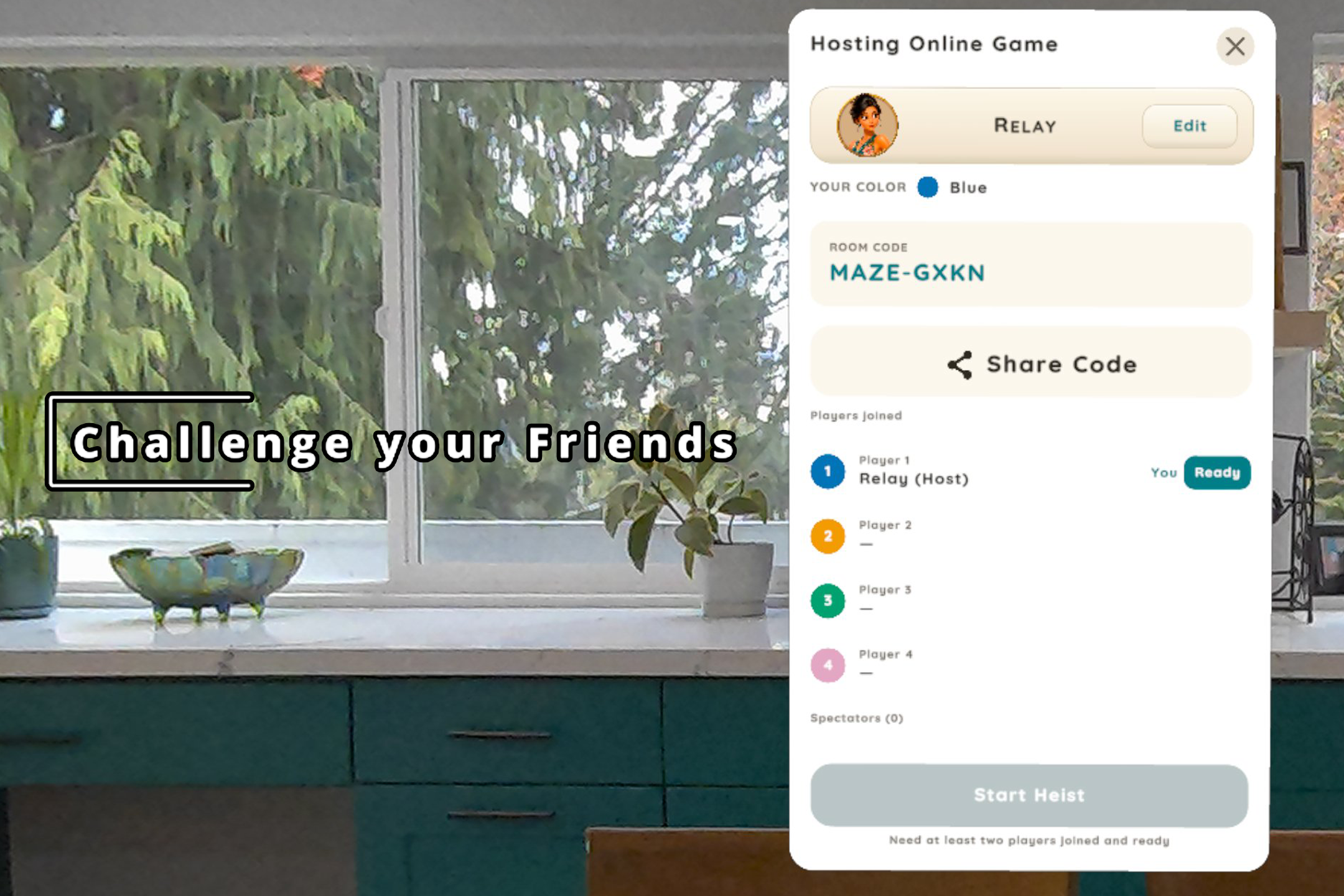
Play with friends with the join code.
Inspiration
Maze Protocol began as a flat tile-shifting spy caper for PC, phone and web, inspired by shifting-tile puzzle games and styled as a slick, Wes Anderson-style spy comedy at a Mediterranean villa. It had been in development for only about a month, and was still unreleased, when this competition was announced. We realized the power of the Quest platform meant we could bring in the feel of a real board game: on a real table, moved with real hands. So we pivoted hard and set out to use as much of Meta's platform and AI tooling as we could.
What it does
Up to four agents race through a hedge maze in passthrough on your own table. Grab your agent and drop it on the highlighted path. Set the spare tile on the edge, press the arrows above it to turn it, and push it in to shift a row. Use gadgets to manipulate rivals and the board. Collect three secret intel, then reach extraction before your rivals box you in. Play friends online, or take on the Silver Fox solo in about ten minutes. It all plays seated, with no controllers.
How we built it
We installed the metavr CLI and ran metavr init, which set up Meta's MCP server and agent plugins for Claude Code. From then on, our coding agent built with Meta's own skills. Every interaction we wanted, we could prompt into existence.
We added the Meta XR SDK v207 All-in-One and ran Meta's AI-assisted project setup until every check was green. After years of XR work, we know settings are where projects stall; Meta's auto-fix saved us countless hours. The Meta XR Simulator let us iterate two to three times faster than taking the headset on and off.
We added an XR main menu, head-following panels, room scanning with automatic table placement, and a full hands-first control scheme without writing a single line of code.
As a two-person studio we leaned on AI everywhere. Claude Code fixed our character rigs and wired up animation, particles and sound. ElevenLabs voiced the banter and made every sound effect. Generated faceplate animations match each voice line. A Blender LOD tool we built with Claude through MCP kept our models within Quest's budget.
Challenges we ran into
From flat 2D to a living 3D board: converting our UI/UX and many game systems from screens and clicks into a tabletop world you reach into was our biggest job.
Buttons gave way to hands: our off-hand field device started with Place Tile and Move buttons. Grabbing worked so much better with hand tracking and Meta's tools that those buttons became a quick reference, leaving only End Turn.
Accomplishments that we're proud of
The banter system: Confidence in the power of Quest, and of upcoming devices like Meta VR Glasses, let us go all in on video. We voiced every line in ElevenLabs, then fed each recording to MiniMax to generate lip-synced talking busts. Now 40 voiced, animated clips give our rivals real personality.
A full port from flat to mixed reality in four weeks, by two people.
What we learned
Pairing a coding agent with Meta's MCP server let us spend our time on game feel, not settings. And with hand tracking, direct manipulation wins: if players can grab it, they don't need a button for it.
What's next for Maze Protocol
Two more playable agents, Cipher and Glitch. Rivals who unlock as characters. Themed content packs the host shares with everyone in the room. Co-op levels, subtitles for every line, and an Early Access launch on the Meta VR Store in March 2027.
