Inspiration
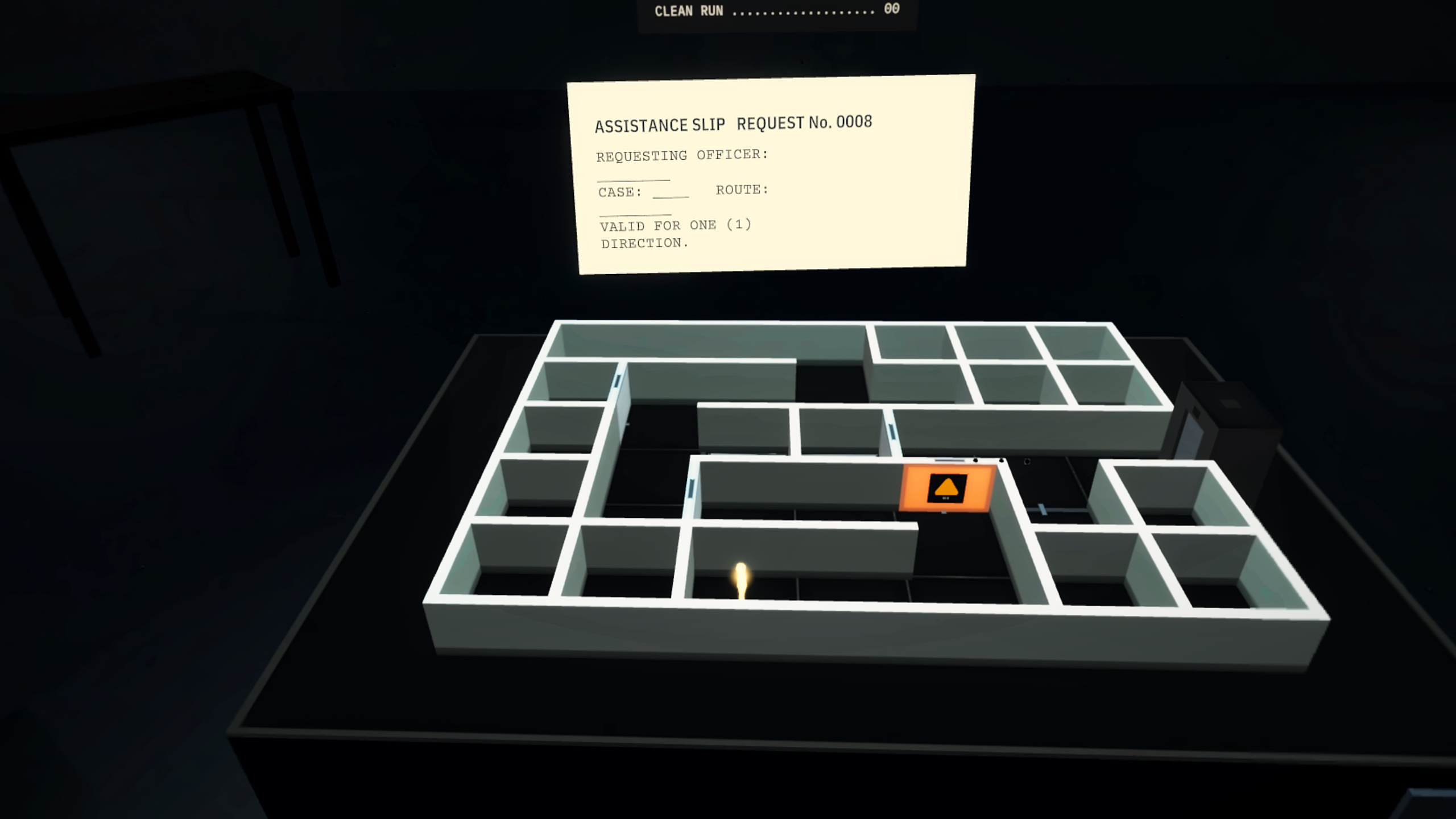
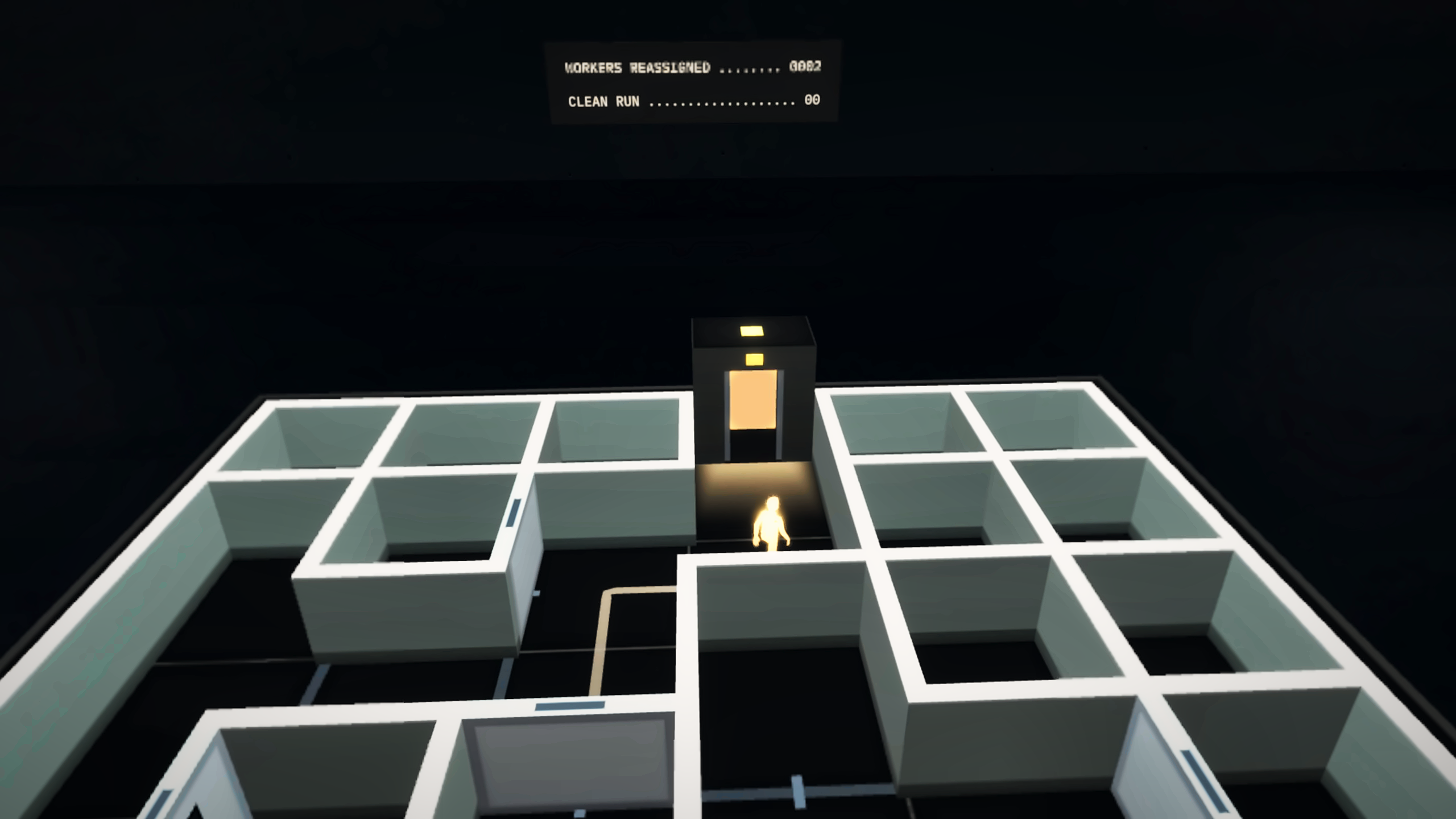
I wanted to make a puzzle that only works in VR. The image I started with was a dollhouse: a tiny office sitting on a table, with you leaning over it like a giant. I’ve also always liked stories set in sterile offices where something is clearly wrong, where someone upstairs rearranges your life and you never find out who. So I flipped that around. In Maze Escape, you’re the one upstairs.
What it does
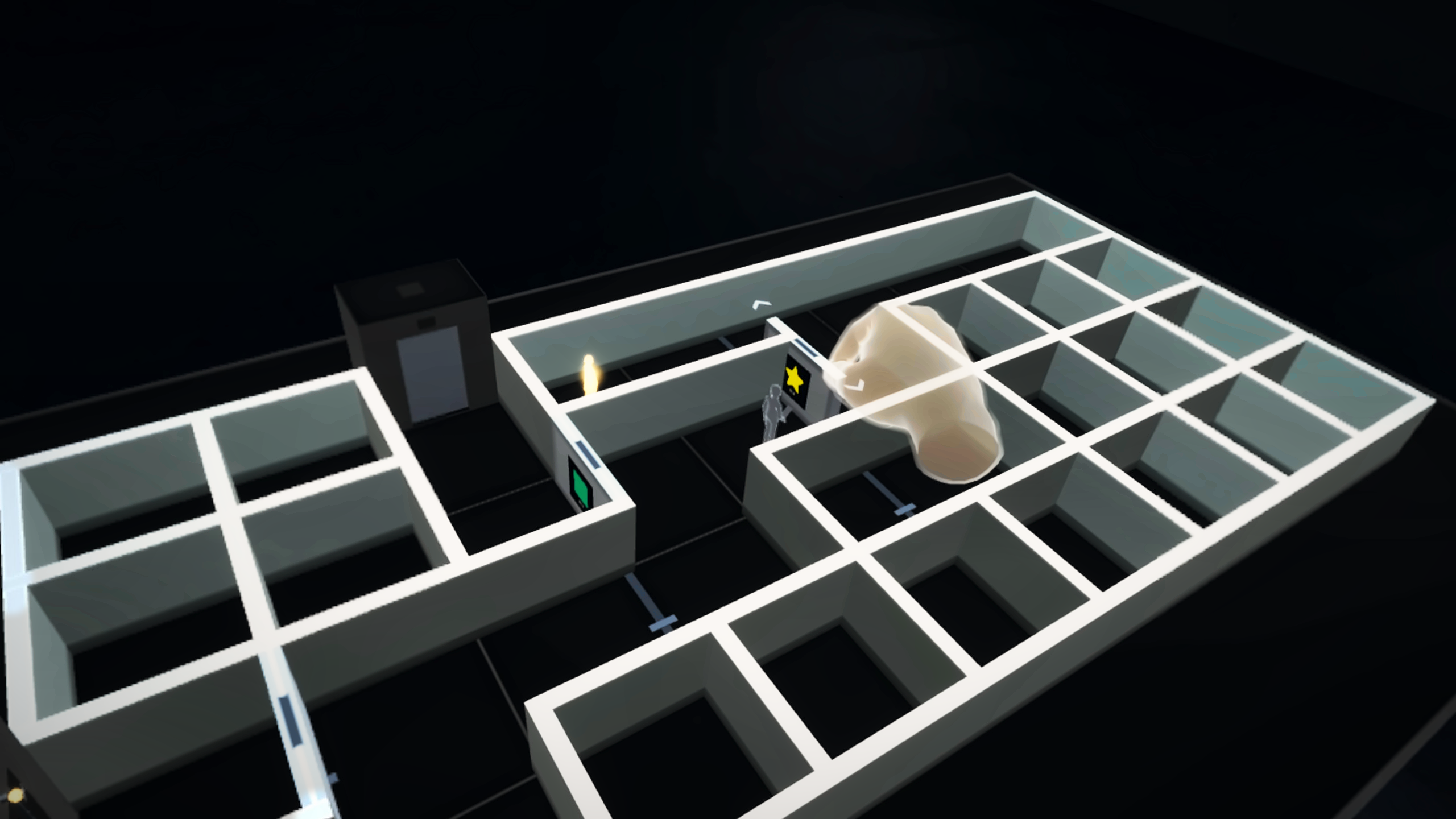
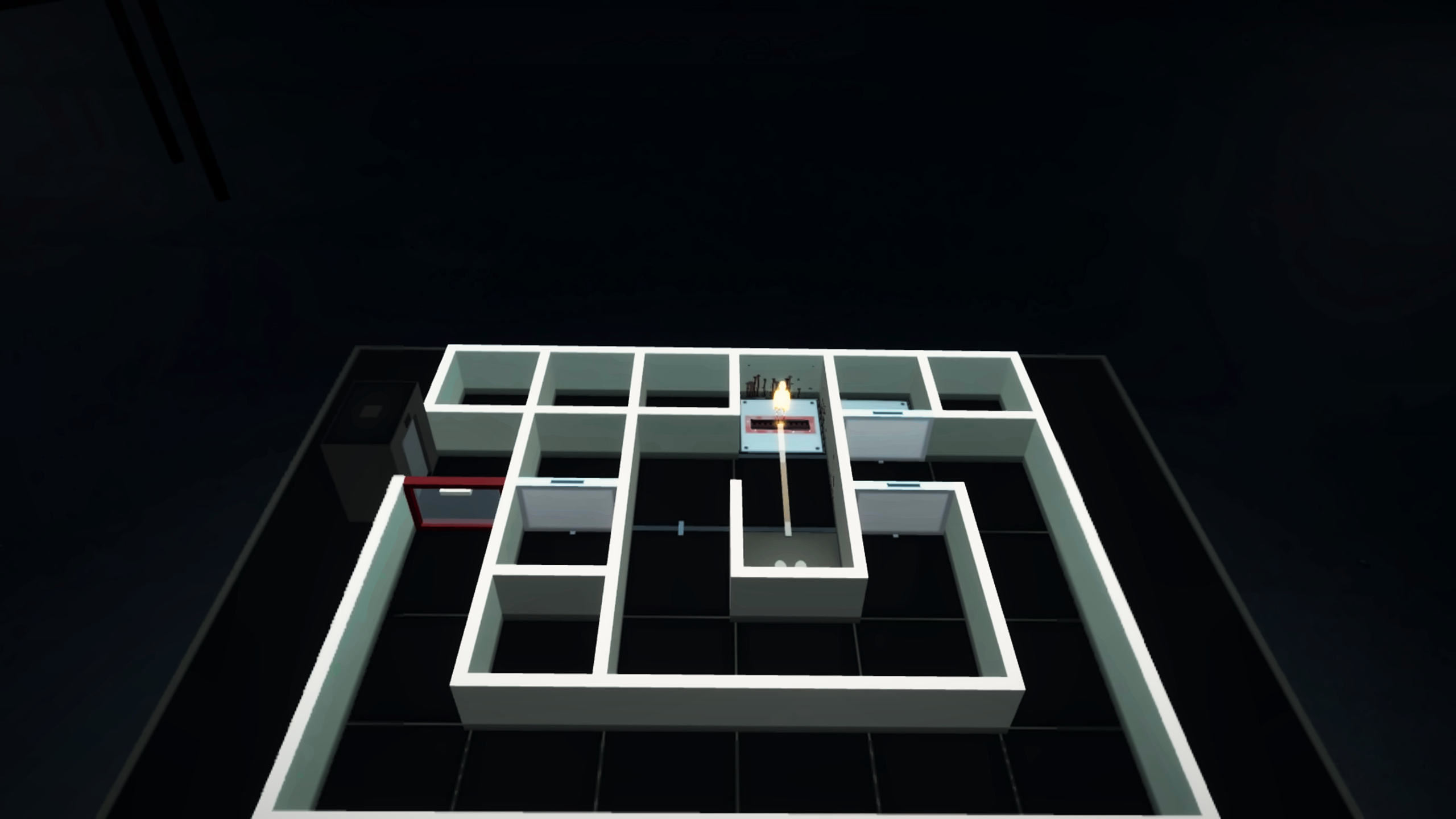
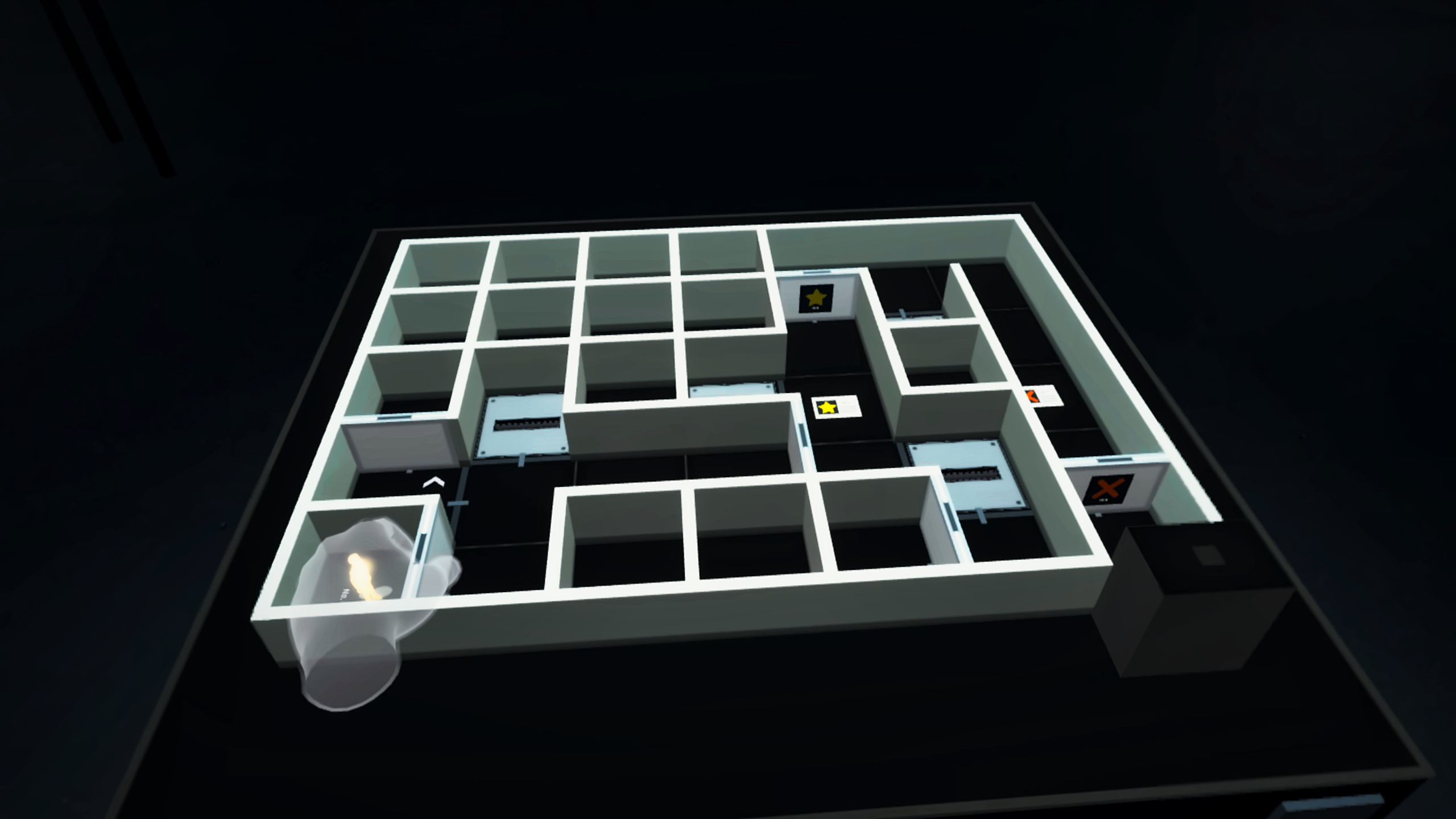
A small office maze rises on a table in front of you. Inside, a tiny glowing worker stands boxed in. You never control him. You reach in with your own hands and slide the walls to open a route, and the moment a path opens he notices and walks it by himself. If he reaches the elevator, the case is closed. If you lead him into a dead end, a floor shredder or the Inspector’s path, he gets “reassigned.”
There are 50 cases, and each block of ten brings in a new danger. As you go, the company starts paying attention to you. A Supervisor watches from her desk, a huge hand comes down from the ceiling to undo your last move, ink seeps out of the floor if you stall too long, and you can punch through emergency glass if you’re willing to pay for it. You play seated, with your bare hands, and each case takes a few minutes.
How I built it
I built it solo in Unity 6 with URP, OpenXR and the Meta XR SDK. Grabbing runs on the Meta Interaction SDK, so it works with hands first and controllers too. The booth builds itself around you in your real room through passthrough, and when you punch out, you’re back in your room. Leaderboards use Meta’s platform services. Every surface comes from one shader with no textures, and since there’s no bloom on Quest, all the glow is faked with geometry. I also wrote a level editor and a solver. Hints are baked by replaying each level’s real solution through the actual game simulation, so a hint can never point you the wrong way.
Challenges I ran into
Tracked hands have no haptics, so a wall had to feel heavy without any vibration. Resistance on the rail, notches it snaps into and a solid clunk did most of the work there. Early on, reaching for a wall would sometimes grab the whole table, so now the table can only be grabbed by its rim.
The bigger problems were in the design. My first ten levels could be finished in about two minutes, so I rebuilt every level in blocks of ten, one danger per block. Then outside playtesters told me the game felt one-sided: nothing reacted to them, good or bad, there were no stakes, and it got boring around case 11. They were right. I’d polished the puzzles and forgotten about the world. Most of the last month went into making the company react to you, with verdict stamps, the Supervisor and scares built into the room itself, without ever punishing a loss.
Accomplishments that I'm proud of
The tutorial teaches the whole game in under two minutes without a single line of text. The first time you slide a wall and the worker turns and walks through the gap on his own, you get that “I did that” feeling, and the whole game is built around it. I’m also proud of the 50 handmade cases, each with its own solution, a tiny living world that holds 90 Hz on Quest, and an ending I really like that I won’t spoil here.
What I learned
A clever puzzle isn’t enough in VR. People want the world to answer what they do with their hands. I also learned to show the game to strangers early, because they’ll say what friends won’t. And I learned that scares in VR need firm rules: nothing ever touches you, and nothing moves toward you while you’re looking at it.
What’s next for Maze Escape
Next is the launch on the Meta Horizon Store, then the next 50 cases on a new floor (the ending already hints at where they go). Between paid packs I want to add free cases and a weekly case that everyone plays fresh on its own leaderboard. I also want to support Meta VR Glasses, since the game is already seated and hands-first.


