-

mayo thumbnail
-
-
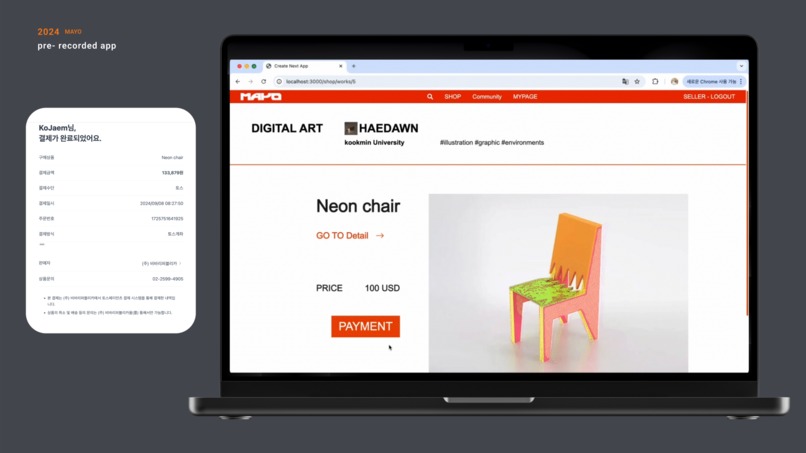
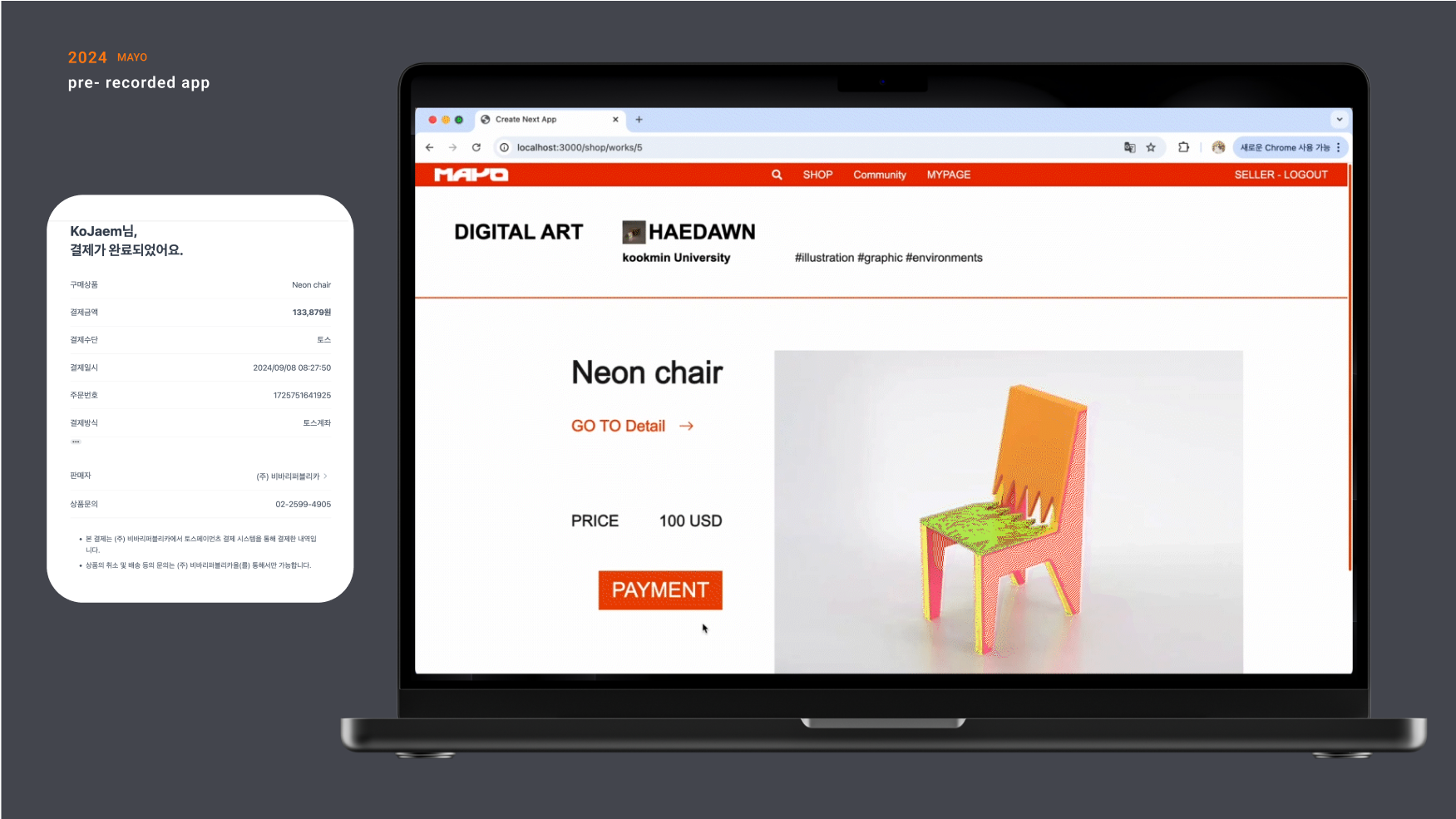
pre- recorded app
-
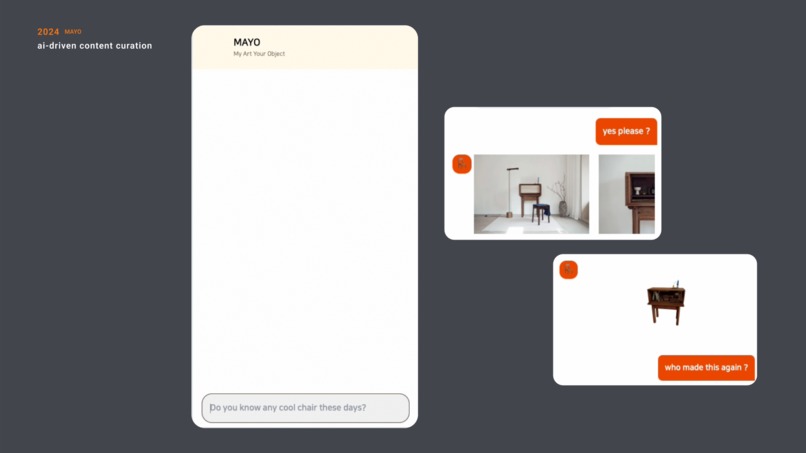
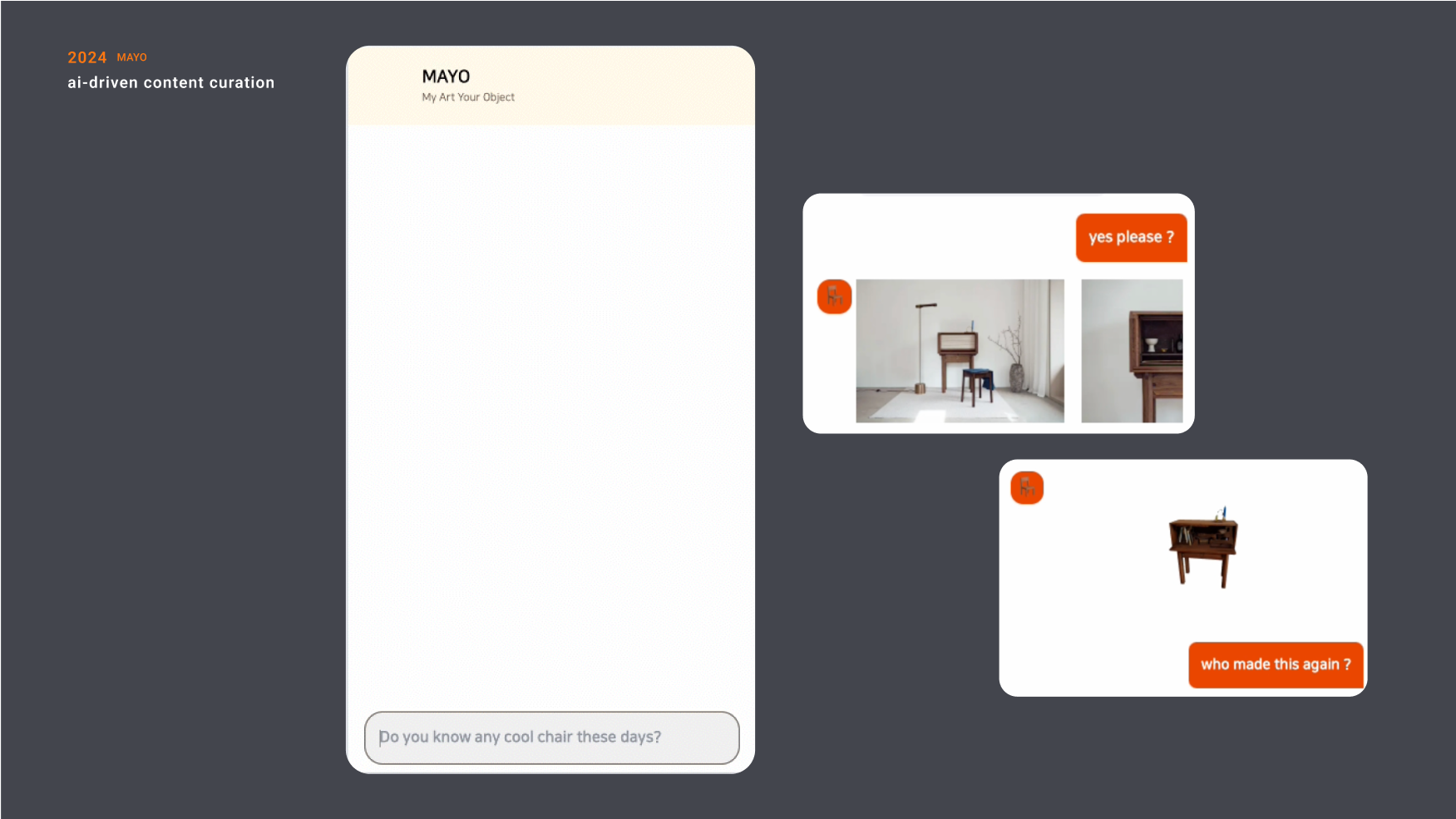
ai-driven content curation(just a image)
-
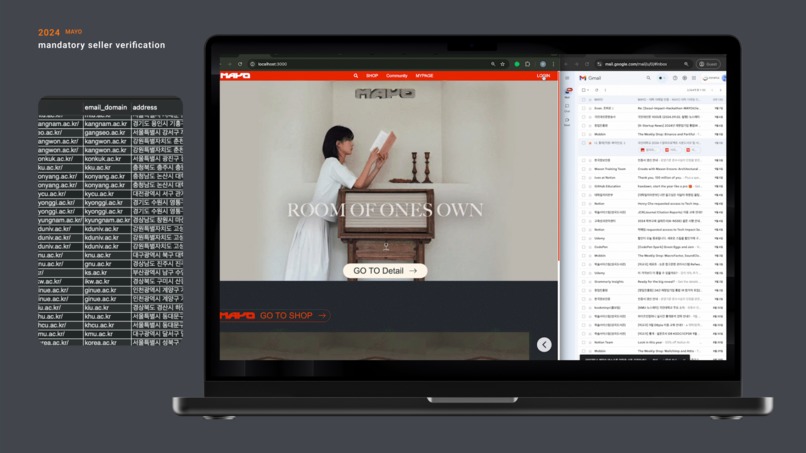
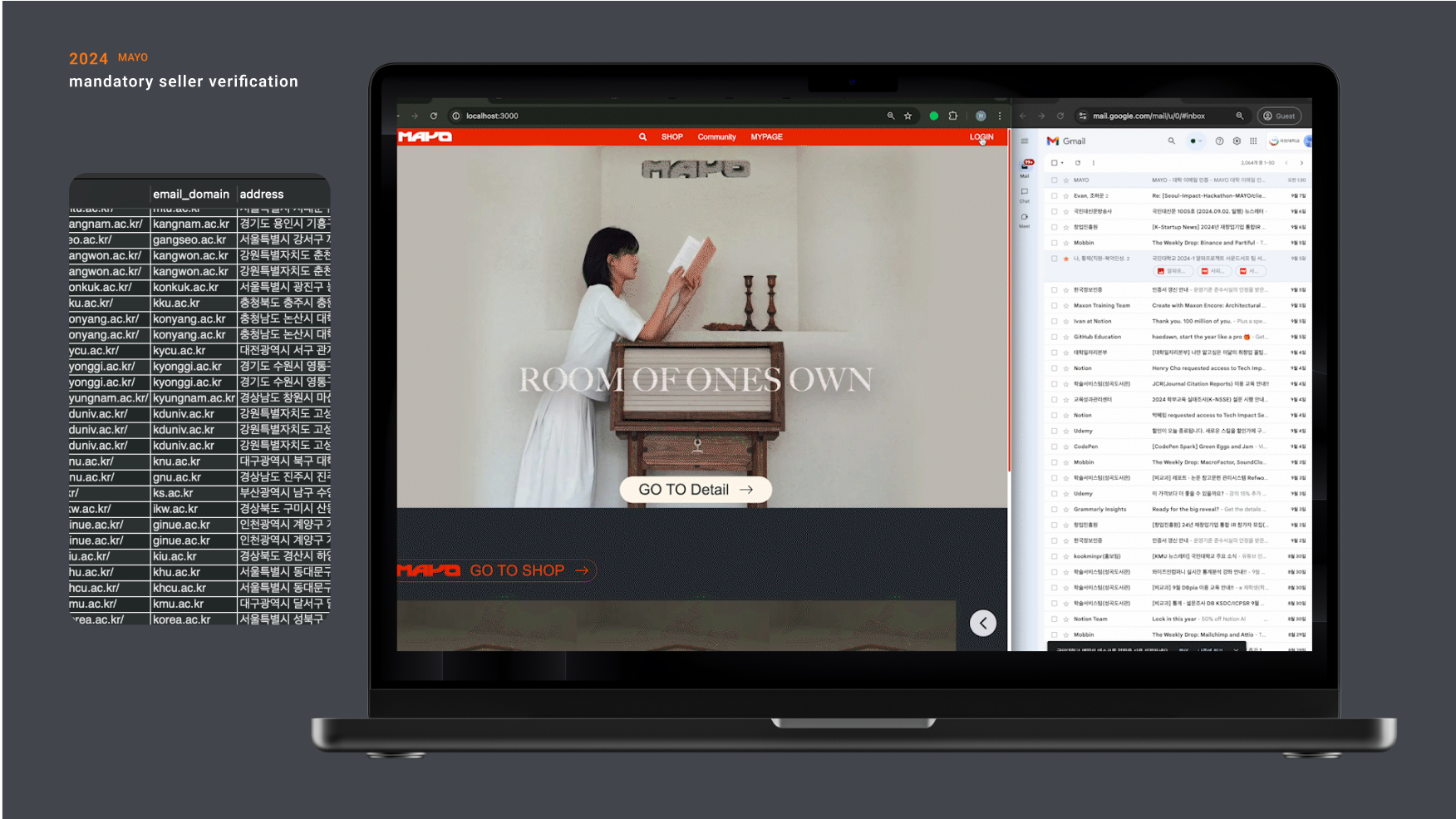
mandatory seller verification
-
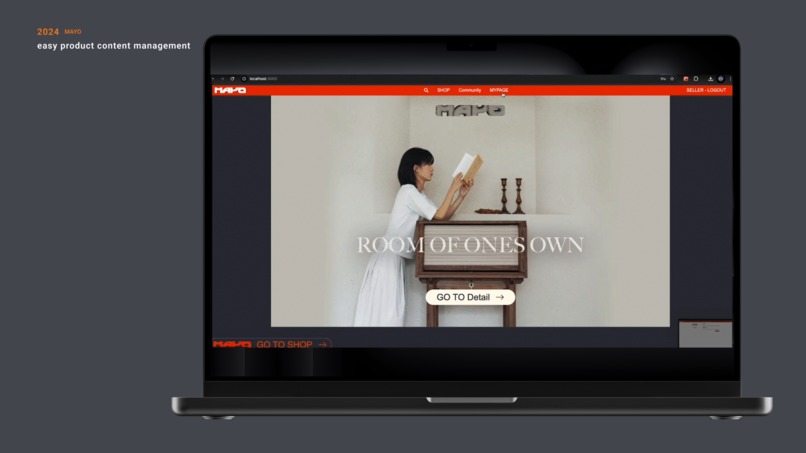
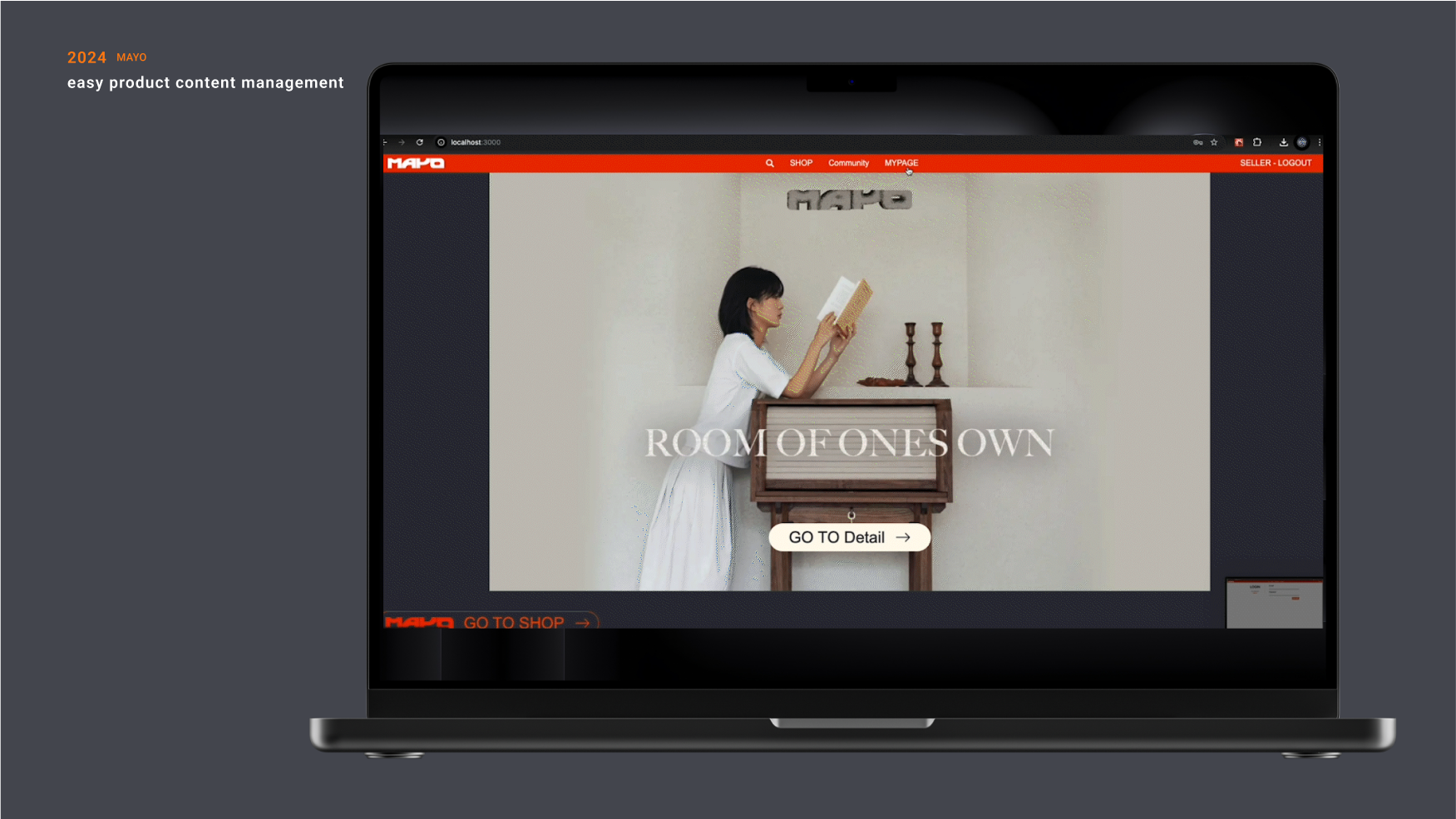
easy product content management
-

Inspiration
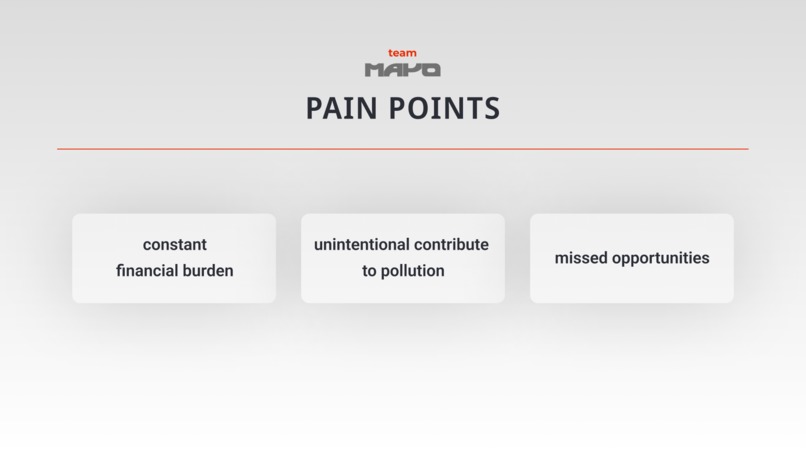
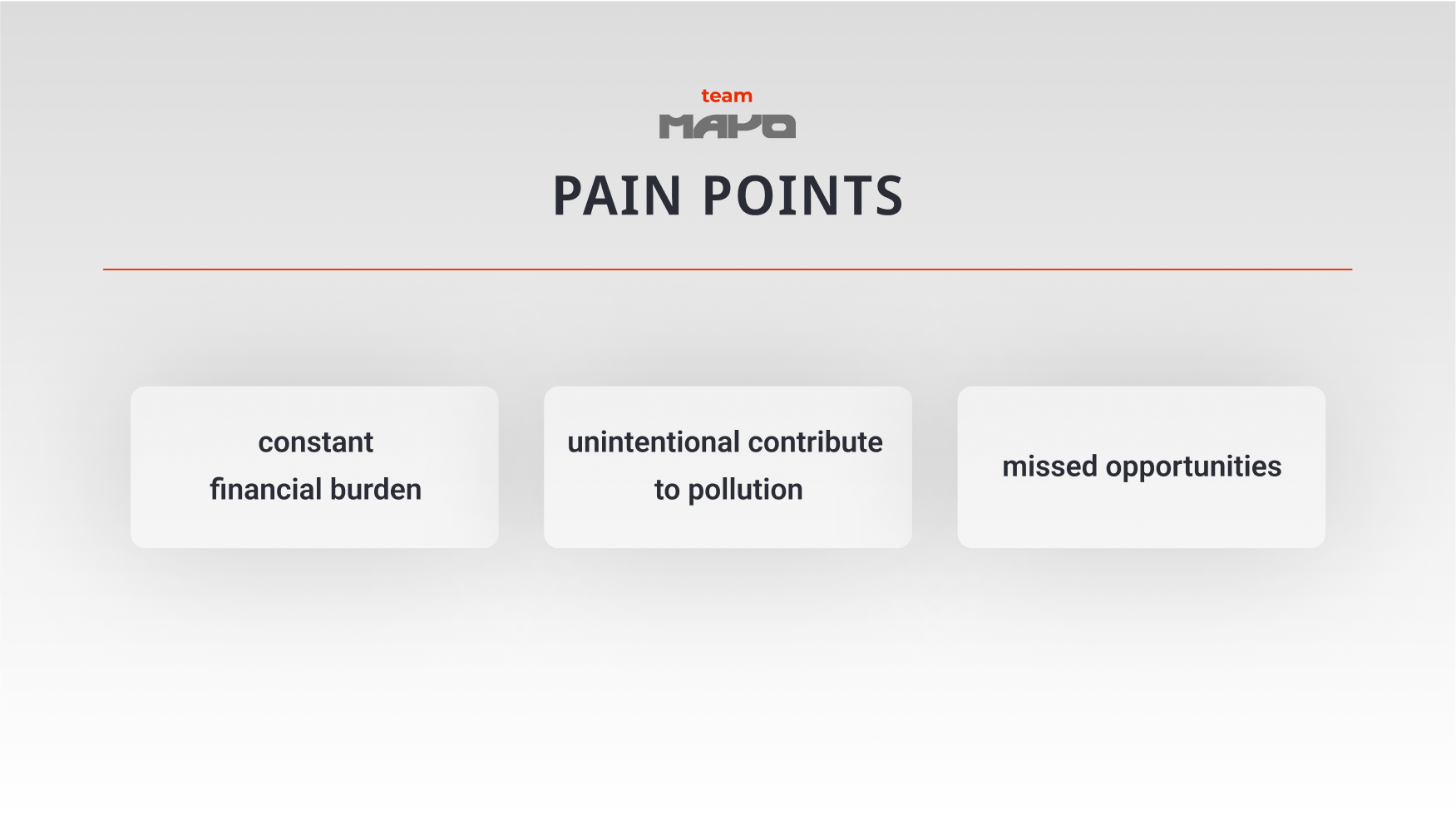
As a team of design enthusiasts and tech innovators, we recognize a common issue faced by student designers and artists: many of the unique, valuable works created as part of their education end up discarded due to space limitations, lack of exposure, or management challenges. Whether it’s a graduation project, a competition entry, or a class assignment, too often these pieces are left unused, contributing to waste and lost opportunities for their creators.
At the same time, buyers seeking distinctive, original works of art often struggle to find pieces that resonate on a personal level. This disconnect inspired us to develop MAYO.
What it does
MAYO—short for My Art, Your Object—is our team’s solution to these problems. We’ve built an e-commerce and trade platform designed specifically to help student designers sell their unused or unsold creations. By doing this, we aim to reduce waste while offering buyers the chance to own original, meaningful pieces that carry personal and artistic value.
Key Features We’ve Developed
Our focus in creating MAYO has been to ensure that it serves its dual purpose: supporting student designers and reducing environmental waste. To achieve this, we’ve incorporated several core features:
1. Mandatory Student Seller Verification: To maintain our platform’s mission of supporting students, only current students can sell on MAYO. We’ve implemented a verification process using school email addresses to confirm their status. This system ensures that our platform stays true to its purpose, fostering a community of young creators focused on sustainability and creativity.
2. Seamless Product Content Management & Curation: We’ve made sure that MAYO is accessible and easy to use for student designers. The platform’s intuitive interface allows sellers to upload and curate their works without any technical complexity. With just a few clicks, users can add product details, images, and descriptions, making the process of managing and updating their portfolios straightforward. This ensures that buyers always have access to fresh, well-presented content.
3. AI-Driven Content Curation: Our platform leverages AI technology to enhance the user experience. By collecting data through the CMS API, our AI helps curate and explain artworks in a personalized way, ensuring users can discover pieces that align with their tastes. It also highlights the stories behind each piece, connecting buyers more deeply with the work they’re purchasing. This feature increases the visibility of student creations, matching them with potential buyers based on preferences and interests.
How we built it
To ensure fast and efficient development, we built MAYO using Next.js with the App Router for its speed and flexibility in building scalable web applications. For styling, we used TailwindCSS, which allowed us to maintain a clean, responsive design while keeping development swift and organized. On the backend, we developed a separate Node.js infrastructure to support a headless CMS architecture, ensuring seamless content management for student designers. This modular setup allows for future scalability and easier updates to the platform.
Challenges we ran into
Limitation of free API regarding school university verification, having to crawl and create customized database and API for smooth authentication process was very time-consuming
Features had to be postponed due to time and resource limitations, though they remain on our roadmap for future iterations.
What's next for MAYO - My Art, Your Object
Our team is excited about the potential for MAYO to grow beyond just a marketplace. If the platform continues to succeed, we aim to expand into creating a community service where design students can connect, exchange ideas, and even share unused materials, further fostering collaboration and reducing waste.
Built With
- express.js
- figma
- framer
- next.js
- node.js
- typescript


Log in or sign up for Devpost to join the conversation.