Inspiration
Ever since the start of the COVID-19 pandemic, the flaws and inefficiencies within the healthcare system have become glaringly obvious. Exacerbated by increasing retirement rates of healthcare professionals, poor working conditions due to the pandemic, as well as professional burnout, the need for an optimized patient registration process to offload work on the providers has greatly increased. As a result of this, the MedI-D turned our focus to digitizing and centralizing personal medical information into one application that streamlines the process and compiles user medical information into one location that is easily accessible.
What it does
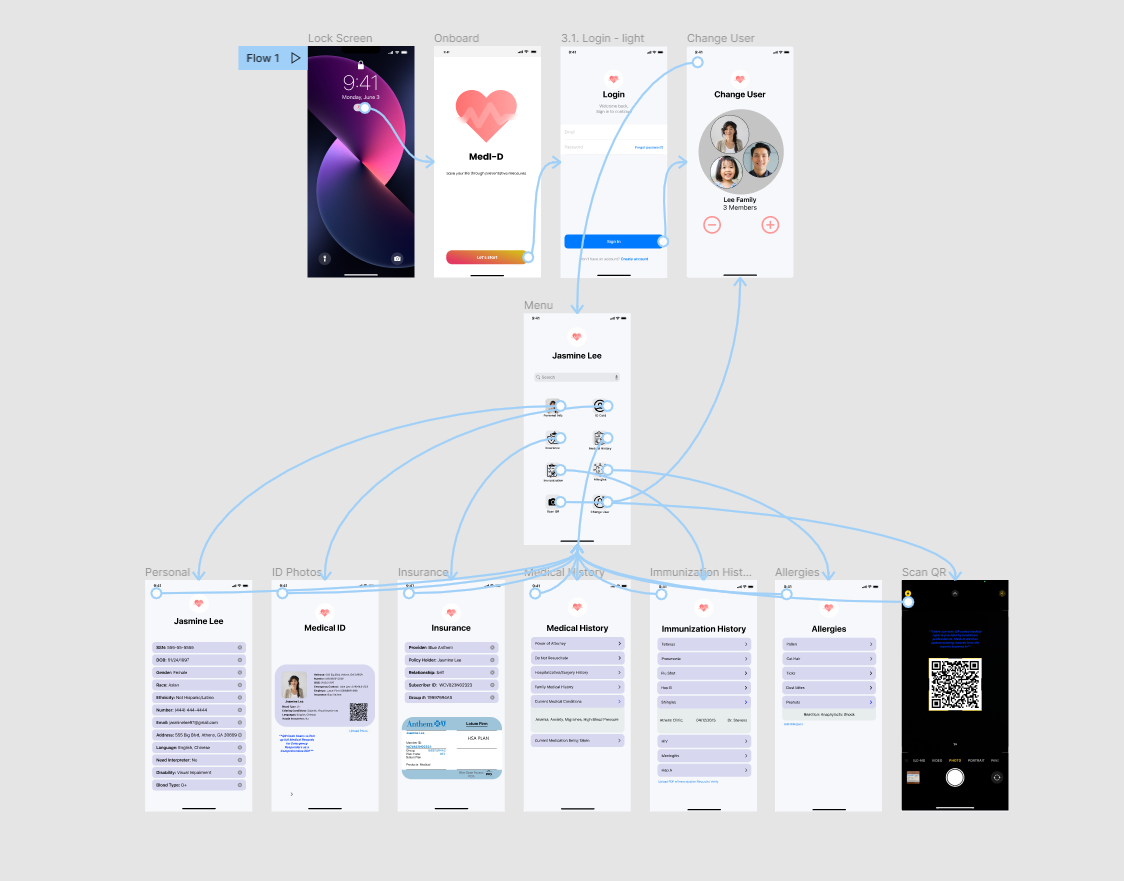
MedI-D is an application that expedites the registration process of healthcare. The application works by having the user create a profile and then querying them for the standard information on nearly every new patient registration form. After the user inputs all of their information, the information is then stored in a database, ready to be accessed by authorized individuals at a moment's notice. The application will generate a digital ID that includes the base necessary information needed by Emergency Medical Responders/Technicians and also creates an encrypted QR code that allows health care providers to view the rest of the patient’s records (provided they receive the password to the QR code from the patient (Not yet implemented)). Furthermore, the application has two other features: the first allows parents to store their children’s or spouse’s information as a separate profile in case they ever need it. The second feature is the ability to scan QR coded medical reports after healthcare visits that automatically updates the users medical records in the app based on the information found within the visit reports (Not Yet implemented).
How we built it
Our team of two optimized our work-load by having Kai build a streamlined prototype user interface that was eye-catching and functional using Figma, while David worked with Java and mySQL, creating interaction between the two in order to allow the user to securely enter, store, and retrieve data from the application.
Challenges we ran into
The main challenges we ran into as a team of two first time hackers was working with software we were entirely unfamiliar with. Working with SQL and Figma was entirely new territory for both of us, as was attending a hackathon, so it was hard at times not to get overwhelmed by any issues that sprung up. However, over the course of the weekend, we both became comfortable with our respective technologies and position we each held in regards to the project.
Accomplishments that we're proud of
Our team is proud to have created a functioning application from scratch within a couple of days. As this is our team’s first hackathon it was incredibly rewarding to see our project come into fruition after struggling for several hours to overcome time constraints and the various learning curves. Most of all, we’re both particularly proud of our idea for optimization of healthcare registration records, as we truly do believe that the technology could positively affect innumerable amounts of people, should it be integrated properly.
What we learned
Throughout our time at the hackathon, we learned how to use Figma to build a mock user interface to demonstrate the theoretical end goal with the application, while also learning about what SQL is and how it stores data. Overall, the interaction between java and SQL and presenting the overall vision of the project using Figma was truly eye-opening.
What's next for MedI-D
Our next steps with this project are actually setting up an interactive front-end framework, allowing users to access the application through their own avenues, whether it be phone or website. On top of that, increasing security of stored data is very important to us, as well as being able to develop ways to quickly present this data, especially QR Code technology, making authorized data transfer seamless.


Log in or sign up for Devpost to join the conversation.