-
-
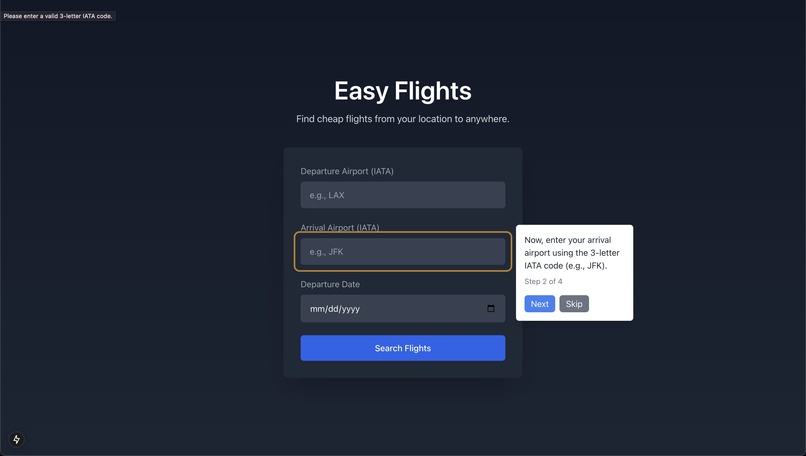
Search page
-
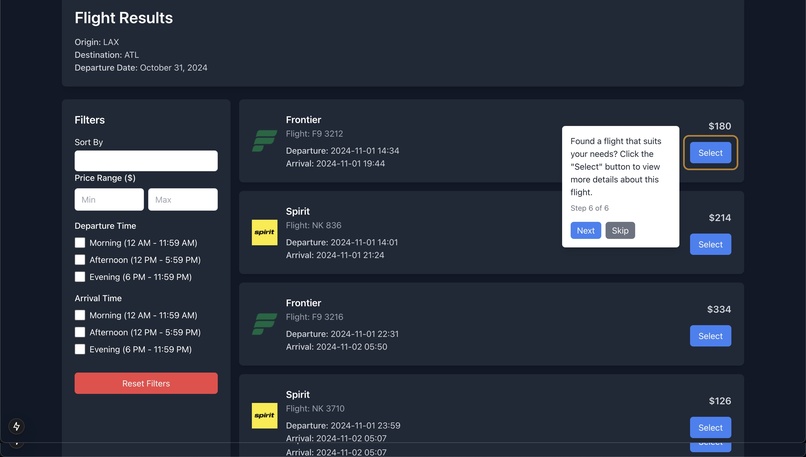
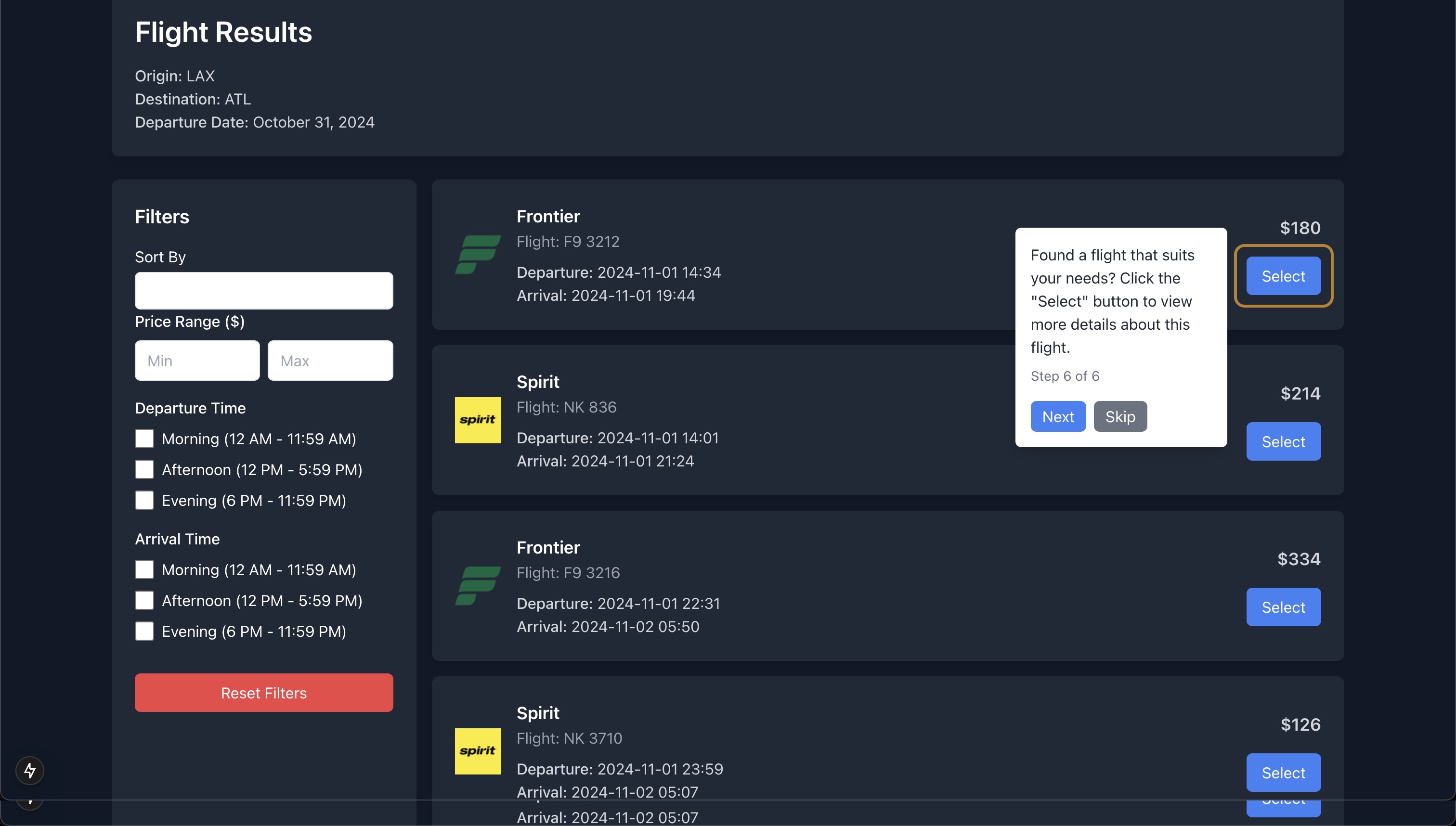
Results Page
-
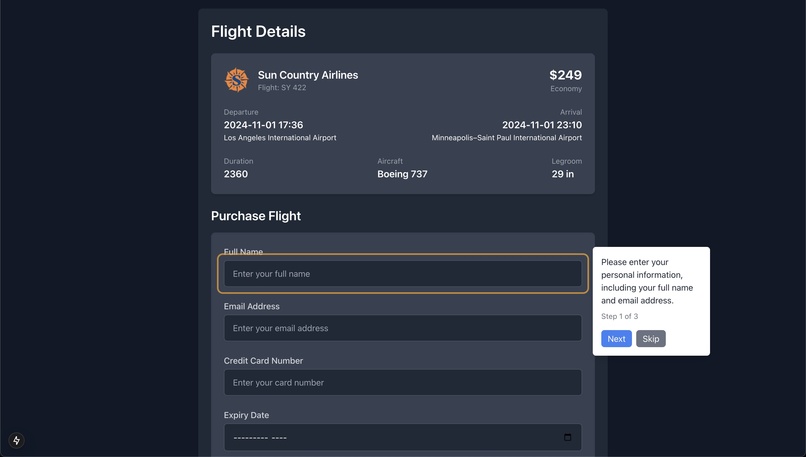
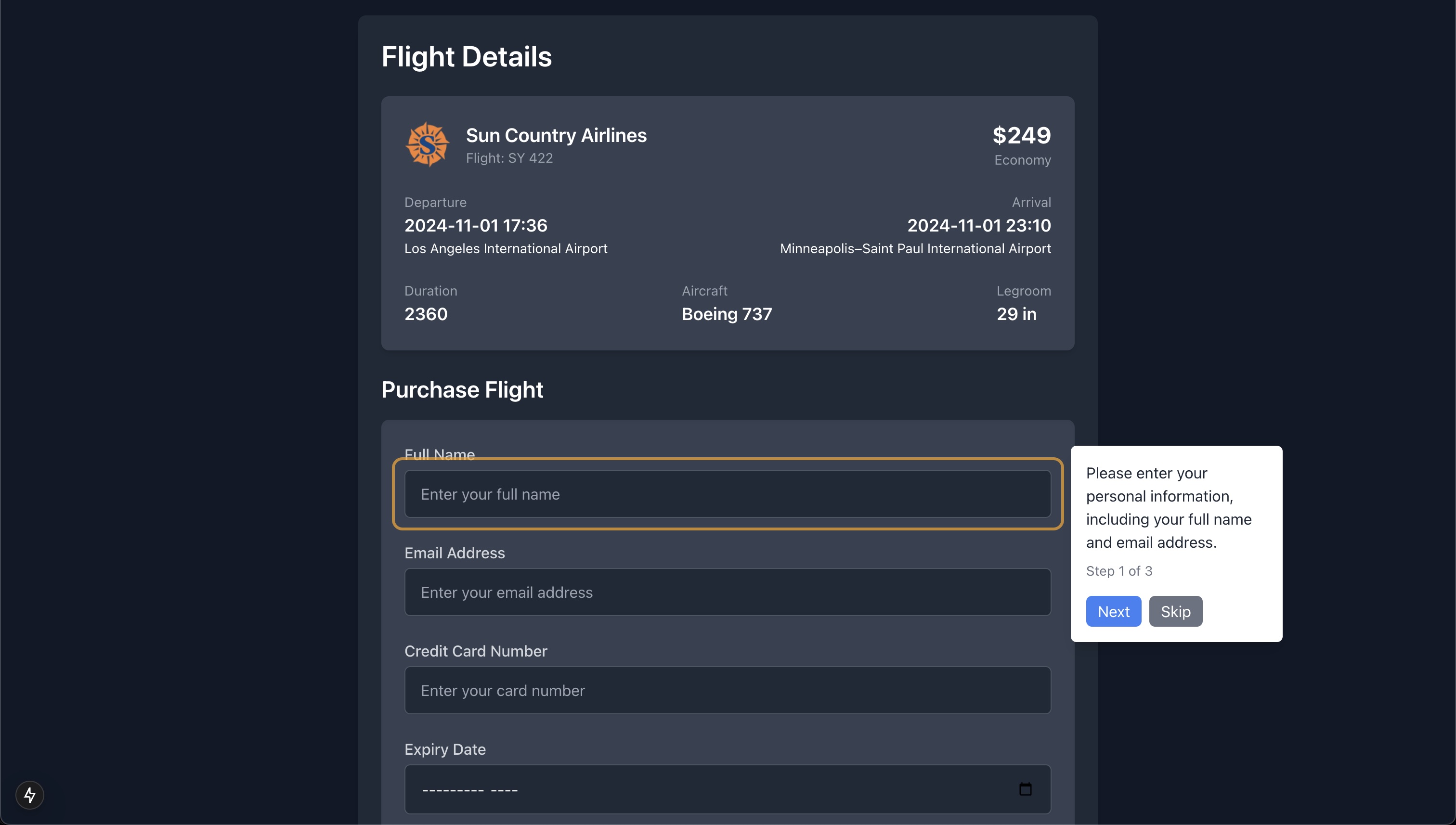
Booking Page
Inspiration
Navigating new websites can be a daunting task. We observed that platforms like Amazon and Google Flights, while powerful, often overwhelm users with countless filters and options. This complexity poses a significant hurdle, especially for individuals with visual impairments or those who are not fluent in the website's primary language. We were inspired to create a solution that bridges this accessibility gap, making the digital world more inclusive and user-friendly for everyone. Thus, SoundSearch was born—a tool designed to simplify web navigation through intuitive, step-by-step voice guidance.
What it does
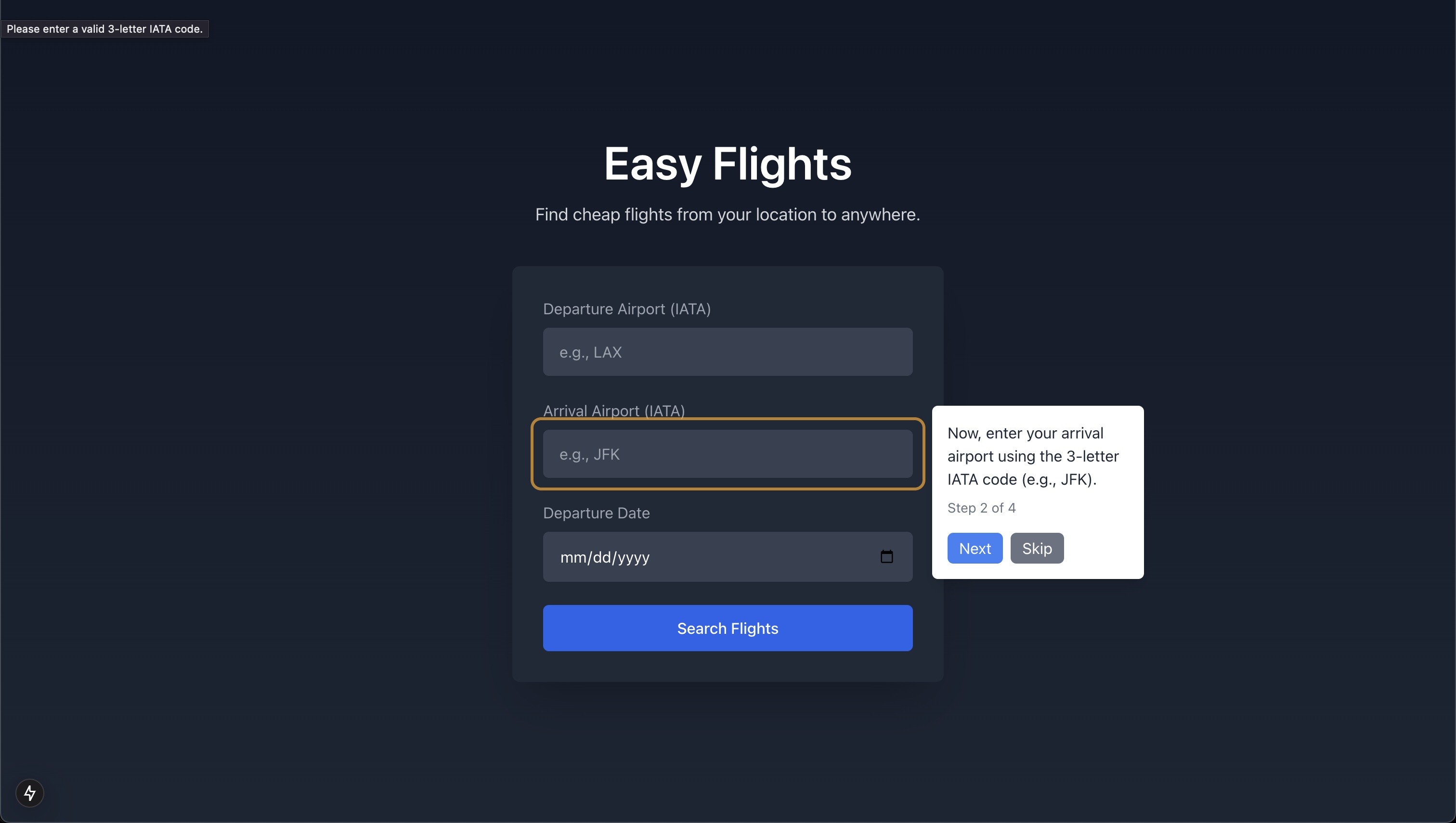
SoundSearch transforms the way users interact with websites by providing real-time, step-by-step voice guidance over a simple phone call. When a user dials our number, SoundSearch synchronizes with the website they're using, highlighting specific sections and guiding them through each step of the process. It tells users how to fill out forms, adjust filters, and navigate complex interfaces. This makes online platforms more accessible, especially for those who have difficulty seeing or are not proficient in the website's language.
How we built it
We combined several cutting-edge technologies to bring SoundSearch to life:
- AWS (Amazon Web Services): We utilized AWS for hosting our backend infrastructure, ensuring scalability and reliability of our service.
- NLX.ai: Implemented for advanced natural language processing, NLX.ai powers the voice interaction, understanding user inputs, and providing accurate, context-aware guidance.
- Google Flights Search: We integrated Google Flights to demonstrate SoundSearch's capability in navigating complex websites with numerous filters and options.
- Next.js: Our frontend is built with Next.js, allowing us to create a seamless and responsive user interface that works in tandem with our voice guidance system.
Challenges we ran into
Our team faced a steep learning curve with several technologies:
- Sponsor Platform Integration: Understanding and integrating with the sponsor's platform presented initial hurdles due to unfamiliarity with its APIs and documentation.
- AWS Complexity: Configuring AWS services was challenging. Setting up the infrastructure, managing permissions, and deploying our application required significant effort to learn and implement correctly.
Accomplishments that we're proud of
- Mastering AWS Deployment: Successfully deploying our application on AWS was a significant milestone. It was our first time using AWS, and overcoming its complexities is something we're proud of.
- Functional Prototype: Despite the challenges, we built a working prototype of SoundSearch that effectively demonstrates the core functionality and value proposition of our idea.
What we learned
- AWS Proficiency: We gained extensive knowledge about AWS services, including deployment processes, debugging techniques, and log management.
- Integration Skills: Learned how to effectively integrate multiple technologies (AWS, NLX.ai, Google Flights Search API, Next.js) to work cohesively.
- Problem-Solving: Enhanced our ability to troubleshoot issues that arise during development, especially when working with new platforms and tools.
What's next for SoundSearch
- User Input Integration: We plan to allow users to input information via voice commands, making the interaction even more seamless.
- Expanding Website Support: Extend compatibility to more websites, ensuring a wider range of platforms are accessible through SoundSearch.
- Personalization: Implement user profiles to tailor the guidance based on individual preferences and needs.
- Multilingual Support: Introduce support for multiple languages to assist non-native speakers more effectively.
Built With
- amazon-web-services
- nextjs
- nlx


Log in or sign up for Devpost to join the conversation.