Inspiration
Every year, millions of students travel abroad to study in languages that are not their first. They hope to adapt quickly, but reality is harsh: lectures move fast, textbooks are complex, and translation tools only convert words—they don’t help students truly understand.
For many, the first year becomes a struggle. They can’t follow lectures, struggle to communicate with peers, and fall behind academically. Frustration turns into demotivation, and in some cases, students even drop out—changing the course of their future, not because they lack talent, but because of language barriers.
MayaTutor was born from this problem. Our goal: turn language barriers into learning bridges—help students not just translate, but truly understand, practice, and master academic content.
What it does
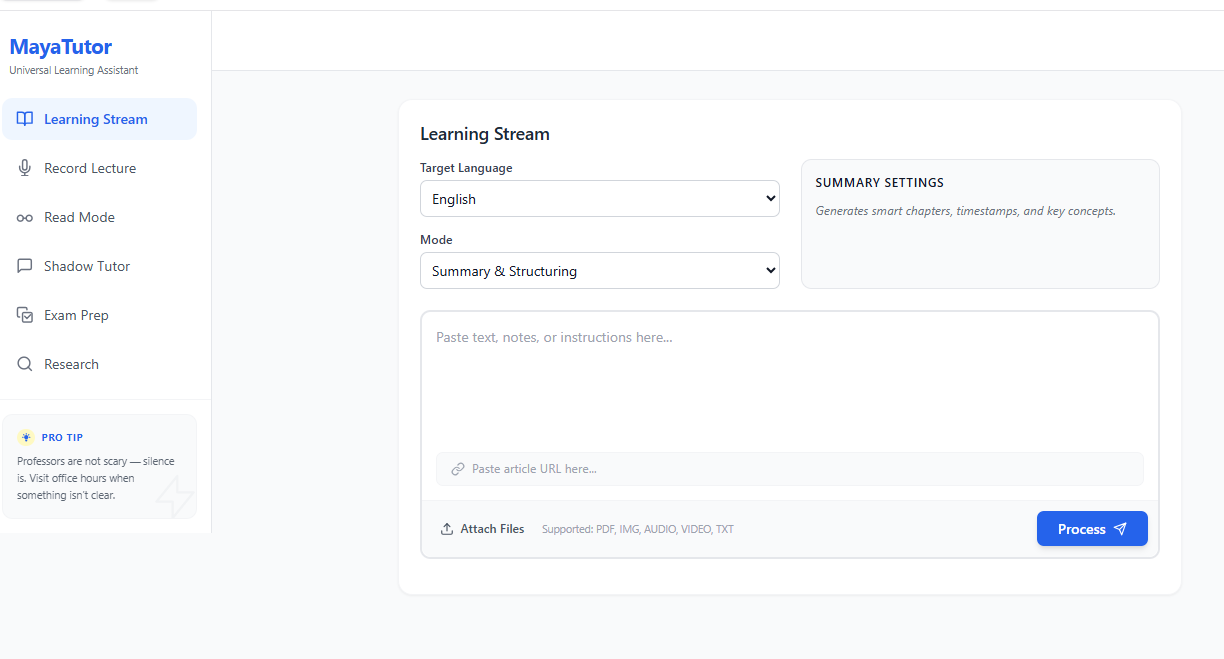
MayaTutor is a real-time, multilingual AI academic companion that processes PDFs, slides, images, audio, video, and live lectures. It adapts content to a student’s target language and learning level, providing multiple modes of engagement:
- Learning Stream: Select a language and learning mode—summary, concept map, quizzes, or flashcards.
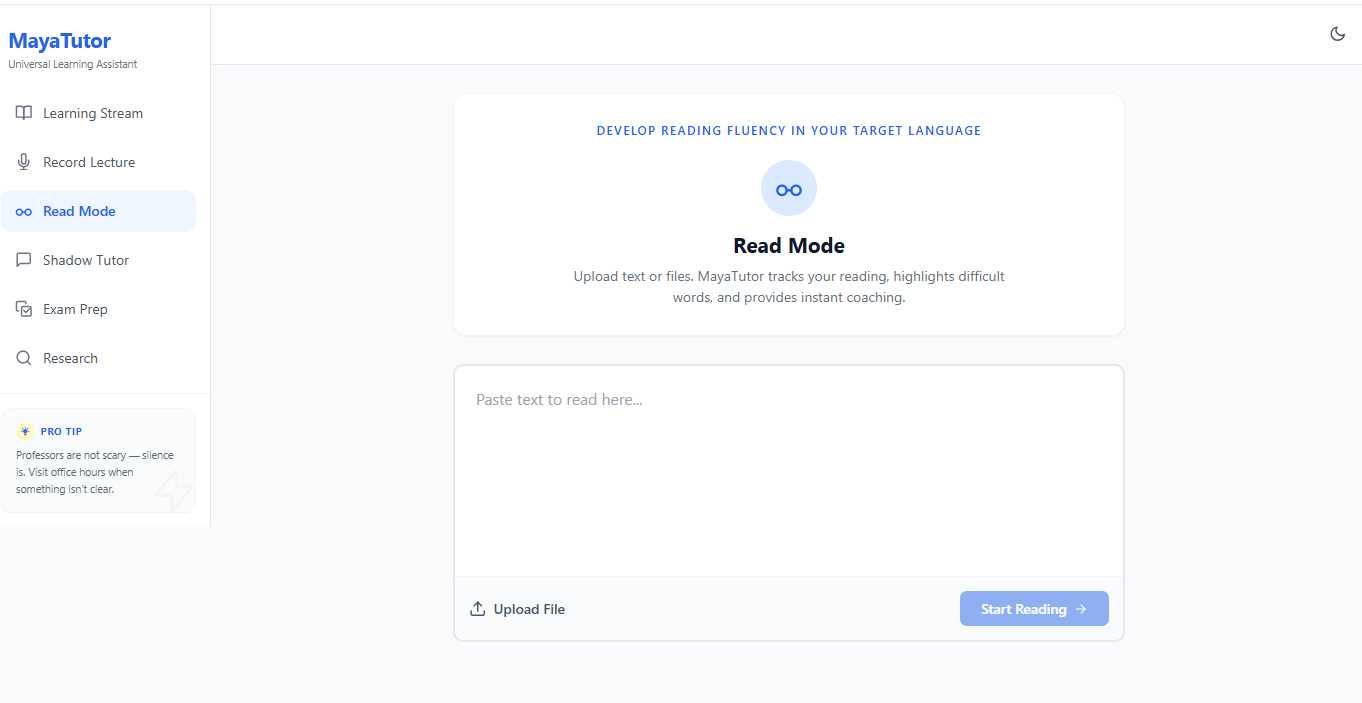
- Read Mode: Upload texts and practice reading while receiving real-time comprehension coaching.
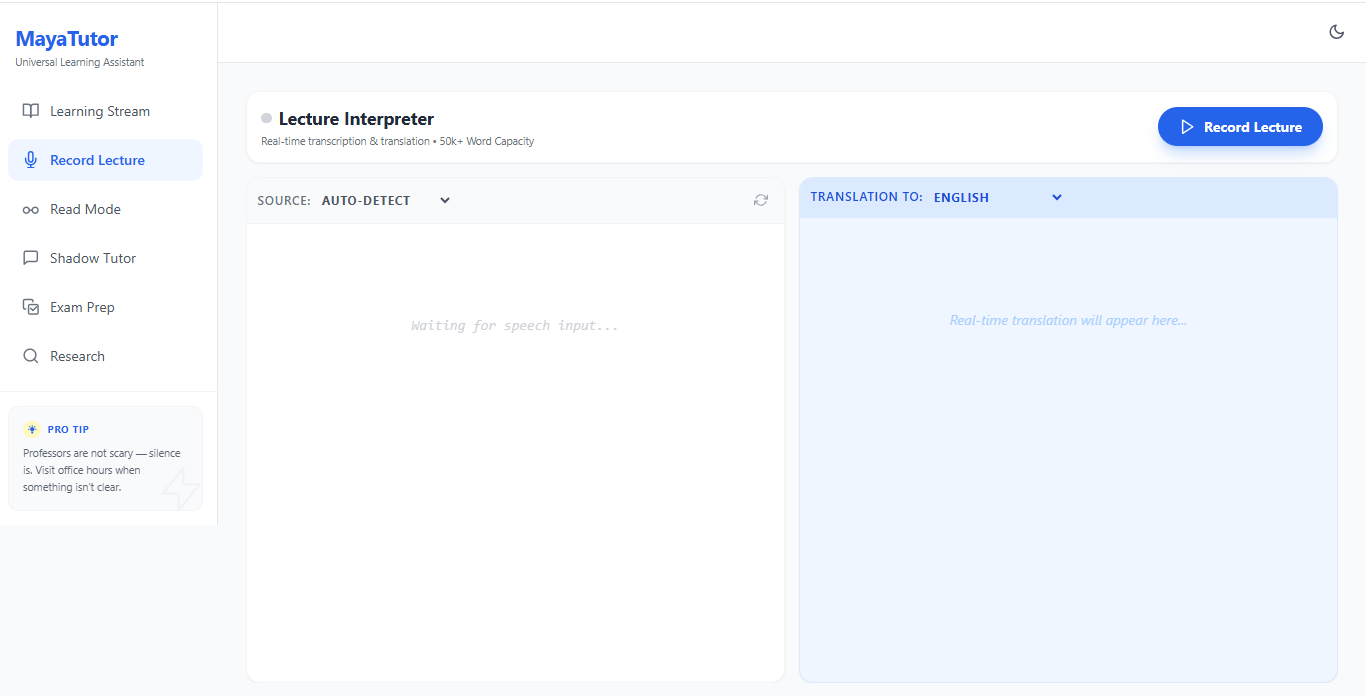
- Record Lecture Mode: Transcribe and translate lectures, highlighting key points and producing study-ready notes.
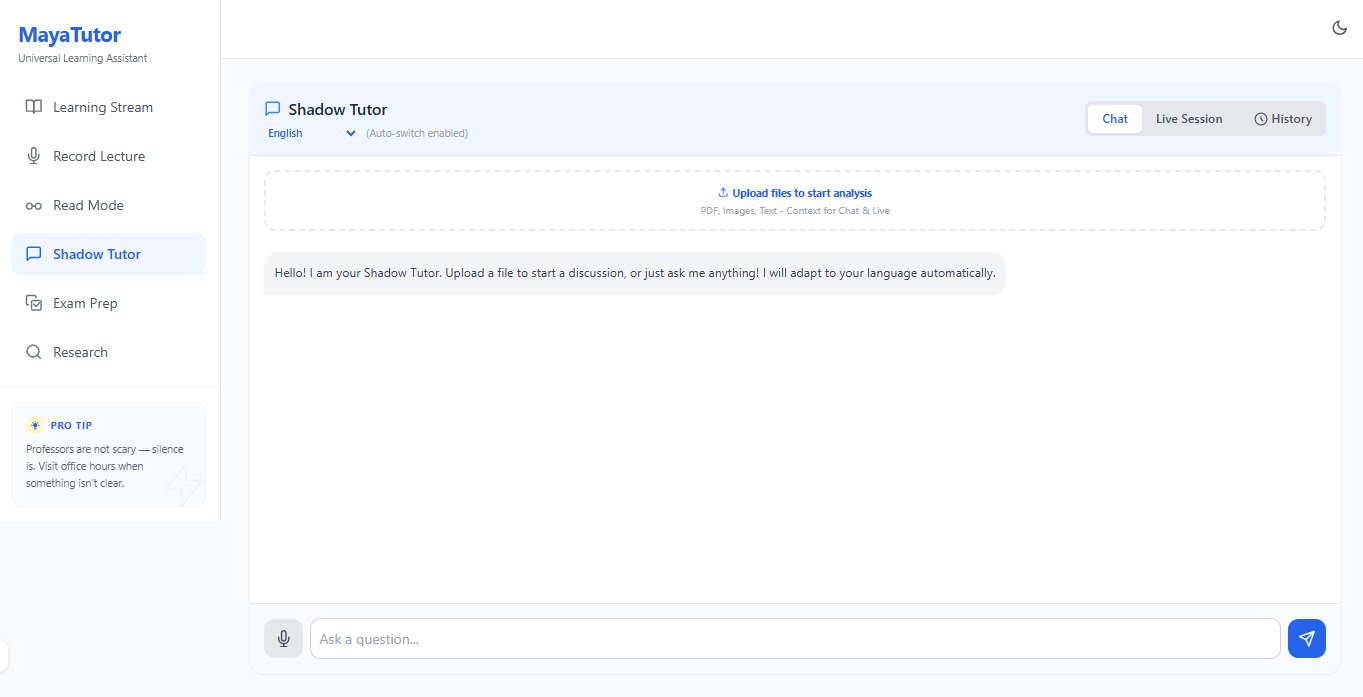
- Shadow Tutor: Chat with the AI, ask questions, and receive step-by-step explanations.
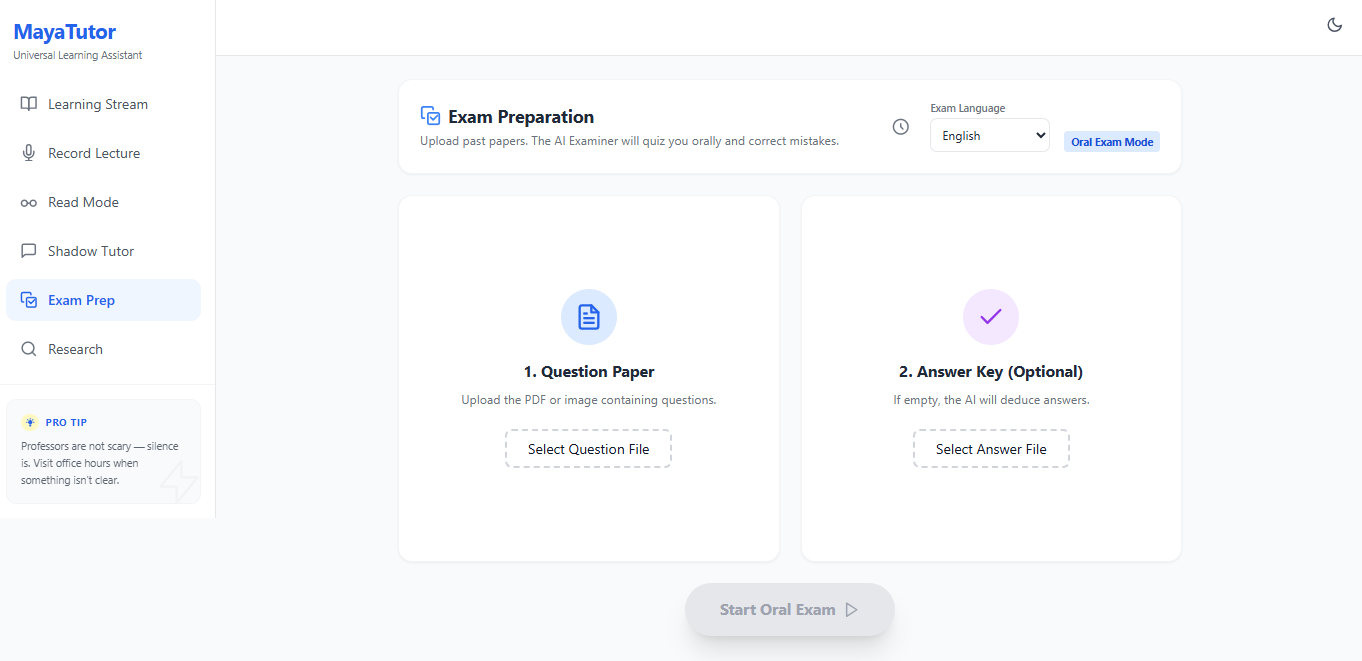
- Exam Prep Mode: Simulate exams with uploaded questions and answers, and receive feedback.
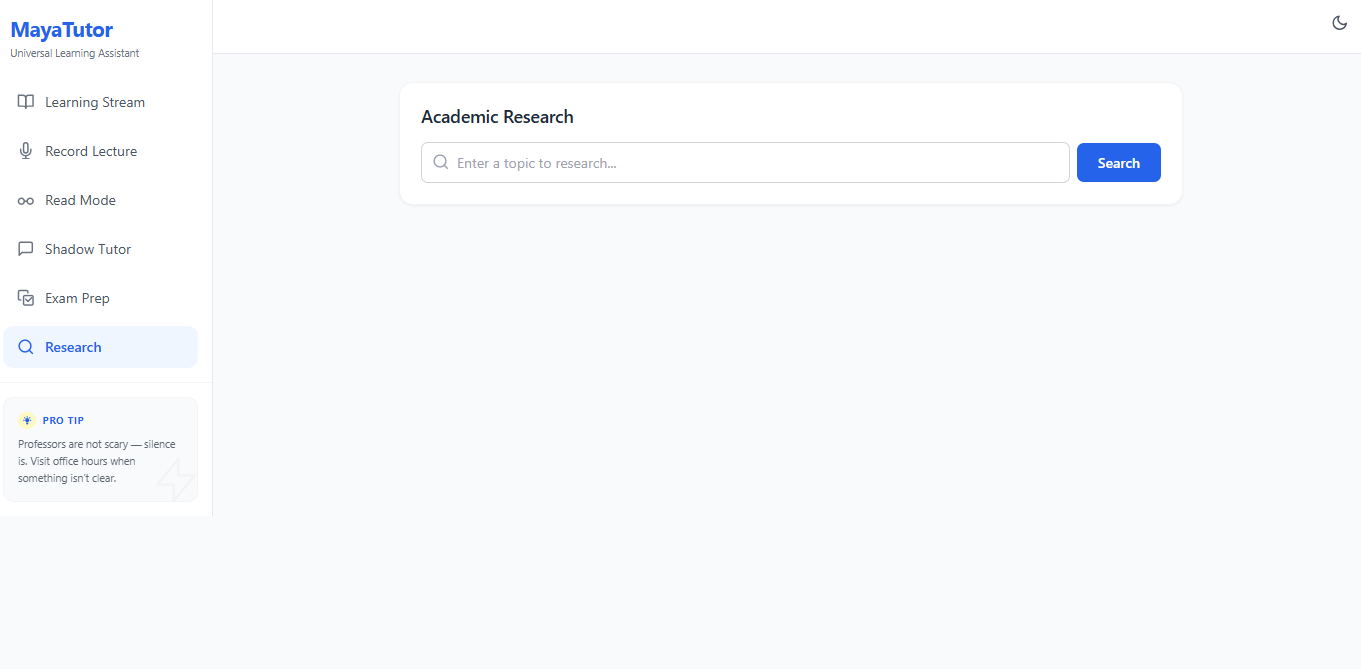
- Research Mode: Explore topics with structured, student-friendly summaries.
- Pro Tips Sidebar: Offers guidance for students studying abroad or in foreign-language environments.
How we built it
MayaTutor is a multimodal AI system designed to reason over:
- Text (notes, articles, slides, PDFs)
- Images (diagrams, screenshots, handwritten notes)
- Audio (recorded lectures, voice questions)
- Video (lecture recordings, screen captures)
The architecture automatically detects the source language, translates content, and adapts explanations to the user’s level. Content is routed into the appropriate learning mode—summary, tutor, quiz, flashcards, or research—so every interaction is **personalized, interactive, and study-focused.
Challenges we ran into
- Performance & latency: Processing large files, audio, and live lectures can take a few seconds, occasionally slowing the experience.
- Large file uploads: Big documents required optimization to maintain responsiveness.
- Lecture recording stability: Output sometimes appeared in fragmented bursts instead of smooth streaming.
- Mathematical and scientific notation: Translating formulas across languages while preserving correctness was complex.
- Balancing speed, accuracy, and real-time usability was a constant trade-off throughout development.
Accomplishments that we're proud of
- Building a multi-mode AI learning companion instead of a single-purpose tool.
- Supporting text, audio, video, and images in a single platform.
- Designing a system that focuses on understanding, confidence, and personalized learning, not just translation.
- Defining a clear AI teaching philosophy that adapts to student level and learning style.
What we learned
- Translation alone is not education—explanation, interaction, and practice matter more.
- Students learn better when content adapts to their language level and context.
- AI in education is most effective as a coach and companion, not just an answer engine.
- Good edtech is about learning experience design, not just features.
What's next for MayaTutor
- Improve performance and latency to ensure smooth, real-time interactions.
- Add more learning features that help students progress across subjects.
- Introduce progress tracking and learning analytics.
- Enhance live lecture support for more reliable, continuous transcription and translation.
- Build a mobile-first experience to make MayaTutor globally accessible.
Built With
- apis
- document
- gemini)
- next.js
- react
- speech-to-text
- translation
- typescript


Log in or sign up for Devpost to join the conversation.