-
-
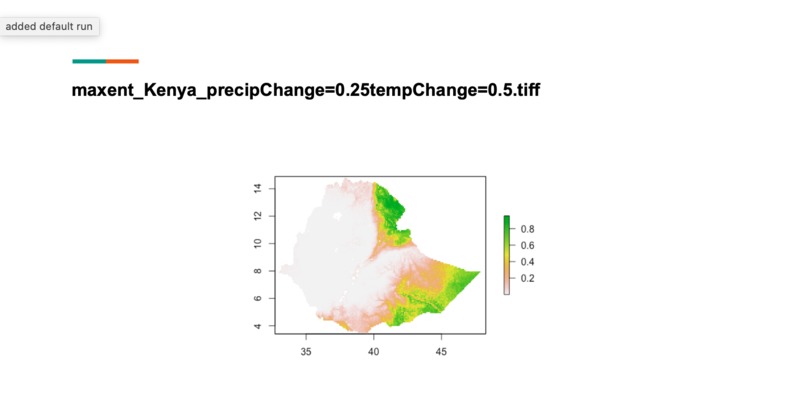
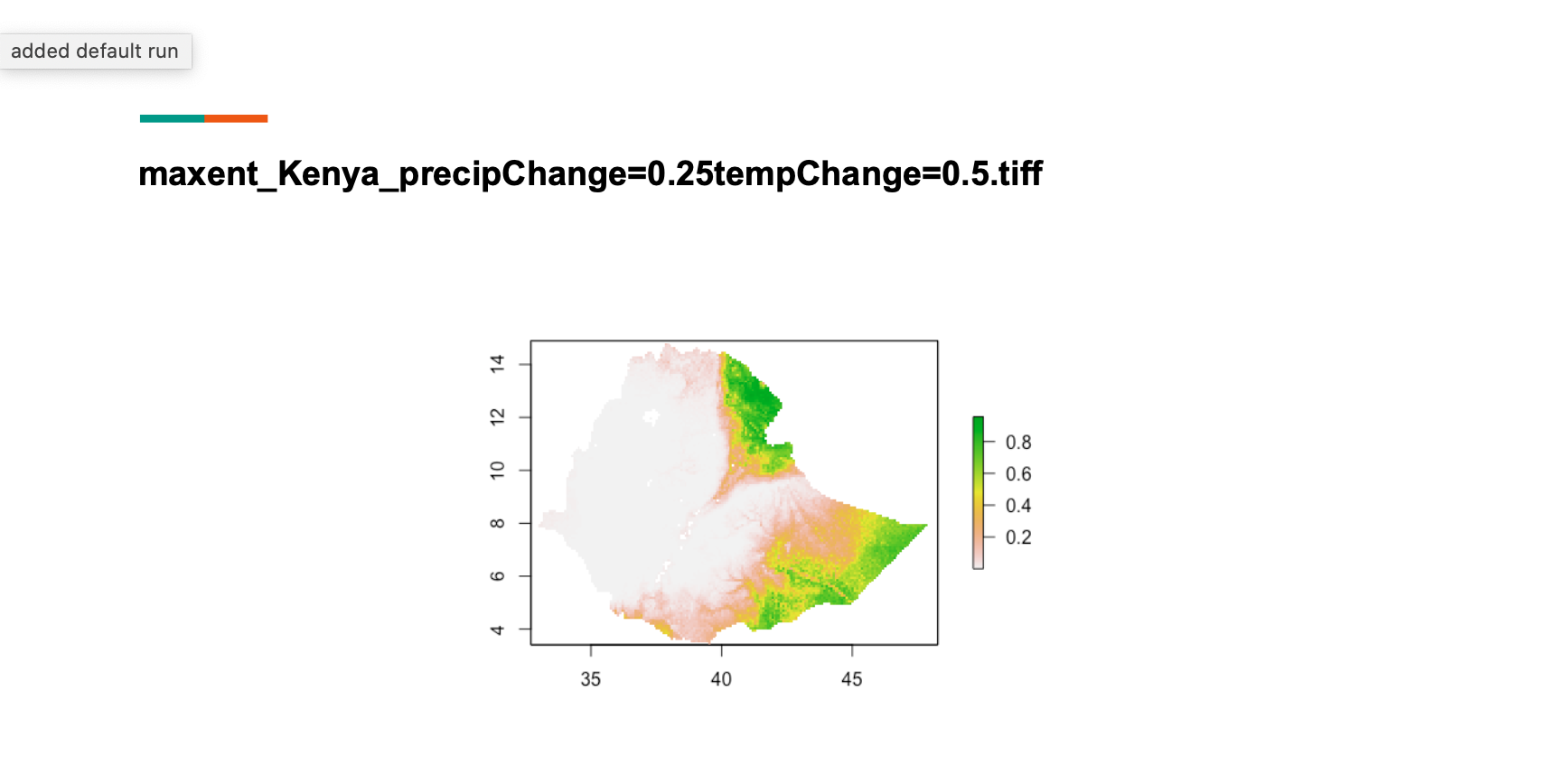
MaxHop Run
Inspiration
We were inspired by Sustainable Development Goals #2 (Zero Hunger) and #13 (Climate Action). Climate change has increased the likelihood that locust swarm outbreaks will occur more frequently and threaten the global food supply. MaxHop will help address this problem by predicting the probability of locust presence, which can then be used to determine early intervention and deterrence. MaxHop is based on a paper titled, “Prediction of breeding regions for the desert locust Schistocerca gregaria in East Africa”.
What it does
The Jataware locust model predicts the probability of locust presence in Africa using a maximum entropy model over environmental data such as climate and soil texture. Our model provides a command line interface which allows users to manipulate environmental input conditions against a pre-trained model to predict future locust distributions. We attempted to adapt MaxHop to the ASDI dataset, CMIP6 GCMs. Training MaxHop on the CMIP6 GCMs would produce forecasts for locust presence from 1980-2100 based on the climate simulations from CMIP.
How we built it
Please refer to the tutorial above on how to train and implement CMIP6 GCMs on MaxHop. Also refer to our Github repository for more details.
What's next for MaxHop
We encourage those interested in MaxHop to continue to expand its functionality and applications.


Log in or sign up for Devpost to join the conversation.