-
-
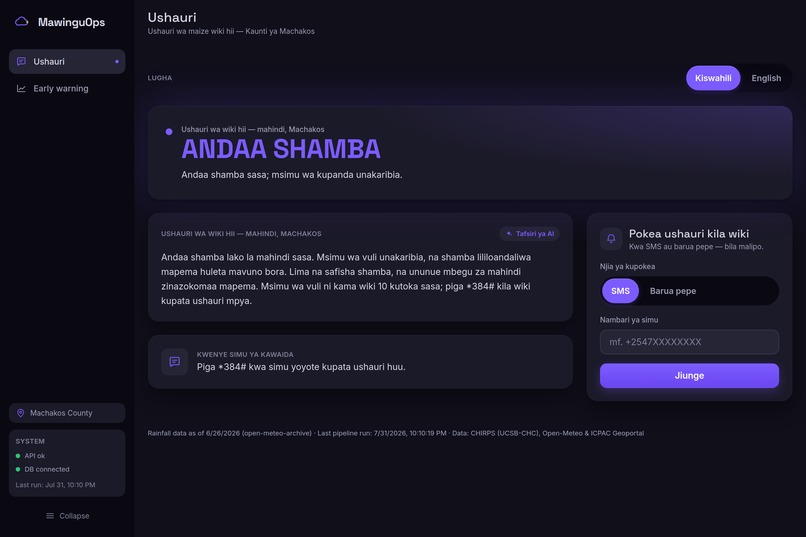
-
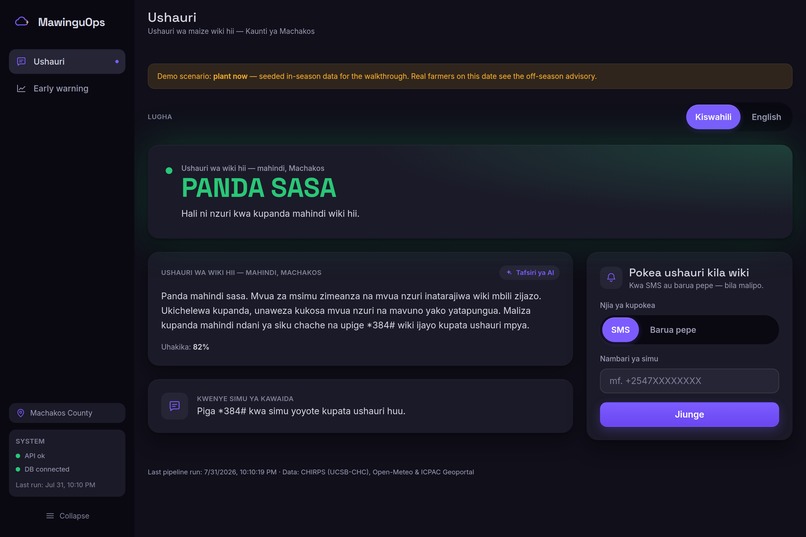
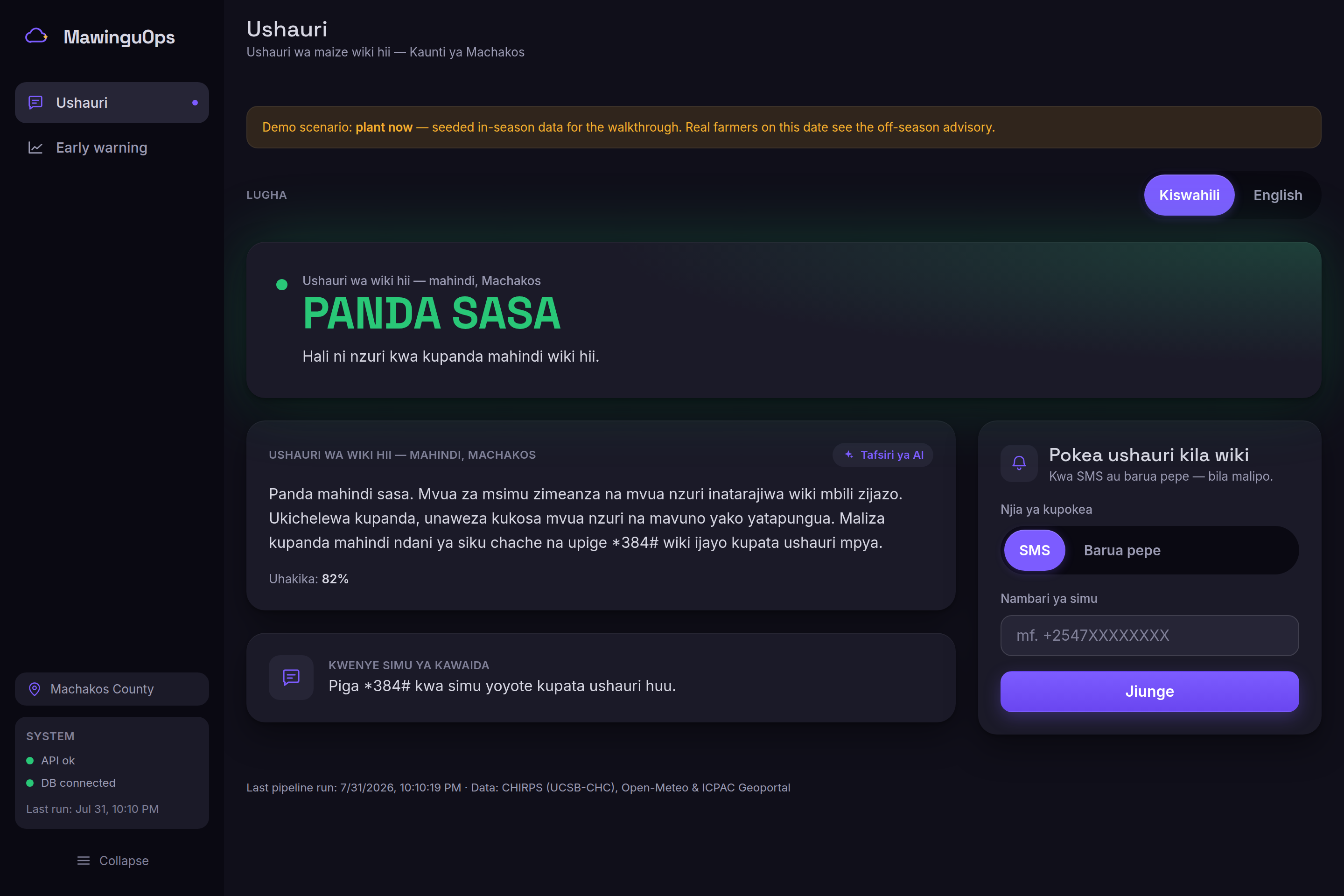
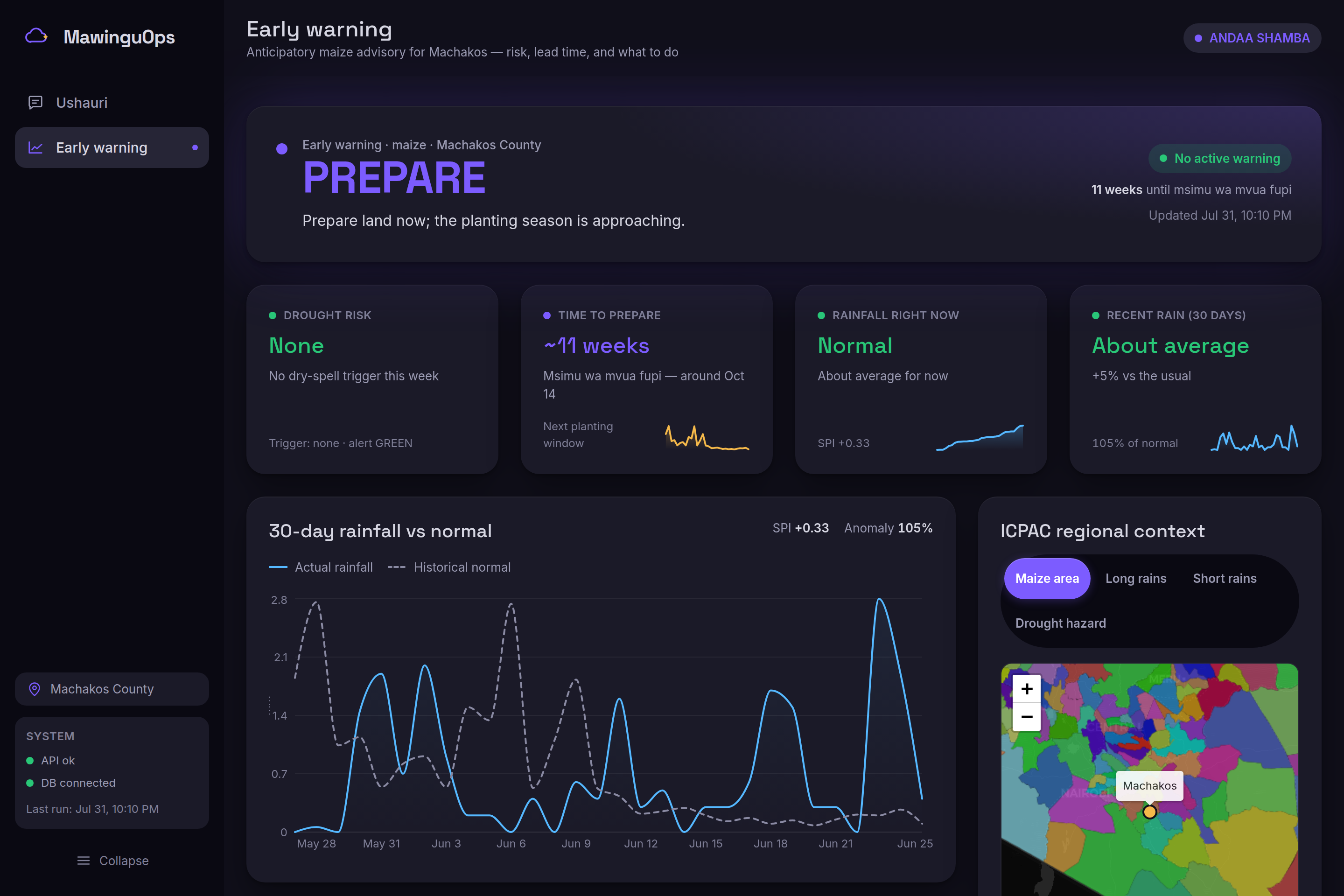
The same advisory when the call is PLANT, with the plain-language reason and the option to subscribe for free weekly alerts by SMS or email.
-
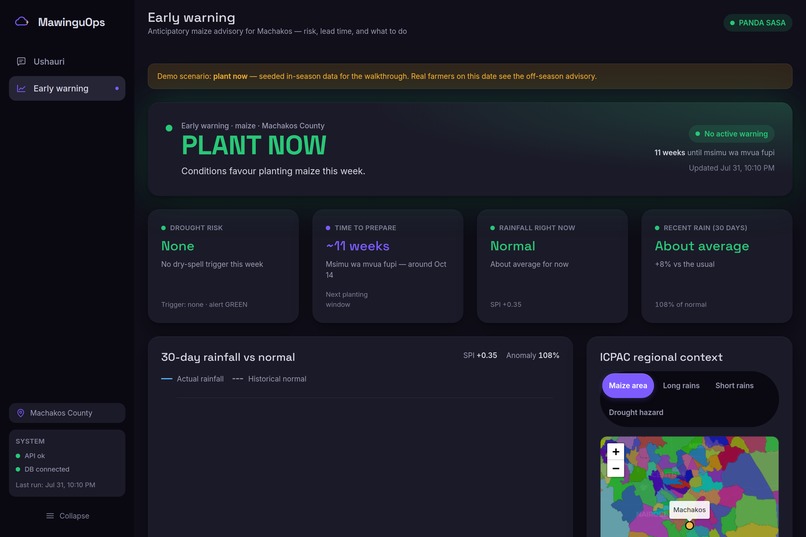
-
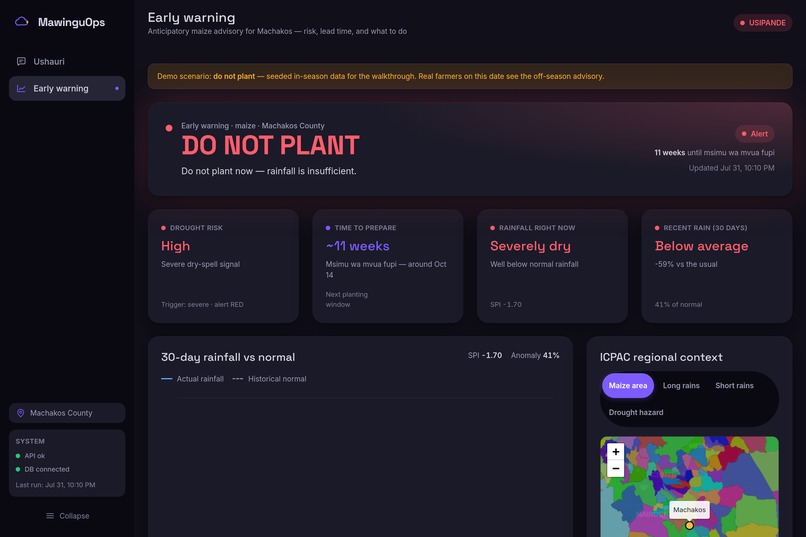
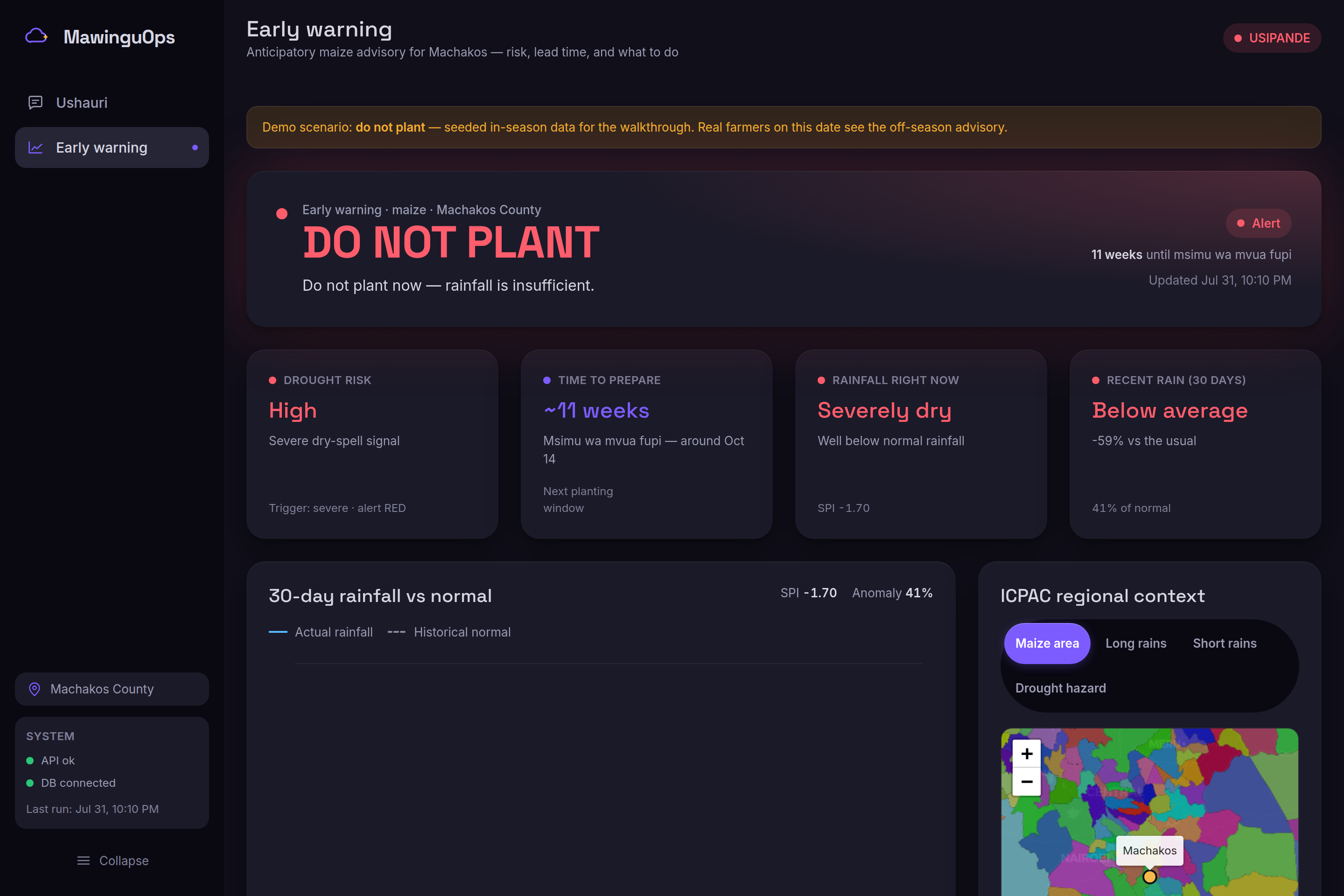
A worsening dry spell escalates the signal to red, DO NOT PLANT, warning farmers before they sink seed and labour into a failing season.
-
-
-
-
-
Inspiration
In Machakos County, a smallholder farmer makes one high-stakes decision every season: when to plant maize. Plant before the rains establish and the seed dies in dry soil; plant too late and the crop misses the window. As the rains grow more erratic, that bet gets harder, and getting it wrong can cost a family its seed, its labour, and its food for the year.
The frustrating part is that the data to warn them already exists: satellite rainfall, drought indices, and seasonal forecasts from world-class sources. But it lives in technical dashboards and indices that a farmer with a feature phone can neither reach nor understand. We wanted to close that last mile: turn credible climate science into one timely, plain-language action, delivered on any phone.
What it does
MawinguOps is an early-warning planting advisory for smallholder maize farmers.
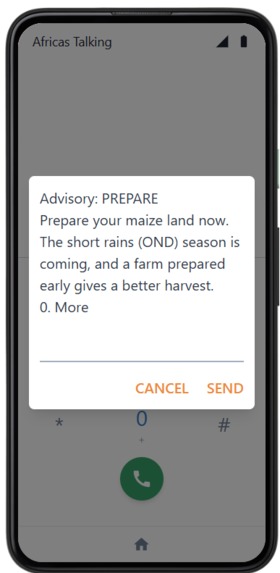
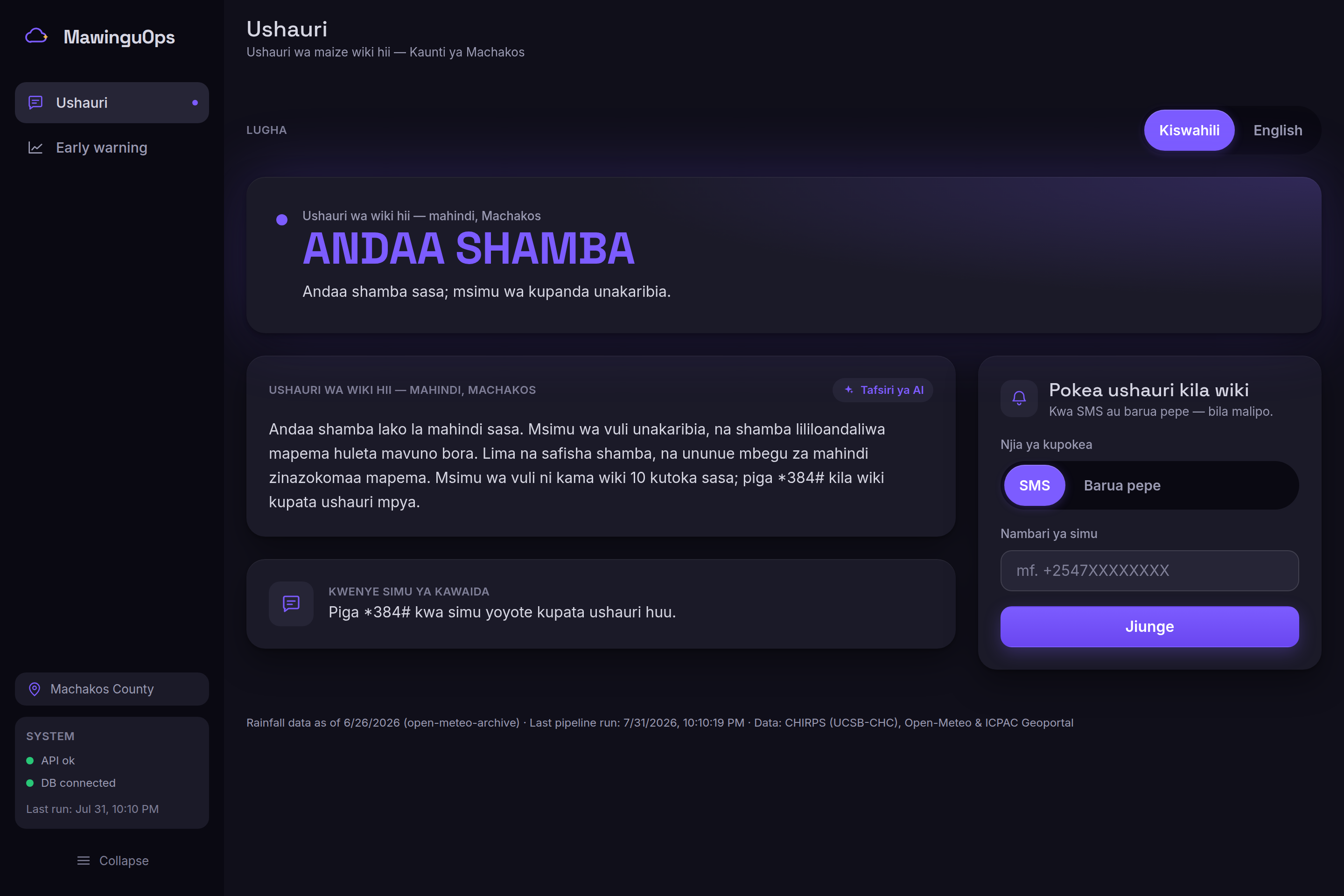
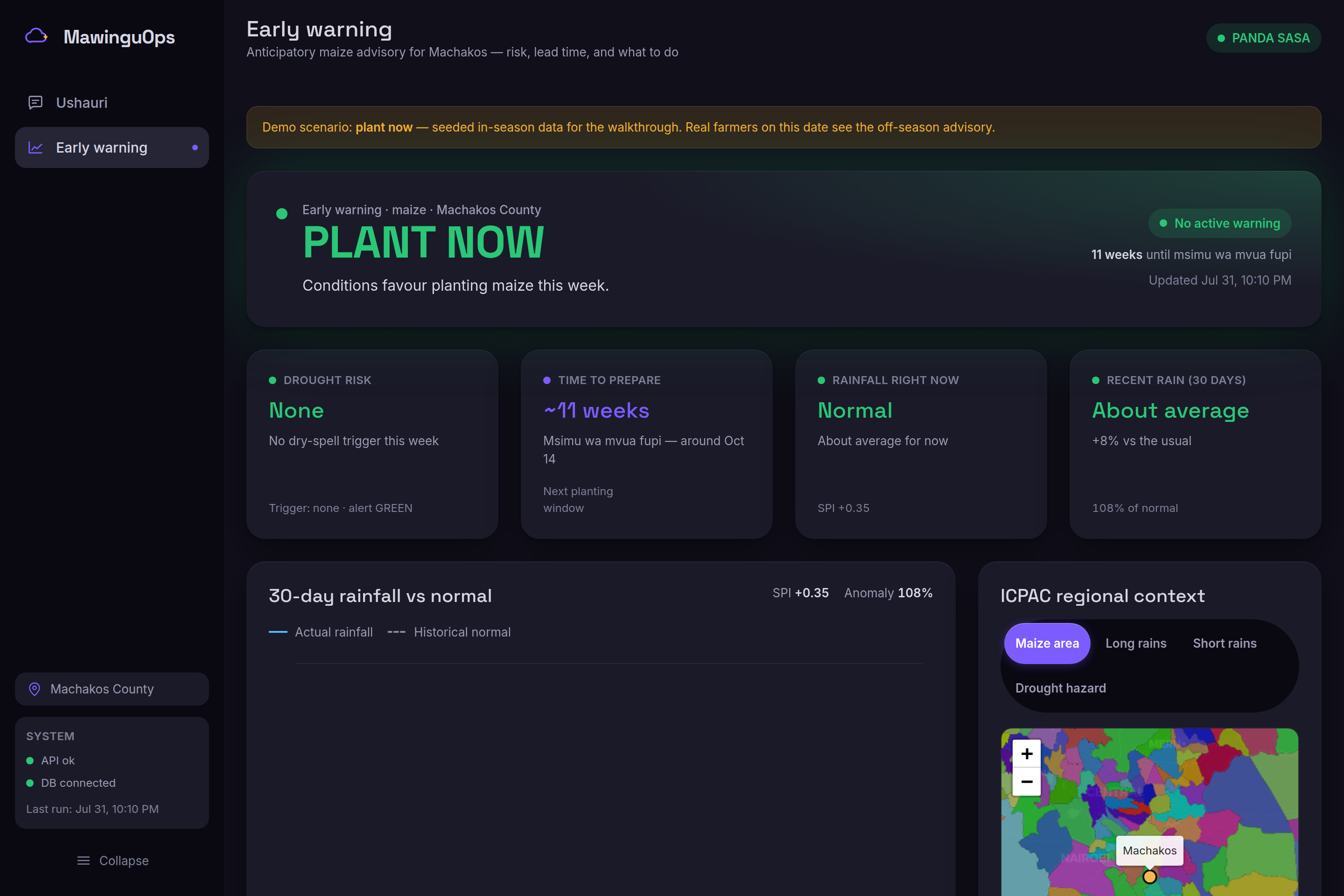
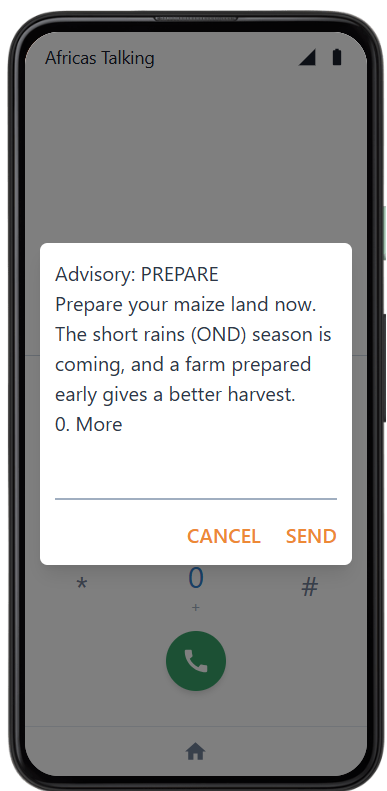
- It issues a single traffic-light signal, GREEN / YELLOW / RED, with one action word: PLANT, WAIT, PREPARE, or DO NOT PLANT.
- It explains the "why" in plain language, in both English and Kiswahili.
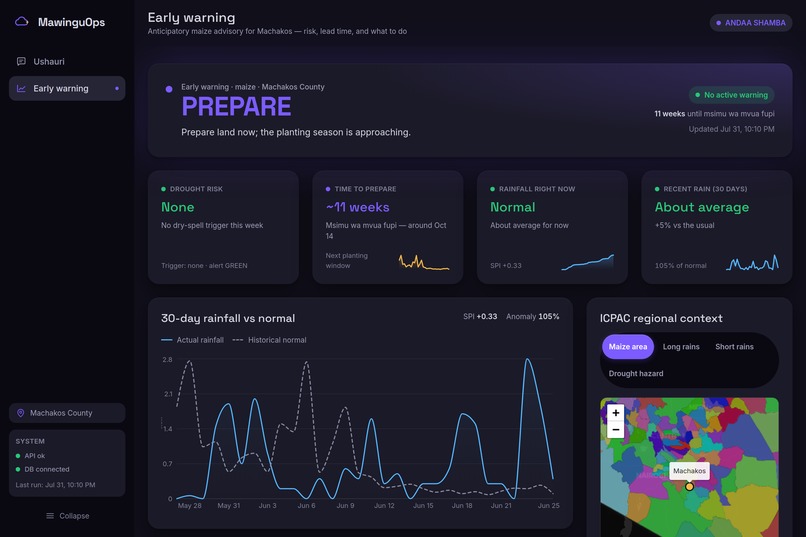
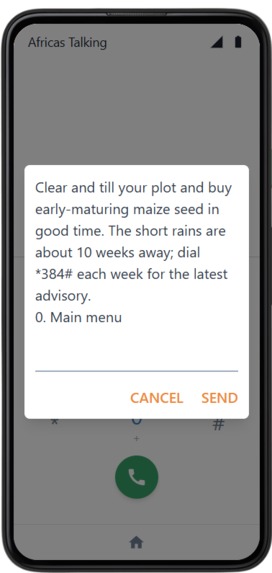
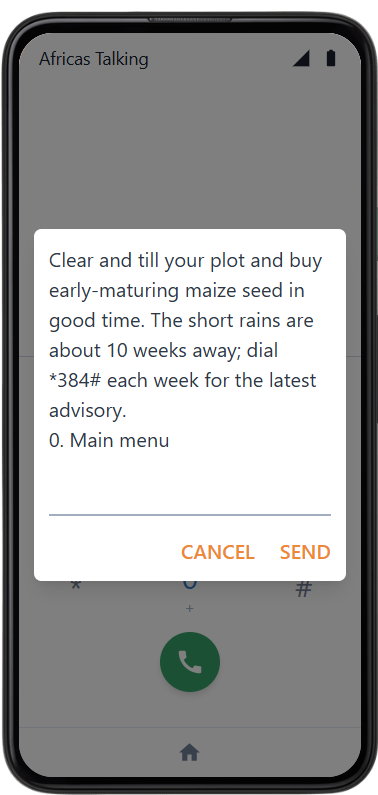
- It leads with early warning: the risk level and how much lead time a farmer has to act (for example, "prepare your land, the short rains are about 12 weeks away").
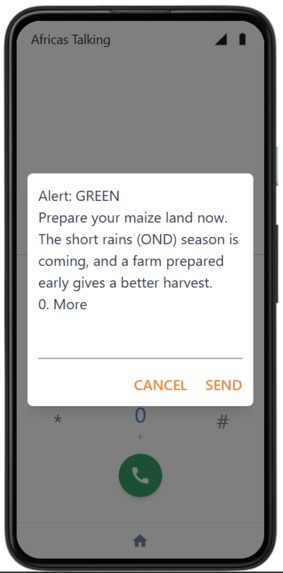
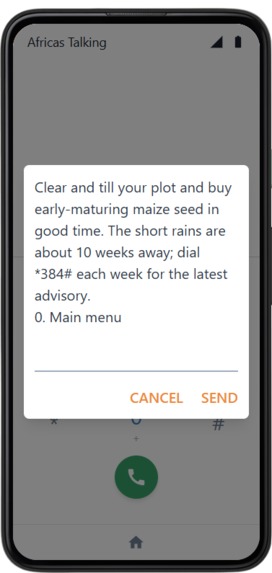
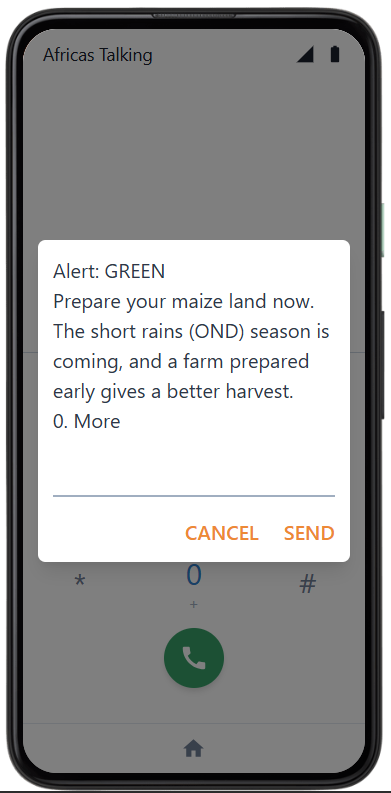
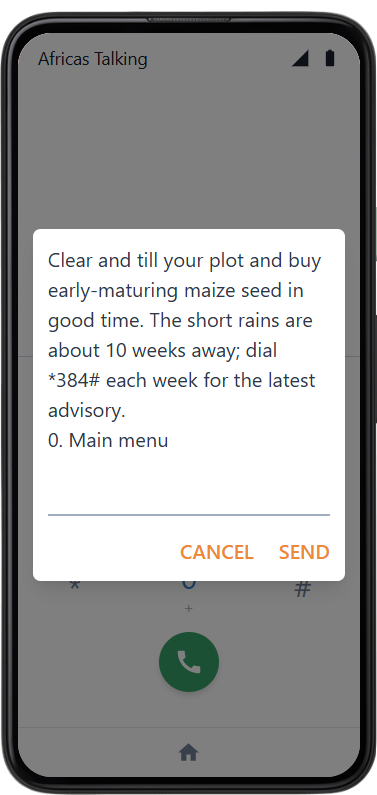
- It reaches everyone: a web dashboard for officers, weekly SMS and email alerts, and a USSD line (*384#) that works on any basic phone with no smartphone and no data.
An officer-facing view translates the underlying signals (drought risk, rainfall condition, 30-day trend, season onset) into plain verdicts, with the raw figures kept as small print for credibility.
How we built it
A weekly Python pipeline pulls CHIRPS satellite rainfall (UCSB Climate Hazards Center), Open-Meteo forecasts, and ICPAC Geoportal layers. It computes the Standardized Precipitation Index and a 30-day rainfall anomaly, detects growing-season onset, and validates it against the CHIRPS climatology. A scikit-learn model converts those features into a planting recommendation with a confidence score.
SPI expresses a rainfall total as a standard-normal anomaly (fit to a gamma distribution, then transformed), which in its standardized form is:
$$ \text{SPI} = \frac{x - \mu}{\sigma} $$
The heart of the project is the translation layer. Raw indices mean nothing to a farmer, so a Llama 3.3 70B model (via Groq) rewrites the verified signals into a short advisory in English and Kiswahili. It is grounded only in the facts that were actually crossed that cycle, and every output passes a validation guardrail.
Everything is precomputed into PostgreSQL. The delivery channels (a **React
- Vite + Tailwind** dashboard with Recharts and Leaflet, a Node / Express API, and a USSD webhook for Africa's Talking) only read, so every channel shows the same decision instantly. It deploys to Render from a single Blueprint file: managed Postgres, a Dockerized API, and the static dashboard.
Challenges we ran into
- Making an LLM safe enough for real advice. A hallucinated planting message could hurt a family. We grounded the model in verified facts, validated every generation, and wrote a deterministic fallback that produces the same four-part advisory if the model fails or Groq is unavailable, so a bad output can never reach a farmer.
- Speaking to people who do not read indices. "SPI +0.33" is meaningless in the field. We built a plain-language layer that leads with verdicts and lead time, and demoted the numbers to officer-only detail.
- Demonstrating an in-season decision off-season. The live plant / wait / don't-plant path only activates during the rain windows. We added a demo scenario selector and seeded in-season data so the full decision path is always demonstrable, without ever changing what a real farmer sees.
- Stateless USSD. Africa's Talking does not resend custom fields between steps, so we persisted session context in the database to keep each USSD journey consistent.
Accomplishments that we're proud of
- A complete anticipatory pipeline that goes from satellite data all the way to a message on a feature phone.
- A grounded, bilingual AI translation with a real safety net, not a raw model hooked to production.
- True multi-channel parity: dashboard, SMS, and USSD all read one precomputed source, so the advice never contradicts itself.
- Alignment with credible, regional science (CHIRPS and ICPAC), and a one-file reproducible deployment.
What we learned
- The practical side of drought monitoring: SPI, rainfall anomalies, and growing-season onset, and how to sanity-check them against climatology.
- How to make large language models trustworthy for high-stakes use through grounding, guardrails, and deterministic fallbacks.
- Designing for the last mile, where a USSD menu on a feature phone matters more than a polished screen.
- That the hardest and most valuable work in early warning is translation: turning correct data into an action someone will actually take.
What's next for MawinguOps
- Expand beyond Machakos to more counties and crops, starting where drought risk is highest.
- Wire the ICPAC Data Library onset and a combined drought index directly into the pipeline.
- Run a real pilot with county extension officers and a farmer cooperative to measure whether the advisories change planting outcomes.
- Add more languages, and extend the early-warning signal to pest, disease, and market-price alerts.
Built With
- africas-talking
- chirps
- docker
- express.js
- groq
- icpac
- leaflet.js
- llama
- node.js
- open-meteo
- pandas
- postgresql
- python
- react
- recharts
- render
- scikit-learn
- tailwindcss
- vite

Log in or sign up for Devpost to join the conversation.