-
-

App Icon
-
-
-
-
Screenshot 3
-
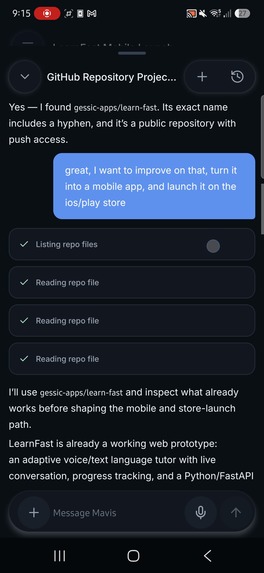
Screenshot 1
-
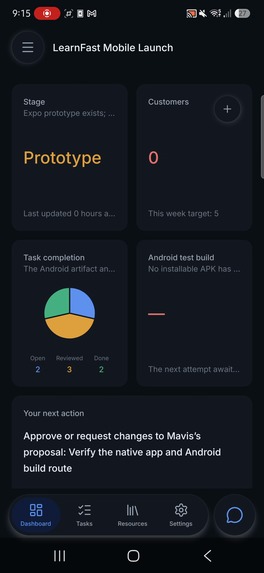
Screenshot 2
-
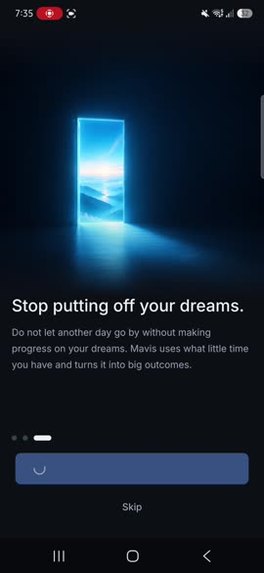
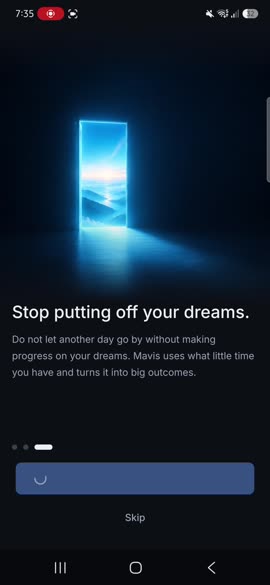
Stop putting off your dreams

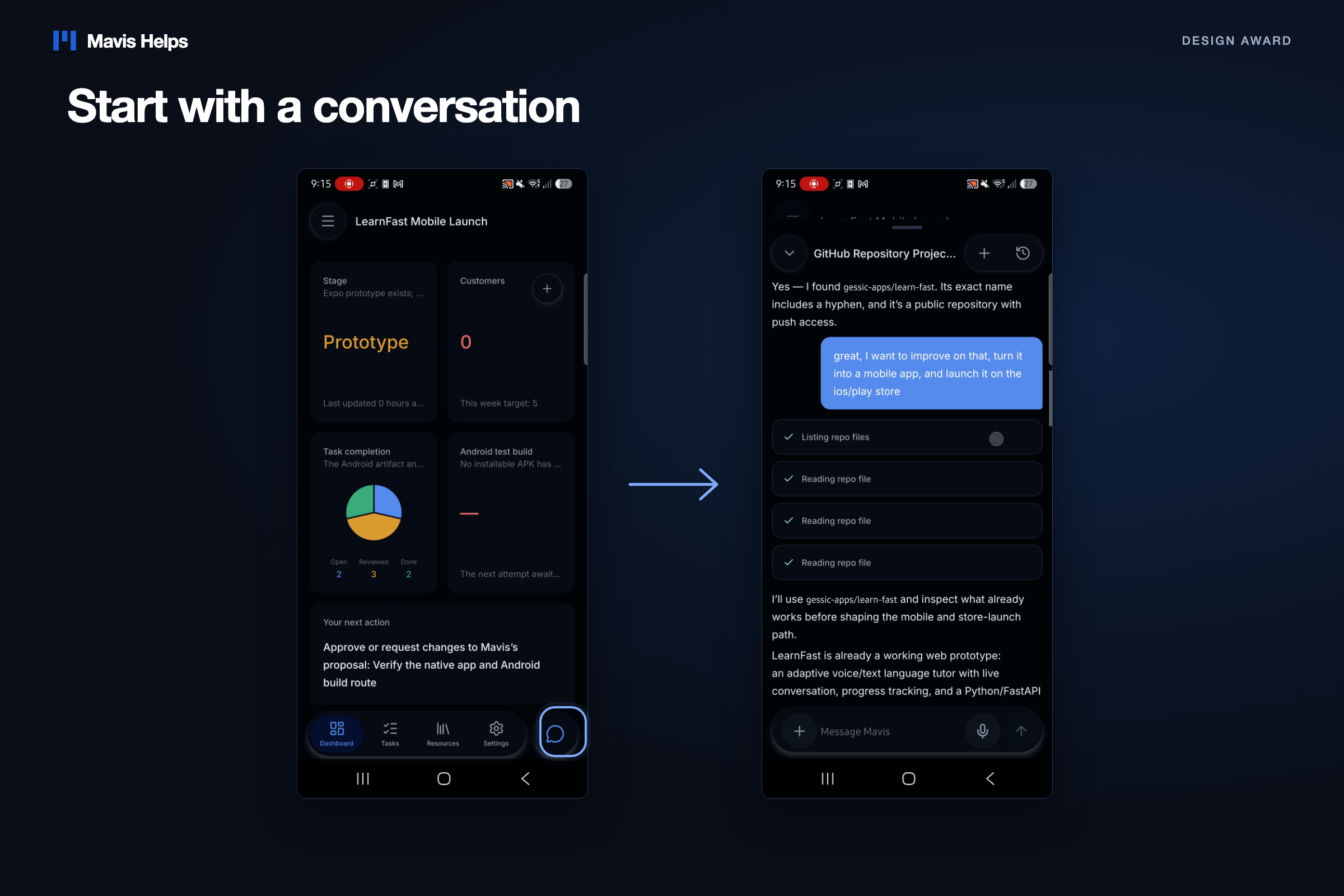
Inspiration
I have:
• 4 kids (under 5), • a full time job • a part time job • a wife, doing a masters degree • and training 3 times weekly, in a basketball 5th divisions men league.
Starting a side business is impossible. Or is it? AI promises us that we can do things nearly at the speed of thought. But I ran into a major problem each time I started a new project:
*I need to be at my desk. Just to steer the AI agent for a few minutes every hour. *
That gave me the inspiration to build a fully mobile AI agent specifically for launching products, getting customer feedback, researching markets, and keeping the side business moving.
My hypothesis is Mavis Helps can be an AI agent optimized for launching a side business. It promises to minimize human input, and maximizing AI effectiveness. I believe that if we can include humans to make the decisions when it matters the most, a lot of work can be done by AI until the project shows promise and the founder can go full time.
What it does
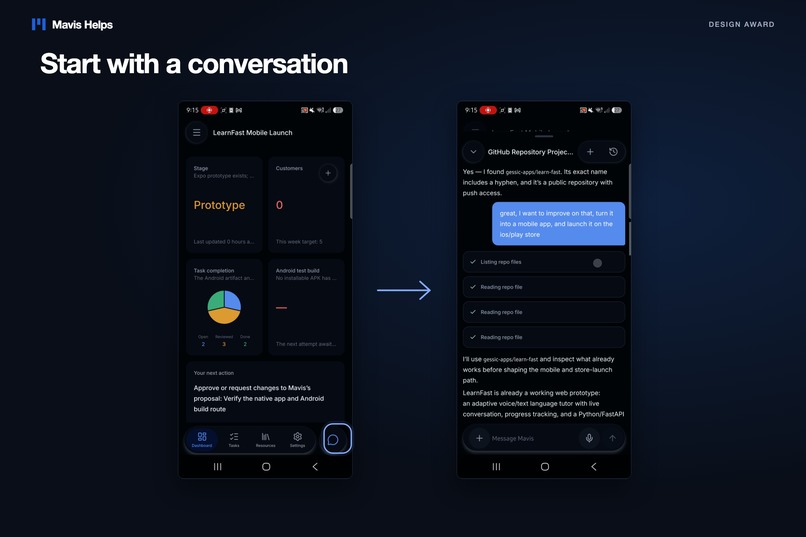
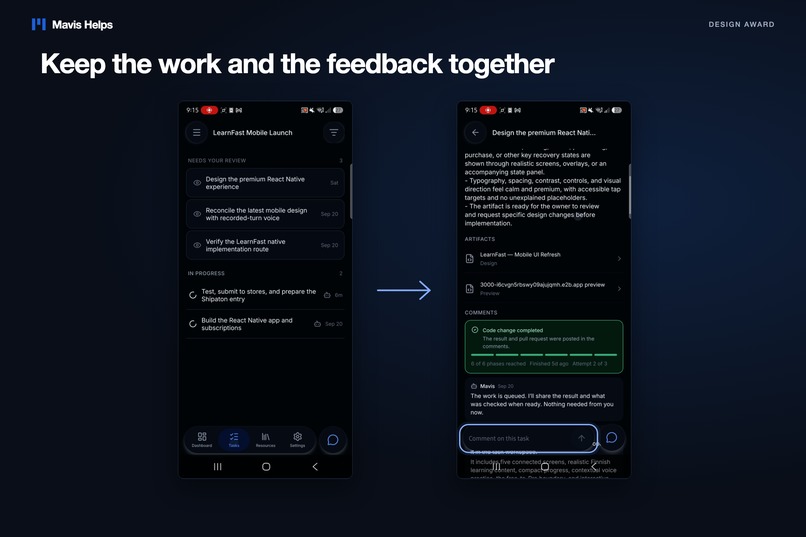
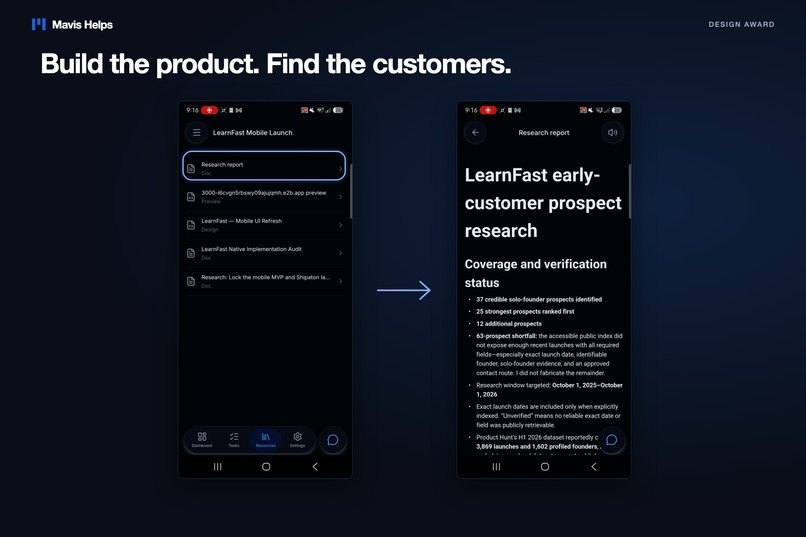
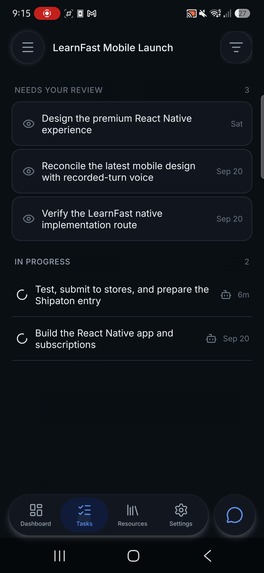
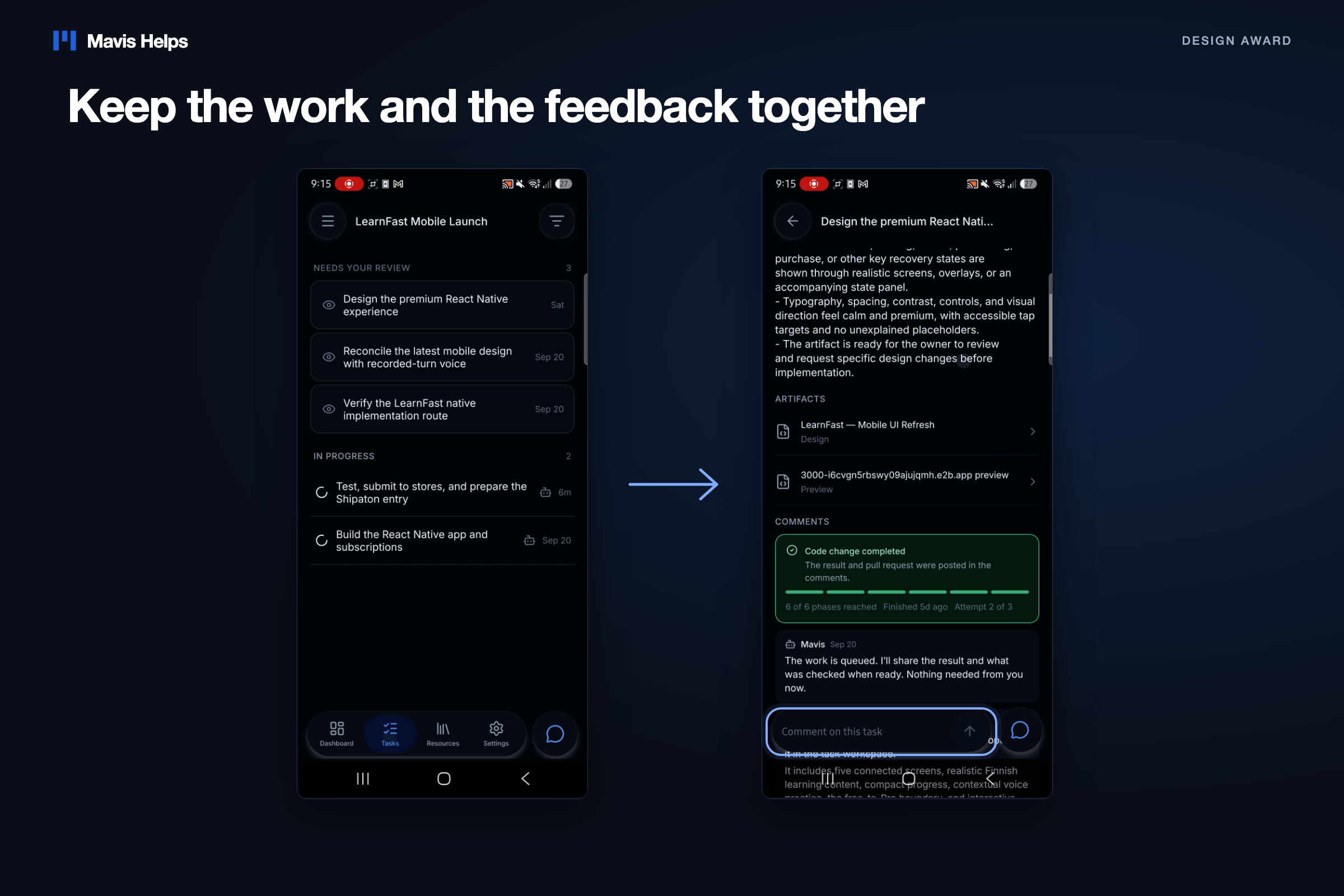
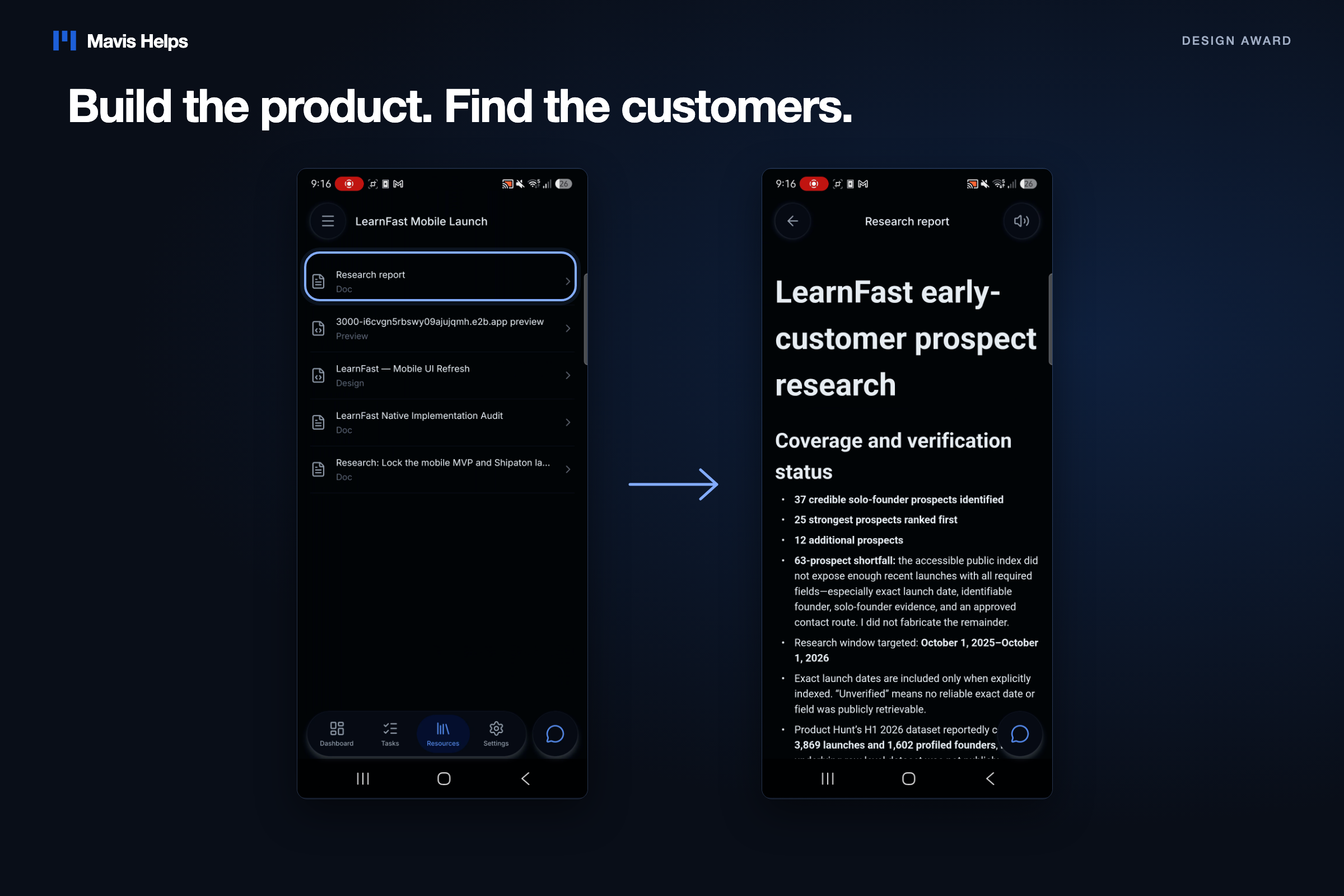
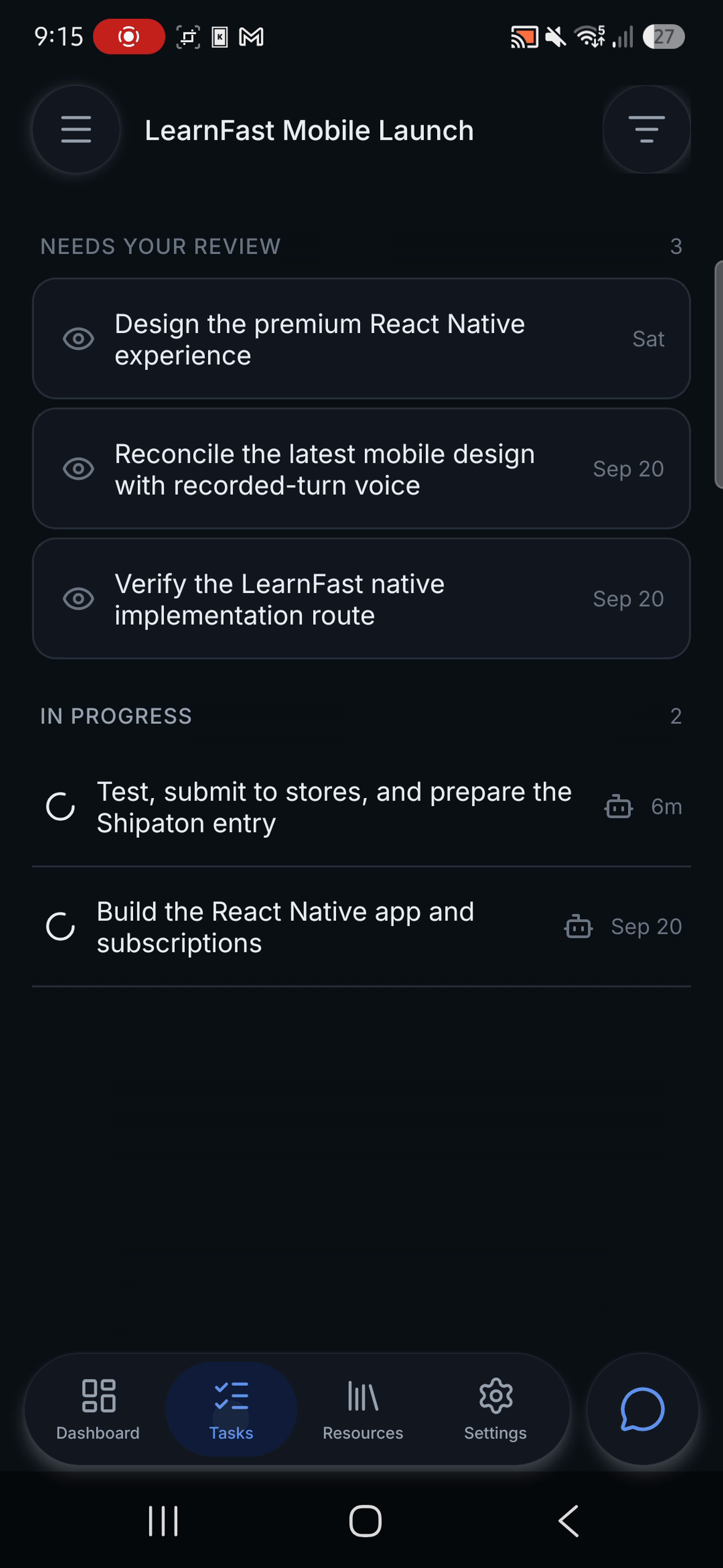
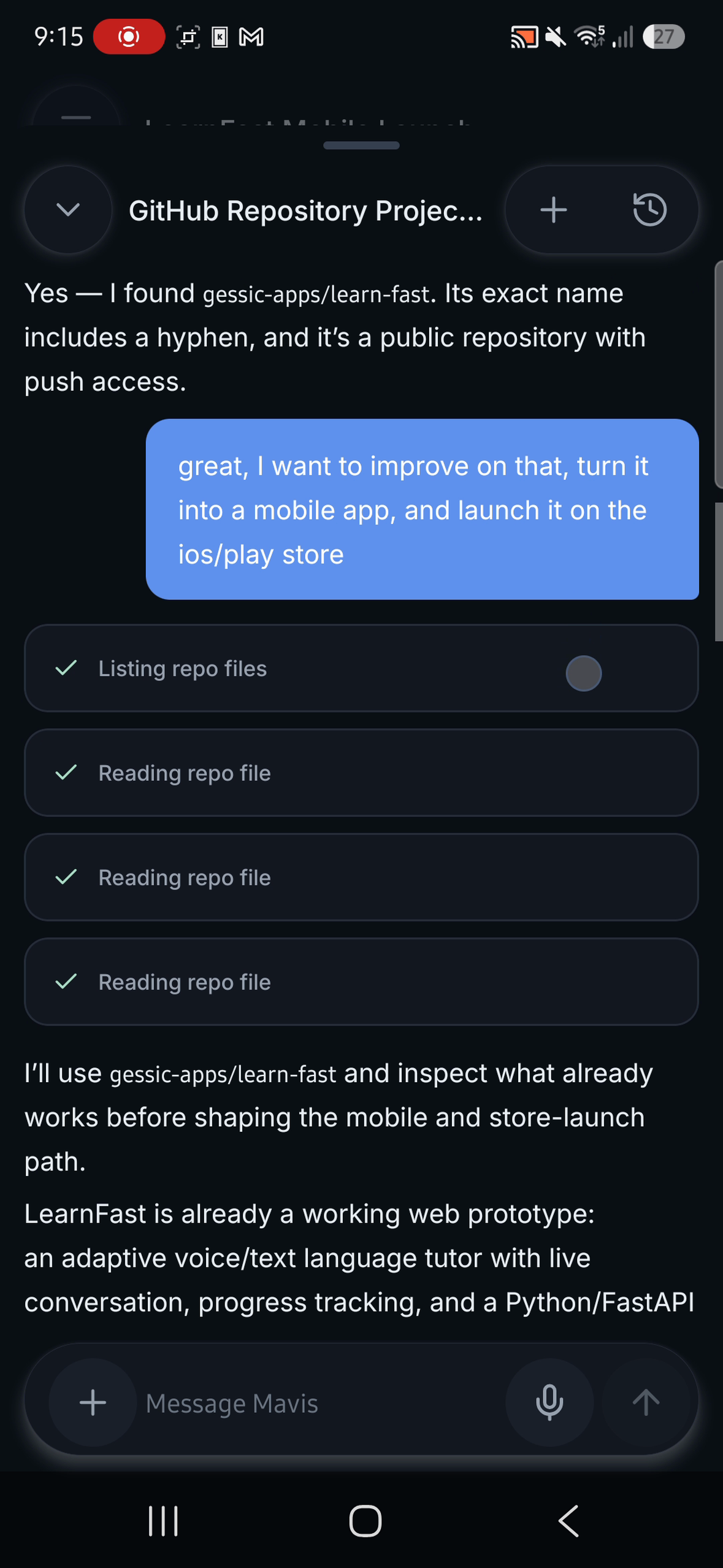
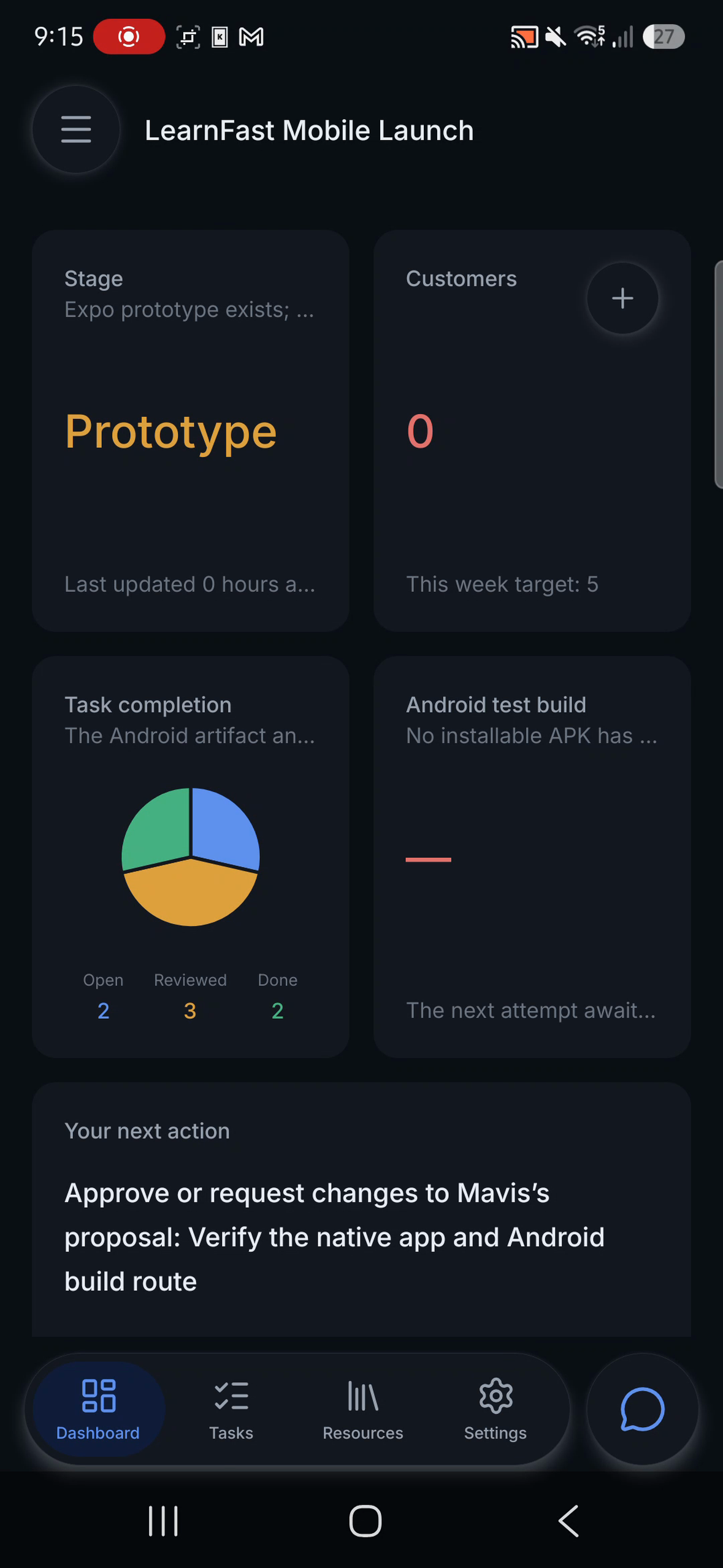
Mavis Helps is an app that allows busy professionals (esp. with kids) to start and run a software business, from their phone. They chat with an AI, which builds mobile or web apps. People can see previews, launch apps to the stores, do deep research about market segments, and so much more.
How we built it
I started by writing out the requirements by hand. I mapped out the Jobs to be done. Since I needed this app myself, a lot of the initial design was focused on making my side projects go from idea, to working prototype, to curating outreach lists.
Next, we used codex to do the implementation. In general, I would ask codex to do some work, I'd review it, then we would iterate. Some days, when I was too busy, I would just let codex rip without checking its work. I found that on those days, I usually had to delete much of that work, because when I did not review the work, it introduced logical bugs and poor UX. At one point, we ripped out the entire coding agent internals and rebuilt it with Pi coding agent.
Challenges we ran into
The first version was very buggy. Building a harness for running a business has a lot of moving parts:
• Coding Agents, • Deep research integrations, • UI/UX design work, • Customer outreach solutions, • and more.
The biggest challenge was: each user prompted differently, and the agent did not always choose the best tools for the job.
Accomplishments that we're proud of
We onboarded 3 paying customers. These are people we reached out to, that we knew:
• Had full time jobs • Had kids • Wanted to start a side business
The moment they began using the app, they were hooked. They called me 2-3 times a day asking for help, reporting bugs, and generally trying to do more and more. One user fired her developer; she had never heard of github, but after using our app for three days, was pushing code, merge (via an Ai agent), and adding more features to her platform that managers all her air bnb rentals.
What we learned
I rebuilt the app multiple times thanks to the consistent feedback from our early users. The biggest learning was that, being ambitious is the only way to get ahead. In the beginning, we relied heavily on third party services like E2B to power our agent computers. These were slow. Thanks to AI, we could build our own solutions on virtual machines, for just an extra hour, and get 10x increases in speed.
I learned that I don't need to compromise on features like we did years ago. If the customer wants it, we can build it.
What's next for Mavis Helps
I hope to go full time building Mavis Helps within the next 2 months. The early user feedback has been tremendous, and within a year, I believe we can make it far enough that we can unlock an entire new demographic to build next year's shipaton apps: busy professionals with kids who mostly sit out these hackathons.
Built With
- expo.io
- openai
- react-native

Log in or sign up for Devpost to join the conversation.