-
-
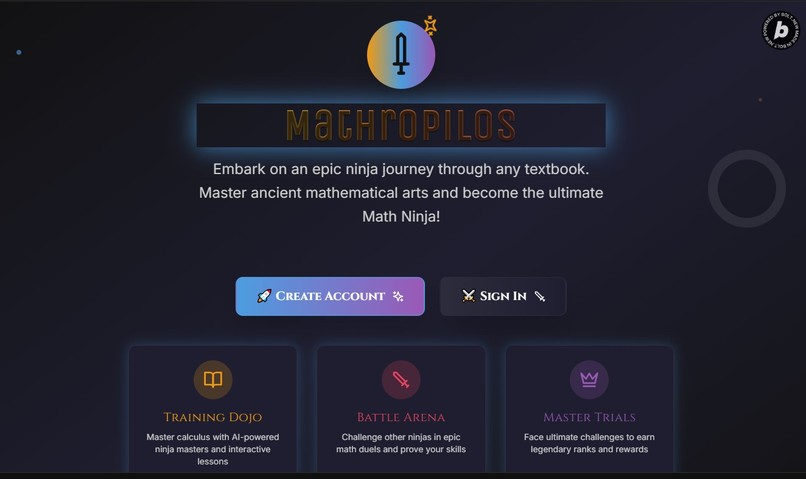
Welcome Page
-
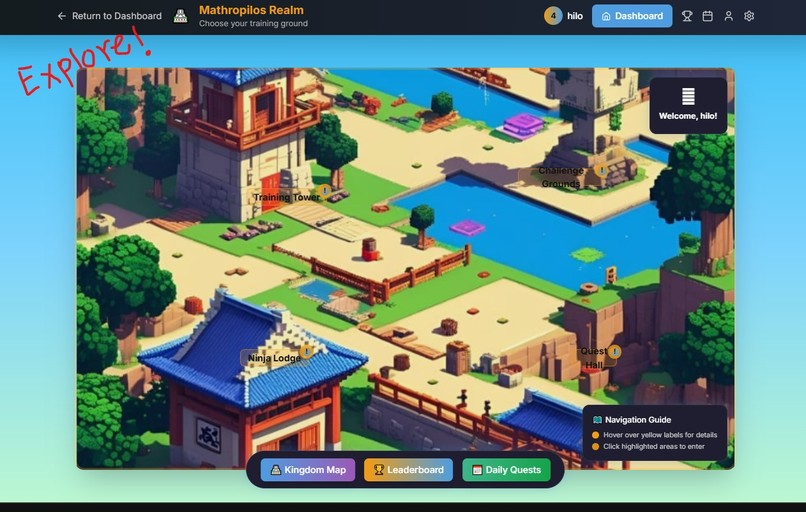
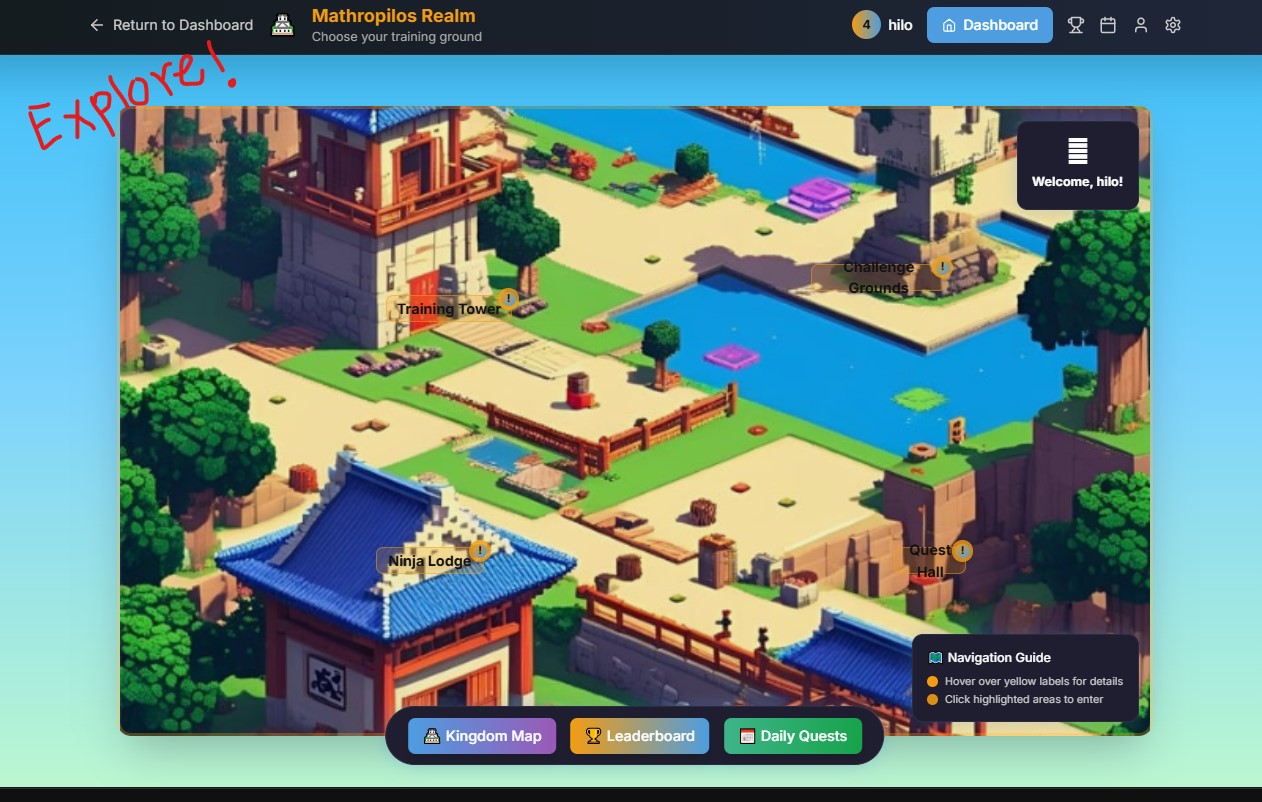
Explore the Kingdom
-
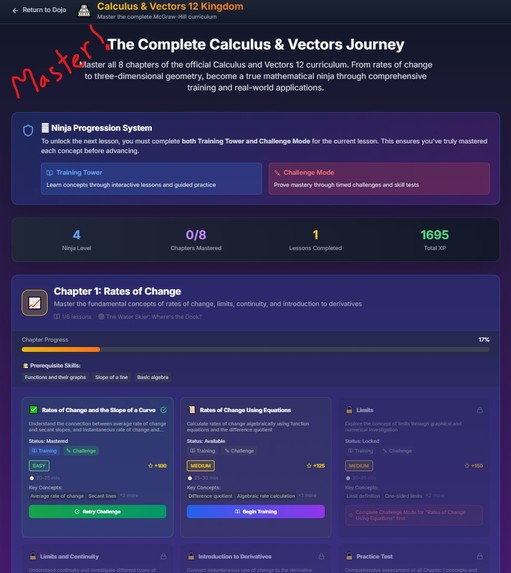
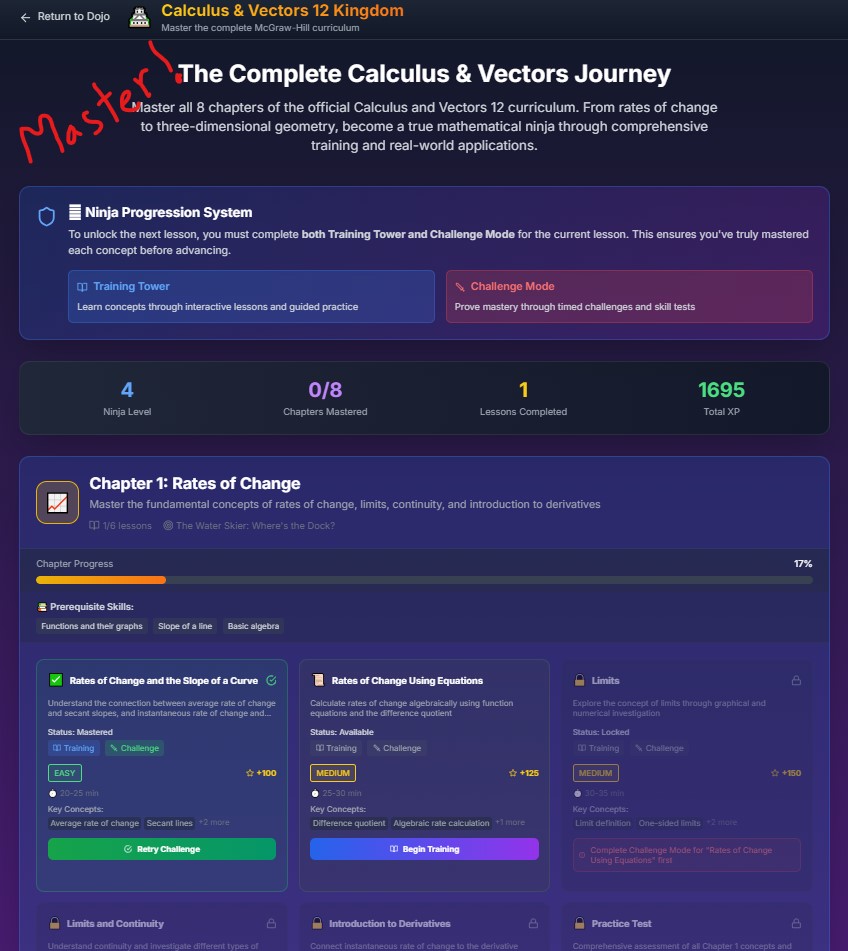
Training Tower
-
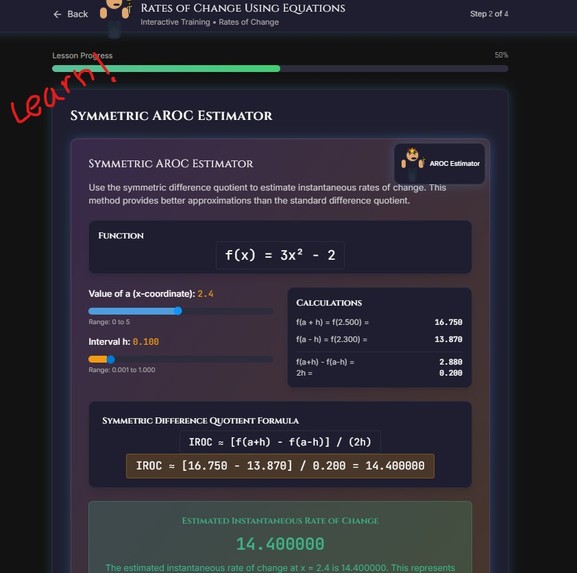
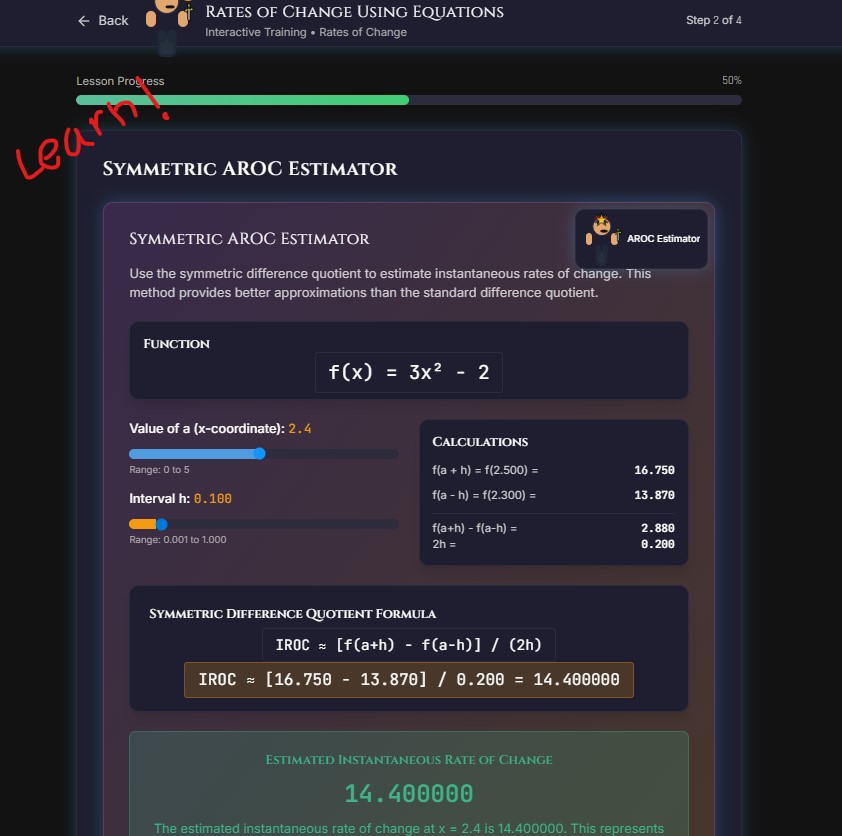
Interactive Lessons
-
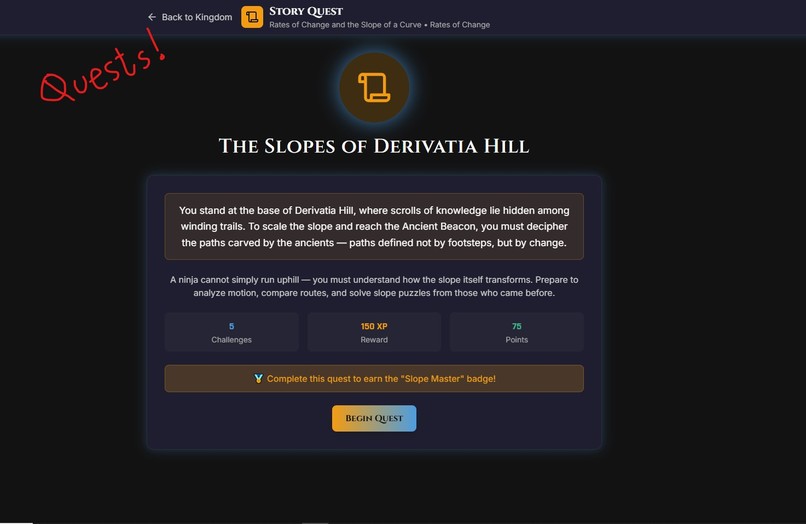
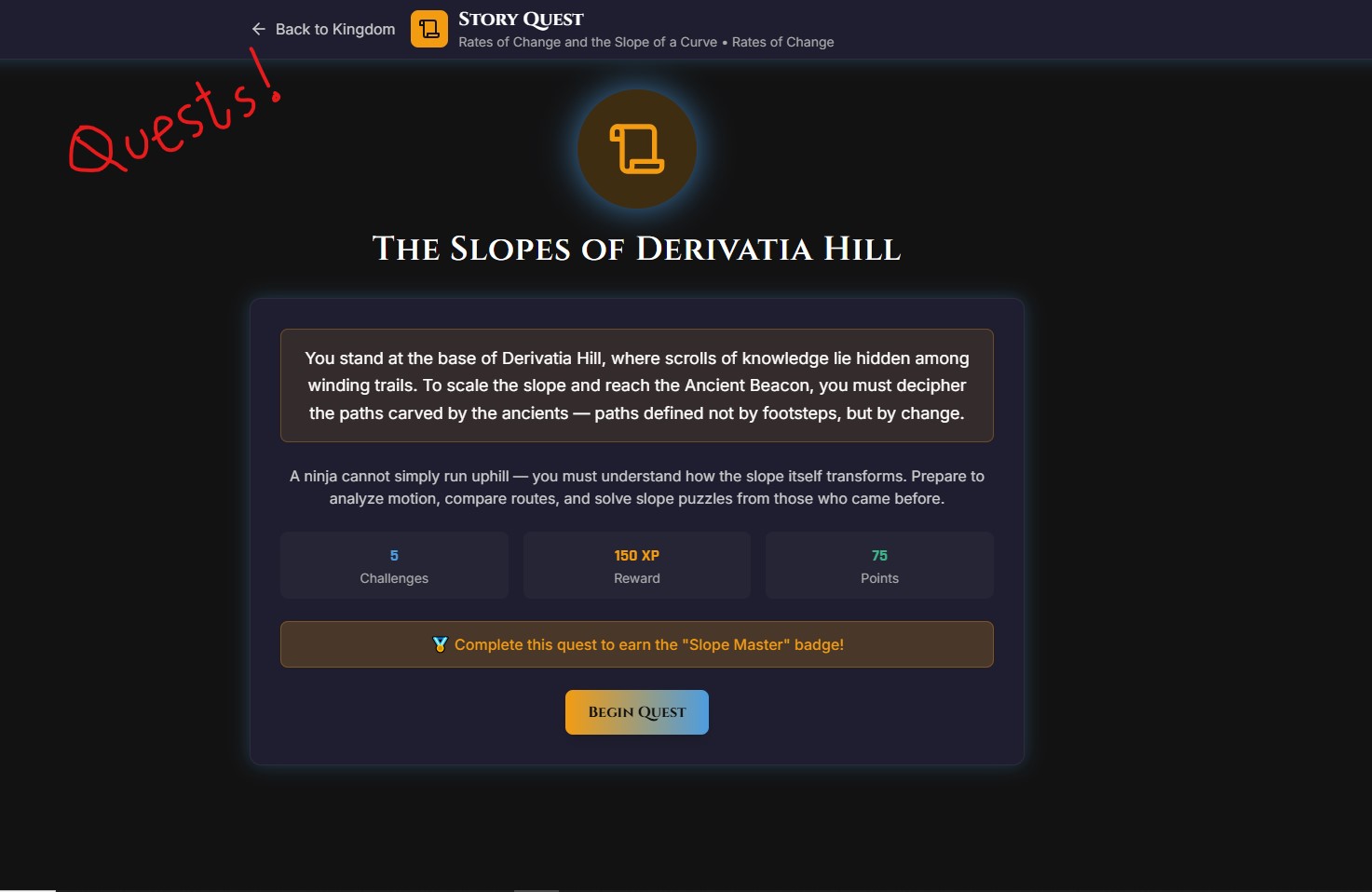
Challange Ground: Quest Mode
-
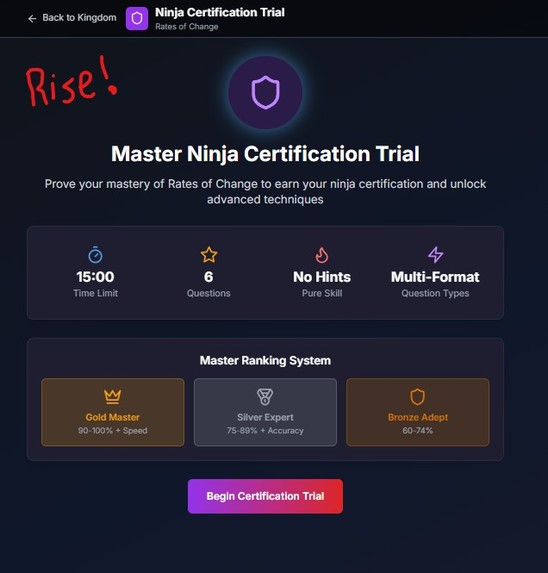
Optional Certification
-
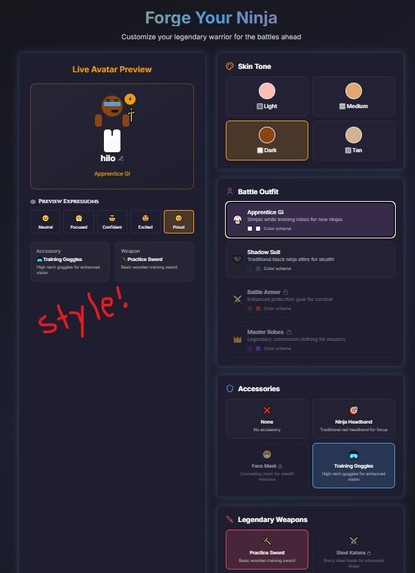
Learn in Style
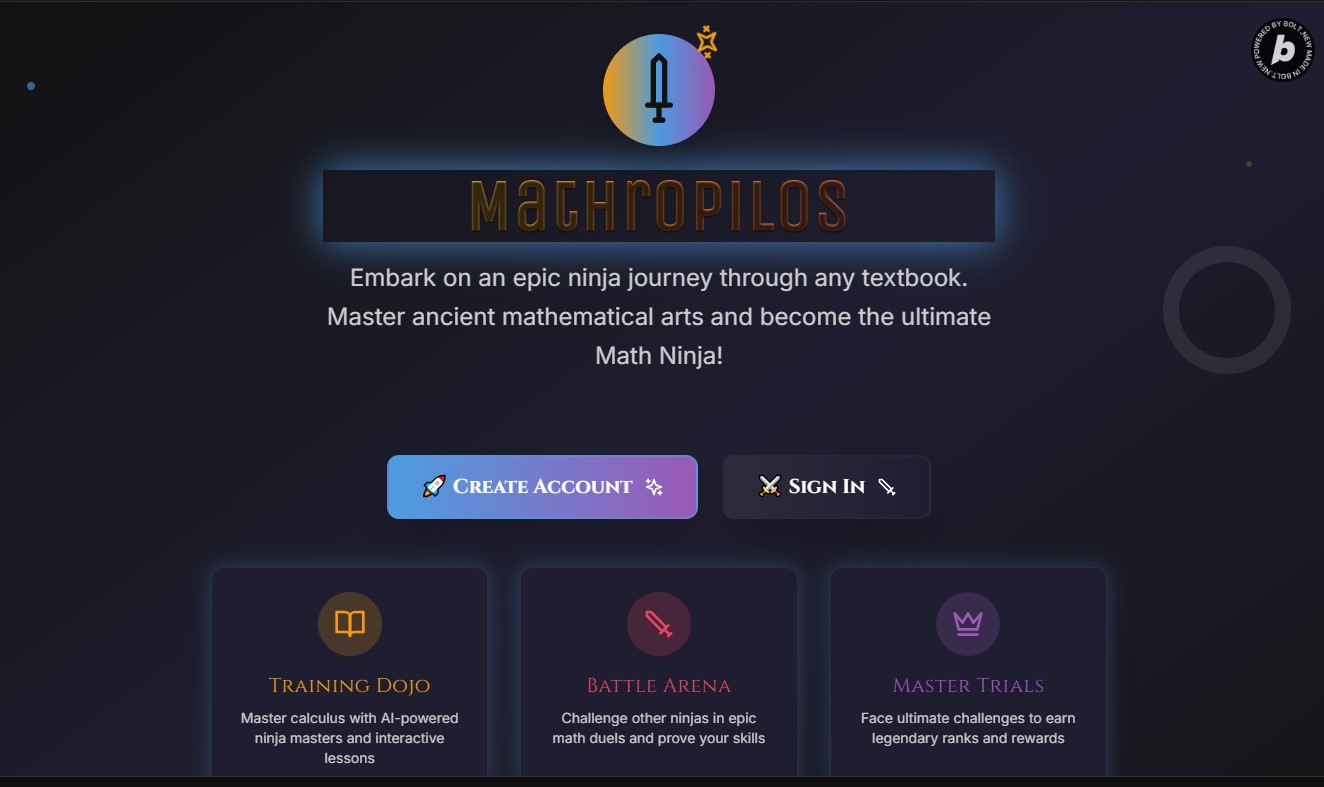
Mathropilos: Secret Rise of the Shinobi
Inspiration
Mathropilos is a web-based game designed for students taking Calculus 12, inspired by how often I saw classmates feel overwhelmed by math - not because of the difficulty itself, but because of how it's taught. Memorize formulas. Cram for the test. Forget a week later. No one paused to understand the "why". So I thought: "What if there was a better way: a way where learning math was something you could explore, not just survive through dry textbook drills?"
After a lot of research, I couldn't find a game that met real academic standards for high school math, so I decided to build my own. And that’s how Mathropilos was born: a reimagined learning experience that fuses gamification and AI to change the journey. Rooted in ninja lore and built chapter-by-chapter from the Nelson Calculus textbook, the platform helps students visualize concepts, apply them through interactive quests, and rediscover the joy of learning mathematics - all while following the academic structure, so you don’t have to worry about falling behind or missing core curriculum goals!
What it does
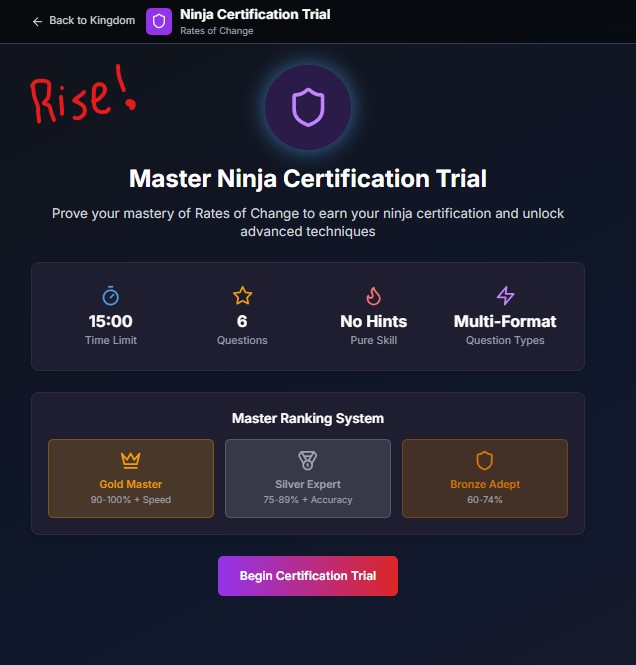
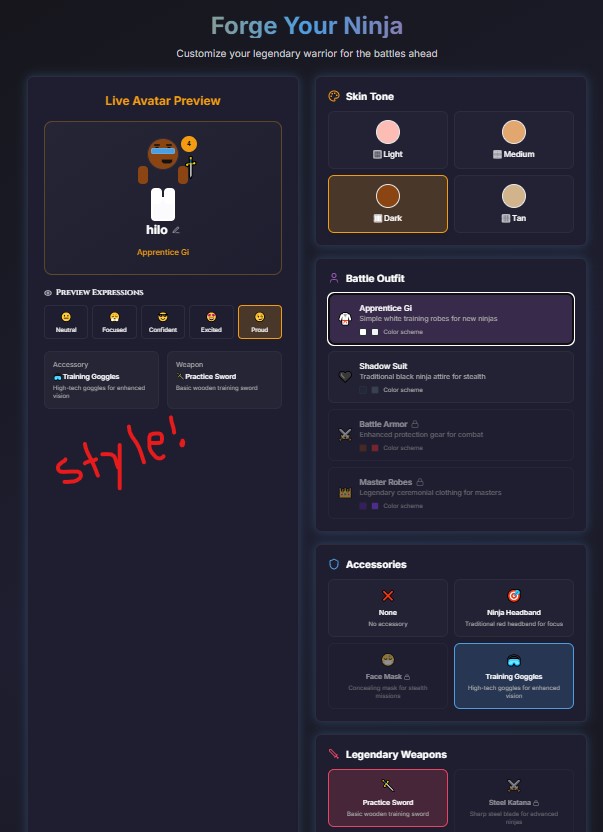
Mathropilos: Secret Rise of the Shinobi is a web-based educational game designed for Calculus 12 students, turning textbook learning into an immersive ninja-themed adventure. What sets it apart is its direct alignment with the Nelson Calculus 12 textbook used in most schools, ensuring that students stay on track with their actual curriculum. Players customize their avatars, enter the Kingdom of Calculus, and progress through chapters (scrolls) by completing interactive lessons in the Training Tower and demonstrating mastery in the Challenge Grounds. It includes game modes like Quests (story-driven math puzzles) and Exam Trials (no-hint assessments) with real-time feedback. As students train, they earn XP, unlock gear, earn badges, and visualize their journey through animated and gamified content, making learning both rigorous and rewarding.
How I built it
I built Mathropilos: Secret Rise of the Shinobi using Bolt, an AI-assisted web app development platform. I structured the entire game based on the Nelson Calculus 12 textbook, designing a world where each chapter became a scroll and each lesson a sublevel. While the initial ideas were all mine, I used ChatGPT to brainstorm game mechanics, write lesson logic, craft ninja-themed quest storylines, and fix broken flows. I then used prompts to generate UI components, lesson logic, test modes, and progression systems. Although Bolt handled much of the initial structure, I had to step in regularly to revise code, implement fixes, and adjust logic manually, especially as the project became more complex. Eventually, I also began editing the code directly using trial-and-error testing, as I ran low on tokens and the AI failed to understand some of my prompts. Finally, I used Supabase for authentication and data storage, and Netlify to deploy my project.
Challenges I ran into
I ran into multiple technical and design challenges while working on this project. Since this was my first time building a large-scale coding application, I had to research everything from structuring to connecting with tools like Supabase. That process took a while, and by the time I became comfortable, I was low on tokens, which meant I had to be very specific and efficient with each prompt.
On the AI side, logic inconsistencies were a recurring issue. Often times, Bolt would only partially implement instructions or misinterpret structural prompts, especially when it came to making complex elements like the Kingdom map or the avatar system. In several cases, I had to resort to inserting images manually or editing the code myself. Even when content was generated, lesson screens would sometimes blank out because the AI failed to load or embed the interactive elements correctly. Finally, almost all features from login to navigation required careful restructuring of the game's logic through repetitive manual testing, which was pretty tedious.
What I learned
I learned a lot through this hackathon. Firstly, I learnt how to take a large vision and break it down into manageable, workable components (yes, even AI needs small parts to work with it, and I learnt that the hard way :)). I also became much more confident with project management, logical sequencing, and debugging along the way. Most importantly, I learned how to work within real-world constraints, whether that was time, platform limitations, or a limited token budget. Additionally, this was my first time editing code in a large-scale app, as I had to step in and make changes myself using both prior knowledge and what I learned online. That experience alone taught me a lot, and I must say, I was also genuinely impressed by how clean and readable Bolt’s generated code was!
Limitations
As a senior high school student with minimal coding experience, the development of Mathropilos: Secret Rise of the Shinobi was heavily constrained by both platform limitations and restrictions. Using Bolt, I faced challenges implementing key components such as a fully immersive, animated game world, as the platform struggled to generate complex or visually layered elements. I was also unable to integrate a full AI engine for personalized, real-time lesson generation and feedback, since doing so increased the project size beyond Bolt’s editing capacity. As a result, while the core structure of the game is functional and promising, several key features remain either incomplete or non-functional.
What's next
In the near future, I plan to integrate a true AI engine capable of generating interactive lessons in real-time (i.e. rather than the lesson being manually inputted), adapting feedback based on student performance, and dynamically adjusting difficulty. A third Challenge Grounds mode - Duel Mode, where students can verse friends or other ninjas - is also in progress. Additionally, I plan to add other functional components like a global leaderboard, an internal leaderboard (i.e. with friends), and an overall more immersive experience. The long-term vision for Mathropilos extends beyond Calculus 12; I intend to build out entire “kingdoms” for Physics 12, Chemistry 12, Advanced Functions, and more - all structured around textbooks used in classrooms.
Important Note
Each lesson needs to be manually reviewed and updated before making it available to the public. At the moment, only Scrolls 1.1 and 1.2 have been fully implemented and tested. As such, the platform isn’t ready for client use yet, but it’s well on its way!
Built With
- bolt.new
- chatgpt
- css
- html
- javascript
- json
- netlify
- sql
- supabase

Log in or sign up for Devpost to join the conversation.