-
-
-
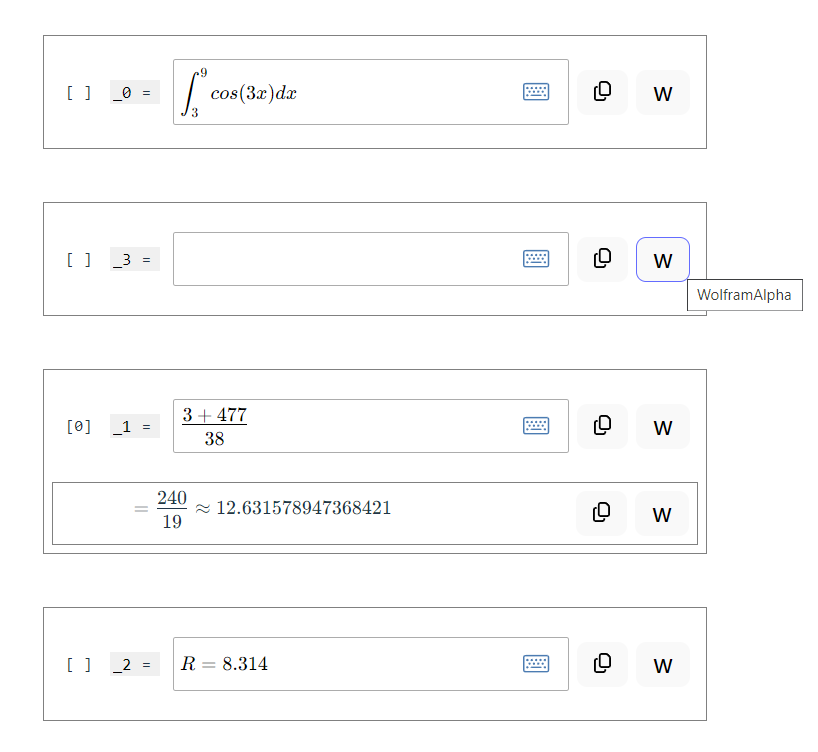
WolframAlpha export
Inspiration
Inspired by desmos, wolframalpha, python notebooks, and long nights working on math homework. I thought that ipynb were very convenient in storing intermediate variables, but it lacked easy math input.
What it does
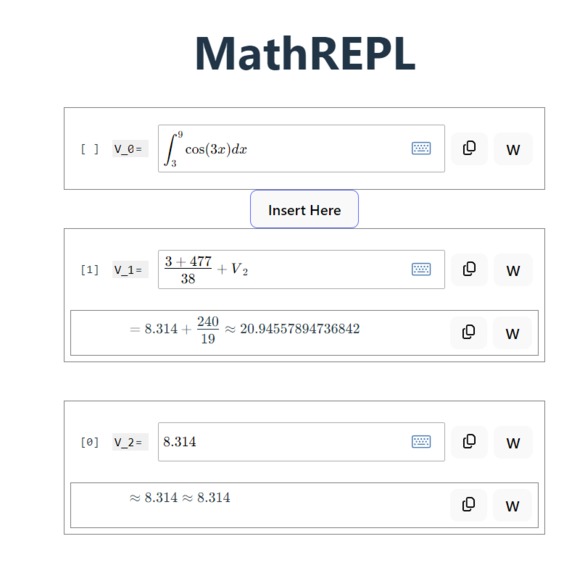
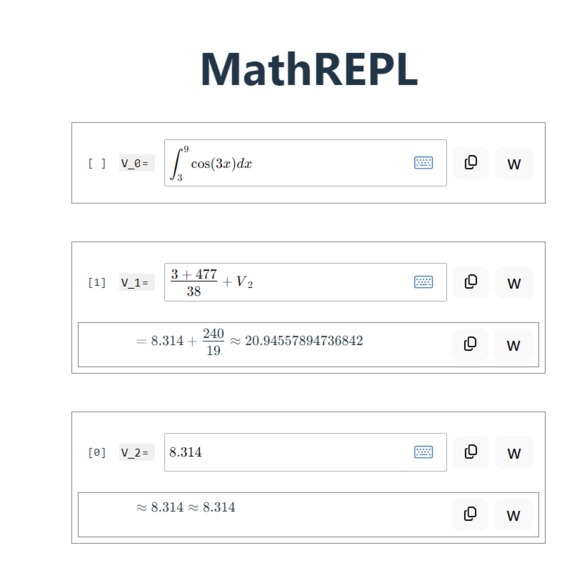
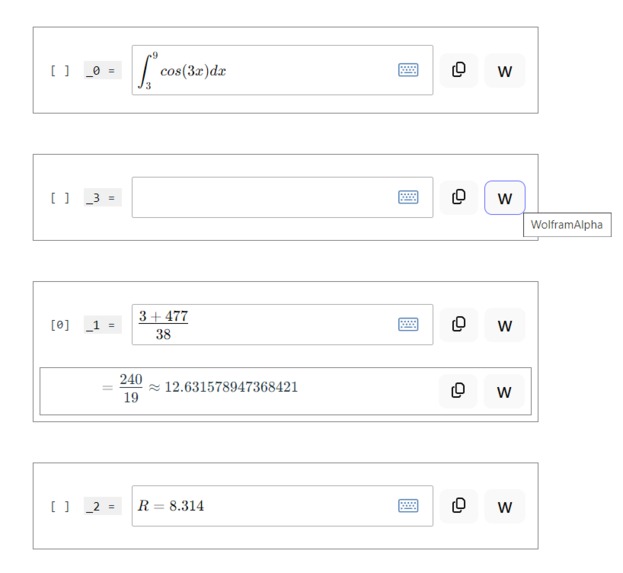
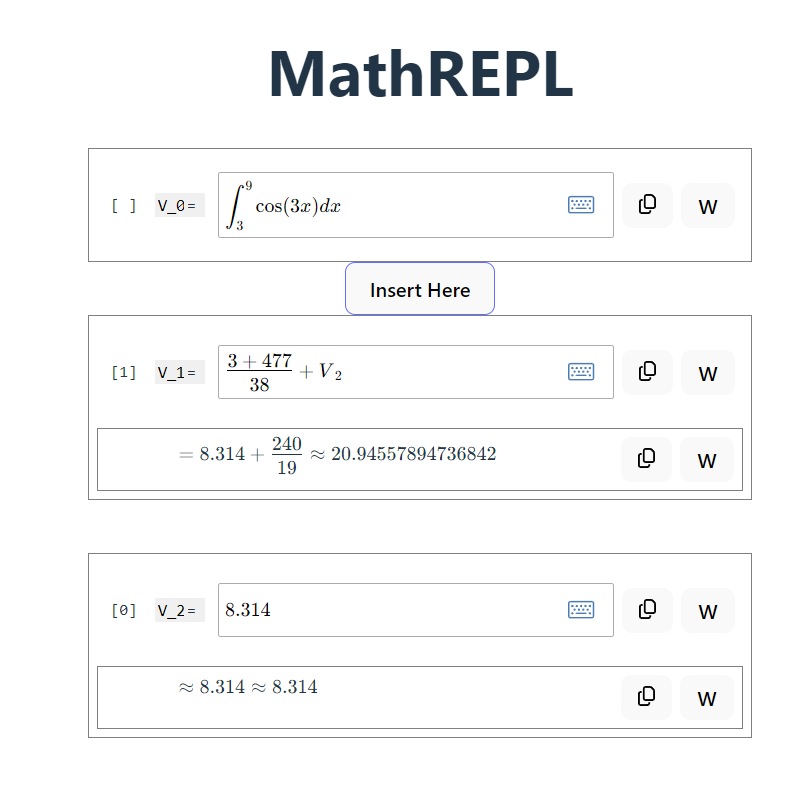
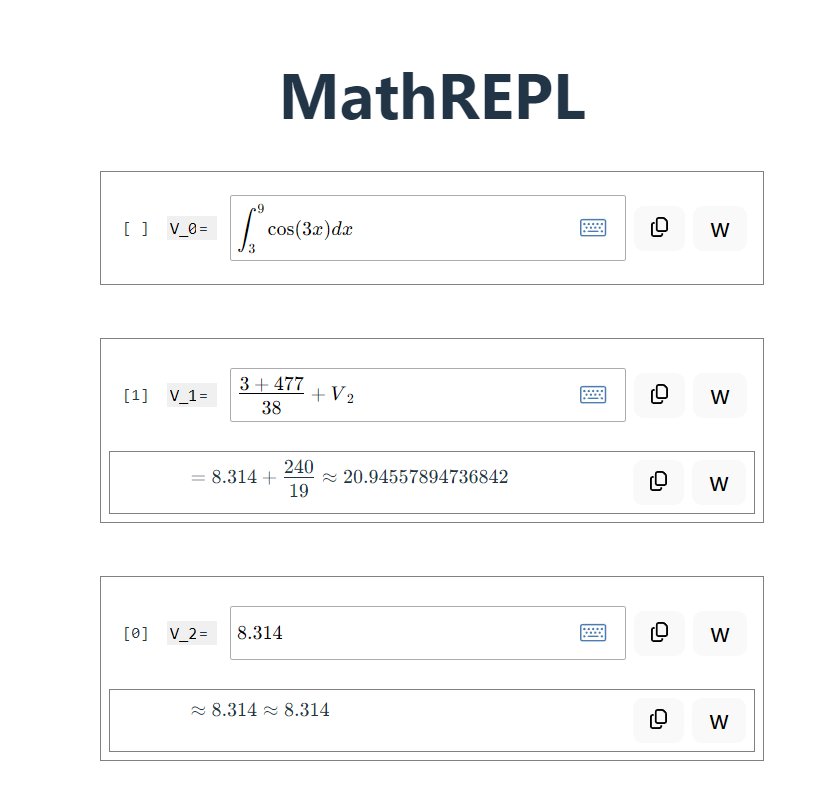
There are multiple insertable "math cells" (which mimic ipynb code cells). Expressions can be evaluated, or exported to wolframalpha or desmos.
How we built it
I used the amazing Cortex.io libraries (mathlive, compute-engine) for the math input, display, and computation. I used Vue, typescript, and github pages for deploy.
Challenges we ran into
The time constraint was a big problem. It was difficult deciding on the exact direction to start; I juggled between many different math libraries (mathjax, asciimath) before settling on cortex.io.
Accomplishments that we're proud of
I think that UI is really easy to use, and the (leveraging the awesome Cortex.io libraries) the math input is genuinely super streamlined.
What we learned
I learned about the incredible cortex.io libraries. I better learned how to use Vue's v-for and keys. I learned how to set up a custom workflow with github pages deploy.
What's next for mathrepl
There's a lot of things that I want to add in the future, including code blocks, text blocks, and variable binding (the groundwork is laid out by the "_1" interface.) I hope to continue developing it as a useful UI tool for math computation.
Built With
- cortex.io
- typescript
- vue

Log in or sign up for Devpost to join the conversation.