-
-
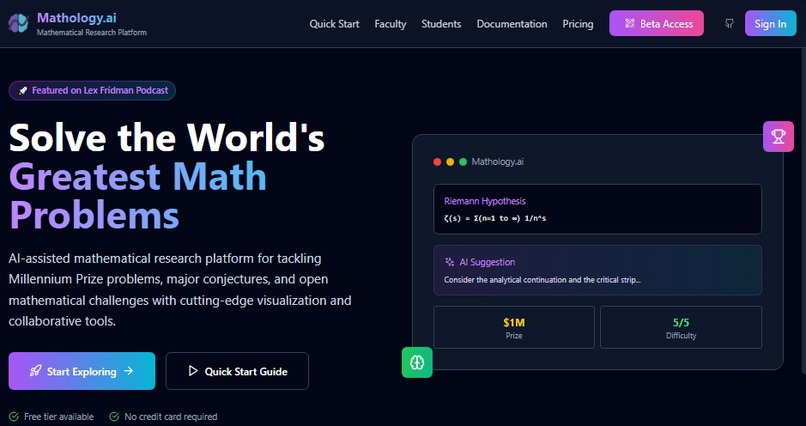
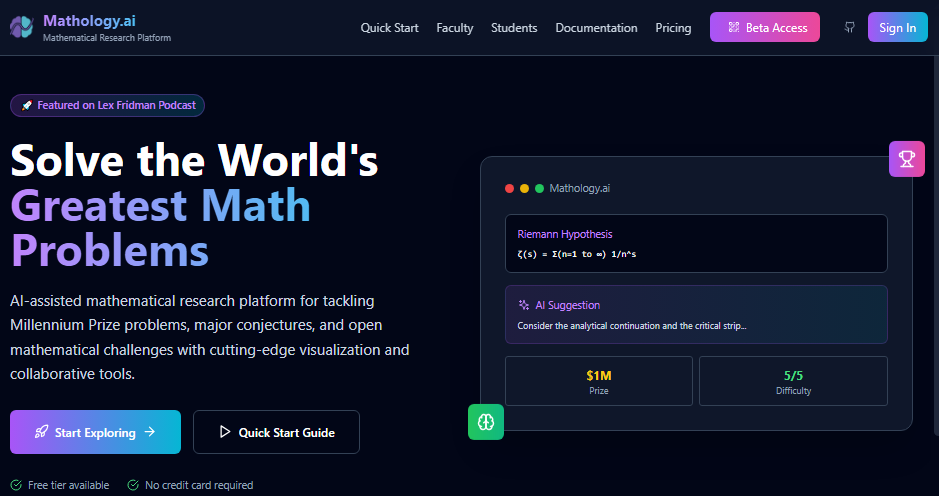
Mathology.ai | Web
-
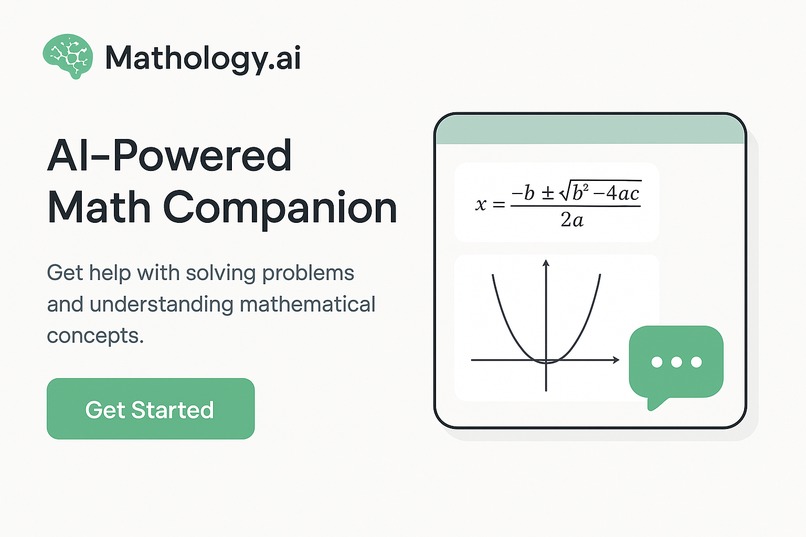
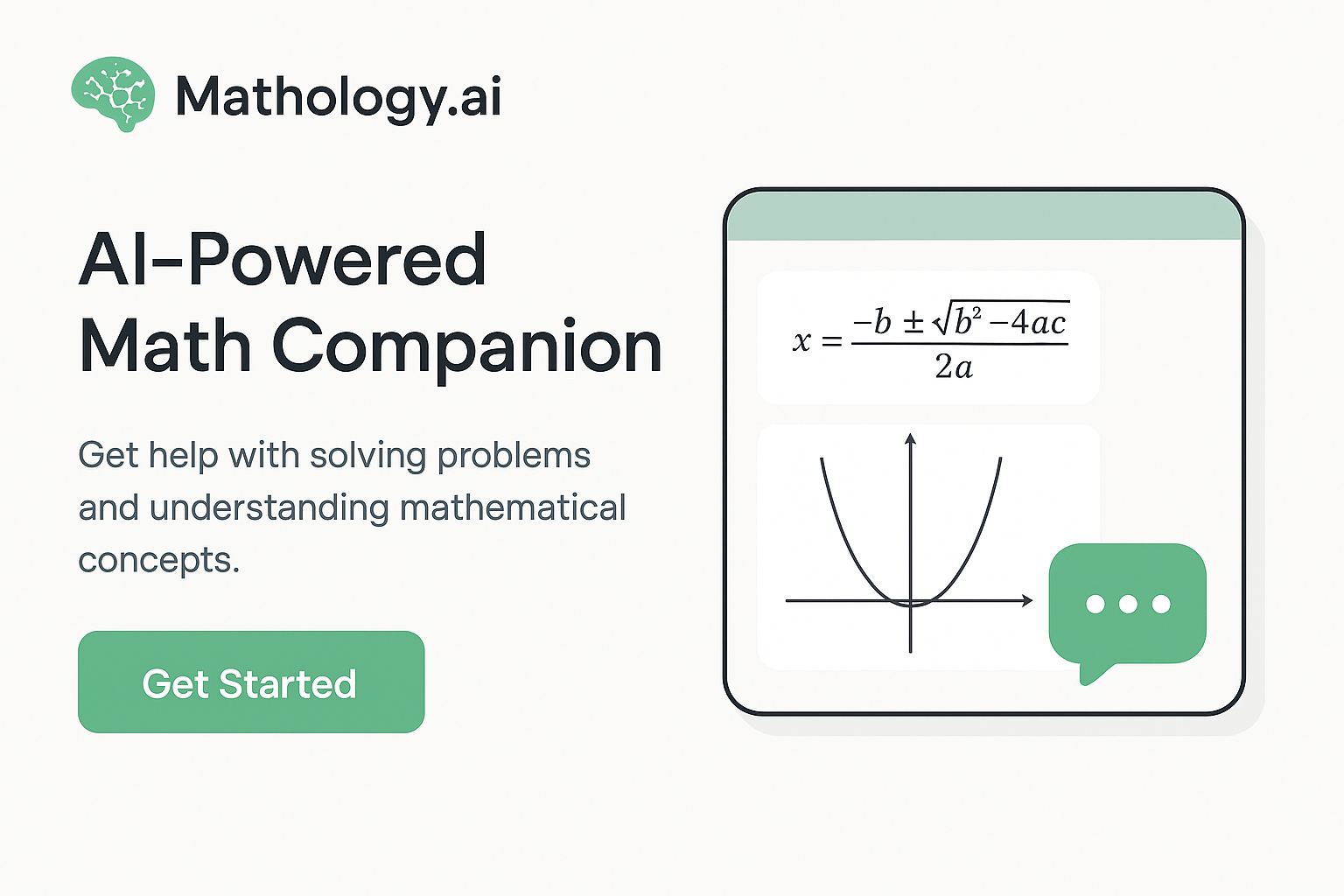
Mathology.ai | Math
Inspiration
I've always loved math. Over the years, my ideas have filled notebooks and scratch paper, but I’ve never had a central, intelligent place to organize, formalize, and evolve those ideas.
Too often, the process of solving or exploring math remains fragmented—an informal process of scribbled notes that rarely transforms into clear, review-ready material unless re-written after the fact.
Mathology.ai was born out of this frustration. I wanted a tool that not only helps with problem-solving, but also captures the journey—automatically organizing thoughts, guiding proper notation, and helping turn insight into structured, formal mathematics as it's being created.
This tool isn’t just for students or educators—it’s for anyone who loves math and wants a smart assistant to streamline formalization and discovery in real time.
What it does
Mathology.ai is an AI-powered math exploration and formalization tool. It allows users to:
- Write and solve math problems using natural language or math input.
- Instantly convert scratch work into formal mathematical notation.
- Visualize steps, graphs, and symbolic operations in real-time.
- Track mathematical progress like a digital math journal.
- Prepare review-ready math papers as part of the discovery process—not afterward.
- Explore advanced problems like the Millennium Prize Problems, or just organize homework better.
How we built it
Mathology.ai is a web-based app built using:
- React + Vite for fast frontend development
- TypeScript and TailwindCSS for a clean, responsive UI
- AI-powered parsing and formatting tools to interpret math expressions
- Integration with plotting and LaTeX rendering libraries to handle visuals and notation
We focused on building a tool that feels intuitive yet powerful enough for complex math exploration.
Challenges we ran into
- Designing a natural input system that balances flexibility (free-form writing) and structure (formal math output)
- Rendering clean LaTeX from messy input without overwhelming the user
- Ensuring mathematical accuracy across a wide range of problems and notations
- Creating an interface that feels like a canvas, journal, and solver all in one
Accomplishments that we're proud of
- Created a usable prototype that makes math feel intuitive and expressive
- Developed a notation engine that adapts to user input and guides correction
- Supported seamless visualization and note-to-paper formatting
- Designed the groundwork for long-term vision: helping users think, solve, and document math effortlessly
What we learned
- Math is deeply personal—different users approach problems in very different ways
- There’s a huge gap between solving a problem and preparing it for review or teaching
- Building tools for math needs empathy, not just correctness—how it feels to use the tool matters
- AI can play a key role in bridging intuition and formalism in math
What's next for Mathology.ai
- Partner with universities and math research centers to develop the tool as a platform for exploration and testing
- Add deep integrations with industry tools:
- Export to MATLAB, Octave
- Import from existing workbooks
- Extend support for symbolic computation engines and live collaborative whiteboards
- Export to MATLAB, Octave
- Create challenge modules tied to major unsolved problems to engage the next generation of math explorers
- Build out mobile and tablet versions for handwritten input and classroom use
Built With
- chart.js
- github
- katex
- markdown-latex-hybrid-parser
- mathjax
- matlab/octave/latex
- netlify
- openai
- planned)-wolframalpha-api
- plotly.js
- react
- sympy
- tailwindcss
- typescript
- vite

Log in or sign up for Devpost to join the conversation.