-
-
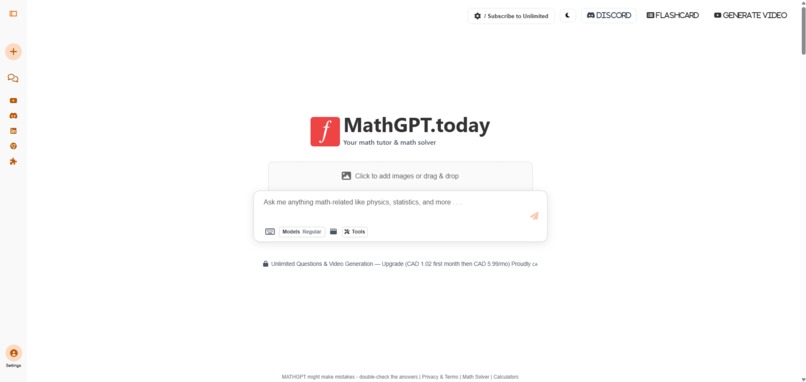
MathGPT UI
-
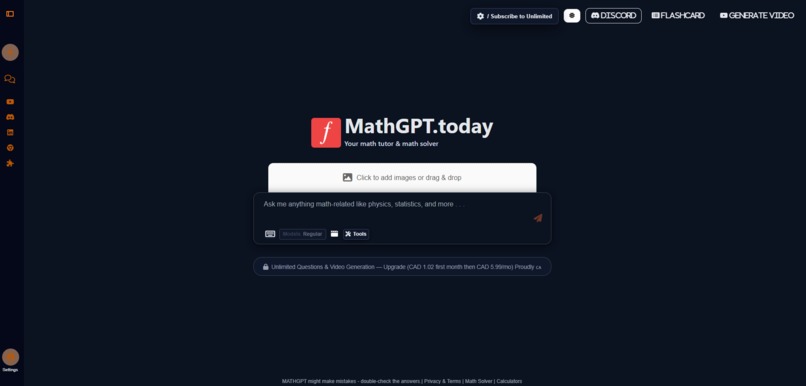
MathGPT Dark Theme
Inspiration
Math can feel frustrating when students only get a final answer without understanding the steps behind it. We wanted to build something that acts more like a real tutor, something that explains clearly, supports different learning styles, and makes math feel less intimidating. MathGPT was inspired by the idea that students should be able to ask for help anytime and actually understand the reasoning, not just copy the result.
What it does
MathGPT is an AI-powered math tutor designed to help students solve and understand math problems step by step. Users can enter a question and receive a clear breakdown of the solution, making it easier to follow the logic behind each step. The platform is built to support learning, not just answer getting.
MathGPT is focused on making math more interactive and approachable. It can help users work through topics like algebra, geometry, calculus, and more, while presenting explanations in a way that feels closer to guided tutoring than a basic calculator. The goal is to give students a tool they can rely on for homework help, self study, and concept review.
How we built it
We built MathGPT as a web platform using Python, Flask, JavaScript, HTML, and CSS. The backend handles user requests, logic, and AI integration, while the frontend focuses on making the experience simple, fast, and easy to use. We integrated AI to generate step by step math explanations and built the interface to keep the learning flow clean and student friendly.
We also worked on deployment, performance, and accessibility so the platform could be available online and usable across devices. A big part of the build was shaping the product experience so it felt educational, not overwhelming.
Challenges we ran into
One of the biggest challenges was making the explanations useful for real students. It is not enough for an AI tool to be technically correct. It also needs to explain in a way that is easy to follow. We spent a lot of time thinking about clarity, structure, and how to present steps in a way that supports learning.
Another challenge was balancing speed and quality. We wanted responses to feel quick, while still providing thoughtful explanations. On top of that, building a polished user experience for math content required attention to layout, readability, and how students interact with problem solving tools.
Accomplishments that we're proud of
We are proud that MathGPT is focused on learning, not just giving answers. The project turns problem solving into a more guided and supportive experience. We are also proud of building a working platform that combines AI, web development, and educational thinking into one tool.
Most importantly, we are proud of creating something with real usefulness. MathGPT is designed to help students feel more confident and independent when facing difficult math problems.
What we learned
We learned that building educational technology is as much about communication as it is about code. A correct solution is only helpful when the student can actually follow it. We also learned how important product design is when building AI tools for learning. The interface, pacing, and explanation style all matter.
On the technical side, we strengthened our experience with full stack web development, deployment, AI integration, and designing a product around real user needs.
What's next for MathGPT
The next step is to make MathGPT even more interactive and personalized. We want to expand visual explanations, improve support for more types of math problems, and continue building features that make learning feel easier and more engaging. We also want to explore more ways for students, teachers, and schools to use MathGPT as a real learning companion rather than just a utility.

Log in or sign up for Devpost to join the conversation.