Inspiration
I believe math fluency is a foundational skill that serves as the building block for all future math learning. Without a solid grasp of basic math facts, it's easy to struggle with more complex mathematical concepts, making it difficult to progress. Nonetheless, through seeing the challenges faced by students I've tutored as well as my own experiences in middle school, I’ve seen that mastering these math facts is a common struggle as a result of traditional methods feeling too rote or disengaging. This inspired me to create a more dynamic, gamified way to learn math facts so that young students are more motivated to build fluency without feeling bored or overwhelmed.
What it does
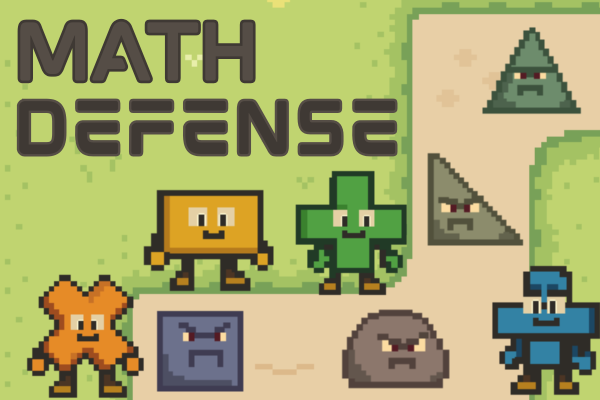
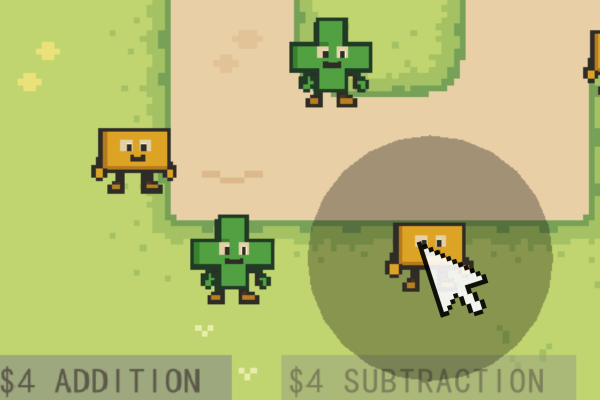
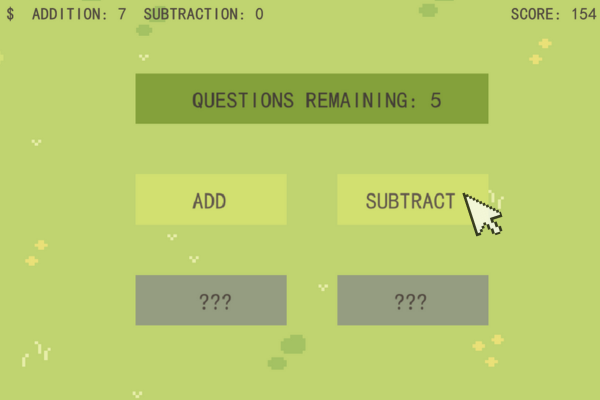
MathDefense is a tower defense styled game that provides an interactive and engaging way for students to sharpen their math skills. In it, students solve math problems to earn different types of coins, each corresponding to a specific operation (Addition, Subtraction, Multiplication, Division). These coins can then be used to buy specialized defenders, each representing one of the math operations. Once acquired, students can strategically place these defenders on the game map to defend against waves of geometrical monsters. Each monster can only be defeated by the defender whose math operation matches that associated with the monster. As students progress through the game, they level up both their math fluency and their in-game abilities, unlocking more characters, earning more coins, and facing increasingly challenging waves of monsters, turning math practice into an exciting, goal-driven experience.
How I built it
I built this game by first designing all characters using Piskel and all layout designs using Figma, and then programming it all together using the programming language GML in the Gamemaker Studio.
Challenges I ran into
Prior to working on this project, I had no experience with Gamemaker or its programming language GML, but I was eager to learn through this project. This led to many challenges from getting accustomed to a new coding environment, such as learning new syntax on the spot and sometimes forgetting it as well as spending a lot of time debugging code.
Accomplishments that I'm proud of
I'm proud to have been able to successfully incorporate foundational education into a smooth, interactive experience, as I know that this unique and fun way of practicing math facts will be able to help a lot of young learners practice their math fluency. I learned a lot myself along the way too, which is also something I'm happy about from this journey.
What I learned
Throughout the development of MathDefense, I've learned a lot about both Gamemaker and the tools it encompasses as well as game design in general, seeing the importance of balance throughout it all. Additionally, I've gained a deeper understanding of user experience design, such as how to make a game accessible and intuitive for all types of players and students.
What's next for MathDefense
Currently, when the student answers a question incorrectly, MathDefense indicates that the answer is wrong and displays the correct answer for the student to take note of. In the future, MathDefense will have more functions behind incorrect answers, such as processes like spaced repetition and tools like being able to see most commonly missed problems, which will support students even more in their learning. Additionally, more question types, such as with fractions or larger numbers, will be added, as well as correlating upgrade types and powerups for the defenders to make the game all the more engaging.
Built With
- figma
- gamemaker
- gml
- piskel

Log in or sign up for Devpost to join the conversation.