-
-
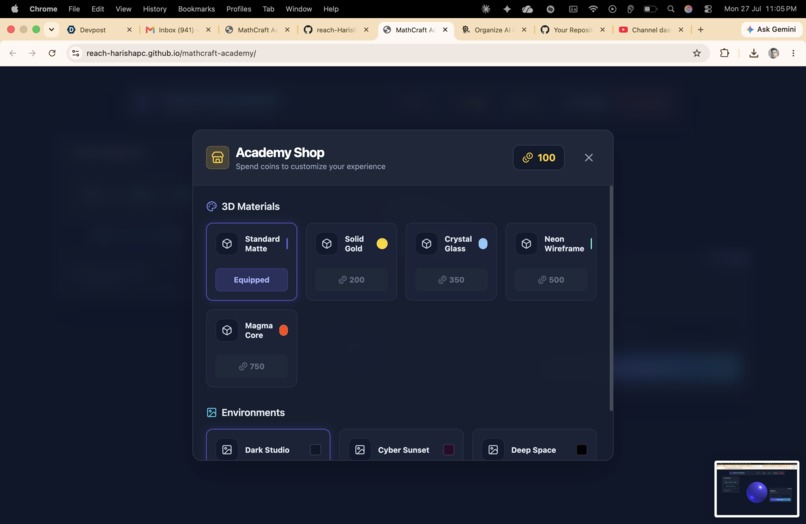
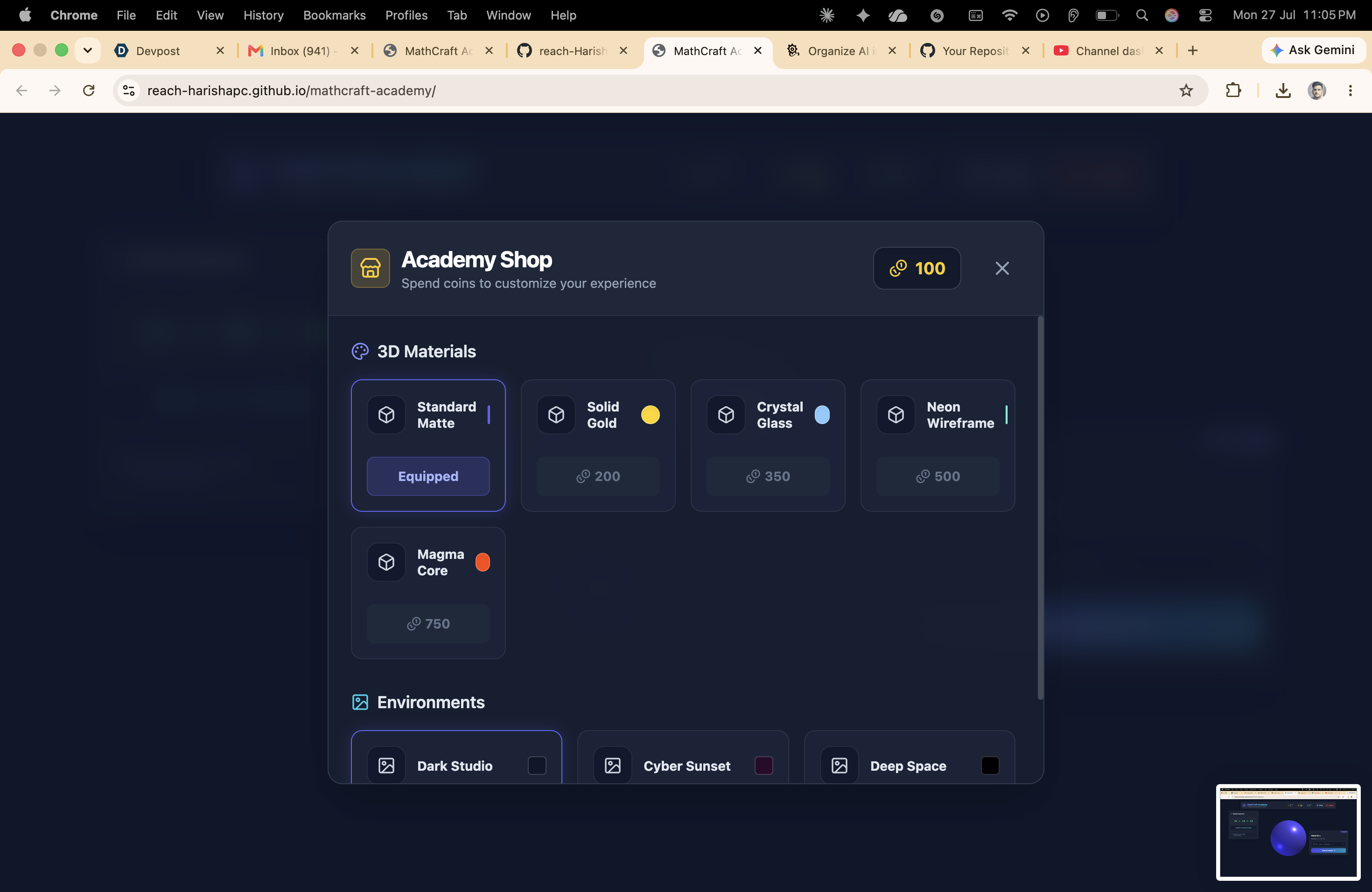
shop
-
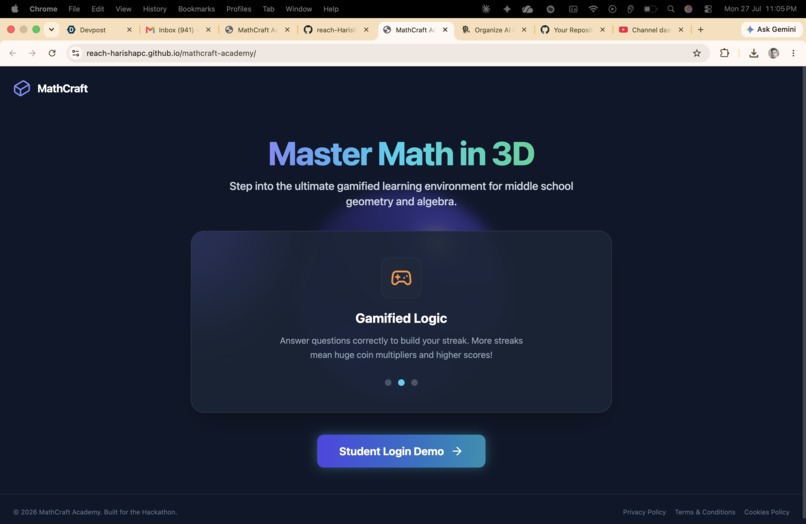
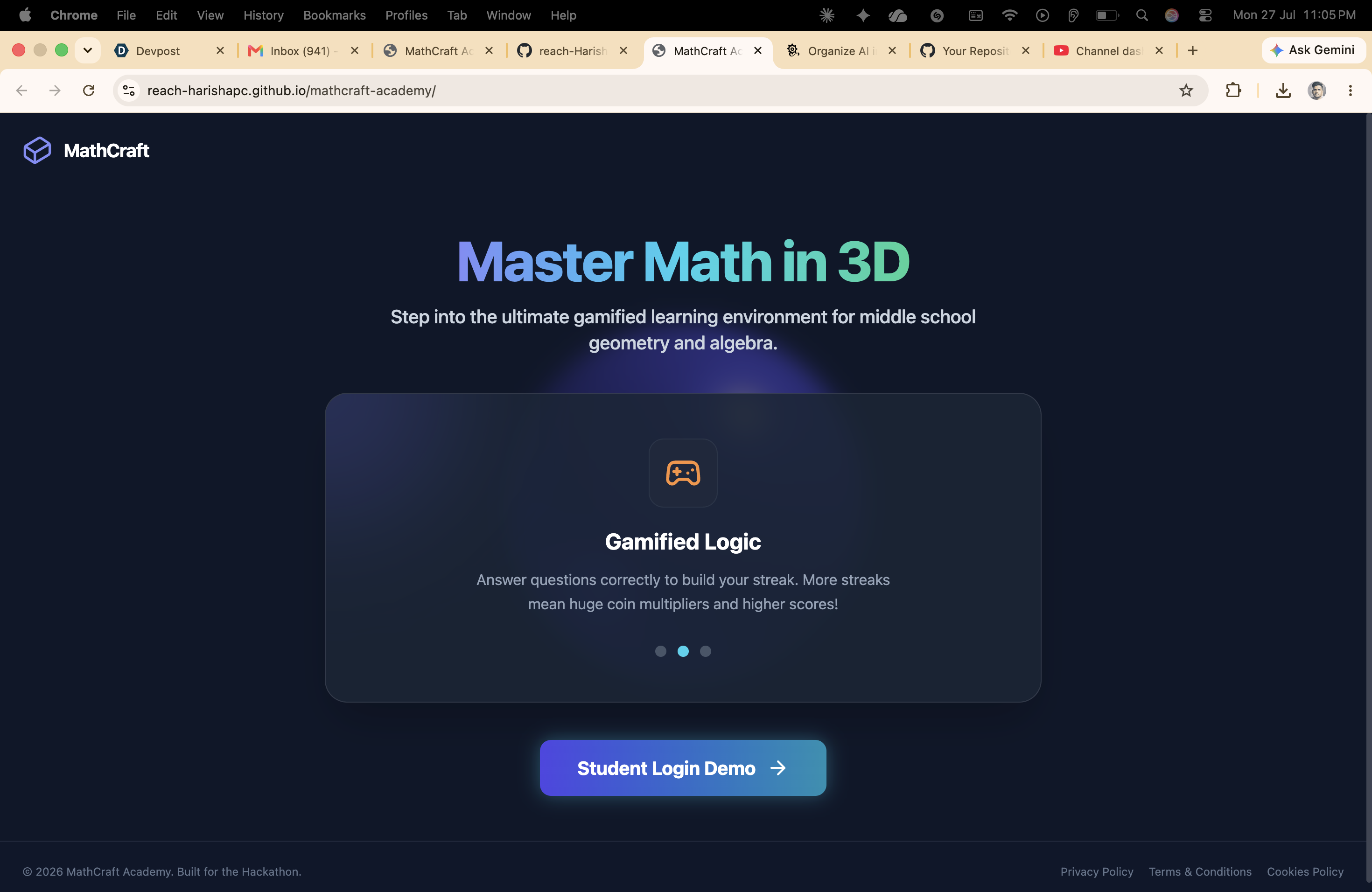
home page with signin
-
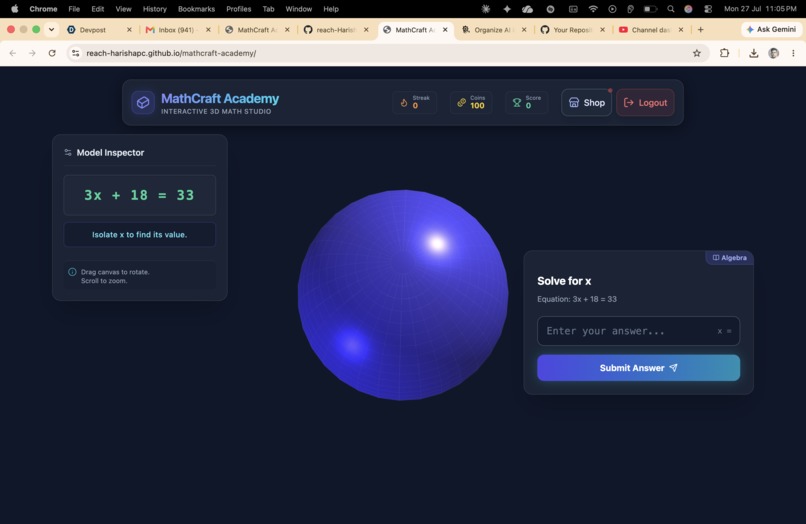
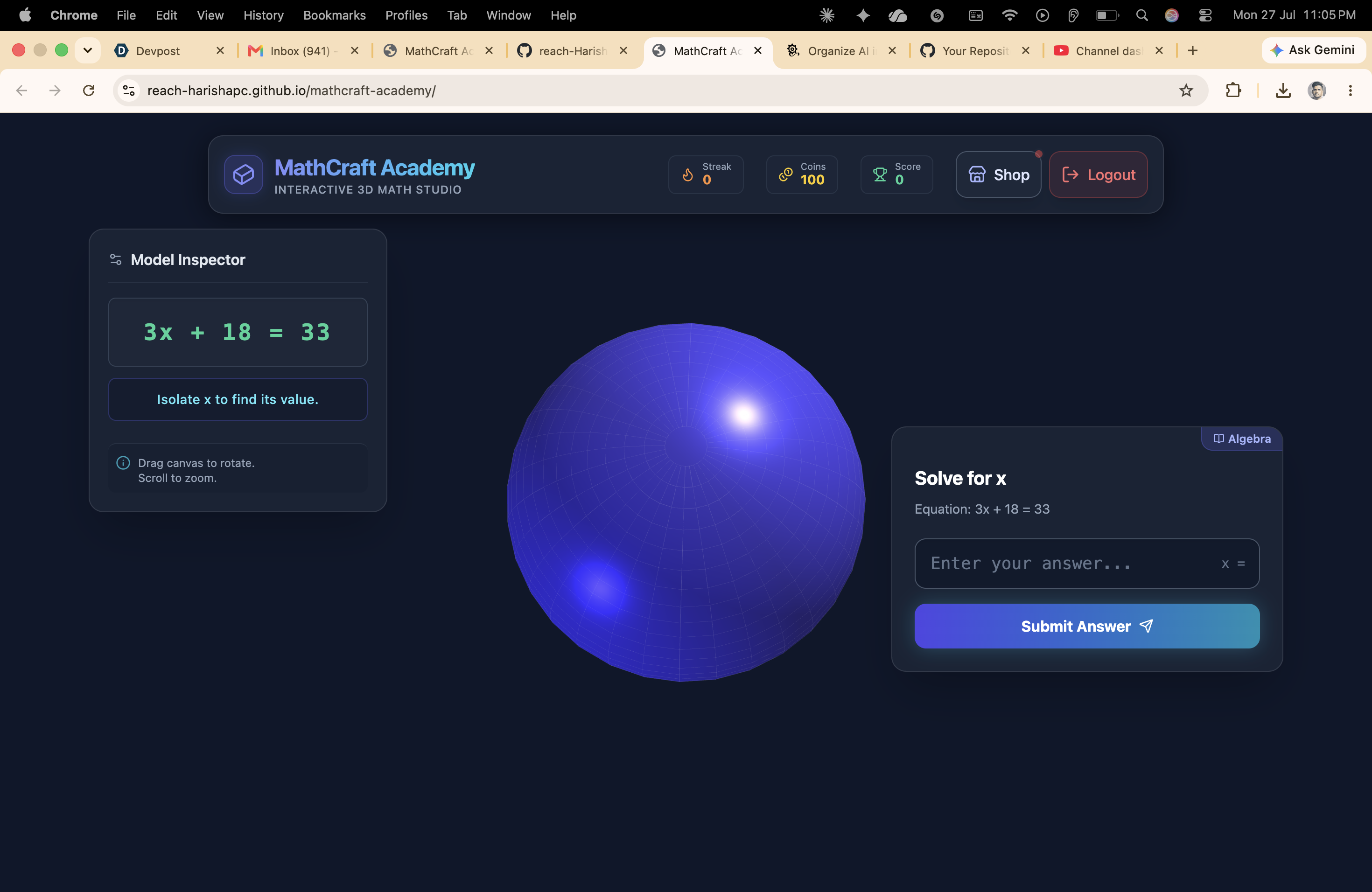
3d interactive math dashboard
Inspiration
Middle school mathematics—especially abstract concepts like 3D spatial geometry, algebra equations, and fraction ratios—can often feel disengaging or overwhelming when taught strictly through flat textbooks. We were inspired to create MathCraft Academy to bridge the gap between abstract math theory and tangible, visual understanding. By leveraging interactive WebGL graphics and modern gamification mechanics, we wanted to make practicing math feel as engaging as playing an immersive 3D video game.
What it does
MathCraft Academy is an all-in-one visual and interactive 3D math studio designed for middle school students (Grades 6–8):
- Interactive 3D Geometry Visualizer: Students can view, rotate, scale, and manipulate 3D shapes (Cubes, Spheres, Cylinders, Prisms) and fraction visualizations in real-time.
- Gamified Problem Engine: Features a dynamic problem-solving suite covering Algebra, Geometry, and Fractions with real-time feedback and streak multipliers.
- In-Game Avatar & Theme Shop: Students earn coins by solving math problems correctly, which they can spend in an interactive store to unlock custom 3D shader materials (e.g., Solid Gold, Lava, Neon) and custom 3D environment backgrounds.
How we built it
MathCraft Academy was architected as a high-performance, single-page web application (SPA) to ensure maximum accessibility and zero setup friction across classrooms:
- Frontend UI & Design: Built with modern Vanilla HTML/JS and styled using Tailwind CSS with a sleek glassmorphism aesthetic.
- 3D Viewport Engine: Rendered using Three.js via WebGL for lightweight, high-FPS interactive graphics directly in the browser.
- Interactivity & Effects: Integrated Canvas Confetti for positive behavioral reinforcement and Lucide Icons for UI visual clarity.
- Deployment & Containerization: Hosted statically on GitHub Pages for instant access, alongside a Dockerized Nginx Alpine environment for lightweight enterprise school deployments.
Challenges we ran into
- WebGL Performance Optimization: Ensuring smooth 3D rendering and real-time mesh material manipulation across low-power mobile and classroom devices without visual stutter.
- Balancing Gameplay & Educational Depth: Designing mechanics where the gamification elements (coin economy and material shop) directly reward math comprehension without overshadowing the core learning objectives.
- Dynamic Math Equations: Resolving UI layout shifts when seamlessly toggling between complex 3D visual models and mathematical variable inputs.
Accomplishments that we're proud of
- Zero-Dependency Architecture: Delivering a complete, fully functional 3D educational game experience with zero heavy build tools, allowing it to load instantly on any web browser.
- Meaningful Tag Integration: Successfully mapping hackathon requirements into cohesive core features—using WebGL for AR/VR tags and an in-game reward shop for E-commerce tags.
- Polished UI/UX: Crafting a clean, student-friendly dark-mode glassmorphism design complete with interactive visual feedback and reward animations.
What we learned
- Visual Math Retention: Reinforcing spatial math principles with real-time 3D models significantly lowers cognitive resistance for middle school learners.
- Micro-Reward Psychology: Incorporating small, tangible reward loops (streaks, coins, and visual custom skins) drastically boosts student motivation and problem completion rates.
What's next for MathCraft Academy
- WebAR Expansion: Integrating WebXR/AR so students can project 3D geometric shapes directly onto their physical classroom desks using their smartphone camera.
- Multiplayer Class Battles: Introducing real-time quiz battles where students can compete in head-to-head math challenges.
- Teacher Analytics Dashboard: Creating a portal for educators to track class accuracy, identify topic weaknesses, and assign custom math problem sets.


Log in or sign up for Devpost to join the conversation.