-
-

Logo
-

-
-
-

-
-
-
-
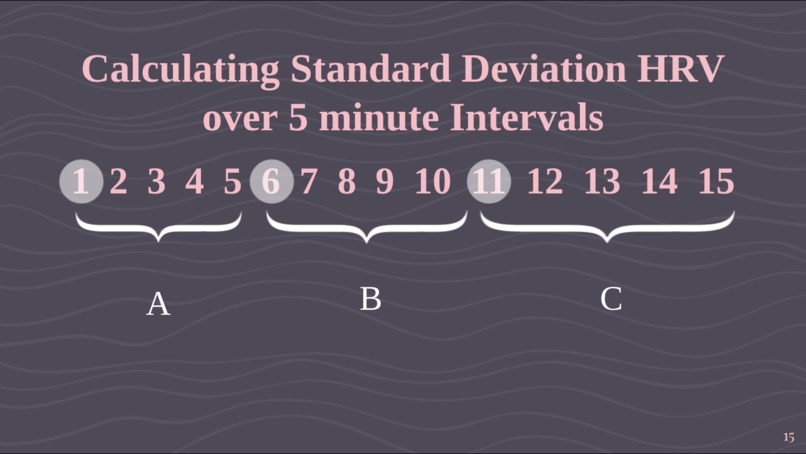
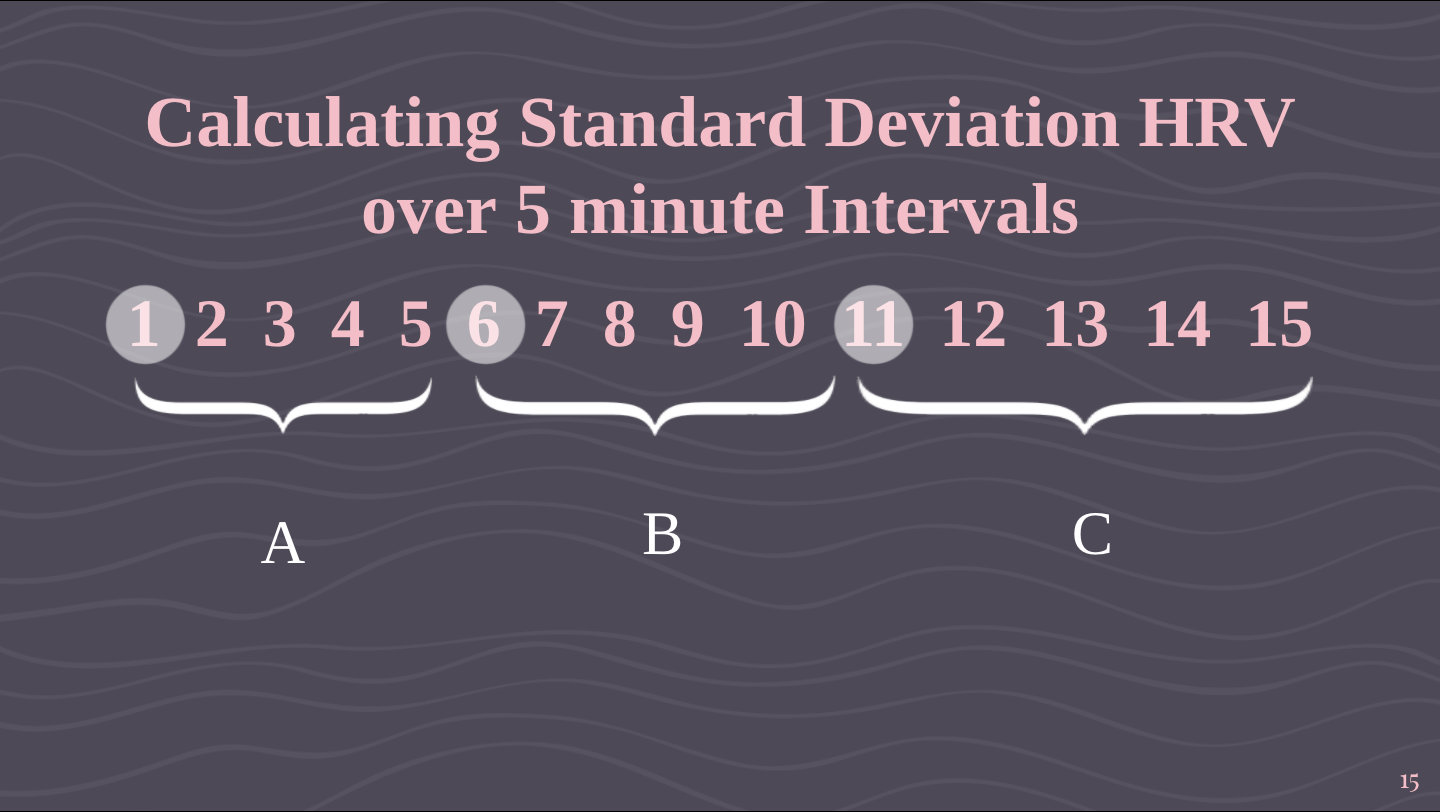
Storing every nth element into a time bin to store each 5 min segment of data into a vector
-

This method of concatenating matrices is useful for larger data sets with over 3 million data points.
-
-
-
-
-
-
-
-




Inspiration
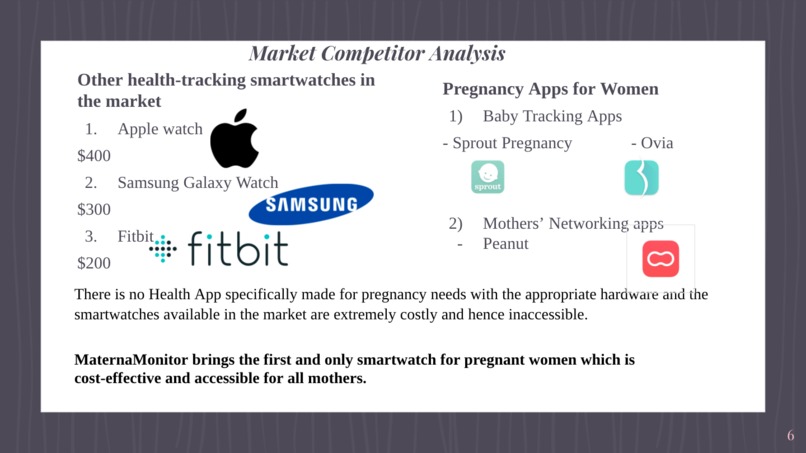
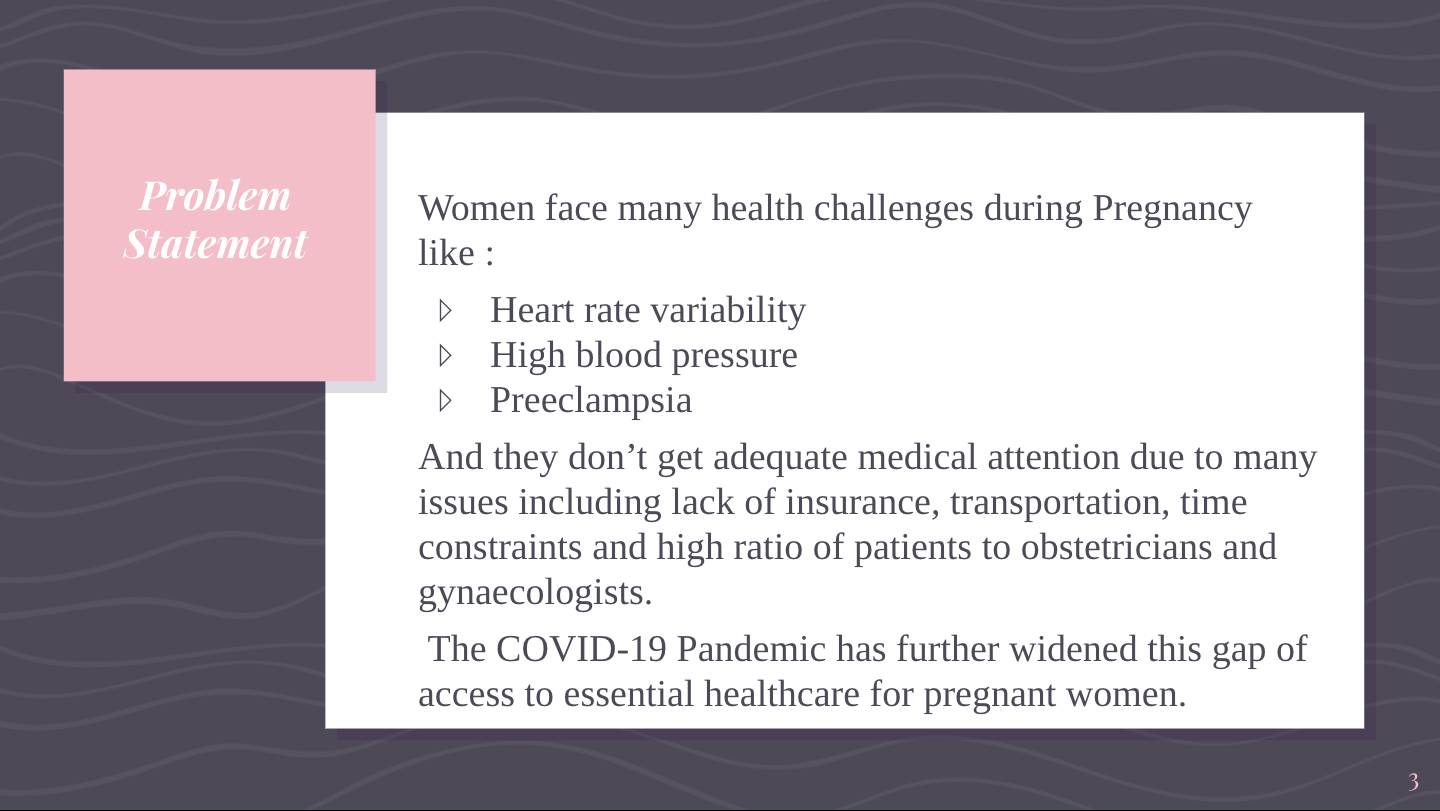
The American College of Obstetrics and Gynecology (ACOG) is a leading women’s health body in the United States. Recently, the COVID-19 pandemic has highlighted healthcare disparities, particularly in the women’s health space. The ACOG released calls to action, two of which include facilitating access to telehealth and remote patient monitoring and eliminating financial barriers and other inequities. COVID-19 has put pregnant women, who are already high risk patients, even more at risk to visit crowded hospitals for regular checkups. During these check-ups, physicians will monitor essential functions such as heart rate and blood pressure, looking for variability that may indicate certain medical conditions. We have decided to create an affordable smart watch that continuously monitors heart rate to allow physicians to make data driven decisions regarding their patients. In addition, this allows physicians to see patient data regardless of their location, an essential feature during the pandemic.
What it does
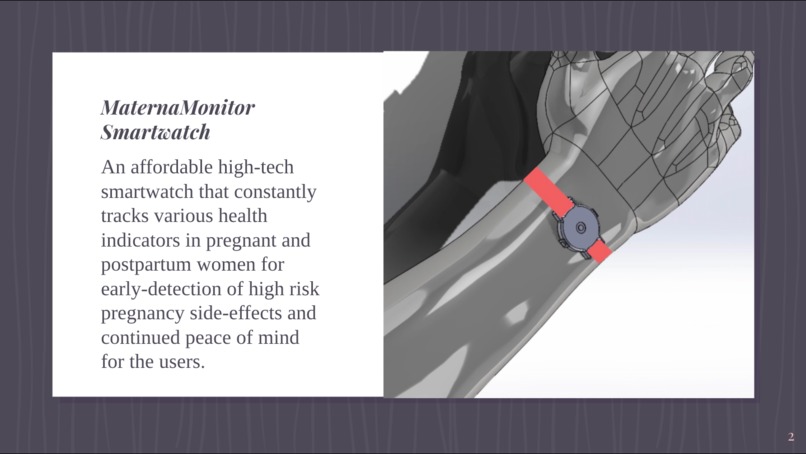
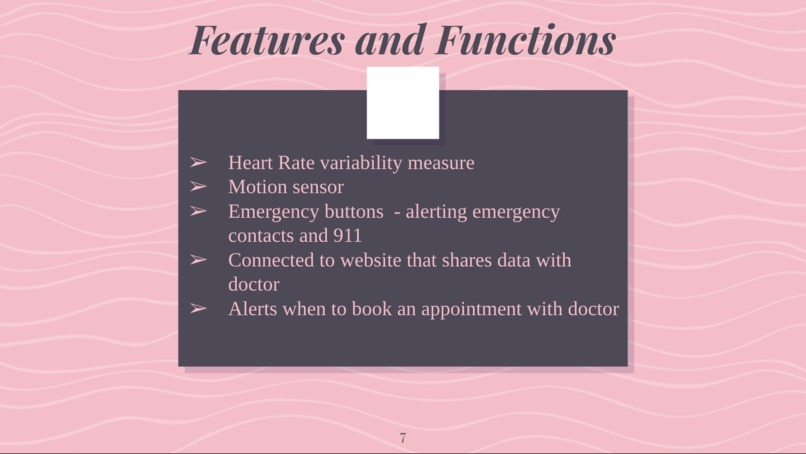
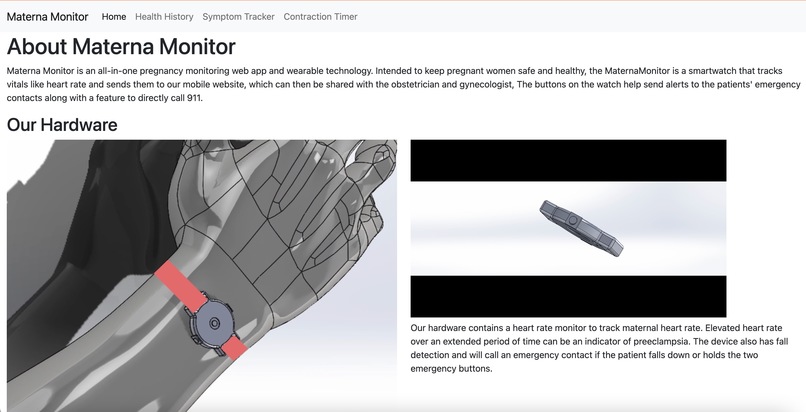
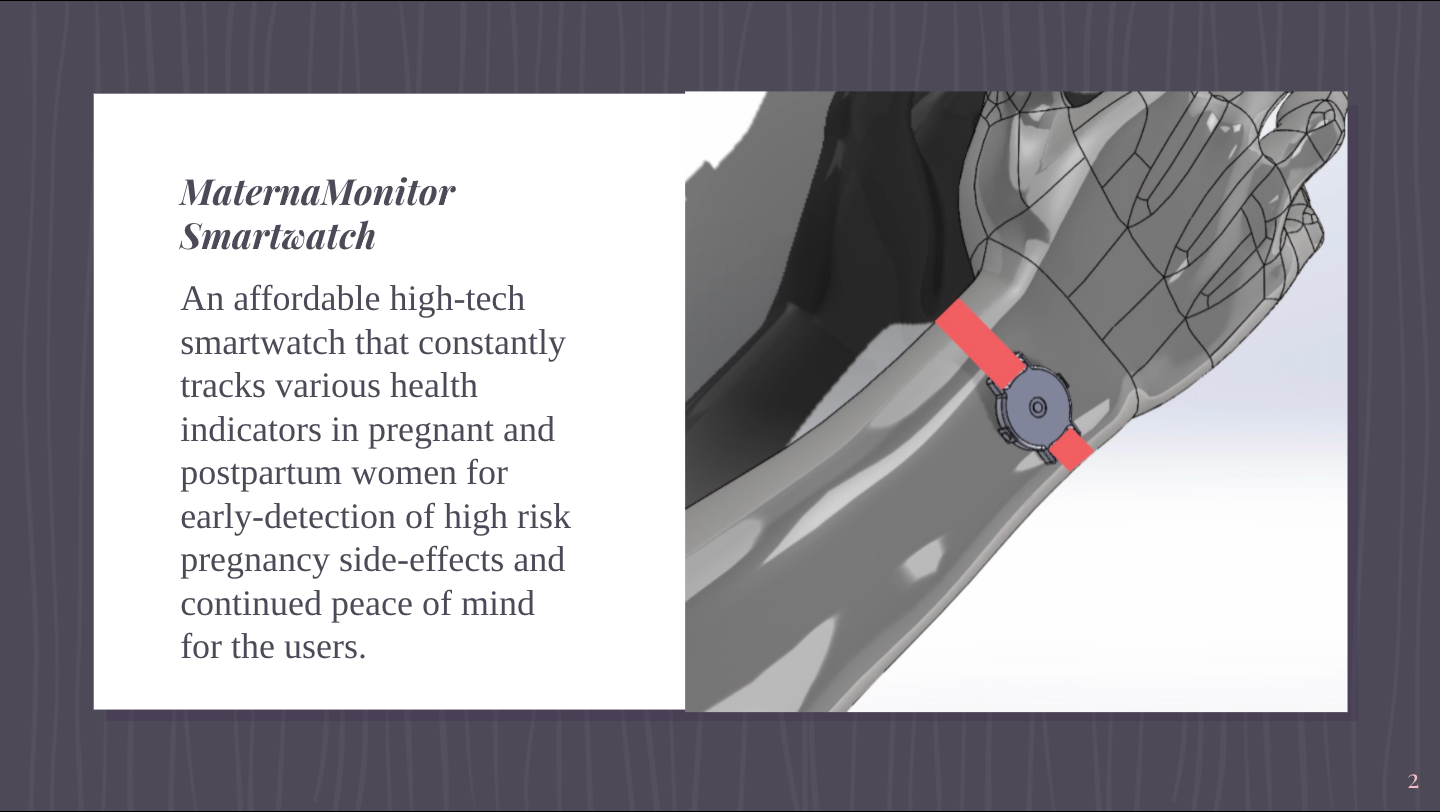
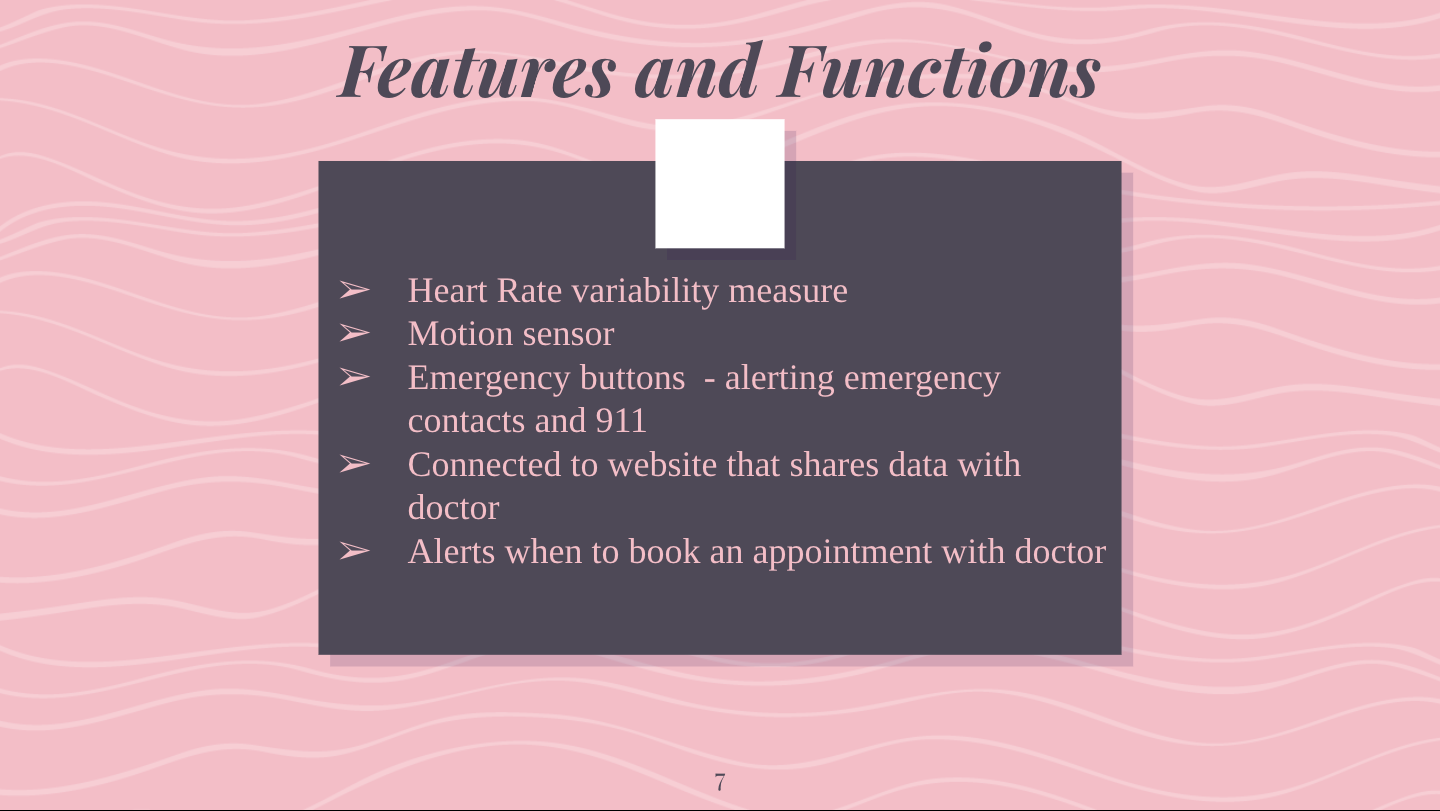
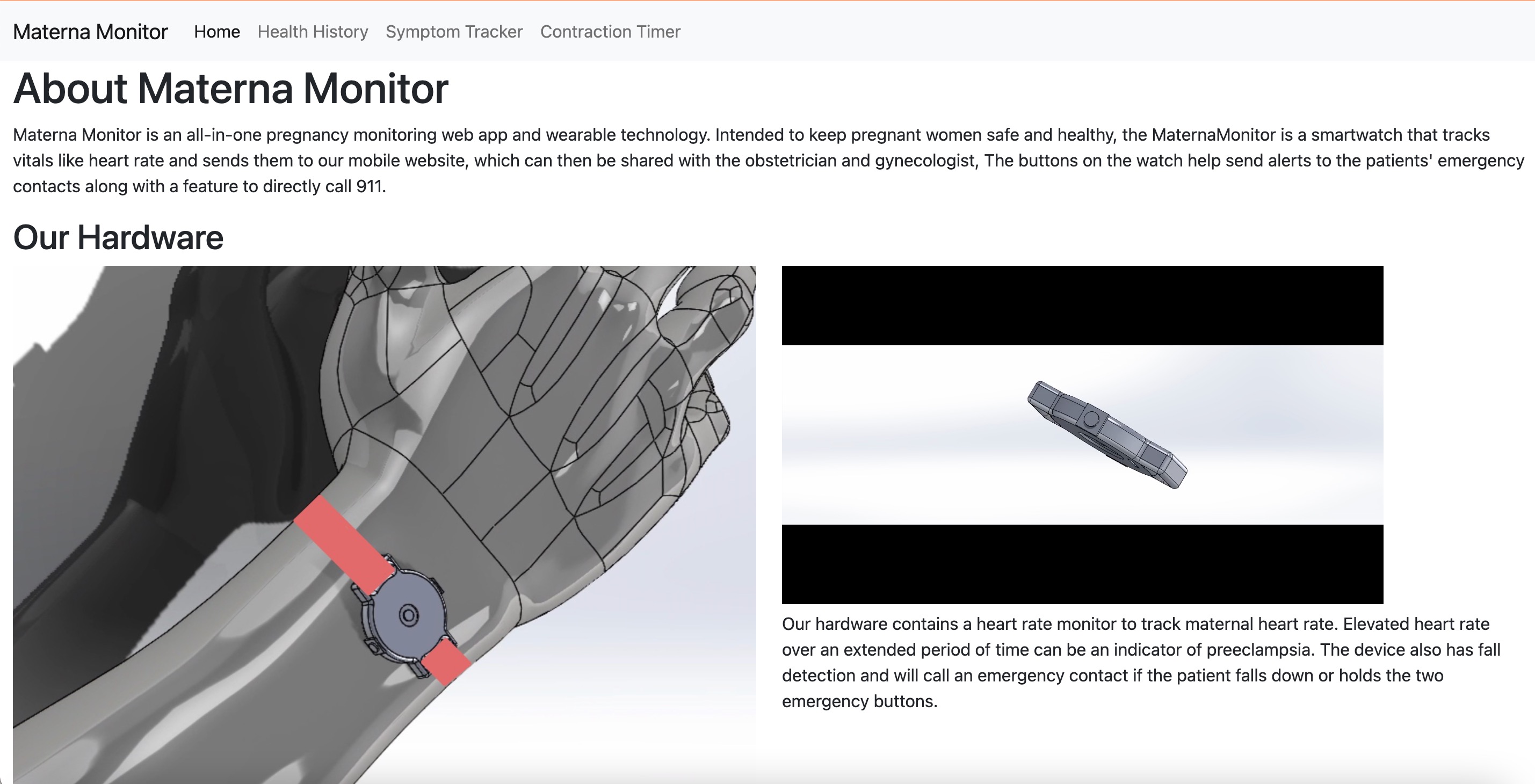
The MaternaMonitor is a smartwatch that tracks vitals like heart rate and sends them to our mobile website, which can then be shared with the physician. Our watch incorporates emergency features sleekly integrated with Twilio to notify an emergency contact regardless of whether or not the patient is conscious to activate the sequence. Meaning, pregnant women are able to press emergency buttons to call for help, or if the watch detects a fall, the watch calls for help on behalf of the patient. In MATLAB we performed data analysis of the heart data and calculated the heart rate variability (HRV) and associated statistical analysis of HRV to measure the risk of pregnant patients.
How we built it
We analyzed the heart rate data using MATLAB. A heart beat is characterized by a QRS complex. Taking the R amplitude of each QRS complex and measuring the time between the R amplitudes, we thus measure the heart rate variability, or the time between heartbeats. Risk is indicated if heart rate variability is not within range of 110-160.
Moreover, we used statistical methods to analyze the calculated heart rate variability to further predict risk for pregnant patients. We want to measure the standard deviation between the mean heart rate variability of 5-minute segments. For example, we have a 15 min time sample, split into 3 segments. To gather the data within each segment, we took the 1st element of each segment and placed them into a column set. Taking the 2nd, 3rd element and so on for each segment, we have 5 column vectors. When concatenated horizontally, we have successfully reproduced our segments. This is important to scale up for data sets that are 24 hours long that have a timestep of 1 ms, which is equivalent to over 3 million data points.
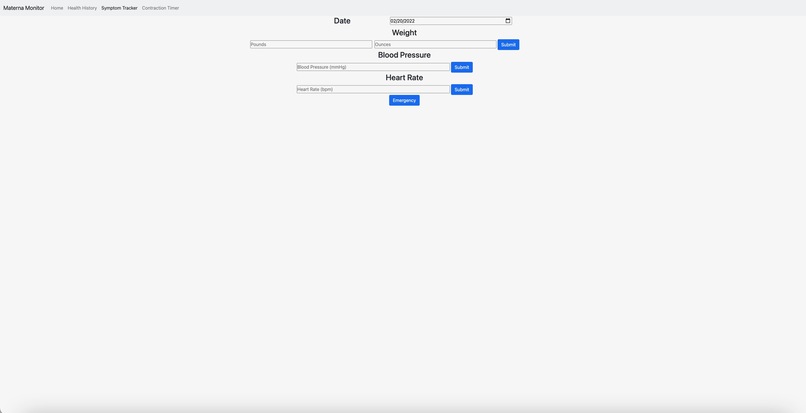
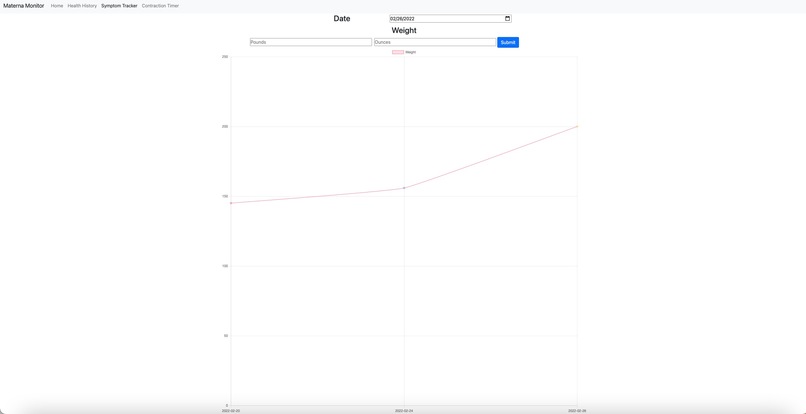
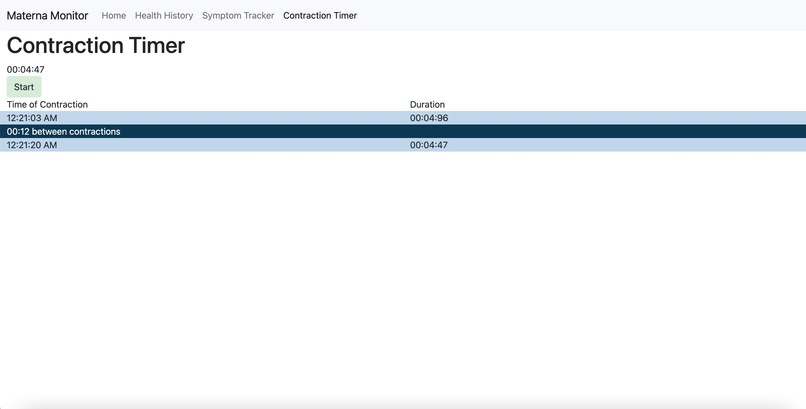
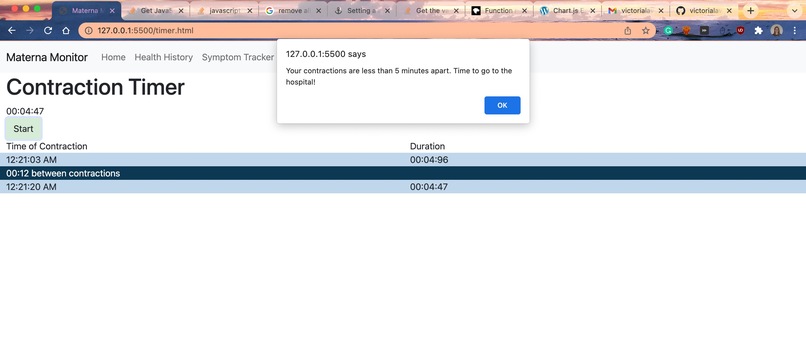
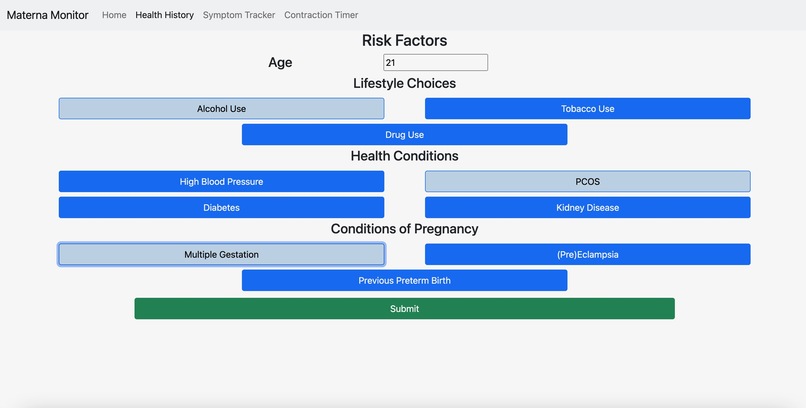
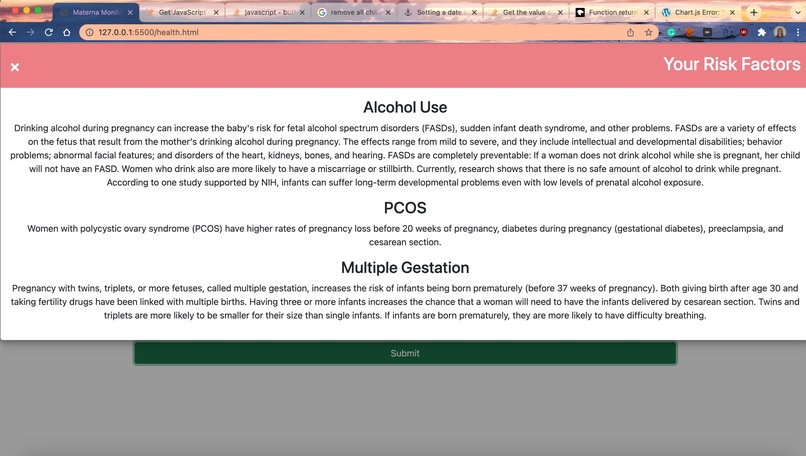
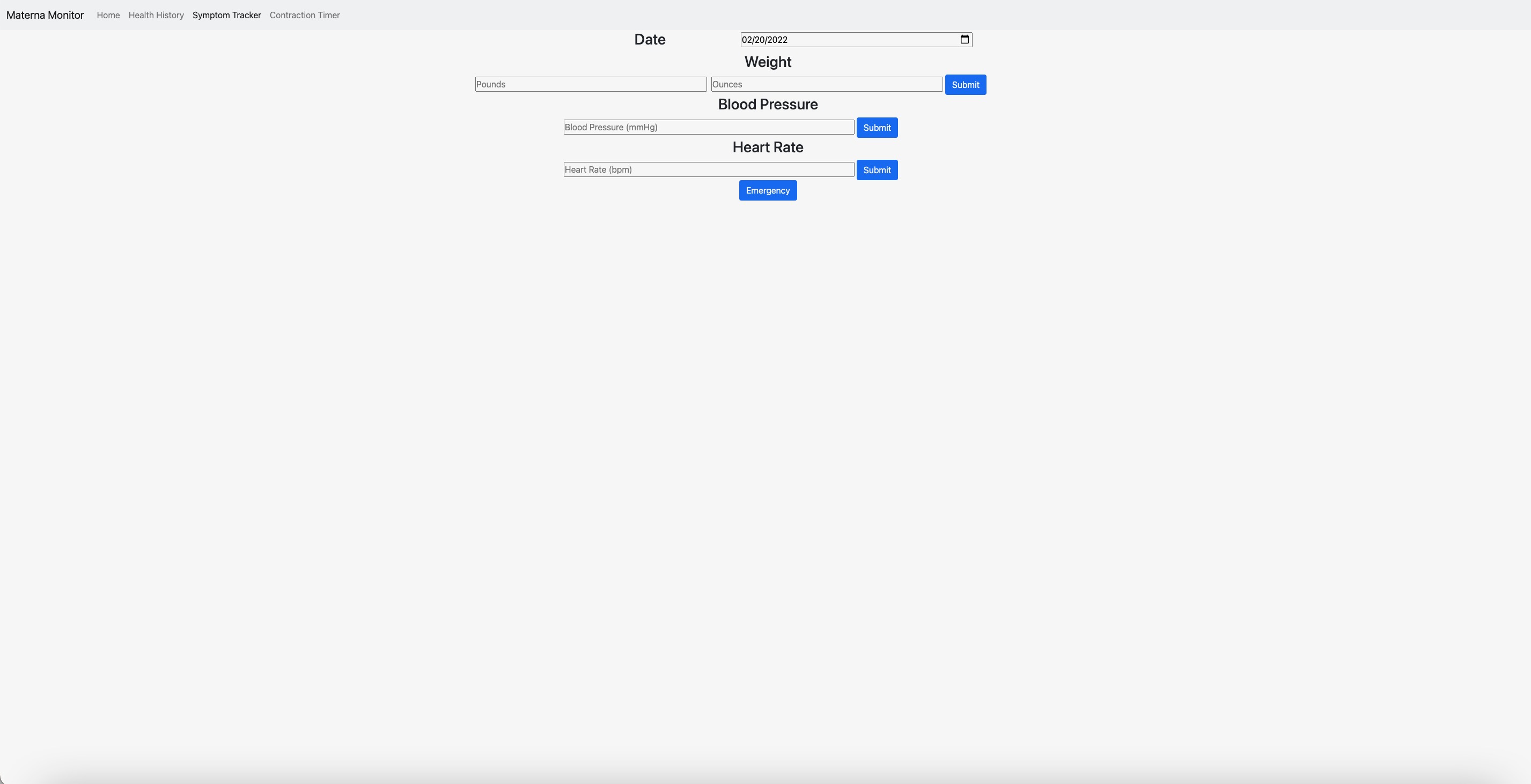
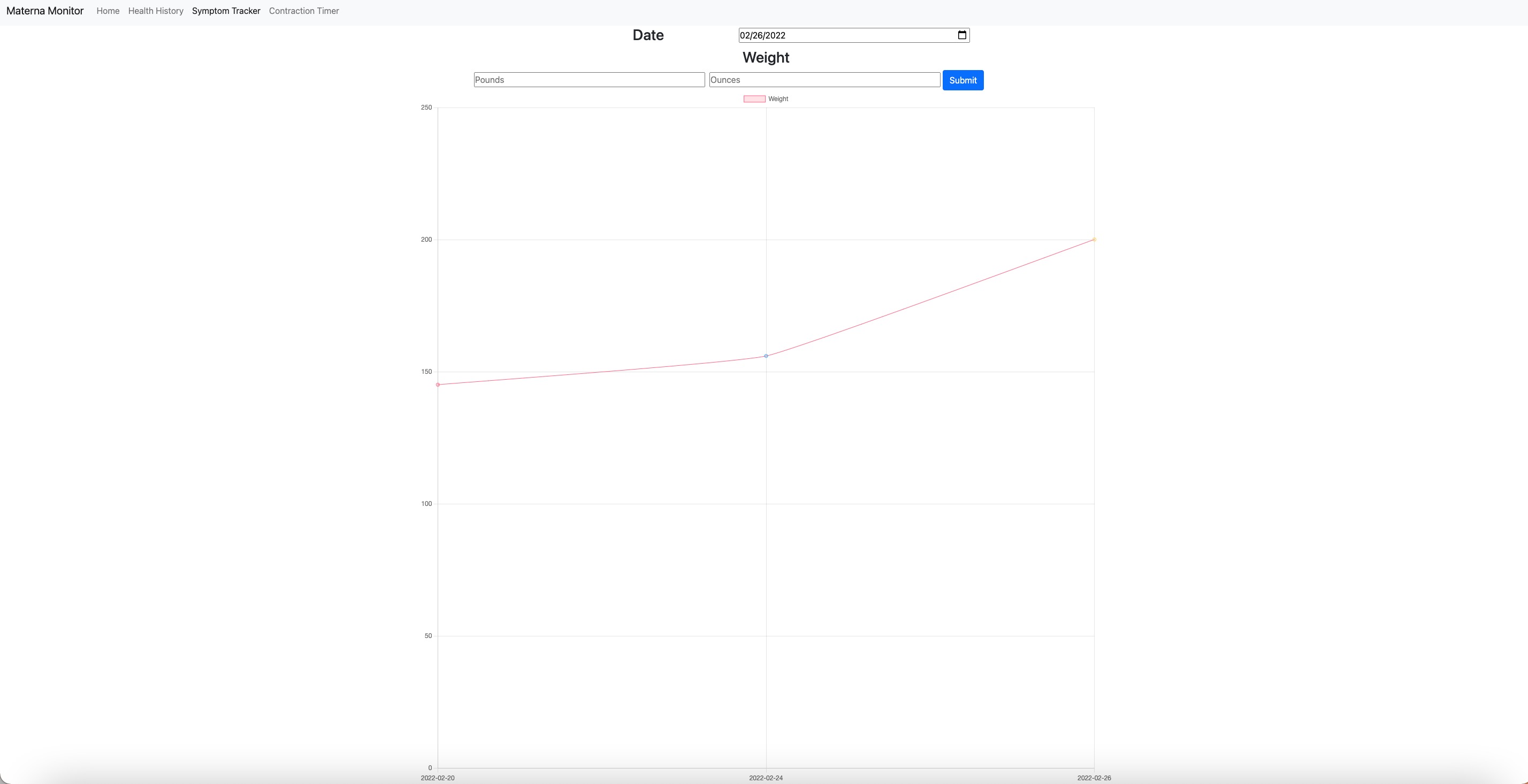
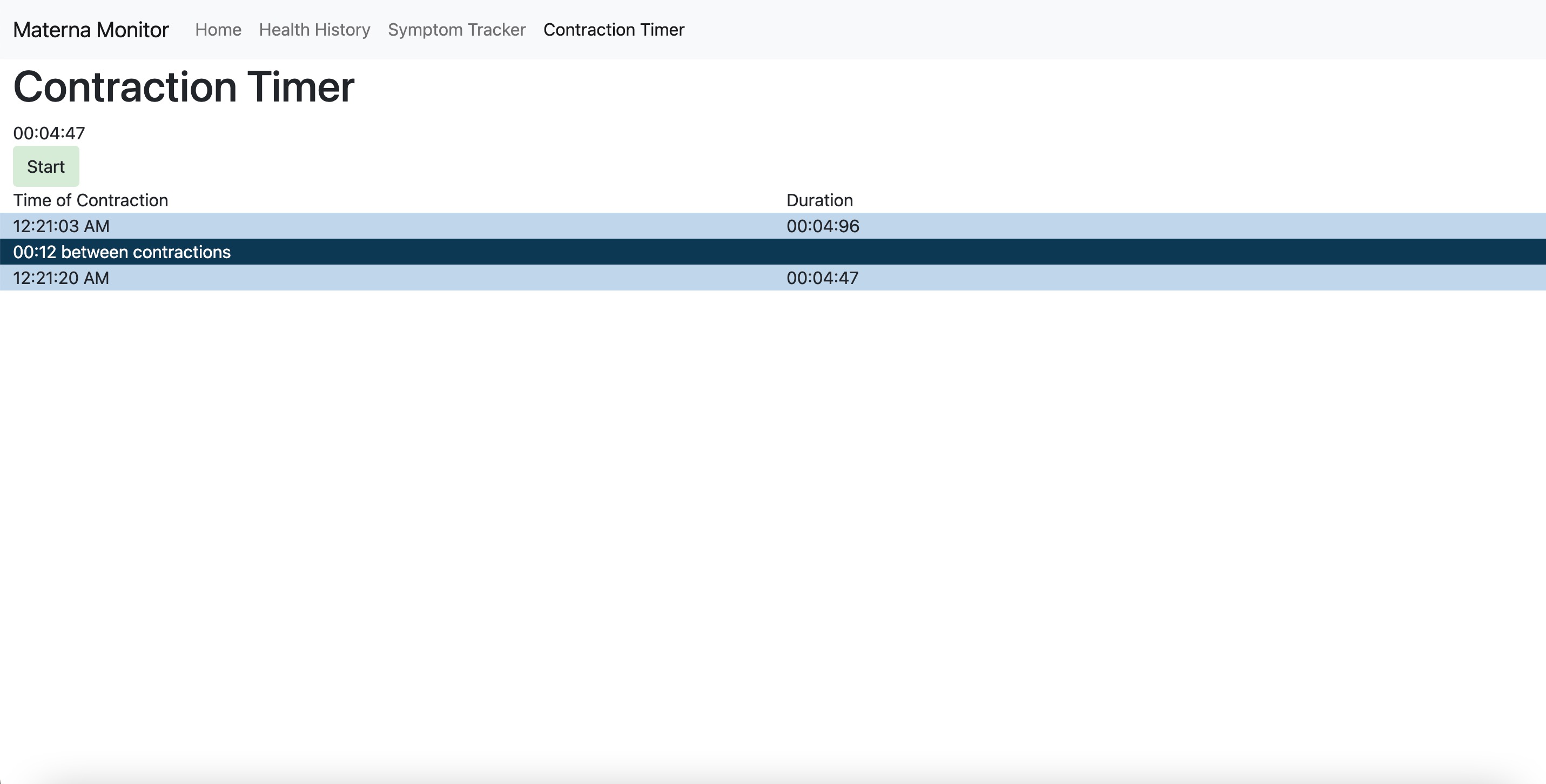
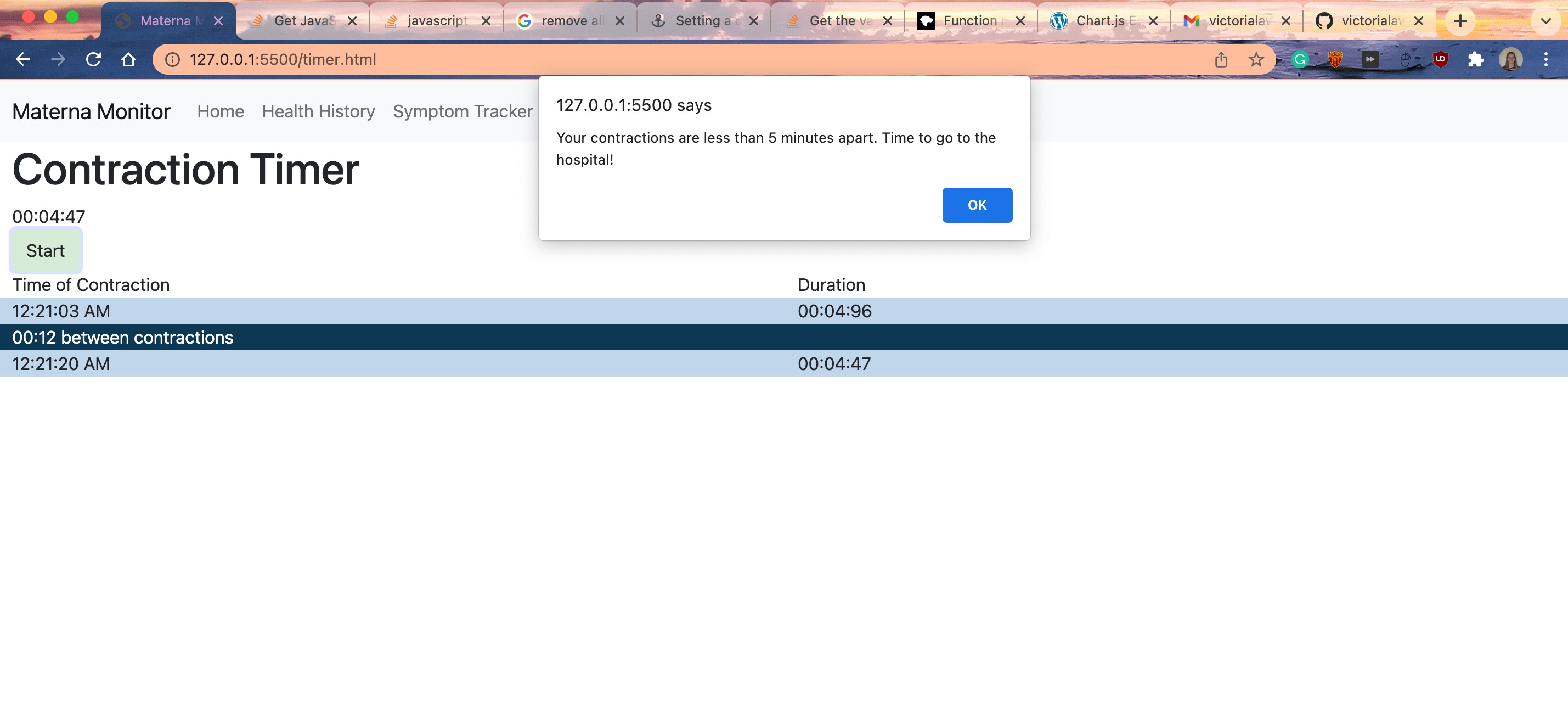
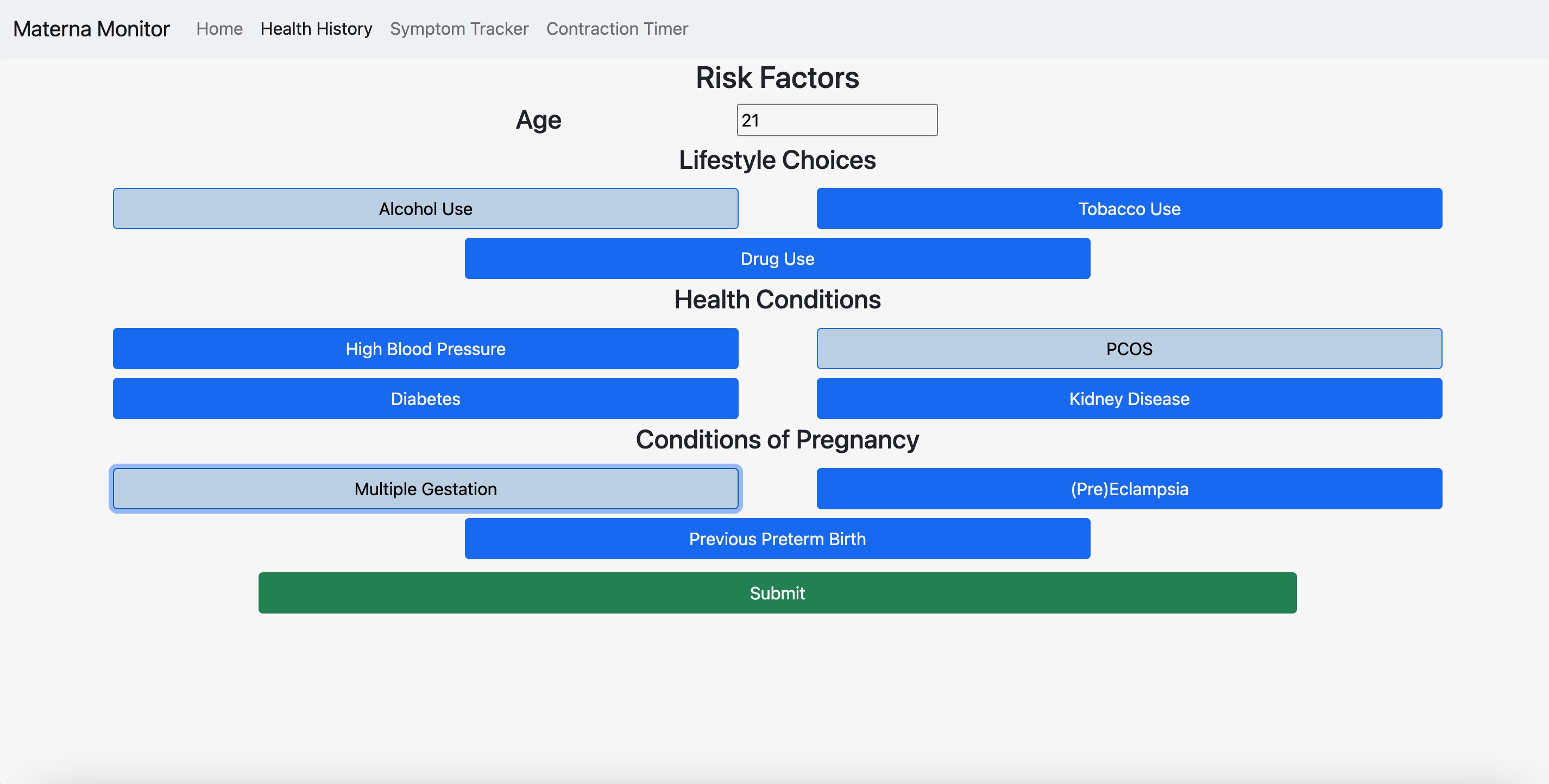
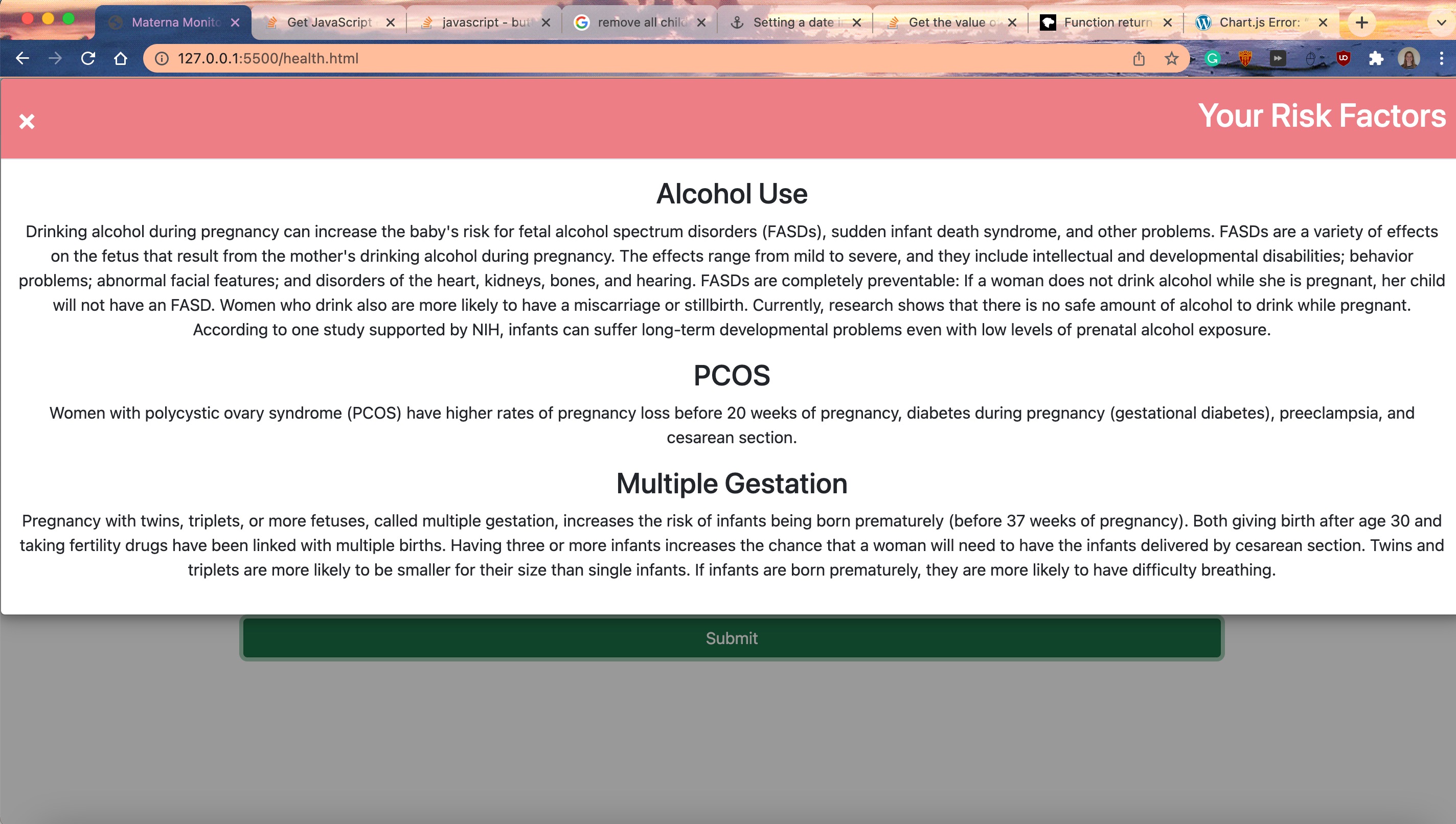
We used HTML/CSS and JavaScript/jQuery/Boostrap to develop a website that goes along with the hardware portion of the device. Our website's first feature is a risk factor information page. The patient can input any of the risk factors that apply to her and receive information about how these risks may affect her pregnancy. Next, we have a health history tracker that allows the patient to record their health history over time and view it on a graph. This page also has an emergency button that sends an emergency call if pressed. We also have a contraction timer that allows the patient to monitor the duration of her contractions and notifies via alert and text message (using Twilio) when it's time to go to the hospital.
We integrated hardware via Arduino using buttons, LEDs, and more. We send a call using Twilio and a Python script to notify someone that an emergency has occurred. While the competition didn’t provide a heart rate monitor, we integrated code that would record heart rate data if connected.
Challenges we ran into
Integrating twilio with arduino code Finding robust data for heart rate analysis Lack of appropriate sensors in Arduino kit
Accomplishments that we're proud of
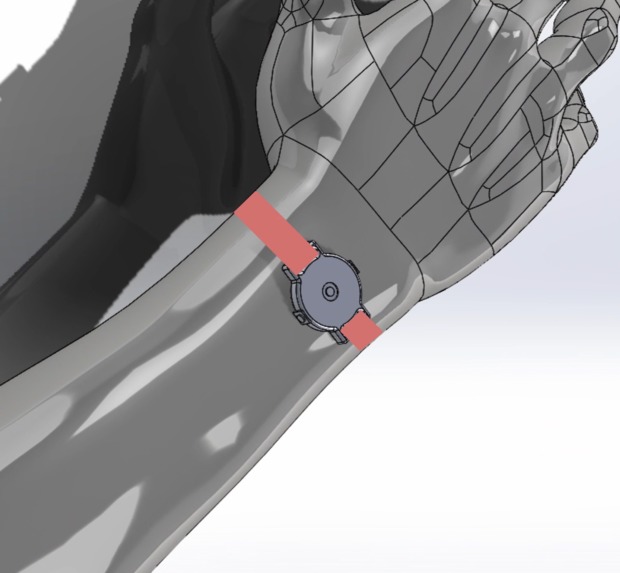
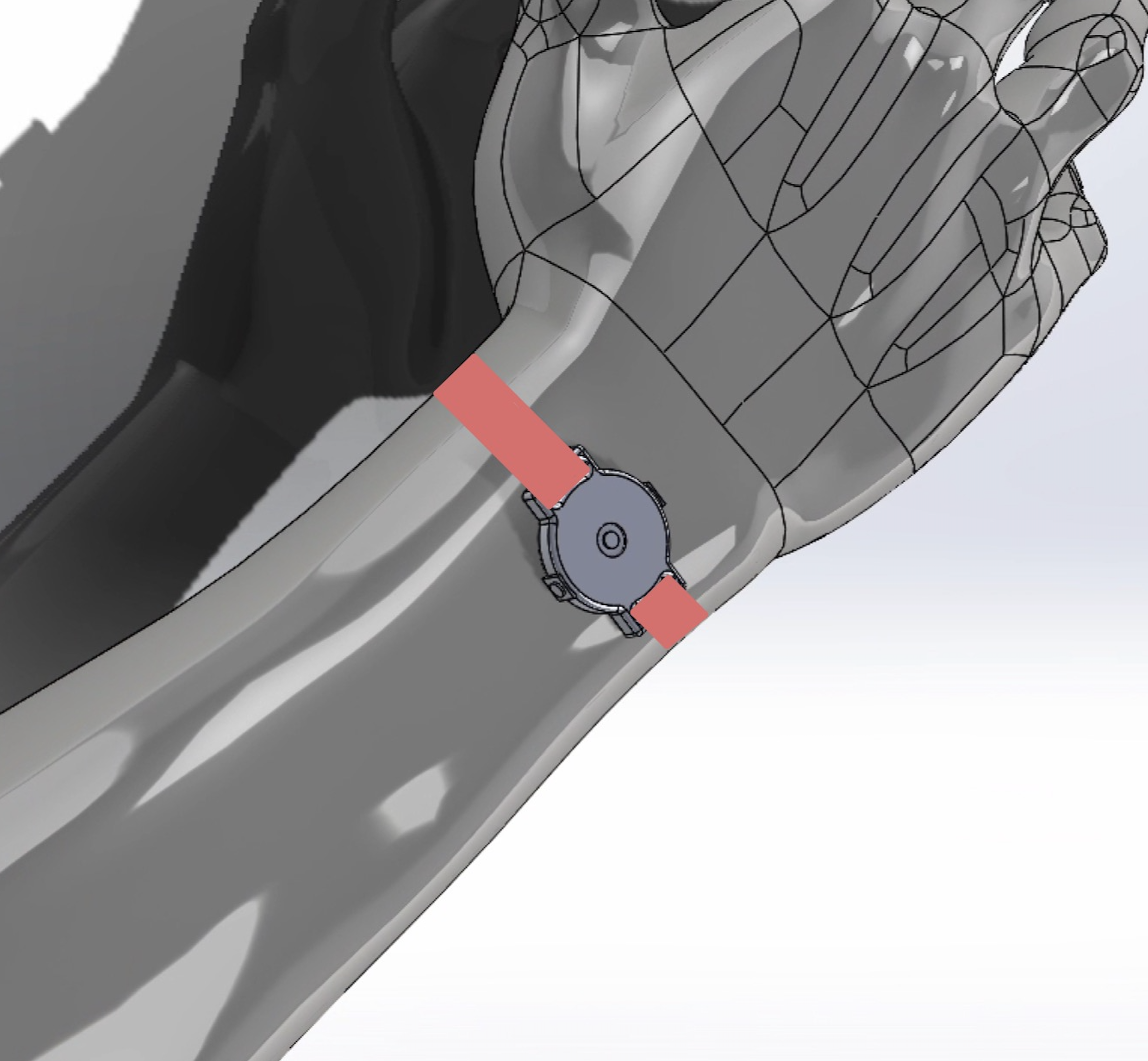
We were able to talk to Dr. Ramnik Sabharwal who helped us verify our data set analysis and how she interprets the ranges in her daily practice. She expressed how useful the MaternaMonitor would be for both her patients and women across the world. We are also proud of the fact that we integrated hardware and produced a 3D rendering of the physical watch prototype using SolidWorks.
What we learned
We learned how to integrate Arduino with our website and Twilio. We learned how to transpose and concentrate matrices in MATLAB so we can sort and analyze data. We learned how to extrapolate heart rate data in order to measure our desired time points.
What's next for MaternaMonitor
The MaternaMonitor mobile website will next be integrated into a mobile application. In addition, the essential monitoring functions could include fetal monitoring sensors and a bluetooth-connected blood pressure cuff that would help with the diagnosis of pre-eclampsia, a medical condition that can result in death for both the mother and baby.


Log in or sign up for Devpost to join the conversation.