Inspiration
Choosing the right material is one of the most important decisions in engineering. A material that performs well in one application can fail in another because of differences in strength, weight, temperature resistance, corrosion resistance, cost, manufacturability, and sustainability.
Yet material selection is often difficult and time-consuming. Students and engineers may have to search through datasheets, material databases, standards, and technical resources before they can confidently compare alternatives. At the same time, general-purpose AI can provide convincing recommendations without clearly showing whether the information is verified or simply an AI-generated estimate.
We wanted to bridge this gap.
We built MaterialMind AI to combine structured engineering data with AI reasoning, helping users move from an application requirement to a transparent and explainable material recommendation.
Our goal was not to build another chatbot. We wanted to build an AI engineering copilot that understands material-selection trade-offs and is honest about what it knows.
What it does
MaterialMind AI is an AI-powered materials engineering copilot that helps users select, compare, and understand engineering materials based on their application requirements.
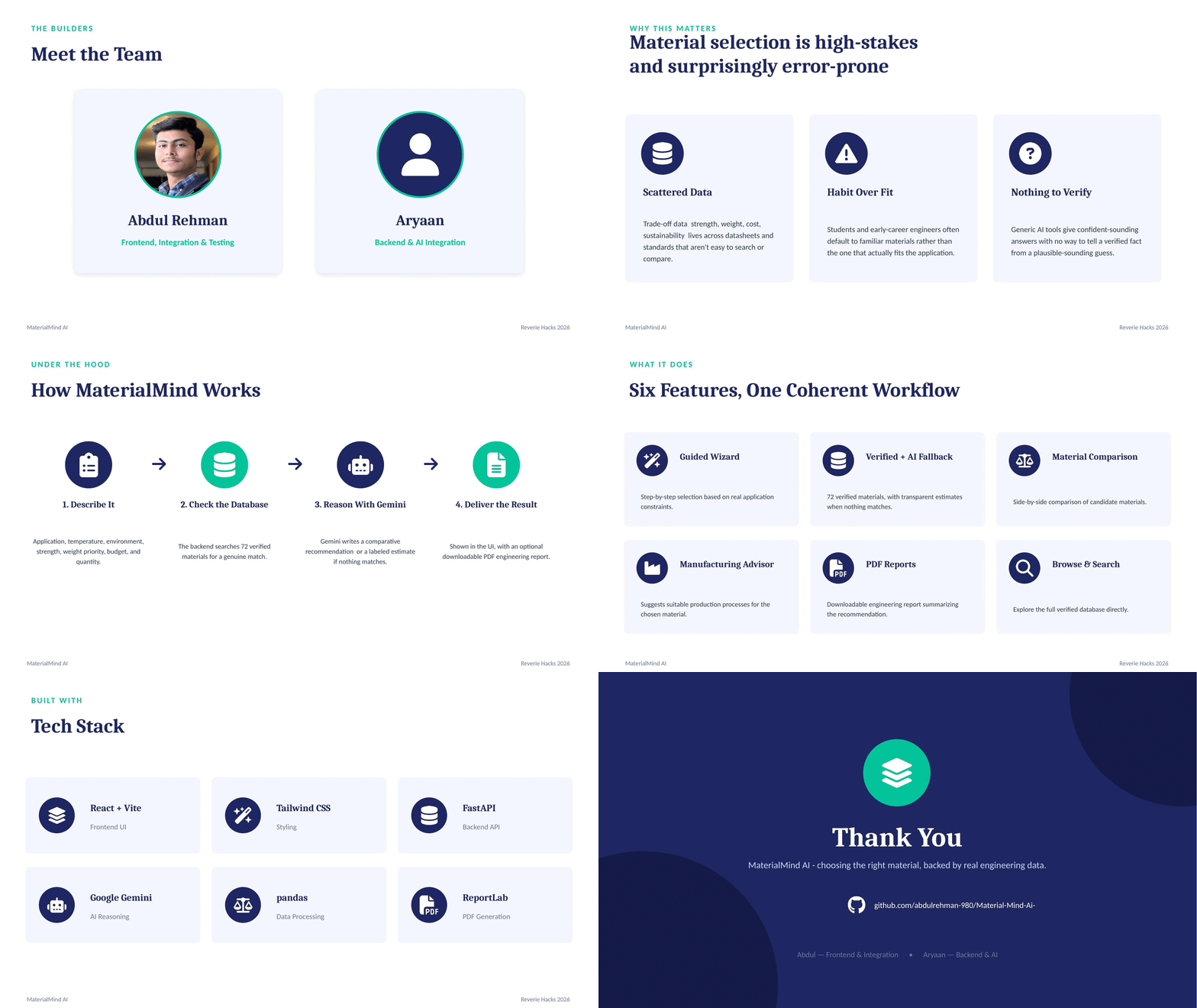
Users can describe their requirements, including the application, operating environment, temperature, strength, weight priority, budget, and quantity.
MaterialMind searches a database of 72 verified engineering materials and identifies relevant candidates. Google Gemini then analyzes the engineering context and helps turn those candidates into an understandable recommendation.
A typical recommendation provides the top material, its key weakness, a runner-up alternative, important engineering trade-offs, manufacturing considerations, sustainability context, and a final recommendation.
MaterialMind also provides guided material selection, side-by-side material comparison, manufacturing guidance, material database browsing and search, and downloadable engineering PDF reports.
One of our most important design principles is transparency. When a recommendation is based on verified material data, the system uses that information directly. If a suitable verified material cannot be found and Gemini provides an estimate, the result is clearly identified as an AI estimate that should be verified before use.
This prevents the system from presenting an AI-generated assumption as an established engineering fact.
How we built it
We built MaterialMind AI as a full-stack application combining a structured materials database, backend engineering logic, and generative AI.
The frontend was developed using React, Vite, and Tailwind CSS. It provides the guided material-selection workflow, material comparison, recommendations, database exploration, and report access.
The backend was developed using Python, FastAPI, and Uvicorn. It manages the application logic, material-data processing, recommendation workflow, comparison functionality, and communication with the AI layer.
We created a structured database containing 72 hand-verified engineering materials and their relevant engineering properties. The database acts as the foundation of the recommendation process rather than relying entirely on an AI model's internal knowledge.
Google Gemini was integrated as the AI reasoning layer. It helps interpret engineering requirements, compare candidate materials, explain trade-offs, and communicate recommendations in a way that is easier for students and engineers to understand.
We also integrated ReportLab to generate downloadable engineering PDF reports.
The overall workflow is simple: users describe their engineering requirements, the system searches the verified materials database, suitable candidates are compared, Gemini provides reasoning and explanations, and the final recommendation is presented to the user with an optional engineering report.
Challenges we ran into
The biggest challenge was balancing AI flexibility with engineering reliability.
A general-purpose AI model can generate a material recommendation in seconds, but a technically convincing answer is not necessarily a verified engineering answer. We therefore had to design the system so that verified material data remained the foundation of the recommendation.
Another challenge was representing real engineering trade-offs. There is rarely one material that is best in every category. A material may have excellent strength but be expensive or heavy, while another may be lightweight but have limitations in temperature performance or manufacturing.
Instead of reducing material selection to a single property, we designed MaterialMind to communicate these trade-offs and present both a primary recommendation and an alternative.
We also had to integrate the frontend, backend, materials database, AI reasoning, comparison system, manufacturing guidance, and PDF generation into one coherent application within the limited time of a hackathon.
Accomplishments that we're proud of
We are proud that MaterialMind AI became more than a simple AI chatbot. We built a working domain-specific engineering decision-support application around a real materials-engineering problem.
We created a database of 72 verified engineering materials, integrated Google Gemini for AI-powered reasoning, implemented transparent handling of AI estimates, and built a guided material-selection workflow.
We also developed material comparison, manufacturing recommendations, sustainability considerations, database browsing and search, and downloadable engineering PDF reports.
Most importantly, we made transparency part of the product itself. MaterialMind does not try to hide uncertainty behind confident language. When an answer is an AI estimate, we want the user to know that it is an estimate and that it should be verified.
That principle is central to our vision of responsible AI for engineering.
What we learned
One of our biggest lessons was that building a useful AI product is about much more than integrating an LLM.
We learned how important high-quality, structured domain data is when applying AI to technical fields. We also gained practical experience in full-stack development, API integration, structured engineering-data processing, generative AI integration, prompt and workflow design, material comparison, trade-off analysis, and engineering report generation.
We also learned that there is rarely a single "best" material. Good material selection is about understanding constraints and trade-offs. This changed the way we designed our recommendations, from simply naming a material to explaining why it was selected, what its limitations are, and what alternative could be considered.
Most importantly, we learned that trust is a feature. For engineering applications, an AI system should not only provide an answer; it should also communicate how much confidence the user should place in that answer.
What's next for Material Mind Ai
MaterialMind AI is currently a hackathon project, but we see significant potential to develop it into a broader materials-engineering platform.
Our next priorities are to expand the verified materials database, integrate more authoritative engineering data sources, improve multi-objective material ranking, add stronger source citations and traceability, expand cost and sustainability analysis, and develop deeper manufacturing-process intelligence.
We also plan to incorporate materials-science literature and research papers, support more specialized engineering applications and industries, introduce saved projects and recommendation history, and eventually deploy the platform as a scalable cloud application.
In the longer term, we envision MaterialMind AI becoming a materials engineering copilot for students, researchers, and practicing engineers, helping them discover materials faster, understand complex engineering trade-offs, and make better-informed decisions without losing sight of data quality and engineering judgment.
Our vision is simple: make material selection faster, smarter, and more transparent while keeping real engineering data at the center.
MaterialMind AI — choosing the right material, backed by real engineering data.


Log in or sign up for Devpost to join the conversation.