-
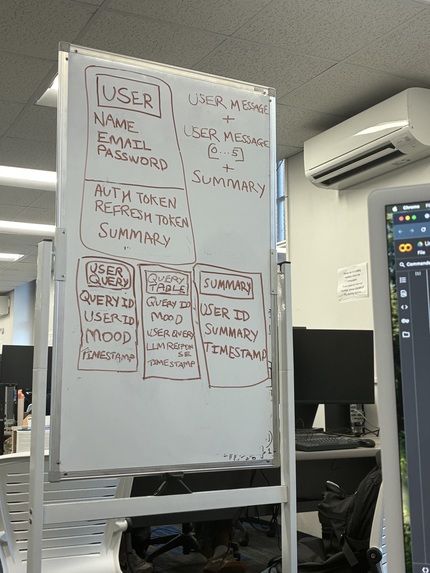
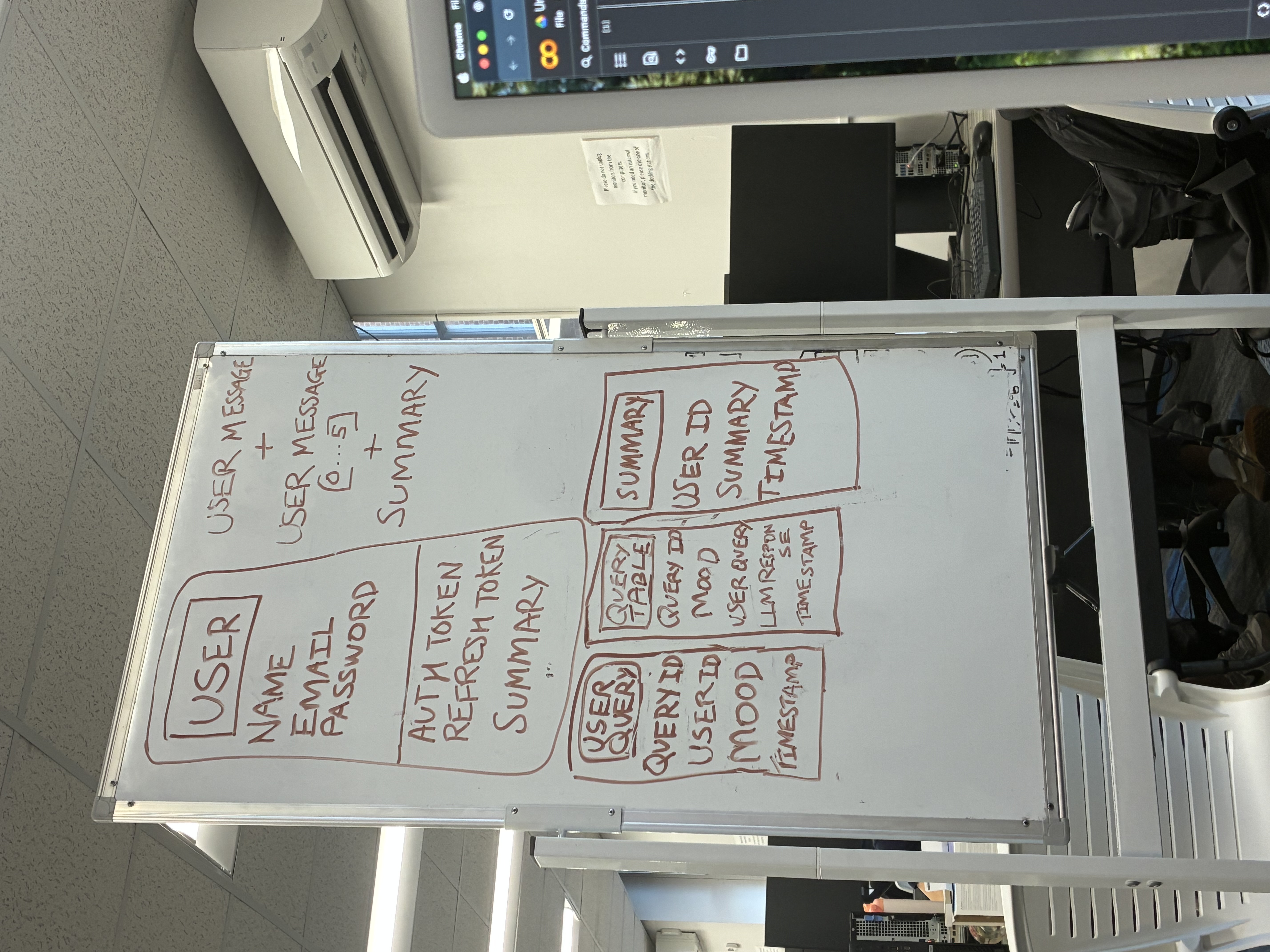
flow chart
Inspiration
Postpartum depression (PPD) has doubled globally, rising from 9.4% in 2010 to 19% in 2021. Nearly half of cases go undiagnosed, leaving mothers and children at risk. We wanted to create a tool that provides immediate, empathetic support to new mothers.
What it does
Mater Care uses AI-powered facial emotion recognition to assess a mother’s mood—happy, sad, or neutral. A Gemini virtual companion then delivers personalized, empathetic guidance in real time, helping mothers feel understood and supported during a vulnerable period.
How we built it
Emotion detection: We used DeepFace to analyze webcam images for emotional signals.
Signal processing: We applied normalization and boosting to emphasize subtle signs of sadness (often underdetected).
AI companion: The processed data is passed into Google Gemini, which responds with empathetic, supportive guidance tailored to the detected emotional state.
On-demand design: The system isn’t always running in the background — instead, the mother chooses when to use it, giving her full control and ensuring privacy.
Challenges we ran into
Emotion detection accuracy: Sadness is often subtle and easily misclassified. We had to boost and normalize detection values to capture it more reliably.
Balancing empathy with safety: We wanted responses that were warm and supportive, but without sounding clinical or giving medical advice.
Time constraints: Building a full pipeline—from face capture, to emotion analysis, to Gemini integration—within hackathon deadlines pushed us to simplify while keeping the core vision intact.
Accomplishments that we're proud of
Built an end-to-end prototype that can read emotions from a webcam and respond with real-time, empathetic support.
Integrated DeepFace + Gemini into a single workflow.
Designed a system that is opt-in and privacy-first, putting control in the hands of mothers.
Brought attention to an under-discussed issue: postpartum depression and maternal mental wellness
What we learned
How to fine-tune emotion recognition models to handle subtle signals.
The importance of framing AI systems as companions, not clinicians.
That simplicity is powerful—sometimes a small, well-focused prototype can deliver meaningful impact.
The real-world value of empathetic design in health tech.
What's next for Mater Care
Expand emotion coverage: Add training data for more nuanced emotions like anxiety, overwhelm, or fatigue.
Mobile-first design: Build a phone-friendly app so mothers can use it anytime, anywhere.
Personalization: Adapt responses over time, learning from each mother’s patterns.
Partnerships with healthcare providers: Ensure the tool complements professional care, acting as an early signal for when to seek help.
Offline-first features: Provide core support without requiring constant internet, preserving privacy.


Log in or sign up for Devpost to join the conversation.