Mate-E
Inspiration
Most productivity software expects people to become project managers. You create folders, organize tasks, choose workflows, and spend time maintaining the system instead of making progress.
I wanted to build something different.
The idea behind Mate-E is that AI should reduce decisions rather than create more of them. Instead of another place to store information, Mate-E acts like an intelligent teammate that helps users move a project forward. The goal is simple:
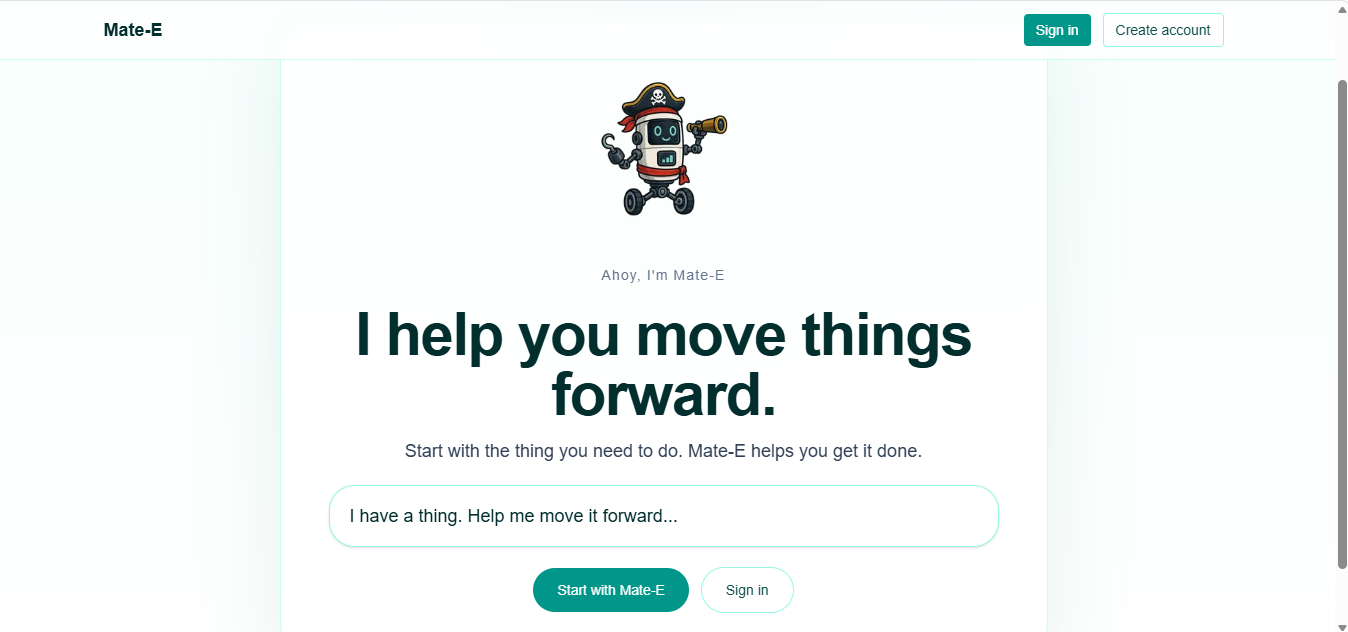
"I have something I want to accomplish. Help me finish it."
That philosophy guided every design decision throughout development.
What it Does
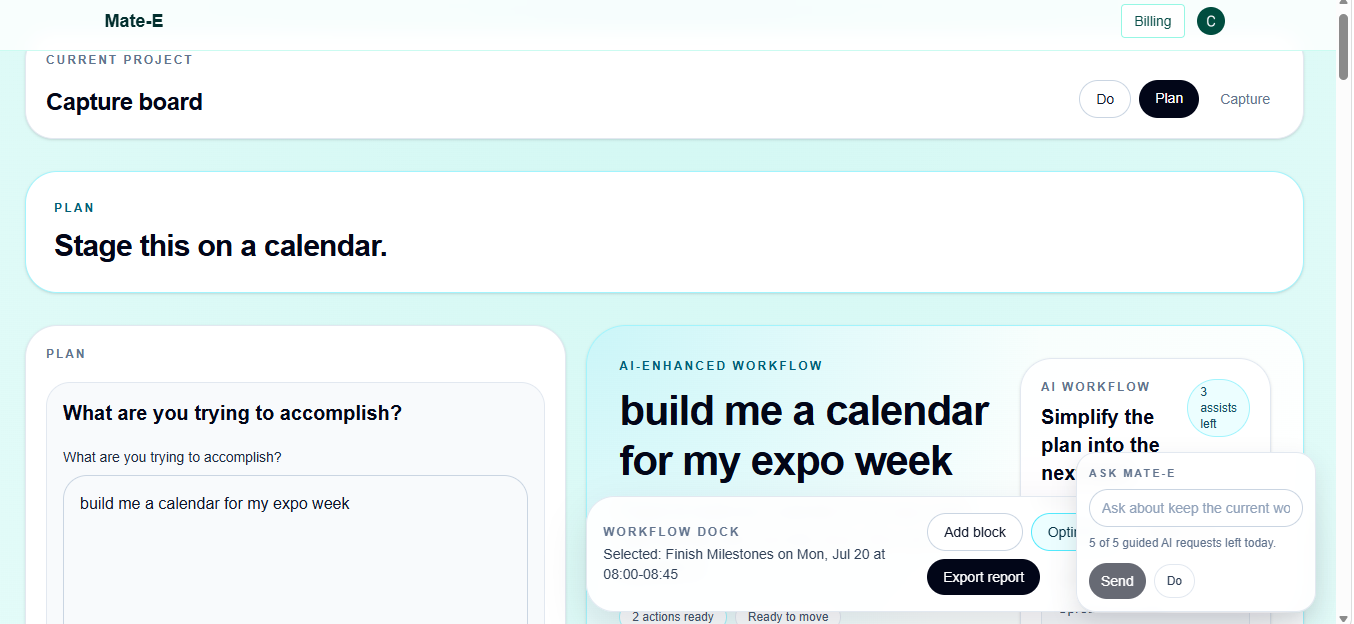
Mate-E is an AI-powered productivity workspace that helps individuals move projects from idea to completion.
Users can:
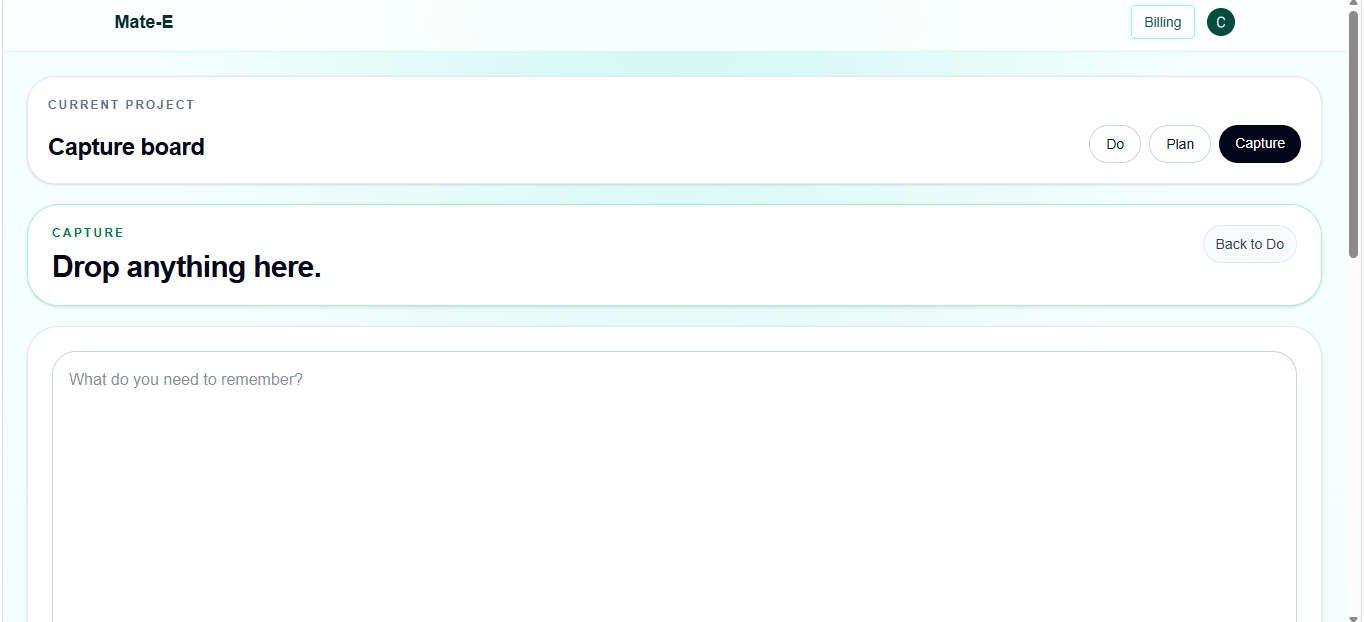
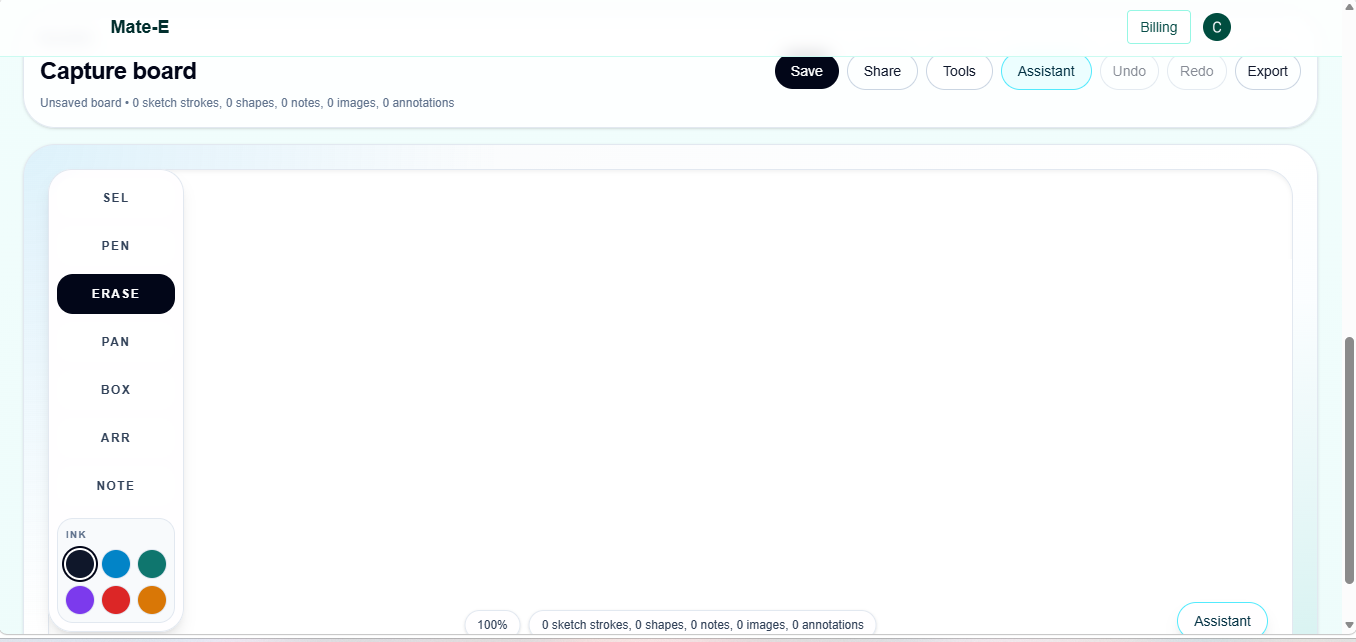
- Capture ideas, notes, and files in one place.
- Organize information automatically with AI assistance.
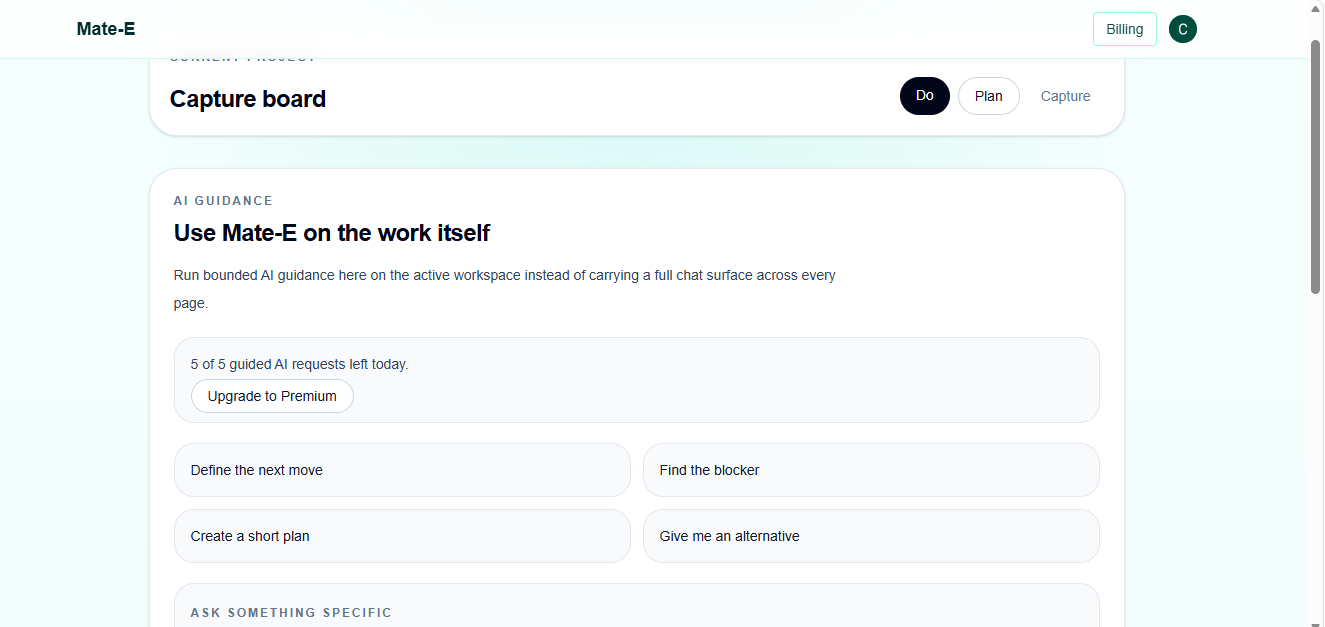
- Generate actionable next steps.
- Maintain project context without manually managing folders or complicated workflows.
- Stay focused on what matters instead of spending time organizing software.
Rather than exposing dozens of features at once, the interface emphasizes a single current project and the next action required to move it forward.
How We Built It
Mate-E was built as a modern web application using:
- Next.js with the App Router
- React
- TypeScript
- Tailwind CSS
- Prisma
- PostgreSQL
- OpenAI APIs for intelligent project assistance
- Stripe for subscription management
- Vercel for deployment
Throughout development, I repeatedly simplified the product. Earlier versions contained more dashboards, menus, and organizational concepts. As the project matured, I realized that every additional decision increased cognitive load.
Instead of adding features, I removed them.
The final direction focuses on a clean workspace where AI helps users decide what to do next.
Challenges
The largest challenge wasn't technical—it was product design.
Modern productivity software often accumulates complexity over time. Every new feature seems useful in isolation, but together they create friction. One of the hardest parts of building Mate-E was resisting that tendency.
On the engineering side, building a production-ready AI application introduced its own challenges:
- Designing prompts that consistently generate useful results.
- Managing authentication and user-specific project data.
- Integrating subscription billing with Stripe.
- Handling deployment across development and production environments.
- Maintaining responsiveness while interacting with AI services.
Balancing simplicity with functionality required constant iteration.
What I Learned
Building Mate-E reinforced an important lesson:
Good software removes work rather than adding options.
I also gained practical experience building production AI applications, including:
- Full-stack web development.
- Authentication and user management.
- Database modeling.
- AI prompt engineering.
- Payment infrastructure.
- Cloud deployment.
- Product and UX design.
Perhaps most importantly, I learned that successful AI products are less about showing users what AI can do and more about quietly helping them accomplish their goals.
What's Next
Mate-E is only the beginning.
Future plans include:
- More capable autonomous AI agents.
- Cross-device synchronization.
- Calendar and email integrations.
- Intelligent project planning.
- Research assistance.
- Document generation.
- Collaboration features.
- Workflow automation across external services.
The long-term vision is an AI teammate that reduces cognitive overhead, helping people spend less time managing work and more time creating meaningful outcomes.
Built With
- agents
- ai
- clerk
- css
- full-stack
- next.js
- openai
- postgresql
- prisma
- productivity
- react
- saas
- stripe
- tailwind
- typescript
- vercel

Log in or sign up for Devpost to join the conversation.