

Inspiration
This was our first very hackathon! In fact, the both of us had never used over 90% of the tools that we used to build Matcha Mode. We each have our personal mental health struggles, including ADHD, procrastination, and stress. So we decided to create something that could really help us stay on track and also give us a safe place to vent when things get overwhelming.
What it does
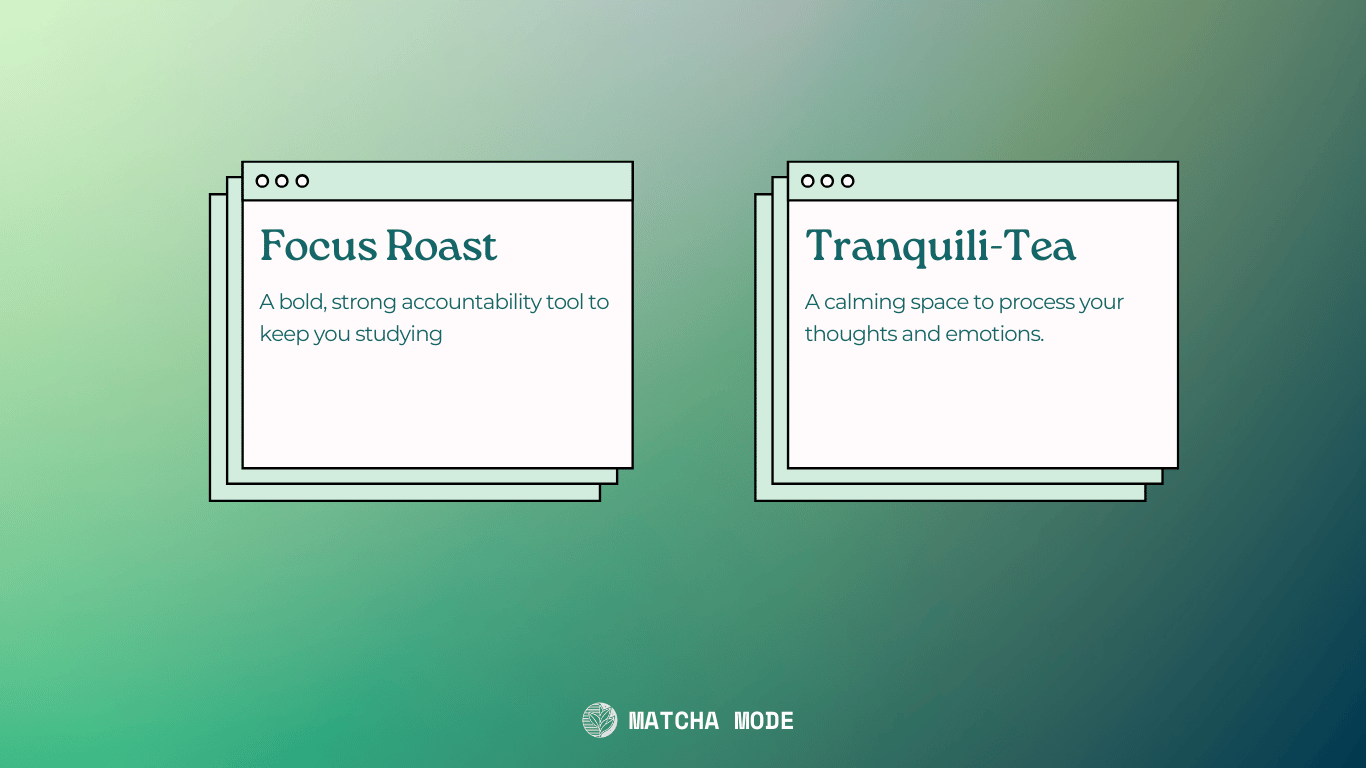
Matcha Mode is meant to be as soothing as a cup of matcha (also what got us through these grueling 24 hours!). It has two main features:
- Focus Roast: Share your screen and webcam with an AI coach of your choice—Gordon Ramsay or David Goggins. They’ll keep an eye on what you’re doing and call you out if you slip up. If you wander onto Instagram, brace yourself for Gordon’s ~not so friendly~ feedback!
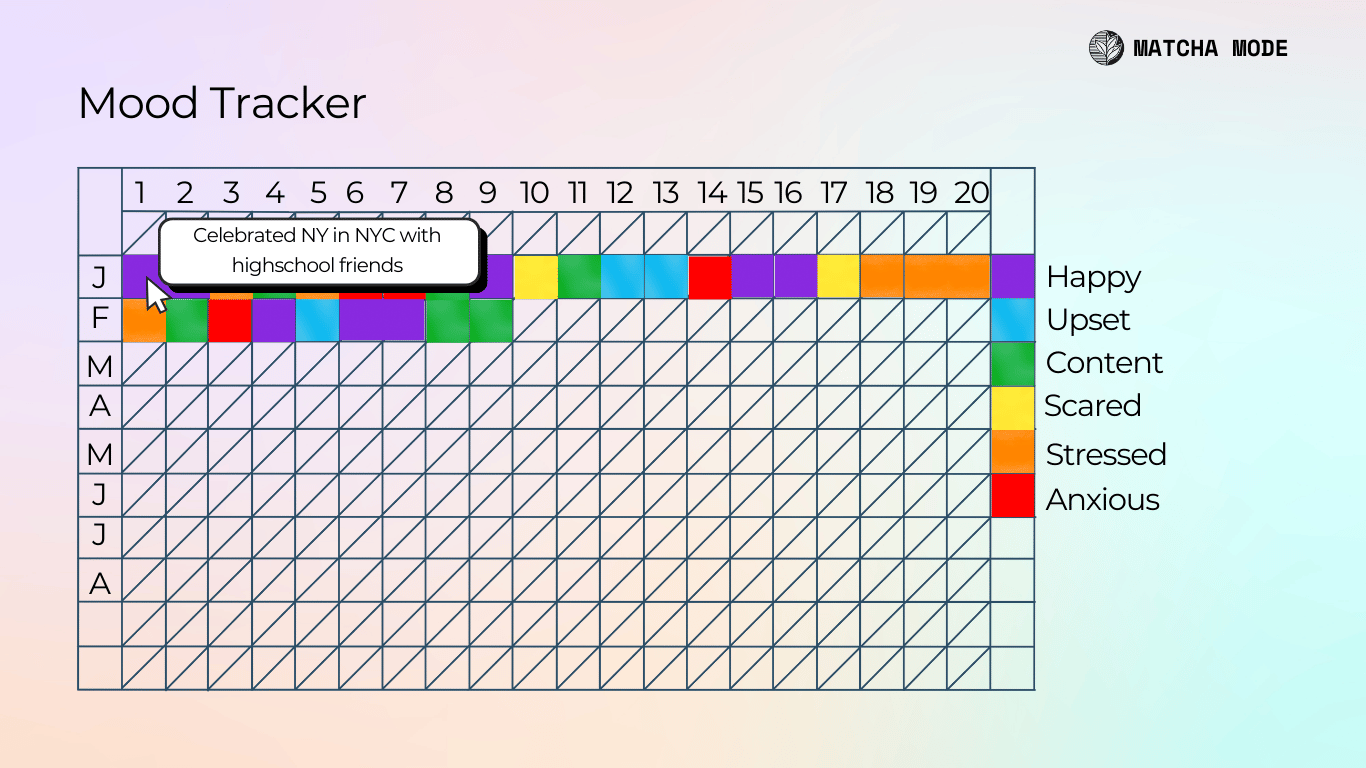
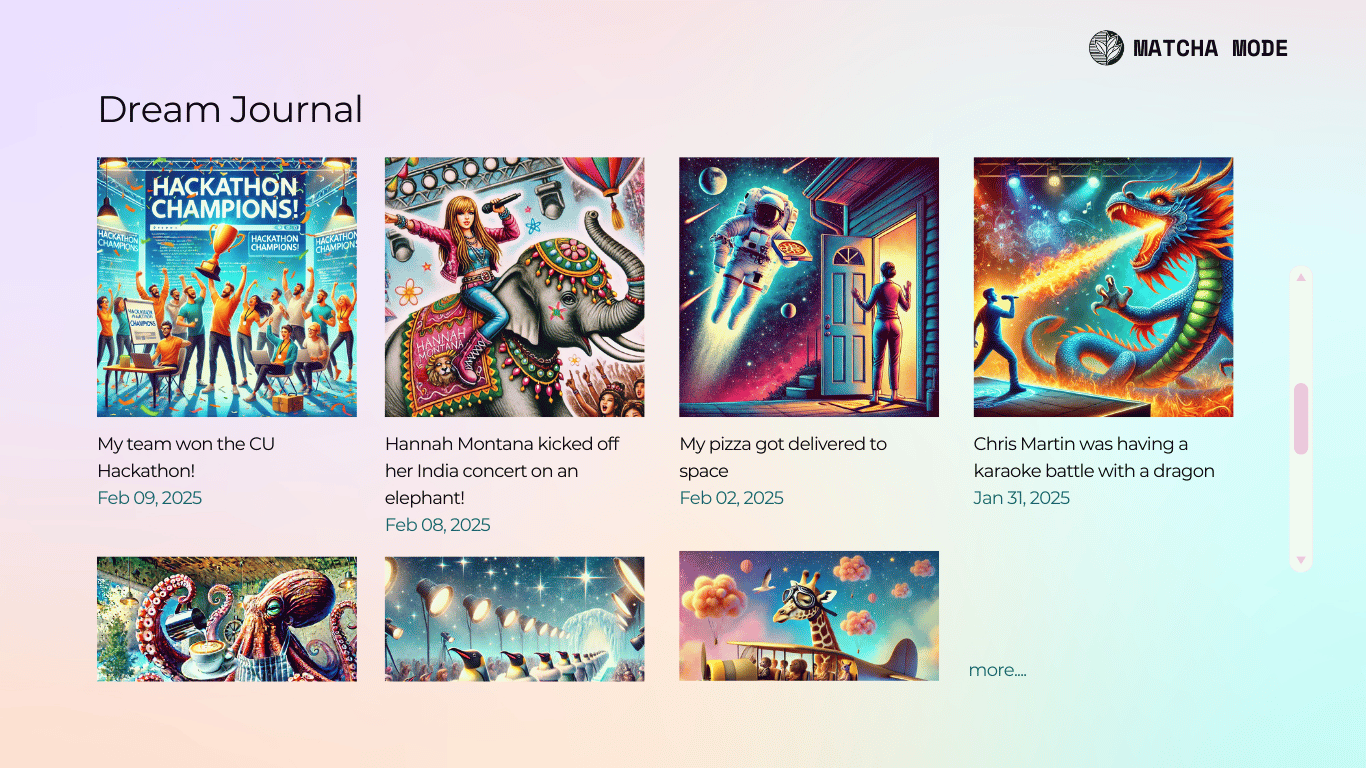
- Tranquili-tea: Speak or vent into the void without any judgement. This Dream Journal transcribes your weird and bizarre dream descriptions and transforms them into AI-generated visuals, letting you see your thoughts in whole new angle. Over time, it collects all your entries and lets you dig back through them, so you can keep track of how you’ve been feeling and managing stress.
How we built it
For Focus Roast, we have a Flask backend serving a React frontend. The React portion captures your screen and webcam feed at regular intervals and sends them to Flask, which in turn sends these images to llama 90B vision model, which describes the photos in great detail. These details are sent to deepseek r1 via Groq to decide if you're procrastinating or not. Based on deepseek's decision, our Python script makes a playHT request for a Gordon Ramsay/David Goggins voice cloned text-to-speech (TTS), which we made ourselves by finding and sampling their voice. Depending on latency considerations, the Python script either generates a new voice generation line or spits out a cached dialogue.
For our Dream Journal, we had Groq run a whisper speech-to-text (STT) model that then passed the text transcript to OpenAI gtp4o-mini for summarization. This was then passed to another OpenAI model for Stable Diffusion image generation, after which both the dream summary and generated image were stored in an SQLite database. This interface was built completely via streamlit, which helped us create widgets and tools a lot faster, saving us a lot of time.
Challenges we ran into
Since this was our first hackathon (and there are only two of us on the team), we both were pretty clueless on the front-end side. We ran into so many roadblocks and weren't able to implement so much of what we wanted to do. But we learned a lot and got farther than we thought we would. It's wild to think we built Matcha Mode using frameworks we never even heard of before!
Accomplishments that we're proud of
We're really proud of piecing all these different moving parts to together, building a fun UI, creating two custom voice models, and even autonomous AI agents that actually work.
What we learned
We learnt a lot about coding best practices, front-end development, working with APIs, and building with GenAI.
What's next for Matcha Mode
Build out the rest of the suite. Stay tuned!

Log in or sign up for Devpost to join the conversation.