-
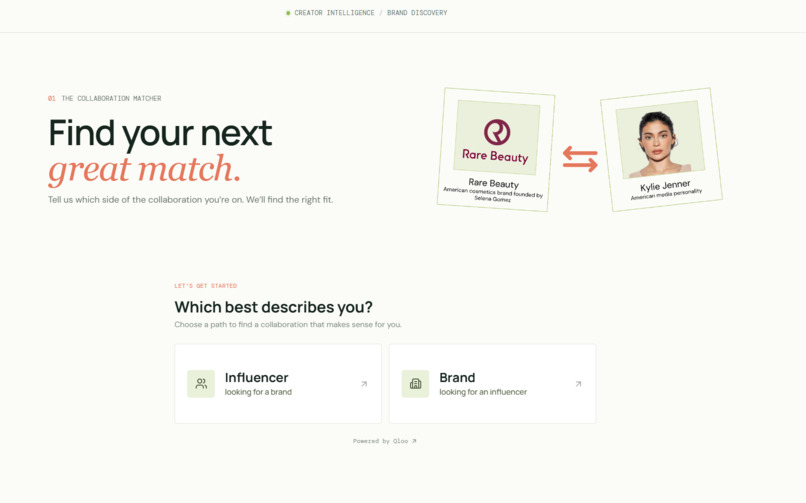
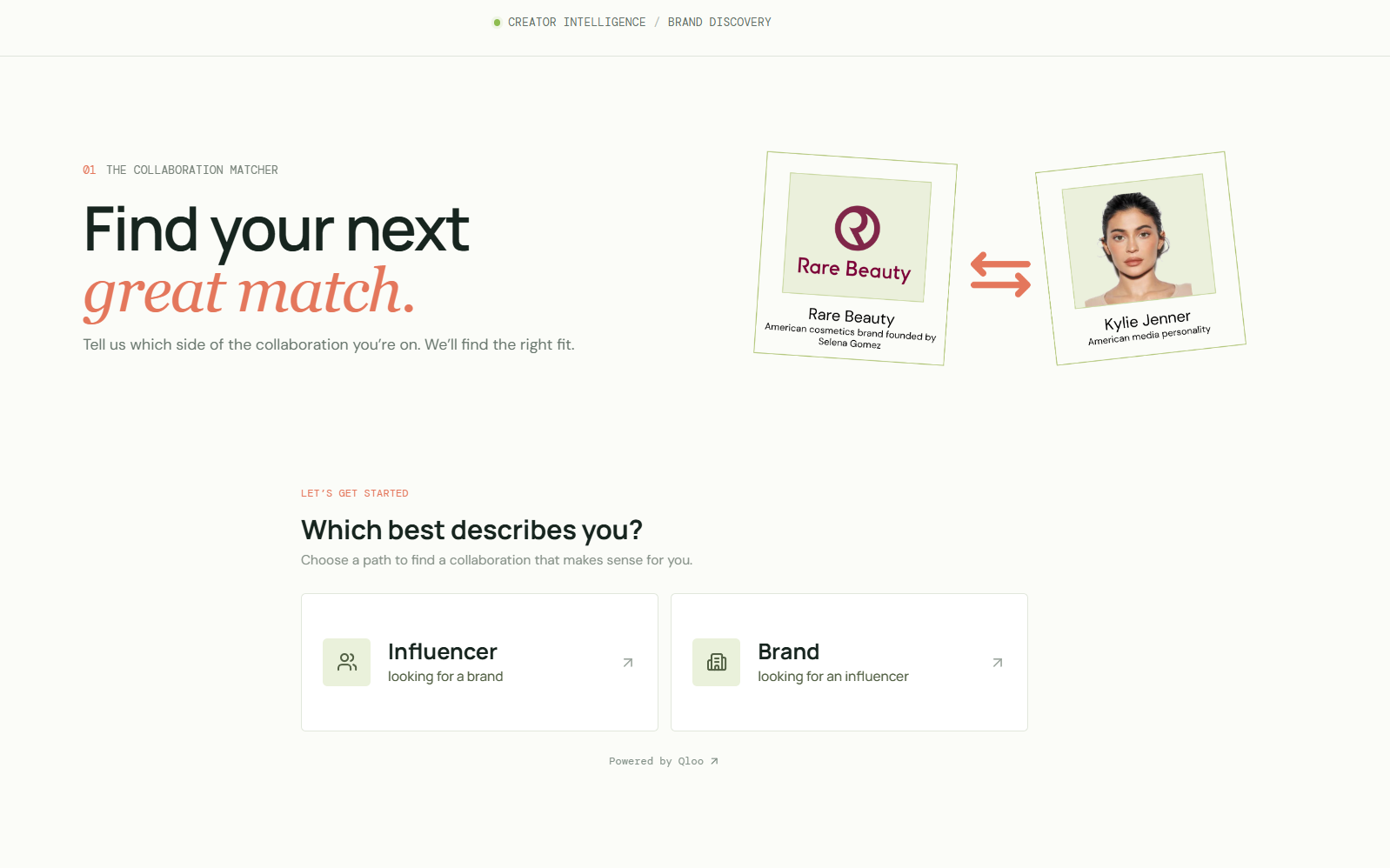
Landing page
-
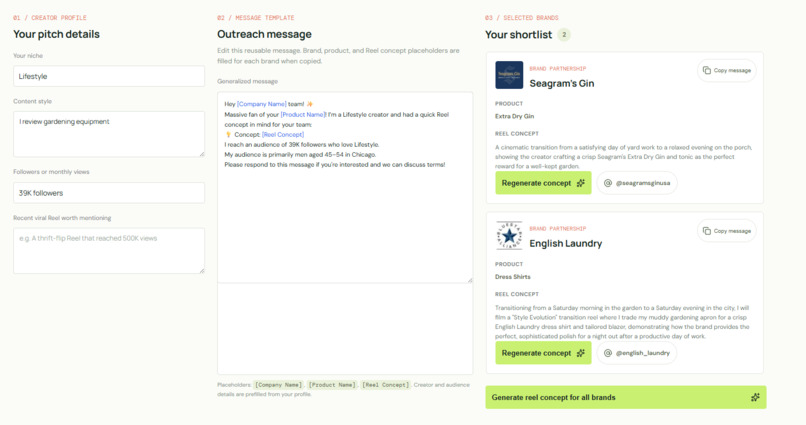
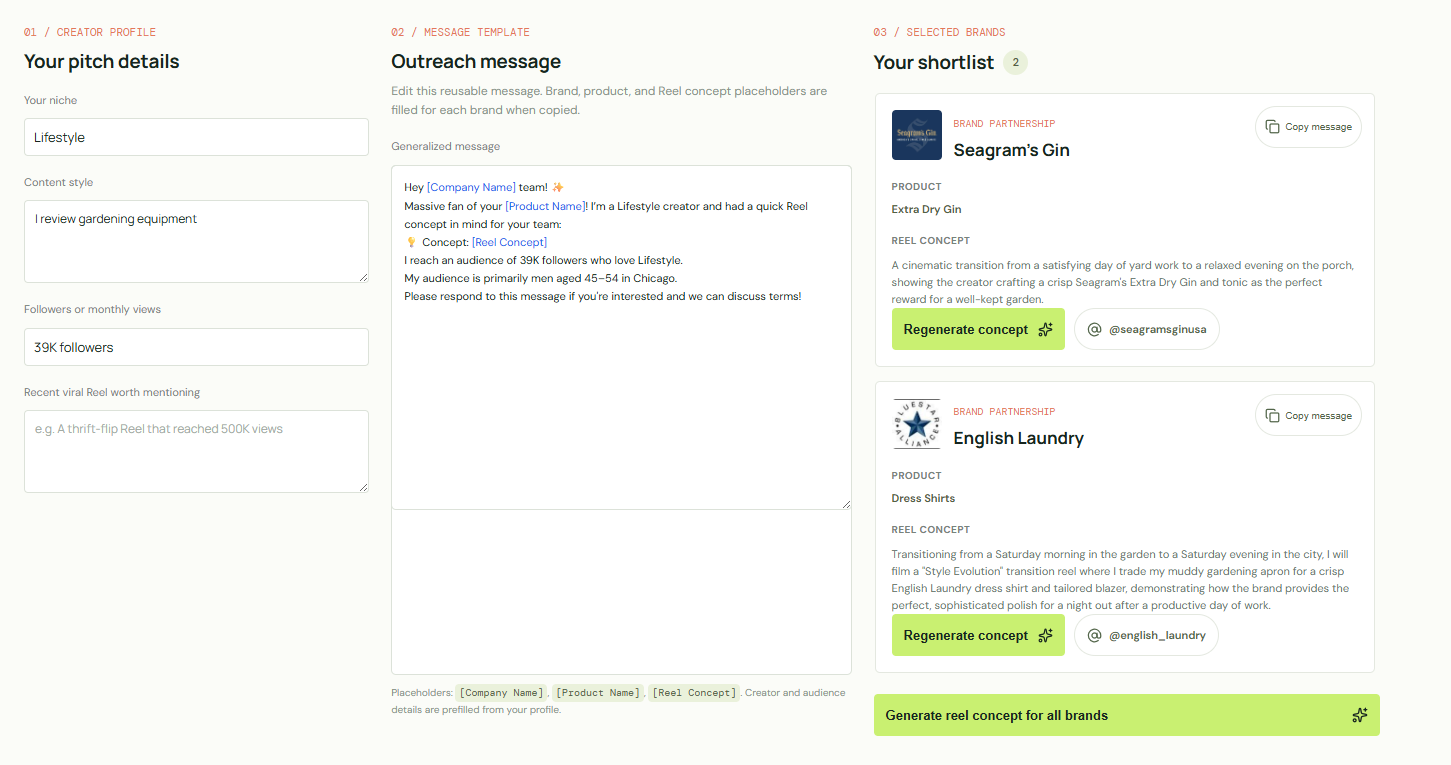
Brand outreach tool for influencer
-
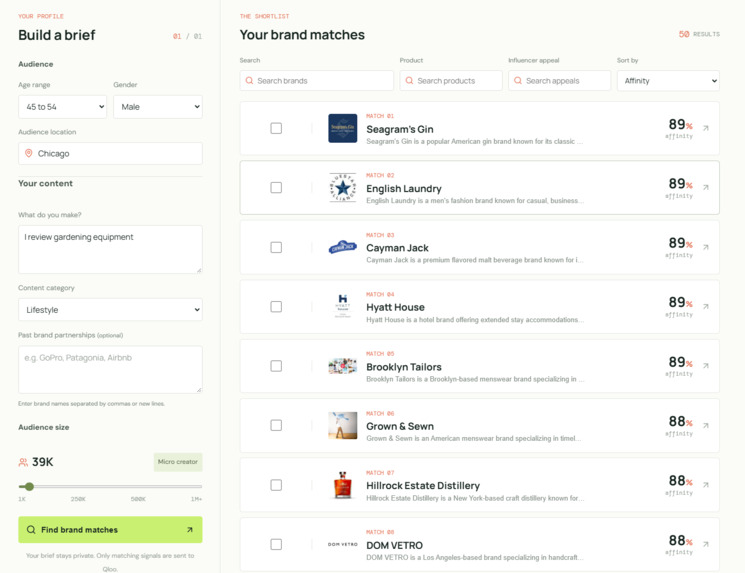
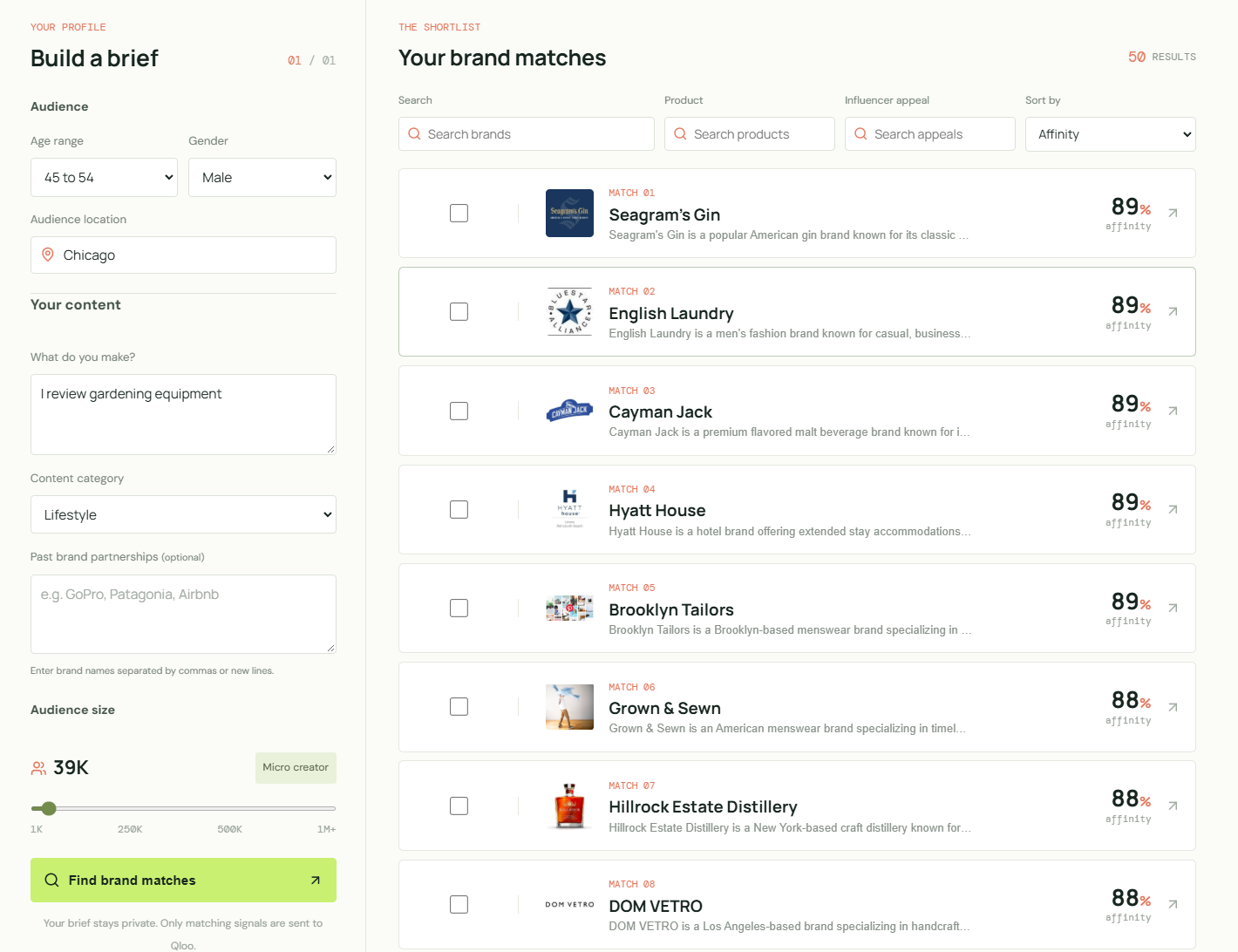
Brand matches for an influencer
-
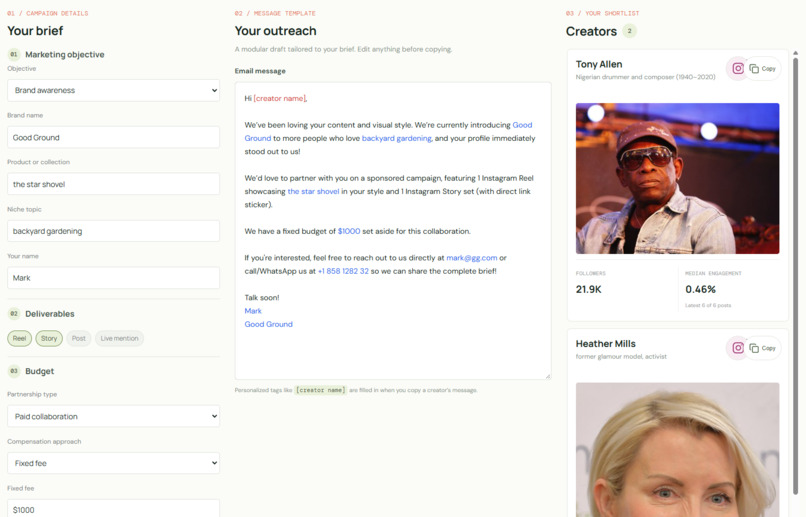
Influencer outreach tool for brand
-
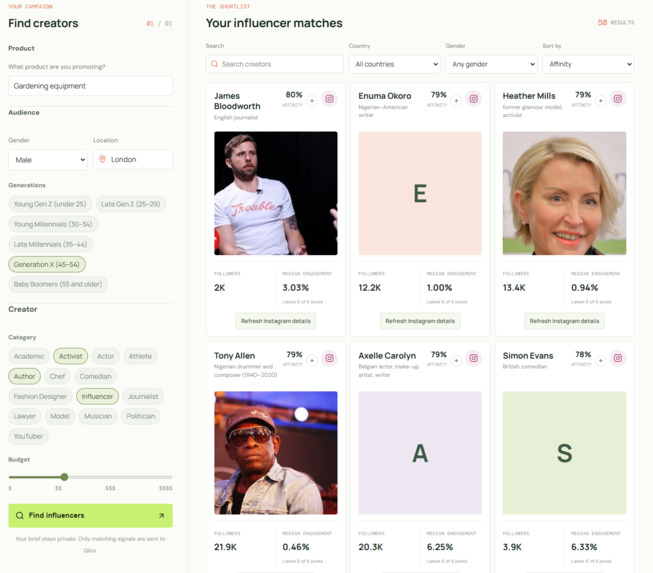
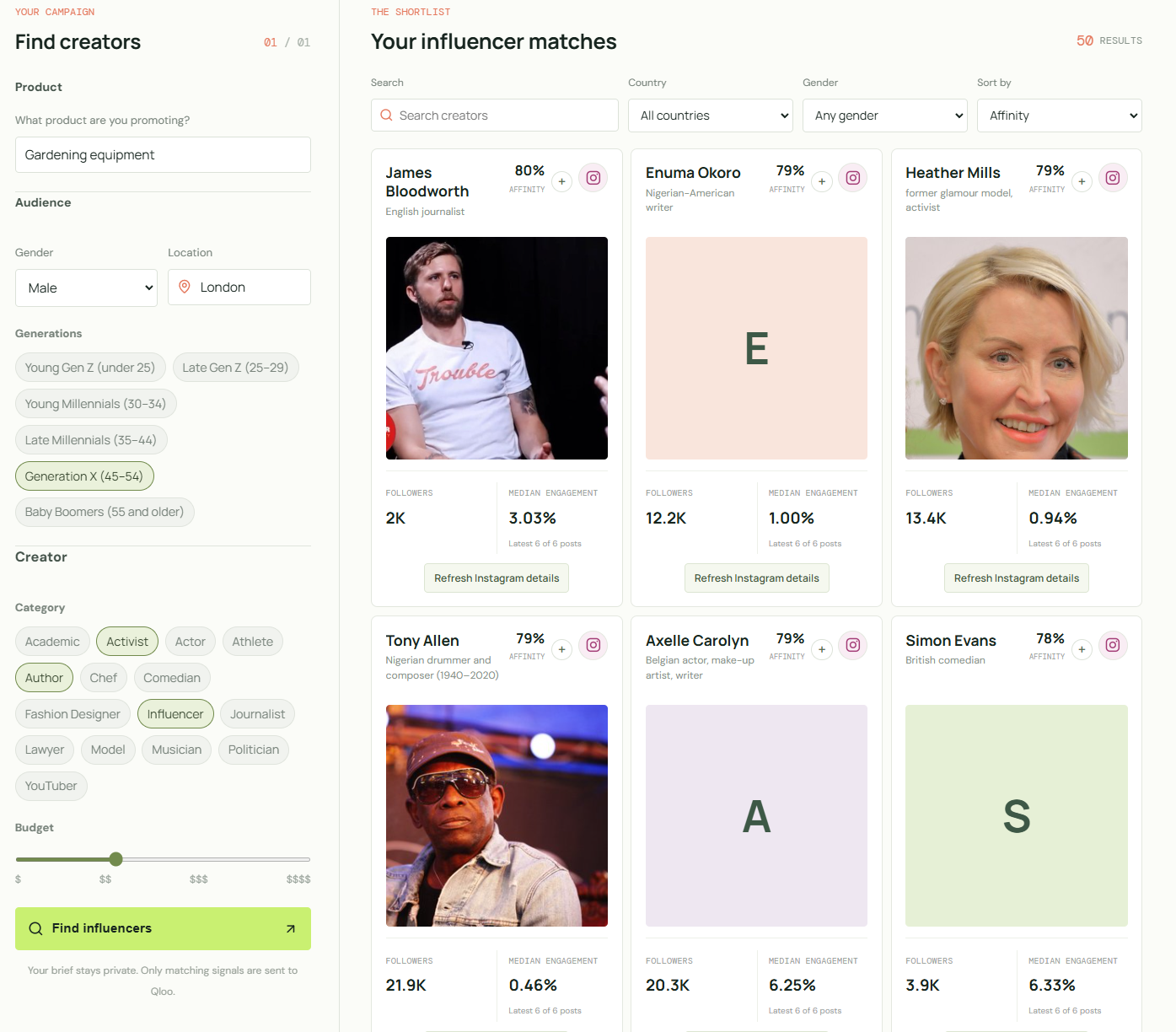
Influencer matches for brands
Inspiration
Budding Instagram influencers struggle with brand discovery. Brands struggle with finding the influencer with the right audience demographics. Currently both resort to manual searching, which could take a lot of time and effort. As a result, influencers give up early and wait for brands to find them. Brands on the other hand splurge on famous creators and end up advertising to similar audiences, losing the potential increase visibility to a completely different, yet compatible cohort of customers.
What it does
Matcha is a discovery, shortlisting and outreach tool to forge better influencer <-> brand partnerships using Qloo's taste intelligence.
- Discovery: Matcha helps creators find brands that fit their audience and helps brands discover creators aligned with their products and style.
- Shortlisting: It facilitates with the shortlisting process by showing brand details and creators follower count and engagement rate.
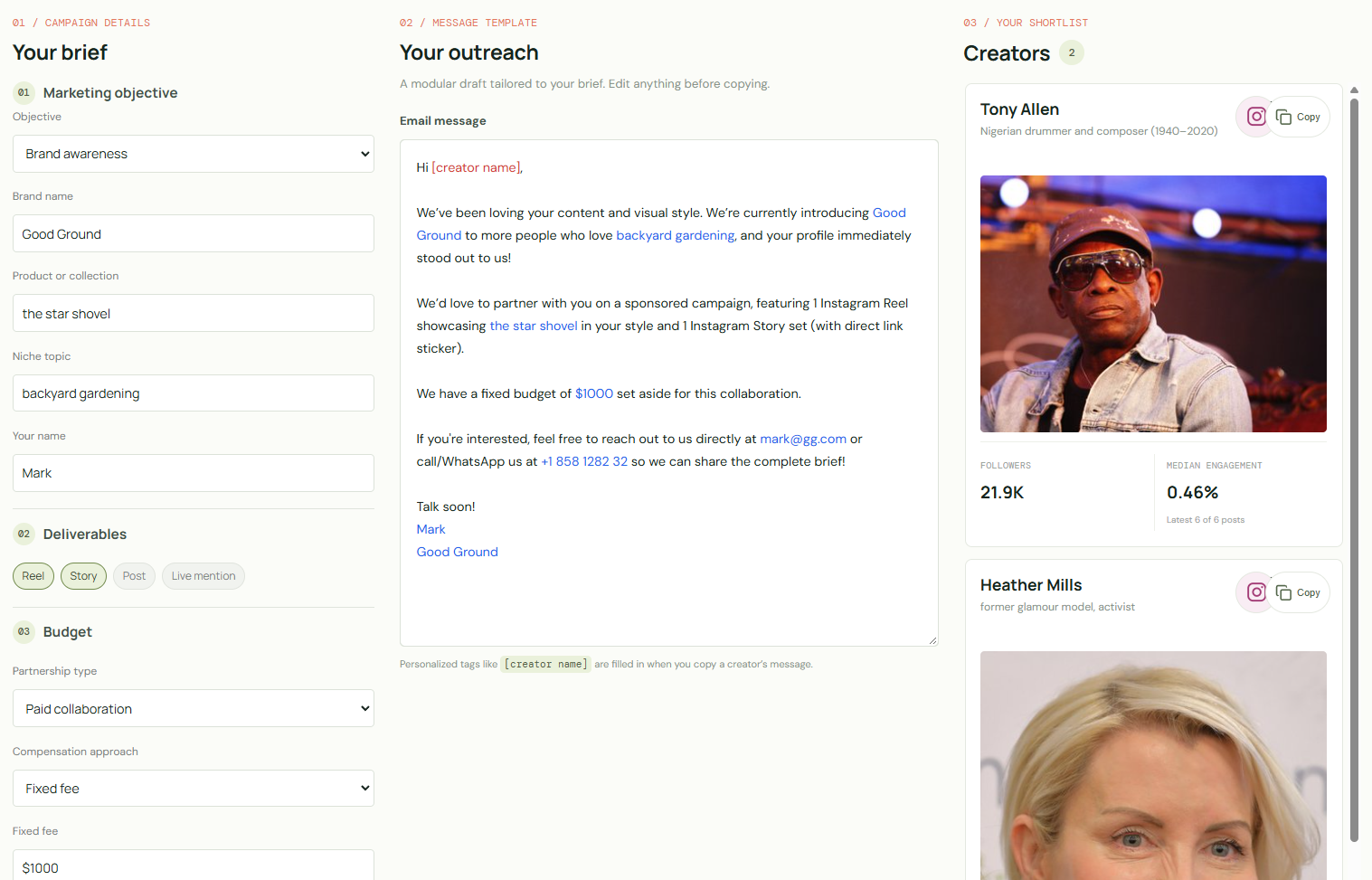
- Outreach: Matcha can generate brand-specific Reel concepts and turn them into editable outreach messages. For brands, it provides creator recommendations and tools to support their outreach process.
How we built it
We built Matcha with a React and Vite frontend and an Express server. Qloo powers audience-affinity and brand-discovery recommendations. The server handles API requests and keeps credentials out of the browser. We also integrated Gemini to generate Reel concepts grounded in available brand context and creator profiles, and Apify to retrieve Instagram creator details.
Challenges we ran into
- Product Positioning: An in depth research was conducted into the way influencer marketing works to asses what brands look for in an influencer marketing campaign and what influencer look for in their partnerships with brands. At first, the focus was only on influencer reaching out to brands. However this will attract only a small population, since most influencer partnerships are inbound. We consciously built both angles of approach to collect data and further improve the recommendations that the product can provide.
- Utilizing Qloo's signal input: An influencer cannot match brands just based on their niche. A brand cannot find it's audience just based on their product. Integrating as much signals as possible to accurately define a brands marketing intent was a challenge. Thanks to the options provided to pass multiple demographic signals into the Qloo API, we were able to ensure that marketing campaigns are targeted for the audience that the brand wants to cater to.
- Instagram metrics: Fetching metrics from Instagram is a tricky bit, because Meta has strict web scraping laws. The solution implemented uses an off the shelf Instagram API from Apify. This is still not a polished approach, since the package could be taken down anytime. This although, offers a good temporary solution while we work on getting the official Meta Developer API set up.
- Explainability: This is still an unsolved problem. The Qloo API offers an explainability score for matches. However this often does not turn up in complex semantic search queries. Furthermore, a brand would want to know more information on why an influencer is a good fit for them, without having to do the research themselves.
Accomplishments that we're proud of
We brought brand discovery, creator discovery, filtering, and personalized outreach together in one app. We’re especially proud that outreach can incorporate brand context and creator details, while remaining editable so users can make the message their own. We also made the experience responsive and added support for past brand partnerships as an optional recommendation signal.
What we learned
We learned that good matching depends on more than a single metric: audience interests, cultural affinities, product context, and creator style all help make recommendations more relevant. We also learned that generated content needs clear constraints and enough room in the response to be useful, and that preserving context between discovery and outreach is essential to a smooth user experience.
What's next for Matcha
The north star for Matcha is to be a mediator between influencer and brands, where the Matcha team controls the contracting process after shortlisting. There are also considerations to explore an influencer marketplace model, where the influencer can post their rates for deliverables and brands can reach out to them and vice versa. Here are a few near term improvements that will be worked on -
- Testing: A lot of testing has to be done from influencers and brands to ensure that the recommendations are relevant across geographies and industries
- Improved outreach: Improve outreach email to add demographic match details returned by Qloo
- Enhanced ranking: Ranking brands and influencers based on likelihood of partnership along with affinity
- Auto-capture signals: Ability to capture signals automatically based on the influencers and brands instagram profile.
