-
-
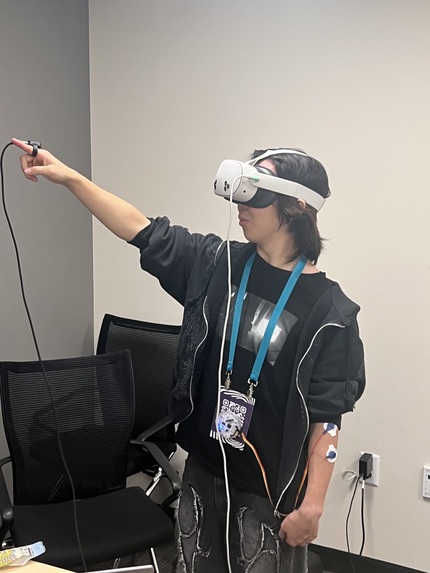
Ad astra!
-
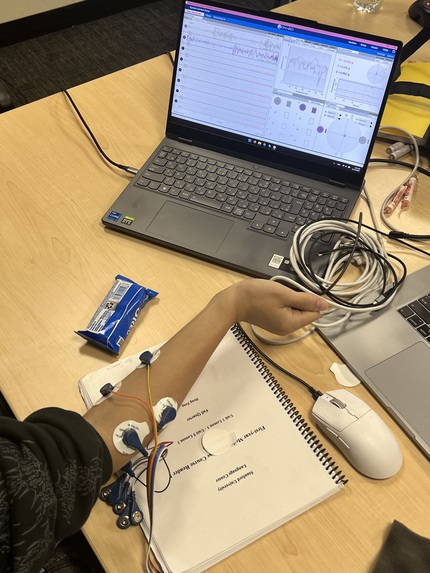
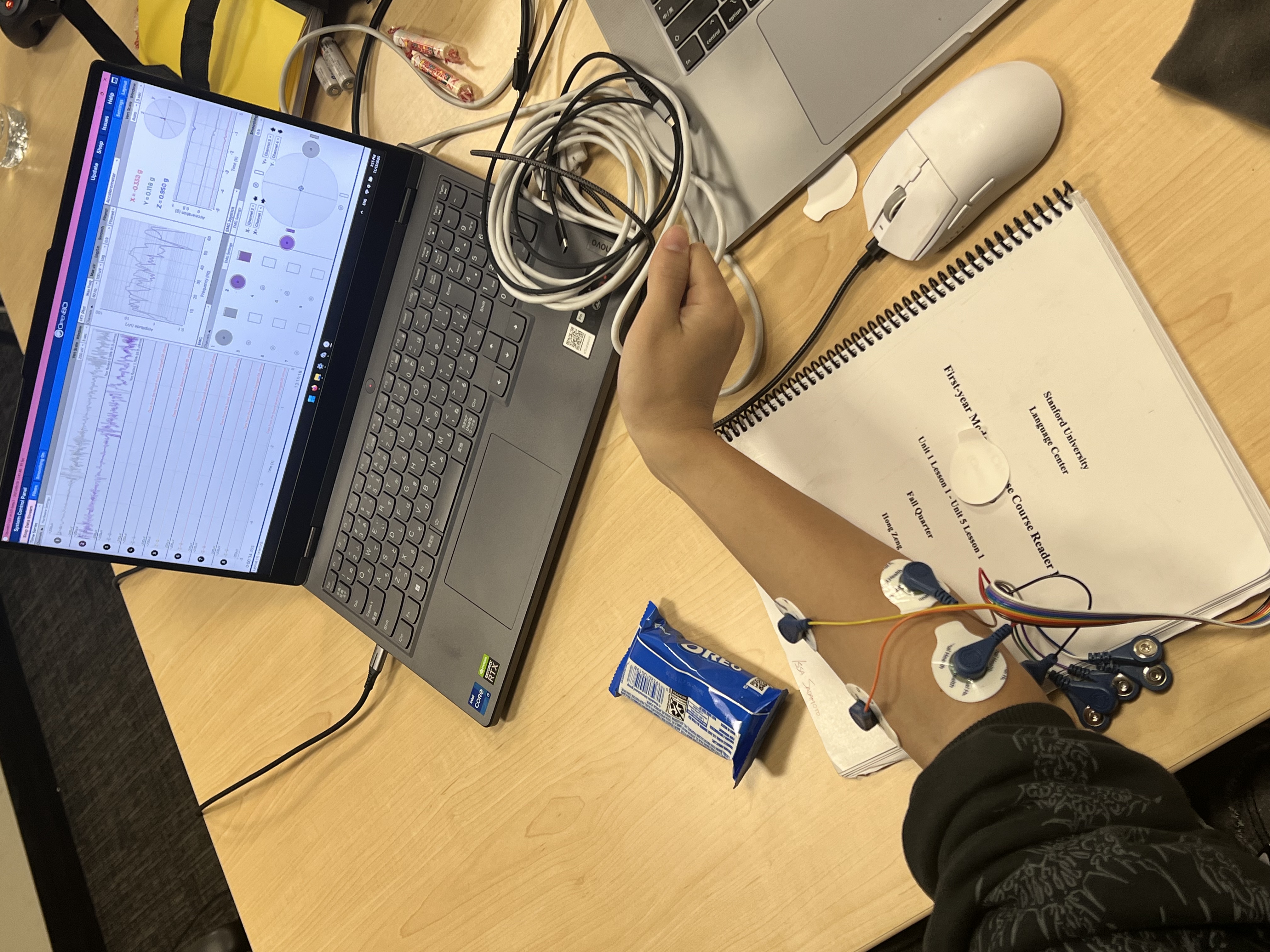
EMG sensor capture!
-
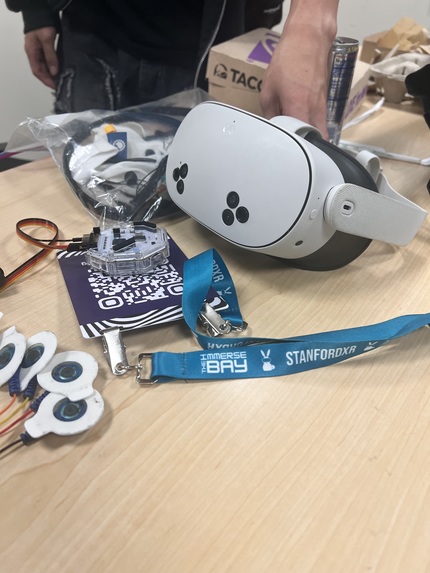
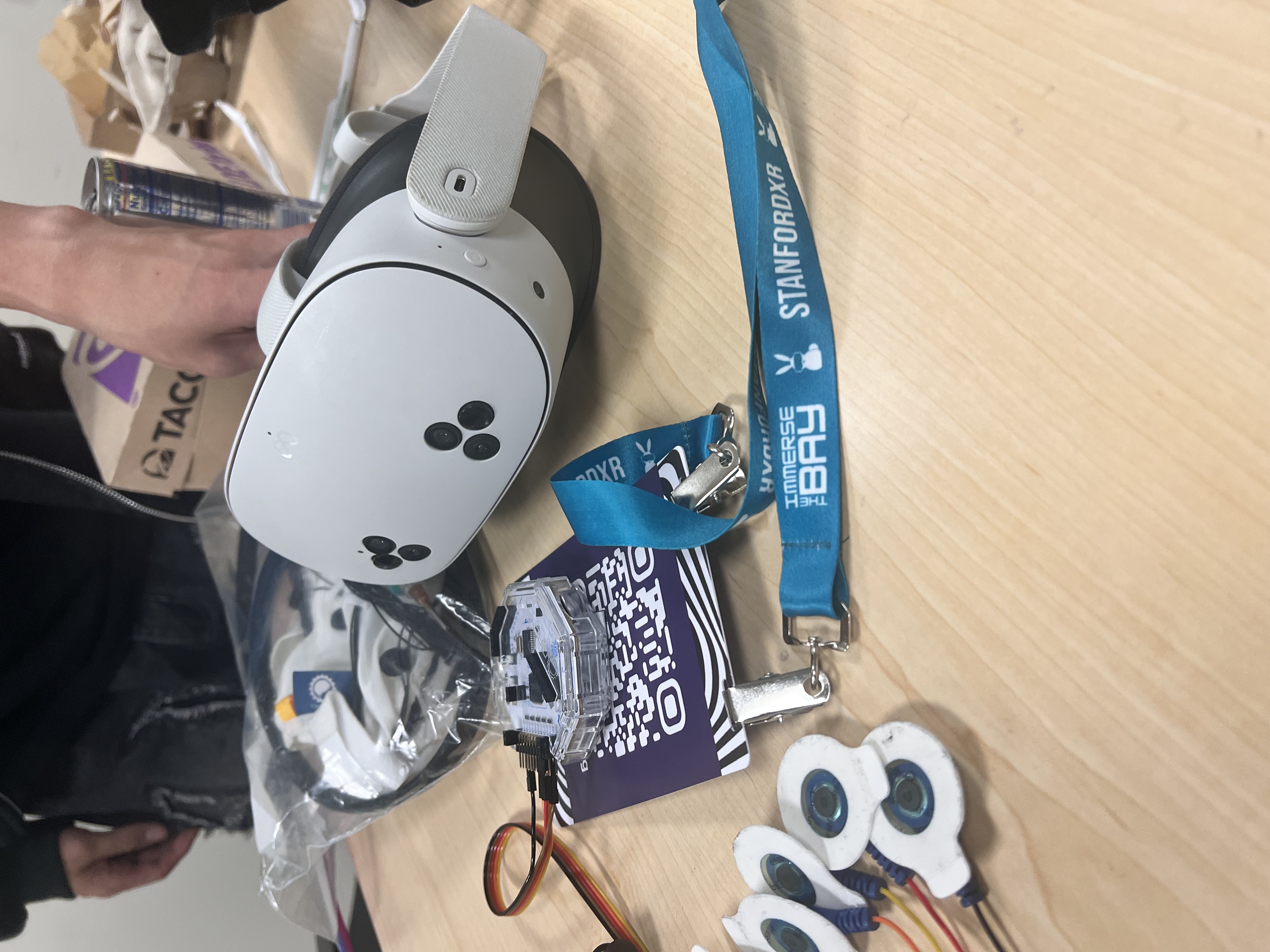
Hardware stack!
Inspiration
We wanted to use VR's unique ability to immerse players into fantastical, enhanced worlds. The theme of "down the rabbit hole" into the world of Alice in Wonderland, where things such as spatial locomotion and relative size change all the time, inspired us to create a similarly fantastical world through VR, mapping sensory inputs to functions we typically don't associate them with.
What it does
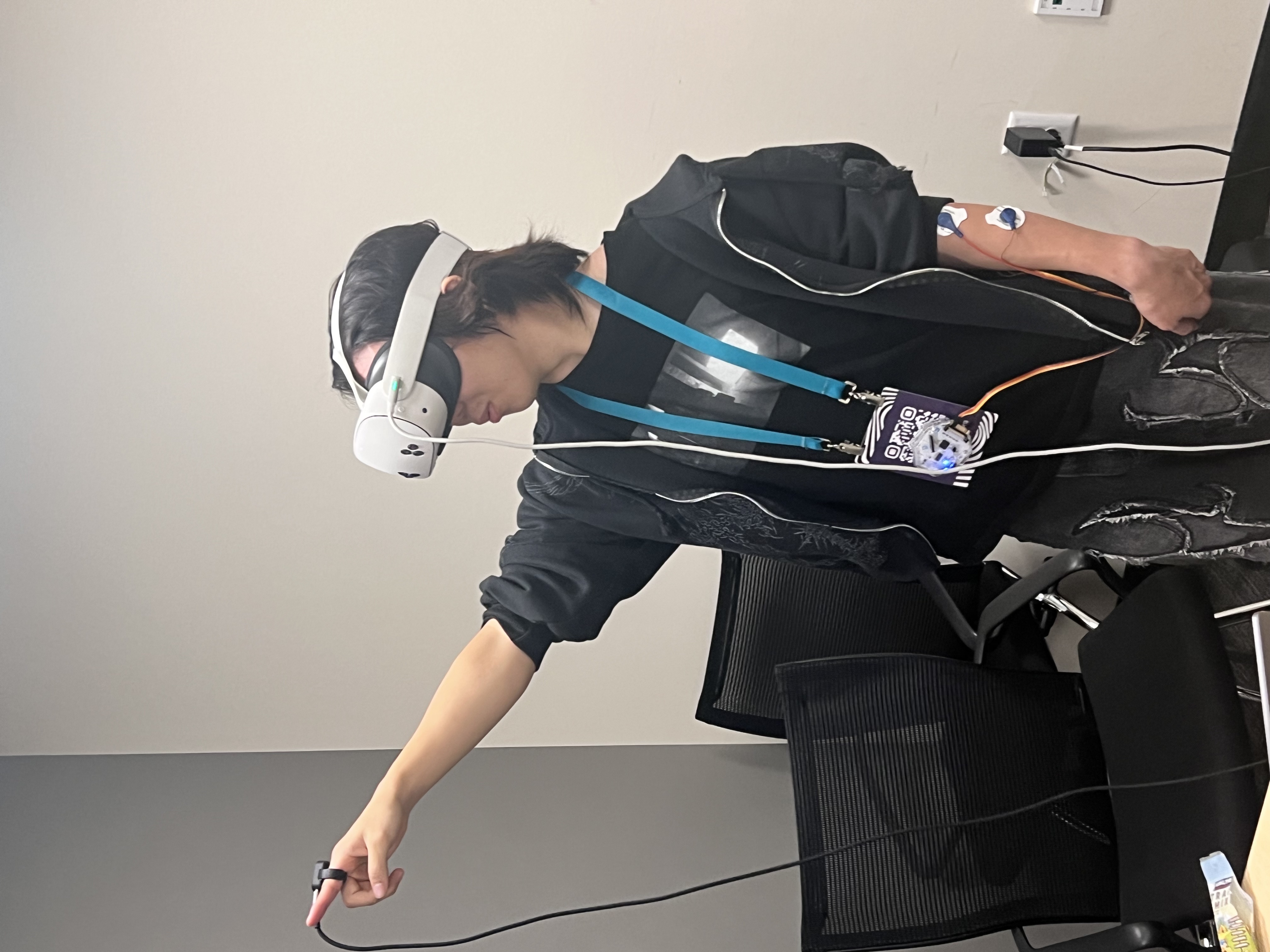
We create a controller-free world where your hands are completely free, with full freedom of movement along the world using a mix of EMG muscle state and head rotation. In a world of complete darkness, you must rely on haptic feedback and sound in order to traverse your way to the exit, with users building up a map of their worlds as they progress through the environment.
How we built it
For hardware, we rely on a Quest 3S for the VR experience, OpenBCI's Cyton to capture EMG sensor input stream, and Afference's Ring in order to direct tactile feedback on the object they touch, without any controllers. We use Unity to calculate all the inputs/outputs and to create the world.
Challenges we ran into
Interfacing with all the different pieces of hardware, each with their own different methods of communication, was a challenge to work through. We connected UDP data stream of muscle tension, Bluetooth LE actuator, and the Meta SDK, to demonstrate a unified approach to sensing.
Accomplishments that we're proud of
We hacked on cutting-edge hardware: these ways of interacting with the senses are previously unheard of. We created a complete unity scene, connected all mediums of input/output, and the final project is actually aesthetically cool and fun to explore! It was both of our first hackathons, so it was cool to experience developing something new on a time crunch and being realistic with what we could do!
What we learned
Neither of us had any Unity experience prior to starting the hackathon, and as such, we learned how to use Unity from scratch through this experience. For the OpenBCI and Afference hardware, we had no clue these things existed, so we also learned how to interface with them to provide input/outputs for the player. Neither of us have any experience developing applications for VR, so that was also a new experience for us to enjoy.
What's next for matcha latte
(As international students we are desperate for internships please) Issa is interested in utilizing the experience developing for VR to extend his current personal project "Xylo", a virtual character existing in many different forms of media (including video, digital illustration, hologram projection, a text-to-text/text-to-speech/speech-to-speech conversational partner), into a VR/AR application so that users have deeper immersion when interacting.
Thomas wants to explore Symbolic Systems, especially how neuroscience and CS can work together in interesting ways for education and our lives. VR and brain interfaces and learning and sensory feedback?

Log in or sign up for Devpost to join the conversation.