-
-
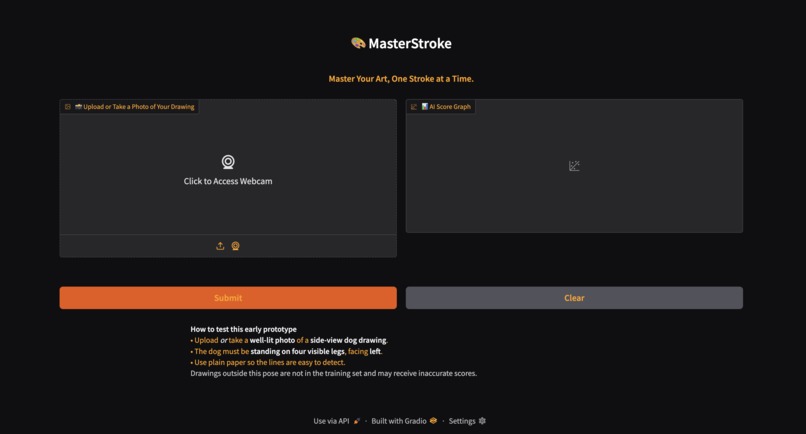
MasterStroke WebApp
Inspiration
We were inspired by a few ideas. First, we wanted a project simple enough to build in one day while learning how machine learning models are created and trained. One of our teammates had prior experience with TensorFlow through robotics programming, and we decided to apply it to a new challenge. In our community, many schools face funding cuts affecting art programs and elective classes. Often, art classes are staffed by teachers without specialized training. We thought AI could offer an innovative solution — a tool that helps any teacher, even without an art background, guide students to improve their artistic skills. That’s how MasterStroke was born.
What it does
MasterStroke is an AI-powered tool that evaluates students' drawings and gives feedback based on skill level — Beginner, Intermediate, or Advanced. Students upload or take a photo of their artwork, and the system, powered by a Teachable Machine model and TensorFlow, analyzes the drawing and recommends personalized resources to help them improve. It’s designed to support teachers without an art background by providing guided, skill-based feedback for student growth.
How we built it
We used Google’s Teachable Machine to train a custom image classification model to evaluate art skill levels. We exported the model in TensorFlow format and integrated it into a Python application using TensorFlow and Gradio. The frontend was built with Gradio Blocks for a responsive UI, while the backend handles image preprocessing, model inference, and score visualization using Matplotlib. We hosted the app using Gradio’s share link, making it accessible for testing and feedback.
Challenges we ran into
We had to carefully create sample images for each skill category and make sure they matched the right bucket. At first, we trained the model with a small number of samples, but the results were unreliable, so we spent extra time creating and organizing more training data. We also ran into setup issues with Python and faced challenges getting our TensorFlow model to work smoothly with Gradio. Another problem we discovered was that when users took a picture with the webcam, the images were mirrored, which caused inconsistent predictions. We had to debug and fix this to make the app more reliable.
Accomplishments that we're proud of
One accomplishment that we are both proud of is that we have become proficient users of Gradio, Teachable Machine, and VsCode. We have also learned a lot about teamwork working together, splitting the responsibilites equally. Prior to the Hackathon, we were experimenting on Gradio with different projects using OpenAI. However, a few days of the Hackathon, we were encouraged to experiment more, be creative, and never give up.
What we learned
Through this project, we learned how machine learning models are trained and why having enough quality data is critical for good performance. We gained hands-on experience working with TensorFlow, Gradio, and Python to build and deploy a real application. We also learned how small technical issues — like webcam image mirroring or setup problems — can have a big impact, and how important it is to test carefully and debug systematically. Finally, we saw how AI can help solve real-world problems, like making art education more accessible for schools with limited resources.
What's next for MasterStroke
Next for MasterStroke, we hope to eventually be able to grade different drawings of all different levels. We would use a different model, other than Teachable Machine, that already has knowledge of art. This way, the drawing would not be limited to only dogs, but to all different kinds of drawings. We also hope to be able to partner with professional artists, to create personalized lesson plans for all different levels of skill. Eventually, we could spread MasterStroke all over the world, helping kids and saving lots of money, which can go to other parts of the school. Finally, we could make art a lot more hands-on and fun through gamification.


Log in or sign up for Devpost to join the conversation.