Inspiration
As a 20-something navigating early-career finances, I realized how little formal education prepares us for real-world money management—budgeting, investing, credit, taxes. Friends in their 20s-30s shared the same frustration: overwhelmed by jargon, unsure where to start, and no structured way to build habits. I wanted to create something accessible: short, daily lessons (fit for busy schedules) and hands-on tools that skip the fluff and focus on what actually matters.
What it does
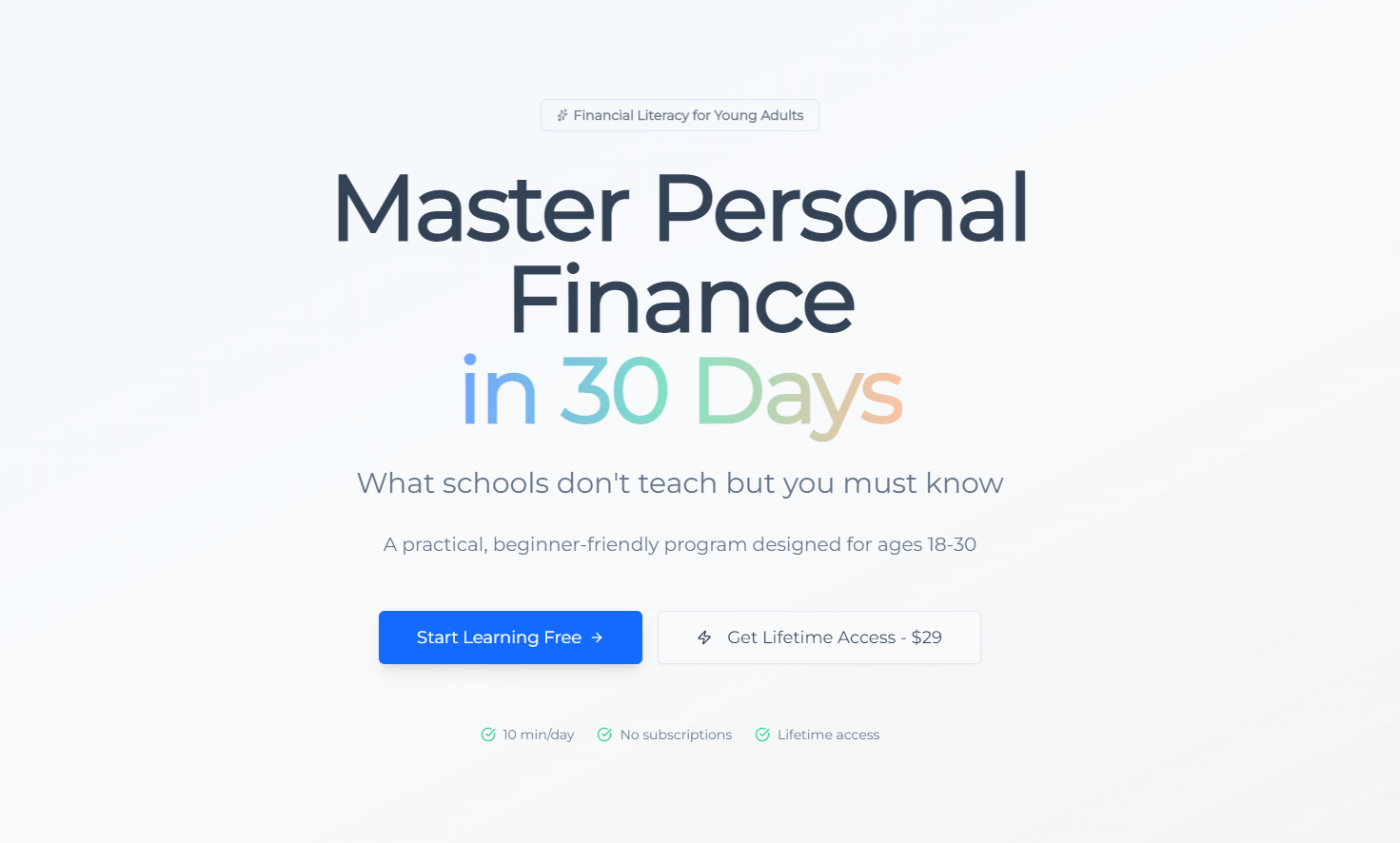
PersonalFinance 101 is a 30-day web app that teaches core financial skills through 10-minute daily modules (budgeting → saving → investing → credit → taxes → insurance). It includes AI-powered Q&A for instant answers, practical calculators (budget creator, emergency fund planner, debt payoff tool), and a financial health score to track progress—all for a one-time $29 fee, no logins or subscriptions.
How we built it
I started by mapping the 30-day curriculum to cover high-priority topics for young adults, then designed a card-based UI for daily lessons. For functionality: used HTML/CSS/Tailwind for responsive design, JavaScript for calculator logic and progress tracking, React for modular components, OpenAI API to power conversational Q&A (stripping financial jargon), and Stripe API for seamless one-time payments. I built the progress bar to auto-update as users complete lessons, and integrated Chart.js to visualize financial data in exercises.
Challenges we ran into
The biggest hurdle was balancing depth and brevity—ensuring 10-minute daily lessons were actionable without oversimplifying critical topics (e.g., basic investing or tax fundamentals). Another challenge was making calculations (emergency fund, debt payoff) accurate yet easy to understand, and ensuring payment processing was frictionless (no account creation required). Persisting session data (progress, exercise inputs) without user logins also required creative client-side storage solutions.
Accomplishments that we're proud of
Creating a cohesive learning journey that fits into busy lifestyles—users don’t need to carve out hours to learn. The AI Q&A tool delivers clear, jargon-free responses (tested with friends who had no financial background), and the calculators turn abstract concepts into tangible action steps. Most importantly, the $29 one-time fee model keeps it accessible—no recurring subscriptions, just lifetime access to all content.
What we learned
I deepened my understanding of user-centric design: young adults prioritize simplicity, speed, and relevance over complex features. I also learned to translate financial concepts into plain language—avoiding terms like "APY" or "tax brackets" without context. Technically, I gained hands-on experience with API integration (OpenAI/Stripe) and session-based data management (critical for no-login functionality).
What's next for this project
First, expand the AI Q&A to cover region-specific nuances (e.g., EU vs. US tax basics). Then, add more interactive exercises (e.g., credit score simulators) and refine the financial health score to factor in lesson engagement. I also plan to add printable versions of budget templates and lesson summaries, and test the app with a wider group of young professionals to refine content for undercovered topics (e.g., gig economy taxes).

Log in or sign up for Devpost to join the conversation.