Inspiration
As a professional who’s navigated tense salary negotiations and high-stakes B2B deals, I saw a gap: most people learn negotiation through trial-and-error, with real consequences. I wanted to build a safe space to practice—one that mirrors real-world dynamics, adapts to how you negotiate, and gives actionable feedback rooted in proven frameworks like BATNA and ZOPA. The goal? Make expert negotiation training accessible to anyone, no expensive workshops required.
What it does
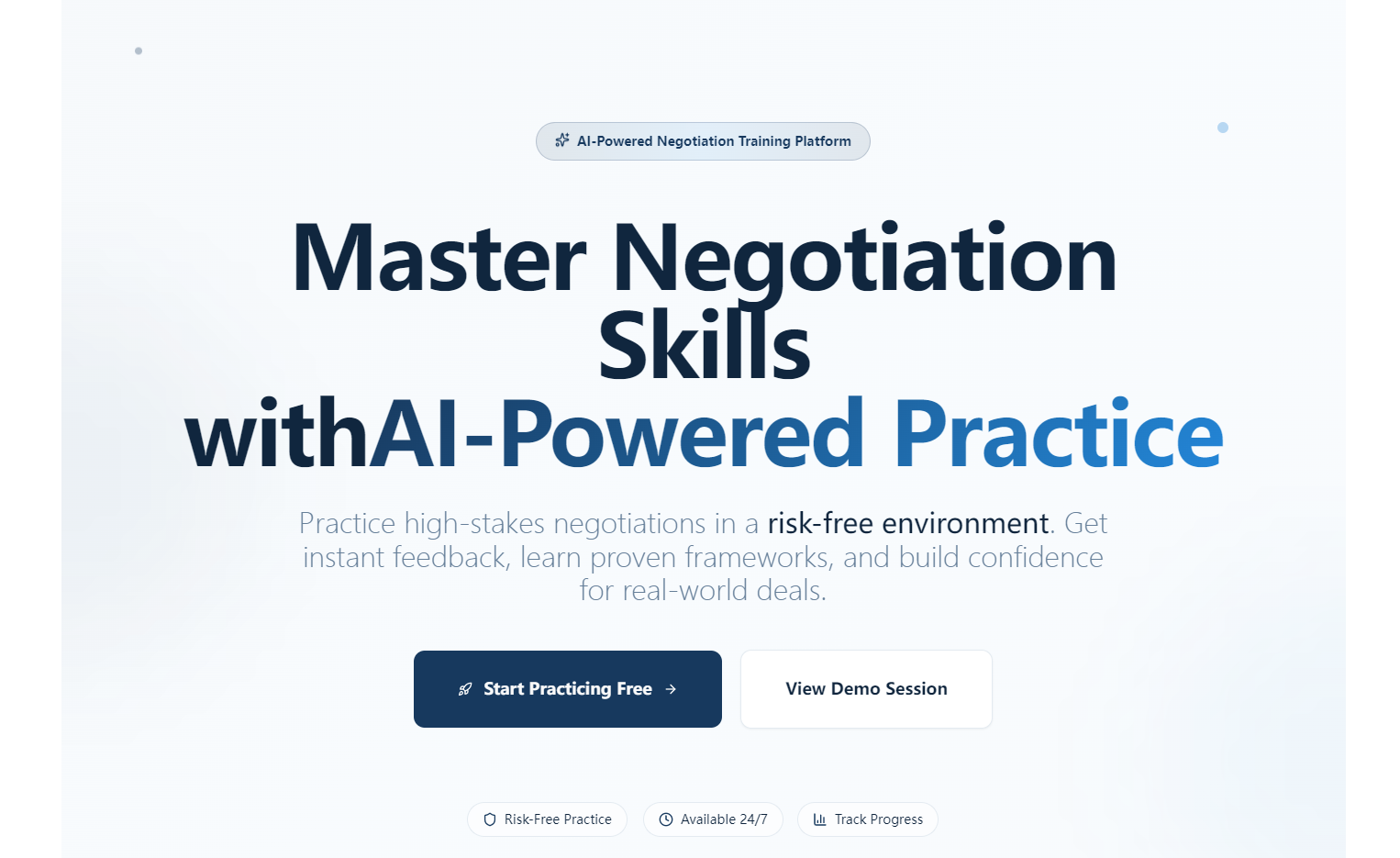
NegotiationSim AI lets users practice 3 core negotiation scenarios (salary, B2B, retail) with AI opponents customizable by difficulty (Beginner to Advanced) and style (Competitive, Aggressive, etc.). It delivers real-time feedback on strengths/weaknesses, contextual framework guidance, and a scored outcome summary—plus session history/replay to track growth. Guest users get limited preview access, while subscribers unlock full customization and unlimited practice.
How we built it
We started by mapping core user journeys (e.g., guest preview → scenario selection → AI config → simulation → results). Frontend: React for the interactive conversation flow and feedback panels. Backend: Node.js/Express to handle AI logic, scoring, and session storage (MongoDB). OpenAI API powered adaptive AI responses, calibrated to difficulty/style rules. We integrated payment APIs for the subscription page and AWS for cloud hosting to ensure scalability.
Challenges we ran into
The biggest hurdle was calibrating AI response logic—ensuring higher difficulty levels delivered meaningful, not just harsh, counterarguments, and that different styles (e.g., Cooperative vs. Aggressive) had distinct, consistent conversation patterns. We also struggled with real-time feedback timing: making sure feedback felt immediate but not intrusive, and aligned with negotiation frameworks contextually. Guest/paid access boundaries also required tight validation to avoid feature leaks.
Accomplishments that we're proud of
We built a fully functional platform where guest users can jump into a sample simulation without login—lowering friction to try. The AI adapts seamlessly to user choices, and the real-time feedback ties directly to proven negotiation tactics (not generic advice). We also created a replay feature that highlights missed opportunities, turning every practice session into a learning moment. Most importantly, beta testers reported feeling more confident in real negotiations after just a few simulations.
What we learned
Building adaptive AI requires balancing complexity with usability—over-engineering responses made the experience clunky, while oversimplifying lost realism. We also learned the value of user testing early: initial feedback revealed guests wanted clearer guidance on scenario goals, so we added concise context blurbs to the selection page. On the technical side, we mastered integrating third-party APIs (OpenAI, payment gateways) while maintaining secure, scalable backend logic.
What's next for this project
First, we’ll add more scenario types (e.g., vendor contract negotiations) to expand use cases. We plan to refine the scoring logic to include more nuanced metrics (e.g., emotional tone analysis in user inputs). Long-term, we want to add progress tracking dashboards to show users’ growth over time, and explore limited team access for small businesses to train their sales teams. We’re also iterating on the subscription model to include tiered pricing for different user needs (e.g., casual learners vs. professionals).

Log in or sign up for Devpost to join the conversation.