-
-
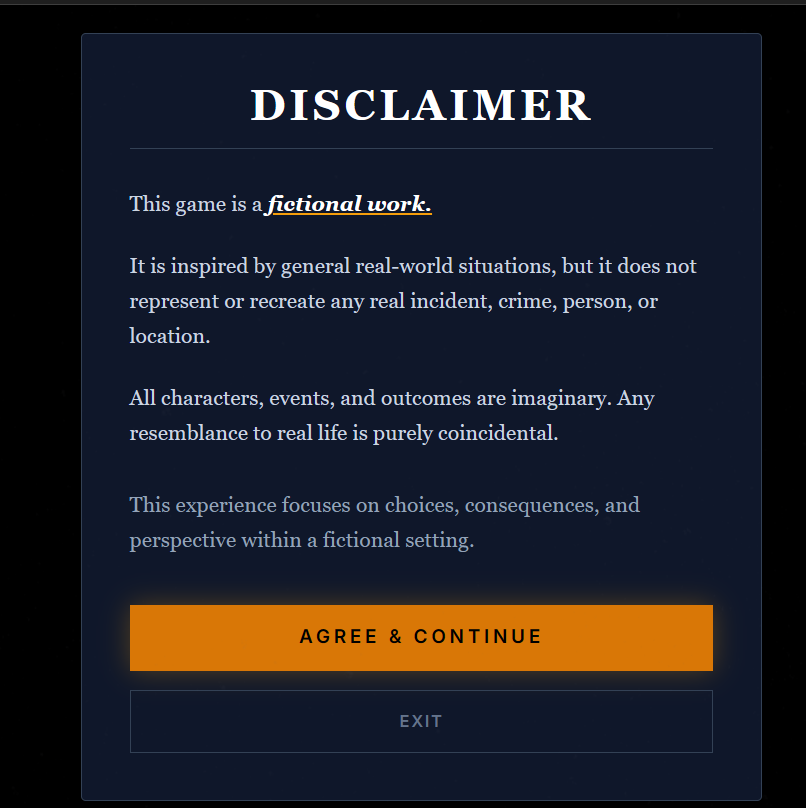
Inspired by real investigative methods, this game presents a fictional narrative created for educational and entertainment purposes.
-
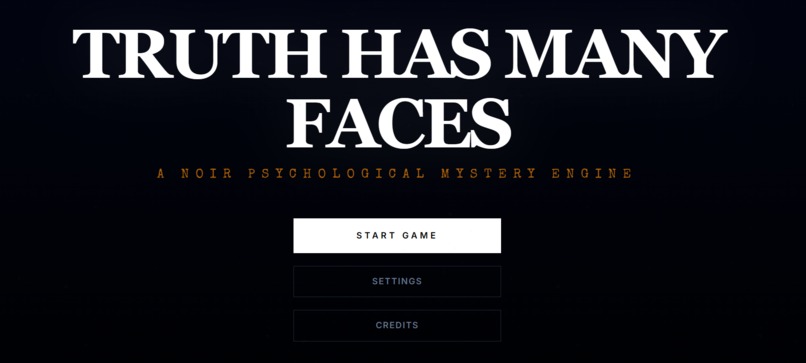
A noir psychological mystery engine where the truth shifts based on perspective. Uncover secrets and challenge your perception of reality.
-
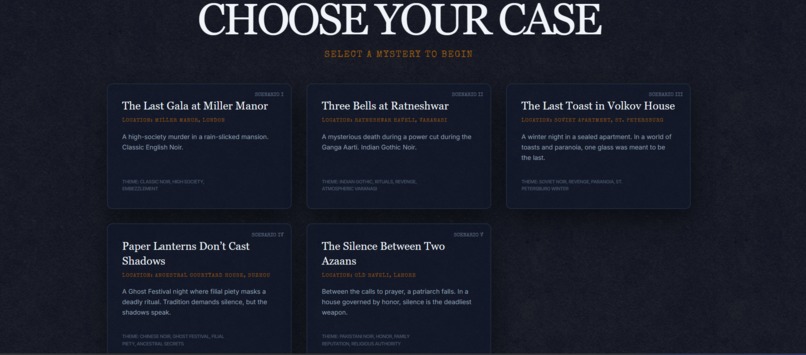
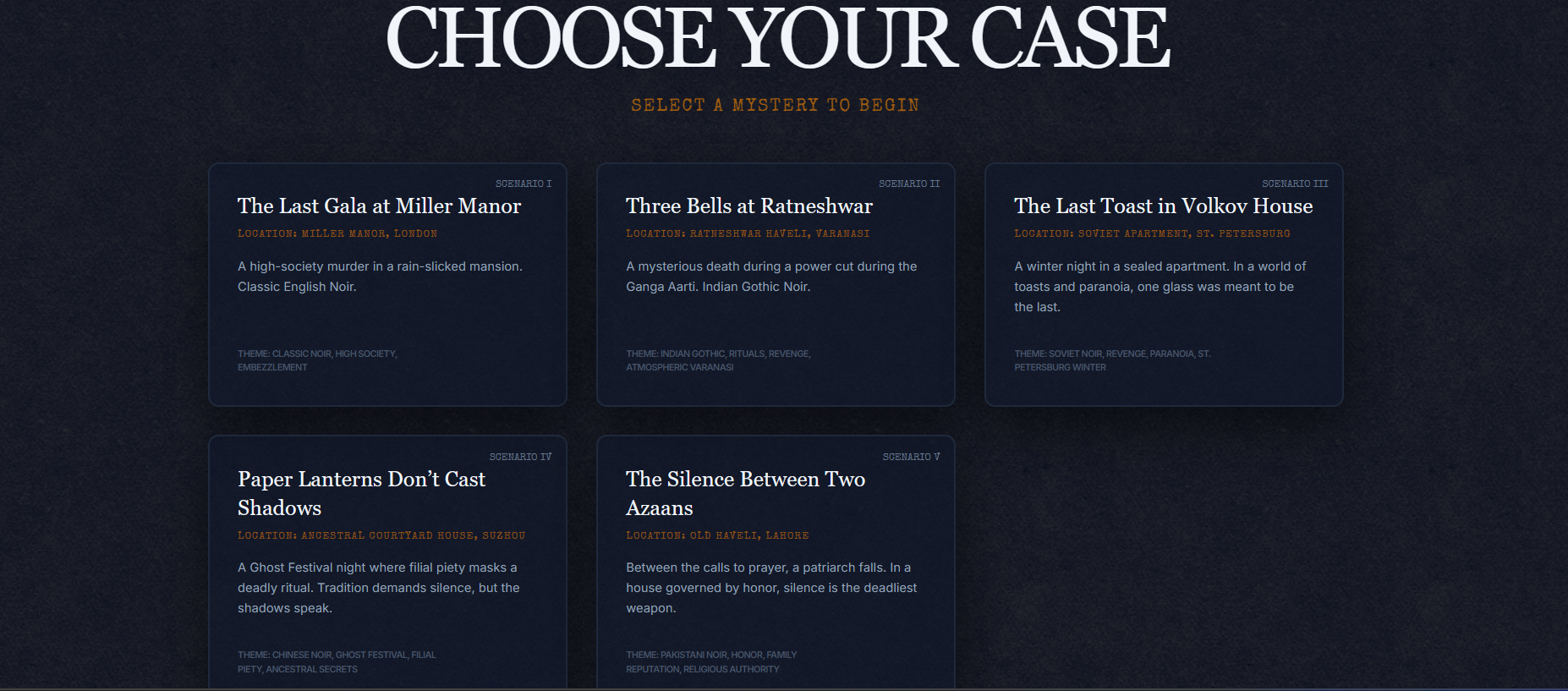
Select from five diverse global mysteries. Each scenario offers a unique cultural noir setting, from London mansions to Lahore havelis.
-
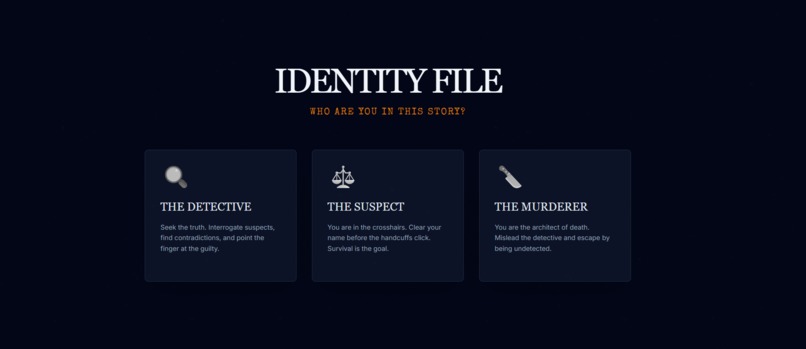
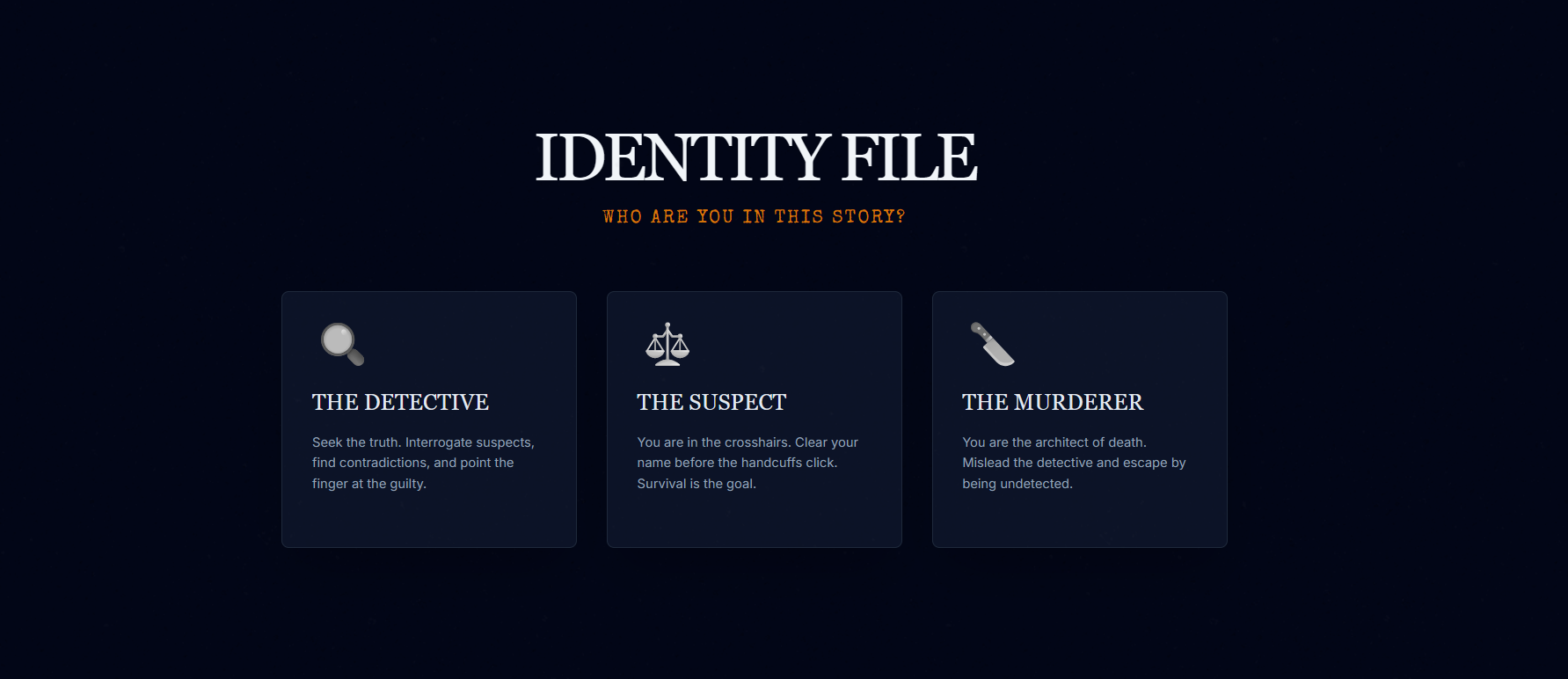
Choose your perspective: seek the truth as the Detective, clear your name as the Suspect, or escape as the Murderer.
-
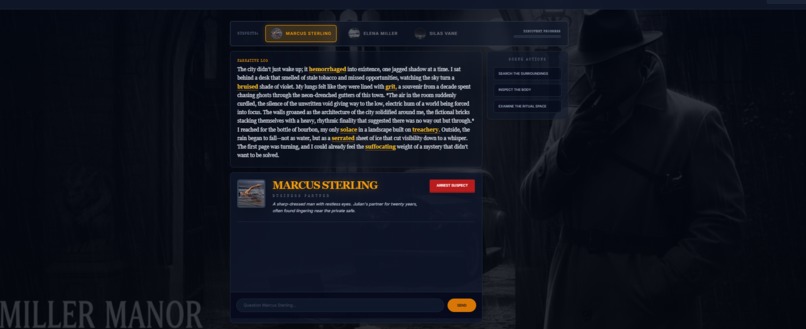
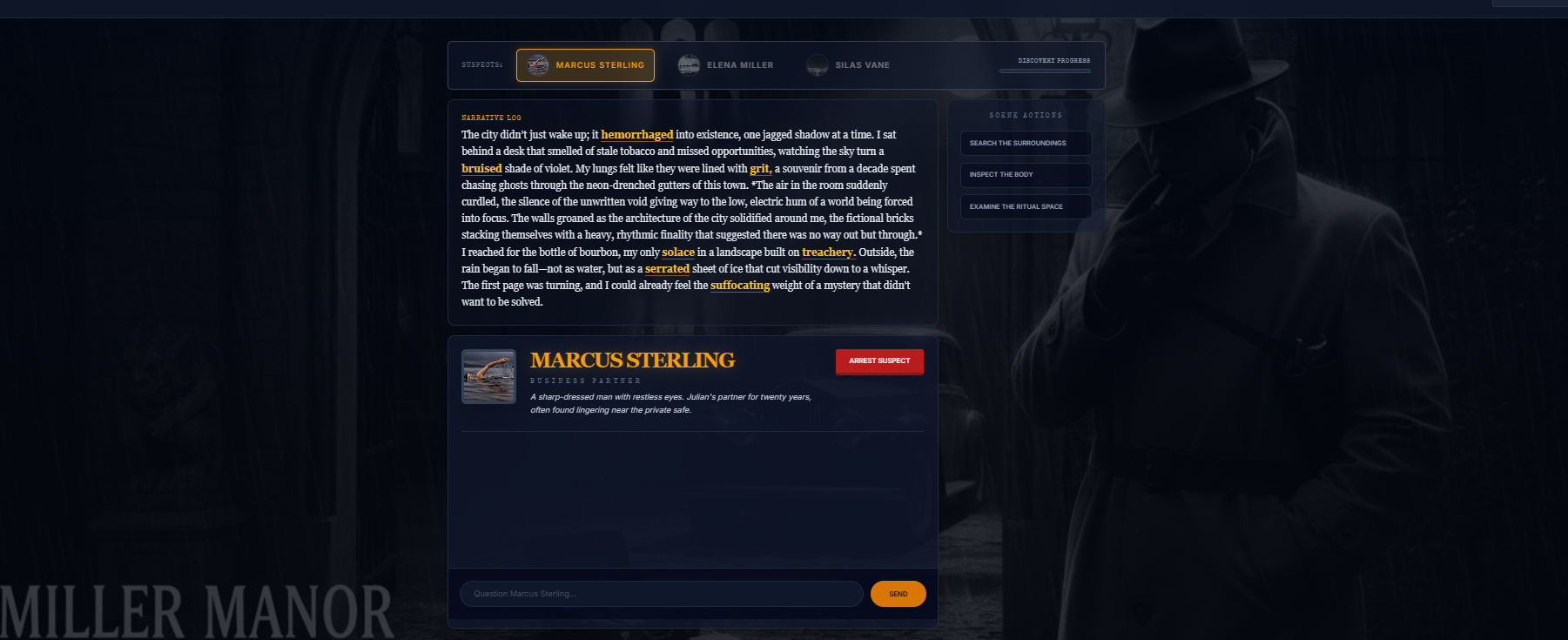
Dive into an immersive narrative log, interrogate key suspects like Marcus Sterling, and perform scene actions to solve the mystery.
-

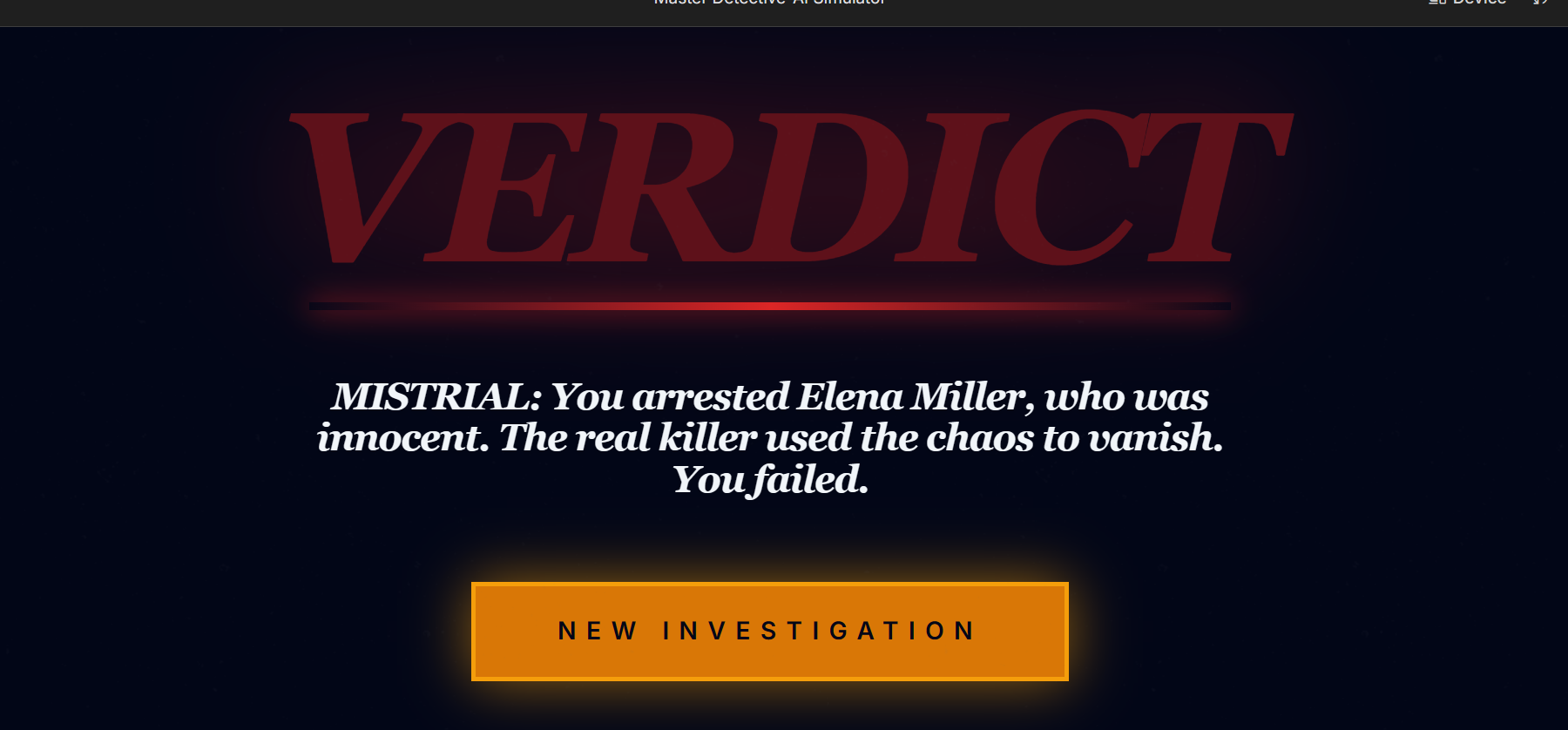
The case concludes with a definitive verdict. Justice is served by arresting the true killer, completing your immersive noir investigation.
-

Failure is a possibility. A mistrial occurs if you arrest the innocent, allowing the true killer to escape into chaos.
-

Invert the investigation: experience the narrative through the victim's eyes. Feel the suffocating atmosphere as your final moments unfold.
-

Step into the killer’s shoes, navigating the heavy air of a fresh crime scene while evading the lead detective’s gaze.




Inspiration
The inspiration behind Master Detective came from classic detective stories and mystery games that reward thinking over reflexes. Most games today focus on speed or graphics; we wanted to build something that challenges the player’s reasoning, observation, and deduction skills. The goal was to make players feel like real detectives—analyzing clues, connecting evidence, and making logical decisions rather than relying on luck.
What it does
Master Detective is a mystery-solving game where players take on the role of a detective tasked with solving cases using logic and deduction. Players investigate crime scenarios by analyzing clues, questioning suspects, and connecting pieces of evidence to uncover the truth. Each decision influences the investigation, requiring players to think critically rather than rely on guesswork. The game emphasizes reasoning, pattern recognition, and logical inference, rewarding players who carefully observe details and make informed choices.
How we built it
We have used different online sources for our project to make it working which comprise of sources like: Youtube ,Google Gemini, Google AI Studio and Google as a search engine. *Programming Language: Python / JavaScript
*Game Logic & Algorithms
*HTML, CSS, JavaScript
Basic UI/UX Design Principles
Challenges we ran into
One of the biggest challenges was designing puzzles that are challenging but fair. Making clues too obvious removes the thrill, while making them too complex frustrates players. Another challenge was maintaining logical consistency—every clue, suspect, and outcome had to make sense together. From a technical side, handling game flow, state management, and user interaction without confusing the player required multiple iterations and refinements.
Accomplishments that we're proud of
We are proud of successfully creating a fully playable detective experience that encourages logical thinking and decision-making. The game presents meaningful choices, where player decisions actually affect progress. Completing the project end-to-end—from idea to execution—within limited time and resources is also a major achievement for us.
What we learned
Through building Master Detective, we learned how important game logic and structure are compared to visuals alone. We improved our understanding of problem decomposition, puzzle design, and user experience. We also learned how iterative testing and feedback can dramatically improve gameplay quality and clarity.
What's next for Master Detective
In the future, we plan to expand Master Detective with:
*Multiple cases with increasing difficulty
*More complex branching storylines
*A scoring or ranking system based on deduction accuracy
*Enhanced UI and sound design for deeper immersion
Our long-term vision is to turn Master Detective into a collection of mystery cases that continuously challenge players’ analytical skills.


Log in or sign up for Devpost to join the conversation.