-
-
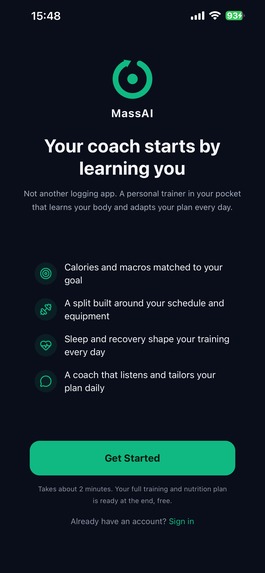
Onboarding
-
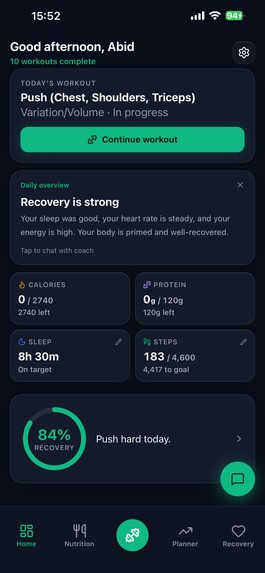
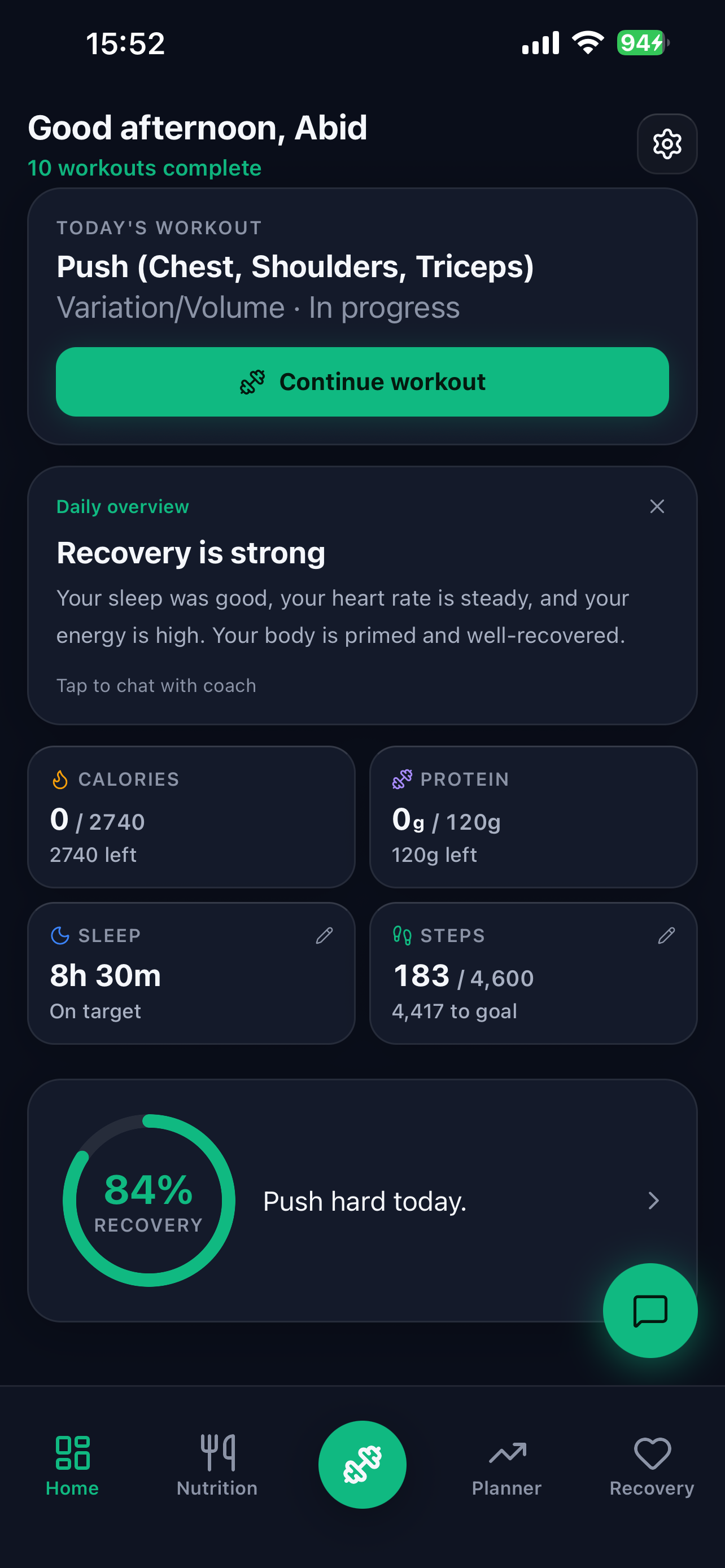
Home
-
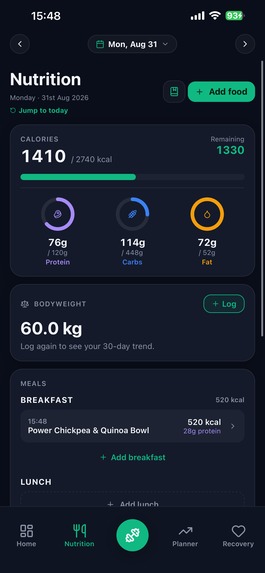
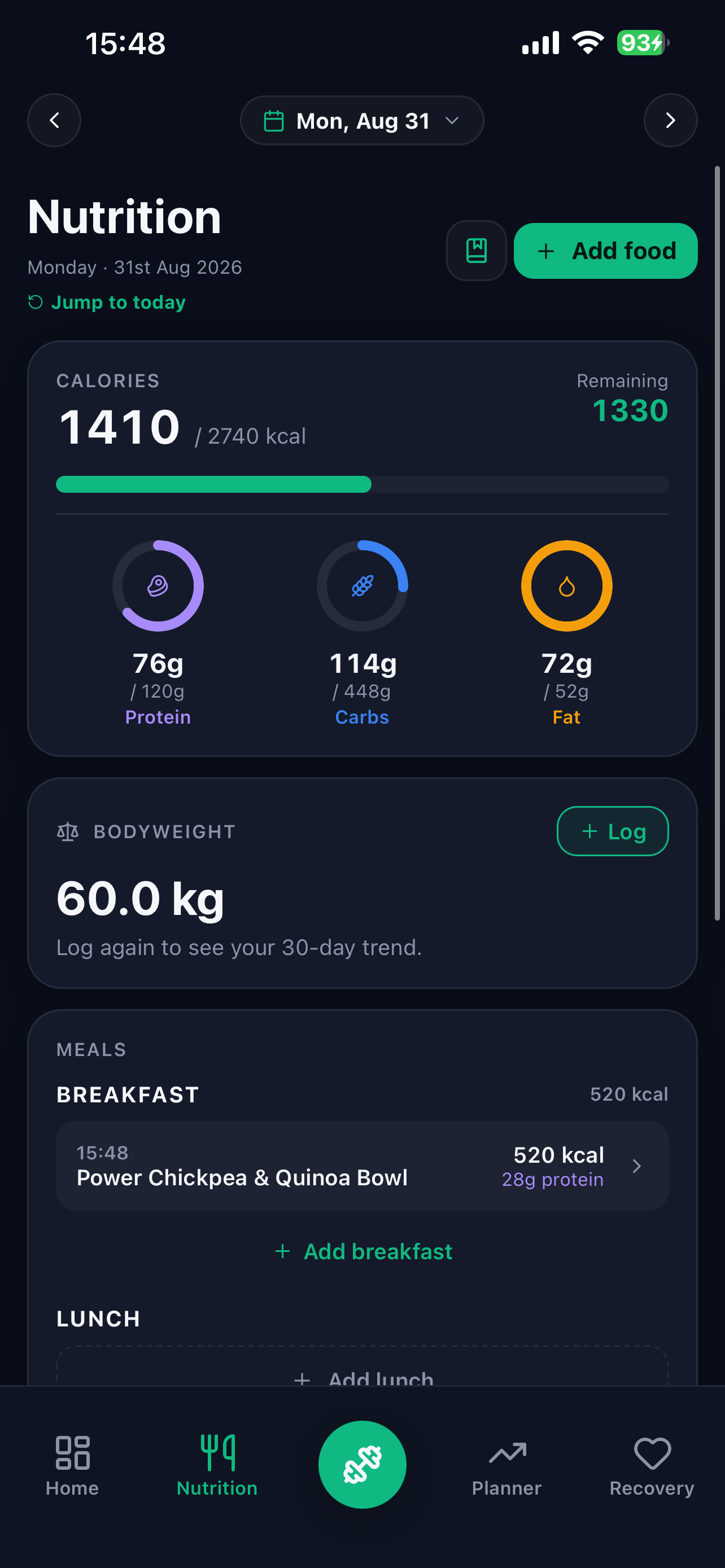
Nutrition
-
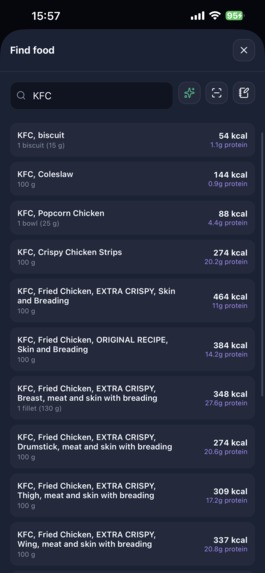
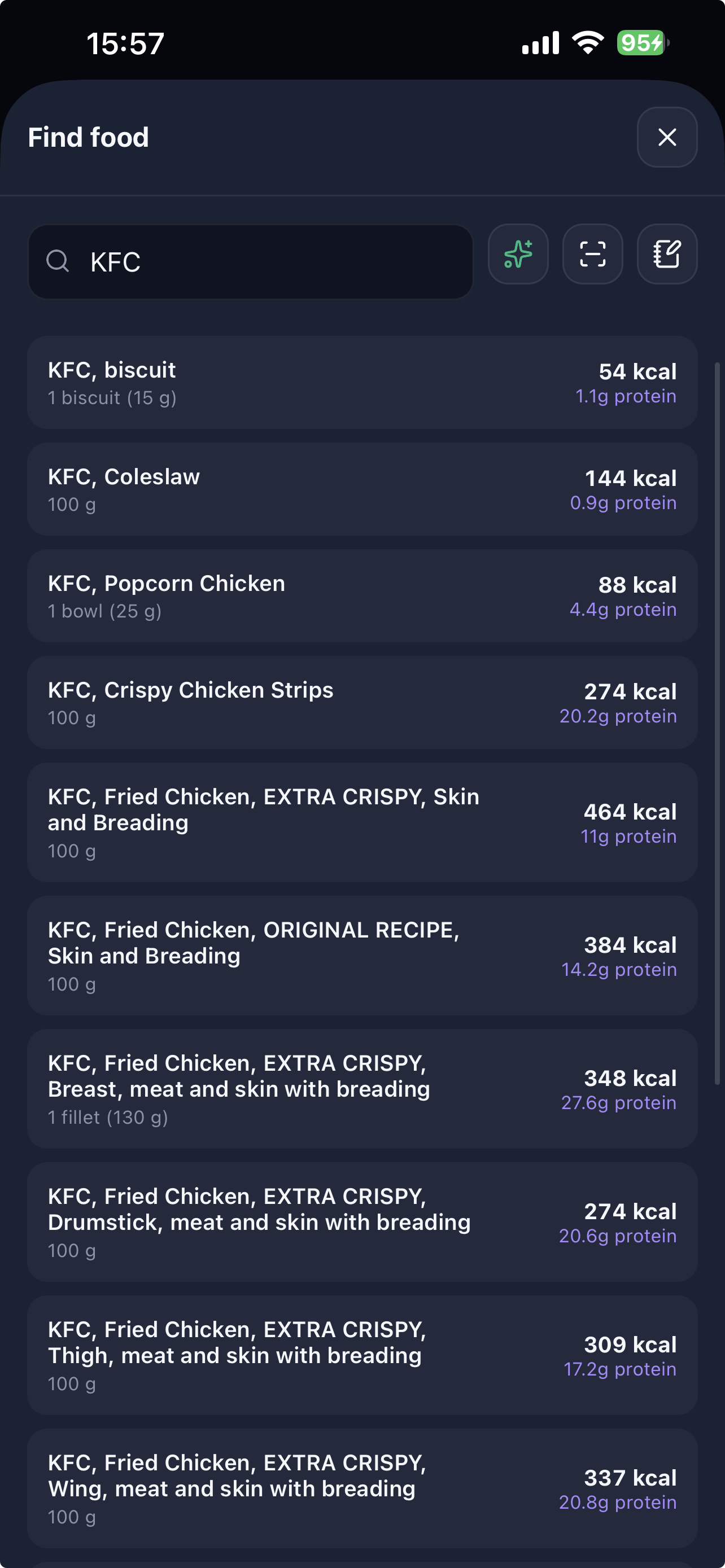
Food Database
-
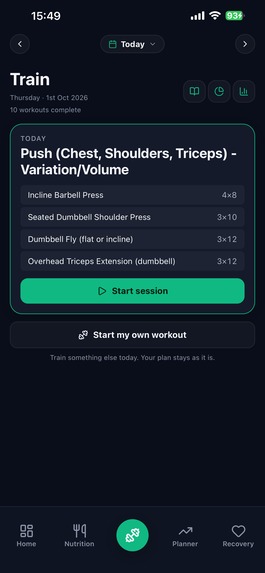
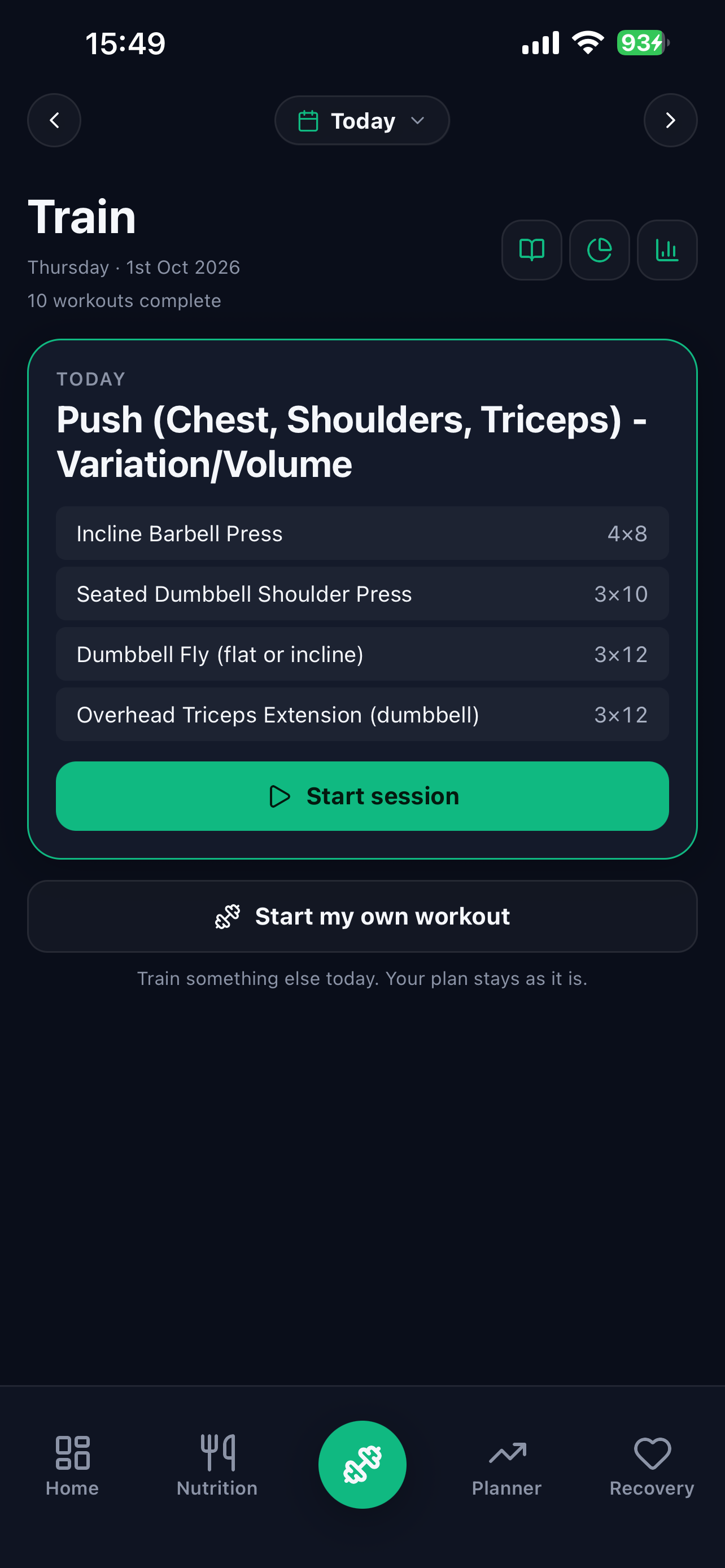
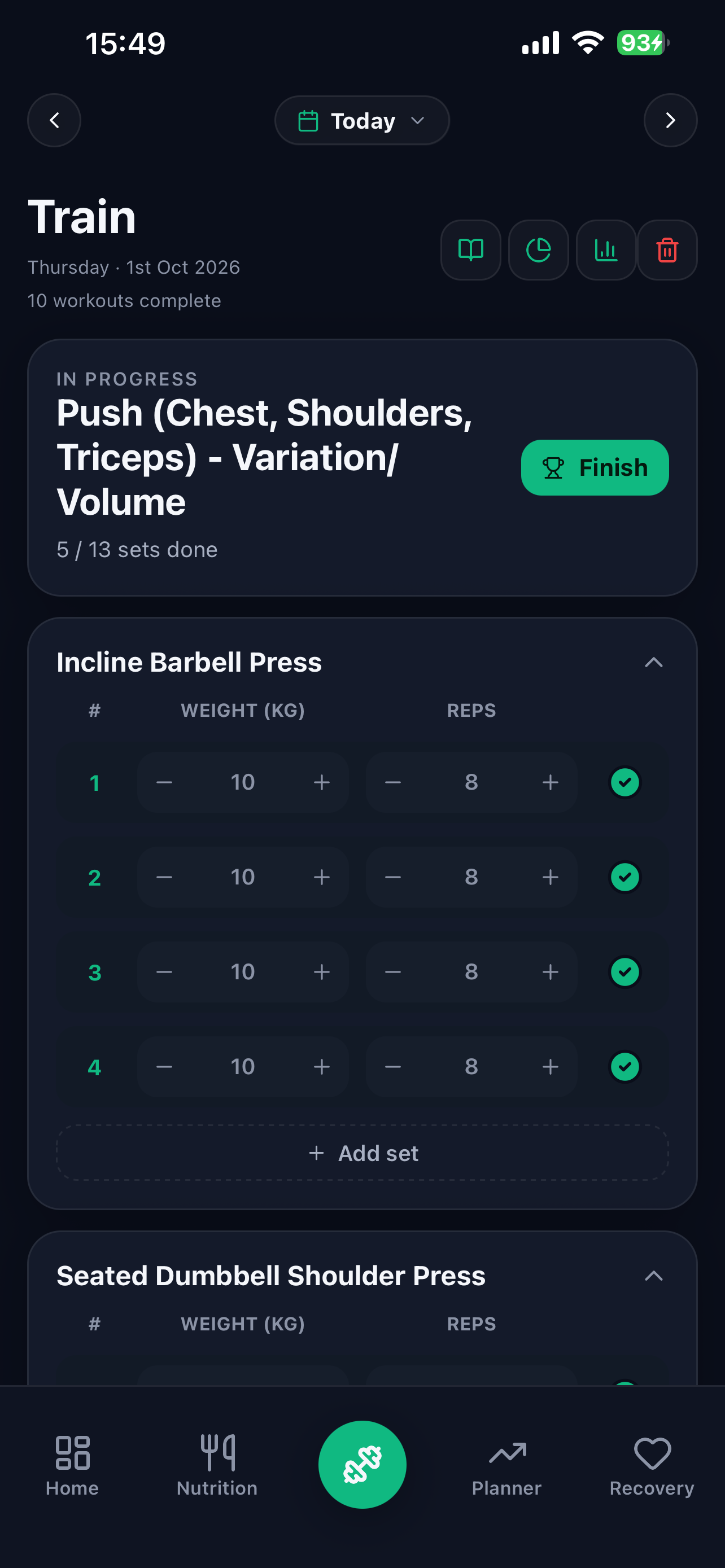
Train 1
-
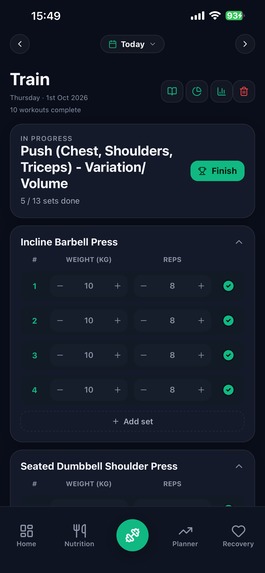
Train 2
-
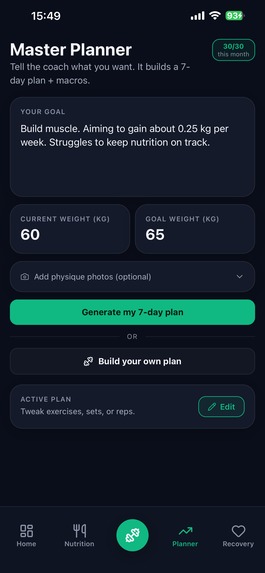
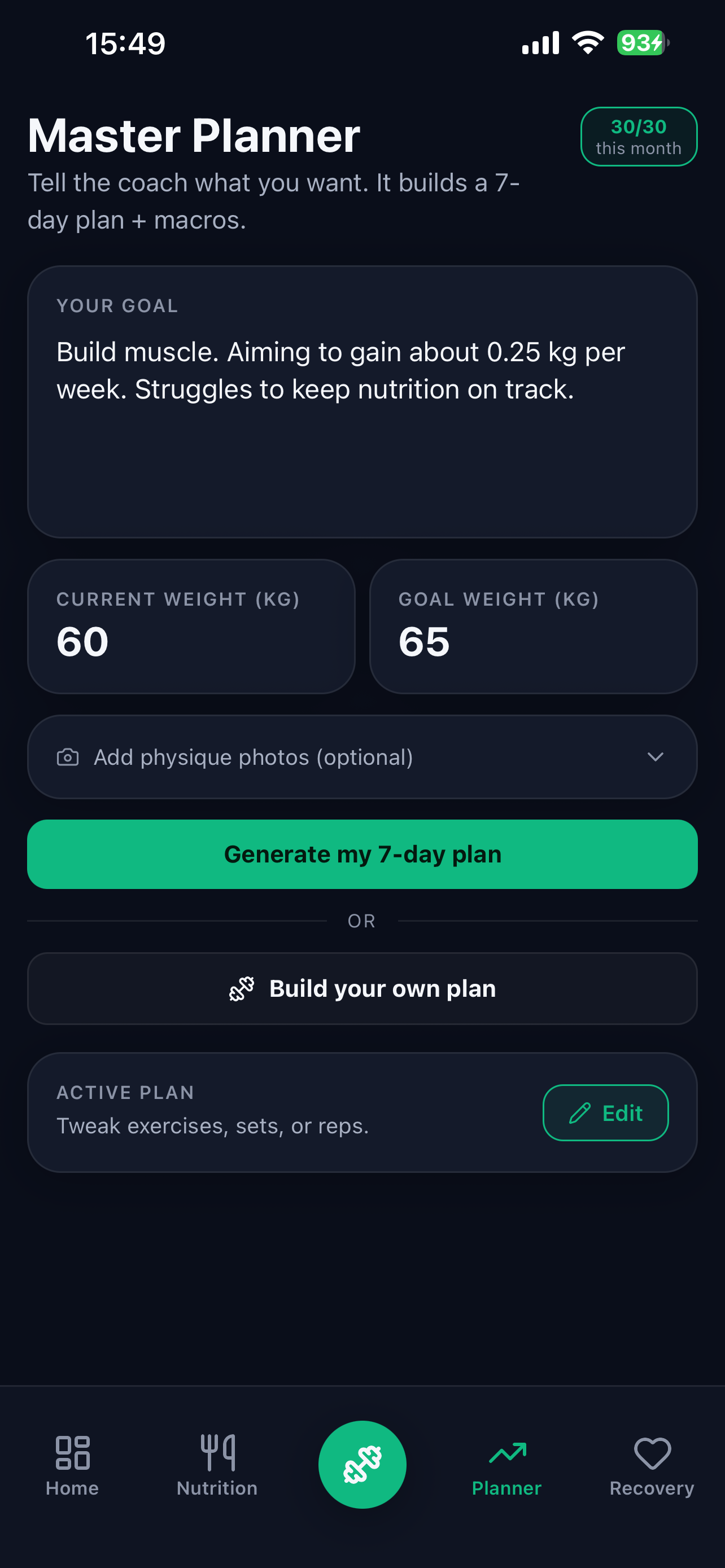
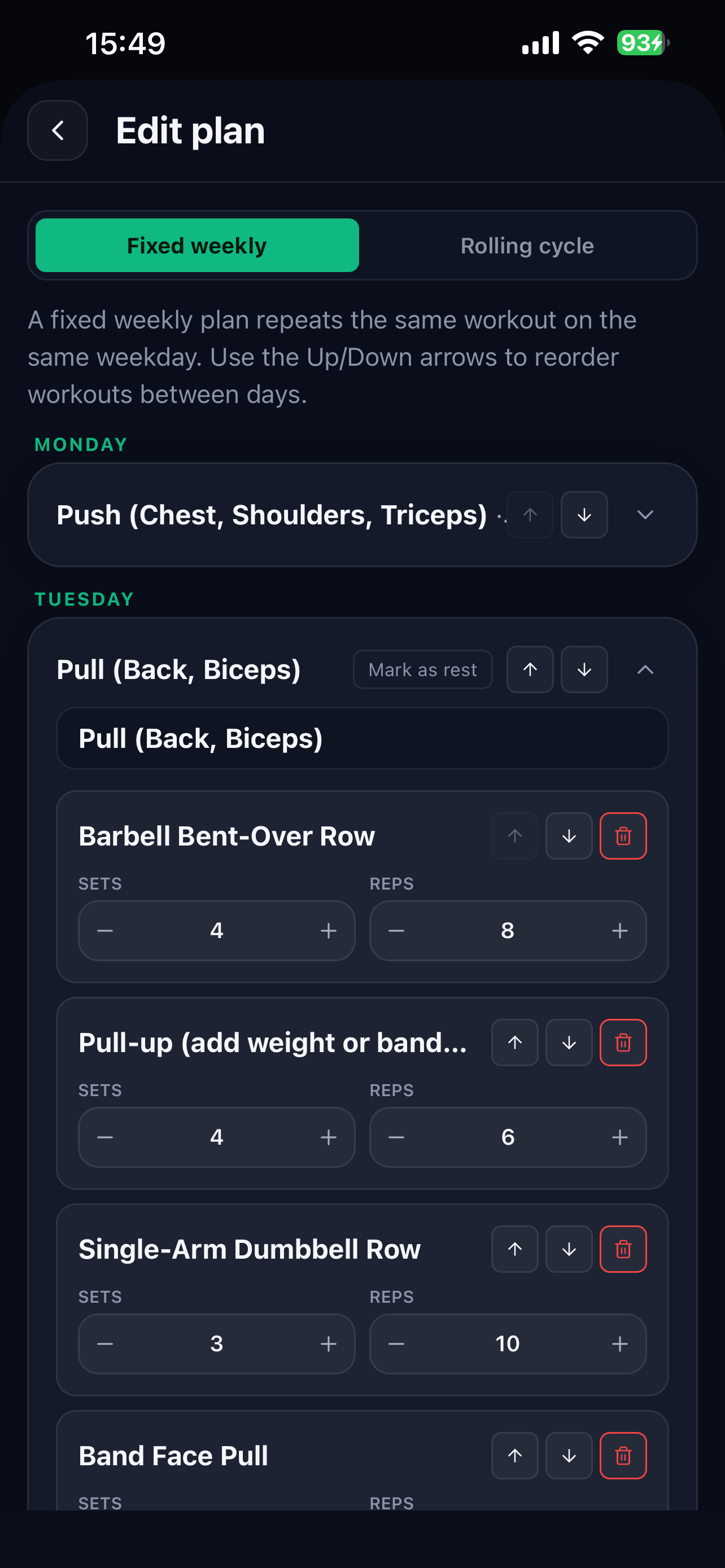
Planner
-
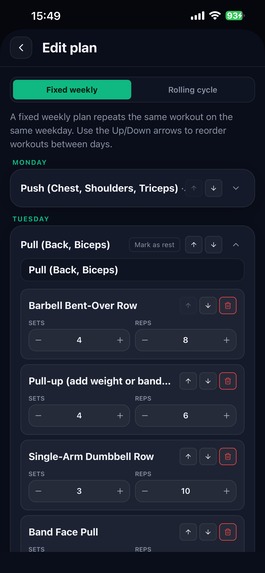
Edit Workout
-
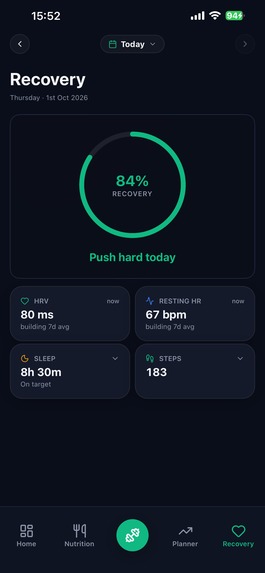
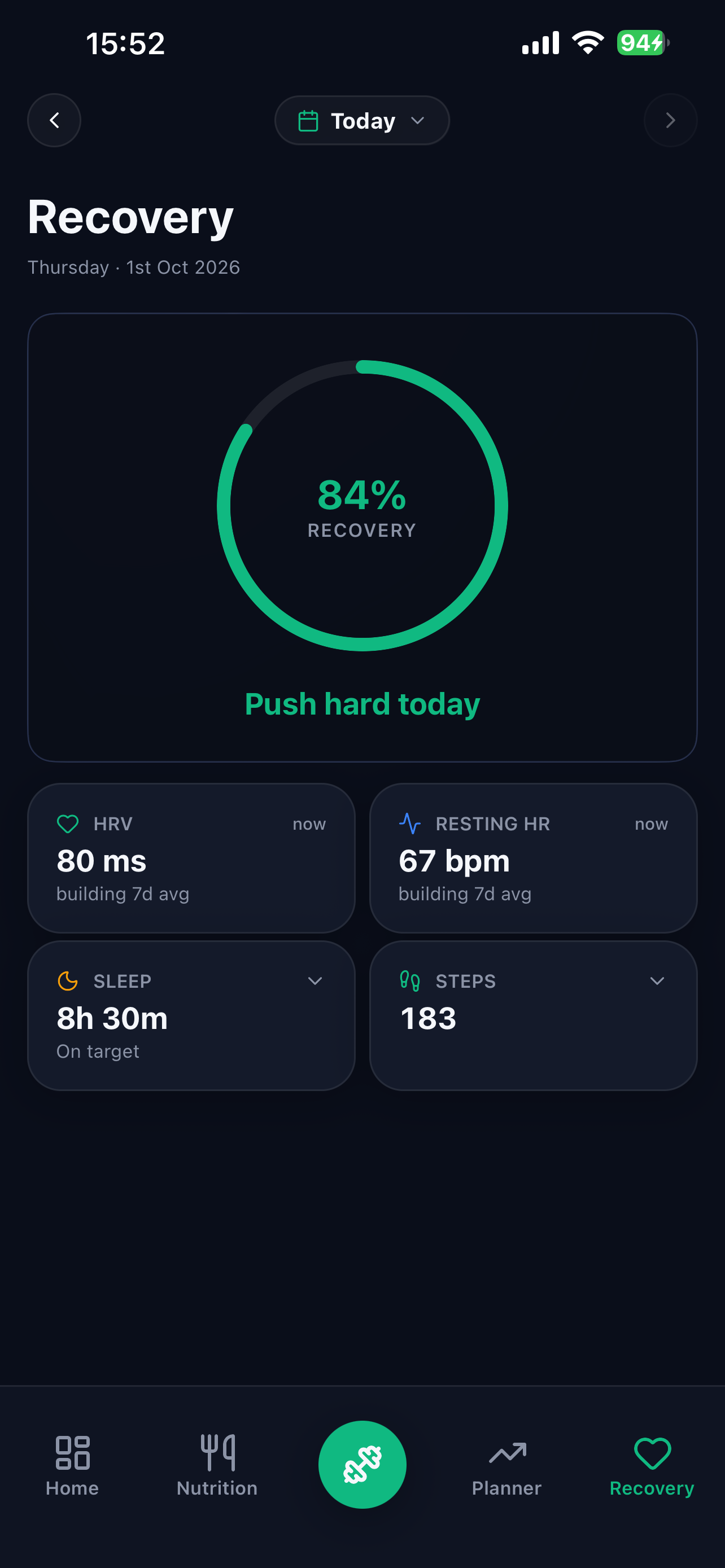
Health Metrics
-
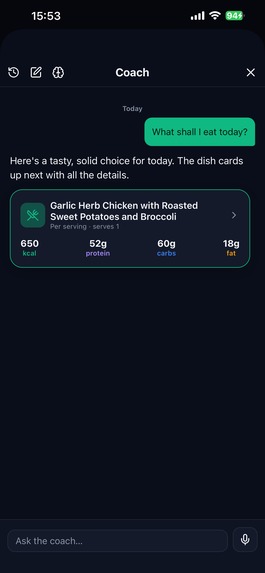
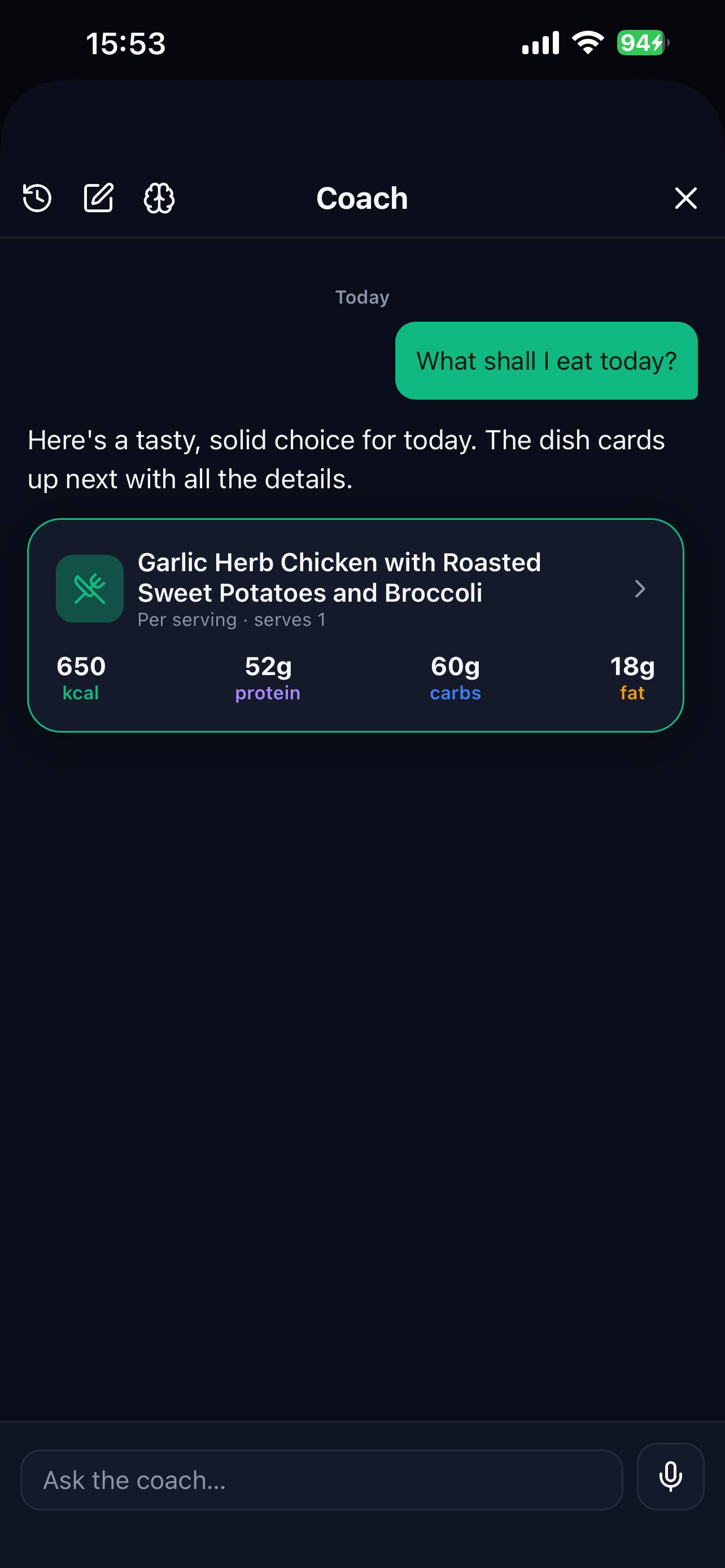
Coach Chat
-
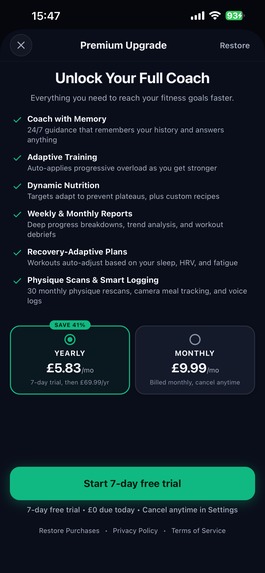
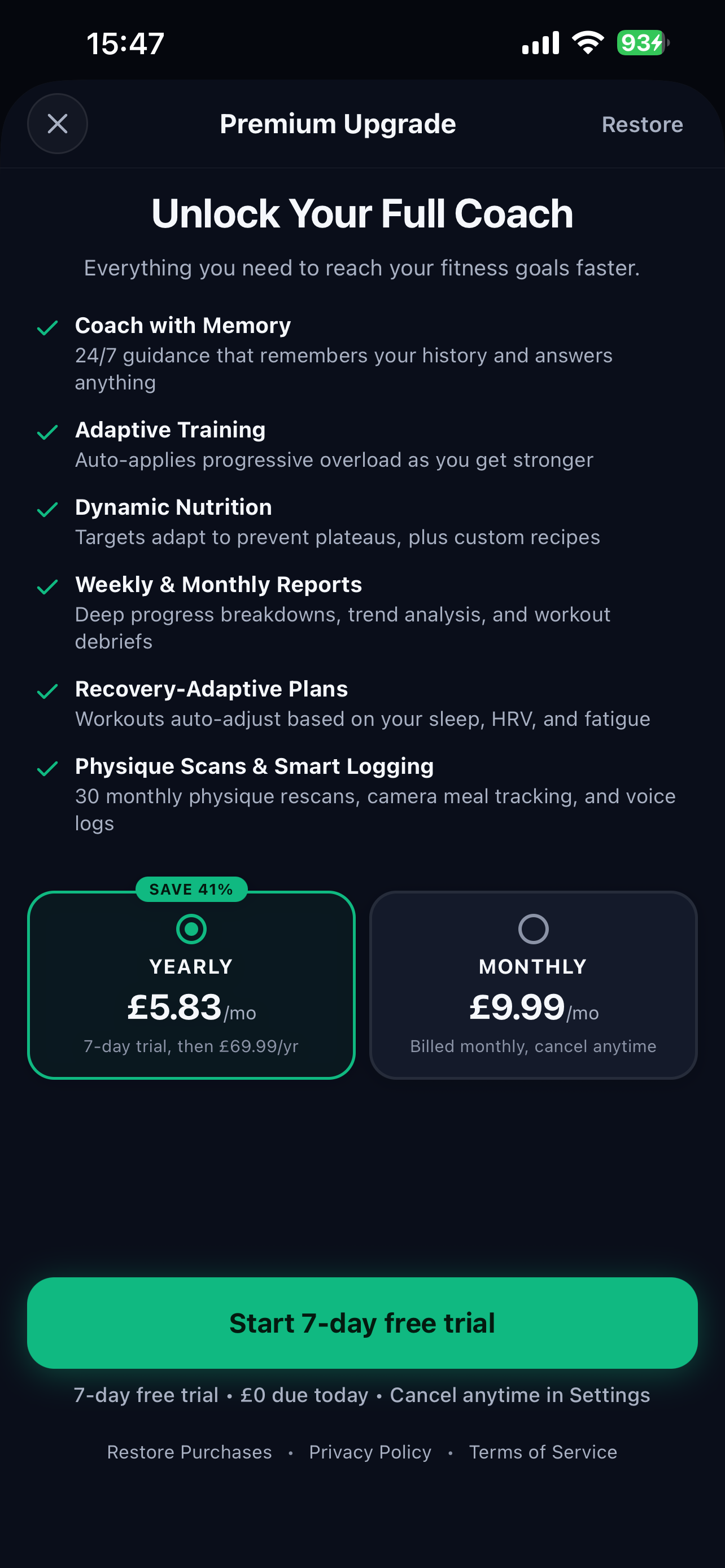
Paywall
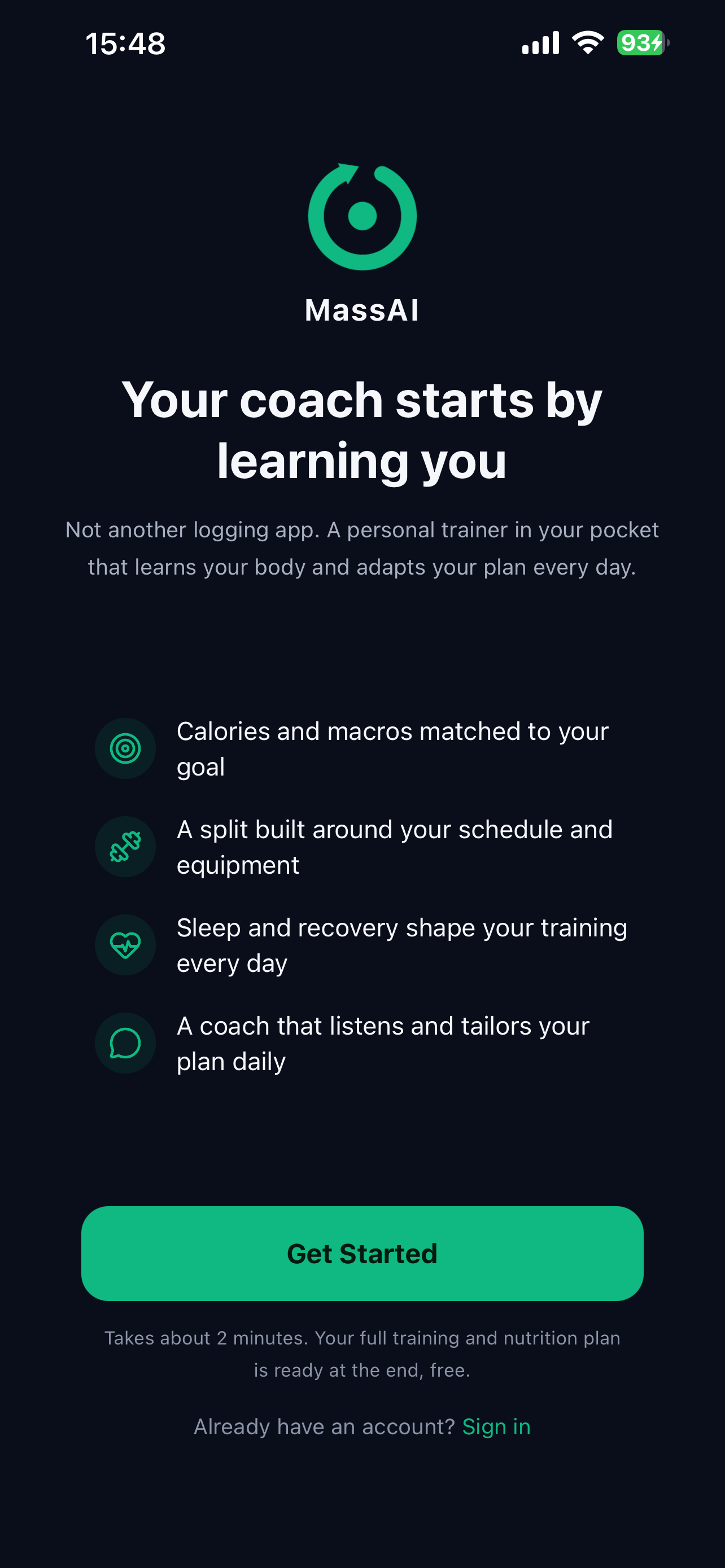
Inspiration
Most fitness apps fail because they are completely static. They hand everyone the exact same cookie-cutter template, ignoring whether you slept three hours or ate half your daily calories. On top of that, the digital fitness space is completely fragmented: you end up juggling three separate subscriptions - one for calorie tracking, one for workout logging, and another for wearable recovery stats.
Hiring a high-tier personal trainer solves the personalisation problem, but at upwards of £300–£400 a month, real coaching is out of reach for most people. Even then, a human trainer doesn't know your exact biometric recovery before you walk through the gym doors. I wanted to build an intelligent coach that bridges that gap: combining workouts, nutrition, and biometrics into one cohesive experience for a fraction of the cost.
What it does
MassAI is an adaptive fitness coach that actually responds to your body's daily state in real time:
- Biometric-Driven Auto-Regulation: MassAI reads wearable recovery metrics (like Heart Rate Variability and sleep data). If your nervous system is taxed from poor sleep, even if you haven’t realised it yet, the app automatically dials back volume or intensity before you start lifting, preventing burnout and injury.
- Nutrition-Aware Training: Because diet and training live in the same place, MassAI factors in your nutritional status. If you are operating on a severe caloric deficit or haven't eaten enough that day, it adjusts your workout to be lighter and more manageable.
- All-in-One Coaching Ecosystem: Replaces scattered apps by unifying daily custom workout plans, quick macro tracking, and recovery scoring into a single screen.
How I built it
- Frontend & Mobile: Built with React Native and Expo to provide a fluid, native iOS interface.
- Biometric Integration: Integrated with Apple HealthKit to read historical and daily HRV, resting heart rate, and sleep stage analysis.
- Intelligence Engine: Built an adaptive logic layer paired with LLM APIs to interpret the user's current strain, daily caloric intake, and training history, turning raw telemetry into concrete, executable sets and reps.
- Backend & Database: Powered by Supabase for secure user authentication, workout logs, and real-time state sync.
Challenges we ran into
The biggest engineering challenge was translating complex, noisy biometric data (like fluctuating HRV) into safe, actionable lifting adjustments without hallucinating impossible workout schemes. I spent extensive time engineering deterministic prompt pipelines and guardrails to ensure that volume drops, exercise substitutions, and calorie checks follow proven exercise science principles rather than arbitrary shifts.
Accomplishments that we're proud of
- Seamlessly closing the loop between recovery data, nutrition, and workout planning so the user never has to manually tweak their split.
- Building a polished, intuitive mobile interface that eliminates the friction of switching between multiple fitness apps.
- Creating an experience that offers the responsiveness of a dedicated 1-on-1 personal trainer at an accessible scale.
What I learned
Biometric data is only useful if it drives an immediate action. Users don't just want a recovery graph telling them they're tired; they want to know exactly what to do at the barbell because of it. Merging nutrition, sleep, and progressive overload into one context window taught us how to design AI systems that feel truly proactive rather than reactive.
What's next for MassAI
- Expanding native integrations across more wearable platforms (Whoop, Garmin, Oura).
- Instant computer-vision meal logging via quick photo capture.
- Smarter long-term periodisation models that forecast plateaus and schedule deload weeks automatically based on multi-week recovery trends.
Built With
- apple-push-notifications
- claude
- expo.io
- gemini
- healthkit
- pytest
- python
- react-native
- revenuecat
- supabase

Log in or sign up for Devpost to join the conversation.