Inspiration
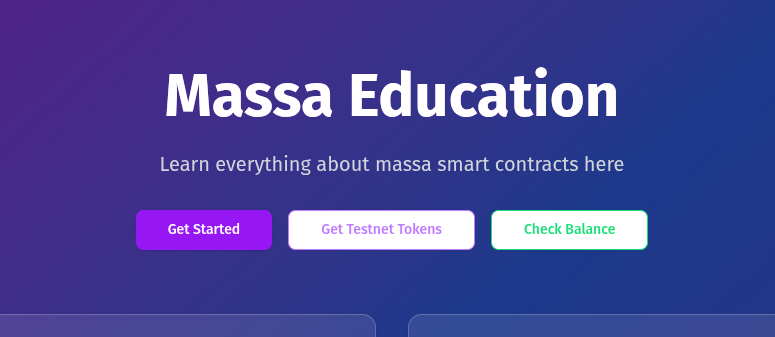
The inspiration for the Massa Education Platform came from recognizing a critical gap in blockchain education - the disconnect between theoretical learning and practical application. Traditional educational platforms teach concepts but fail to validate real-world skills through interactive challenges.
We were inspired by the need to create a comprehensive learning ecosystem specifically for Massa blockchain development, where students could not only learn concepts but also validate their understanding through external API integrations that simulate real-world scenarios. The vision was to bridge the gap between learning and doing, making blockchain education more engaging and practical.
What it does
The Massa Education Platform is a comprehensive course creation and learning management system that revolutionizes blockchain education through:
For Educators:
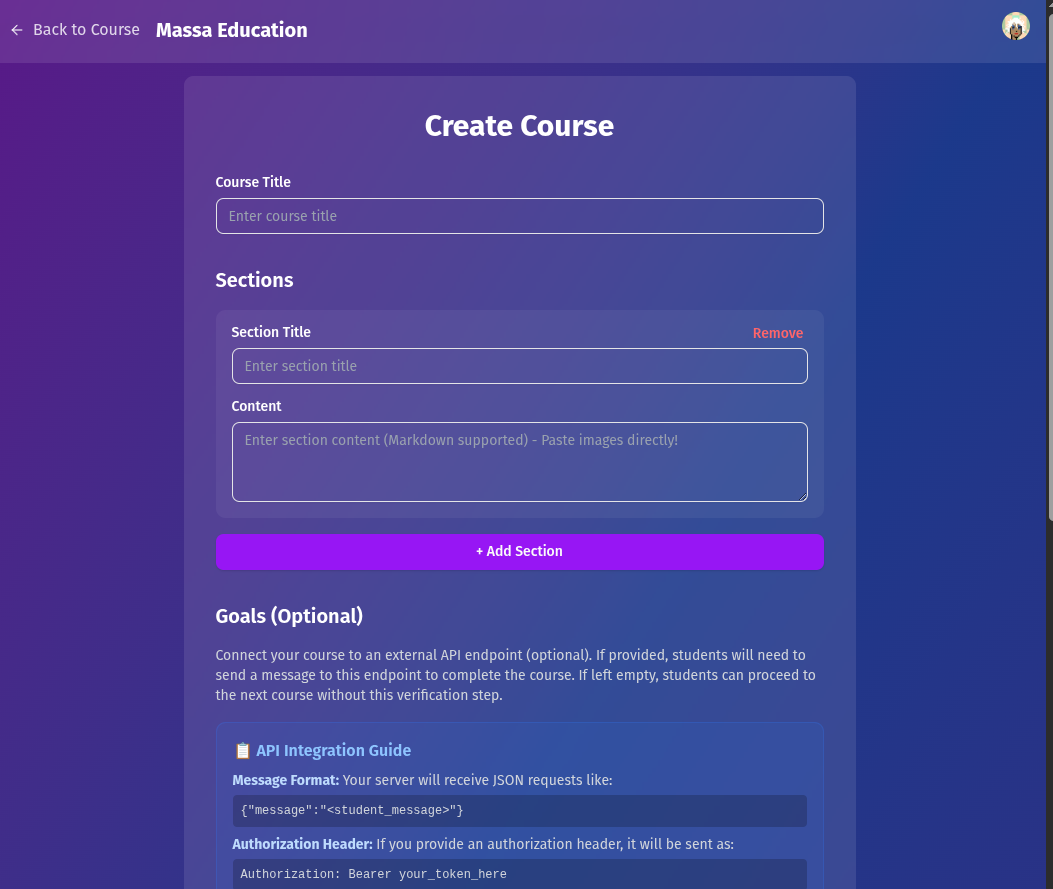
- Dynamic Course Builder: Create rich, multi-section courses with markdown support and real-time preview
- Interactive Goals System: Connect courses to external APIs for quiz-like completion validation
- Flexible Content Management: Organize content into structured sections with multimedia support
- API Integration: Configure custom authorization headers and test endpoints before publishing
- Student Progress Tracking: Monitor learner engagement and completion rates
For Students:
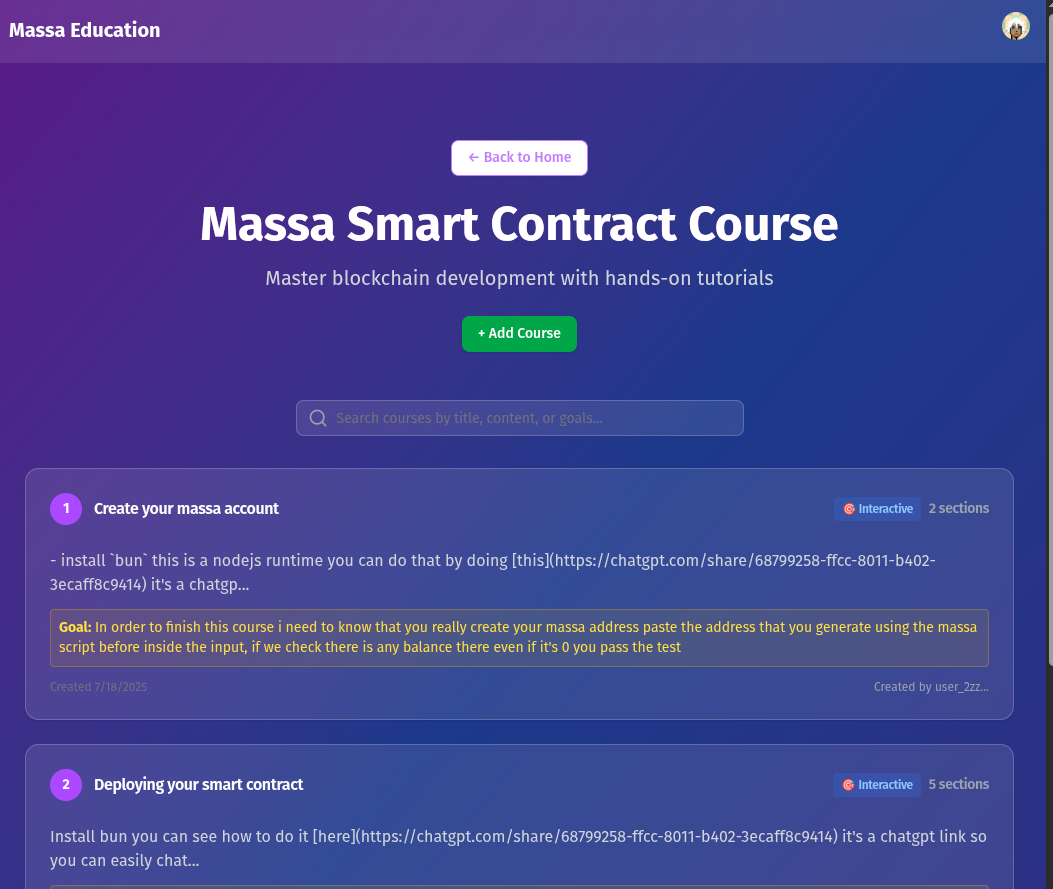
- Interactive Learning Experience: Browse courses with completion badges and progress indicators
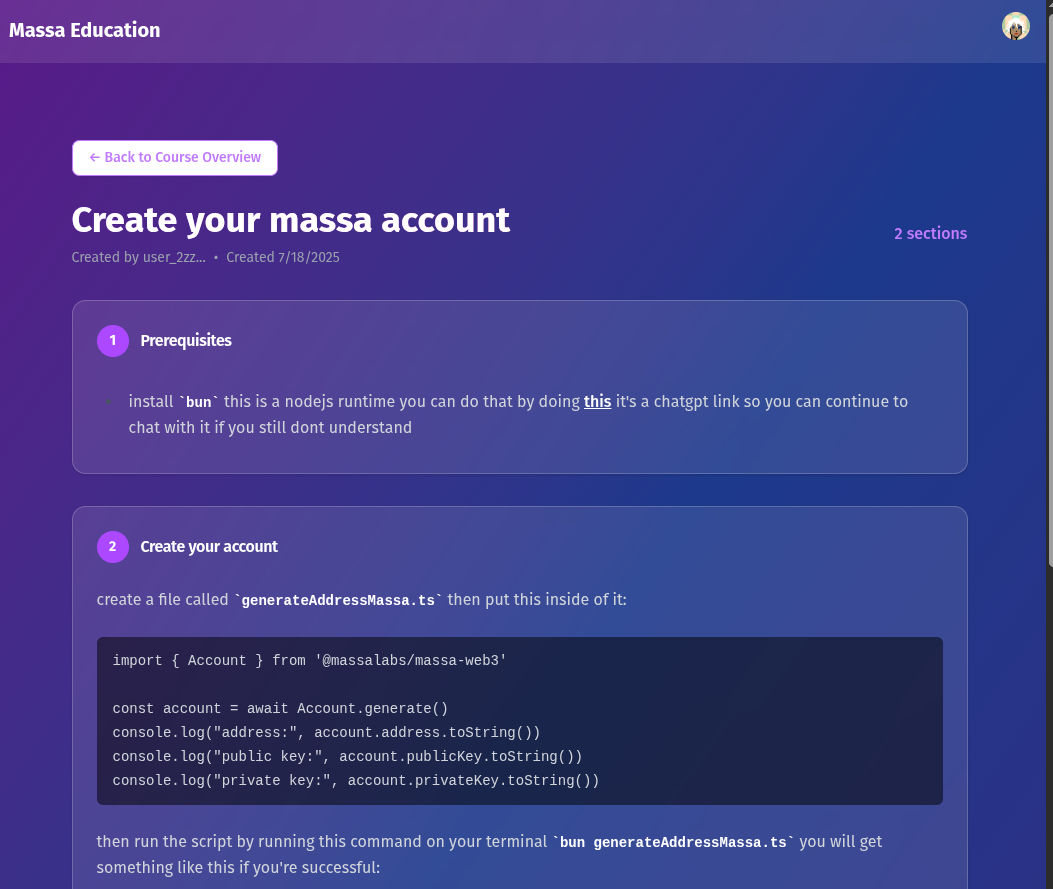
- Rich Content Display: Markdown-rendered course content with responsive design
- Real-time Validation: Submit answers to external APIs for immediate feedback
- Progress Tracking: Visual indicators of course completion and achievements
- Seamless Navigation: Intuitive interface for moving between courses and sections
Technical Features:
- Authentication System: Secure user management with Clerk integration
- Database-Driven: PostgreSQL with Supabase for scalable data storage and real-time updates
- API-First Architecture: External endpoint support for interactive course completion
- Responsive Design: Mobile-first approach that works across all device sizes
- Type Safety: Full TypeScript implementation with comprehensive type definitions
How we built it
Our development approach followed modern web development best practices with a focus on scalability and user experience:
Frontend Architecture:
- React 19 with TypeScript for type-safe component development
- Vite for lightning-fast development and optimized production builds
- Tailwind CSS 4.0 with custom gradient themes and animations
- React Router DOM v7 for seamless client-side navigation
- ReactMarkdown for rich content rendering with syntax highlighting
Backend Infrastructure:
- Supabase (PostgreSQL) with Row Level Security policies for data protection
- Edge Functions for serverless API processing and course validation
- Real-time subscriptions for live updates and notifications
- Automated migrations with Docker-based deployment pipeline
Authentication & Security:
- Clerk integration for secure user management and social login
- JWT-based authentication with automatic token refresh
- Row Level Security policies ensuring users only access their own data
- CORS handling for secure cross-origin API communication
Database Design:
- Courses table with JSONB sections for flexible content structure
- User completions tracking with unique constraints preventing duplicate entries
- Automated timestamps with trigger-based updates
- Cascading deletes for data integrity
Development Workflow:
- Planning Phase: Wireframing and database schema design
- Core Infrastructure: Authentication, routing, and database setup
- Component Development: Reusable UI components with consistent design
- Feature Implementation: Course creation, content management, and API integration
- Testing & Optimization: Performance tuning and user experience refinement
- Deployment: Production environment setup with environment variable management
Challenges we ran into
Technical Challenges:
- Complex State Management: Managing multi-step course creation forms with real-time preview required careful state orchestration and performance optimization
- API Integration Security: Implementing secure external API calls with custom authorization headers while maintaining user data privacy
- Database Schema Evolution: Designing a flexible schema that could accommodate future feature additions without breaking existing functionality
- Real-time Preview: Creating a live preview system that accurately reflects the final course appearance while maintaining performance
- Type Safety: Ensuring comprehensive TypeScript coverage across complex data structures and API responses
User Experience Challenges:
- Responsive Design: Creating an interface that works seamlessly across desktop, tablet, and mobile devices
- Intuitive Course Creation: Designing a course builder that's powerful enough for educators but simple enough for non-technical users
- Error Handling: Providing meaningful feedback for API failures and network issues
- Performance Optimization: Ensuring fast load times even with rich markdown content and multiple course sections
Infrastructure Challenges:
- Local Development Environment: Setting up consistent Docker-based Supabase environment across different development machines
- Migration Management: Implementing automated database migrations that work reliably in both development and production
- Edge Function Deployment: Creating a seamless deployment pipeline for serverless functions
Accomplishments that we're proud of
Technical Achievements:
- Full-Stack Type Safety: Achieved 100% TypeScript coverage from database types to UI components
- Real-time Course Preview: Built a sophisticated preview system that updates instantly as educators create content
- Flexible API Integration: Created a system that can connect to any external API with custom authentication
- Responsive Design Excellence: Achieved perfect mobile responsiveness with a gradient-based design system
- Database Performance: Implemented efficient indexing and RLS policies for optimal query performance
User Experience Wins:
- Intuitive Course Creation: Educators can create rich courses without technical knowledge
- Seamless Learning Flow: Students can progress through courses with clear visual feedback
- Interactive Validation: Real-time API integration provides immediate learning feedback
- Accessibility: Built with screen readers and keyboard navigation in mind
Architecture Successes:
- Scalable Foundation: Database and API architecture can handle thousands of concurrent users
- Security-First Design: Comprehensive security policies protect user data and prevent unauthorized access
- Modern Tech Stack: Leveraged cutting-edge technologies for optimal developer experience and performance
What we learned
Technical Insights:
- TypeScript Benefits: Comprehensive type safety dramatically reduced runtime errors and improved development velocity
- Supabase Power: Row Level Security policies provide enterprise-grade security with minimal configuration
- React 19 Features: New concurrent features improved user experience with better loading states
- API Design Patterns: Learned effective strategies for integrating with external APIs while maintaining security
User Experience Lessons:
- Preview Importance: Real-time preview significantly improved educator satisfaction and course quality
- Error Message Quality: Clear, actionable error messages are crucial for user adoption
- Mobile-First Design: Starting with mobile constraints led to better overall user experience
- Progressive Enhancement: Building core functionality first, then adding advanced features
Project Management Insights:
- Iterative Development: Regular user feedback loops prevented major architectural mistakes
- Documentation Value: Comprehensive README and code comments saved significant debugging time
- Testing Strategy: Early integration testing caught issues that unit tests missed
What's next for Massa Education Platform
Short-term Enhancements (Next 3 months):
- Enhanced Analytics Dashboard: Detailed insights for educators on student progress, completion rates, and engagement metrics
- Course Completion Certificates: Blockchain-verified certificates stored on Massa network for course completion
- Advanced Content Types: Support for embedded videos, interactive code playgrounds, and live coding exercises
- Community Features: Discussion forums, peer review capabilities, and student-to-student mentoring
Medium-term Expansion (3-6 months):
- Mobile Application: Native iOS and Android apps for learning on the go
- AI-Powered Learning Paths: Personalized course recommendations based on student performance and interests
- Marketplace Integration: Allow educators to monetize premium course content with cryptocurrency payments
- Multi-language Support: Internationalization for global blockchain education
Long-term Vision (6+ months):
- Massa Network Integration: Direct smart contract deployment and testing within the platform
- Decentralized Identity: Blockchain-based student credentials and achievement tracking
- Advanced API Ecosystem: Marketplace for third-party educational tools and integrations
- Enterprise Features: White-label solutions for blockchain companies and educational institutions
Technical Roadmap:
- Performance Optimization: Implement caching strategies and CDN integration for global performance
- Advanced Security: Multi-factor authentication and advanced threat detection
- Scalability Improvements: Microservices architecture for handling enterprise-scale usage
- Developer API: Public API for third-party integrations and custom educational tools
Built with
Frontend Technologies:
- React 19 - Latest React version with concurrent features and improved performance
- TypeScript - Full type safety across the entire application
- Vite - Next-generation build tool for fast development and optimized production builds
- Tailwind CSS 4.0 - Utility-first CSS framework with custom gradient themes
- React Router DOM v7 - Client-side routing with advanced navigation features
- ReactMarkdown - Rich markdown rendering with syntax highlighting support
UI/UX Libraries:
- Radix UI - Unstyled, accessible UI primitives for custom component development
- shadcn/ui - Beautiful, customizable components built on Radix UI
- Lucide React - Comprehensive icon library with consistent design
- Tailwind Animate - Smooth animations and transitions
- Class Variance Authority - Type-safe component variants
Backend & Database:
- Supabase - Open-source Firebase alternative with PostgreSQL database
- PostgreSQL - Advanced relational database with JSONB support for flexible data structures
- Edge Functions - Serverless functions for API processing and course validation
- Row Level Security - Database-level security policies for data protection
Authentication & Security:
- Clerk - Complete authentication solution with social login support
- JWT Tokens - Secure token-based authentication with automatic refresh
- CORS Handling - Secure cross-origin resource sharing configuration
Development Tools:
- Bun - Fast JavaScript runtime and package manager
- Docker - Containerized development environment for consistency
- Git - Version control with comprehensive commit history
- ESLint & Prettier - Code quality and formatting tools
Deployment & Infrastructure:
- Vite Build System - Optimized production builds with code splitting
- Environment Variables - Secure configuration management
- Database Migrations - Versioned schema changes with automated deployment
- Container Orchestration - Docker-based deployment pipeline
External Integrations:
- Custom API Support - Flexible integration with any external validation service
- Authorization Headers - Secure API communication with custom authentication
- Real-time Validation - Instant feedback through external API responses
- Error Handling - Comprehensive error states and user feedback systems
Built With
- kiro

Log in or sign up for Devpost to join the conversation.