Inspiration
Identifying unknown molecules from mass spectrometry is slow and often needs expensive lab work. Researchers want a fast first guess before they go further, so I built a simple tool that gives one.
What it does
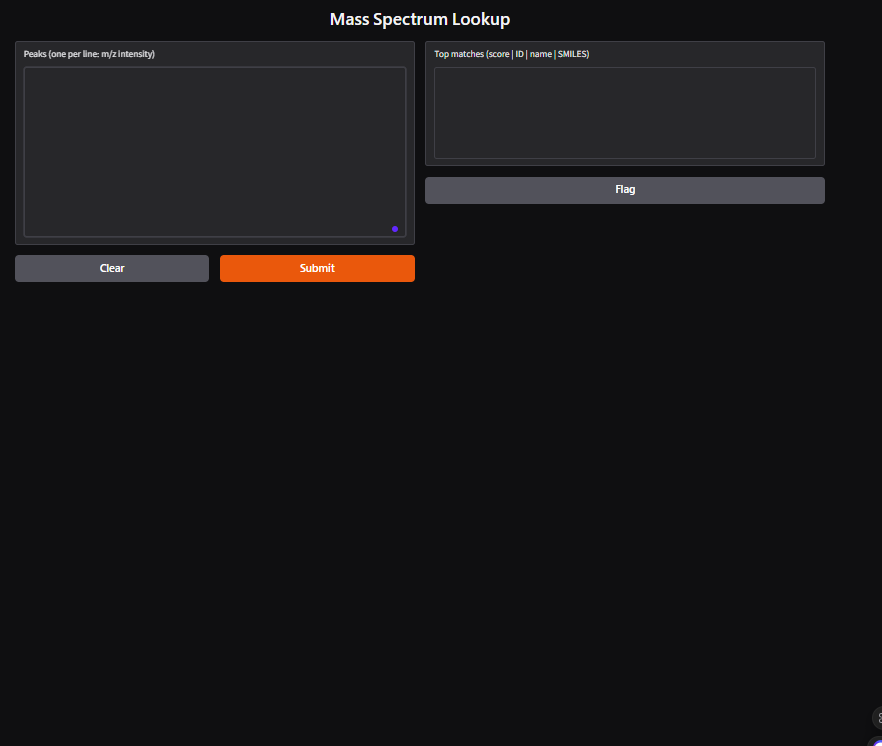
Mass Spectrum Lookup takes the fragment peaks from an MS/MS spectrum (m/z and intensity) and compares them against 4,724 positive-mode MS2 records from the open MassBank library. It returns the closest matches, each with a similarity score, compound name, and SMILES structure.
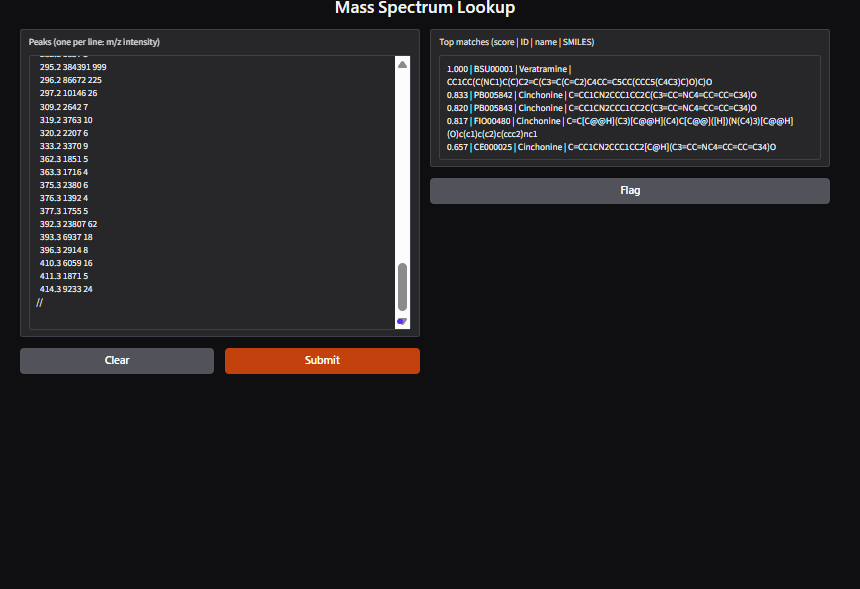
Testing with a noisy copy of a known spectrum (Veratramine) returned Veratramine at the top with a score of 1.000. Pasting the spectrum for Cyclopamine's sibling compounds also returns structurally related matches near the top.
How I built it
- Python to parse MassBank records and extract the precursor mass, ion mode, and peaks
- Peaks are binned to 0.1 m/z, normalized, and compared with cosine similarity
- A Gradio web interface lets users paste a spectrum and view the ranked results
Challenges
- MassBank records come in many small text files with varying fields. Some precursor values list two numbers, which crashed the first parser until I handled them.
- Structurally similar compounds produce similar fragment patterns. In testing, Cinchonine variants ranked close to each other, which shows the limits of spectrum-only matching.
Limitations
- It can only identify compounds already present in the library. It cannot identify new molecules.
- Results are ranked by peak similarity, so close structural relatives can score almost as high as the true match.
- The demo runs locally. It has not been deployed online.
What's next
- Add more libraries and filter by instrument type and collision energy
- Add a fragment-based structure score alongside peak similarity
- Deploy to a public host so judges can try it without setup
Built With
- gradio
- massbank
- python
- zenodo

Log in or sign up for Devpost to join the conversation.