Inspiration
I noticed a critical flaw in the AI boom: engineering tools allow developers to generate code faster than ever, but if the underlying system architecture is logically broken, AI just generates flawed code faster. The most expensive software mistakes aren't syntax typos; they are deep architectural errors. I built Project Mason to solve this bottleneck by validating the structural blueprint before any code is written.
What it does
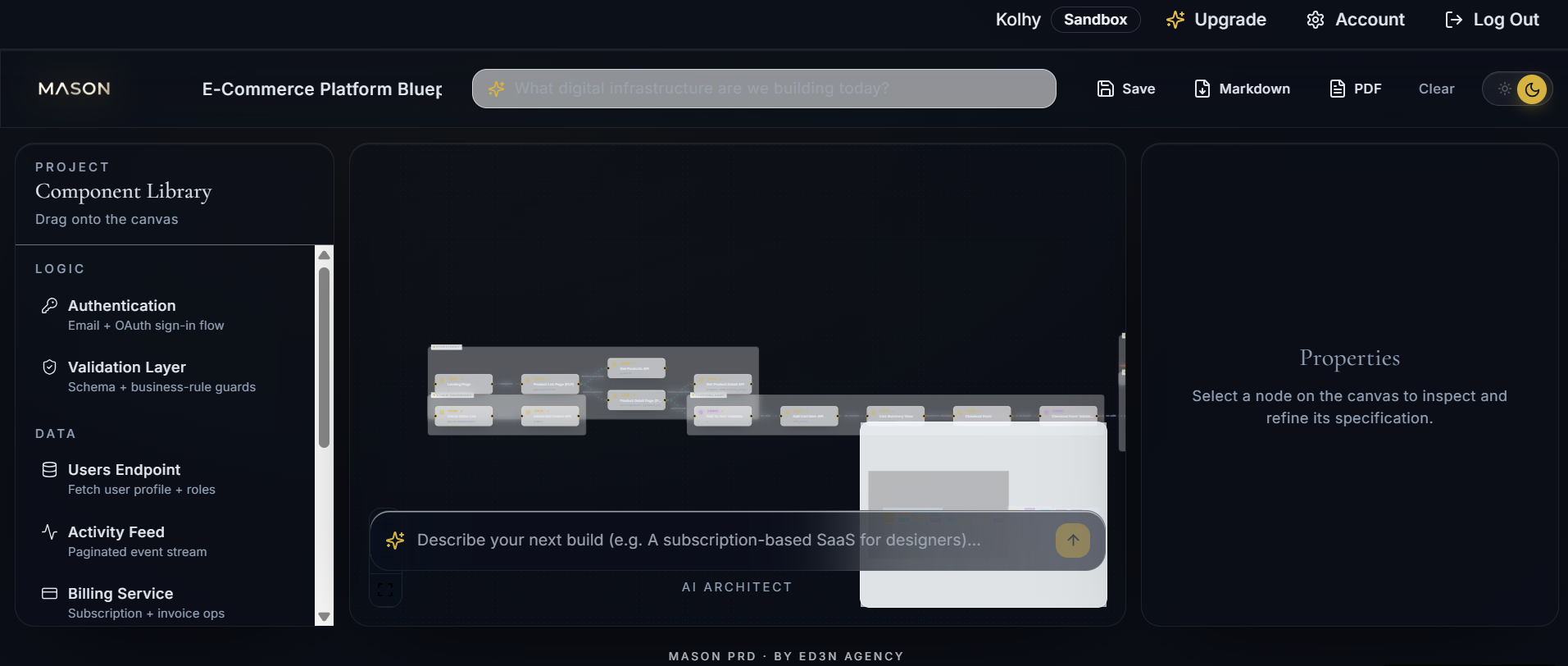
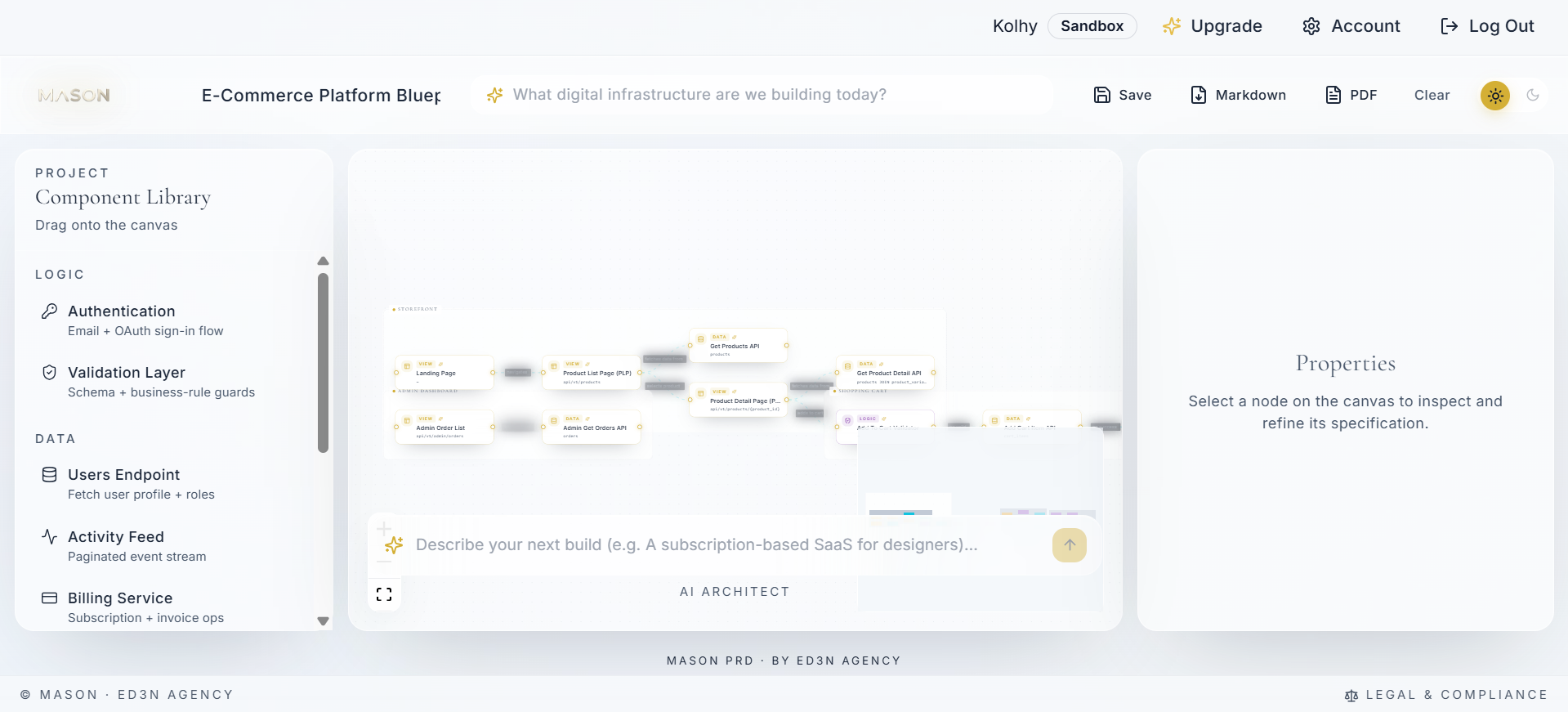
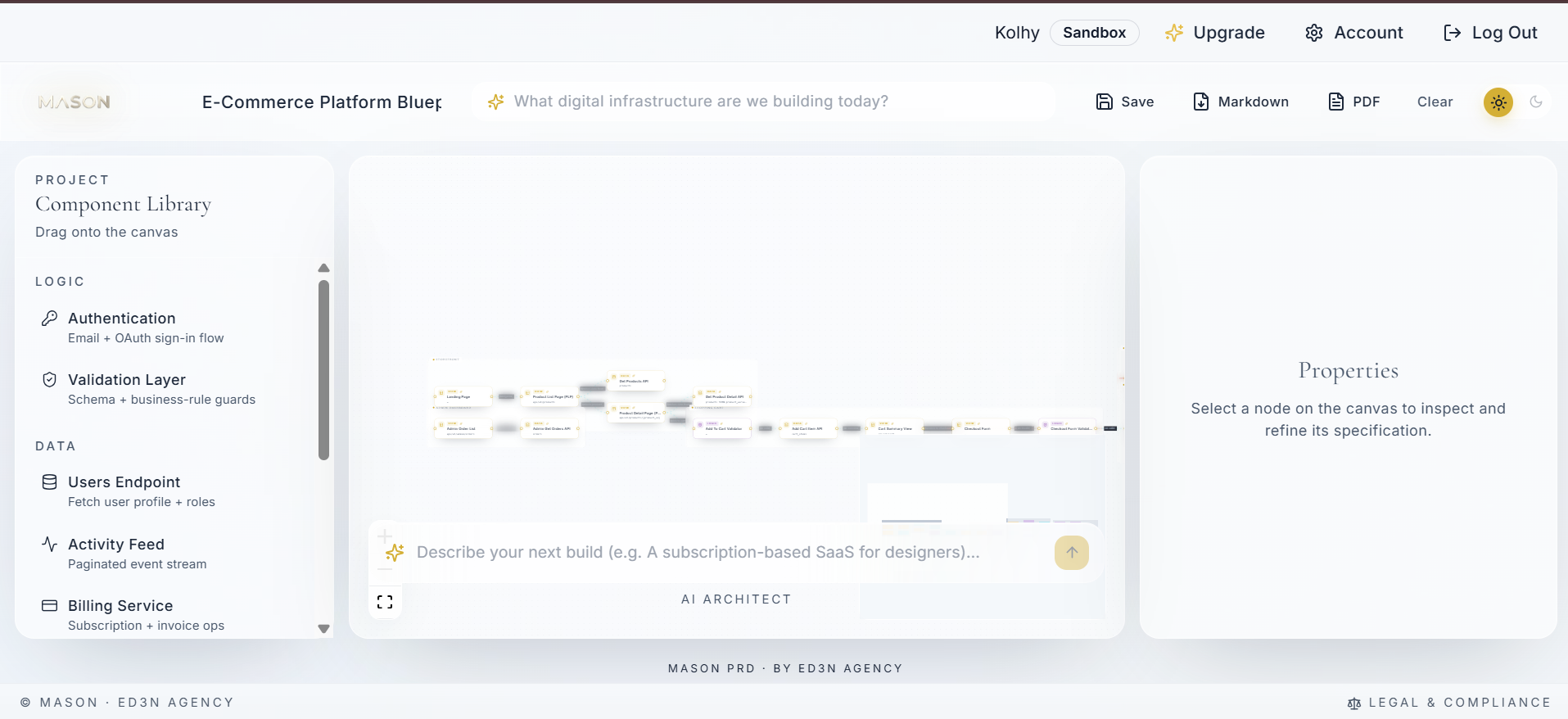
Mason automatically audits software blueprints and product specs before code is written. It analyzes unstructured requirements, maps out the system's entire logical flow, and runs simulations to catch critical architecture flaws like race conditions, logic deadlocks, and security gaps before engineering begins.
How we built it
I developed the frontend dashboard of a high-end responsive developer interface using React, Next.js and Tailwind CSS. The analytical backend is built on a strong Node.js and Python architecture that parses heavy logic. I developed complex LLM API prompt chains with strict validation layers that convert unstructured human requirements into deterministic, verifiable state-machine models for the core auditing engine. Lovable fully automates continuous deployment and fast prototyping.
Challenges we ran into
The biggest hurdle was semantic precision. Human-written product documents are naturally ambiguous. Forcing fluid AI models to reliably parse fluid, conversational language and transform it into a mathematically rigorous, deterministic state-machine model required intense iteration on prompt chaining, strict validation layers, and structured JSON parsing.
Accomplishments that we're proud of
Currently I'm proud of successfully engineering a pipeline that transforms vague human text into strict, precise logical maps, and I also managed to build an AI simulation engine that reliably surfaces complex architectural flaws, like race conditions, before development starts.
What we learned
What I Learned: Architecture is the bottleneck. The real bottleneck of software engineering in the age of instant AI code generation is not code writing, but system design and logic verification. Taming Semantic Ambiguity: I learned to build fluid AI workflows that transform unstructured, conversational inputs into deterministic, reliable engineering analysis. High-Leverage Prevention: I learned that the most effective way to push debugging to the very front of the product lifecycle is to not make architectural mistakes in the first place, rather than fixing them once they are in production.
What's next for Mason
Next for Mason is building native IDE and product management plugins (VS Code, Jira, Notion) alongside an interactive visual graph editor to let developers simulate and map system state changes live.

Log in or sign up for Devpost to join the conversation.