Inspiration
As a developers, I noticed a massive flaw in the current AI boom: tools allow teams to generate code faster than ever, but if the underlying software architecture is logically flawed, AI just generates broken code faster. The most expensive mistakes aren't typos; they are systemic architectural errors. I built Project Mason to solve the structural bottleneck of modern engineering.
What it does
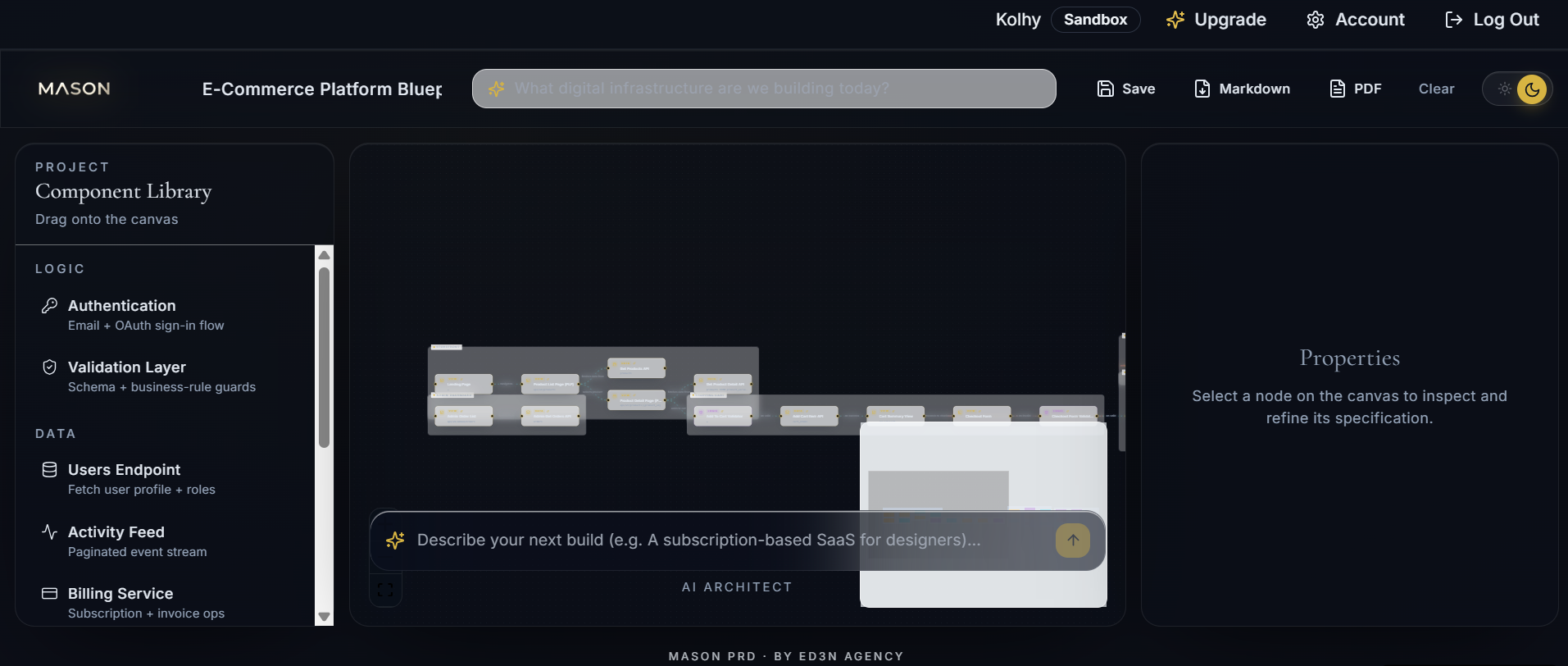
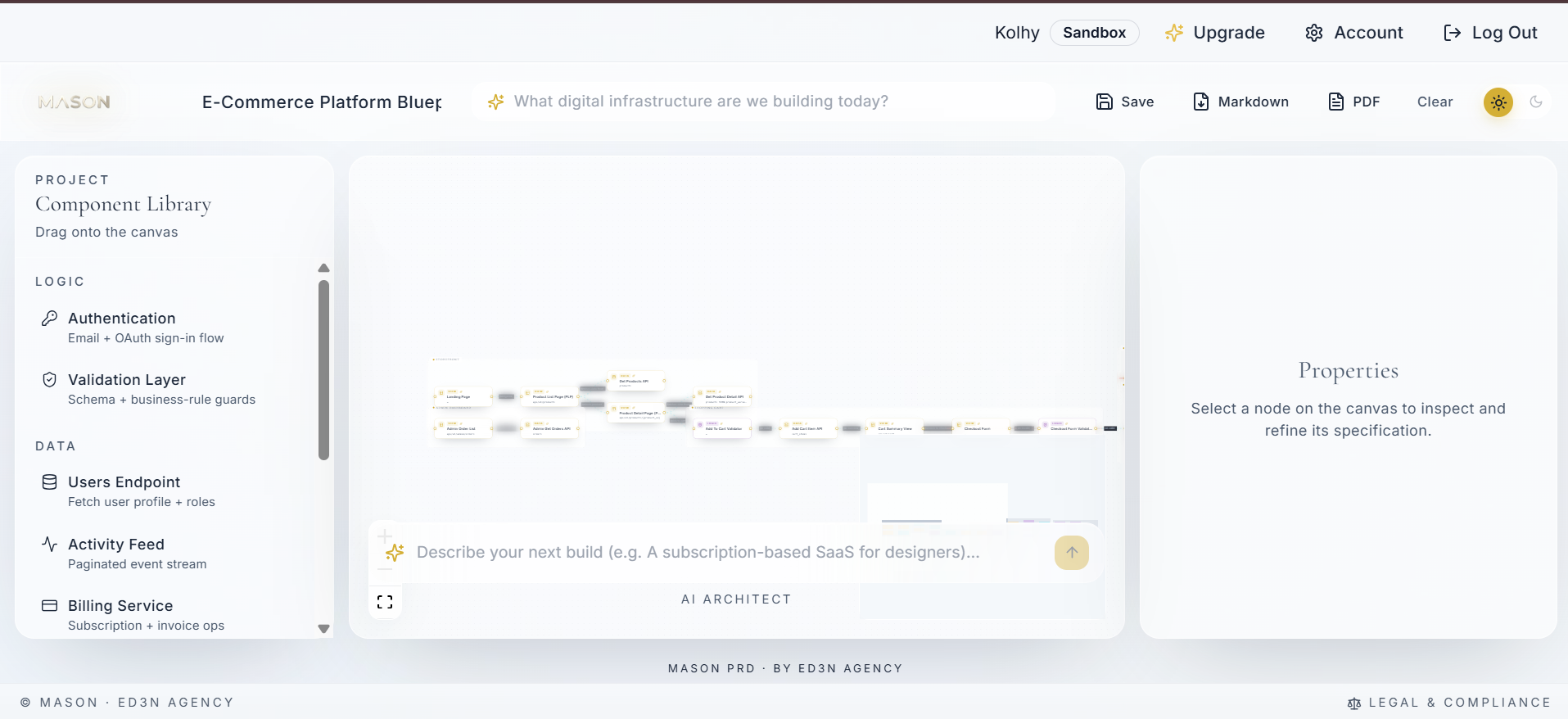
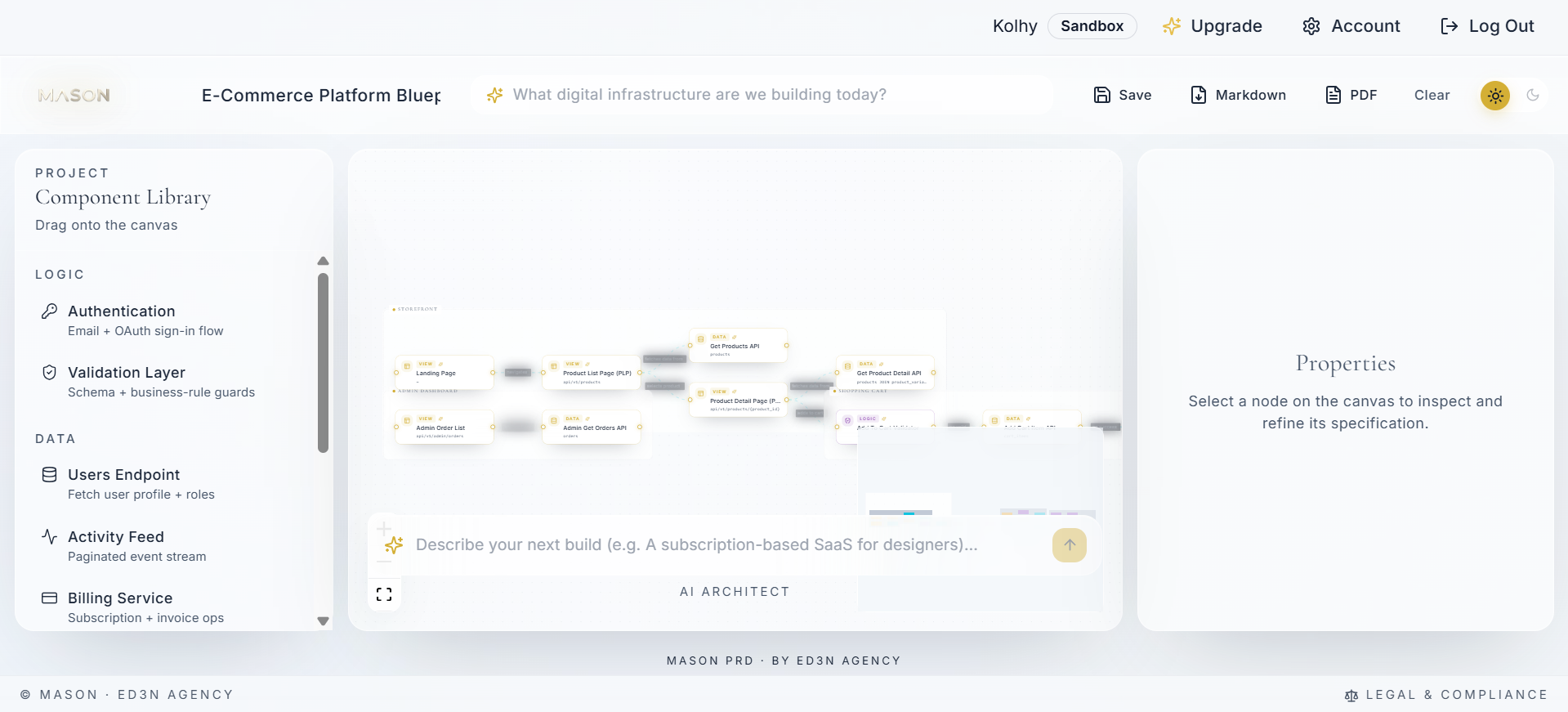
Project Mason automatically audits software blueprints before code is written. It analyzes unstructured product documents, maps out the system's entire logical flow, and runs simulations to catch critical architecture flaws like race conditions, logic deadlocks, and security gaps, saving developers from costly re-work.
How we built it
I engineered Mason to translate unstructured product requirements into formal state-machine models. By leveraging advanced language models fine-tuned on system design principles, the engine automatically simulates thousands of edge cases identifying race conditions, logic deadlocks, and privilege escalation vulnerabilities before engineering begins.
Challenges we ran into
The primary challenge was semantic precision. Human-written product documents are inherently ambiguous. Getting an AI to reliably parse variable human language and transform it into a mathematically rigorous, deterministic logical map required intense iteration on prompt chaining, structured JSON outputs, and strict validation frameworks.
Accomplishments that we're proud of
Deterministic Parsing: Successfully engineered a pipeline that transforms vague human text into strict, mathematically precise logical models. Complex Bug Detection: Built an AI simulation engine that reliably surfaces complex architectural flaws, like race conditions, before development starts. Solo Infrastructure Execution: Developed a deeply technical, enterprise-grade developer tool entirely on my own, prioritizing core analytical depth over mere superficial polish.
What we learned
Architecture is the Bottleneck: In an era of instant AI code generation, the true engineering bottleneck is system design and logic verification, not writing code. Taming Semantic Ambiguity: Learned how to structure advanced AI workflows to output highly deterministic, reliable engineering analysis from fluid, unstructured user inputs. High-Leverage Scaling: Discovered how to shift debugging to the absolute absolute start of the lifecycle, maximizing development speed by preventing errors rather than fixing them.
What's next for MASON
IDE & Tool Integrations: Building native plugins for VS Code and platforms like Jira or Notion to audit product requirements directly where they are written. Live Design Simulations: Introducing an interactive visual graph editor that lets developers simulate system state changes and see logical bottlenecks live. Early-Stage Founder Beta: Launching an exclusive, invite-only beta for technical student founders and agile development teams to battle-test the engine on real MVPs.

Log in or sign up for Devpost to join the conversation.