-
-
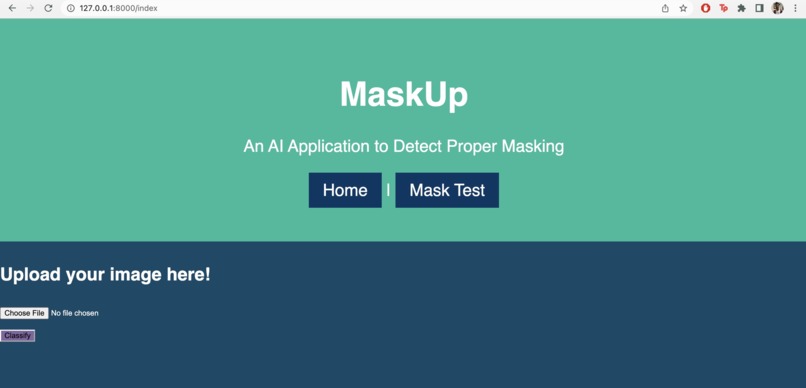
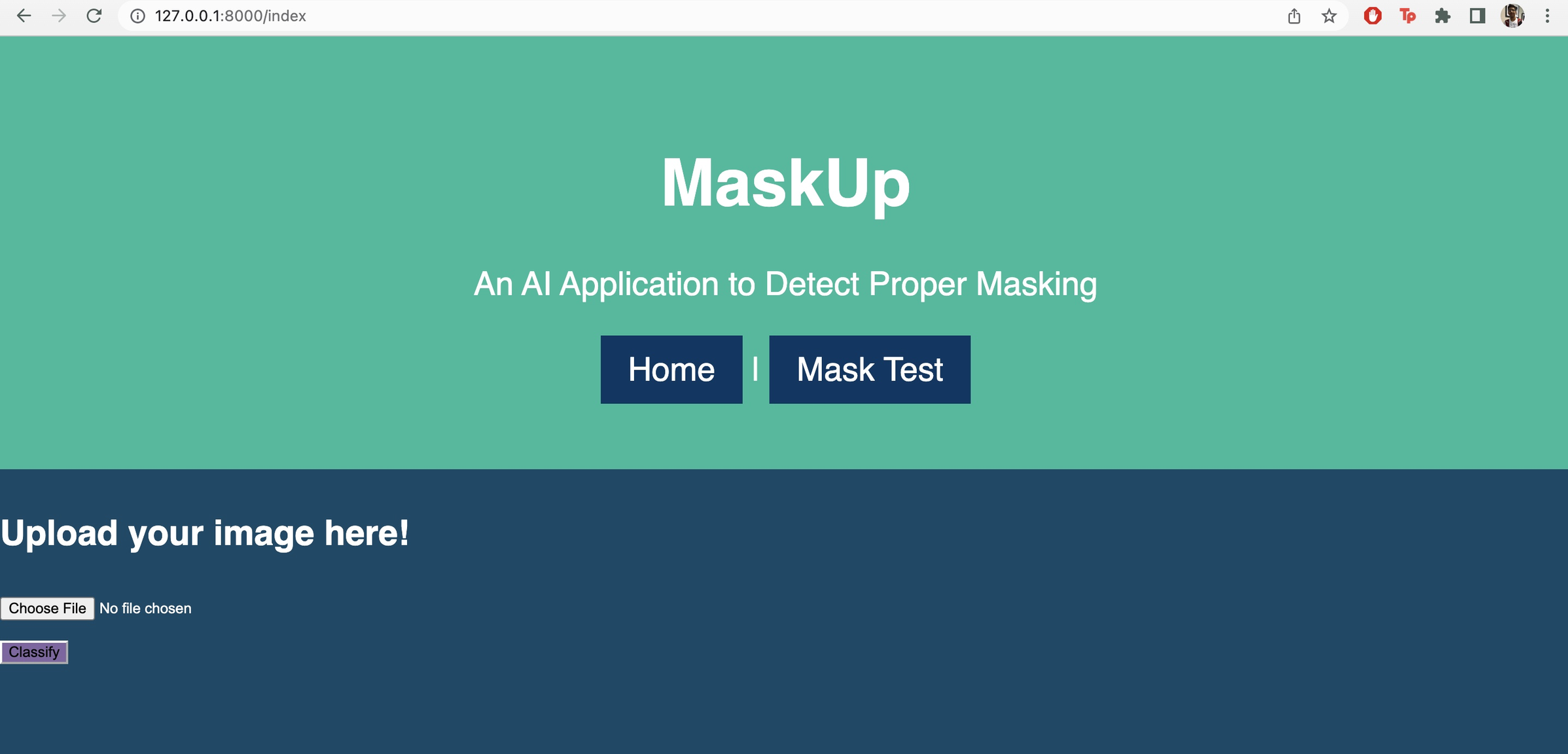
WebApp once Mask Test button is clicked
-
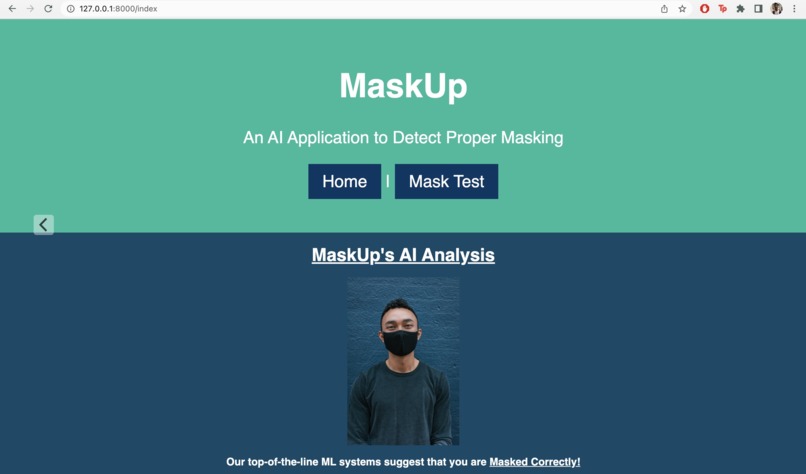
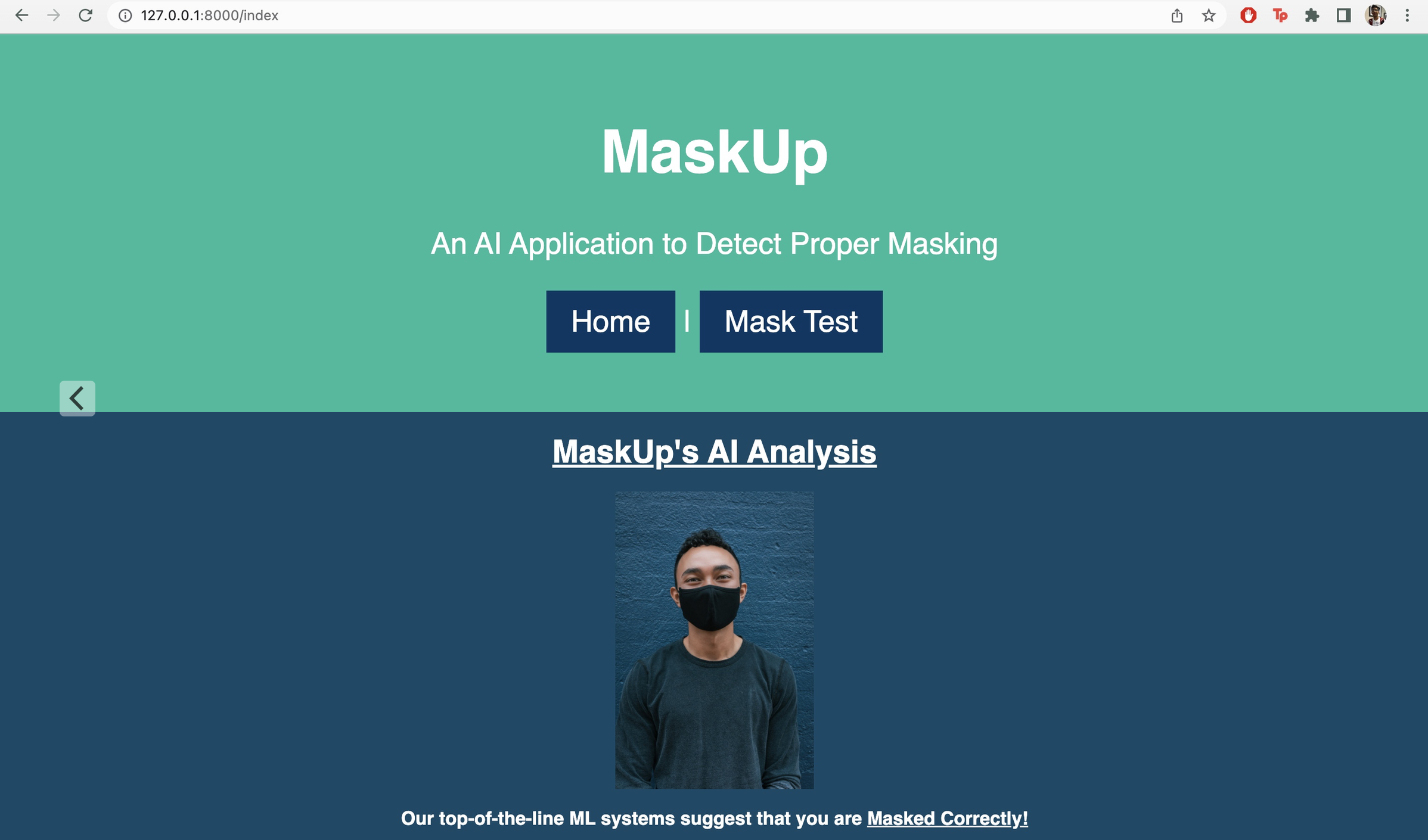
Image Analysis Results
Inspiration
Masking has played a very important part in preventing the spread of COVID-19. We felt that an app that would be able to recognize if a person was wearing a mask, not wearing a mask at all, or improperly wearing a mask is an essential first step in enforcing mask mandates and guidelines on a larger scale.
What it does
Our project is an ML-based mask detection app. A user can upload an image and our app detects one of three cases: the person in the image is unmasked, the person in the image is properly masked, or the person in the image is improperly masked.
How we built it
We implemented a transfer learning model and Convolutional Neural Network trained on a dataset of 853 images to classify photographs. We connected the model to our WebApp using Django.
Challenges we ran into
Processing and resizing the image data, connecting the model to the WebApp, and having the model run in a timely manner.
Accomplishments that we're proud of
Created a fully functional WebApp that is connected seamlessly with our ML model, achieving an 83% validation accuracy for our model, developing a product in such a time crunch.
What we learned
How to allow for user interaction with a WebApp, the importance of image processing before feeding the data into the ML model, and the capabilities of Django.
What's next for MaskUp
We hope to expand the app to be able to detect masking in images containing multiple people. In the long term, we hope to see if we can integrate video data, from which we can pull images and identify if individuals in the video are masked.
Built With
- django
- html
- keras
- machine-learning
- python
- tensorflow

Log in or sign up for Devpost to join the conversation.