-
-
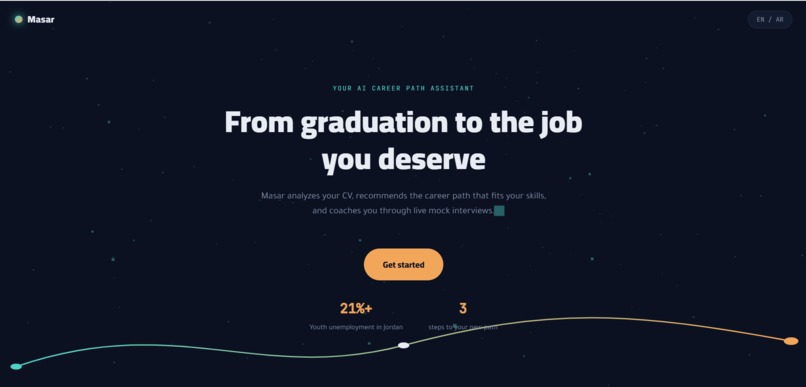
Masar's bilingual landing page, introducing the AI career path assistant with real Jordan unemployment data (21%+) driving the mission.
-
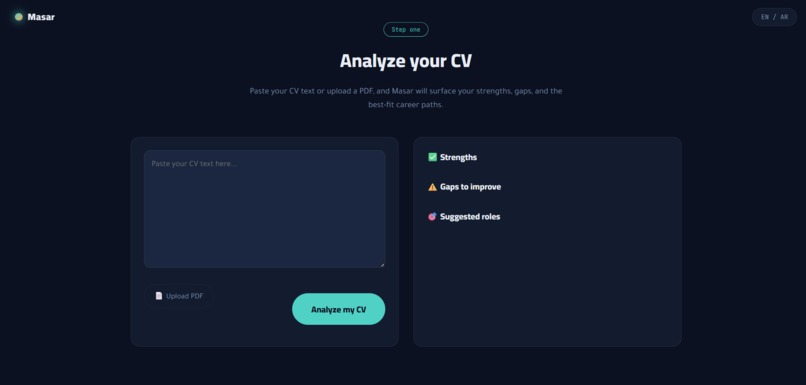
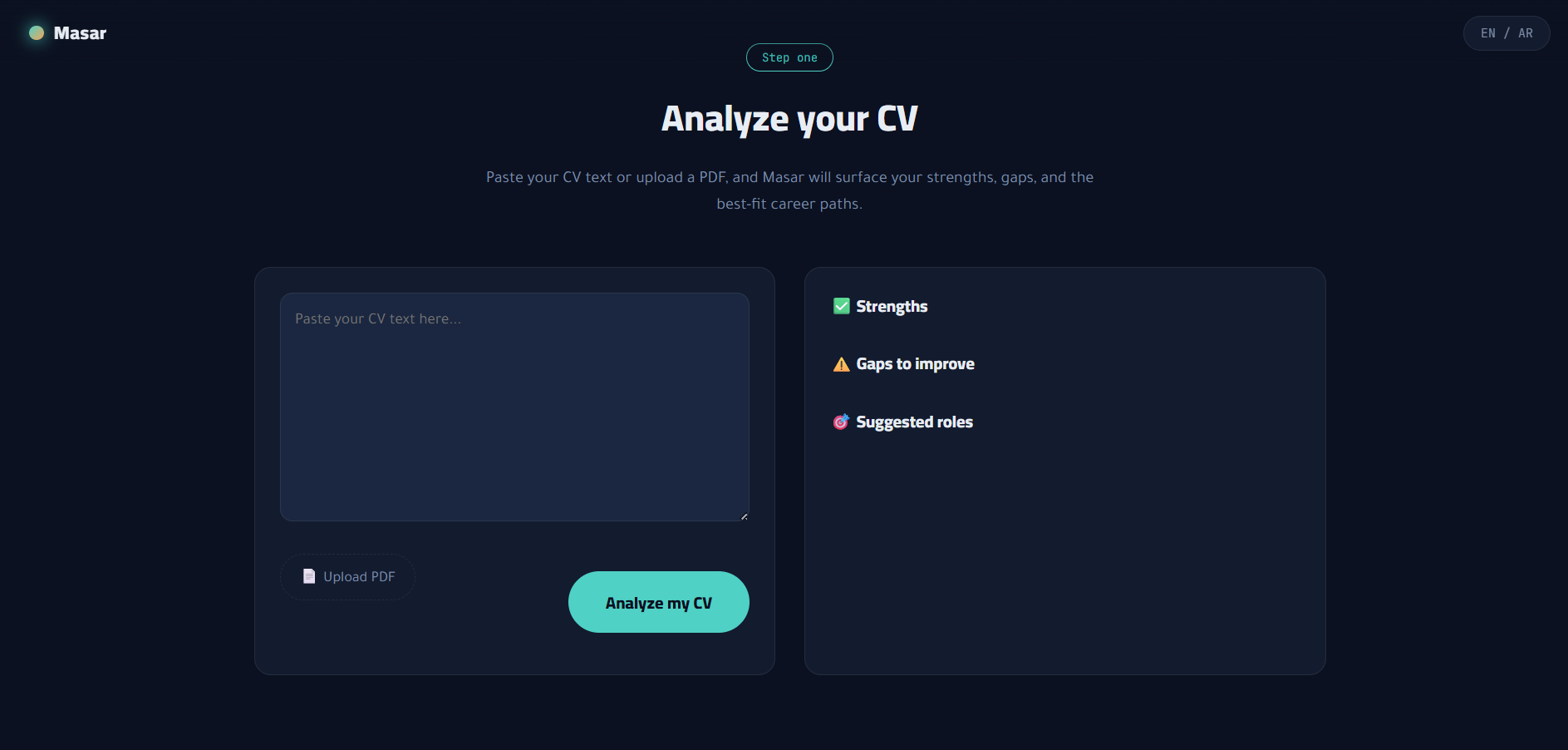
Step one — CV upload interface where users get instant AI-powered feedback on their resume.
-
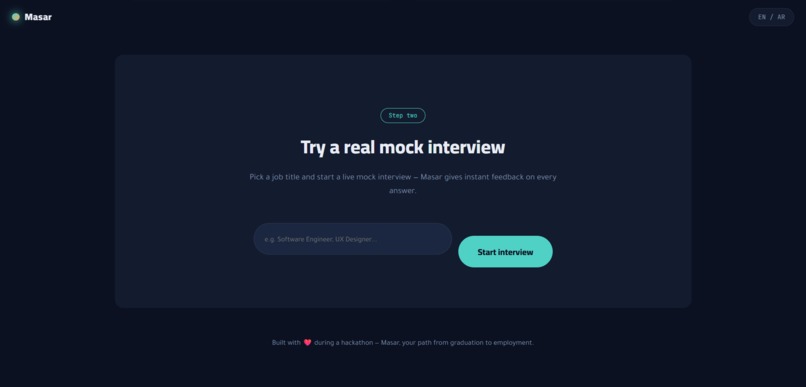
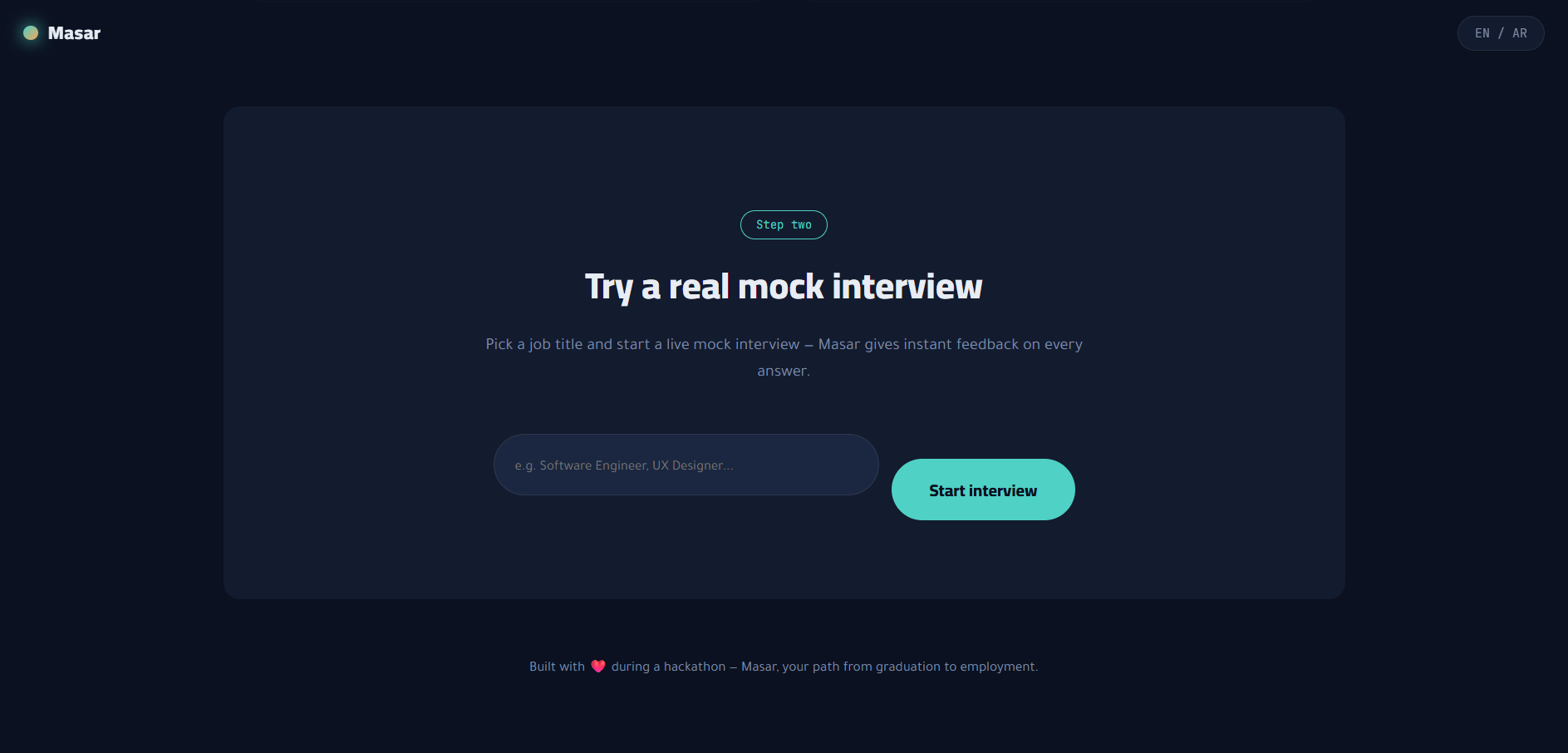
Step two — pick a job title to launch a live AI mock interview with instant feedback.
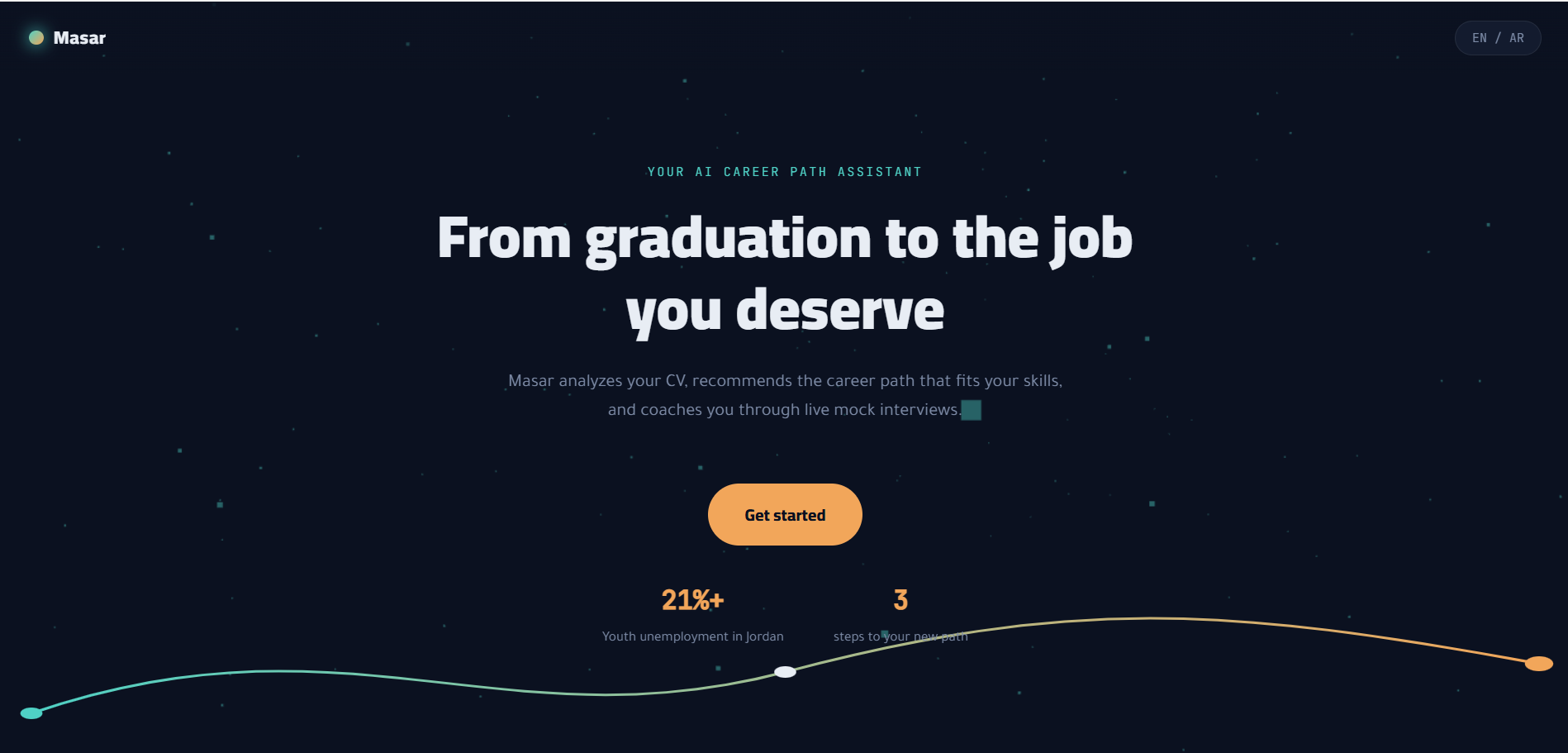
Masar — AI Career Path & Interview Coach
Inspiration
I'm a 23-year-old university student about to graduate, and it's been hard watching close friends who graduated before me still struggling to find work. When I looked into it, I realized the issue usually isn't a lack of job openings — it's that they don't know which career path actually fits their skills, and they walk into interviews unprepared and unconfident. Digging further, I found this is far from an isolated problem: unemployment in Jordan has exceeded 21% in recent years, with similar patterns across other Arab countries. That gap between graduation and employment is exactly what Masar was built to close.
What it does
Masar is an AI career agent that helps job seekers bridge the gap between graduating and getting hired. It:
- Analyzes CVs — uploads a resume and identifies strengths, gaps, and areas to improve
- Recommends career paths — matches the user's actual skills to roles that genuinely fit them, instead of generic job titles
- Simulates job interviews — runs a live, conversational mock interview, asks role-relevant questions, and gives instant, specific feedback
- Works bilingually — fully supports both Arabic and English, since most existing career tools are English-only and don't serve the Arab job market well
How we built it
- AI Agent Core: Built using the Qwen Cloud API (qwen-turbo) via Alibaba Cloud's OpenAI-compatible endpoint, with a structured-JSON prompting pattern to orchestrate CV parsing, career matching, and interview simulation as distinct agent capabilities rather than a single prompt
- CV Analysis: PDF text extraction pipeline (pdf-parse) that structures resume data before passing it to the model for evaluation
- Career Matching: The model returns strict JSON with strengths, gaps, and three ranked career suggestions, parsed and rendered directly into the UI
- Interview Simulation: A turn-based conversational loop that keeps full history client-side and sends it back each turn, so the interviewer's follow-up questions stay contextual
- Frontend: Vanilla JS + Three.js (ambient particle background) + GSAP (scroll reveals, entrance animations) — bilingual interface (Arabic RTL / English) with a custom "journey path" visual signature
- Backend: Node.js + Express, deployed on Vercel
- Language toggle: Persistent Arabic/English switching so users can move between languages without losing context
Challenges we ran into
- Getting the mock interview to feel natural and react to the user's actual answers, instead of following a fixed script
- Balancing Arabic and English UX in the same interface without either language feeling like an afterthought
- Scoping the project tightly enough to ship a working demo in the hackathon timeframe, while still showing three distinct AI capabilities (analysis, matching, simulation)
- Making the CV analysis useful and specific rather than generic "add more keywords" feedback
Accomplishments that we're proud of
- Built a genuine multi-capability AI agent (not just a single chatbot wrapper) in a short timeframe
- Delivered a fully bilingual experience from day one — not bolted on later
- The interview simulation feature works live and gives feedback that actually references what the user said
- Grounded the entire project in a real, data-backed problem instead of a hypothetical one
What we learned
- How to design agent tools/prompts so each capability (analysis, matching, interviews) stays focused and doesn't blur together
- The UX challenge of building genuinely bilingual products, not just translated ones
- How much of "career readiness" is really about confidence and specificity — not just having a well-formatted CV
- The value of scoping ruthlessly under time pressure to ship something that actually works end-to-end
What's next for Masar
- Explore Arm64-optimized deployment (e.g. Arm-based cloud instances) and benchmark inference performance for the interview simulation loop, since latency matters most in that live-feedback flow
- Expand the career-matching database with real, region-specific job market data instead of a curated sample set
- Partner with universities and career centers across Jordan and the region to pilot Masar with real graduating students
- Add a progress-tracking dashboard so users can see improvement across multiple mock interviews over time
- Explore integrations with actual job boards to close the loop from "recommended path" to "applied to a real job"
Built With
- alibaba-cloud
- css
- dashscope
- express.js
- gsap
- html
- javascript
- node.js
- qwen
- three.js
- vercel

Log in or sign up for Devpost to join the conversation.