-
-
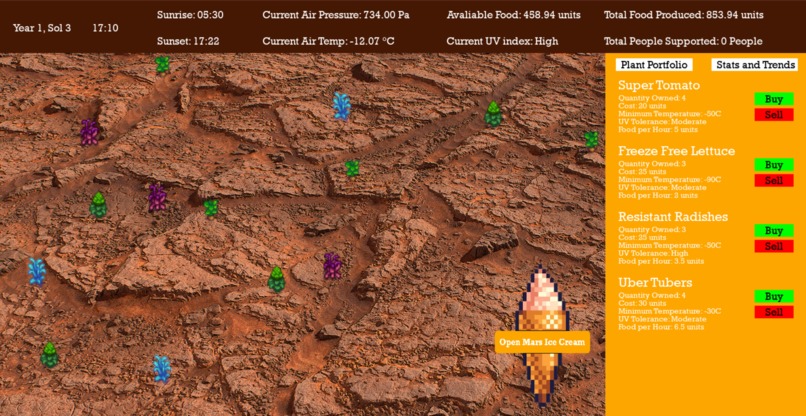
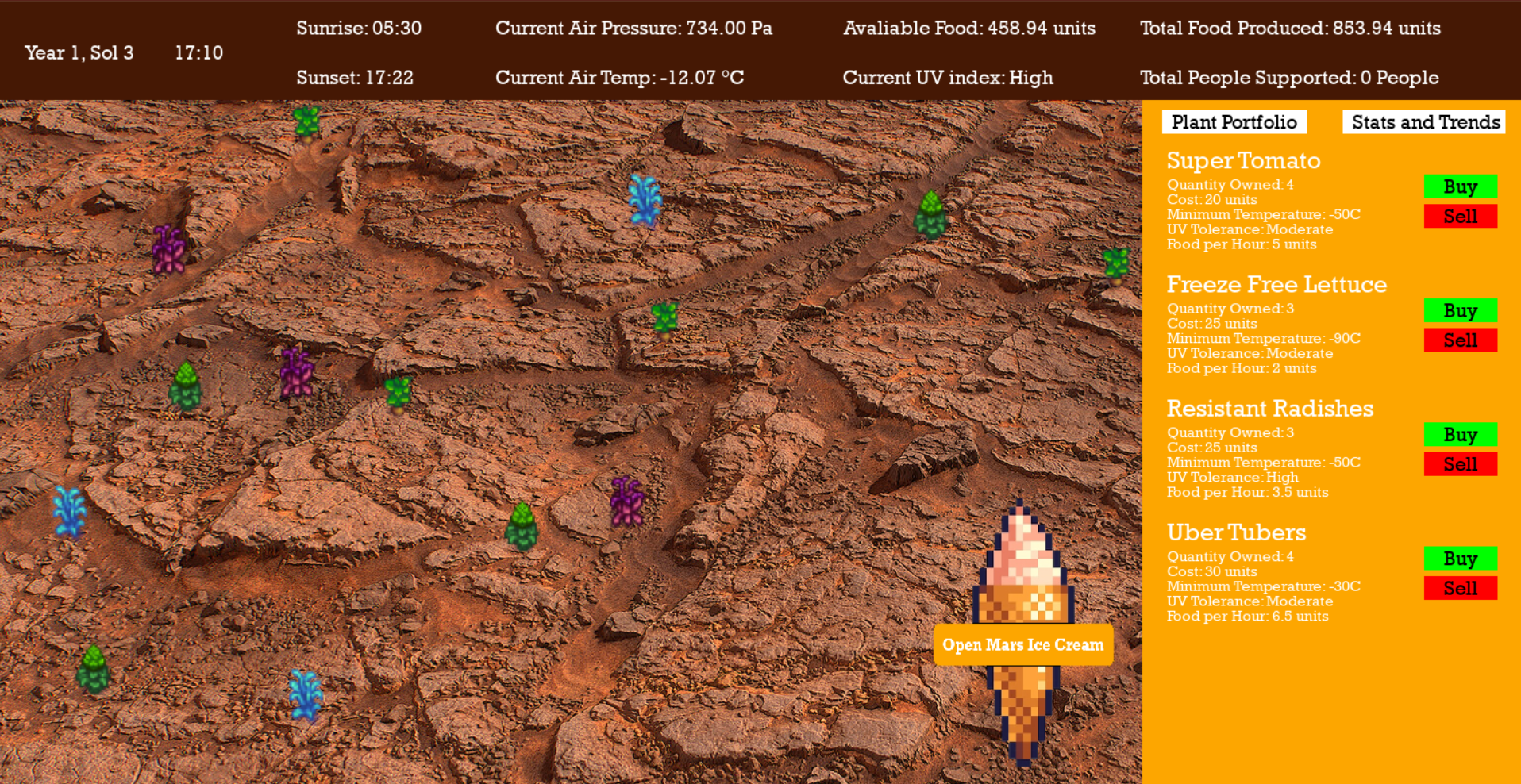
The main screen of the game, showing an increasingly fertile Martian field and a header bar detailing climate data.
-
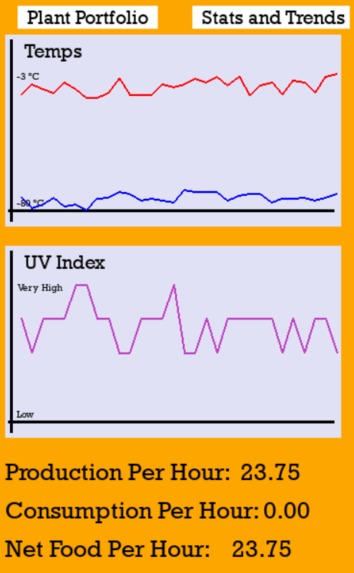
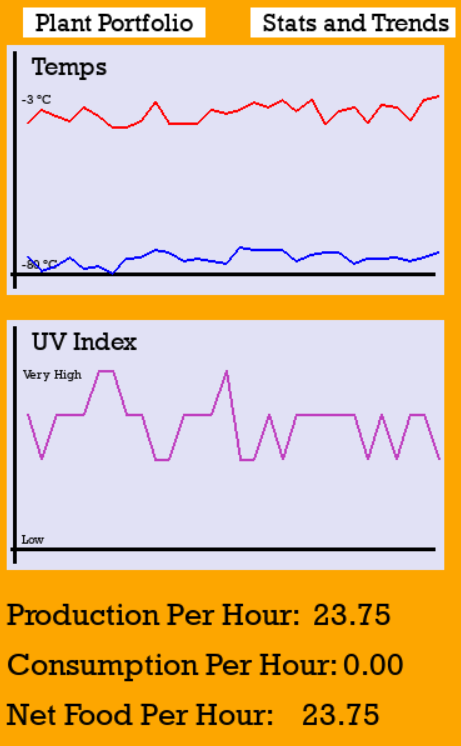
The 'Stands and Trends' widget gives the player helpful insight on historical weather trends and their current progress.
-
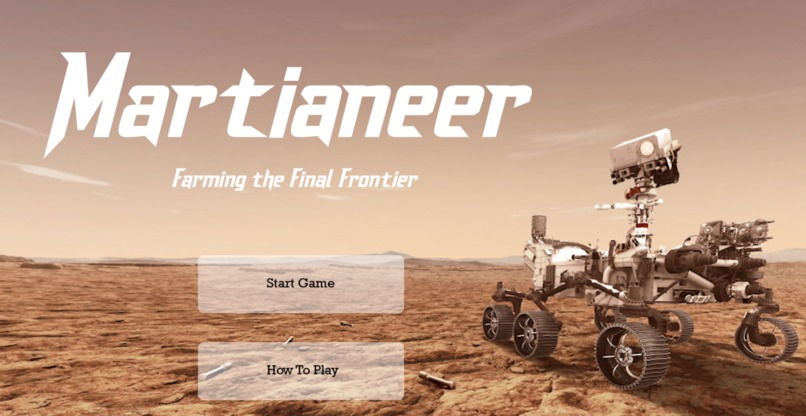
The game's title screen.
-
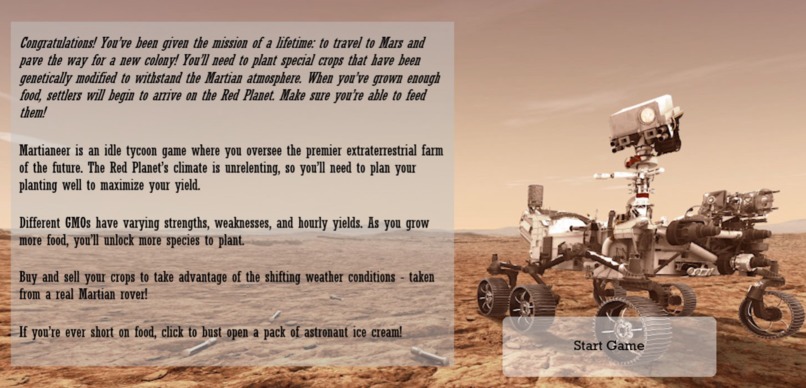
The game's "How to Play" screen.


Inspiration
We came across a dataset containing weather and climate data collected by the Curiosity rover sent to Mars, and were inspired to use it in our project. We gamified this dataset by incorporating it as the driving mechanic in an idle tycoon game. Similar games like Cookie Clicker inspired the genre and format.
What it does
The game opens with an empty expanse of Martian soil, and the player starts with nothing but a seemingly-endless supply of astronaut ice cream. They're tasked with growing enough food for future settlers, and must spend their resources wisely on crops that are suited for the harsh, rapidly-changing Martian environment. Some are resistant to intense UV radiation, others to exceptionally low temperatures. Some can only survive in a narrow range of conditions, making their fruits all the more valuable.
As the player accrues more food, settlers will begin to join their colony. Feeding them will diminish the player's food stores, adding an extra challenge towards the later stage of the game. When a colony is full, the player can choose to keep expanding, or start an entirely new homestead elsewhere on the planet.
How we built it
Martianeer is built almost entirely in Python, using Pygame for its graphics and game logic.
Challenges we ran into
- None of us had used Pygame before and there was a steep learning curve
- The bulk of the logic is stored in two files, making it difficult for three people to work on the project without "squashing each other to high heaven" (-Simon, 2023).
- We did not decide on an idea beforehand, and had to brainstorm on the fly while avoiding unrealistic scope creep.
Accomplishments that we're proud of
- Real Martian weather data: By far the coolest part of the project is that the game is driven by data recorded during an actual day (or 'sol') on Mars. We developed a model to simulate the rise and fall of temperatures from sunrise to sunset given the high and low temperatures Curiosity reported.
- Graphs / trendlines: The 'Stats and Trends' tab allows the player to view the data Curiosity reported over the last 30 days. They can use these graphs and trendlines to better predict what and when to plant.
- Reasonable Scope: With game design, it's very easy to bite off more than you can chew. All of us are relatively new to hackathons, and this was our first time progressing past the "need to haves" stage and reaching the "nice to haves." We're proud to say Martianeer feels whole.
What we learned
Pygame is no joke. Our git history and codebase reflect an increasing understanding of how the library works and best practices that formed as we developed our game.


Log in or sign up for Devpost to join the conversation.