Inspiration
Streamlining emergency medical workflows and reducing clinical decision fatigue by combining automated safety rule evaluations with a robust, asynchronous event-driven backend and a modern user interface.
What it does
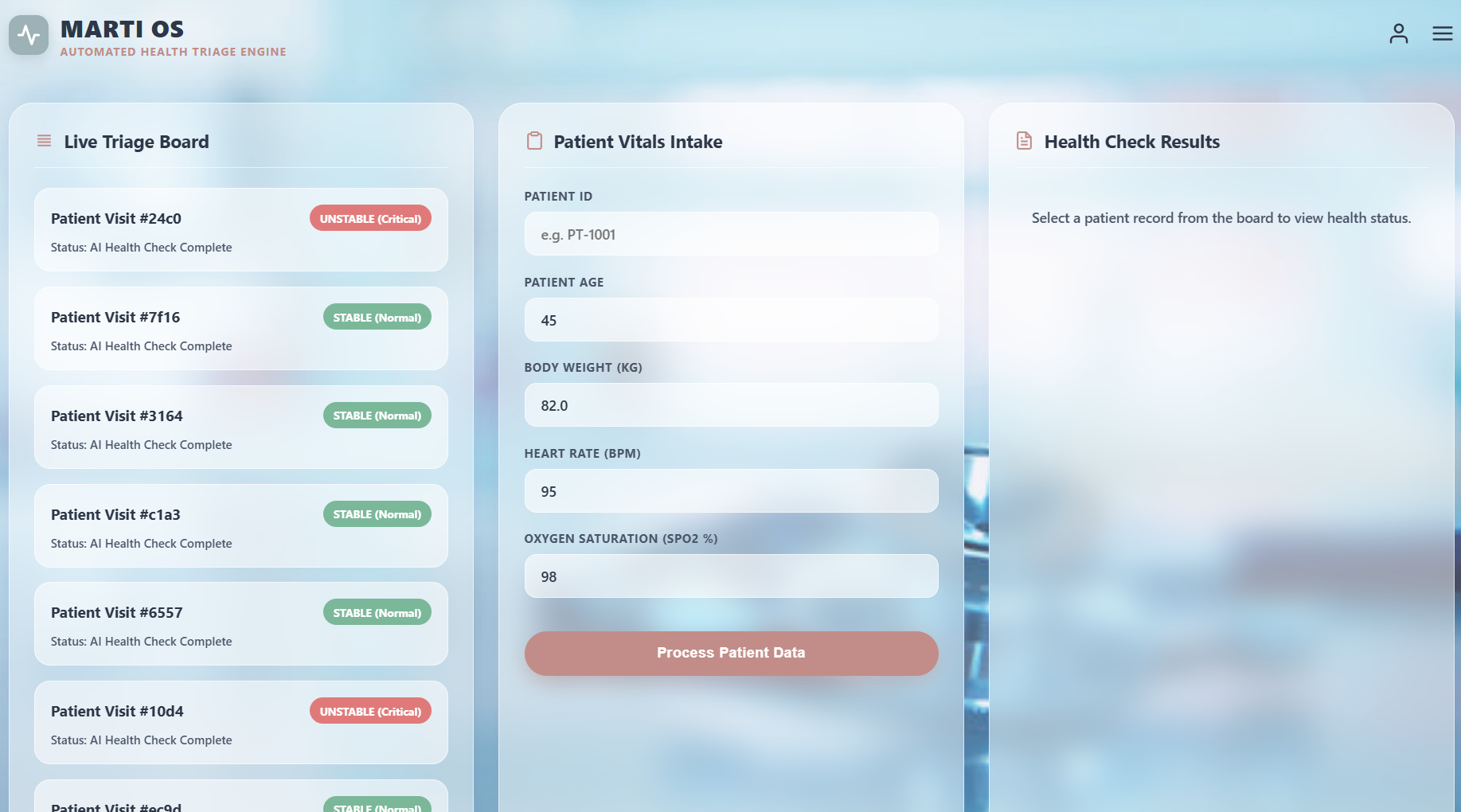
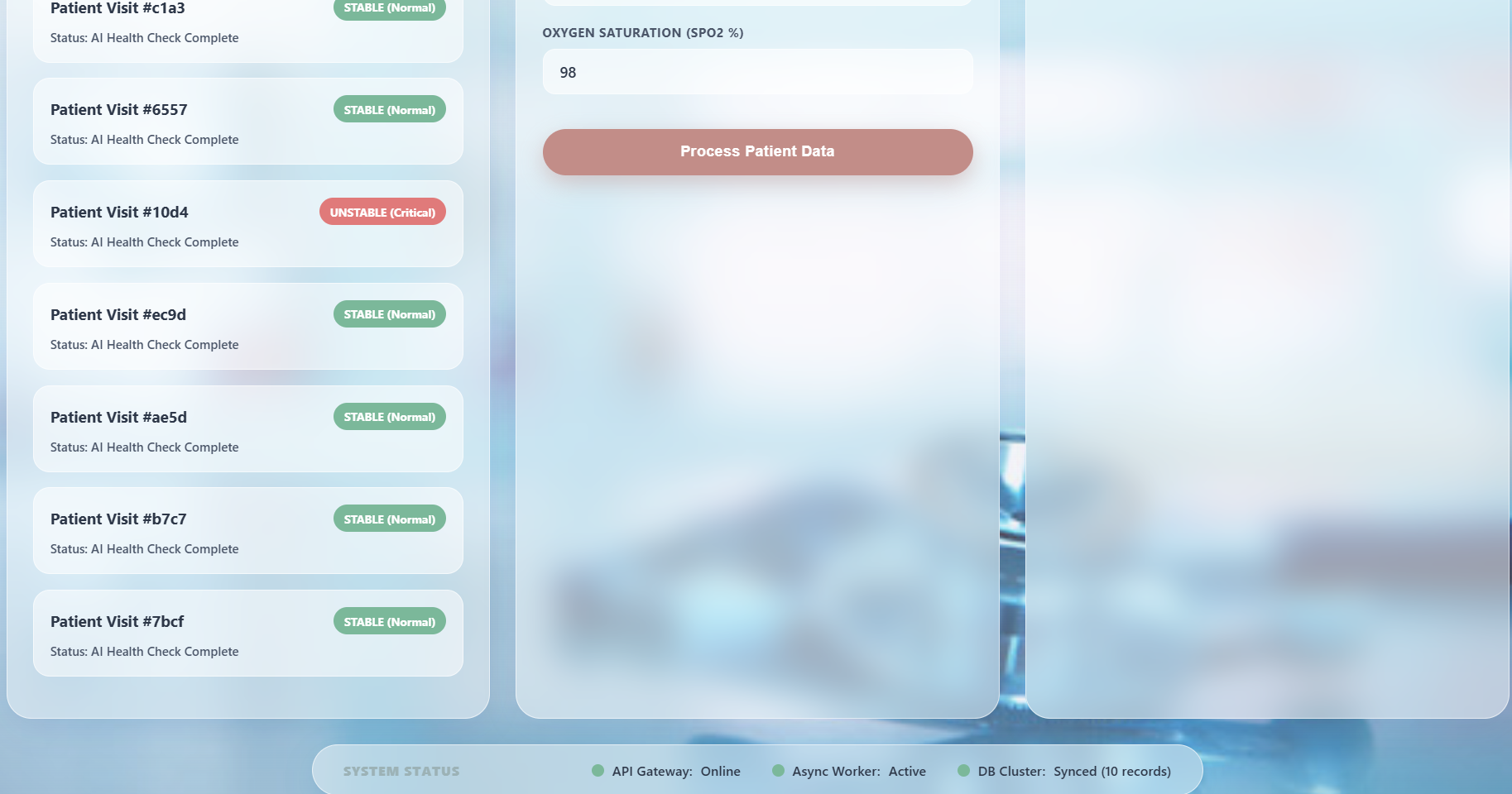
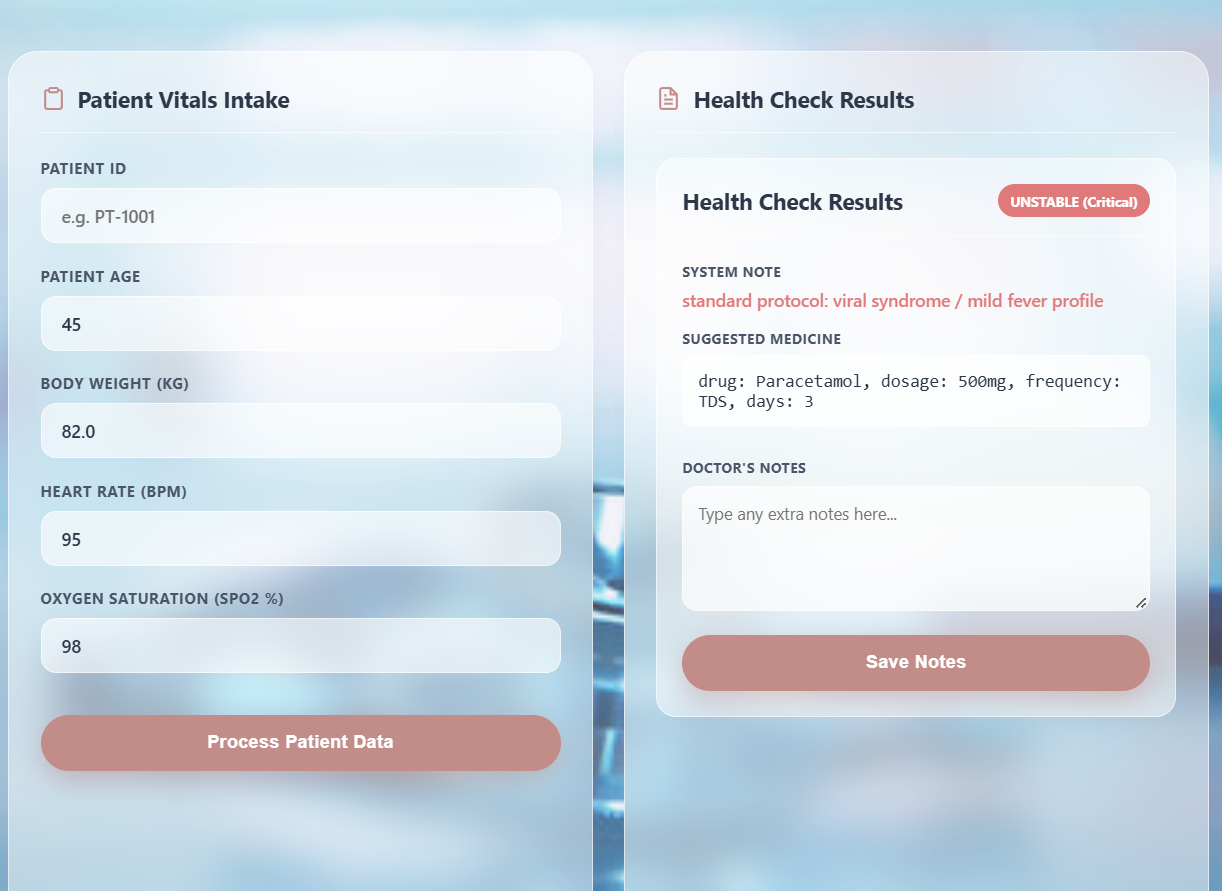
MARTI OS is an automated clinical triage engine designed to assist healthcare environments through:Patient Vitals Intake: A secure form capturing vital parameters including heart rate, oxygen saturation (SpO2), weight, and age.Automated Safety Classification: Instant evaluation of patient vitals to categorize cases into Stable (Normal), Medium Stable (Monitor), or Unstable (Critical). Live Triage Board: A real-time updating queue displaying incoming patient encounters and processing status.Clinical Review Panel: An interactive interface allowing physicians to review system notes, examine suggested draft prescriptions, and sign off on clinical records.System Telemetry: Live health monitoring indicators tracking the status of the API gateway, async worker, and database cluster.
How we built it
Backend API: Built using FastAPI for high-performance routing, asynchronous request handling, and robust data validation via Pydantic.
Message Broker & Queue: Utilizes Redis Streams and consumer groups to decouple intake requests and handle background task distribution securely.
Async Workers & Logic: Powered by dedicated Python background workers (triage_worker.py) executing rule-based safety checks (evaluate_safety).
Data Persistence: Relational data storage managed via PostgreSQL and SQLAlchemy.
Frontend UI: A custom, modern glassmorphism web dashboard styled with a refined pastel color palette, responsive CSS grids, and live polling for real-time queue synchronization
Challenges we ran into
Managing compatibility between asynchronous Redis stream commands and older local Redis server installations, which required refining the worker's task recovery mechanisms.
Ensuring seamless, non-blocking state synchronization between the FastAPI gateway, the Redis message broker, and the PostgreSQL database cluster.
Accomplishments that we're proud of
Successfully engineering a fully decoupled, production-grade microservices architecture combining REST endpoints, in-memory message streaming, and relational persistence.
Transforming complex medical telemetry into an intuitive, human-centered glassmorphic dashboard suitable for a live demonstration.
What we learned
Deepened our mastery of event-driven architecture, consumer group patterns, and asynchronous processing using Redis.
Learned how to balance complex backend logic with clean, accessible frontend design tailored for critical workflows.
What's next for Marti OS
Expanding the rule-based engine to support multi-parameter clinical scoring models.
Integrating secure Electronic Health Record (EHR) interoperability standards.
Containerizing the entire stack using Docker for seamless multi-node cloud deployment.
Built With
- css
- fastapi
- html5
- javascript
- postgresql
- pydantic
- redis
- sqlalchemy
- vanillla

Log in or sign up for Devpost to join the conversation.